TL;DR

Get home appliances delivered free with Prime
- Fast, free delivery on millions of items
- Prime Video, Amazon Music and more included
- Member-only deals all year
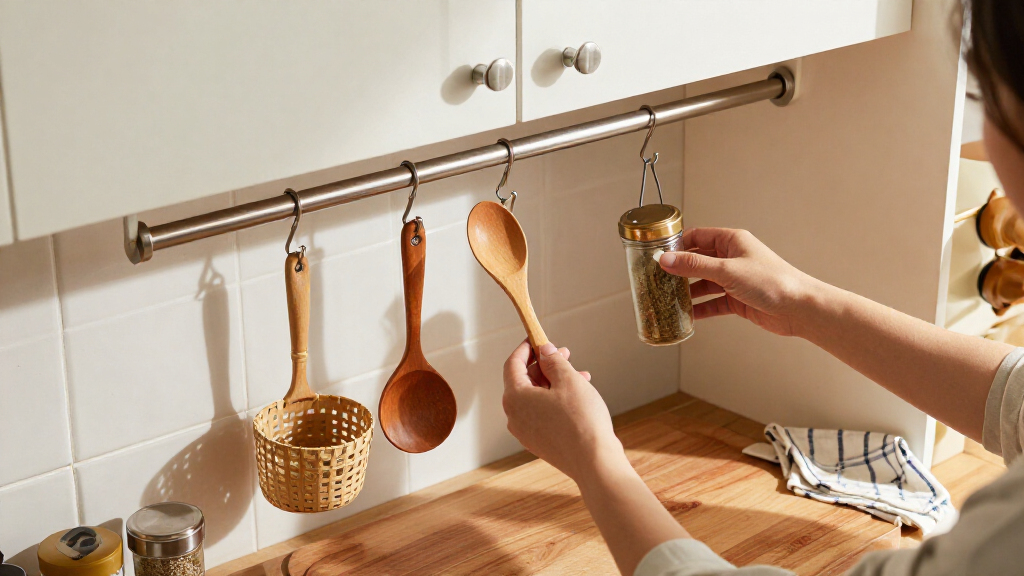
A Hunker report describes repurposing curtain rods with S-hooks to move utensils, mugs, cutting boards and measuring cups off kitchen counters. The setup can add hanging storage, but the report says typical curtain rods hold about 20 to 50 pounds and advises against installing them above the stove.
A Hunker report describes using a curtain rod and S-hooks to hang kitchen utensils and other bulky items, freeing countertop space for cooking and preparation. The suggestion is a household storage tip, not a product announcement or tested finding; the report also cautions readers to account for a rod’s load limit and avoid placing hanging items above the stove.
The method uses a rod mounted in a suitable spot—such as an empty stretch between or beneath cabinets, or along a backsplash—with movable S-shaped hooks attached. Utensils can hang directly from the hooks, while mugs, measuring cups and cutting boards may also be moved off the counter if they can be safely hung. The report says a basket supported by two hooks can hold smaller items such as spice jars.
Hunker advises measuring the available wall space before choosing a rod and considering how high it will sit so items remain easy to reach. Traditional curtain rods generally use screws for support, while a tension rod placed between cabinets may suit renters or people who want to avoid drilling. The article also suggests cabinet knobs as possible anchors for a more decorative setup.
The report puts typical curtain-rod capacity at about 20 to 50 pounds, but that range is not a load rating for every rod or installation. The actual safe capacity depends on the rod, brackets or tension mechanism, wall or cabinet surface, fasteners and how the weight is distributed. Hunker warns against overloading the arrangement and recommends avoiding the space above a stove, where grease and heat can affect hanging items and create hazards, particularly for wooden or plastic utensils.
More Room for Kitchen Prep
For people with limited kitchen workspace, shifting frequently used tools off the counter may make more room for meal preparation and cleanup. The approach uses otherwise unused wall space and can keep utensils within reach, rather than requiring a large cabinet or countertop organizer. It may be useful in a small apartment kitchen, though the amount of space recovered will depend on what is moved and the room available.
The arrangement also puts stored items in view, which can make access easier but means the items are exposed to kitchen dust, splashes and cooking residue. That trade-off matters when deciding whether to hang everyday tools or items that need to remain covered. The report presents the idea as a simple DIY option, but it does not provide independent testing of how much counter space it saves or the load limits of specific products.
Products Worth Considering

Philips Hue Bridge Pro Smart Lighting Hub

TCL QM64L 85-Inch QD-Mini LED 4K Smart Fire TV

Ring Alarm 14-Piece Wireless Security System
As an affiliate, we earn on qualifying purchases.
Choosing a Safe Mounting Spot
The Hunker article frames the rod as a way to use vertical storage when countertop space is scarce. Its practical advice begins with choosing a location and measuring the gap, then matching the rod and hardware to that space and the items intended for hanging. A clear area between cabinets or along a backsplash may work; placement should also leave enough clearance for cooking and everyday movement.
Mounting method affects both convenience and stability. A tension rod can fit between two surfaces without screw holes, while a conventional rod may need fasteners suited to the surface and intended load. The report does not specify wall materials, installation instructions for particular products, or a universal weight limit. Readers should follow the manufacturer’s instructions and avoid treating the article’s general capacity range as a guarantee for their own setup.
““Ample counter space is a luxury in any kitchen.””
— Hunker report
Load Limits Depend on Installation
The source does not identify a specific rod, bracket, wall type or tested installation, so the 20-to-50-pound range cannot establish how much any particular setup can safely hold. It also does not quantify the counter space saved or report results from a trial. Readers need to check the product’s instructions and account for the mounting surface and the combined weight of hooks and stored items.
It is also unclear which kitchens have a suitable mounting space, or whether particular items can be hung securely without damage. A tension rod’s suitability will depend on the gap and the manufacturer’s stated use. The article does not provide detailed guidance on protecting hanging items from dust, moisture or heat beyond its warning about positioning near the stove.
Measure Before Adding Hooks
The next step for anyone considering the setup is to measure the intended location, choose a rod and mounting method suited to it, and check the product’s capacity instructions before loading it. Start with a small number of lightweight items and confirm that the rod and its supports remain stable. Keep the arrangement away from the stove and ensure hanging objects do not obstruct preparation, sinks or cabinet doors.
The Hunker report does not announce a follow-up test or product release. The practical outcome will depend on each kitchen’s layout and the hardware selected; there is no single capacity or installation method that applies to every home.
Key Questions
What can be hung from a curtain rod in a kitchen?
The Hunker report suggests utensils, mugs, cutting boards and measuring cups, using S-hooks where appropriate. It also describes hanging a small basket from two hooks for items such as spice jars. Check that each item is suitable for the hook and rod.
How much weight can a curtain rod hold?
The report gives a general range of 20 to 50 pounds for typical rods. That is not a universal rating: safe capacity varies by product, mounting method, fasteners and surface. Follow the manufacturer’s instructions and do not assume every installation can hold the top of that range.
Can renters install this storage without drilling?
The report says a tension rod between cabinets may offer a renter-friendly option. Whether it will work depends on the gap and the rod’s stated use; check its instructions and avoid loading it beyond its rated capacity.
Where should a kitchen storage rod go?
Hunker suggests looking at empty space between or beneath cabinets or along a backsplash, while keeping items easy to reach. It advises against placing the rod above the stove because of grease and fire concerns, particularly for wooden or plastic utensils.
Source: hunker.com