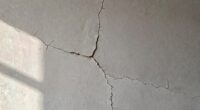
To detect hidden water leaks early, watch for signs like increased water bills, musty odors, or discoloration on walls and floors. Inspect pipes for corrosion, use moisture meters or thermal imaging cameras, and listen for running water when fixtures are off. Checking water pressure and feeling for temperature differences can also help. By staying alert and using simple tools, you can catch leaks before they cause major damage—keep exploring to learn more proven detection techniques.
Key Takeaways
- Monitor your water bills for unexplained increases indicating possible leaks.
- Use moisture meters and thermal imaging cameras to identify hidden damp spots behind walls and floors.
- Check for musty odors, mold, or discolored surfaces as signs of concealed moisture.
- Inspect visible pipes regularly for corrosion, leaks, or damage to catch problems early.
- Schedule routine professional plumbing inspections to detect and address leaks before costly damage occurs.

General Tools MMD4E Digital Moisture Meter, Water Leak Detector, Moisture Tester, Pin Type, Backlit LCD Display With Audible and Visual High-Medium-Low Moisture Content Alerts, Grays
HUMIDITY SENSOR: Our handy meter tool can quickly determine what level of remediation is needed to keep your…
As an affiliate, we earn on qualifying purchases.
As an affiliate, we earn on qualifying purchases.
Understanding How Water Leaks Hide Behind Walls and Floors

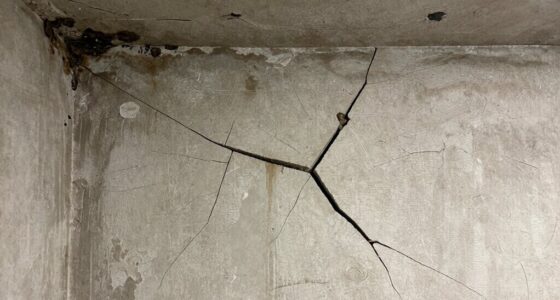
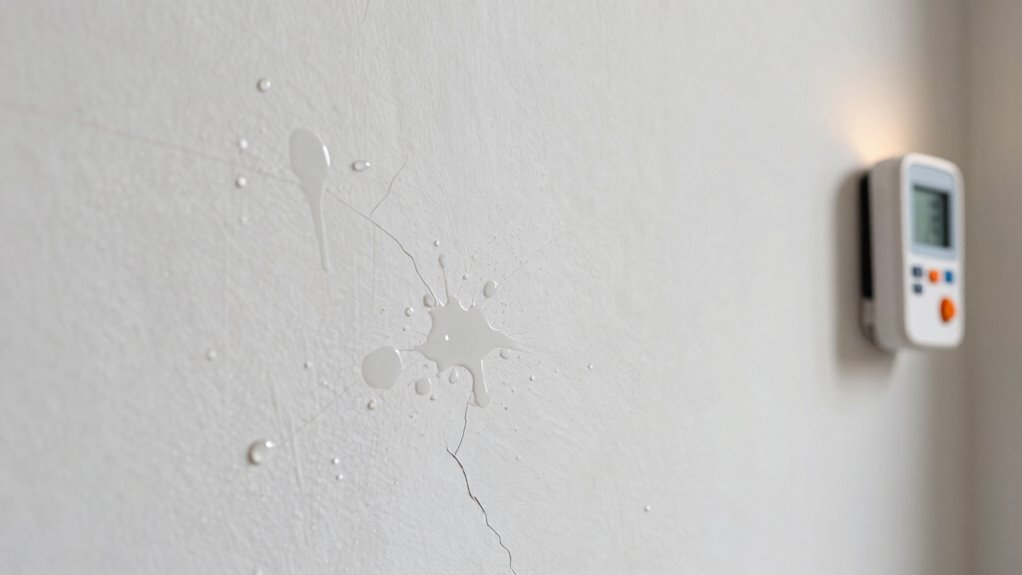
Water leaks often remain hidden behind walls and floors because they don’t always cause immediate or obvious signs on the surface. Over time, pipe corrosion can weaken pipes, leading to slow leaks that seep into surrounding materials. These leaks can cause drywall damage, such as bubbling, cracking, or discoloration, without you noticing at first. As water accumulates behind walls or under floors, it may not be visible, but it can weaken structures and promote mold growth. Hidden leaks often go unnoticed because they don’t produce obvious drips or puddles, making it easy to overlook the problem until significant damage occurs. Understanding how leaks can hide behind these surfaces helps you stay alert to subtle signs and catch issues early before they escalate. Being aware of structural weakening caused by prolonged water exposure can help you take prompt action to prevent costly repairs. Recognizing the signs of water damage early on can be crucial in avoiding extensive repairs later. Additionally, using moisture meters or infrared cameras can be an effective way to detect hidden water sources before they cause major issues. Knowing how to identify the risk factors associated with undetected leaks can further enhance your ability to prevent damage, especially since many leaks are caused by corroded pipes that deteriorate over time without visible symptoms.

TOPDON TC004 Mini Thermal Imaging Camera, 240 x 240 TISR Resolution, 15-Hour Battery Life, 128 x 128 IR Resolution, 25Hz Handheld Infrared Camera with High/Low Temp Alerts, Auto Shutdown- Blue
【Enhanced Thermal Clarity】Start with 128×128 thermal imaging and enhance to 240×240 resolution with TISR technology for greater details….
As an affiliate, we earn on qualifying purchases.
As an affiliate, we earn on qualifying purchases.
Signs That Indicate You Have a Hidden Water Leak
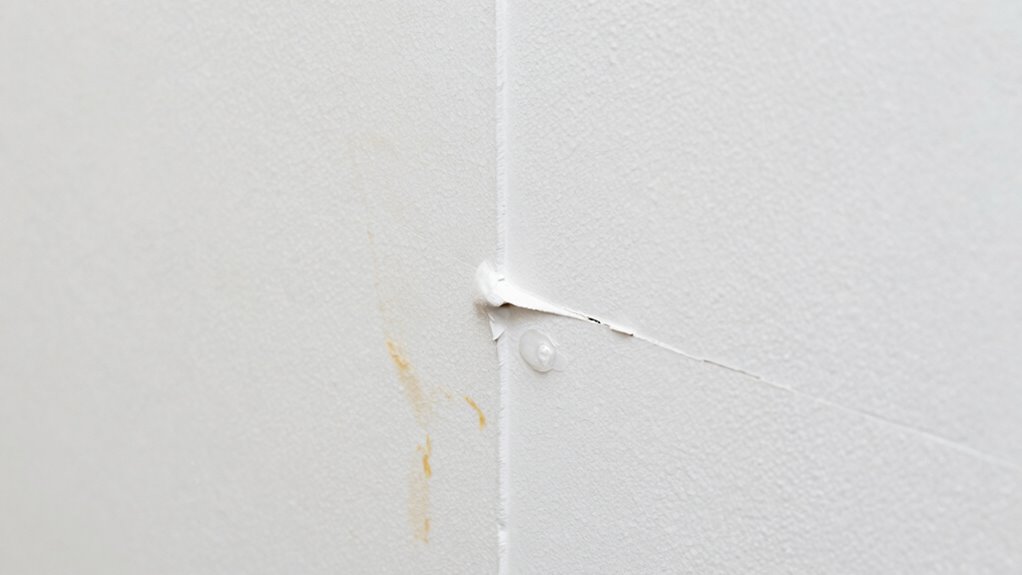
Even if you haven’t seen any obvious signs, there are subtle indicators that a hidden water leak might be lurking in your home. A sudden increase in your water bill is a strong clue that you need to examine your plumbing maintenance habits. Look out for musty odors or unexplained mold, which can signal hidden moisture. Listen for the sound of dripping or running water, even when no fixtures are in use. Discolored spots or warping on walls, ceilings, or floors also suggest leaks behind surfaces. Additionally, if you notice damp or spongy areas, it’s time to take leak prevention seriously. Regular plumbing maintenance can help catch these issues early and prevent costly damage, ensuring your home remains dry and leak-free. Recognizing these early warning signs can save you from extensive repairs down the line.

Water Leakage Detection, Underground Water Leak Detector, High Strength Sound Intensifier Water Pipe Leakage Monitor, Suitable for Site Construction, Car Maintenance
【Dual Probe Design】The water leakage detection kit is equipped with two kinds of detection probes, which can be…
As an affiliate, we earn on qualifying purchases.
As an affiliate, we earn on qualifying purchases.
Easy Tools and Techniques to Detect Hidden Water Leaks

Detecting hidden water leaks can often be straightforward with the right tools and techniques. Start by inspecting visible pipes for any signs of moisture or damage. Use a moisture meter to identify damp spots behind walls or under floors. Check water pressure—if it drops unexpectedly, it could indicate a leak somewhere in the system. Feel for temperature differences around pipe insulation, as cold spots may signal hidden leaks. A simple water pressure gauge attached to your main line can help detect pressure drops that suggest leaks. You can also listen for sounds of running water when no fixtures are in use. Incorporating proper form and technique can further improve your ability to locate leaks early. Familiarizing yourself with firewood handling techniques can also help prevent damage caused by hidden issues like leaks that lead to wood rot or mold. Additionally, understanding common leak locations can help you target problem areas more efficiently. Being aware of water conservation strategies can motivate you to address leaks promptly, saving both water and money. These tools and techniques enable you to identify potential problem areas early, helping you prevent costly damage and water waste.

Endoscope Camera with Light: 5" 1080P HD Dual-Lens Inspection Borescope Camera for Sewer – 16.4ft Waterproof Industrial Endoscope – Flexible Snake Bore Scope for Plumbing Automotive
5" HD SCREEN & DUAL-LENS FLEXIBILITY – This endoscope camera with light features a 4.3-inch HD screen with…
As an affiliate, we earn on qualifying purchases.
As an affiliate, we earn on qualifying purchases.
How to Confirm and Precisely Locate the Water Leak
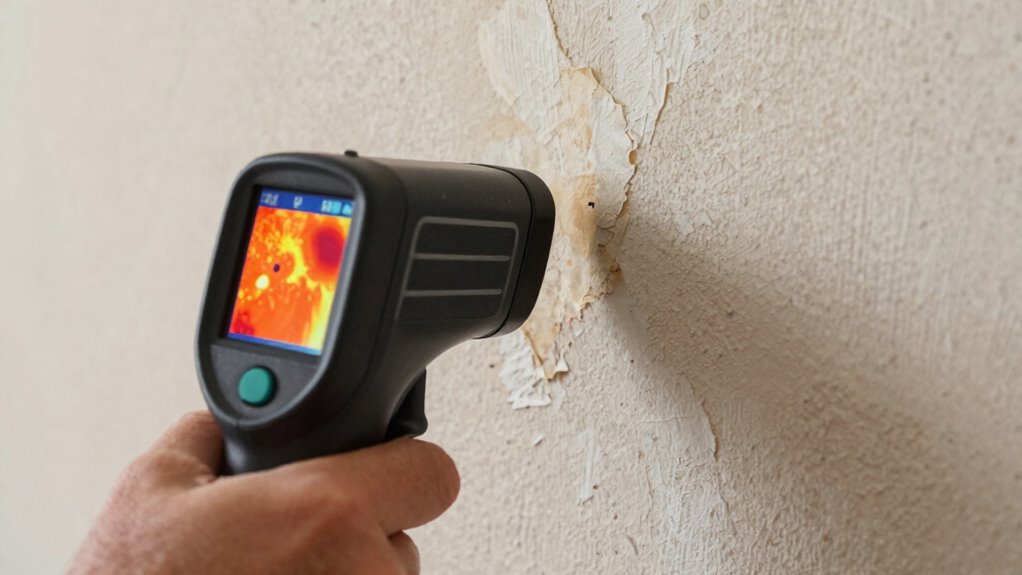
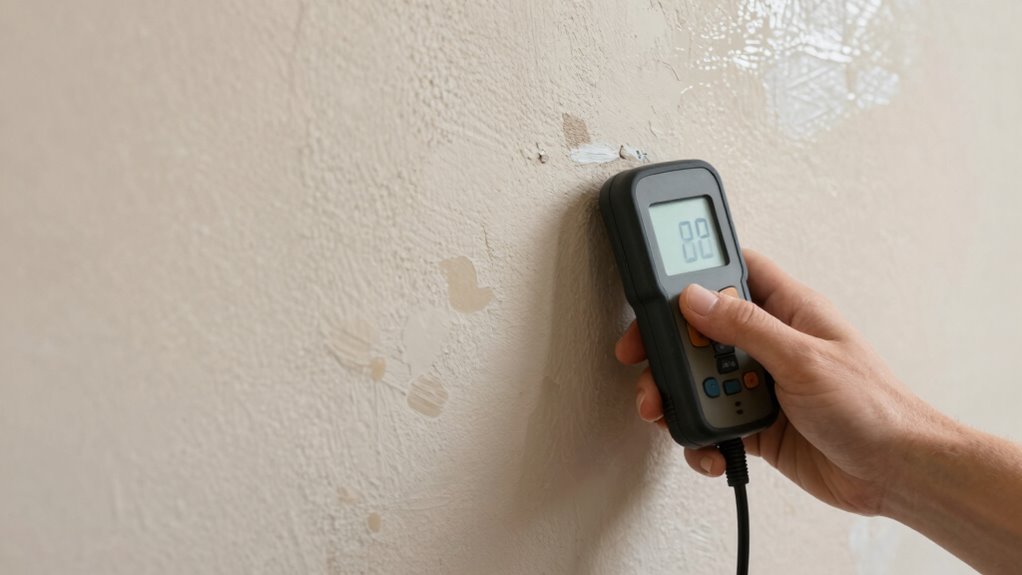
To confirm and precisely locate a hidden water leak, start by observing the affected area for subtle signs such as discoloration, mold growth, or sagging ceilings. Leak detection often requires careful inspection and sometimes pipe inspection tools to identify the source. Use a moisture meter or thermal imaging camera to detect hidden dampness behind walls or ceilings. Conduct a thorough pipe inspection to locate leaks within plumbing lines. Here’s a quick reference:
| Step | Method | Indicators |
|---|---|---|
| Visual Inspection | Look for stains, mold | Discoloration, sagging |
| Moisture Detection | Use moisture meter | Elevated moisture levels |
| Thermal Imaging | Use thermal camera | Cold spots indicating leaks |
| Pipe Inspection | Check accessible pipes | Visible damage or corrosion |
Additionally, understanding area of coverage can help determine the extent of potential water damage and necessary repairs. Knowing the common leak sources can also streamline your detection process and prevent unnecessary disassembly. Being aware of potential damage consequences highlights the importance of early detection and prompt action. It’s also helpful to be familiar with early warning signs, which can alert you before significant damage occurs. Recognizing typical leak locations can further improve your chances of early detection and effective repair.
Preventative Steps to Avoid Future Hidden Water Leaks
Once you’ve confirmed the location of a water leak, taking proactive steps can help prevent future issues. Here are some effective leak prevention strategies:
- Insulate pipes—especially in cold areas—to prevent freezing and bursting.
- Regularly inspect plumbing for signs of wear or corrosion.
- Maintain proper drainage around your property to avoid water buildup. Additionally, ensuring your plumbing system is properly maintained can help identify potential vulnerabilities before they develop into leaks. Being aware of water pressure levels can also prevent pipe stress and potential failures. Monitoring website performance metrics can assist in identifying unusual activity that might indicate hidden issues. Regularly inspecting your portable oil radiator can also prevent leaks caused by malfunction or damage.
- Schedule routine professional inspections to catch hidden problems early. Using essential oils like eucalyptus oil in your home may support overall health and reduce risks associated with mold or bacteria growth caused by moisture issues.
Proper pipe insulation is essential, as it minimizes the risk of pipe bursts during cold weather. Implementing these steps helps you avoid costly repairs and water damage down the line. Staying vigilant with leak prevention measures keeps your plumbing system healthy and efficient, giving you peace of mind.
Frequently Asked Questions
Can Hidden Water Leaks Cause Structural Damage Over Time?
Hidden water leaks can definitely cause structural damage over time. When a hidden pipe leaks, it leads to moisture buildup within walls and floors. This persistent moisture weakens the structural integrity, causing wood rot, mold growth, and even foundation issues if left unchecked. You might not notice the leak initially, but over time, the damage accumulates, making early detection vital to prevent costly repairs.
Are There Specific Seasons More Prone to Hidden Water Leaks?
Yes, certain seasons are more prone to hidden water leaks. During winter, seasonal fluctuations like freezing temperatures can cause plumbing vulnerabilities, leading to burst pipes or cracks that develop unnoticed. Conversely, spring and fall often bring heavy rains, which can overwhelm drainage systems and reveal existing leaks. Staying vigilant during these seasons helps you catch leaks early, preventing costly damage and maintaining your home’s integrity.
How Long Can a Hidden Leak Go Unnoticed Without Detection?
A hidden leak can go unnoticed for weeks or even months without detection, especially if early detection methods aren’t in place. Pay attention to leak signs like rising water bills, unexplained damp spots, or mold growth. Regularly inspecting your plumbing and monitoring water usage helps catch leaks early. The longer a leak remains undetected, the higher the risk of costly damage, so act quickly at the first signs.
Do Insurance Policies Cover Damage From Hidden Water Leaks?
Insurance policies often cover damage caused by hidden water leaks if you file an insurance claim promptly. Leak detection becomes vital here, as identifying the leak early can prevent extensive damage and costly repairs. Make certain to document the damage and contact your insurer quickly. Some policies exclude certain types of leaks or require regular maintenance, so review your policy details to understand what’s covered and guarantee you’re protected.
What Professional Services Are Best for Detecting Hidden Leaks?
Think of professional leak detection as a treasure hunt where detection methods and leak detection tools are your map and compass. You’ll want to hire specialists who use advanced techniques, like acoustic sensors, thermal imaging, or pressure testing, to pinpoint hidden leaks accurately. These experts combine their skills and tools to quickly locate leaks behind walls or underground, saving you money and preventing further damage.
Conclusion
If you ignore these signs, a hidden water leak can turn your home into a swamp overnight, causing thousands in damages and turning your life into a never-ending waterpark adventure—without the fun. Catch leaks early with these simple tools and techniques, and you’ll save yourself from a flood of disasters. Don’t let a tiny drip become a tidal wave; stay vigilant and keep your home dry and safe from catastrophic water surprises!