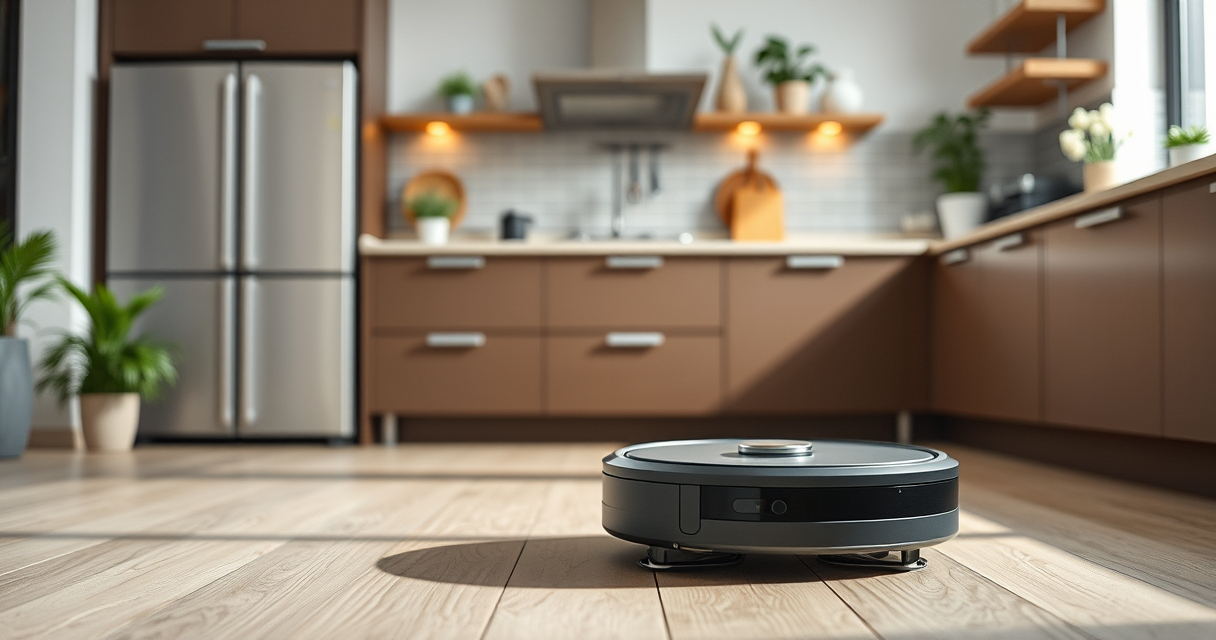
For most buyers, the Roborock Qrevo Edge 3 Pro is my best overall pick, with a high-suction version also listed for shoppers who want extra cleaning power. The Qrevo 2 Pro is a strong alternative for buyers focused on its stated 20,000 Pa suction, while the Q7 M5+ models pair vacuum-and-mop cleaning with a self-emptying dock. The main tradeoffs across this Roborock lineup are dock automation, suction claims, and how much you want to spend on premium features rather than basic upkeep. Similar model names also make it worth checking the exact version and included dock before choosing. Read on for the full comparison and help matching a Roborock to your home.

Get home appliances delivered free with Prime
- Fast, free delivery on millions of items
- Prime Video, Amazon Music and more included
- Member-only deals all year
Complete the kit


Key Takeaways
- The Qrevo Edge 3 Pro leads the premium conversation: it appears twice, including a version advertised with 36,000 Pa suction, so buyers should verify which listing and specifications they are comparing.
- The Qrevo 2 Pro has the largest stated suction figure outside the high-suction Edge listing: its 20,000 Pa claim makes it a candidate for buyers prioritizing suction on paper, though suction alone does not settle overall cleaning performance.
- The Q7 models emphasize a different kind of value: the Q7 L5 offers an 8,000 Pa combo, while the Q7 M5+ listings add self-emptying and cite up to 7–9 weeks between emptying.
- Dock details are a key dividing line: several options explicitly include self-emptying docks, while product names alone do not establish that every model has the same level of hands-off maintenance.
- Duplicate and near-duplicate listings call for careful comparison: the two Qrevo S Pro entries and two Q7 M5+ entries have overlapping names, so buyers should confirm color, dock, and exact model configuration rather than assume they are different generations.
| Roborock Robot Vacuum and Mop with LiDAR Navigation and Self-Empty Dock |  | Best for Straightforward Self-Emptying | Suction power: 10,000 Pa | Navigation: PreciSense LiDAR | Dust bag capacity: 2.7 L | VIEW ON AMAZON | See Our Full Breakdown |
| roborock 2026 New Qrevo S Pro Robot Vacuum and Mop, 18,500Pa Suction |  | Best for Hands-Off Pet Homes | Suction power: 18,500 Pa | Battery life: 180 minutes | Dust bag capacity: 2.7 L | VIEW ON AMAZON | See Our Full Breakdown |
| Roborock Qrevo Edge 3 Pro Robot Vacuum and Mop |  | Best for Maximum Suction and Dock Automation | Suction power: 36,000 Pa | Battery life: 180 minutes | Threshold crossing: Up to 1.77 in single-layer; 3.46 in double-layer | VIEW ON AMAZON | See Our Full Breakdown |
| Roborock Qrevo 2 Pro Robot Vacuum and Mop with 20,000 Pa Suction |  | Best for Long Cleaning Runs | Suction: 20,000 Pa | Battery life: 253 minutes | Noise level: 54 dB | VIEW ON AMAZON | See Our Full Breakdown |
| Roborock Qrevo S Pro Robot Vacuum and Mop, 18,500 Pa, White |  | Best White-Finish All-in-One Pick | Suction: 18,500 Pa | Dust bag capacity: 2.7 L | Battery life: 180 minutes | VIEW ON AMAZON | See Our Full Breakdown |
| roborock Q7 L5 Robot Vacuum and Mop Combo, 8,000Pa Suction |  | Best Entry-Level Mapping Pick | Suction: 8,000 Pa | Navigation: 360° LiDAR mapping | Water tank: 270 ml | VIEW ON AMAZON | See Our Full Breakdown |
| Roborock Saros 20 Flow Robot Vacuum and Mop |  | Best for Advanced Mopping | Suction: 36,000 Pa | Threshold clearance: Up to 3.46 inches | Obstacle recognition: More than 300 object types | VIEW ON AMAZON | See Our Full Breakdown |
| Roborock Qrevo Edge 3 Pro Robot Vacuum and Mop, 36,000 Pa Suction |  | Best All-in-One Dock | Suction: 36,000 Pa | Mop system: Dual spinning mops | Mop speed: 200 RPM | VIEW ON AMAZON | See Our Full Breakdown |
| roborock Q7 M5+ Robot Vacuum and Mop, Up to 7-9 Weeks Self-Empty, 10000Pa |  | Best for Pet-Hair Homes | Suction: 10,000 Pa | Dust bag capacity: 2.7 L | Stated hands-free collection: Up to 7–9 weeks | VIEW ON AMAZON | See Our Full Breakdown |
| Roborock Q7 M5+ Robot Vacuum and Mop with Self-Emptying Dock |  | Best for Carpet-Focused Homes | Suction: 10,000 Pa | Dust bag capacity: 2.7 L | Stated hands-free collection: Up to 7 weeks | VIEW ON AMAZON | See Our Full Breakdown |
| Roborock | Battery life | Suction | Navigation | Noise level |
|---|---|---|---|---|
| Roborock Robot Vacuum and Mop | 150 minutes | — | PreciSense LiDAR | 65 dB |
| roborock 2026 New Qrevo S Pro | 180 minutes | — | — | 60 dB in product information; 55 dB in description |
| Roborock Qrevo Edge 3 Pro Robo | 180 minutes | — | — | — |
| Roborock Qrevo 2 Pro Robot Vac | 253 minutes | 20,000 Pa | LiDAR | 54 dB |
| Roborock Qrevo S Pro Robot Vac | 180 minutes | 18,500 Pa | LiDAR | — |
| roborock Q7 L5 Robot Vacuum an | 150 minutes | 8,000 Pa | 360° LiDAR mapping | — |
| Roborock Saros 20 Flow Robot V | 301 minutes | 36,000 Pa | — | 66.6 dB |
| Roborock Qrevo Edge 3 Pro Robo | 256 minutes | 36,000 Pa | — | — |
| roborock Q7 M5+ Robot Vacuum a | 150 minutes | 10,000 Pa | PreciSense LiDAR | 65 dB |
| Roborock Q7 M5+ Robot Vacuum a | 150 minutes | 10,000 Pa | PreciSense LiDAR | 65 dB |
More Details on Our Top Picks
Roborock Robot Vacuum and Mop with LiDAR Navigation and Self-Empty Dock
I’d choose this Roborock for buyers who want scheduled vacuuming and basic mopping without managing a dustbin after every run. PreciSense LiDAR maps rooms for organized coverage, and the 2.7 L sealed dust bag cuts down on routine emptying. Its 10,000 Pa suction is below the Qrevo S Pro’s 18,500 Pa and the Qrevo 2 Pro’s 20,000 Pa, so those models make more sense for homes prioritizing stronger pickup and automated mop care. Here, the appeal is a simpler dock paired with three water-flow settings and dual anti-tangle brushes. The tradeoff is that the dock does not wash or dry the mop, and the product details omit water-tank capacity. It also connects only to 2.4 GHz Wi-Fi.
Pros:- LiDAR mapping supports planned room coverage and app scheduling.
- Sealed 2.7 L dust bag reduces how often dust needs to be handled.
- Three water-flow settings let users adjust mopping for different floor types.
- Dual anti-tangle brushes are designed to reduce hair buildup.
Cons:- The dock self-empties but does not automatically wash or dry the mop.
- Suction is lower than the Qrevo S Pro and Qrevo 2 Pro models in this lineup.
- Only 2.4 GHz Wi-Fi is supported, and water-tank capacity is not specified.
Best for: Households that want LiDAR-guided vacuuming, adjustable light mopping, and less frequent dustbin emptying without a mop-washing dock.
Not ideal for: Pet-heavy homes seeking stronger listed suction and automatic mop washing, or buyers whose home network uses only 5 GHz Wi-Fi.
- Suction power:10,000 Pa
- Navigation:PreciSense LiDAR
- Dust bag capacity:2.7 L
- Battery life:150 minutes
- Cleaning path width:12.8 inches
- Mop settings:Three adjustable water-flow settings
- Connectivity:2.4 GHz Wi-Fi
- Noise level:65 dB
Our verdict“Choose this model for mapped cleaning and self-emptying in a simpler package, but pick a Qrevo if you want more automated mop maintenance.”
roborock 2026 New Qrevo S Pro Robot Vacuum and Mop, 18,500Pa Suction
The black Qrevo S Pro is the strongest fit here for pet owners who want the dock to handle more than dust. Its 18,500 Pa suction, rubber main brush, and zero-tangle side brush target hair and everyday debris, while the dock empties dust, washes the mops at 167°F, and dries them with warm air. That makes it a more self-sufficient choice than the simpler Roborock model with a self-empty dock alone. The 10 mm mop lift and carpet-aware settings help it move between hard floors and rugs, and obstacle detection can steer around common household items. The Qrevo 2 Pro offers stronger listed suction and a longer stated battery life, though this S Pro combines mop upkeep and a 3.8-inch profile. It still needs 2.4 GHz Wi-Fi, and its 2.7 L dust bag eventually needs replacement.
Pros:- Dock empties dust, washes mops at 167°F, and dries them with 113°F warm air.
- 18,500 Pa suction and carpet-aware cleaning suit mixed-floor homes.
- Rubber main brush and zero-tangle side brush are designed to reduce hair wrap.
- Low 3.8-inch profile and obstacle detection help with under-furniture and around-object cleaning.
Cons:- Supports 2.4 GHz Wi-Fi only.
- The 10 mm mop lift is less than the Qrevo 2 Pro’s listed 15 mm lift.
- The 2.7 L dock bag must be replaced when full.
Best for: Pet-owning households with mixed flooring that want automated dust emptying, mop washing, and hair-resistant brush design.
Not ideal for: Buyers who need 5 GHz-only Wi-Fi, or those who prefer to avoid a dock with dust bags and ongoing mop-system upkeep.
- Suction power:18,500 Pa
- Battery life:180 minutes
- Dust bag capacity:2.7 L
- Mop washing temperature:167°F
- Mop drying:113°F warm air
- Mop lift:10 mm
- Noise level:60 dB in product information; 55 dB in description
- Connectivity:2.4 GHz Wi-Fi
Our verdict“Pick the Qrevo S Pro if pet hair and automated mop care matter more than having the highest suction or longest stated runtime.”
Roborock Qrevo Edge 3 Pro Robot Vacuum and Mop
The Qrevo Edge 3 Pro stands apart from the other Roborock options here with 36,000 Pa suction and a dock that handles dust, water refilling, detergent dispensing, and mop washing and drying. That combination suits homes where both floor pickup and reduced routine maintenance matter. Compared with the Qrevo S Pro, it has much higher stated suction and hotter mop washing; the Qrevo 2 Pro, however, lists a longer 253-minute battery life, while the Edge 3 Pro specifies 180 minutes. Its threshold crossing capacity may help it move between some uneven floor sections, and automatic mop detachment is described for carpet transitions. There are practical limits: 2.4 GHz is the only listed Wi-Fi band, and its 3.13-inch clearance means it may miss dust under lower furniture. Buyers should also check clearances rather than assume every threshold is passable.
Pros:- 36,000 Pa suction is the highest listed among these five products.
- Multifunction dock washes and dries mops, refills water, dispenses detergent, and empties dust.
- Listed threshold capacity supports movement over some single- and double-layer transitions.
- Obstacle recognition and room mapping support more directed cleaning.
Cons:- The stated 3.13-inch access height may prevent cleaning beneath low furniture.
- Connectivity is limited to 2.4 GHz Wi-Fi.
- Its 180-minute stated battery life is shorter than the Qrevo 2 Pro’s 253 minutes.
Best for: Owners of larger mixed-floor homes who want very high listed suction and a dock that automates dust, water, detergent, and mop care.
Not ideal for: Homes with low-clearance furniture below 3.13 inches, or networks that require 5 GHz Wi-Fi.
- Suction power:36,000 Pa
- Battery life:180 minutes
- Threshold crossing:Up to 1.77 in single-layer; 3.46 in double-layer
- Low-clearance access:3.13 inches
- Mop washing temperature:212°F
- Mop drying temperature:131°F
- Dust emptying:Up to 65 days
- Connectivity:2.4 GHz Wi-Fi
Our verdict“Choose the Edge 3 Pro for the strongest listed suction and broadest dock automation, provided its height and connectivity suit your home.”
Roborock Qrevo 2 Pro Robot Vacuum and Mop with 20,000 Pa Suction
The Qrevo 2 Pro is the lineup’s practical pick for buyers who want a long stated runtime alongside a full-service dock. Its 253-minute battery life exceeds the 180 minutes listed for both Qrevo S Pro versions and the Qrevo Edge 3 Pro, which may suit larger homes or longer scheduled runs. At 20,000 Pa, its listed suction is also above the S Pro’s 18,500 Pa, though well below the Edge 3 Pro’s 36,000 Pa. The dock empties dust, refills water, and washes and dries the mops; a zero-tangle brush system and extending mop and side brush are aimed at hair and edge cleanup. The 15 mm mop lift is higher than the S Pro’s 10 mm, but still a limitation for taller rugs. Its 54 dB listing is relatively quiet on paper, and Wi-Fi remains 2.4 GHz only.
Pros:- 253-minute stated battery life is the longest among these five products.
- Dock empties dust, refills water, and washes and dries mops.
- 20,000 Pa suction and automatic carpet detection support mixed-floor cleaning.
- Extending mop and reversible side brush target edge and corner coverage.
Cons:- 15 mm mop lift may not provide enough clearance for taller rugs.
- Supports only 2.4 GHz Wi-Fi.
- Its suction rating is lower than the Qrevo Edge 3 Pro’s 36,000 Pa.
Best for: Owners of larger homes who value longer listed runtime, automated dock care, and cleaning along edges and corners.
Not ideal for: Buyers who need a mop lift above 15 mm for taller rugs, or who require 5 GHz Wi-Fi.
- Suction:20,000 Pa
- Battery life:253 minutes
- Noise level:54 dB
- Mop lift:Up to 15 mm
- Mop washing temperature:149°F
- Mop drying temperature:113°F
- Navigation:LiDAR
- Connectivity:2.4 GHz Wi-Fi
Our verdict“Pick the Qrevo 2 Pro for longer cleaning runs and broad dock automation, not for the highest suction or extra-tall rug clearance.”
Roborock Qrevo S Pro Robot Vacuum and Mop, 18,500 Pa, White
This white Qrevo S Pro brings the same core cleaning proposition as the black Qrevo S Pro: 18,500 Pa suction, dual liftable spinning mops, anti-tangle brushes, and a dock that empties dust, washes and dries mops, and refills the robot. I’d choose between the two by finish and the details provided, not by assuming a performance difference. Against the Roborock model with a self-empty dock but no listed mop-washing station, this is the more hands-off option for regular mopping. Its 10 mm mop lift and carpet-aware settings help manage floor changes, though the Qrevo 2 Pro lists a higher 15 mm lift and a longer 253-minute runtime. The noise information conflicts, giving both 55 dB and 60 dB, so I wouldn’t use that figure to choose. It also relies on 2.4 GHz Wi-Fi and a replaceable dust bag.
Pros:- Dock handles dust emptying, mop washing and drying, and water refilling.
- 18,500 Pa suction and carpet-aware settings suit mixed hard-floor and rug homes.
- Anti-tangle brush design is intended to reduce hair wrap.
- Obstacle avoidance and a listed 3.8-inch profile support object-aware cleaning and access under some furniture.
Cons:- Noise is listed as both 55 dB and 60 dB, leaving the operating level unclear.
- The 10 mm mop lift is lower than the Qrevo 2 Pro’s listed 15 mm.
- The dock’s dust bag requires eventual replacement, and Wi-Fi is 2.4 GHz only.
Best for: Buyers who prefer a white Roborock and want an all-in-one dock for routine vacuuming and mop maintenance across hard floors and rugs.
Not ideal for: Those who need a confirmed noise specification, more than 10 mm of mop lift, or 5 GHz-only Wi-Fi support.
- Suction:18,500 Pa
- Dust bag capacity:2.7 L
- Battery life:180 minutes
- Mop washing temperature:167°F
- Mop drying:113°F warm air
- Mop lift:10 mm
- Navigation:LiDAR
- Color:White
Our verdict“Choose the white Qrevo S Pro if its finish and automated mop care suit your home, but favor the Qrevo 2 Pro for longer stated runtime or higher mop lift.”
roborock Q7 L5 Robot Vacuum and Mop Combo, 8,000Pa Suction
I’d choose the Q7 L5 for mapped cleaning and strong everyday pickup without stepping up to a self-emptying or mop-washing dock. Its 8,000 Pa suction, carpet boost, and anti-tangle brushes suit homes dealing with pet hair, while LiDAR mapping supports room-by-room schedules and no-go zones. Unlike the Q7 M5+, it has no self-emptying dock, so you’ll need to empty its bin yourself; its advantage is a simpler setup with fewer dock functions to maintain. The 270 ml tank handles light maintenance mopping, but this is a basic damp-pad approach, not the pressurized roller system on the Saros 20 Flow. I’d skip it if hands-off debris disposal or heavier-duty floor washing matters more than mapped vacuuming.
Pros:- 8,000 Pa suction and carpet boost target embedded dust and debris.
- Dual anti-tangle brushes help limit hair wrap and brush maintenance.
- LiDAR mapping supports multiple floor maps, room scheduling, and no-go zones.
- Vacuuming and light mopping can run together.
Cons:- No self-emptying dock, unlike the Q7 M5+.
- The 270 ml water tank and removable mop pad are better suited to upkeep than intensive scrubbing.
- Wi-Fi connectivity requires a 2.4 GHz network.
Best for: People moving up from a basic robot vacuum who want LiDAR mapping, pet-hair features, and occasional mopping without a self-emptying dock.
Not ideal for: Busy pet households seeking weeks between bin emptying, or buyers who expect a robot mop to scrub stubborn, dried-on messes.
- Suction:8,000 Pa
- Navigation:360° LiDAR mapping
- Water tank:270 ml
- Battery life:150 minutes
- Brush design:Dual anti-tangle main and side brushes
- Mapping:Multi-floor maps
- Controls:App, buttons, and voice
- Wi-Fi:2.4 GHz only
Our verdict“Choose the Q7 L5 if mapped vacuuming and light mopping matter more to you than automatic bin emptying or advanced mop care.”
Roborock Saros 20 Flow Robot Vacuum and Mop
The Saros 20 Flow is the lineup’s strongest fit for buyers who want mop care and floor adaptation handled automatically. Its pressurized self-cleaning roller is washed with 212°F water and dried with 145°F air at the dock, a more involved mopping setup than the pad on the Q7 L5. AI floor recognition adjusts water flow, and the mop lifts up to 15 mm for carpet transitions. The high stated suction and recognition of more than 300 obstacle types also give it a broader cleaning brief than the Q7 M5+. Those capabilities come with a more complex dock and a 2.4 GHz-only Wi-Fi requirement. Threshold clearance is specified up to 3.46 inches, so homes with taller barriers should verify their measurements rather than assume it will cross them.
Pros:- 36,000 Pa stated suction pairs vacuuming with a pressurized roller mop.
- Dock washes the roller with hot water and dries it with warm air.
- AI floor recognition adjusts water flow, and the mop lifts for carpet transitions.
- Recognizes more than 300 obstacle types and is specified to cross double-layer thresholds up to 3.46 inches.
Cons:- The advanced roller-mop dock adds more functions and setup than the Q7 L5’s basic mop module.
- Wi-Fi support is limited to 2.4 GHz.
- The stated threshold clearance is finite, so taller transitions may remain impassable.
Best for: Households with a mix of hard flooring and carpet that want a self-cleaning roller mop, automatic water adjustment, and obstacle recognition.
Not ideal for: Buyers seeking a simple vacuum-and-pad-mop setup, or homes whose thresholds exceed the stated 3.46-inch clearance.
- Suction:36,000 Pa
- Threshold clearance:Up to 3.46 inches
- Obstacle recognition:More than 300 object types
- Mop lift:Up to 15 mm
- Mop washing:212°F water
- Mop drying:145°F warm air
- Battery life:301 minutes
- Noise level:66.6 dB
- Wi-Fi:2.4 GHz only
Our verdict“Pick the Saros 20 Flow if automated roller-mop washing and floor-aware cleaning are priorities, and its dock and network requirements suit your home.”
Roborock Qrevo Edge 3 Pro Robot Vacuum and Mop, 36,000 Pa Suction
I’d favor the Qrevo Edge 3 Pro when reducing routine dock chores is more important than keeping the system simple. Its multifunction dock handles dust emptying, mop washing and drying, water refilling, and detergent dispensing, while dual spinning mops apply up to 14 N of pressure at 200 RPM. That makes it a more automated alternative to the Q7 M5+, whose self-emptying dock is focused on debris collection rather than full mop care. The adjustable chassis is listed to cross thresholds up to 3.46 inches across double-layer transitions, and the robot can reach low spaces as short as 3.13 inches. That dock dependence is also the tradeoff: setup and upkeep involve more parts, and connectivity is limited to 2.4 GHz Wi-Fi.
Pros:- 36,000 Pa suction and dual spinning mops combine strong pickup with powered mopping.
- Dock automates dust emptying, mop washing and drying, water refilling, and detergent dispensing.
- Adjustable chassis is specified for raised thresholds and low-clearance access.
- Mop pressure and speed are specified at up to 14 N and 200 RPM.
Cons:- Several maintenance features depend on the multifunction dock, adding complexity compared with the Q7 M5+.
- Wi-Fi connectivity supports 2.4 GHz only.
- The stated 3.46-inch double-layer threshold limit may not cover every floor transition.
Best for: Owners of mixed-floor homes who want a dock to manage dust, mop washing, drying, refilling, and detergent with minimal routine intervention.
Not ideal for: Buyers who prefer a basic charging dock, want to avoid maintaining a multifunction station, or rely on 5 GHz-only Wi-Fi.
- Suction:36,000 Pa
- Mop system:Dual spinning mops
- Mop speed:200 RPM
- Mop pressure:Up to 14 N
- Threshold clearance:Up to 1.77 inches single-layer; 3.46 inches double-layer
- Low-clearance access:3.13 inches
- Battery life:256 minutes
- Dock functions:Hot-water mop washing, hot-air drying, self-cleaning, auto-refilling, detergent dispensing, and self-emptying
- Wi-Fi:2.4 GHz
Our verdict“Choose the Qrevo Edge 3 Pro if you want one dock to handle most vacuum and mop upkeep and are comfortable with a more involved system.”
roborock Q7 M5+ Robot Vacuum and Mop, Up to 7-9 Weeks Self-Empty, 10000Pa
The Q7 M5+ balances strong pickup with less frequent bin handling, making it a practical choice for homes where hair and debris build up between cleaning runs. Its 10,000 Pa suction and dual anti-tangle brushes are a step up from the Q7 L5’s stated suction, while the 2.7 L sealed bag lets the RockDock collect debris for up to seven to nine weeks under the stated conditions. LiDAR mapping and app controls add room scheduling and no-go zones, but mopping remains a basic system with three water-flow settings—not the automated roller care offered by the Saros 20 Flow. I’d pick this over the Q7 L5 for reduced bin maintenance, but skip it if floor scrubbing and dock-managed mop washing are central to your routine.
Pros:- 10,000 Pa suction is higher than the Q7 L5’s stated 8,000 Pa.
- The 2.7 L sealed dust bag is specified for up to seven to nine weeks of hands-free debris collection.
- Dual anti-tangle brush design is intended to reduce hair wrap.
- LiDAR mapping supports scheduled, room-specific cleaning and no-go zones.
Cons:- Mopping uses a basic pad and adjustable water flow rather than the Saros 20 Flow’s self-cleaning roller.
- The dock handles dust emptying but does not offer the Qrevo Edge 3 Pro’s full mop-care functions.
- App connectivity requires 2.4 GHz Wi-Fi.
Best for: Pet owners who want mapped cleaning, hair-resistant brushes, and fewer manual bin-emptying sessions.
Not ideal for: Buyers who need active, dock-cleaned mopping or want to avoid a 2.4 GHz Wi-Fi requirement.
- Suction:10,000 Pa
- Dust bag capacity:2.7 L
- Stated hands-free collection:Up to 7–9 weeks
- Navigation:PreciSense LiDAR
- Water-flow settings:3
- Battery life:150 minutes
- Cleaning path width:12.8 inches
- Noise level:65 dB
- Wi-Fi:2.4 GHz only
Our verdict“Choose the Q7 M5+ if pet hair and longer stretches between bin emptying matter more than advanced mop automation.”
Roborock Q7 M5+ Robot Vacuum and Mop with Self-Emptying Dock
This Q7 M5+ configuration makes sense for buyers who want the core appeal of a self-emptying Roborock without putting mop automation at the center of the decision. It combines 10,000 Pa suction, PreciSense LiDAR, anti-tangle brushes, and a 2.7 L bag specified to hold debris for up to seven weeks. That gives it a more hands-off vacuuming routine than the Q7 L5, which has no self-emptying dock, but its listed surface recommendation is carpet and its mop function offers only three water-flow settings. Compared with the Qrevo Edge 3 Pro, it lacks automated mop washing, drying, and water refilling. The 2.4 GHz-only connection is another limit for households without a compatible network.
Pros:- 10,000 Pa suction and dual anti-tangle brushes target debris and pet hair.
- A 2.7 L sealed bag is specified for up to seven weeks of debris collection.
- PreciSense LiDAR supports mapped cleaning paths and app scheduling.
- Three water-flow settings allow some adjustment for light mopping.
Cons:- Mop care is limited compared with the Qrevo Edge 3 Pro’s washing, drying, and refilling dock.
- The listed surface recommendation is carpet, offering less guidance for buyers seeking a hard-floor-focused model.
- App connectivity requires 2.4 GHz Wi-Fi.
Best for: Carpet-focused households that want LiDAR scheduling, anti-tangle brushes, and a self-emptying dust bag without prioritizing advanced mopping.
Not ideal for: Buyers whose main need is hard-floor scrubbing, a dock that cleans mop pads, or compatibility with 5 GHz-only Wi-Fi.
- Suction:10,000 Pa
- Dust bag capacity:2.7 L
- Stated hands-free collection:Up to 7 weeks
- Navigation:PreciSense LiDAR
- Water-flow settings:3
- Battery life:150 minutes
- Surface recommendation:Carpet
- Noise level:65 dB
- Wi-Fi:2.4 GHz
Our verdict“Pick this Q7 M5+ if your priority is scheduled carpet vacuuming with less frequent bin emptying, not hands-off mop maintenance.”

How We Picked
I ranked these Roborock models by how clearly their listed features address common household needs: routine vacuuming, mopping, less frequent bin emptying, and higher stated suction. I treated dock configuration and the clarity of the product listing as practical factors, since a robot’s maintenance burden can matter as much as its headline suction figure. I also separated basic combo models from Qrevo and Saros options that appear positioned for buyers seeking a more feature-rich setup.
The order favors versatile choices first, then models with a more specific advantage or a narrower fit. Suction figures are considered as stated claims, not a complete measure of real-world cleaning; brush design, floor type, navigation, and upkeep also affect results. Similar or repeated listings are not treated as proof of meaningful performance differences, so I call attention to the need to verify exact configuration before purchase.
Factors to Consider When Choosing Roborock
Choosing a Roborock is less about picking the largest number in a listing and more about matching automation and maintenance to your home. I would start with your floors, how often you want to handle the dustbin and mop, and whether the listing clearly names the dock included. These checks can prevent paying for features you will not use—or choosing a basic configuration that adds chores back to your routine.
Match Suction Claims to Your Floors
High stated suction can be appealing, especially in homes with carpet, but it is only one part of cleaning performance. Consider whether your space is mostly hard flooring, low-pile rugs, or thicker carpet, and check the product details for brush and carpet-handling features. A larger Pa figure does not tell you how well a robot handles edges, hair tangles, or transitions between surfaces. Avoid paying a premium based on suction alone if your main need is daily pickup on hard floors. For mixed flooring, prioritize a balanced set of cleaning and navigation features over a single headline specification.
Read the Dock Configuration Before Comparing Models
A self-emptying dock reduces how often you handle collected dust, but it does not automatically mean the whole cleaning routine is hands-off. Listings may differ in whether the dock handles only dust or also supports more extensive mop maintenance, so check the included functions rather than relying on a family name. A dock can also take up substantial floor space, which matters in apartments or narrow utility areas. Compare what maintenance remains, such as washing or replacing mop components and emptying or cleaning dock parts. The right setup is the one that removes the chores you dislike without adding a bulky station you cannot accommodate.
Choose Automation Around Your Cleaning Habits
Think about how often you run the robot and whether you want to start a routine manually or rely on scheduled cleaning. A household with pets, frequent cooking, or daily foot traffic may benefit more from regular automated runs than from occasional high-powered sessions. If you prefer to tidy rooms first and supervise each run, a simpler setup may meet your needs without extra dock features. Check the app and mapping details for the exact model if room-by-room control or scheduling is central to your routine. Do not assume every Roborock with a similar name offers identical controls or automation.
Treat Similar Names as a Verification Task
This roundup includes repeated Qrevo S Pro and Q7 M5+ names, along with two Qrevo Edge 3 Pro entries carrying different suction claims. That makes exact model identification more important than usual. Compare the full model name, color, dock description, and stated specifications on the seller page before ordering. A suffix or bundle difference can change what arrives, even when the headline name looks nearly identical. If two listings appear to describe the same robot, do not assume one is a newer or better version without confirming the distinctions.
Budget for Ongoing Care, Not Just the Robot
Robot vacuums still need routine attention: brushes collect hair, sensors need cleaning, and mop components require care. A self-emptying dock can reduce one recurring task but may add its own parts to maintain. Before choosing a more automated model, check the availability and replacement cycle of consumables for the specific configuration. Homes with long-haired pets should place extra weight on brush access and how easily tangles can be removed. A model that is simpler to maintain may suit you better than one with more features you rarely use.
Frequently Asked Questions
Should I choose the Qrevo Edge 3 Pro listed at 36,000 Pa over the Qrevo 2 Pro at 20,000 Pa?
Not on suction claims alone. The Edge listing gives a higher stated figure, while the Qrevo 2 Pro is also presented as a high-suction option; neither number by itself settles how either robot will perform in your rooms. Compare the complete model configuration, dock functions, brush details, and the kind of flooring you have. The Edge entry may suit buyers seeking a premium feature set, while the Qrevo 2 Pro is a clear alternative for those focused on its specified suction. Verify the exact listing before choosing because this roundup includes two Edge 3 Pro entries with different suction claims.
Is a self-emptying Roborock worth choosing if I already run a robot vacuum regularly?
It can be worthwhile if frequent bin emptying is the chore that interrupts your routine, especially in a busy or pet-owning home. A self-emptying dock does not remove all upkeep, so check whether you are comfortable maintaining the dock and the robot’s brushes and mop parts. If you run short cleaning sessions and do not mind emptying the bin, a simpler model may be a better fit. The Q7 M5+ listings specifically mention self-emptying, while the Q7 L5 listing does not name that feature. Confirm the dock included with the exact model rather than relying on the Q7 family name.
Which Roborock makes more sense for a home with mostly hard floors and a few rugs?
For that layout, I would compare the cleaning and mopping setup first, then check how the robot handles your rugs. A high suction claim may be less valuable than reliable room navigation and a mop routine that suits your hard floors. The Qrevo models are the more feature-focused options in this lineup, while the Q7 L5 and Q7 M5+ offer simpler combo choices. Check whether the exact model can handle the rug transitions and whether its mop setup fits your flooring. If rugs are delicate or thick, verify the model’s carpet behavior before scheduling mop runs.
How do I tell whether the two Qrevo S Pro or Q7 M5+ listings are actually different?
Compare the full listing details, not just the headline. Look for differences in included dock, color, stated suction, accessory bundle, and exact model identifier. The Qrevo S Pro entries here share the same core name, with one explicitly listing a white finish; that alone does not establish a performance difference. The Q7 M5+ entries likewise have overlapping names, and one specifies up to 7–9 weeks of self-emptying. If the seller page does not make the configuration clear, confirm it before purchase rather than inferring a generation change.
When should I pay more for a premium Roborock instead of choosing a Q7 model?
Paying more for a premium option makes the most sense when its added automation or cleaning features solve a recurring problem in your home. If you mainly need routine vacuuming and mopping, the Q7 L5 or Q7 M5+ may cover the basics without requiring a more feature-rich setup. A premium Qrevo or Saros model is easier to justify when you want a more advanced overall system and will use its added capabilities. Compare the dock and maintenance functions closely, since those can shape day-to-day convenience more than suction figures. If you cannot identify a specific feature you will use, the simpler model may be the wiser choice.
Conclusion
For a balanced starting point, I recommend the Qrevo Edge 3 Pro as best overall, while checking the exact version because this roundup includes different stated suction claims. The Q7 M5+ is my best value direction for buyers who want a combo robot with self-emptying, and the Qrevo 2 Pro is the best premium alternative for suction-focused shoppers who want its stated 20,000 Pa specification. For beginners, I would start with the Q7 L5 if a simpler vacuum-and-mop setup is the priority; confirm dock details before buying. If you want a more specialized premium option, compare the Saros 20 Flow and Qrevo models by their exact listed features rather than assuming the most expensive-sounding name is the best fit. Match the robot to your floors and maintenance preferences, then verify the complete model configuration.