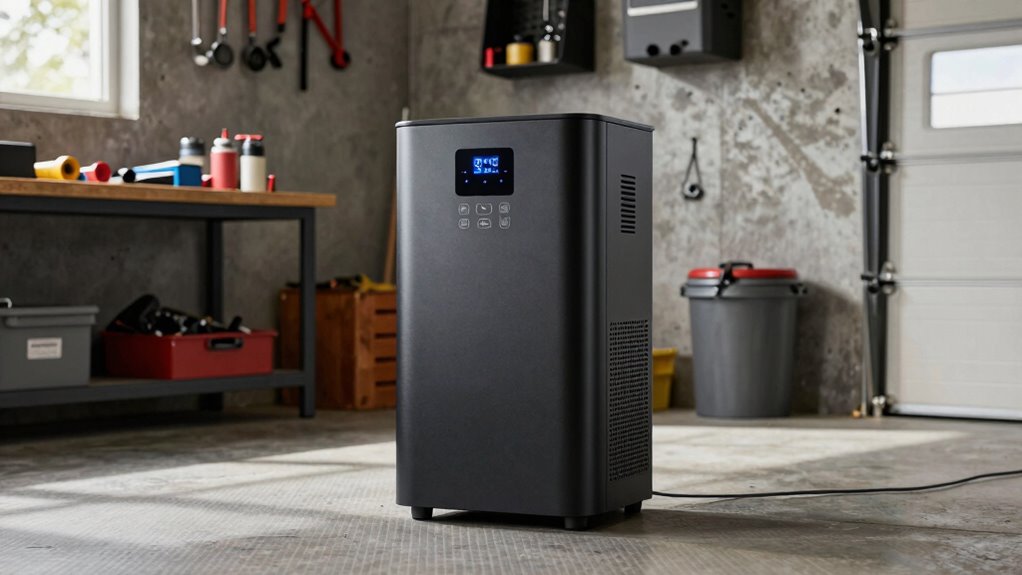

To size a garage dehumidifier correctly, measure the space’s square footage and ceiling height to determine volume. Use humidity sensors to monitor moisture levels over time and evaluate factors like insulation and ventilation. Choose a unit with the right pint capacity—around 30-50 pints for moderate humidity—and look for energy-efficient, quiet models with automatic shut-off. Proper sizing prevents mold and saves energy. Keep learning how to optimize your setup for lasting moisture control.
Key Takeaways
- Measure garage volume (square footage and ceiling height) to determine appropriate dehumidifier capacity.
- Use humidity sensors to assess moisture levels and identify damp or poorly ventilated areas.
- Match dehumidifier pint rating (30-50 pints) to the measured humidity and moisture sources.
- Consider insulation and ventilation quality when selecting a unit to ensure effective moisture control.
- Regularly monitor humidity and perform maintenance for optimal dehumidifier performance.
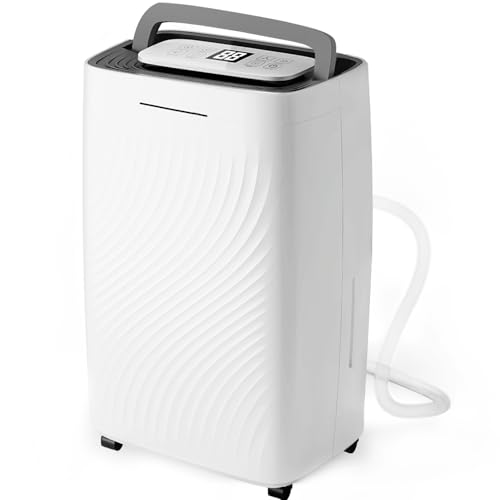
5500 Sq.Ft Dehumidifier for Basement with Drain Hose, Max 80 Pints/D (Standard 50Pint/D), Most Efficient Energy Saving 2026 Dehumidifier Features Air Purifier Combo, Ideal for Large Room, Home, Garage
The 2025 Manastin Compressor Dehumidifier efficiently handles large homes over 5,500 sq. ft. It removes 80 pints/day in…
As an affiliate, we earn on qualifying purchases.
As an affiliate, we earn on qualifying purchases.
Why Proper Garage Dehumidifier Sizing Prevents Mold and Saves Money
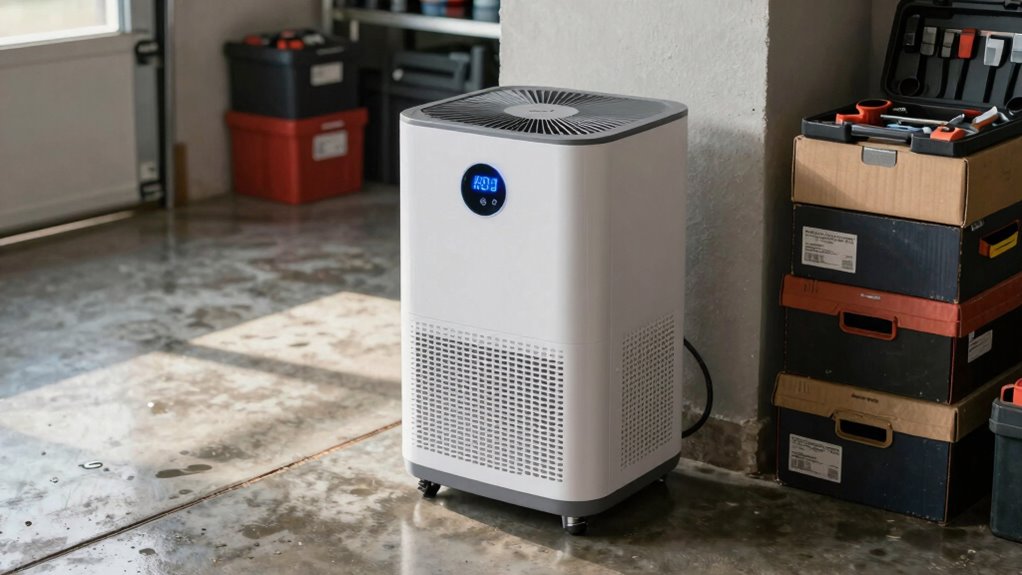
If your garage’s humidity levels are too high, mold can quickly become a problem, damaging your belongings and posing health risks. Proper dehumidifier sizing is essential to prevent this. When you choose the right size, it works efficiently, reducing moisture without overworking. Ventilation systems help circulate air, preventing damp spots, while good insulation techniques keep warm, dry air in and moisture out. These measures complement your dehumidifier, ensuring it doesn’t have to work harder than necessary. An appropriately sized dehumidifier saves you money by lowering energy costs and extending the unit’s lifespan. Selecting a dehumidifier with the right capacity also involves understanding your garage’s size and typical humidity levels, which can vary depending on your climate and moisture conditions. It’s also helpful to consider environmental factors that influence humidity, such as local weather patterns and the presence of water sources nearby. It also minimizes the risk of mold growth, protecting your health and your possessions. Proper sizing creates an adaptable, long-term moisture control system that keeps your garage safe and dry. Additionally, understanding garage humidity levels helps you make informed decisions about dehumidifier capacity and placement. Knowing the environmental conditions of your area can further optimize your dehumidification strategy.
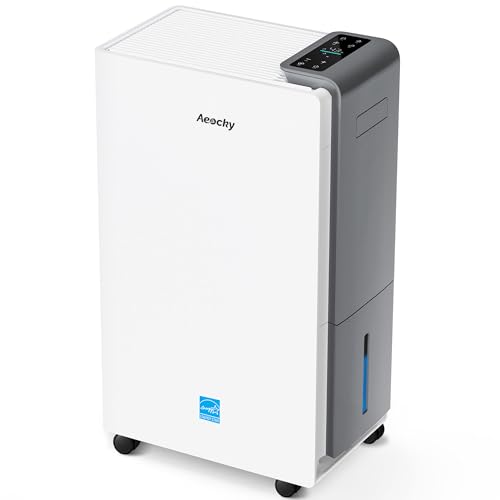
4500 Sq.Ft Energy Star Most Efficient 2025 Dehumidifier,AEOCKY Max 80 Pint/Day Smart Compressor Dehumidifier with Drain Hose, Intelligent Humidistat,for Basement,Bedroom,Home,Bathroom
【ENERGY STAR 25 ≠ ENERGY STAR Most Efficient 2025】Don't fall for competitors' word games. With only 2.6% of…
As an affiliate, we earn on qualifying purchases.
As an affiliate, we earn on qualifying purchases.
How to Measure Moisture Levels and Size Your Garage

Measuring moisture levels accurately is the first step in sizing your garage dehumidifier effectively. To do this, you should use humidity sensors placed in different areas of your garage to get a reliable reading. Also, consider ventilation techniques that influence moisture levels, such as regular airflow or exhaust fans. When measuring, look for consistent readings over several days to account for fluctuations. Keep in mind that high humidity often indicates the need for a larger dehumidifier. To refine your assessment, evaluate:
Accurate humidity measurement and ventilation assessment ensure proper garage dehumidifier sizing.
- The frequency of moisture buildup during different weather conditions
- Areas prone to dampness or poor airflow
- How ventilation techniques impact humidity levels
Using these insights, you’ll better understand your garage’s moisture profile and select the right-sized dehumidifier. Additionally, understanding the role of ventilation can help you optimize airflow and reduce moisture accumulation more effectively. Proper moisture measurement techniques are essential for making informed decisions about dehumidifier capacity. For a more accurate assessment, consider monitoring environmental factors that impact humidity levels over time. Incorporating comprehensive data collection can further enhance your understanding of moisture patterns in your garage. Monitoring indoor air quality can also provide additional context for moisture management strategies.

TempPro TP50 Digital Hygrometer Indoor Thermometer Room Thermometer and Humidity Gauge with Temperature Humidity Monitor(Previously ThermoPro)
Wellness Indicator: This humidity meter with humidity level icon indicates air conditions – DRY/COMFORT/WET, allowing this humidity sensor…
As an affiliate, we earn on qualifying purchases.
As an affiliate, we earn on qualifying purchases.
How to Calculate the Right Dehumidifier Capacity for Your Garage
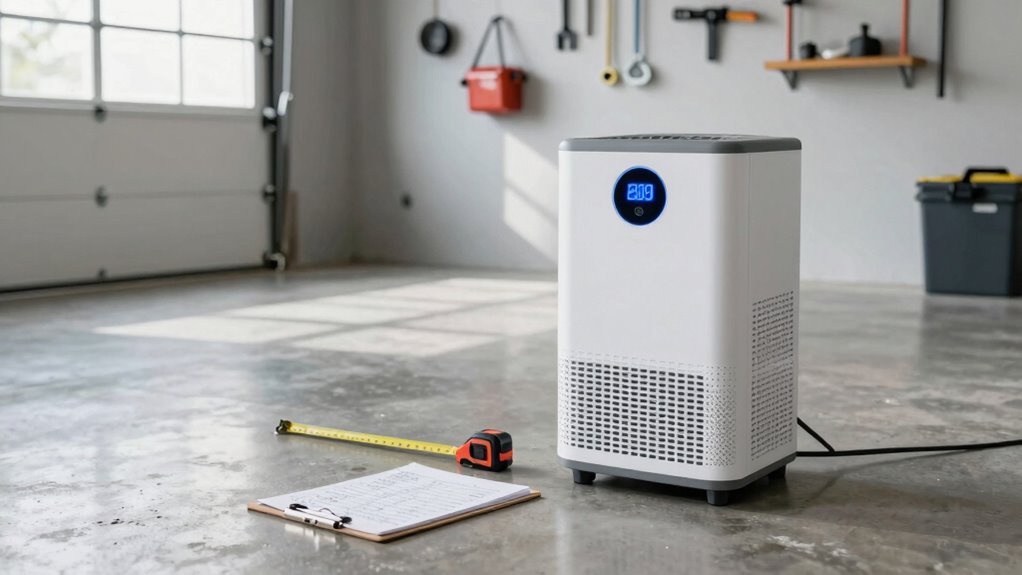
Wondering how to determine the right dehumidifier capacity for your garage? Start by evaluating the size of your space, including garage insulation and ventilation improvements. A well-insulated garage retains less moisture, so you might need a smaller unit. Conversely, poor ventilation can increase humidity, requiring a more powerful dehumidifier. To calculate capacity, determine your garage’s square footage and multiply it by the height to find volume. Then, consider the typical moisture levels in your area. For example, if your garage is 300 square feet with an 8-foot ceiling, that’s 2,400 cubic feet. For moderate humidity, a dehumidifier rated around 30-50 pints should suffice. Adjust this based on insulation quality and ventilation upgrades to guarantee ideal moisture control without over- or under-sizing. Additionally, eco-friendly disposal options can help you manage old or inefficient units responsibly when upgrading.

Dehumidifier, 106 OZ Water Tank Dehumidifiers for Home, 1000 sq.ft Quiet Dehumidifier for Basement Bathroom Bedroom RV with Auto Shut Off, Timer, Sleep Mode, 7 Color Light, Gray
[Dual-Core Highly Efficient Dehumidifier] This dehumidifier employs advanced dual semiconductor condensation technology for highly efficient dehumidification.In a sealed…
As an affiliate, we earn on qualifying purchases.
As an affiliate, we earn on qualifying purchases.
What Features to Look for in a Garage Dehumidifier
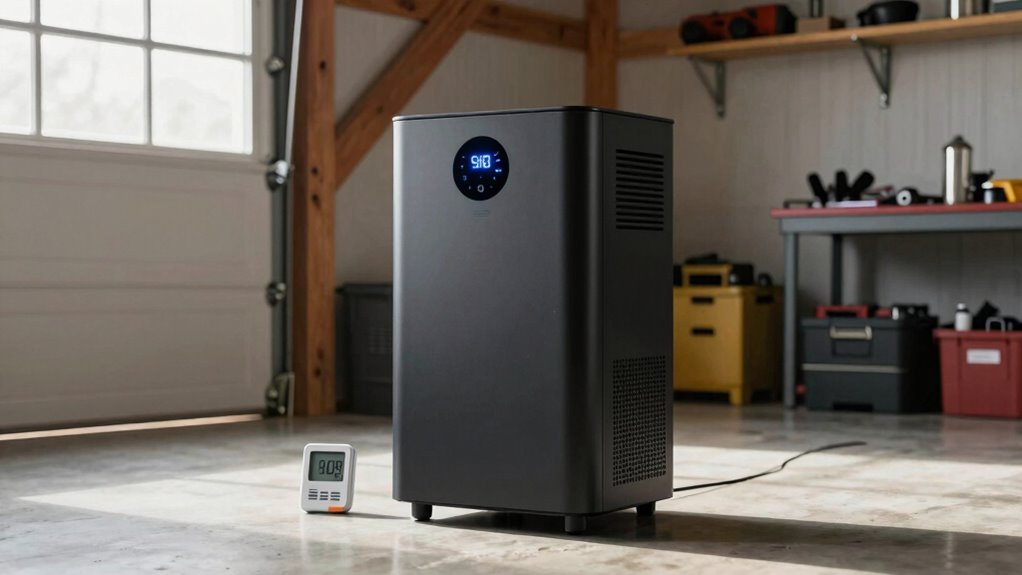
Choosing the right features in a garage dehumidifier can make a significant difference in how effectively it controls moisture and fits your needs. Look for models with high energy efficiency to save on electricity and reduce environmental impact. Noise levels are also important; quieter units prevent disruption during use. Consider these key features:
- Auto shut-off: Prevents over-dehumidifying and saves energy.
- Continuous drainage options: Eliminates the hassle of manual emptying.
- Electronic controls with humidity display: Allows precise regulation and monitoring.
Additionally, check for a durable design suitable for garage environments and easy maintenance. Incorporating vacuum filtration can improve air quality and ensure the unit captures dust and debris effectively. Being aware of noise levels helps in selecting a unit that won’t disturb your workspace or living area. Understanding the environmental impact of your choice encourages sustainable practices in your home. Selecting a model with energy-efficient technology can further reduce your carbon footprint. Considering feature customization options can help tailor the dehumidifier’s operation to your specific needs. Prioritizing these features ensures your dehumidifier operates efficiently, quietly, and reliably, creating a comfortable, moisture-free space.
Common Sizing Mistakes and Tips to Optimize Your Setup
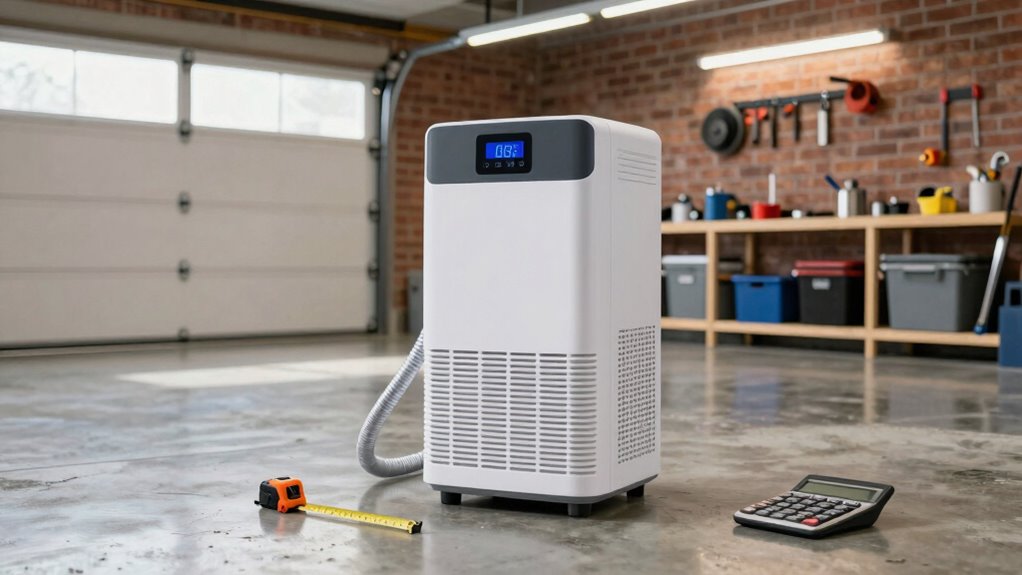
Selecting the right features for your garage dehumidifier is just the first step; guaranteeing it’s properly sized is equally important. One common mistake is overlooking garage insulation, which affects moisture levels and dehumidifier efficiency. Without adequate insulation, your unit may struggle to maintain ideal humidity. Another mistake is neglecting ventilation systems, which help circulate air and reduce humidity spikes. To maximize your setup, avoid choosing a dehumidifier that’s too small, as it won’t handle high moisture levels, or too large, which wastes energy. Measure your garage accurately and consider its insulation quality and ventilation. Proper sizing ensures your dehumidifier works effectively, saves energy, and prolongs its lifespan. Regular maintenance and monitoring humidity levels help you fine-tune your setup over time. Understanding the relationship between insulation and humidity can further improve your dehumidification strategy. Additionally, assessing your garage’s moisture sources can help you better control humidity levels and optimize your dehumidifier’s performance. Recognizing how air circulation impacts humidity levels can also contribute to more efficient dehumidification. Ensuring good airflow management within the garage can make a noticeable difference in humidity control.
Frequently Asked Questions
How Often Should I Run My Garage Dehumidifier?
You should run your garage dehumidifier daily, especially in humid months, to maintain ideal moisture levels. To guarantee energy efficiency, set it to a preferred humidity level and avoid overworking it. Regular maintenance tips include cleaning the filter and checking for clogs. This way, your dehumidifier runs efficiently, reduces energy use, and keeps your garage dry, preventing mold and damage effectively.
Can a Dehumidifier Be Used in a Detached Garage?
Think of your detached garage as a sponge waiting to soak up moisture; yes, you can definitely use a dehumidifier there. To make it effective, guarantee proper garage insulation and meet ventilation requirements, allowing the dry air to circulate. This prevents dampness and mold growth. Just like in a connected garage, a dehumidifier helps maintain a dry, comfortable environment in your detached space, protecting your belongings and the structure itself.
What Is the Ideal Humidity Level for a Garage?
The ideal humidity level for your garage is between 30-50%. Proper humidity control helps prevent moisture buildup, which can lead to mold, rust, and damage to tools or vehicles. Keeping it within this range guarantees moisture prevention while maintaining a comfortable environment. Use a hygrometer to monitor the humidity regularly, and adjust your dehumidifier accordingly to keep the garage dry and protected from excess moisture.
Do I Need a Dehumidifier With a Drain Hose?
Yes, you might need a dehumidifier with a drain hose for continuous operation. If your garage has high humidity or you’re planning long-term use, a drain hose allows the unit to drain excess water automatically, avoiding frequent emptying. This setup guarantees the dehumidifier runs continuously, maintaining ideal humidity levels without interruption. So, if convenience and consistent moisture control matter, opting for one with a drain hose is a smart choice.
How Noisy Are Garage Dehumidifiers During Operation?
Garage dehumidifiers generally produce moderate noise levels during operation, but it varies by model. Most have sound ratings between 50 to 70 decibels, which is comparable to a normal conversation or background noise. If you’re sensitive to noise, look for units specifically designed for quieter operation. Keep in mind, higher capacity models might be a bit louder, but many modern dehumidifiers include noise-reducing features to keep the sound manageable.
Conclusion
Choosing the right dehumidifier size for your garage is essential to prevent mold and save money. Did you know that garages with humidity levels above 60% are prone to mold growth? Proper sizing ensures effective moisture control and longevity of the unit. By measuring your garage’s moisture levels and understanding capacity needs, you’ll create a healthier, more comfortable space. Invest wisely—your garage’s air quality hinges on it!