To size your air compressor correctly, you need to assess your tools’ CFM and PSI requirements, considering their operation patterns and peak demands. Match the tank size to your application for stable air flow and minimal fluctuations. Think about motor size, noise levels, and whether you need portable or stationary units. Planning for future expansion and efficiency helps avoid costly mistakes. Keep in mind safety and maintenance to prolong your equipment’s lifespan—more tips are just ahead.
Key Takeaways
- Assess tool requirements by measuring CFM and PSI to ensure the compressor can meet peak and average demands.
- Match tank size to application needs to stabilize pressure, reduce moisture, and accommodate workload fluctuations.
- Consider workspace noise levels, portability, and environmental conditions to select suitable compressor models.
- Calculate motor size based on air demand, ensuring efficient operation without overworking or excessive energy use.
- Plan for future expansion and maintenance needs to ensure long-term performance and safety.

California Air Tools 20020AD 2.0 HP Ultra Quiet and Oil-Free Air Compressor with Wheels, 20 Gallon Tank Capacity, 70 dB Noise Level, Electric, Portable, with Automatic Drain Valve
ULTRA QUIET PERFORMANCE: The California Air Tools Ultra Quiet, Oil-Free 2.0 HP Air Compressor operates at only 70…
As an affiliate, we earn on qualifying purchases.
As an affiliate, we earn on qualifying purchases.
How to Assess Your Air Demand and Usage Patterns

Have you ever wondered how much air your tools actually need during a typical workday? To assess your air demand, observe how often and for how long each tool operates. Keep track of your usage patterns to determine average consumption. Consider the impact on air quality, as dust or moisture in compressed air can affect your work and equipment. Noise levels are also important—louder tools may require soundproofing or quieter alternatives to maintain a safe, comfortable workspace. By understanding these patterns, you can better estimate the total air demand, ensuring your compressor provides consistent performance without wasting energy. Accurate assessment helps you select the right size compressor, balancing capacity with efficiency while maintaining good air quality and manageable noise levels. Additionally, understanding the science behind sound vibrations and their effects can help you choose quieter, more effective equipment sound healing science.

Craftsman Air Compressors 6 Gallon Portable Pancake Air Compressor,Oil Free Max 150 Psi 1.0HP 2.6 CFM@90PSI Electric Air Compressor Shop Air Compressor, CMXECXA02106410
6 GALLON CRAFTSMAN AIR TOOL: 6 Gallon pancake style electric air compressor. 120V 1.0 HP, perfect for home,…
As an affiliate, we earn on qualifying purchases.
As an affiliate, we earn on qualifying purchases.
Calculating CFM and PSI Requirements for Your Tools
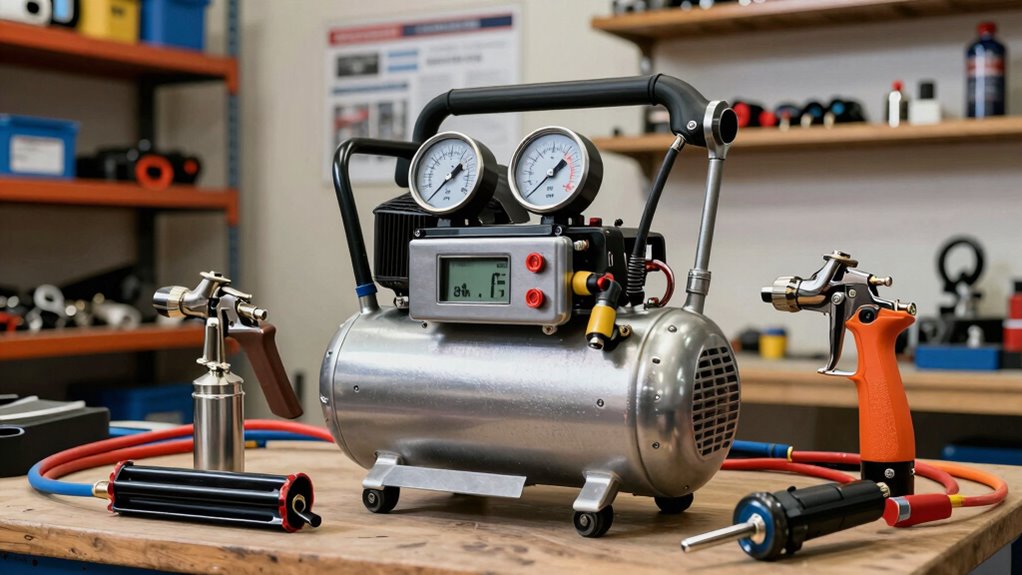
To guarantee your air compressor can meet your tools’ demands, you need to accurately calculate the required CFM (cubic feet per minute) and PSI (pounds per square inch). Start by checking each tool’s specifications for CFM and PSI ratings, ensuring your compressor can handle the highest demands. Keep in mind that consistent air quality is essential for ideal performance, so select a compressor that maintains clean, dry air. Noise levels matter too; quieter models are preferable if your workspace is shared or noise-sensitive. Combining these factors helps you choose a compressor that not only supplies sufficient airflow and pressure but also maintains good air quality and acceptable noise levels. Additionally, understanding compressor technology can help you make a more informed decision. Accurate calculations prevent underperformance and extend your compressor’s lifespan, especially when considering the long-term use of your equipment.

Portable Air Compressor with 3 Gallon Steel Tank, 1.15 HP 2.2 CFM @ 90 PSI, 116 Max PSI Oil-Free Air Compressor for Garage, Home Use, Tire Inflation, Nail Gun, DIY Projects,110V
3 GALLON AIR COMPRESSOR TANK: This 3 Gallon air compressor tank delivers 1.15 HP, 2.2 CFM at 116…
As an affiliate, we earn on qualifying purchases.
As an affiliate, we earn on qualifying purchases.
What Types of Air Compressors Are Best for Your Needs

Choosing the right air compressor depends on whether you need portability or a permanent setup. You’ll also want to contemplate if an oil-free model suits your environment better or if oil-lubricated units are more durable for your tasks. Understanding these options helps you select the best compressor for your specific needs. Additionally, considering features like outdoor transformation essentials can ensure your compressor performs well in backyard or poolside environments. For example, selecting a compressor with appropriate maintenance requirements can prolong its lifespan and keep it functioning smoothly in various settings. Exploring traditional folklore-inspired props can add a spooky touch to your Halloween decorations, especially if you’re aiming for an authentic Romanian Halloween atmosphere. Incorporating natural remedies and practices rooted in Indigenous knowledge can also enhance the longevity and reliability of your equipment by promoting sustainable usage and care. To further enhance your setup, investing in top car protection and accessories can help safeguard your equipment from environmental damage and ensure long-term efficiency.
Portable vs Stationary Models
Are you trying to decide between portable and stationary air compressors? Consider your needs carefully. Portable advantages include ease of transport, flexibility for different job sites, and simple setup. They’re ideal if you move around often or work in multiple locations. On the other hand, stationary models offer station benefits like higher capacity, greater durability, and consistent performance for long-term use.
Here are some points to help you decide:
- Portables are perfect for small jobs, DIY projects, or on-the-go tasks.
- Stationary models suit heavy-duty applications and continuous operation.
- Portables save space and are easier to store.
- Stationary models often require more initial investment but provide reliable, high-volume airflow.
- When choosing an air compressor, consider the air compressor sizing to ensure it meets your specific work demands.
- Proper sizing also helps prevent overloading the motor and ensures efficient operation during your tasks.
Choose based on your workload, mobility needs, and workspace constraints.
Oil-Free vs Oil-Lubricated
When selecting an air compressor, understanding the difference between oil-free and oil-lubricated models helps guarantee you get the right fit for your tasks. Oil-free technology ensures cleaner air and less maintenance, making it ideal for food, medical, or sensitive applications. These compressors operate without lubrication, reducing the need for lubrication maintenance and eliminating oil spills. On the other hand, oil-lubricated compressors typically last longer and can handle heavy-duty use, but they require regular lubrication maintenance to keep running smoothly. Consider your environment, air quality needs, and maintenance capacity when choosing. If you need a low-maintenance, clean air source, oil-free models are often best. For durability and heavy use, oil-lubricated compressors tend to be more reliable over time. Additionally, understanding affiliate disclosure can help you make more informed decisions about product recommendations and purchases. Recognizing the type of compressor suitable for your specific needs can significantly impact your overall experience and maintenance efforts. Being aware of air quality standards can also guide your choice toward the most appropriate model for your application. Consulting reputable sources, such as the Gold IRA Markets reviews, can provide valuable insights into the reliability and reputation of different compressor brands.

California Air Tools 8010A 1.0 HP Ultra Quiet and Oil-Free Air Compressor, 8 Gallon Aluminum Tank, Lightweight with Wheels, 60 dBA Noise Level
ULTRA QUIET PERFORMANCE: The California Air Tools Ultra Quiet & Oil-Free Air Compressor operates at only 60 decibels,…
As an affiliate, we earn on qualifying purchases.
As an affiliate, we earn on qualifying purchases.
How to Choose the Right Tank Size for Your Applications
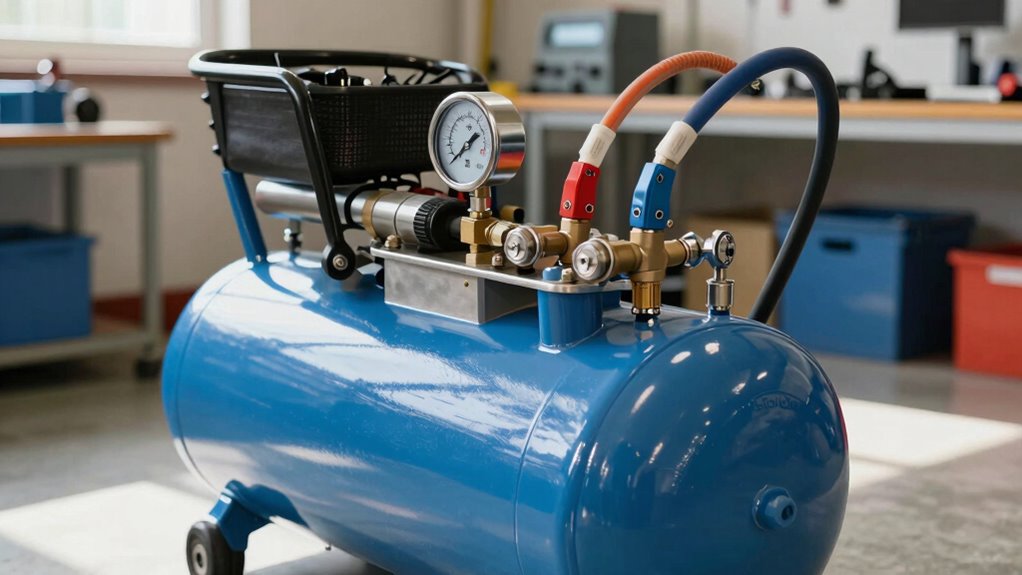
To select the right tank size, you need to ensure your application’s demand for compressed air and how much capacity it requires. Think about the space available and whether portability matters for your setup. Matching these factors ensures your compressor can handle your workload efficiently without unnecessary bulk. Considering sustainable operation can also help in choosing a size that promotes long-term efficiency and reduces energy consumption. Additionally, understanding data storage and backup solutions can influence decisions about equipment placement and energy use in your setup. Incorporating energy efficiency strategies into your selection process can further optimize overall performance and reduce operational costs. Moreover, evaluating air quality and filtration needs can ensure your system maintains optimal performance over time.
Application Demands and Capacity
Selecting the right tank size is essential for meeting your application’s demand without unnecessary downtime or excessive energy use. To determine the proper capacity, consider these factors:
- Air quality requirements: Larger tanks help stabilize pressure and reduce moisture, maintaining cleaner air. Proper tank sizing can also influence the overall air system efficiency by minimizing fluctuations and ensuring consistent output. Additionally, an appropriately sized tank can help reduce the accumulation of microplastics in dust, which can affect air quality. Implementing tank sizing strategies based on application needs can further optimize air quality and system performance. Furthermore, choosing the correct tank size can support air quality management by reducing the need for frequent system adjustments.
- Demand fluctuations: If your work varies, a bigger tank can handle peak demands without affecting operation.
- Noise levels: Smaller tanks often run more frequently, increasing noise; larger tanks can minimize this noise.
- Operational efficiency: Matching tank size to your airflow needs prevents compressor cycling, saving energy and prolonging equipment life.
- Application demand consistency: For applications with variable load demands, selecting an appropriate tank size ensures smooth operation and reduces wear on the compressor.
Space and Portability Needs
Choosing the right tank size also depends on the space you have available and how portable you need your compressor setup to be. If space is limited, a compact design with a smaller tank can easily fit into tight areas and be moved around more easily. Consider weight considerations; a lighter compressor is more portable, especially if you need to transport it frequently. Larger tanks provide longer runtime but tend to be heavier and bulkier, making them less suitable for mobile applications. If you require mobility or have limited space, opt for a smaller, lightweight compressor with a compact design. Conversely, if stationary use is your goal, a larger tank can offer longer continuous operation without frequent restarts. Always balance your space constraints and portability needs to choose the ideal tank size.
Matching Power and Motor Size to Your Air Needs

Matching the right power and motor size to your air needs guarantees your compressor operates efficiently and reliably. To do this, consider these key points:
- Assess your air demand: Know your required CFM and PSI, which influence the motor size.
- Select appropriate motor horsepower: Larger motors handle higher demand but may increase noise; choose wisely.
- Balance power with air compressor maintenance: Properly maintained motors last longer and run smoother.
- Prioritize noise reduction: Opt for models with sound dampening features to reduce noise, especially in shared spaces.
Matching motor size ensures your air compressor can meet demand without overworking, saving energy and minimizing wear. Proper sizing also helps keep noise levels manageable and supports easier air compressor maintenance.
Planning for Efficiency and Future Growth
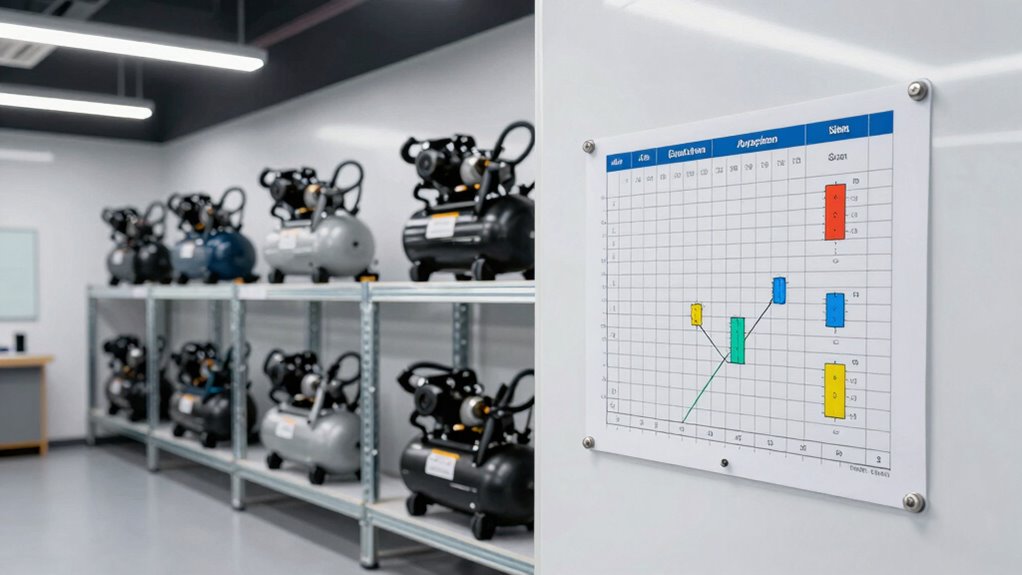
Are you planning to keep your air compressor efficient and adaptable for future needs? Focusing on energy conservation now can considerably lower operating costs and reduce environmental impact. Choose an appropriately sized compressor that can handle future demand increases without overworking. Incorporate regular maintenance scheduling to guarantee peak performance and prevent unnecessary energy waste. Efficient operation depends on timely filter changes, oil checks, and system inspections, which extend equipment lifespan and improve overall energy use. Consider upgrading control systems that optimize compressor operation based on demand, further boosting efficiency. Planning for growth means not only selecting the right size today but also designing for scalability. By prioritizing energy conservation and diligent maintenance, you set your system up for long-term reliability and cost savings.
Common Mistakes to Avoid When Sizing Your Air Compressor

One common mistake is selecting an air compressor based solely on peak demand rather than considering your average operating needs. This can lead to overspending and inefficient performance. To avoid this, consider these points:
- Ignore future expansion plans, which may require a larger compressor.
- Overlook regular maintenance tips that guarantee peak operation and longevity.
- Fail to account for safety precautions, risking equipment damage or injury.
- Underestimate downtime for repairs, affecting productivity.
Frequently Asked Questions
How Often Should I Perform Maintenance on My Air Compressor?
You should perform maintenance on your air compressor regularly, ideally following a set maintenance schedule. Typically, check oil levels, filters, and belts weekly, and do more thorough inspections monthly. Regular maintenance helps optimize performance, prevents breakdowns, and extends your compressor’s lifespan. Always adhere to the manufacturer’s recommendations, and keep detailed records to guarantee you’re maintaining your equipment consistently for peak performance and reliability.
What Are the Signs of an Undersized or Oversized Compressor?
If your compressor’s capacity isn’t right, you’ll notice it struggles or runs constantly, indicating it’s undersized. An oversized compressor runs too much, causing high noise levels and energy waste. You might also see frequent cycling or excessive pressure build-up. Pay attention to how often it runs and the noise levels; these signs help you determine if your compressor’s capacity needs adjusting for peak performance.
How Does Altitude Affect Air Compressor Performance?
Altitude affects air compressor performance by altering air density, which impacts efficiency. You’ll notice performance variations at higher elevations, requiring altitude adjustments to maintain ideal operation. As you ascend, thinner air can reduce compressor capacity, causing it to work harder or struggle. To keep your compressor running smoothly, you need to account for altitude adjustment, ensuring consistent airflow and preventing potential damage caused by reduced performance.
Can I Run Multiple Tools on a Single Compressor Efficiently?
Yes, you can run multiple tools on a single compressor efficiently if you consider tool compatibility and compressor capacity. Make sure your compressor has enough CFM (cubic feet per minute) to meet the combined demand of all tools. Check each tool’s requirements and avoid exceeding the compressor’s maximum capacity. Properly balancing the demand will help you operate multiple tools smoothly without sacrificing performance or damaging the compressor.
What Safety Precautions Should I Consider When Operating an Air Compressor?
Did you know that improper safety measures cause over 10,000 compressor-related injuries annually? When operating an air compressor, you should focus on pressure regulation to prevent over-pressurization, which can be dangerous. Also, consider noise reduction, as loud compressors can harm your hearing over time. Always wear protective gear, inspect hoses regularly, and make sure the compressor is grounded properly for safe operation. Stay vigilant and prioritize safety at all times.
Conclusion
Choosing the right air compressor is like planting a tree—you want to start with the right size and type to grow strong and healthy. Remember, overestimating your needs wastes energy, while underestimating can leave you stranded. By carefully evaluating your demand, matching specifications, and planning for growth, you’ll guarantee your tools run smoothly, just like a well-tended garden thriving through the seasons. Get it right, and your air system will serve you reliably for years to come.