If you’re choosing between two-stage and single-stage air compressors, consider how much power and durability you need. Single-stage models are simpler, more affordable, and good for light to moderate tasks, while two-stage compressors handle heavy-duty jobs better with higher efficiency, cleaner air, and quieter operation. Two-stage units may cost more upfront but save you money over time. Want to learn more about which type best matches your project? Keep going for detailed insights.
Key Takeaways
- Two-stage compressors compress air twice for higher pressure, cleaner output, and better efficiency than single-stage units.
- Single-stage compressors are more affordable, compact, and suitable for light to moderate tasks.
- Two-stage models offer quieter operation, improved heat management, and durability for heavy-duty, continuous use.
- Single-stage compressors require less maintenance and are ideal for small workshops or auto repairs.
- Choosing between them depends on workload demands, noise preferences, space, and budget considerations.
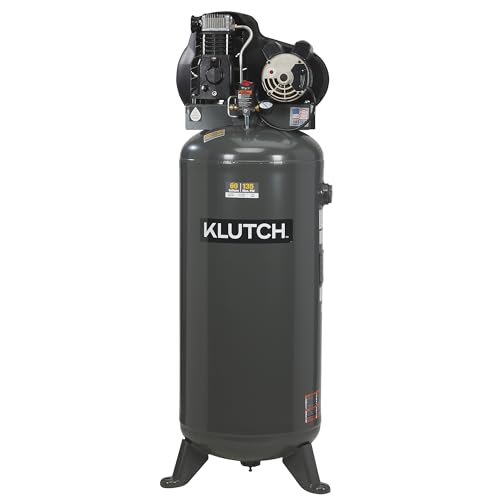
Klutch 60-Gallon Single-Stage Vertical Air Compressor, 3.7 HP, 230 Volts
POWERFUL PERFORMANCE: Features a robust 3.7 HP dual-induction motor that delivers 9.3 CFM @ 90 PSI and a…
As an affiliate, we earn on qualifying purchases.
As an affiliate, we earn on qualifying purchases.
Which Air Compressor Is Right for You? Key Differences and Use Cases
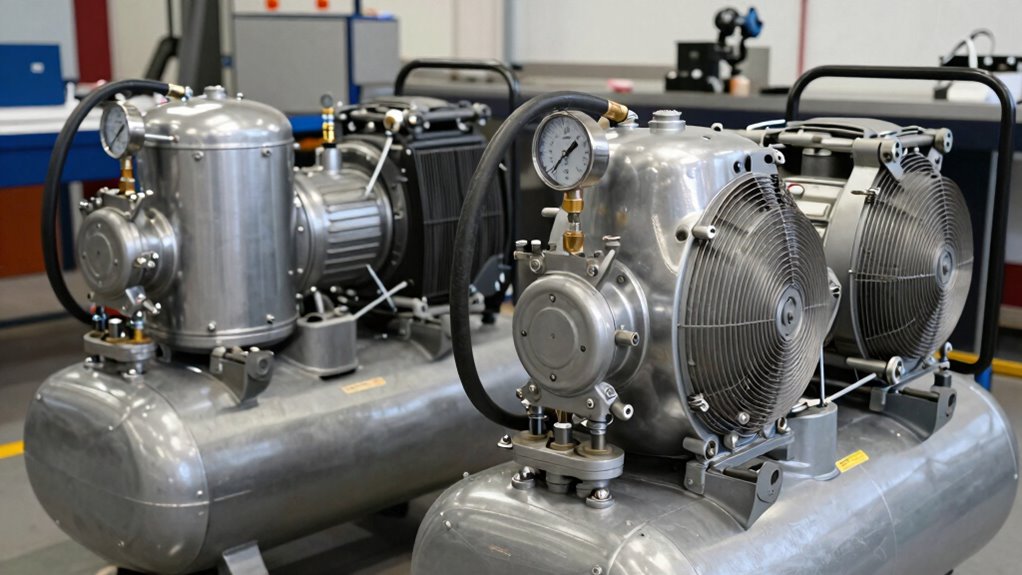
Are you unsure whether a single-stage or two-stage air compressor is better for your needs? Your choice depends on your project requirements and environment. Single-stage compressors are typically more compact, produce lower noise levels, and are suitable for light to moderate tasks. They offer decent air quality for small tools and hobbies. A single-stage compressor is often ideal for light-duty applications, where high pressure and volume are not necessary. Two-stage compressors, on the other hand, handle higher pressure demands, making them ideal for industrial use or heavy-duty applications. They often deliver better air quality due to more efficient compression, but they can generate more noise. Consider your workspace—if noise levels are a concern, a single-stage might be preferable. Additionally, understanding air compressor types can help you make a more informed decision. Proper maintenance routines, including filtration and pump protection, can further extend the lifespan and performance of your compressor. Being aware of compression stages and their impact on performance can help you select the best compressor for your specific needs. Recognizing performance factors such as duty cycle and airflow capacity can also influence your choice. Ultimately, matching your specific use case with the compressor’s capabilities will help you choose the right option for reliable performance and ideal air quality.
Klutch 60-Gallon Single-Stage Vertical Air Compressor, 3.7 HP, 230 Volts
POWERFUL PERFORMANCE: Features a robust 3.7 HP dual-induction motor that delivers 9.3 CFM @ 90 PSI and a…
As an affiliate, we earn on qualifying purchases.
As an affiliate, we earn on qualifying purchases.
How Do Single-Stage and Two-Stage Compressors Work?
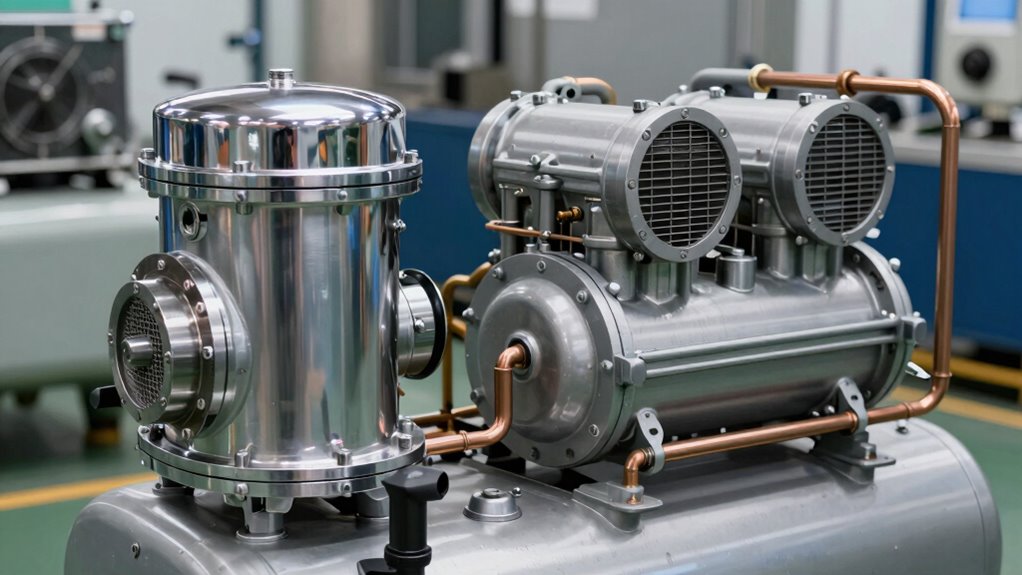
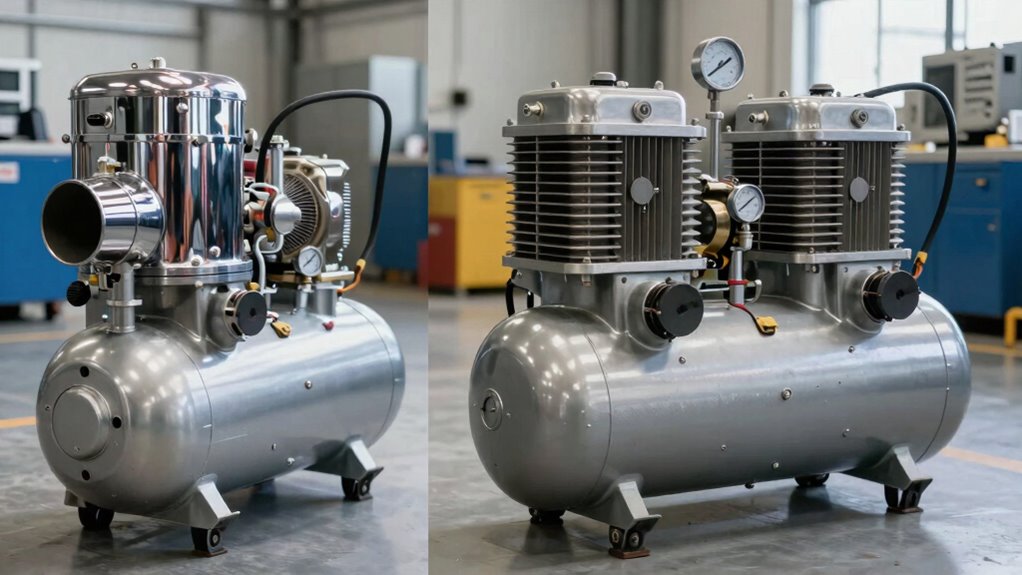
Single-stage and two-stage compressors operate differently to generate compressed air. In a single-stage compressor, air is compressed once, resulting in lower air quality and higher noise levels. It’s simple and ideal for light tasks. Meanwhile, a two-stage compressor compresses air twice, which improves air quality and reduces noise. Here’s how they differ:
Single-stage compressors are simple and ideal for light tasks, while two-stage units offer cleaner air and quieter operation.
- Compression Process: Single-stage uses one piston, two-stage uses two for higher pressure.
- Air Quality: Two-stage compressors produce cleaner, drier air, suitable for precision work.
- Noise Levels: Two-stage units tend to be quieter because they operate more efficiently, with less strain on components.
- Efficiency and Design: Two-stage compressors are often more energy-efficient and durable, making them suitable for continuous use in demanding applications. Understanding the compression process helps you select the most appropriate type for your needs.

Nessxa 8 Gallon Ultra Quiet Air Compressor, 1.5HP 4.52 CFM, Max 115 PSI Oil-Free Air Compressor Tank, 110V/60hz, 70dB Air Compressor for Car Repair, Spray Painting, Woodwork Nailing
8 Gallon Ultra Quiet Air Compressor: This portable air compressor features a lightweight storage tank, handle, and wheels…
As an affiliate, we earn on qualifying purchases.
As an affiliate, we earn on qualifying purchases.
Performance: Which Compressor Is Better for Heavy-Duty Tasks?
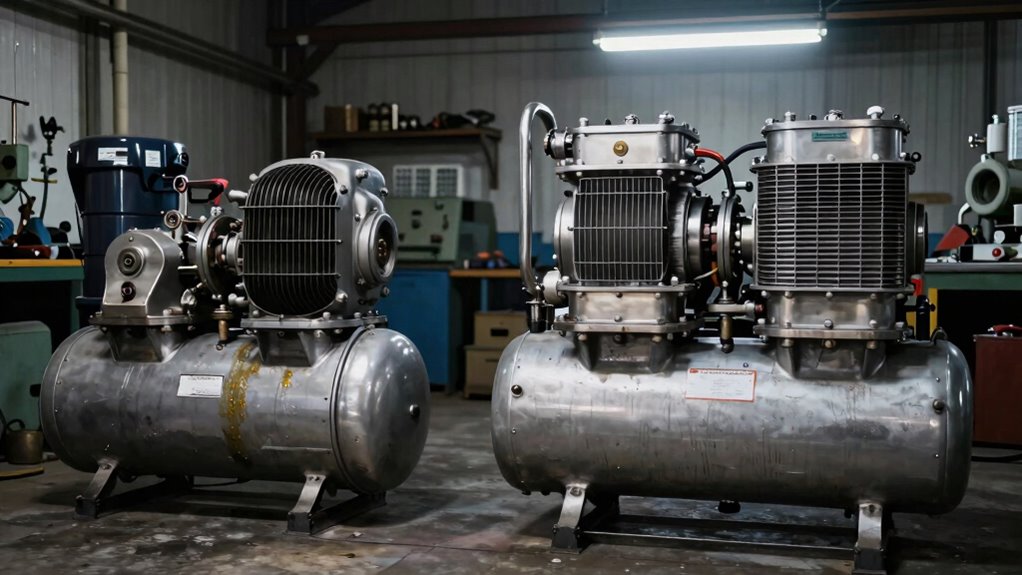
When it comes to heavy-duty tasks, two-stage compressors generally outperform single-stage models because they can handle higher pressure demands and continuous operation more effectively. They deliver consistent airflow, which improves air quality, ensuring your tools operate smoothly without fluctuations. Additionally, two-stage compressors often produce lower noise levels during operation, reducing workplace disturbances and creating a safer environment. Their ability to maintain stable pressure and better manage heat build-up makes them ideal for demanding applications. You’ll notice they run more efficiently under prolonged use, providing reliable performance for your toughest jobs. In contrast, single-stage compressors may struggle with sustained high-pressure needs and tend to generate more noise, making them less suitable for heavy-duty tasks where performance and air quality are critical. Proper cooling techniques, such as enhanced ventilation and heat dissipation methods, further improve their longevity and efficiency during extended use. Understanding air compressor types can help you select the most suitable model for your specific needs and ensure optimal operation. Implementing advanced cooling methods can be particularly beneficial in managing heat during intensive use, especially for continuous operation where heat buildup is a concern. Additionally, incorporating heat management strategies can significantly prolong the lifespan of your compressor during demanding workloads.

GOYOJO PCP Air Compressor, Max 4500 PSI / 300 Bar, Fast Fill for Airguns or Paintball Tank, Auto Shut-Off, Dual Power Car 12V DC or Home 120V AC, Built-in Cooling Fan, 300W Portable Pcp Pump
VERSATILE & BEGINNER-FRIENDLY – Designed with ease of use in mind, the GOYOJO 4500 PSI Pcp Air Compressor…
As an affiliate, we earn on qualifying purchases.
As an affiliate, we earn on qualifying purchases.
Cost and Maintenance: Comparing Single-Stage and Two-Stage Compressors
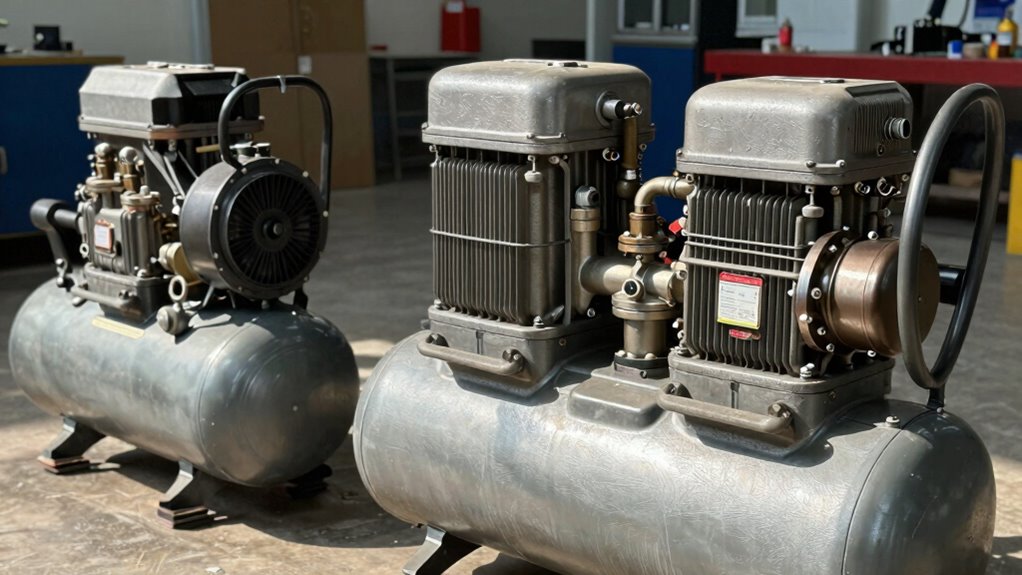
While two-stage compressors often come with a higher initial purchase price, they can offer cost savings over time through better durability and efficiency. When comparing costs and maintenance requirements, keep these points in mind:
- Cost comparison: Single-stage models are cheaper upfront but may have higher energy costs due to less efficiency. Two-stage units consume less power over time, offsetting initial expenses.
- Maintenance requirements: Single-stage compressors are simpler, needing less routine maintenance but may require more frequent repairs. Two-stage compressors have more parts, which can increase maintenance needs but are built for longer lifespan.
- Long-term savings: Despite higher initial costs, two-stage models often save money in the long run thanks to reduced energy bills and decreased downtime. Understanding compressor efficiencies can help in making an informed decision.
How to Choose Based on Your Budget and Space Needs
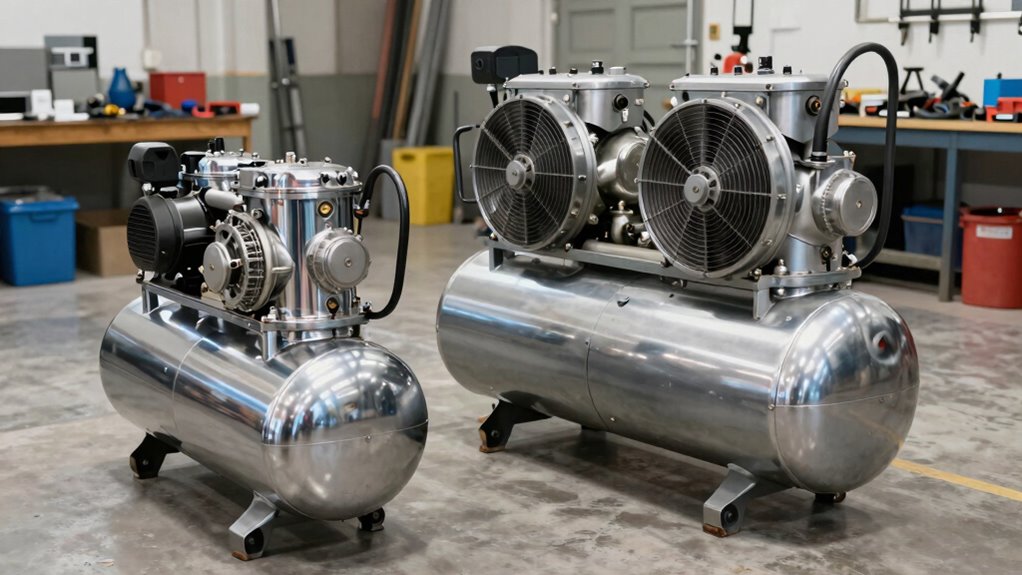
When choosing an air compressor, your budget plays a big role in narrowing down options, as single-stage units are typically less expensive upfront. Space efficiency also matters, especially if your workspace is limited, since single-stage compressors often have a smaller footprint. Balancing these factors helps you select the right compressor that fits both your financial and spatial constraints.
Budget Considerations
Are you trying to determine which type of compressor fits your budget and space constraints? Your choice depends on more than just initial costs. Consider these factors:
- Upfront vs. Long-Term Costs: Single-stage compressors are often cheaper initially, but two-stage models may save you money over time through lower maintenance and energy efficiency.
- Air compressor noise and environmental impact: Two-stage units tend to operate more quietly and have a smaller environmental footprint, which can justify a higher price if these factors matter to you.
- Maintenance expenses: Single-stage compressors usually require less maintenance, saving you money upfront, while two-stage models may reduce downtime and repairs in the long run.
Balancing budget with noise and environmental considerations helps you choose the right compressor.
Space Efficiency
Choosing between single-stage and two-stage air compressors depends heavily on your available space and budget. Single-stage units are typically more compact, making them ideal if space is limited. They also tend to be more affordable upfront, fitting tighter budgets. Two-stage compressors, while larger, offer better energy savings over time because they operate more efficiently, reducing energy consumption and environmental impact. If you’re working in a confined space, a single-stage model might be the best choice, but if you prioritize long-term savings and lower environmental impact, investing in a two-stage compressor could be smarter. Carefully evaluate your space constraints and budget to select a compressor that balances immediate costs with ongoing operational efficiency and environmental benefits.
Common Applications for Single-Stage and Two-Stage Compressors
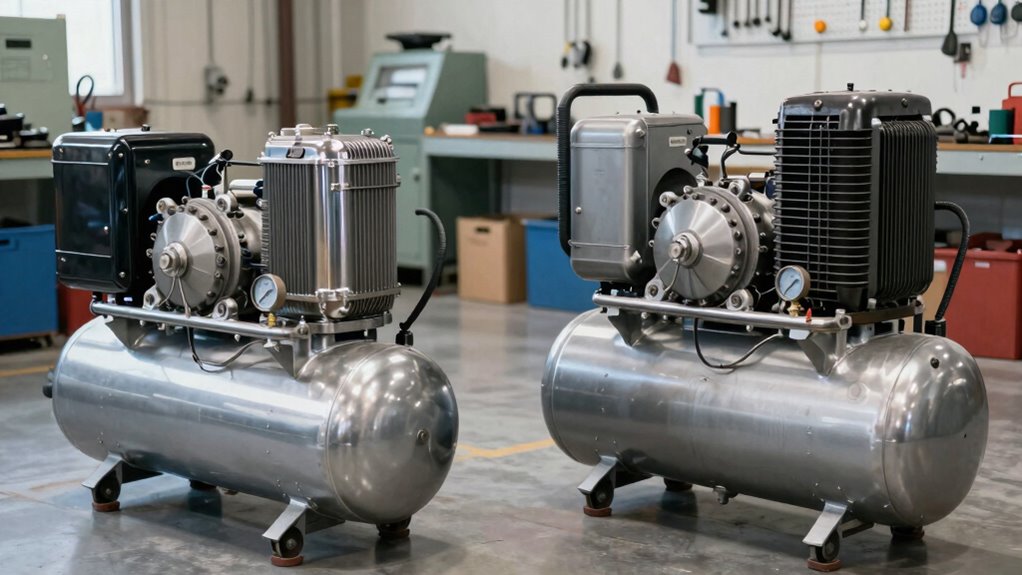
Single-stage and two-stage compressors serve different needs based on their applications. If you need reliable performance with moderate air quality and noise levels, single-stage units are ideal. They’re common in small workshops or automotive repairs. For larger operations requiring higher air quality and quieter operation, two-stage compressors excel. Consider these typical uses:
- Manufacturing plants, where consistent airflow and reduced noise are essential.
- Construction sites, needing portable units that handle demanding tasks.
- Automotive shops, where lower noise levels improve work environment and air purity is critical.
Two-stage compressors offer better air quality and lower noise, making them suitable for continuous, heavy-duty use. Meanwhile, single-stage models provide a straightforward, cost-effective solution for less intensive applications.
Factors to Consider When Selecting an Air Compressor
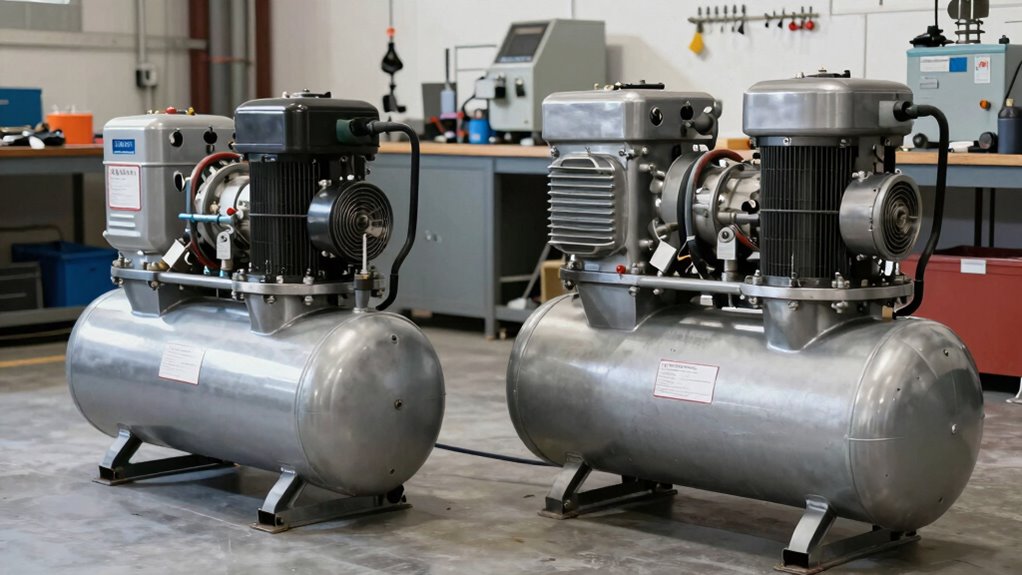
When choosing an air compressor, you need to take into account your power and capacity needs to make certain it can handle your workload. Operational efficiency is also important, as it affects long-term costs and performance. Additionally, space and budget constraints will influence your options and help narrow down the best fit for your setup. Incorporating energy-saving tips can further optimize your compressor’s performance and reduce overall energy consumption. Understanding safety precautions is crucial for preventing accidents and ensuring safe operation during extended use. Considering ergonomic design features can also enhance user comfort and reduce fatigue during extended operation. Being aware of compressor maintenance requirements can help prolong the lifespan and maintain optimal functionality of your equipment. Furthermore, understanding how sound healing science influences equipment operation can contribute to creating a quieter and more productive work environment.
Power and Capacity Needs
Understanding your power and capacity requirements is essential to selecting the right air compressor for your needs. Accurate assessment guarantees you choose a unit that meets demand without wasting energy or increasing costs. Consider these factors:
- Air demand: Calculate your daily air consumption to determine the necessary capacity, focusing on efficiency improvements.
- Power supply: Confirm your power source can handle the compressor’s requirements, avoiding overloads and optimizing performance.
- Noise levels: If noise reduction is important, select a model that operates quietly, especially in shared or sensitive environments.
- Knowledge of compressor types: Understanding the differences between two-stage and single-stage compressors can help you choose the most suitable option for your specific needs. Additionally, being aware of air compression principles can deepen your understanding of how these units operate and influence your selection process.
Operational Efficiency Factors
Selecting an air compressor that operates efficiently requires careful consideration of several key factors. First, examine the lubrication methods; oil-lubricated compressors often run smoother and last longer, reducing downtime, while oil-free models require less maintenance. Next, consider noise levels—if your workspace is noisy, choosing a quieter compressor improves working conditions and compliance with noise regulations. Energy consumption also impacts operational efficiency, so look for models with advanced motor designs or variable speed drives that adapt to demand. Maintenance ease is another factor; simpler maintenance routines keep the compressor running at peak efficiency. Additionally, understanding water-based cooling systems can help optimize compressor performance and prevent overheating during operation. By weighing lubrication methods, noise levels, energy use, maintenance needs, and cooling options, you can select an air compressor that minimizes operational costs and maximizes performance.
Space and Budget Constraints
Choosing an air compressor that fits your space and budget requires careful planning. First, consider noise levels; quieter models suit small or shared workspaces, while louder units may be fine elsewhere. Second, evaluate environmental impact—opt for energy-efficient compressors to reduce your carbon footprint and ongoing costs. Third, assess your budget by comparing initial costs and long-term expenses like maintenance. Single-stage compressors tend to be more compact and affordable upfront, making them ideal for tight spaces and budget-conscious setups. Two-stage compressors, though pricier, often operate more efficiently and with lower noise levels over time. Additionally, understanding compressor efficiency can help you select a model that optimizes performance while minimizing energy use. Incorporating noise reduction techniques can also enhance your workspace environment by further reducing sound levels. Considering soundproofing methods can be particularly beneficial in shared or noise-sensitive environments. Balancing these factors guarantees you pick a compressor that meets your space constraints and financial limits without compromising performance or environmental responsibility. Incorporating auditory processing considerations can also help ensure that sound levels align with your workspace needs.
FAQs: Understanding Air Compressors and Making the Right Choice
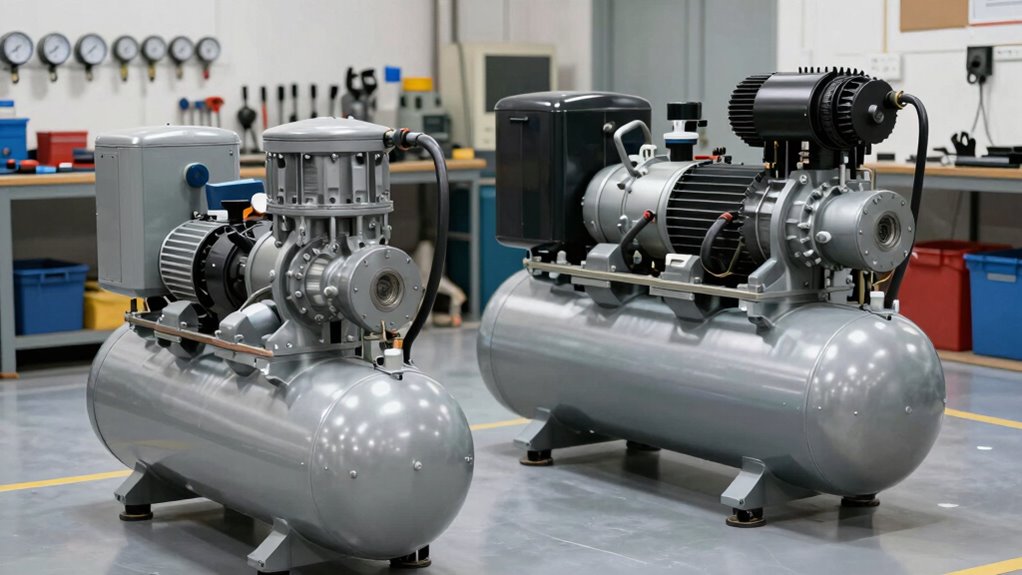
Deciding between a two-stage or single-stage air compressor can seem confusing at first, but knowing the key differences helps you make an informed choice. When choosing, consider air compressor safety—look for features like pressure relief valves and proper ventilation to prevent accidents. Also, think about compressor noise levels; single-stage units tend to be quieter, making them suitable for quieter work environments. Two-stage compressors often produce more noise but deliver higher pressure and efficiency for demanding tasks. Ask yourself about your specific needs: Do you prioritize safety, noise reduction, or power? Understanding these factors helps you select the right compressor for your project, ensuring safe operation and a more comfortable working environment.
Frequently Asked Questions
What Are the Environmental Impacts of Single-Stage Versus Two-Stage Compressors?
Single-stage compressors generally have lower energy efficiency, causing higher electricity consumption and increased environmental impact. They also tend to have higher maintenance costs over time, which can lead to more waste and resource use. Two-stage compressors are more energy-efficient, reducing emissions and energy use, but may have higher initial manufacturing impacts. Overall, choosing a two-stage system can lessen your environmental footprint through better efficiency and lower long-term maintenance.
How Does Compressor Noise Level Differ Between Single-Stage and Two-Stage Models?
Did you know that single-stage compressors are generally noisier than two-stage models? You’ll notice more noise during operation, making sound mitigation a key concern. Two-stage compressors typically feature better noise reduction design elements, resulting in a quieter environment. If reducing noise is your priority, a two-stage compressor offers significant sound mitigation benefits, helping you work more comfortably without sacrificing performance.
Are There Specific Industries That Prefer One Type Over the Other?
You’ll find that certain industry applications favor either single-stage or two-stage compressors based on energy efficiency needs and operational demands. For example, manufacturing and heavy-duty industries often prefer two-stage models because they deliver higher efficiency and better durability under continuous use. Meanwhile, smaller workshops or light-duty tasks may opt for single-stage compressors due to their lower initial cost and simpler design, aligning with their energy efficiency and workload requirements.
Can Single-Stage Compressors Be Upgraded to Two-Stage Ones Later?
You can upgrade a single-stage compressor to a two-stage one, but it’s not always straightforward. The upgrade potential depends on your compressor’s design and size. While the initial cost comparison favors single-stage units, upgrading later can be costly and complex. Consider whether the long-term benefits of a two-stage compressor justify the investment upfront, especially if your needs are likely to grow or change.
What Safety Considerations Are Unique to Each Compressor Type?
You need to follow distinct safety protocols for each compressor type. For single-stage compressors, guarantee proper ventilation and monitor for overheating during continuous use, as they operate at higher speeds. Two-stage compressors require careful handling of high-pressure components and regular maintenance of intercoolers to prevent hazards. Always adhere to manufacturer guidelines, perform routine inspections, and keep safety gear handy to minimize risks and maintain ideal operation.
Conclusion
Choosing between a single-stage and two-stage air compressor is like selecting the right tool for your task—each has its strengths. Consider your workload, budget, and space, and you’ll find a compressor that fits seamlessly into your workflow. Whether you’re powering a home workshop or tackling heavy-duty projects, the right compressor will become your reliable partner, delivering consistent performance, ease of maintenance, and peace of mind—making every task smoother, faster, and more efficient.