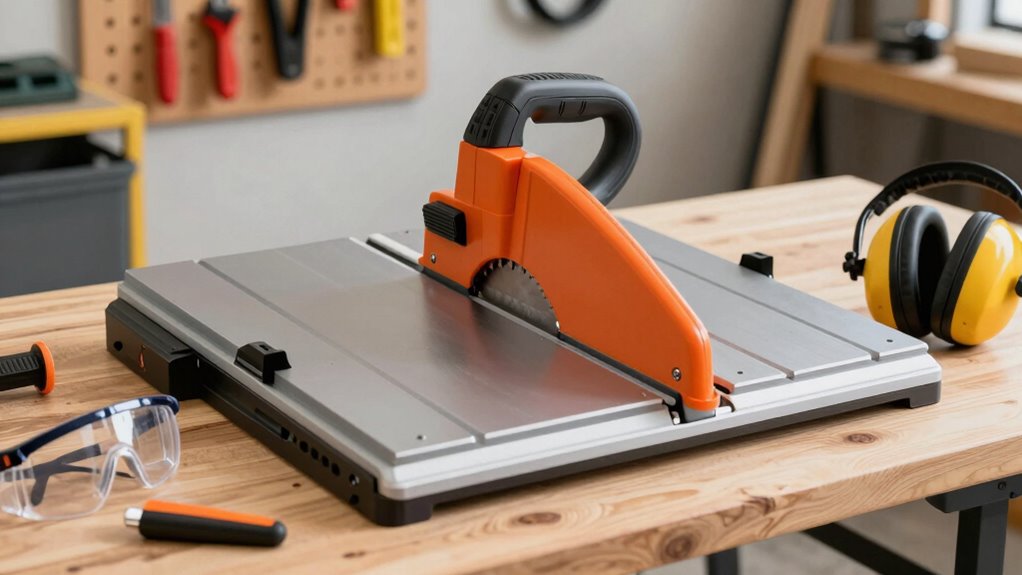

To stay safe when using your table saw at home, always keep safety features like blade guards and kickback devices in place and check them regularly. Organize your garage workspace with clear pathways and proper lighting, and avoid overloading outlets. Wear PPE such as safety glasses, hearing protection, and dust masks. Follow proper procedures for blade alignment, fence setup, and using push sticks. If you continue exploring, you’ll discover even more tips to keep your projects safe and efficient.

Get home appliances delivered free with Prime
- Fast, free delivery on millions of items
- Prime Video, Amazon Music and more included
- Member-only deals all year
Key Takeaways
- Keep blade guards and anti-kickback devices properly installed and regularly inspected.
- Organize your workspace to ensure clear pathways and proper lighting for safe operation.
- Always wear safety glasses, hearing protection, and dust masks during use.
- Use push sticks and maintain proper fence alignment to prevent accidental contact with the blade.
- Avoid bypassing safety features; ensure all safety mechanisms are functional before cutting.
As an affiliate, we earn on qualifying purchases.
Key Safety Features on Your Table Saw
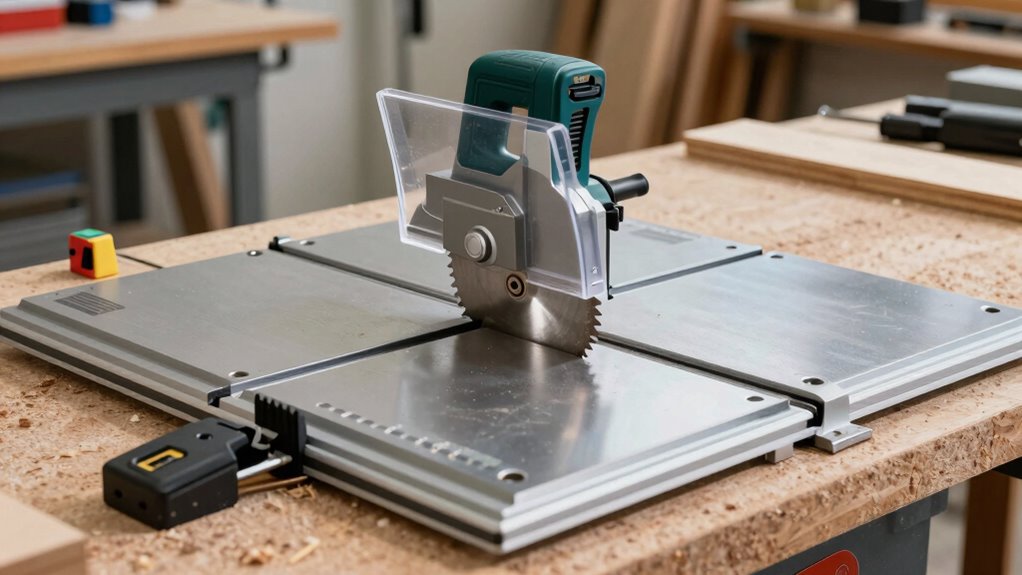
Have you ever wondered what safety features are essential for protecting yourself while using a table saw? One of the most important is the blade guard. It covers the blade, preventing accidental contact and reducing the risk of cuts. Keep the blade guard in place whenever possible, and never bypass it. Another critical feature is kickback prevention. Kickback occurs when the wood catches and is thrown back toward you, which can cause injury. Modern saws include riving knives and anti-kickback pawls to help prevent this. These safety features work together to keep you safe during operation. Regularly check that the blade guard and kickback prevention devices are functioning correctly. Proper safety protocols and routine maintenance are vital in creating a safe working environment. Using these key safety features helps you work confidently and minimizes the risk of accidents. Additionally, understanding how safety features function can help you troubleshoot and maintain your equipment effectively. Properly securing your materials and maintaining a clean workspace can further reduce hazards and improve overall safety.
anti-kickback pawls for table saw
As an affiliate, we earn on qualifying purchases.
As an affiliate, we earn on qualifying purchases.
Setting Up a Safe Garage Workspace for Your Table Saw
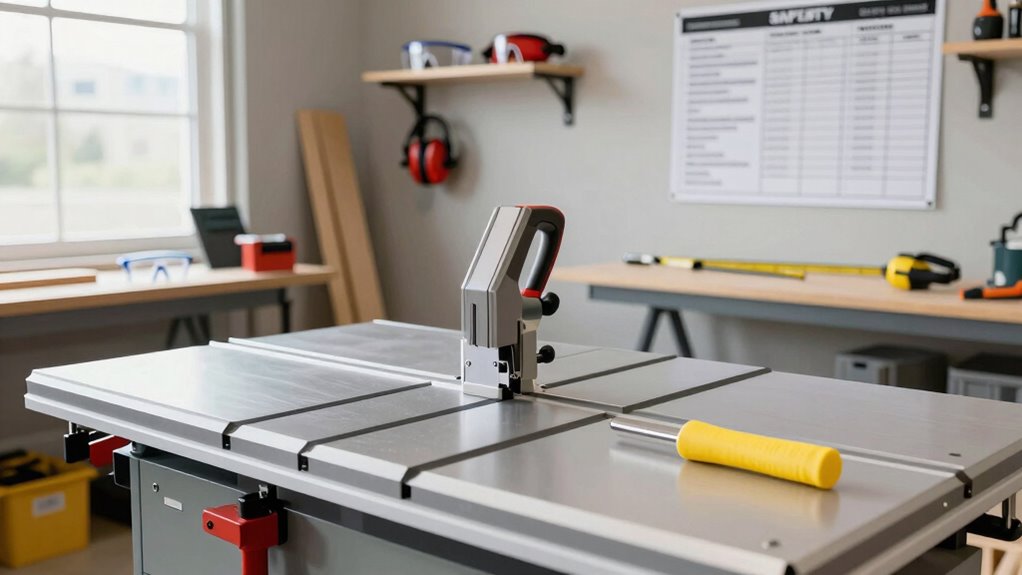
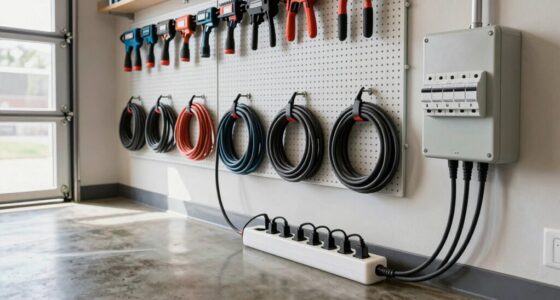
Ever wondered how to create a workspace that keeps you safe while using your table saw? Start by organizing your garage to minimize clutter and guarantee clear pathways. Proper garage organization reduces tripping hazards and makes it easier to access tools safely. Next, focus on electrical wiring. Use grounded outlets and avoid overloading circuits to prevent electrical fires or shocks. Keep extension cords away from cutting areas and ensure all wiring is in good condition. Adequate lighting is essential, so install bright, even illumination to see your work clearly. Finally, designate a specific area for your table saw, away from other equipment and foot traffic. A well-organized, properly wired workspace sets a strong foundation for safe, efficient woodworking. Incorporating self-watering planters and essential oils for respiratory health into your workshop environment can also promote better breathing and alertness during long projects. Paying attention to projector placement and ensuring clear sightlines can further enhance safety and visibility during your work. Additionally, understanding cabling solutions and how to prevent cable failures is crucial for maintaining a safe and efficient workspace.
As an affiliate, we earn on qualifying purchases.
Protect Yourself With PPE When Using a Table Saw
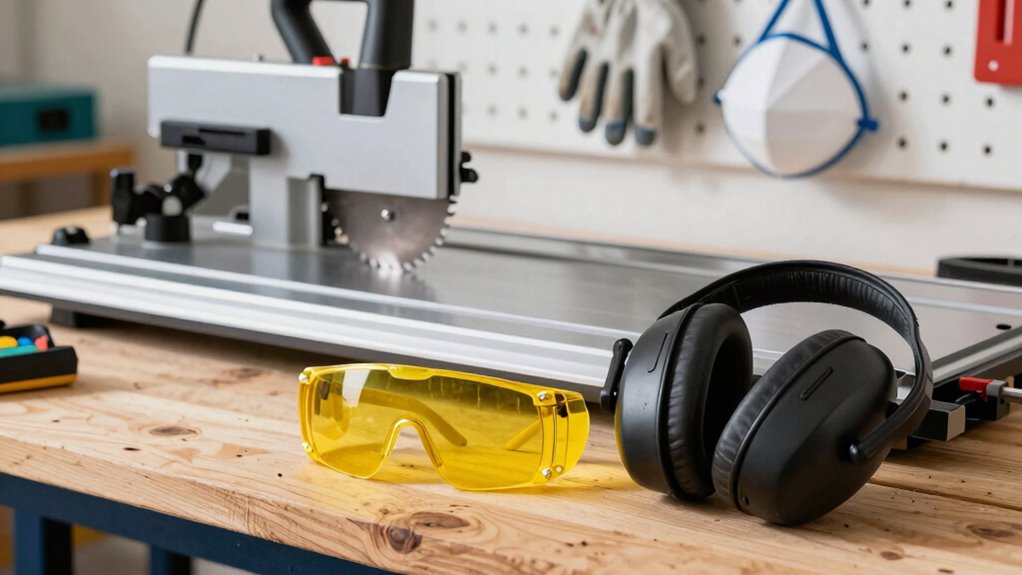
Using a table saw safely isn’t just about knowing the machine; wearing the right personal protective equipment (PPE) is vital to prevent injuries. Safety gear such as safety glasses or goggles protects your eyes from flying debris or wood chips, while hearing protection reduces the risk of hearing damage from loud motor noise. A dust mask or respirator can keep sawdust out of your lungs, especially during prolonged cuts. Wear snug-fitting gloves only when handling rough materials away from the blade—never while operating the saw. Additionally, don’t forget to use push sticks or push blocks to keep your hands at a safe distance from the blade. Proper PPE forms a fundamental layer of defense, keeping you safe while you work confidently. Remembering the importance of personal protective equipment can significantly reduce the risk of injury during your projects. Incorporating water safety practices, such as keeping your work area dry and free of clutter, can also help prevent slips or accidents around your workspace. Regularly inspecting your tools and work environment for hazards is also crucial to maintain a safe work area. Being aware of sauna safety tips and proper ventilation strategies can further enhance your overall safety during woodworking projects. Additionally, familiarizing yourself with safety guidelines specific to your tools can help you operate them more confidently and securely.
As an affiliate, we earn on qualifying purchases.
Using Your Table Saw Safely Step-by-Step
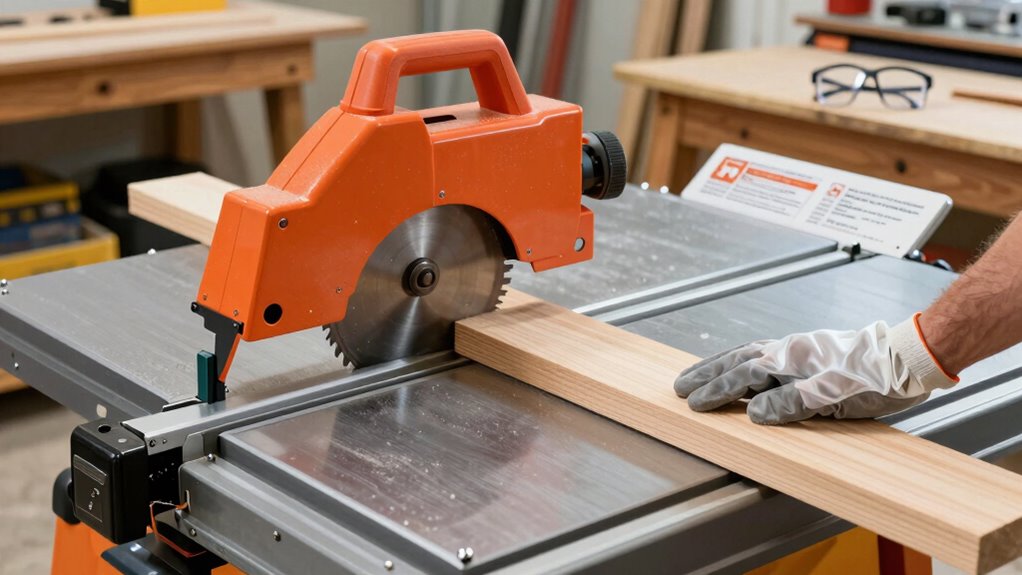
To guarantee your safety while operating a table saw, it’s essential to follow a clear, step-by-step process. First, ensure your blade is properly aligned to make accurate cuts and reduce kickback risk. Next, set the appropriate blade height and guard it with safety covers. Before cutting, check that dust collection systems are working to keep your workspace clean and visibility high. Always wear PPE, including eye and ear protection. Keep your hands clear of the blade and use push sticks when necessary. Regularly inspect and clean your saw, especially the dust port and blade alignment. Additionally, understanding air system integration can help improve dust extraction efficiency and overall safety. Proper blade safety protocols are crucial in preventing accidents and ensuring a smooth operation. Being familiar with safety features on your saw can also significantly reduce the risk of injury. Implementing effective dust management strategies further contributes to a safer working environment. Incorporating knowledge about dust extraction systems can enhance your setup’s efficiency and safety. Here’s a quick checklist:
| Step | Action | Focus Area |
|---|---|---|
| 1 | Check blade alignment | Blade accuracy |
| 2 | Set up dust collection system | Workspace cleanliness |
| 3 | Confirm safety guards are in place | Personal safety |
Watch Out for These Table Saw Hazards
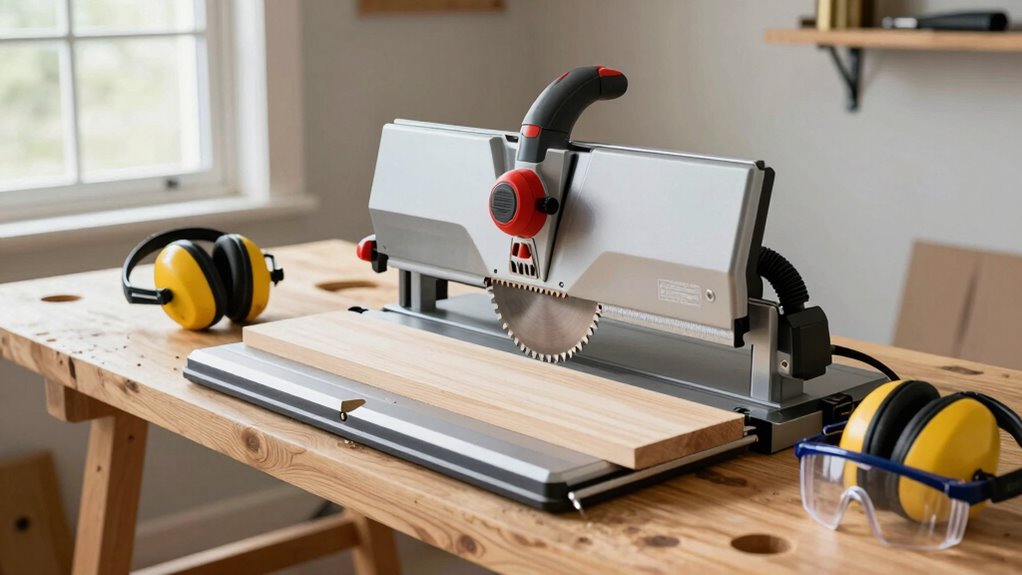
While following safety steps helps prevent many accidents, it’s equally important to be aware of specific hazards that can still pose risks during table saw operation. One major hazard is removing or bypassing the blade guard, which is designed to protect your hands from contact with the blade. Always keep the blade guard in place unless absolutely necessary, and only remove it if your task requires it, replacing it as soon as possible. Kickback is another dangerous risk, caused when the wood pinches or catches, forcing it back toward you. To prevent kickback, use proper push sticks, maintain consistent pressure, and ensure the fence is aligned correctly. Staying alert and understanding these hazards helps you operate your table saw safely and reduces the chance of injury. Additionally, being aware of sound vibrations and their impact on health can help you create a safer and more comfortable workspace. Moreover, understanding the horsepower of electric dirt bikes can inform you about the power and performance capabilities of tools or vehicles in your workshop, promoting safer handling and usage. Recognizing safety equipment and always using the appropriate gear further enhances your protection during operation. It’s also helpful to be aware of ergonomic practices to minimize fatigue and prevent strain during extended use. Being mindful of tool maintenance can prevent malfunctions that might lead to accidents.
Frequently Asked Questions
How Often Should I Inspect My Table Saw for Safety Issues?
You should inspect your table saw for safety issues before each use. Check the blade for proper alignment and sharpness, as well as for any damage or dullness that could cause kickback. Make sure safety gear like goggles and hearing protection are in good condition and ready. Regularly perform blade maintenance, and don’t forget to test safety features—like the blade guard—every time you use the saw.
Can I Use a Table Saw for Materials Other Than Wood?
You can use a table saw for materials beyond wood, but only if it’s designed for that purpose. Notably, about 15% of DIYers experiment with cutting metals or plastics. For alternative materials, verify your saw has a suitable blade and proper safety measures. Cutting metals requires a blade specifically made for that task, and you must take extra precautions to avoid sparks and damage to your equipment. Always prioritize safety and follow manufacturer guidelines.
What Should I Do if My Table Saw Makes Unusual Noises?
If your table saw makes unusual noises, first turn it off and unplug it. Check the blade alignment to guarantee it’s properly installed and straight. Clear any debris or dust buildup that might be causing noise, especially around the blade and dust collection system. Regular maintenance, including blade sharpening and cleaning, helps prevent issues. If noise persists, consult the manufacturer or a professional technician to avoid safety hazards.
How Do I Store My Table Saw Safely When Not in Use?
When you’re done using your table saw, you should store it safely by unplugging it first. Lower the blade guard and make sure it’s securely in place to prevent accidental contact. Clean out dust using the dust collection port to keep the area safe and the saw functioning well. Store the saw in a dry, stable spot, away from children and pets, to maintain safety and prolong its lifespan.
Are There Specific Safety Tips for Beginners Using a Table Saw?
Think of your table saw as a wild stallion; you need to tame it with safety. Always use blade guards to shield your fingers and guarantee proper kickback prevention measures. Start slow, focus on your cut line, and never rush. Keep your hands clear of the blade, stand to the side, and wear safety glasses. Practicing patience and caution makes you a confident rider on this woodworking journey.
Conclusion
By following these safety tips, you’ll keep your garage workshop a fortress rather than a danger zone. Think of your table saw as a trusted ally—when used correctly, it’ll help you craft your projects safely and efficiently. Remember, safety isn’t just a rule; it’s the shield that protects your fingers and future. Stay alert, wear your PPE, and respect the machine—because a safe workshop is a happy workshop.
Evergreen bestsellers Picks
bestsellers
As an affiliate, we earn on qualifying purchases.