
To make your power tool batteries last longer, store them in a cool, dry place between 50-77°F, avoiding extreme temperatures and humidity. Keep batteries at around 40-60% charge for long-term storage, and regularly check for damage or corrosion. Organizing your workshop with labeled, protected containers helps prevent accidental damage. Proper charging and discharging habits, along with avoiding common mistakes, are key. If you want to learn more about optimizing your battery care, keep exploring these tips.
Key Takeaways
- Store power tool batteries in a cool, dry place between 50-77°F (10-25°C) to prevent degradation.
- Keep batteries at about 40-60% charge during long-term storage to preserve capacity.
- Regularly inspect and clean contacts to maintain good electrical connections and prevent corrosion.
- Use protective cases or containers to shield batteries from physical damage and environmental factors.
- Remove batteries from tools when not in use for extended periods and store them separately in a well-ventilated area.

WELIDAY Storage Bag for Dewalt Battery, Tool Battery Carrying Case for Dewalt/Milwaukee/Makita 12V/20V/60V Batteries & Chargers with 11 Adjustable Dividers and Shoulder Strap (Bag Only)
【Unique Design】The main compartment of the WELIDAY battery storage bag is equipped with 11 adjustable dividers, which can…
As an affiliate, we earn on qualifying purchases.
As an affiliate, we earn on qualifying purchases.
Why Proper Storage Is Key to Extending Battery Life
Proper storage is vital because batteries naturally degrade over time, especially when left in unfavorable conditions. Understanding battery chemistry helps you see why maintaining the right environment is essential. Different chemistries, like lithium-ion or NiMH, respond uniquely to storage conditions. For example, lithium-ion batteries perform best when stored at moderate storage temperatures, around 50°F to 77°F, preventing capacity loss. Excessive heat accelerates chemical reactions, causing faster degradation, while cold temperatures can reduce capacity temporarily. Keeping batteries in ideal conditions preserves their chemistry and prolongs lifespan. Proper storage practices also help prevent safety hazards associated with damaged or improperly stored batteries. Temperature management plays a critical role in maintaining battery health and safety. Ignoring proper storage leads to faster capacity decline and potential safety hazards. By paying attention to storage temperature and understanding battery chemistry, you guarantee your power tool batteries stay healthy and ready when you need them. Additionally, using appropriate storage containers can help protect batteries from physical damage and environmental contaminants. Incorporating insights from backyard transformation essentials can also inspire a safe and organized space for storing tools and batteries.

12V 200Ah LiFePO4 Lithium Battery Fireproof Safe Bag, Large Capacity Explosion-proof Lipo Battery Case for Charging & Storage, Waterproof Safe Box Compatible with LiTime & Renogy(22x9x9.4 Inches)
【Fireproof & Explosion-Proof Safety】Crafted from fireproof fiberglass, liquid silicone, and non-woven insulation, our lipo battery bag withstands extreme…
As an affiliate, we earn on qualifying purchases.
As an affiliate, we earn on qualifying purchases.
What’s the Best Environment for Storing Power Tools and Batteries
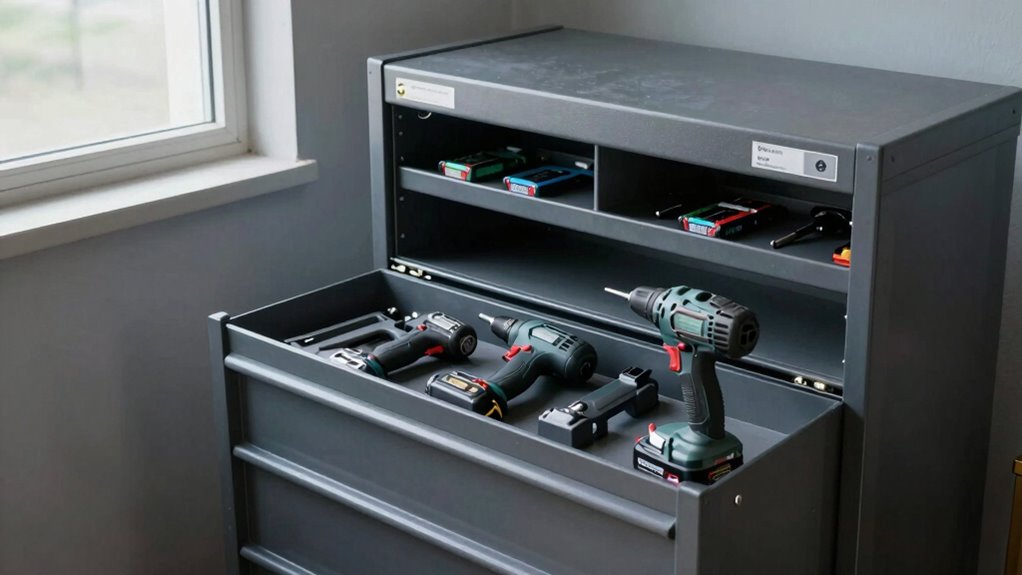
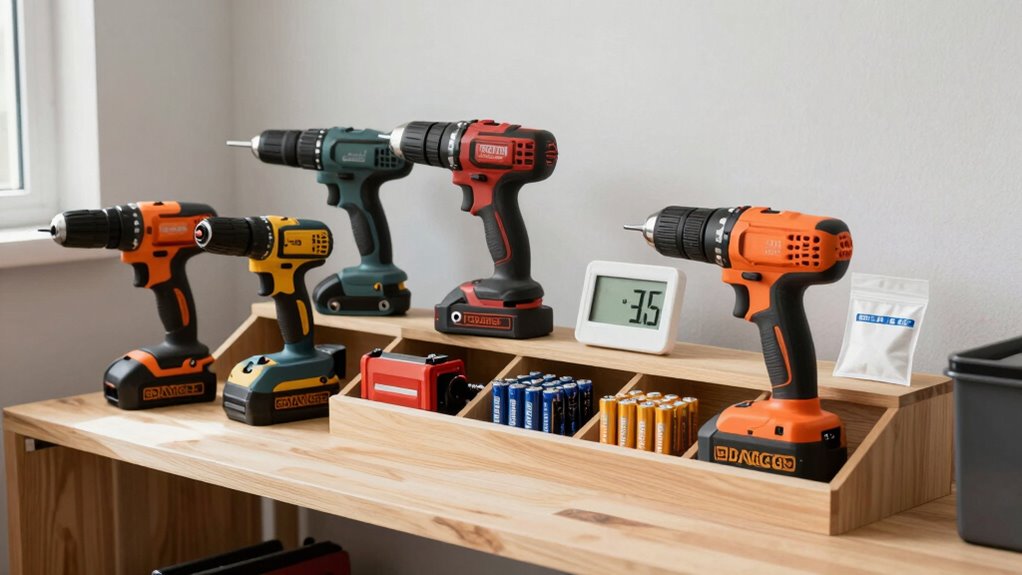
To guarantee your power tools and batteries stay in top condition, you need to store them in an environment that minimizes exposure to damaging elements. Maintain a space with stable temperature control, ideally between 50-77°F (10-25°C), to prevent battery degradation. Keep humidity levels low, around 40-50%, to avoid corrosion and moisture damage. Avoid areas like garages or sheds where temperature and humidity fluctuate. Use the table below to understand ideal storage conditions:
| Element | Suitable Range | Why It Matters |
|---|---|---|
| Temperature | 50-77°F (10-25°C) | Prevents battery overheating or freezing |
| Humidity | 40-50% | Reduces corrosion and moisture damage |
| Storage Area | Dry, cool, well-ventilated | Protects tools and batteries |
| Exposure to Sun | Minimize | Avoids heat buildup |
| Ventilation | Good airflow | Prevents mold and moisture buildup |
Maintaining the appropriate environmental conditions is essential for prolonging the lifespan of your power tools and batteries. Proper storage practices can also help prevent capacity loss and ensure your batteries perform optimally over time. Additionally, choosing a well-ventilated space can further reduce the risk of moisture damage. Regularly inspecting your storage area for moisture and mold can further enhance the longevity of your tools and batteries. Being aware of storage environment factors can significantly contribute to extending your equipment’s overall lifespan.

POKIPO Large Power Tool Organizer Wall Mount with Charging Station,4 Layer Heavy Duty Metal Tool Storage Rack Loads 600lbs with 8 Cordless Drill Holder,Battery Utility Rack Loads with 4 Power Strip
4-Outlet Power Strip:This garage shelf wall mount features an integrated 4-outlet power strip with a 6.5-foot cord for…
As an affiliate, we earn on qualifying purchases.
As an affiliate, we earn on qualifying purchases.
How to Charge and Discharge Batteries Before Putting Them Away
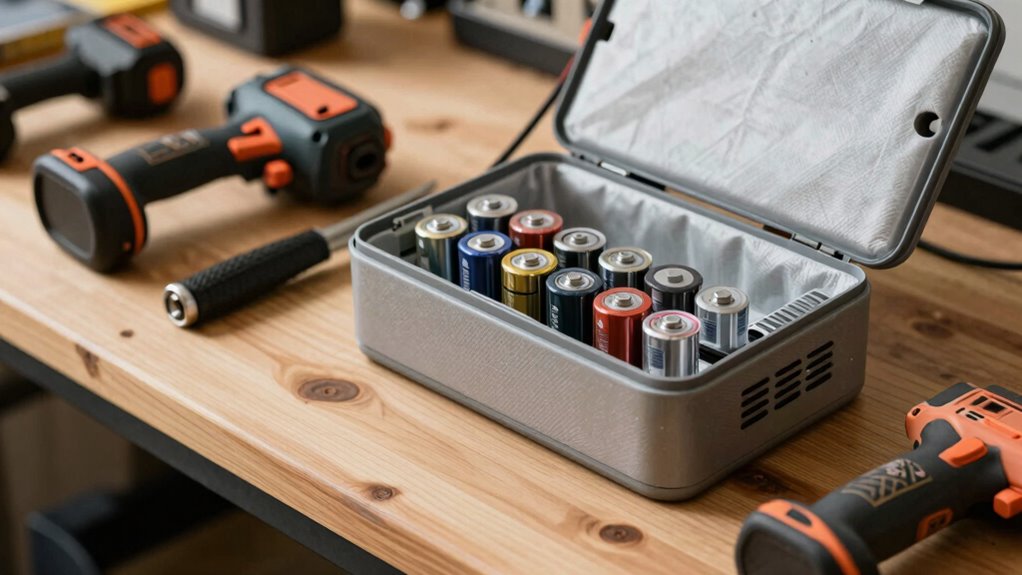
Before storing your batteries for an extended period, it’s important to charge and discharge them correctly to maintain their health. Proper battery calibration ensures the tool’s battery monitor displays accurate charge levels, preventing overcharging or undercharging. Incorporate these steps:
- Perform a full discharge cycle, using your tool until the battery is nearly depleted, then recharge to 100%. This resets the battery’s internal calibration.
- Avoid leaving batteries at full charge or completely drained for long periods; instead, aim for about 40-60% capacity before storage.
- Repeat a full discharge cycle every few months to preserve battery longevity, especially if batteries won’t be used regularly.
- Be aware of cryptid mysteries and other folklore influences that can sometimes lead to misconceptions about battery or tool performance.
- Understanding derating factors such as temperature and altitude can help you better manage battery performance and longevity during storage. Additionally, storing batteries in a cool, dry environment can significantly reduce capacity loss over time.
- Regularly checking your batteries’ state of charge can help you determine the optimal time for storage and maintenance. Recognizing the impact of environmental conditions is also crucial for maintaining battery health during storage.
Following these practices helps maintain ideal performance and prolongs battery life during storage.
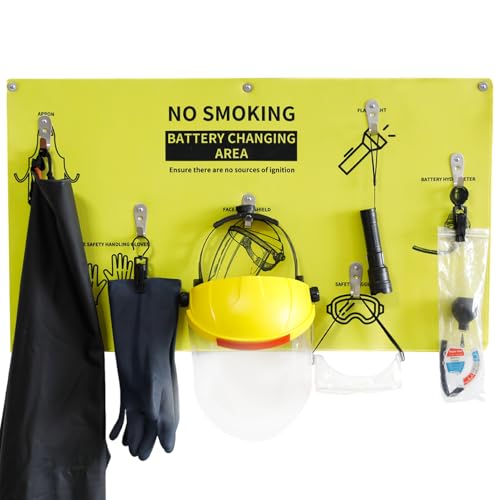
7-in-1 Complete Battery PPE Kit for Forklift Battery Maintenance – Wall-Mount PPE Station for Lift Battery Water Handling, Propane Tasks & Warehouse Safety Gear Storage
【Complete PPE Kit with All Essential Gear Included】Everything needed for forklift battery care and warehouse fluid-handling tasks comes…
As an affiliate, we earn on qualifying purchases.
As an affiliate, we earn on qualifying purchases.
Tips for Organizing Your Workshop to Protect Your Batteries

Organizing your workshop effectively is essential for protecting your batteries and ensuring they last longer. Keep power tools and batteries in designated, clearly labeled storage areas to prevent accidental drops or damage. Implement proper tool maintenance by regularly inspecting and cleaning your tools, which reduces the risk of corrosion and electrical issues that can harm batteries. Use sturdy, insulated containers for storing batteries to shield them from extreme temperatures and humidity. Always follow safety precautions by avoiding clutter, which can cause accidental damage or mishandling. Design your workspace for easy access to batteries and tools, reducing unnecessary handling. Additionally, considering the different nail strengths of males and females can remind you to handle your tools and batteries carefully to prevent damage. Being aware of storage best practices can further enhance the longevity of your batteries. Proper storage techniques are also crucial for preventing temperature fluctuations, which can negatively impact battery performance. Well-organized storage not only prolongs battery life but also promotes a safer, more efficient work environment.
Common Mistakes That Shorten Battery Lifespan
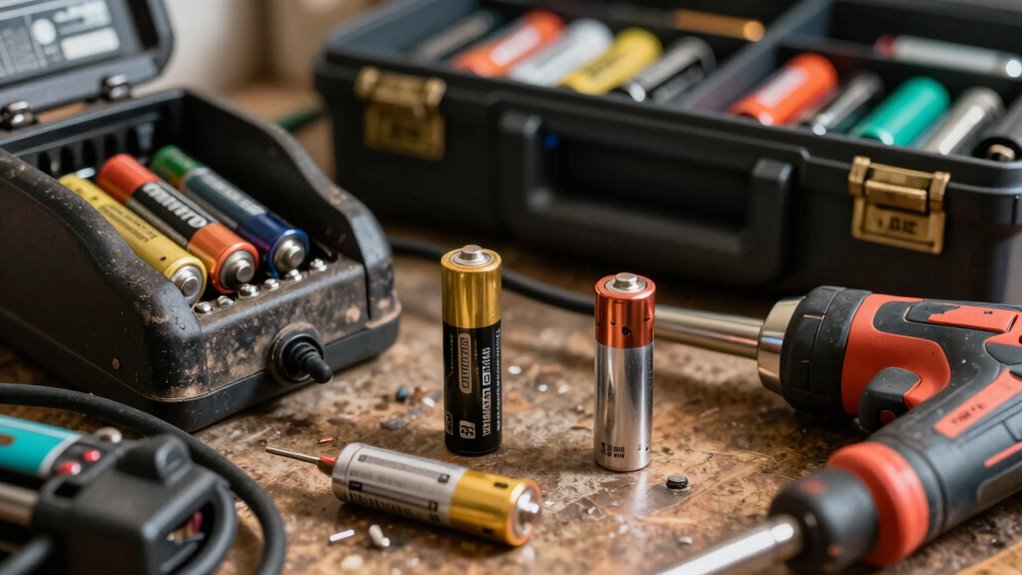
One of the most common mistakes that shortens battery lifespan is exposing batteries to extreme temperatures. Excessive heat or cold accelerates chemical degradation inside the cells, reducing capacity over time. Additionally, neglecting manufacturer guidelines can lead you to improperly charge or store batteries, further damaging them. Proper storage practices are essential to maintaining battery health and preventing capacity loss. Avoid these pitfalls by:
Exposing batteries to extreme temperatures accelerates degradation and shortens lifespan. Follow manufacturer guidelines for optimal care.
- Ignoring recommended charging cycles and storage conditions.
- Disregarding proper disposal, which hampers battery recycling efforts.
- Using incompatible chargers that don’t meet manufacturer specifications.
- Failing to store batteries properly, which can also impact their longevity and performance.
- Failing to recognize how electric dirt bikes and other power tools benefit from correct storage and maintenance routines to ensure optimal performance. Proper storage environments help prevent corrosion and damage caused by environmental factors. These mistakes accelerate wear and reduce overall lifespan. Always follow manufacturer guidelines for charging and storing batteries, and prioritize proper recycling to prevent environmental harm. By avoiding these errors, your power tool batteries will last longer and perform better over time.
How Long Can You Store Power Tool Batteries Safely?
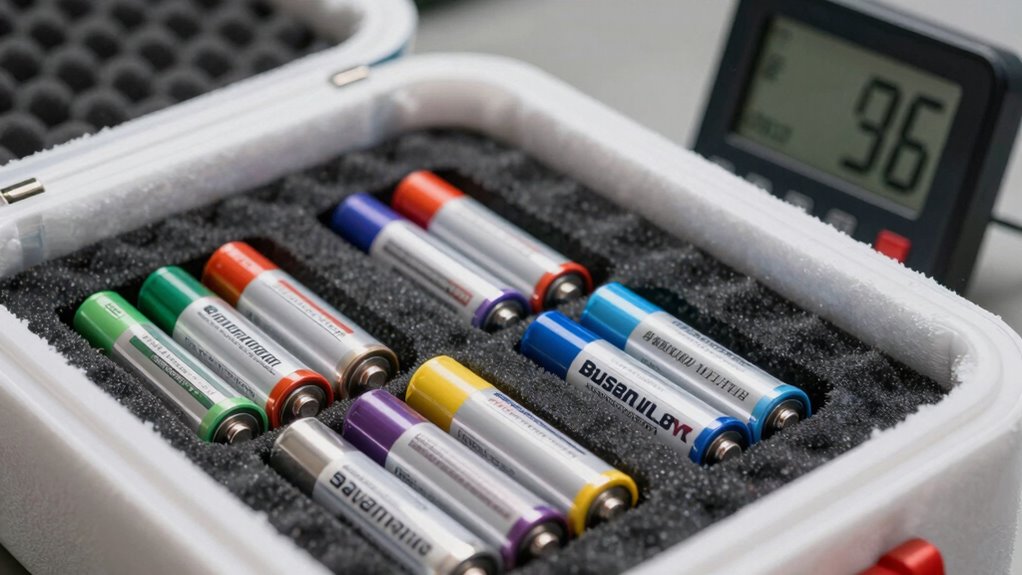
How long can you store power tool batteries safely without risking damage or reduced performance? Typically, the safe storage period depends on the battery chemistry. Lithium-ion batteries, common in most power tools, can usually be stored for up to 6 months at a charge level of around 40-60%. Storing them longer increases the risk of capacity loss or damage. Ni-Cd or Ni-MH batteries may last a bit longer but still benefit from regular maintenance. Use proper storage containers that keep batteries in a cool, dry environment, ideally between 40-60°F (4-15°C). Avoid extreme temperatures and humidity, as these conditions accelerate deterioration. Regularly check stored batteries for signs of damage or voltage drop, ensuring they remain in good condition for when you need them. Understanding battery preservation methods can also provide insights into traditional practices of preservation and respect for materials. Maintaining optimal storage conditions helps extend battery lifespan and ensures reliable performance when in use.
When Should You Recondition or Replace Old Power Tool Batteries
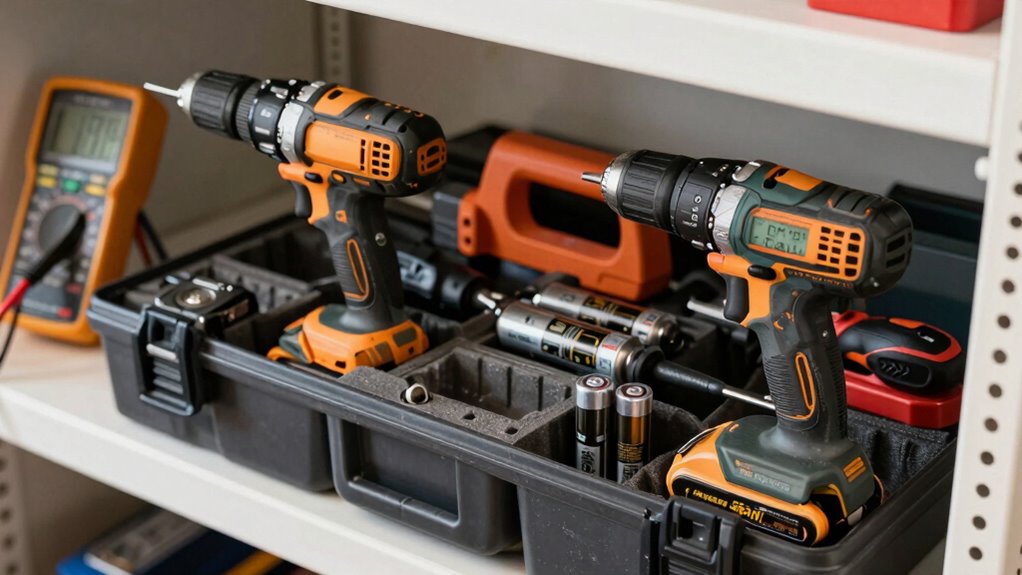
You should consider reconditioning or replacing your power tool batteries when you notice signs of wear, like reduced run time or difficulty holding a charge. How often you recondition depends on usage and battery condition, so keep an eye on performance. Sometimes, replacing the battery is more cost-effective than repeatedly reconditioning a worn-out one.
Signs of Battery Wear
As batteries age, their performance begins to decline, signaling that it may be time to recondition or replace them. You should pay attention to these signs of battery wear:
- Reduced battery capacity, causing shorter run times and needing more frequent charging.
- Sudden power surges or inconsistent power delivery during use, indicating the battery can’t maintain steady voltage.
- Difficulty holding a charge even after full charging, which suggests the battery’s internal chemistry has deteriorated.
These signs point to diminished efficiency and increased wear. If you notice any of these issues, it’s wise to evaluate whether reconditioning is enough or if replacement is necessary to ensure your power tools operate safely and effectively.
Frequency of Reconditioning
Determining when to recondition or replace your power tool batteries depends largely on their usage patterns and performance. If you notice the batteries hold less charge or take longer to recharge, it’s time to consider reconditioning. Modern battery technology has improved, but all batteries naturally degrade over time, especially with frequent use. Regularly inspecting and reconditioning batteries can extend their lifespan. Keep batteries in proper storage containers when not in use to minimize capacity loss. If reconditioning no longer restores performance or the batteries no longer hold a charge effectively, replacement might be necessary. Monitoring usage and performance helps you decide the right timing, ensuring your power tools stay reliable without unnecessary replacements. Proper reconditioning frequency keeps batteries healthy and maximizes their longevity.
Cost-Effectiveness of Replacement
Deciding whether to recondition or replace old power tool batteries depends largely on their cost-effectiveness. If reconditioning costs outweigh the benefits, replacing might be smarter, especially when considering energy efficiency. Before discarding, consider these factors:
- Battery Recycling Value: Old batteries can be recycled, reducing environmental impact and recouping some costs.
- Performance Decline: If battery capacity drops markedly, reconditioning may no longer restore adequate power.
- Long-Term Savings: Replacing batteries with new, energy-efficient models could save more over time than frequent reconditioning.
Weighing these points helps guarantee you make a cost-effective decision that supports both your budget and environmental responsibility.
Quick Tips for Long-Term Power Tool Storage Success
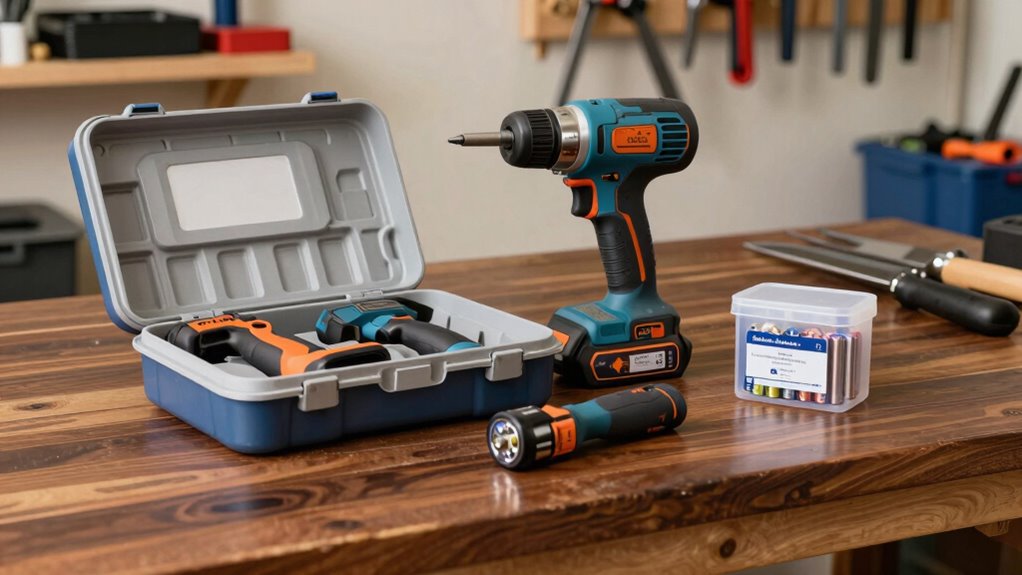
Properly storing your power tools and batteries is essential for long-term success. To maximize battery capacity, always store batteries in a cool, dry place away from direct sunlight and extreme temperatures. This helps prevent capacity loss and extends battery life. Implement effective power management by removing batteries from tools when not in use, especially during long storage periods. Keep batteries at around 40-60% charge to avoid capacity drain or overcharging. Use protective cases or containers to prevent physical damage and corrosion. Regularly inspect batteries and tools, cleaning contacts and terminals as needed. Label storage areas clearly to ensure quick access and avoid accidental damage. These quick tips help maintain peak performance and prolong the lifespan of your power tools and batteries.
Frequently Asked Questions
Can Temperature Fluctuations Damage Power Tool Batteries?
Temperature fluctuations can definitely damage your power tool batteries. When your storage environment experiences extreme or changing temperatures, it can harm the battery health, causing capacity loss and reducing lifespan. To protect your batteries, keep them in a cool, dry place with stable temperatures. Avoid storing them in places like garages or sheds where temperature swings are common. Proper storage helps maintain battery health and guarantees your tools stay ready to use.
Is It Better to Store Batteries Fully Charged or Empty?
Did you know that storing batteries at about 50% charge can extend their lifespan by up to 40%? When considering storage best practices, it’s better to keep batteries neither fully charged nor completely empty. Keeping them at this ideal level prevents capacity loss and chemical degradation. So, for the longest battery lifespan, charge your batteries to around half before storing and check periodically to maintain that level.
How Often Should I Check Stored Batteries for Maintenance?
You should check your stored batteries every 3 to 6 months for maintenance. During these checks, perform battery calibration if needed to guarantee accurate performance. Keep an eye on storage humidity; high humidity can cause corrosion, so store batteries in a cool, dry place. Regular inspections help prevent issues like capacity loss and extend your batteries’ lifespan, ensuring your power tools are always ready when you need them.
Are There Specific Storage Containers Recommended for Batteries?
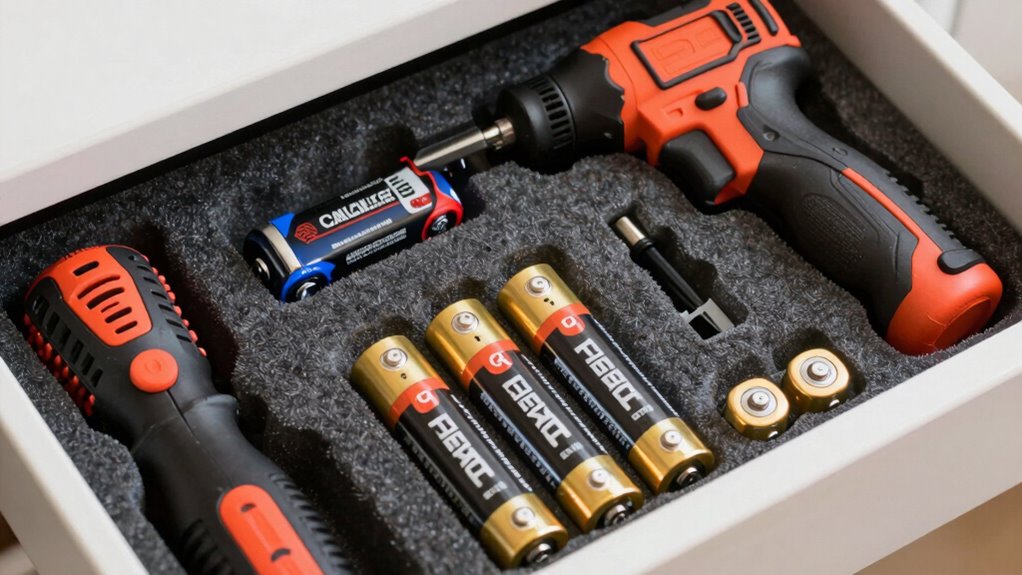
You should use dedicated storage cases designed for batteries, as they offer protection and organization. Avoid general containers; instead, opt for battery compartments or specialized storage cases with compartments that keep batteries separated and secure. These cases prevent damage, short circuits, and dust buildup. When storing, guarantee batteries are in a cool, dry place within the cases to extend their lifespan and maintain peak performance.
What Signs Indicate a Battery Needs Replacement Sooner?
A battery’s like a fading star, signaling it’s time to replace. Look for reduced run time, swelling, or corrosion, which are clear signs it’s nearing the end. Poor charging habits can accelerate this, so always follow proper charging routines. When a battery’s life dims, consider battery recycling options to dispose of it responsibly. If you notice these signs, replacing the battery promptly keeps your power tools performing at their best.
Conclusion
By properly storing your power tool batteries, you can extend their lifespan and save money in the long run. Imagine you’re a DIY enthusiast who stored batteries in a cool, dry place and followed best practices—your tools stayed ready for projects months later. Just like that enthusiast, taking a few simple steps now guarantees your batteries stay healthy, so you’re always prepared for your next task without surprise replacements. Proper storage truly pays off!