To stop tools from rusting in a humid garage, make certain you control moisture by using a dehumidifier and keep the space well-ventilated. Store your tools in dry, elevated containers with protective coatings like oil or rust inhibitors. Regularly inspect and clean your tools, and use desiccants to absorb excess moisture. Organizing your garage to improve airflow and maintaining humidity levels between 40-50% will help protect your tools long-term. Discover more tips to keep rust at bay.
Key Takeaways
- Maintain humidity levels between 40-50% using dehumidifiers or moisture absorbers in the garage.
- Store tools in dry, well-ventilated areas, elevated off damp floors and protected in sealed containers.
- Regularly clean and dry tools after use, applying protective coatings like oil or rust inhibitors.
- Improve airflow by ensuring proper ventilation, opening windows, or installing exhaust fans.
- Routinely inspect for rust, promptly remove it with brushing or DIY solutions, and reapply protective treatments.
![wisedry 2 x 500 Gram [2.2 lbs] Rechargeable Silica Gel Car Dehumidifier, Microwave Fast Reactivated Desiccant Packets Large for Gun Safe Closet Basement Garage Storage Moisture Absorber Bag Reusable](https://m.media-amazon.com/images/I/51pHUtcOd3L._SL500_.jpg)
wisedry 2 x 500 Gram [2.2 lbs] Rechargeable Silica Gel Car Dehumidifier, Microwave Fast Reactivated Desiccant Packets Large for Gun Safe Closet Basement Garage Storage Moisture Absorber Bag Reusable
✅ [ CLEAR WINDOWS ] – Wisedry silica gel car dehumidifier bag reduces condensation on car windows which…
As an affiliate, we earn on qualifying purchases.
As an affiliate, we earn on qualifying purchases.
Why Humidity Causes Rust and Why It Matters
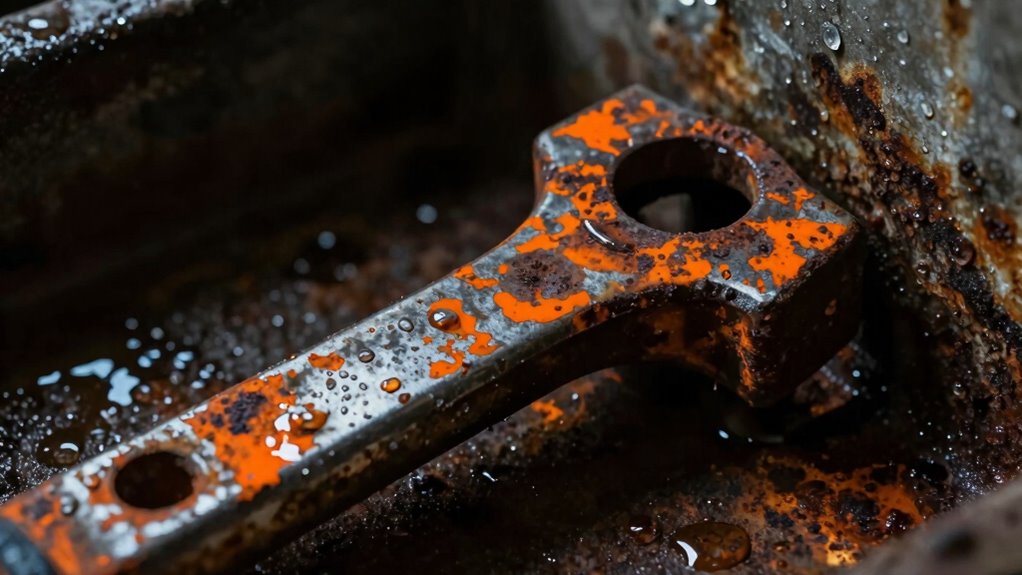
Humidity provides the moisture that rust needs to form on metal surfaces. When humidity levels are high, moisture settles on your tools and garage surfaces, creating an ideal environment for rust formation. This moisture reacts with iron and steel, leading to oxidation, which causes those unsightly rust spots. The more humid your garage, the faster rust can develop, even on well-used tools. Rust weakens metal, making tools less reliable and more prone to damage. Recognizing how humidity influences rust formation helps you understand why controlling moisture is vital. Without proper measures, your tools won’t last long, costing you time and money. Controlling moisture levels can significantly reduce rust formation and extend the lifespan of your tools. Additionally, understanding the effects of humidity on metal can help you choose better storage solutions to keep your tools protected. Being aware of humidity levels can guide you in implementing effective rust prevention strategies. Proper ventilation and dehumidifiers are essential in maintaining optimal garage humidity, preventing excessive moisture buildup.

Vbeijll 5 Gram (50 Pack) Color-Indicating Silica Gel Packets, Premium Food Grade Desiccant – Rechargeable Moisture Absorbers for Food Storage, Electronics, 3D Filament & Safes
FOOD GRADE & SAFE: The storage desiccant packs are made from food grade silicone and has passed a…
As an affiliate, we earn on qualifying purchases.
As an affiliate, we earn on qualifying purchases.
Check Your Garage’s Humidity and Ventilation
Have you checked your garage’s humidity levels lately? Monitoring humidity is key to preventing rust on your tools. Use a hygrometer to get an accurate reading—ideally, keep it between 40-50%. Proper garage organization helps air circulate better, reducing moisture buildup. Make certain your ventilation system is working effectively; open windows or install exhaust fans if needed. Good airflow minimizes dampness that causes rust. Consider labeling your tools so you know which ones are most susceptible to moisture damage, and store vulnerable items in moisture-resistant containers. Regularly inspecting humidity levels and maintaining proper ventilation keeps your garage dry. Indoor air quality plays a crucial role in controlling moisture and preventing rust formation. Additionally, implementing fire-starting kits in your prep setup can ensure you have reliable warmth and protection against damp conditions. This simple step creates an environment where rust struggles to form, extending the life of your tools and keeping your workspace efficient.

WD-40 Specialist Corrosion Inhibitor, Long-Lasting Anti-Rust Spray, 6.5 OZ
Coats metal parts to lubricate and protect against rust and corrosion by blocking out air and moisture. Protects…
As an affiliate, we earn on qualifying purchases.
As an affiliate, we earn on qualifying purchases.
How to Store Tools Properly to Prevent Rust
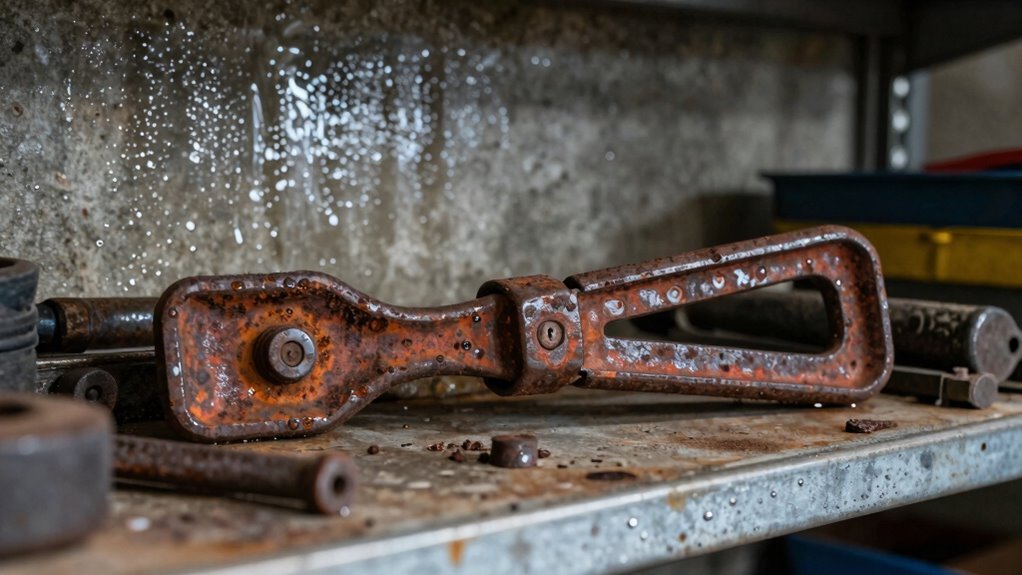
To keep your tools rust-free, start by applying protective coatings like oil or rust inhibitors. Make sure you store them in a dry, well-ventilated space, and check on them regularly for any signs of corrosion. Proper storage and maintenance are key to preventing rust in humid garages. Additionally, regularly inspecting your tools can help you catch early signs of rust and address them before they worsen. Incorporating landscaping to enhance natural beauty around your storage area can also reduce humidity levels and protect your tools from moisture damage. Using portable oil radiators can help maintain a comfortable, dry environment in your garage, further reducing the risk of rust formation on your tools. Ensuring proper storage techniques can significantly extend the lifespan of your tools and keep them in optimal condition.
Use Protective Coatings
Ever wondered how a simple coating can save your tools from rust? Protective coatings are a smart way to enhance rust prevention, especially in a humid garage climate. Applying oil, wax, or specialized rust inhibitors creates a barrier that prevents moisture from reaching the metal surface. Regularly coating your tools helps maintain their condition and prolongs their lifespan. Use a clean cloth to apply a thin layer of protective product, ensuring even coverage. For best results, focus on areas prone to moisture buildup, like hinges and joints. Remember, consistent application is key to combating rust caused by high humidity. Incorporating proper storage solutions such as sealed containers or moisture absorbers can further enhance rust prevention. Additionally, understanding the importance of Protective coatings in Victorian steampunk aesthetics can inspire you to adopt both functional and stylish solutions for your workshop. By incorporating protective coatings into your tool maintenance routine, you’ll considerably reduce rust formation and keep your tools in top shape for years to come. Using protective coatings as part of a comprehensive rust prevention strategy can make a significant difference in high-humidity environments. Considering the effects of humidity on metal can help you choose the most effective protective measures.
Store in Dry Environment
Protecting your tools from rust starts with choosing the right storage environment. Keeping tools in a dry space greatly enhances their durability and helps maintain their effectiveness over time. To guarantee ideal garage organization and prevent moisture buildup, consider these key tips:
- Use dehumidifiers or moisture absorbers to control humidity levels.
- Store tools in airtight containers or sealed toolboxes.
- Keep tools elevated on shelves or hooks to avoid direct contact with damp floors.
- Regularly inspect and clean tools to prevent corrosion and ensure optimal performance, especially when dealing with engine performance parts like flywheels. Additionally, maintaining proper ventilation in your garage can significantly reduce moisture accumulation and further protect your tools from rust formation. Proper storage techniques are essential for preventing corrosion, ensuring your tools remain in top condition for years to come. Proper tool maintenance also plays a vital role in extending the lifespan of your tools and preventing rust. Incorporating environmental controls can further help in managing moisture levels and safeguarding your tools from deterioration.
Regular Maintenance Checks
Regular maintenance checks are essential to guarantee your tools stay rust-free over time. By inspecting your tools regularly, you can catch early signs of rust or damage, which helps improve tool durability. Clean tools after each use, removing dirt, moisture, and debris that can accelerate rust formation. Apply protective coatings like oil or rust inhibitors to vulnerable surfaces for added rust prevention. Check storage areas for humidity or leaks, and assure tools are stored properly—preferably in a dry, ventilated space. Maintaining a routine ensures you identify issues before they worsen, extending the life of your tools. Proper tool storage in a dry environment is crucial to prevent rust from developing. Regular upkeep, including monitoring environmental factors like humidity, can significantly reduce the risk of tool corrosion. Ensuring good ventilation in your storage area can further help control moisture levels and prevent rust formation. Additionally, understanding sound vibrations and their effects on materials can inform your storage practices to minimize rust risks and maintain your tools’ integrity over time. Prioritize regular maintenance to keep rust at bay and maximize your tools’ longevity.

iLIVING 12" Wall Mounted Shutter Exhaust Fan, Automatic Shutter, with Thermostat and Variable Speed controller, 0.6A, 960 CFM, 1400 SQF Coverage Area Silver (ILG8SF12V-ST)
POWERFUL AIR VENTILATOR – 960 CFM, 115V, 0.6A, 1/20 Horse Power, 1650 RPM, Coverage up to 1400 square…
As an affiliate, we earn on qualifying purchases.
As an affiliate, we earn on qualifying purchases.
Protective Coatings and Treatments to Keep Tools Rust-Free
Protective coatings and treatments can be your first line of defense against rust. Applying rust-resistant coatings, using desiccant packs, and practicing regular maintenance help keep your tools in top shape. Implementing these steps guarantees your tools stay protected in humid environments.
Applying Rust-Resistant Coatings
Applying rust-resistant coatings is a highly effective way to keep your tools free from corrosion in humid garages. These coatings form a barrier that prevents moisture from reaching metal surfaces, essential for rust prevention. To maximize effectiveness, consider these steps:
- Choose a high-quality, waterproof paint or spray designed specifically for metal tools.
- Clean and dry tools thoroughly before applying the coating to guarantee proper adhesion.
- Apply multiple thin layers for even coverage, especially on crevices and hard-to-reach areas.
Using Desiccant Packs Effectively
Since moisture in the air can quickly lead to rust on your tools, using desiccant packs is an effective way to reduce humidity in your garage. To maximize their effectiveness, focus on proper desiccant placement—position packs where air circulation is limited, such as tool drawers or cabinets. This guarantees moisture absorption happens directly around your tools, preventing dampness that causes rust. Regularly check the desiccant packs and replace or recharge them when they become saturated. Avoid placing them directly on tools or in open spaces where moisture can bypass the packs. By strategically placing desiccants and maintaining them, you’ll create a drier environment that considerably slows rust formation and extends the lifespan of your tools.
Regular Maintenance Practices
Keeping your tools rust-free requires more than just controlling humidity; regular maintenance plays an essential role. Protective coatings and treatments help preserve metal alloy properties and prevent corrosion, especially for industrial equipment stored in humid garages. Properly applying oil or rust inhibitors creates a barrier that repels moisture. You should also regularly inspect tools for early signs of rust, cleaning and reapplying protective layers as needed. Additionally, consider using rust-resistant paints on exposed metal surfaces for long-term protection.
Here are three key practices to maintain your tools:
- Apply a thin, even coat of oil or rust inhibitor after each use.
- Use specialized protective sprays for industrial equipment.
- Store tools in airtight containers or with desiccant packs to reduce moisture exposure.
Use Desiccants and Moisture Absorbers in Your Garage
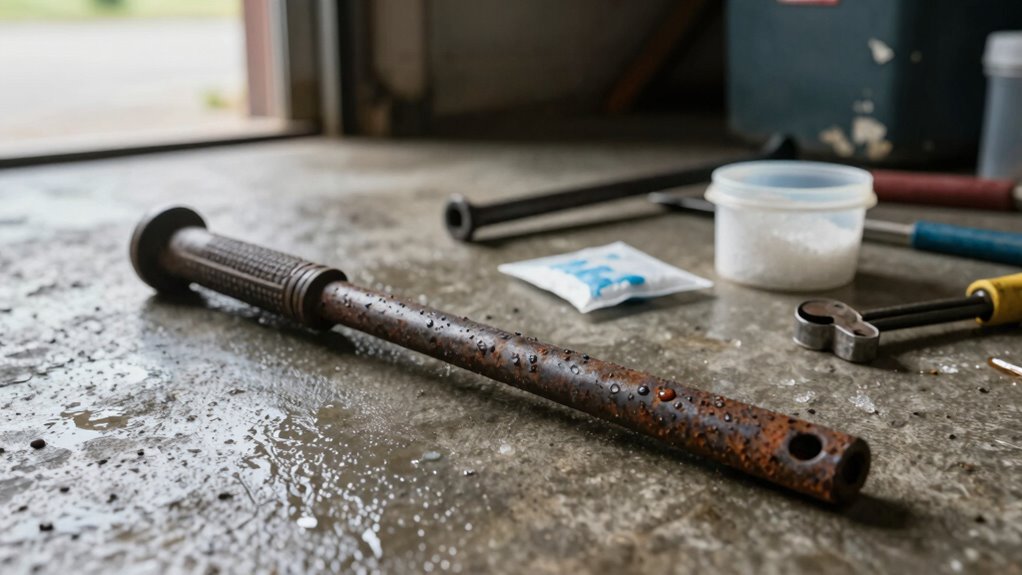
To effectively combat moisture buildup in your garage, consider using desiccants and moisture absorbers. These tools help with humidity control and reduce excess moisture that leads to rust. Place moisture absorbers in corners or areas prone to dampness to keep the environment dry. They work by absorbing humidity, preventing condensation on your tools and surfaces. Using moisture barriers on garage floors and walls also enhances protection. Here’s a quick comparison:
| Desiccants & Absorbers | Moisture Barriers |
|---|---|
| Absorb excess moisture | Block moisture entry |
| Reusable or disposable | Provide long-term dryness |
| Easy to place around | Seal walls and floors |
| Cost-effective | Improve overall humidity control |
How Regular Maintenance Prevents Rust Before It Starts
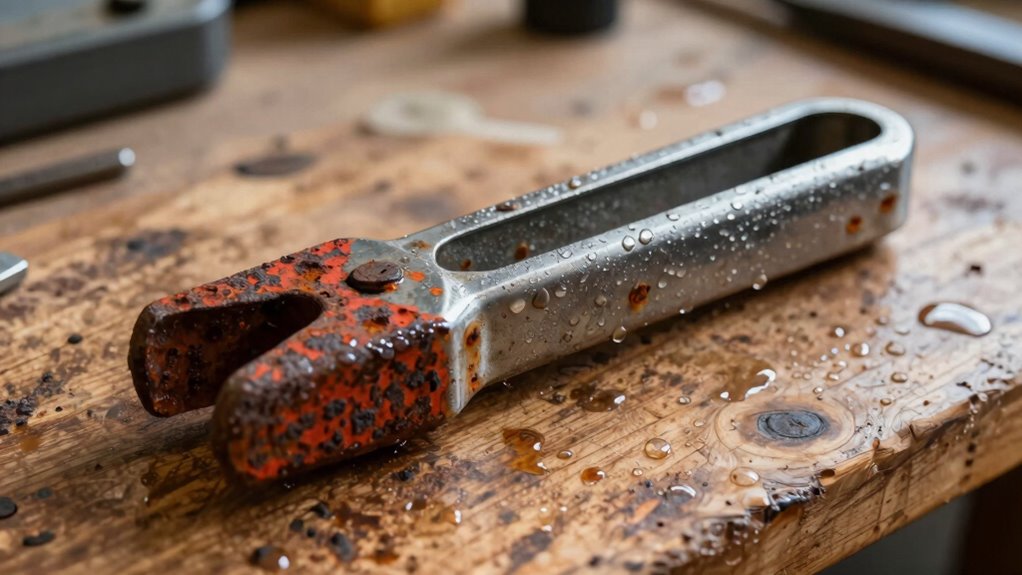
Regular maintenance is your best defense against rust forming on your tools and surfaces. Consistently inspecting and cleaning your tools prevents moisture buildup, a key factor in rust prevention. By applying a light coating of oil after each use, you create a barrier against humidity. Additionally, controlling humidity levels in your garage reduces the risk of rust before it starts.
Consider these steps:
- Regularly check for signs of moisture or corrosion.
- Keep tools dry and wipe them down after use.
- Use moisture absorbers to support humidity control.
Staying proactive with maintenance helps keep rust at bay and extends your tools’ lifespan, making rust prevention more effective in humid environments.
DIY Methods to Remove Rust From Existing Tools
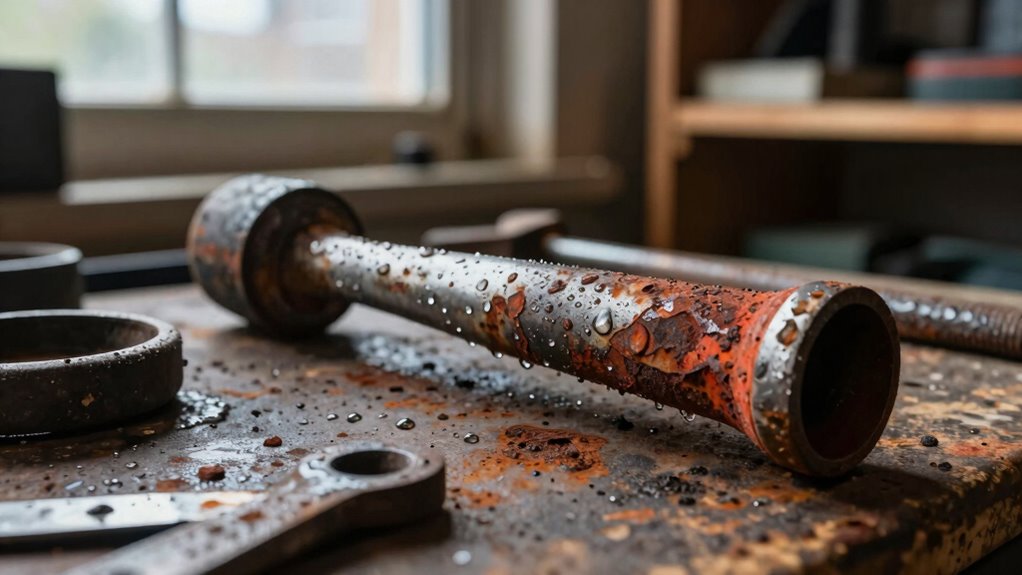
When rust has already taken hold on your tools, removing it efficiently requires a few proven DIY methods. Rust removal techniques like soaking tools in vinegar or lemon juice can loosen rust without harsh chemicals. For tougher spots, use a wire brush or steel wool to scrub away corrosion. Baking soda mixed with water creates a paste that can be applied to rusty areas, then scrubbed off after it dries. Alternatively, commercial rust removers are effective but should be used carefully. Always rinse and dry your tools thoroughly afterward to prevent further rusting. These DIY cleaning methods are simple, cost-effective, and practical for keeping your tools in good shape, especially in humid environments. Regularly applying these techniques will extend the lifespan of your tools.
Choose Rust-Resistant Tools and Smart Storage Solutions
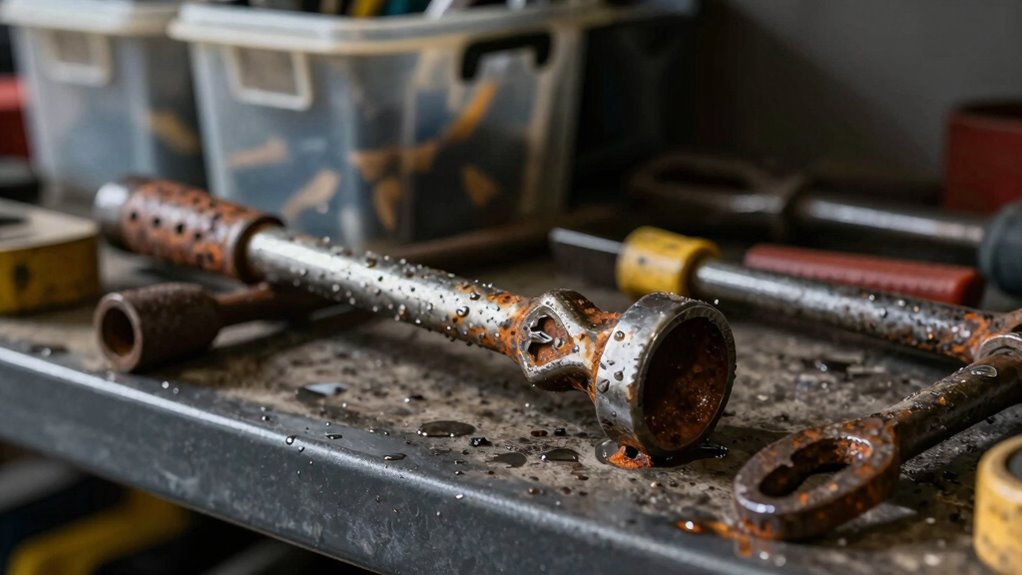
Choosing rust-resistant tools and implementing smart storage solutions can markedly reduce corrosion in humid garages. Selecting tools with high tool durability and appropriate material choices is essential. For example, consider:
Opt for rust-resistant tools and smart storage to prevent corrosion in humid garages.
- Stainless steel tools – resistant to rust and corrosion, ideal for humid environments.
- Tools with protective coatings – such as powder coating or oil finishes, that create a barrier against moisture.
- Plastic or composite storage containers – prevent metal-to-metal contact and reduce moisture buildup.
Long-Term Strategies to Keep Your Garage Rust-Free
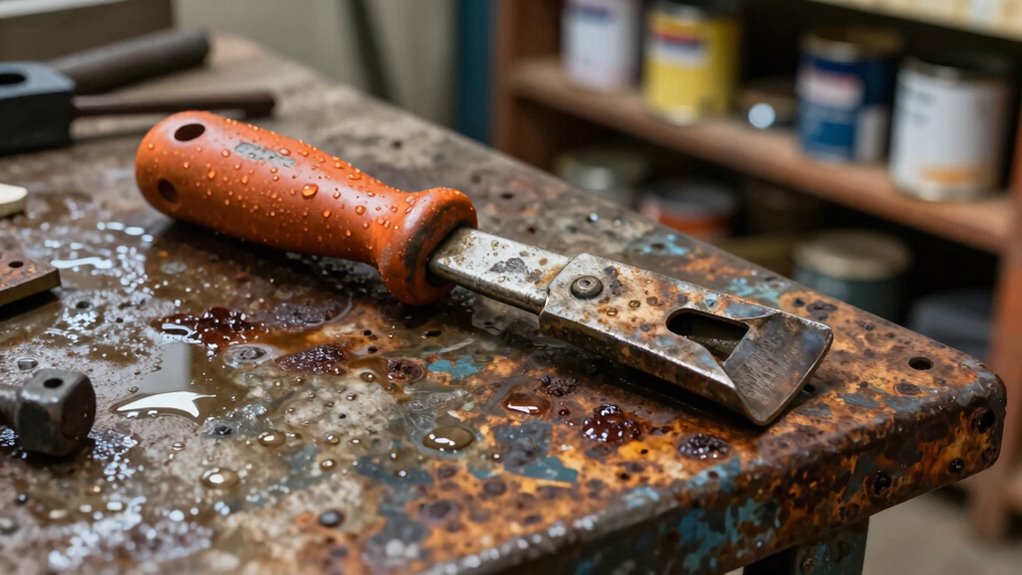
To effectively keep your garage rust-free over the long term, proactive maintenance and consistent habits are key. Regularly organize your garage to guarantee proper airflow and reduce humidity buildup, which slows rust formation. Keep your tools elevated and stored in dry, well-ventilated areas, avoiding clutter that traps moisture. Improving lighting can also help you spot signs of rust early and maintain a clean environment. Use bright, energy-efficient bulbs to enhance visibility and make it easier to check for moisture or corrosion. Establish a routine to wipe down tools and surfaces periodically, and consider adding moisture absorbers or dehumidifiers to control humidity levels. These habits, combined with good garage organization and lighting improvements, create a long-term environment that discourages rust.
Frequently Asked Questions
What Are the Best Dehumidifiers for Garages?
The best dehumidifiers for garages are those with high moisture removal capacity, like the Frigidaire FFAD7033R1 or Eva-Dry Edv-1100. They help with tool maintenance and rust prevention techniques by reducing humidity levels. You should choose one that fits your garage size and is easy to operate. Regularly running a dehumidifier keeps tools dry, minimizes rust, and extends their lifespan, ensuring your garage stays organized and your tools stay in top shape.
How Often Should I Inspect Tools for Rust?
You should inspect your tools for rust at least once a month, especially if you store them in humid garages. Regular tool storage checks help you catch early signs of rust and prevent further damage. When inspecting, look for discoloration or rough patches. Proper rust prevention involves keeping tools dry, using protective coatings, and storing them in a cool, low-humidity environment. Consistent maintenance guarantees your tools stay in top condition longer.
Can Changing Garage Doors Reduce Humidity Levels?
Yes, changing garage doors can reduce humidity levels. Installing proper garage insulation helps regulate temperature and moisture, while enhanced ventilation systems improve air circulation, preventing dampness. A well-insulated, ventilated garage creates a less humid environment, protecting your tools from rust. Consider upgrading to insulated doors with vents or exhaust fans to keep humidity in check, ultimately extending the lifespan of your tools and maintaining a dry storage space.
Are There Eco-Friendly Rust Prevention Options?
Yes, there are eco-friendly rust prevention options that act like guardians for your tools. You can apply eco-friendly coatings, which are safe for the environment and effective at blocking moisture. Natural rust inhibitors, derived from plant-based or mineral sources, provide a chemical-free shield against corrosion. These options are gentle on the planet while keeping your tools protected, ensuring your garage remains eco-conscious and rust-free.
How Do Temperature Fluctuations Affect Rust Formation?
Temperature fluctuations cause moisture cycles that substantially impact rust formation. When temperatures rise and fall, they create condensation, leading to corrosion acceleration on your tools. You might notice rust forming faster during these changes because moisture interacts with metal surfaces repeatedly. To protect your tools, keep humidity levels steady and avoid rapid temperature shifts, which help reduce moisture cycles and slow down rust development.
Conclusion
Keeping your tools rust-free in a humid garage isn’t just about appearance—it’s about preventing costly replacements. Did you know that rust can reduce a tool’s lifespan by up to 70%? By checking humidity levels, using protective coatings, and practicing regular maintenance, you can extend your tools’ life considerably. Stay proactive, store wisely, and incorporate moisture absorbers—you’ll save money and keep your garage organized and efficient for years to come.