To properly lock down your side and entry doors, start by evaluating their material and condition, replacing worn or damaged components. Install high-quality deadbolts and reinforce door frames and hinges with longer screws to resist forcing. Consider smart locks for added convenience and remote monitoring. Regularly inspect and maintain locks, lubricate moving parts, and ensure hardware is secure. By addressing these details, you’ll strengthen your doors against intruders—continue to learn effective security upgrades and tips.
Key Takeaways
- Inspect and reinforce door frames and hinges to prevent forced entry and improve overall strength.
- Install high-quality deadbolts and reinforce strike plates with longer screws for added security.
- Use security accessories like peepholes, security cameras, and additional hardware to deter intruders.
- Ensure proper door material selection and routine maintenance to maintain durability and resistance.
- Regularly check locks and hardware for rust, damage, or wear, and upgrade or repair as needed.

Schlage B60 N 619 Deadbolt, Keyed 1 Side, Highest Residential Security, Satin Nickel
IDEAL USE: Deadbolt thrown or retracted by key from outside or by inside turn unit; perfect for use…
As an affiliate, we earn on qualifying purchases.
As an affiliate, we earn on qualifying purchases.
How to Assess the Security of Your Side and Entry Doors
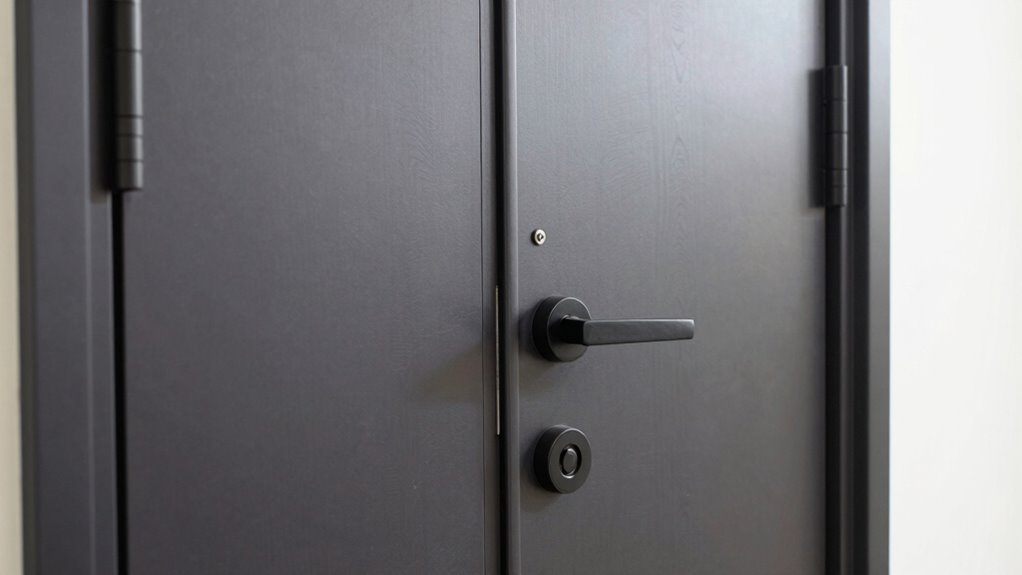
To effectively assess the security of your side and entry doors, start by inspecting their structural integrity. The door material plays a pivotal role in how secure and durable your door is. Solid wood, steel, or fiberglass tend to be more resistant to forced entry than hollow-core doors. Check for any cracks, warping, or damage that could weaken the door’s strength. Weather resistance is also essential; a door that withstands rain, snow, and temperature changes remains sturdy over time. Make sure the door material is designed for outdoor use and has proper sealing around the edges. It’s also helpful to review door installation to ensure it’s correctly fitted and secure. If your door shows signs of wear or isn’t weather-resistant, it’s time to think about upgrades to improve both security and longevity. Incorporating natural materials can also enhance durability and aesthetic appeal in your outdoor entryways. Additionally, consider the importance of door reinforcement techniques to further enhance security, such as installing a deadbolt lock or reinforcing the door frame. Using security accessories like strike plates and hinges can also help prevent forced entry and improve overall door security.

MOSECYOU Extra-Long Door Strike Plate 7", Extended Reinforced Striker Plate, Heavy Duty, Oversized to Repair Damaged Worn Frame/Slot/Jamb, Large Hole to Fix Latch Sticking (Satin Nickel)
Oversized Plate – Standard Lip Design: Features an extra-long (7”) design to enhance security and cover the damaged…
As an affiliate, we earn on qualifying purchases.
As an affiliate, we earn on qualifying purchases.
Choosing the Best Locks for Your Doors

When choosing locks for your doors, you need to take into account different types of mechanisms, such as deadbolts, smart locks, or traditional key locks. You should also evaluate the security level each option offers to match your specific needs. Picking the right lock involves balancing convenience with the protection your home requires. Considering the variety of lock options available, it’s helpful to understand the importance of lock durability and how it impacts long-term security. Additionally, staying informed about potential security threats can help you select the most effective locking solutions.
Types of Lock Mechanisms
Choosing the right lock mechanism is essential for ensuring your door’s security. The type of lock you select should match your door material, whether wood, metal, or fiberglass, for maximum strength and compatibility. Deadbolts offer high security for exterior doors, while knob locks are more suitable for interior use. Lever locks provide ease of access, especially for those with mobility issues. Consider lock aesthetics to match your door’s style—sleek, modern locks for contemporary doors or decorative hardware for traditional designs. The mechanism’s quality impacts durability and resistance to tampering. Additionally, understanding the testing accuracy of different lock mechanisms can help you select a more reliable option. By understanding these options, you can pick a lock that not only secures your entry but also enhances your door’s security features and complements your door’s appearance and fits your security needs. Ensuring proper installation techniques can also play a significant role in maintaining the integrity of your lock system. To guarantee long-term effectiveness, it’s important to choose locks that have been tested for tamper resistance and meet industry standards. Properly selected and maintained locks can also minimize the risk of security breaches, providing peace of mind for your home or business.
Security Level Options
Are you unsure which lock provides the right level of security for your doors? Your choice depends on your door material and the lock’s durability. For wooden doors, a sturdy deadbolt offers strong resistance against forced entry, while metal doors might require high-security locks designed for tougher materials. If you want enhanced security, consider locks with reinforced strike plates and anti-drill features. For exterior doors exposed to the elements, choose weather-resistant locks that won’t weaken over time. The durability of your lock directly impacts its effectiveness, so invest in high-quality options suited for your door type. Additionally, understanding somatic therapy techniques can help you develop a sense of safety and calmness, which is essential for maintaining a secure environment. Incorporating security features tailored to your specific door material ensures you get the right protection without sacrificing functionality or longevity. Recognizing the importance of lock installation is crucial to ensure your chosen lock performs optimally and provides the security you need. Proper lock maintenance can extend the lifespan of your locks and keep them functioning effectively, especially in harsh weather conditions. Considering vetted security systems can also complement your physical locks by providing an added layer of remote monitoring and alert capabilities.

Philips Wi-Fi Door Lock, WiFi Smart Lock Keyless Entry Deadbolt for Front Door, Compatible with Alexa & Google Assistant, Remote Control, Built-in WiFi, APP Fingerprint Passcode Unlock, Auto Locking
𝐅𝐥𝐞𝐱𝐢𝐛𝐥𝐞 𝐖𝐚𝐲𝐬 𝐭𝐨 𝐔𝐧𝐥𝐨𝐜𝐤: Unlock the way you want: app, passcode, fingerprint, physical key, or voice via Alexa/Google…
As an affiliate, we earn on qualifying purchases.
As an affiliate, we earn on qualifying purchases.
Installing Deadbolts and Reinforcement Hardware Correctly
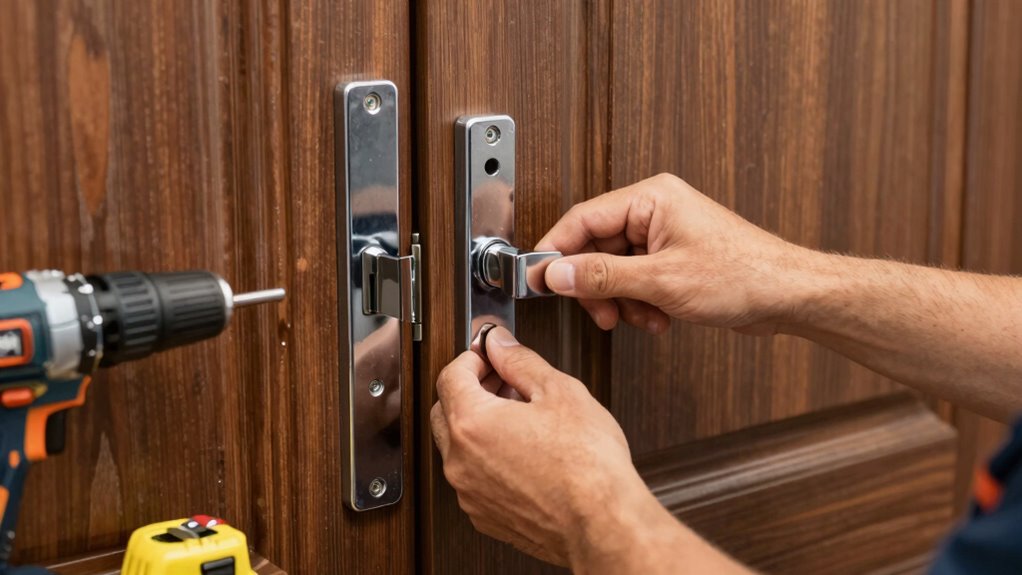
Installing deadbolts and reinforcement hardware correctly is essential for guaranteeing your door provides maximum security. Start by choosing hardware that matches your door material for a seamless look and reliable fit. For example, steel doors require heavy-duty deadbolts, while wooden doors may need reinforcement plates to prevent splitting. Ensure the lock aesthetics complement your door’s style so it doesn’t look out of place. Proper installation involves drilling precise holes and securing hardware tightly with the right screws. Don’t rush this step—misaligned or loose components can compromise security. Use a level to confirm the deadbolt is straight and functions smoothly. When installed correctly, your deadbolt and reinforcement hardware will strengthen your door’s integrity, making it much harder for intruders to force their way in. Additionally, considering water-cooled mattress pads and dehumidifiers, which help maintain a dry environment, can indirectly support your home’s overall security by preventing moisture-related issues that might weaken door frames or hardware over time. Maintaining a stable environment is also important for preventing hardware corrosion, which can diminish the effectiveness of your security measures over time. Ensuring your home’s environment is well-maintained can help preserve the effectiveness of your security hardware and protect your property.

Door Armor MAX 5-Piece Door Reinforcement Kit – Anti Kick-in Door Security for Door Jamb, Frame & Hinges, Heavy-Duty Steel Door Protection, Made in USA (Satin Nickel)
𝐏𝐫𝐞𝐯𝐞𝐧𝐭 𝐃𝐨𝐨𝐫 𝐊𝐢𝐜𝐤-𝐈𝐧𝐬 & 𝐅𝐨𝐫𝐜𝐞𝐝 𝐄𝐧𝐭𝐫𝐲: Strengthen weak entry doors with the Door Armor MAX reinforcement kit. Designed…
As an affiliate, we earn on qualifying purchases.
As an affiliate, we earn on qualifying purchases.
How Secure Are Your Door Frames and Hinges?
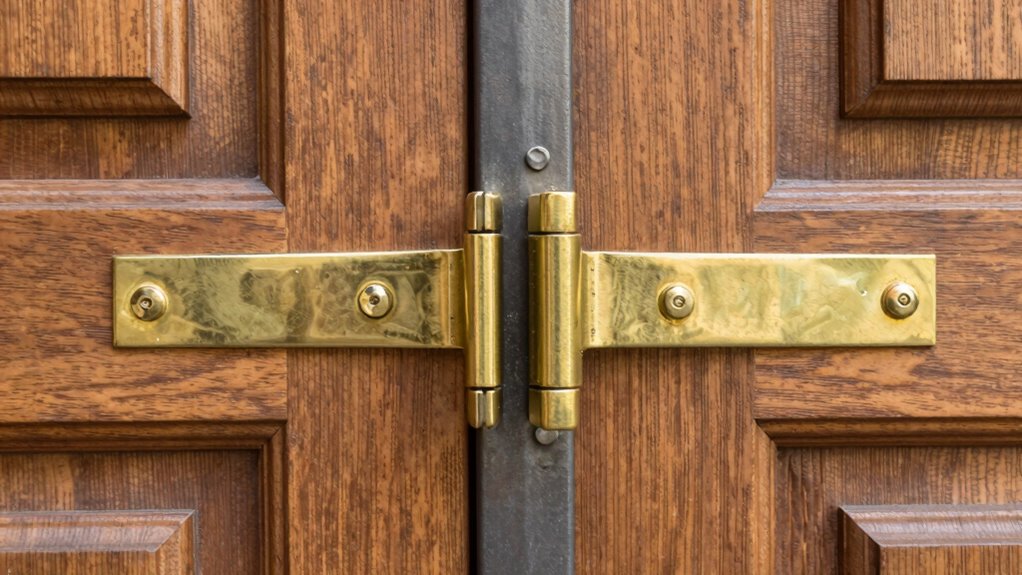
Since door frames and hinges are often the first points of attack for intruders, their strength directly affects your home’s security. You need to assess your door frame integrity and hinge strength regularly. Weak frames or loose hinges can be exploited easily, putting your safety at risk. Here are four critical signs to watch for:
Regularly check door frames and hinges for cracks, rust, or looseness to keep your home secure.
- Visible cracks or warping in the door frame
- Loose or squeaky hinges that wobble under pressure
- Difficulty opening or closing the door smoothly
- Hinges that are visibly damaged or rusted. Regular inspections can help identify structural vulnerabilities early before they compromise your security. Being aware of door hardware condition is essential for maintaining a secure entry point. Additionally, understanding the materials used in your door components can guide you in choosing more durable replacements. Conducting routine maintenance on hinges and frames ensures long-term stability and security.
Smart Locks: The Future of Home Security

Smart locks offer enhanced security features that make your home safer and more resilient against intruders. With convenient access control, you can secure or unbolt your door remotely or grant temporary access to visitors. These modern systems simplify your security setup while giving you peace of mind.
Enhanced Security Features
As technology advances, smart locks are transforming the way you secure your home, offering a level of convenience and control that traditional locks can’t match. Enhanced security features take your protection further by integrating alarm systems and window security. Imagine feeling confident knowing your home is monitored and protected from intruders. Here are four key benefits:
- Real-time alerts that notify you of suspicious activity.
- Remote locking and unlocking for added convenience.
- Integrated alarm systems that activate instantly during a breach.
- Enhanced window security measures that deter forced entry.
These features work together to create an all-encompassing defense, giving you peace of mind knowing your doors, windows, and entire home are fortified against threats.
Convenient Access Control
Have you ever wished you could open your door without fumbling for keys or remembering a code? Smart locks make that possible with keyless entries, offering quick, hassle-free access. You can release your door using a smartphone, fingerprint, or keypad—no more searching for keys. Plus, with access customization, you control who enters and when, perfect for family, guests, or service providers. Here’s a quick overview:
| Feature | Benefit | Example |
|---|---|---|
| Keyless Entries | Easy, fast access | Smartphone app, fingerprint |
| Access Customization | Control access times | Set temporary codes for visitors |
| Remote Lock/Unlock | Manage from anywhere | Lock doors remotely |
| User Management | Add or remove users easily | Grant access to family members |
| Security Alerts | Stay informed of activity | Notifications for door activity |
How to Secure Your Doors When You’re Away
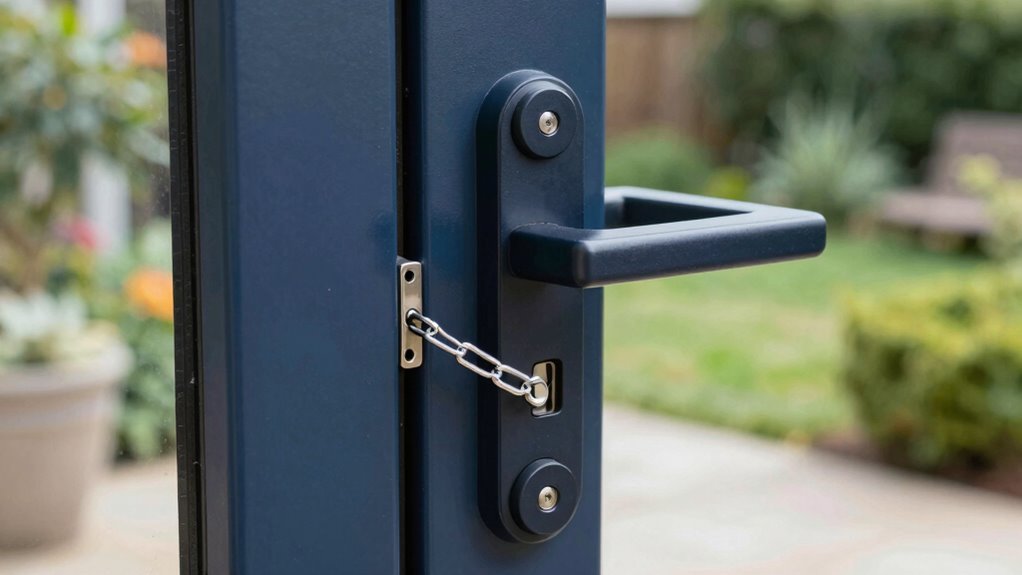
When you’re away from home, guaranteeing your doors are securely locked is essential to prevent intruders from gaining access. Focus on the door material and lock durability to strengthen security. A solid door made of steel or heavy-duty wood resists forced entry better than flimsy options. Additionally, invest in high-quality locks that withstand tampering and weathering.
Secure your home by choosing sturdy doors and durable locks to prevent intruders when you’re away.
Here are four ways to secure your doors when you’re gone:
- Reinforce door frames and hinges for added strength.
- Install deadbolt locks with long throw bolts.
- Use smart locks for remote locking and monitoring.
- Remove or hide spare keys to prevent unauthorized access.
Taking these steps ensures your home stays safe, even when you’re not there.
Common Mistakes That Weaken Your Door Security
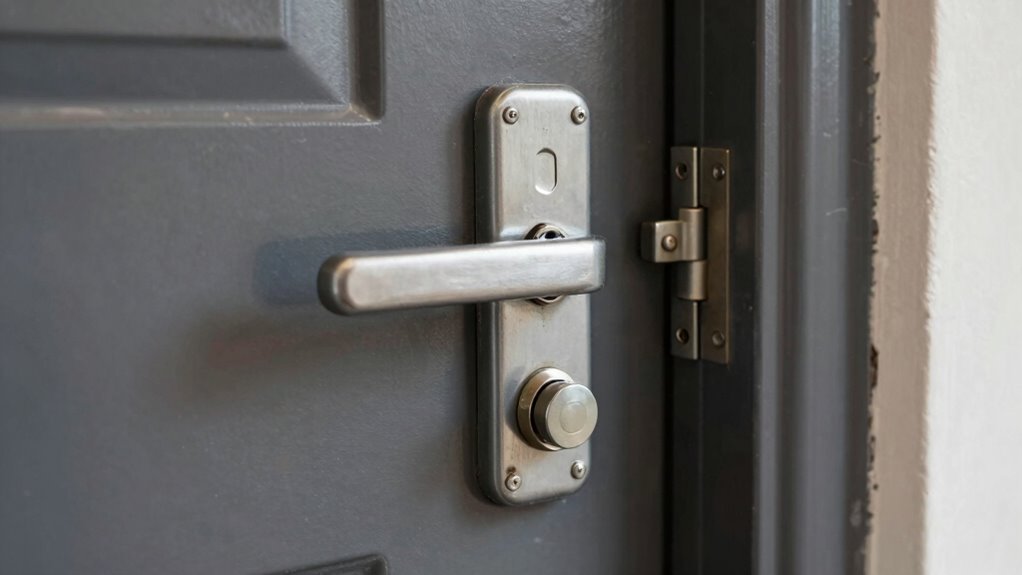
Many homeowners unknowingly weaken their door security by making simple mistakes that are easily fixed. One common error is choosing the wrong door material; a weak or hollow door offers little resistance against forced entry. Solid wood or metal doors provide better security than cheap, lightweight options. Additionally, neglecting proper weatherproofing techniques can lead to damage over time, compromising the door’s integrity. Water infiltration can warp or rot wooden doors, making them easier to break into. Failing to seal gaps or cracks reduces overall security and invites intruders. Ensuring your door is made from sturdy material and properly weatherproofed keeps it strong and resistant. Addressing these basic mistakes greatly enhances your door’s ability to protect your home effectively.
Upgrading Old Doors and Locks for Better Safety
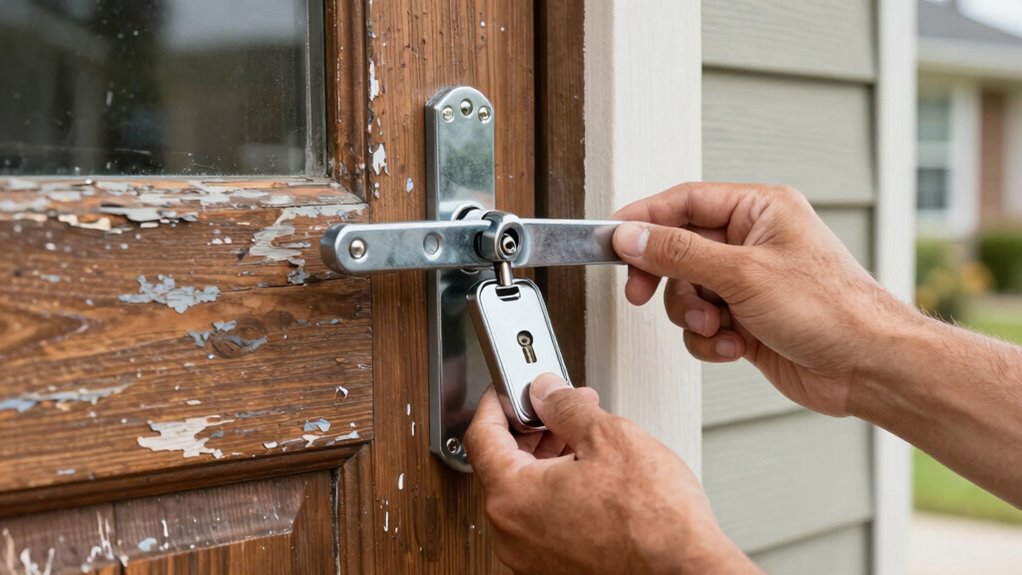
To boost your home’s security, start by evaluating the quality of your current doors and locks. Choosing modern lock systems and having a professional install them guarantees your upgrades are effective and reliable. Proper installation not only improves safety but also gives you peace of mind.
Assessing Existing Door Quality
Old doors and locks can compromise your home’s security, so evaluating their condition carefully is essential. Check the door material; solid wood or metal offers better protection, while hollow doors are weaker. Consider weather resistance—exposure to rain, sun, and wind can degrade materials over time, reducing strength. Assess the overall sturdiness: does the door wobble or show signs of rot and cracks? Look at the lock’s integrity—if it’s rusty or jammed, it’s a vulnerability. Finally, examine hinges and hardware for rust or damage that might weaken the door’s stability.
Here are four key signs you need an upgrade:
- Visible warping or cracking
- Rust and corrosion
- Weak or loose hardware
- Poor weather resistance
Choosing Modern Lock Systems
Upgrading to modern lock systems can substantially enhance your home’s security by providing more reliable and advanced protection. Modern locks often feature smart technology, allowing you to control access remotely or monitor entry activity through your smartphone. Keyless entry systems eliminate the need for physical keys, reducing the risk of lockouts or lost keys. These systems can include keypad codes, fingerprint recognition, or app-based access, making it easier to grant temporary access to guests or service providers. Choosing the right modern lock system means prioritizing convenience and security simultaneously. You’ll benefit from increased control, better audit trails, and fewer vulnerabilities associated with traditional locks. Upgrading your locks with these advanced features guarantees your home remains safer and more accessible on your terms.
Professional Installation Benefits
Professional installation guarantees your new locks and doors are fitted correctly, maximizing their security benefits. Proper installation assures your door material is used effectively, enhancing durability and safety. It also optimizes weather resistance, protecting your home from harsh elements. When experts install your doors and locks, you gain peace of mind knowing they’re secure and reliable.
Consider these emotional benefits:
- Feel confident that your family is protected from intruders.
- Rest easy knowing your doors withstand rain, wind, and extreme weather.
- Experience the comfort of a secure home, no matter the season.
- Enjoy the satisfaction of investing in long-lasting security that saves money over time.
Professional installation truly elevates your safety, making your home resilient and secure.
Additional Security Tips for Your Entry Doors
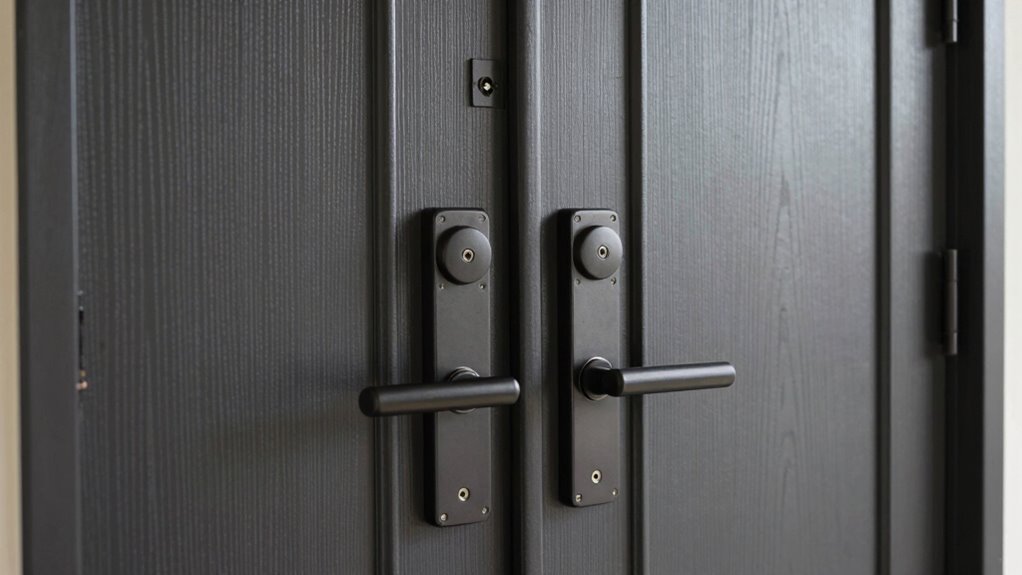
To enhance the security of your entry doors, consider adding a deadbolt lock in addition to your existing lock. The type of door material plays a vital role; sturdy materials like solid wood or steel provide better resistance against forced entry. Weatherproofing techniques not only protect your door from the elements but also keep the lock functioning properly over time. Make certain your door frame is reinforced and properly aligned, making it harder for intruders to pry open. Use a strike plate with longer screws to secure the lock better. Additionally, installing a peephole or security camera gives you a clear view before opening the door. These steps collectively strengthen your entry point, making it more difficult for anyone to breach your home’s security.
Maintaining and Inspecting Your Door Locks for Long-Term Security
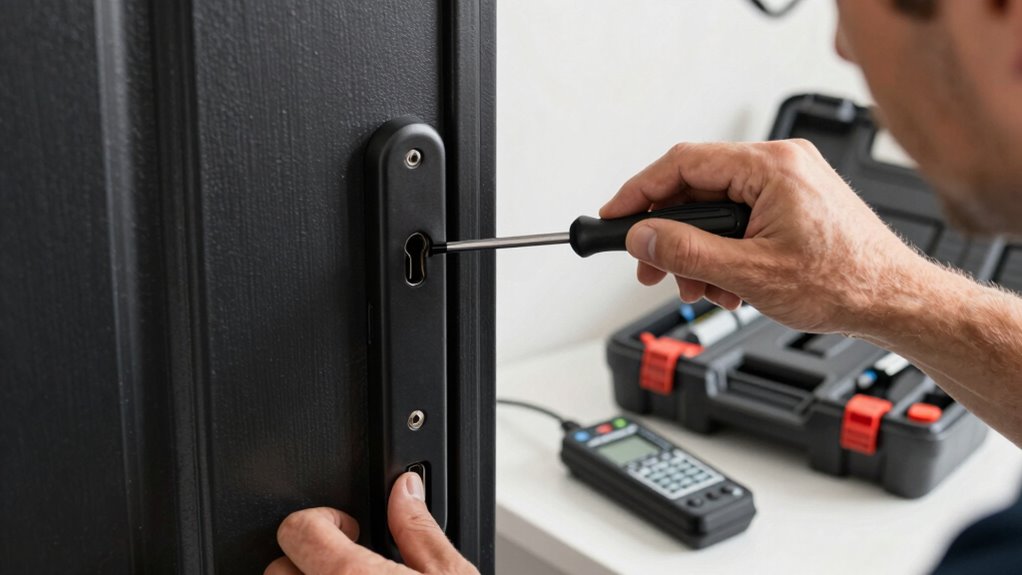
Regularly inspecting and maintaining your door locks guarantees they continue to provide reliable security over time. Proper upkeep assures your door aesthetics stay appealing while preventing vulnerabilities. To keep your locks in top shape:
- Check for rust or corrosion that could weaken the lock’s integrity and mar your door’s appearance.
- Lubricate moving parts to ensure smooth operation and prevent sticking or jamming.
- Review your key management—avoid excess copies and store keys securely to prevent unauthorized access.
- Test the lock’s functionality frequently; if it’s hard to turn or feels loose, replace or repair it immediately.
Consistent maintenance protects your home’s security and peace of mind, making sure your entry points stay strong and inviting.
Frequently Asked Questions
What Materials Are the Most Resistant to Forced Entry?
Steel doors are the most resistant to forced entry, offering superior impact resistance compared to wood or fiberglass. When comparing door materials, steel provides strength and durability, making it harder for intruders to break through. You should prioritize steel or reinforced metal doors for enhanced security. Their robust construction ensures better protection against forced entry, giving you peace of mind. Always check for quality locks and proper installation alongside material choice for maximum security.
How Often Should I Replace or Upgrade My Door Locks?
You should replace or upgrade your door locks during regular door lock maintenance, ideally every 3 to 5 years, or sooner if you notice signs of wear or difficulty locking. Replacement timing depends on the lock’s condition and security needs. If a lock becomes loose, shows signs of rust, or you’ve experienced a break-in attempt, it’s time for an upgrade to guarantee your home stays secure.
Can Smart Locks Be Hacked or Compromised?
Think of smart locks as digital guards—they can be hacked or compromised if cybersecurity vulnerabilities aren’t addressed. While they offer convenience, remote access risks mean cybercriminals might exploit weak security. You need strong passwords, regular updates, and multi-factor authentication to keep these digital keys safe. Otherwise, your smart lock’s convenience could turn into a vulnerability, letting unwanted intruders slip through the digital door.
Are There Specific Security Standards for Door Reinforcement Hardware?
Yes, there are specific security standards for door reinforcement hardware, ensuring durability and strength. When you reinforce doors, consider integrating security cameras and alarm systems to enhance overall protection. These standards often require the hardware to resist forced entry and tampering, giving you peace of mind. Combining reinforced hardware with surveillance and alarms creates an all-encompassing security setup, making your doors much harder for intruders to breach.
How Do Weather Conditions Affect Door Security and Hardware Longevity?
Weather impact can greatly affect your door security and hardware durability. Extreme conditions like rain, snow, or heat cause materials to expand, contract, or corrode, weakening locks and hinges over time. Regular maintenance, choosing weather-resistant hardware, and applying protective coatings help mitigate these effects. By proactively addressing weather impact, you guarantee your door hardware stays secure and functional longer, maintaining your property’s safety regardless of changing weather conditions.
Conclusion
Remember, your doors are the guardians of your home, much like the ancient gates that protected treasures and secrets. By taking the right steps—assessing, upgrading, and maintaining—you guarantee these guardians stand strong against any threat. Don’t let complacency be the weak link. Instead, be the vigilant sentinel, keeping your home safe and secure, just like the watchful eyes of history’s most enduring protectors. Your security is worth every effort.