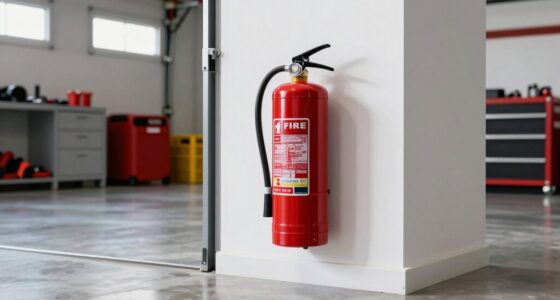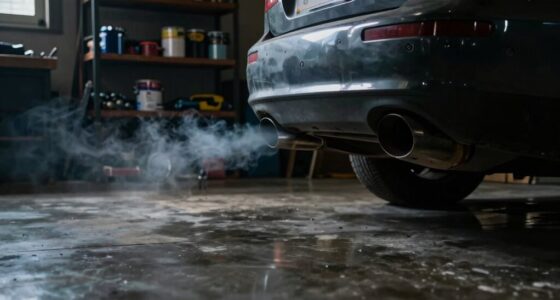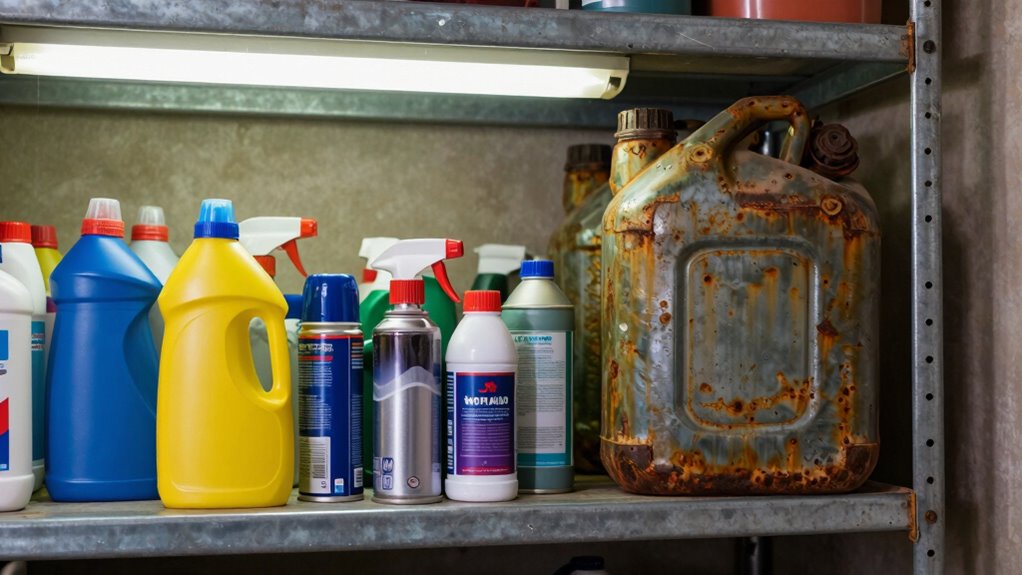

To keep your garage safe, you should never store flammables like gasoline or paint thinner near open flames or heat sources. Avoid combining acids with bases or storing bleach alongside ammonia or other cleaners, as these can produce toxic fumes or cause dangerous reactions. Keep incompatible chemicals apart on labeled shelves or in separate containers, and regularly check for leaks or deterioration. If you want a complete guide on how to organize your chemicals safely, keep going.

Get home appliances delivered free with Prime
- Fast, free delivery on millions of items
- Prime Video, Amazon Music and more included
- Member-only deals all year
Key Takeaways
- Store combustibles (e.g., gasoline) separately from oxidizers (e.g., bleach) to prevent fire hazards.
- Keep acids and bases apart to avoid dangerous chemical reactions and fumes.
- Separate corrosive and reactive chemicals to prevent hazardous reactions or explosions.
- Do not store flammable liquids near open flames, sparks, or heat sources.
- Avoid storing ammonia-based cleaners with bleach to prevent toxic gas formation.
garage chemical storage containers
As an affiliate, we earn on qualifying purchases.
As an affiliate, we earn on qualifying purchases.
Why Is Proper Chemical Storage in Your Garage Important?
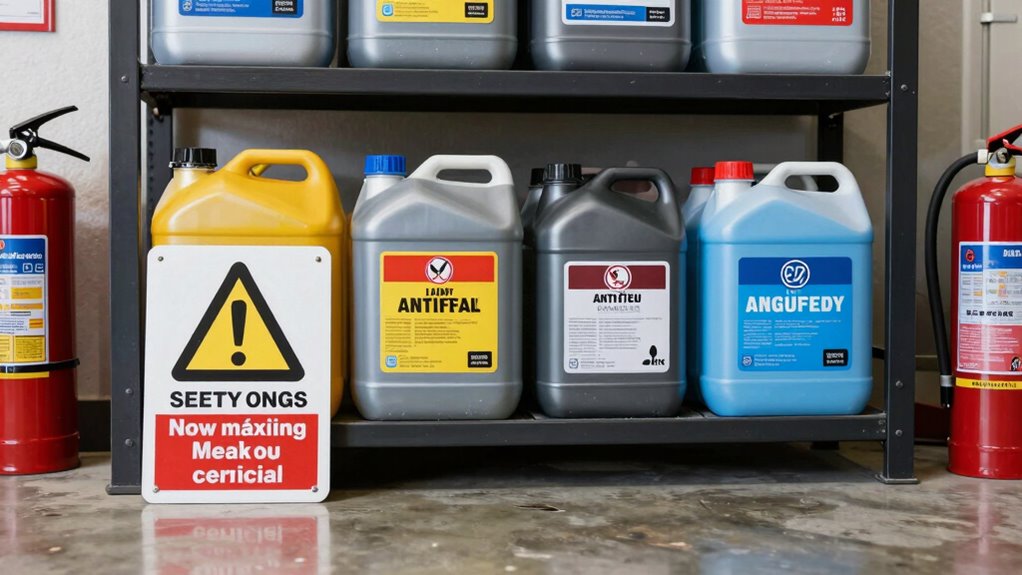
Proper chemical storage in your garage is essential because it helps prevent accidents and injuries. When chemicals are stored correctly, they’re less likely to leak, spill, or cause harmful fumes. Good garage insulation also plays a role, controlling temperature and reducing chemical degradation or explosions caused by extreme heat. If you perform vehicle maintenance regularly, safe storage becomes even more critical, as many automotive chemicals like oils, antifreeze, and cleaners can be hazardous if mishandled. Proper storage keeps these substances out of reach of children and pets, reducing the risk of poisoning. It also helps maintain a tidy workspace, making it easier to access tools and supplies when needed. Additionally, understanding the importance of proper storage conditions can prevent dangerous chemical reactions and ensure long-term stability of stored substances. Incorporating chemical compatibility guidelines into your storage practices can further enhance safety, preventing incompatible chemicals from reacting unexpectedly. Being aware of the ingredients in various chemicals can help you identify potential hazards and handle them more safely. Recognizing the risks of chemical reactions is crucial for maintaining a safe environment and preventing accidents. Proper labeling and storage regulations are also vital to ensure compliance and safety. Ultimately, safe chemical storage safeguards your health, your family, and your property.
flammable liquid storage cabinet
As an affiliate, we earn on qualifying purchases.
As an affiliate, we earn on qualifying purchases.
What Chemicals Should Never Be Stored Together?
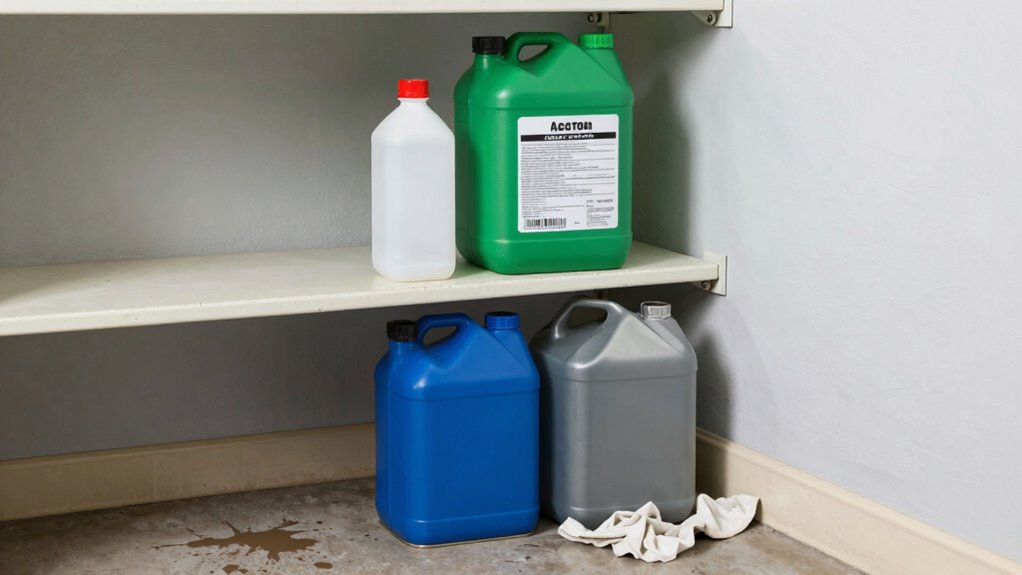
You should never store combustibles and oxidizers together, as their contact can cause fires or explosions. Keep acids away from bases to prevent dangerous chemical reactions, and avoid mixing corrosive with reactive chemicals to prevent hazardous spills. Understanding which chemicals shouldn’t be stored together helps keep your garage safe. Additionally, knowing bank SWIFT/BIC codes can ensure secure and accurate transfers when managing chemical supplies or emergency funds.
Combustibles and Oxidizers
Storing combustibles and oxidizers together creates a serious fire hazard because these chemicals can react violently if they come into contact. Oxidizers, like bleach or hydrogen peroxide, release oxygen that fuels fires, while combustibles such as gasoline or paper easily ignite. To prevent accidents, always consider chemical compatibility and use proper storage containers designed for each chemical type. Keep oxidizers and combustibles in separate, clearly labeled containers and store them in different areas of your garage. Use the table below to understand which chemicals should never be stored together:
| Combustible | Oxidizer | Risk |
|---|---|---|
| Gasoline | Hydrogen peroxide | Explosion |
| Paper | Bleach | Fire hazard |
| Paint thinners | Potassium permanganate | Combustion reaction |
| Rags soaked in oil | Ammonium nitrate | Violent reaction |
| Aerosol cans | Chlorates | Fire or explosion |
Additionally, understanding auditory processing can help identify potential sensory sensitivities that might affect how safety information is communicated in a garage environment.
Acids and Bases
Mixing acids and bases can lead to dangerous chemical reactions if they’re stored together. When acids and bases come into contact, they can produce heat, fumes, or even splattering, posing serious safety risks. To prevent this, you should store them separately in appropriate, clearly labeled storage containers designed for corrosive substances. Use non-reactive materials like plastic or glass that won’t degrade or react with the chemicals. Keep acids away from bases to avoid accidental spills or reactions that could damage containers or cause injuries. Always verify caps are secure and containers are stored upright. Proper separation reduces the risk of accidental mixing, which could lead to hazardous situations. Remember, safety depends on careful storage and handling of acids and bases to prevent dangerous chemical reactions. Proper storage practices are essential for maintaining a safe laboratory environment. Additionally, understanding the chemical properties of each substance can help in choosing the correct storage methods. Safe storage techniques involve knowing how different chemicals interact and react, which is crucial for preventing accidents. Being aware of reactivity patterns can further enhance safety when handling these substances. For example, consulting material compatibility charts can help ensure that storage containers are suitable for specific chemicals.
Corrosive and Reactive Chemicals
Have you ever wondered why certain chemicals must never be stored together? Corrosive and reactive chemicals can cause dangerous reactions if they come into contact. For example, storing acids near oxidizers can lead to explosions or release toxic fumes. To prevent accidents, always use proper storage containers designed for these substances. Keep corrosives in sturdy, labeled containers made from materials resistant to corrosion, and separate reactive chemicals in different compartments. If a spill occurs, safe chemical disposal is essential—never try to clean up reactive chemicals with water unless approved. Proper storage and handling minimize risks and guarantee safe chemical disposal practices. Remember, never underestimate the danger of mixing incompatible chemicals, especially corrosive and reactive ones—it can lead to serious hazards. Ensuring proper chemical separation is crucial to prevent hazardous interactions and maintain a safe storage environment. Additionally, understanding the properties of reactive chemicals helps in implementing effective safety measures. Being familiar with chemical properties enables you to identify which substances should be stored apart to avoid dangerous reactions. Knowing the hazard classifications of chemicals further helps in establishing appropriate safety protocols. Recognizing the potential for **toxic fumes** during chemical reactions underscores the importance of proper ventilation and storage practices.
As an affiliate, we earn on qualifying purchases.
Why Keep Flammable Liquids Away From Open Flames?
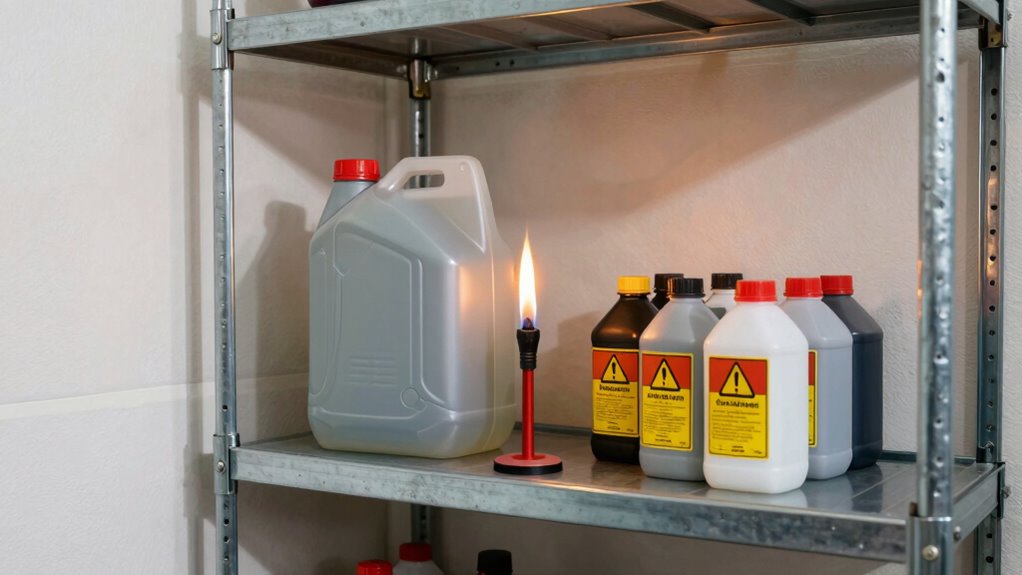
Why is it essential to keep flammable liquids away from open flames? Because these liquids are highly combustible, and even a small spark can lead to a dangerous fire or explosion. To prevent accidents, focus on chemical spill prevention by storing flammable liquids in approved containers with clear storage container labels. Proper labeling helps you quickly identify hazards and handle chemicals safely. Never leave open flames, such as candles or grills, near storage areas containing flammable liquids. An open flame can ignite vapors that are often invisible but highly explosive. Keeping these liquids separate reduces fire risks and ensures safer garage conditions. Always follow safety guidelines, and regularly inspect containers to avoid leaks or deterioration that could increase danger. Additionally, understanding safe storage practices can encourage more careful and methodical safety practices in your workspace. Incorporating fire safety measures into your routine can further minimize the risk of accidents and protect your property. Being aware of fire hazards and proper handling techniques is crucial in maintaining a secure environment.
garage chemical labeling supplies
As an affiliate, we earn on qualifying purchases.
As an affiliate, we earn on qualifying purchases.
How Do Acids and Bases React When Stored Near Each Other?
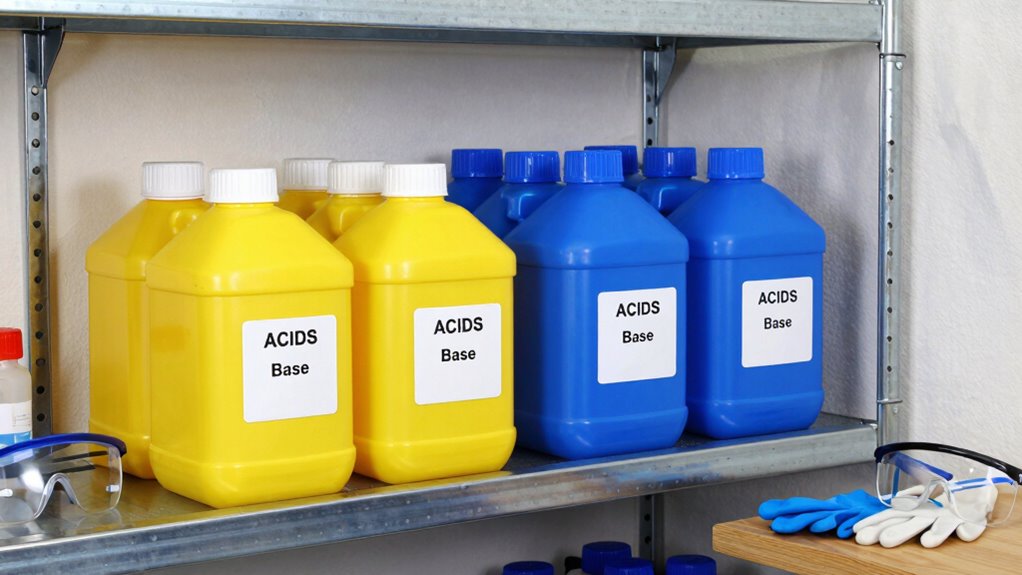
Storing acids and bases close together can lead to dangerous reactions, creating spills or fumes that pose health risks. These reactions can occur unexpectedly if containers leak or are damaged, increasing the chance of accidents. To prevent this, you need to keep acids and bases properly separated and secure. Using appropriate storage materials and understanding chemical properties can help minimize risks and ensure safety. Proper indoor air quality measures, such as good ventilation, are also important to reduce the buildup of potentially harmful fumes in storage areas. Implementing evidence-based storage guidelines, grounded in chemical knowledge, further enhances safety and prevents accidents. Additionally, understanding reaction triggers is crucial to anticipate and avoid hazardous interactions in storage areas.
Risk of Acid-Base Reactions
What happens when acids and bases are stored too close to each other in your garage? They can react suddenly, producing heat, harmful fumes, or even causing containers to burst. This is a clear risk of acid-base reactions, which can lead to dangerous spills or chemical burns. To prevent this, you need to follow proper storage guidelines that prioritize chemical compatibility. Store acids and bases separately, ideally in labeled, sealed containers designed for their specific pH levels. Keep them away from each other and from other reactive chemicals. Proper storage minimizes the risk of accidental reactions and guarantees your safety. Always check manufacturer instructions and adhere to safety standards for chemical storage to avoid hazardous situations in your garage.
Potential for Fuming and Spills
When acids and bases are stored too close together, they can react unexpectedly, releasing fumes or causing spills. If their storage containers aren’t properly labeled, you may not realize the danger until it’s too late. Acid fumes can cause respiratory irritation, while spills can damage surfaces or create slip hazards. An accidental reaction may produce corrosive vapors or heat, increasing the risk of fire or injury. Always guarantee your chemical labeling clearly identifies each substance’s nature, and keep incompatible chemicals in separate, secure storage containers. Proper container selection prevents leaks and minimizes exposure. Regularly check containers for cracks or leaks, and never underestimate the danger posed by improper storage. Prevent fuming and spills by maintaining strict separation and clear labeling of acids and bases.
Need for Proper Separation
Acids and bases react vigorously when they come into contact, releasing heat, fumes, and sometimes causing violent eruptions. To prevent this, proper separation is vital. You should clearly label each chemical using chemical labeling to avoid accidental mix-ups and store them in appropriate storage containers designed for their specific properties. Never store acids and bases in the same container or close proximity, as even minor leaks can trigger dangerous reactions. Keep them in separate, well-ventilated areas, ideally with a barrier or distance between them. Regularly check labels and containers for damage or deterioration. Proper separation ensures safety, reduces the risk of accidental reactions, and maintains a secure garage environment. Always follow manufacturer guidelines and safety protocols for storing corrosive chemicals.
What Are the Dangers of Mixing Bleach With Ammonia or Other Cleaners?
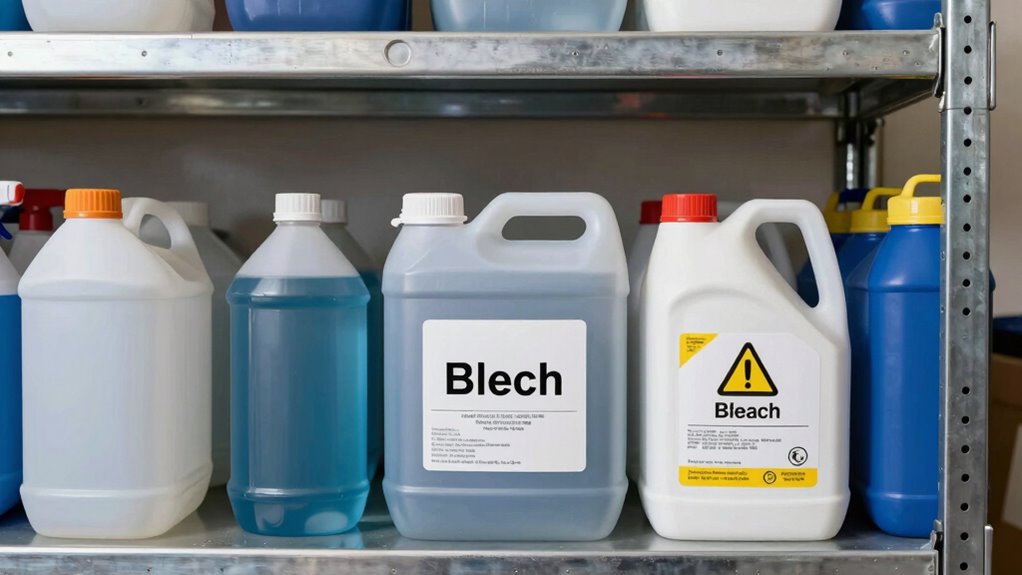
Mixing bleach with ammonia or other common household cleaners can create highly dangerous chemical reactions that pose serious health risks. These reactions produce toxic gases, such as chloramine vapors or hydrazine, which can cause respiratory issues, eye irritation, or even be fatal. To prevent accidents, follow strict storage guidelines and keep incompatible chemicals apart.
Consider these points:
- Never mix bleach with ammonia, vinegar, or acids.
- Store chemicals separately in well-ventilated areas.
- Use clearly labeled containers to avoid accidental mixing.
- Regularly inspect storage areas for leaks or spills that could lead to unintended reactions.
Understanding chemical reactions and adhering to proper storage guidelines are essential for safety in your garage.
How Can You Organize Incompatible Chemicals Safely?
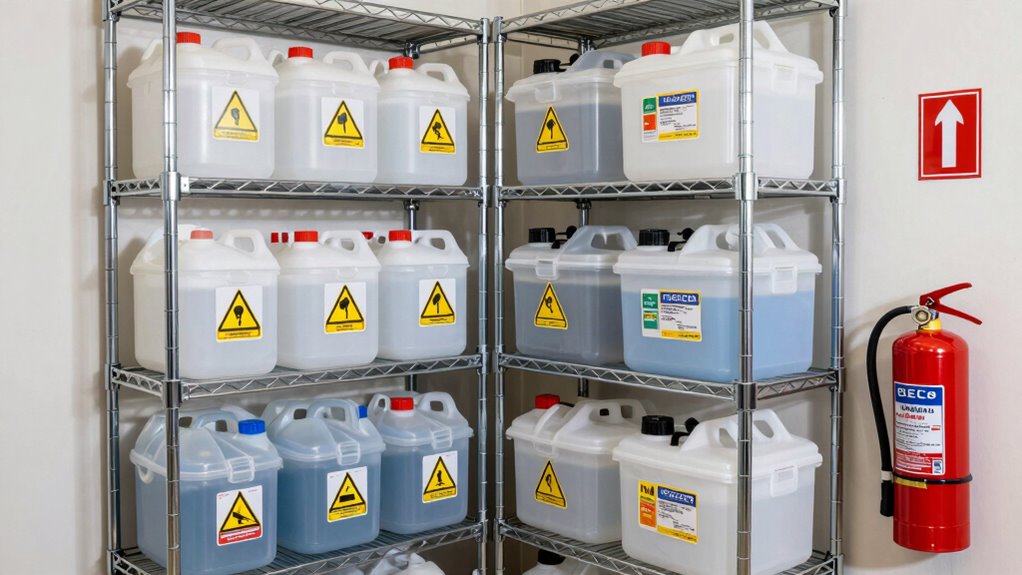
Organizing incompatible chemicals safely requires careful planning and clear separation. You should store hazardous substances in sturdy, labeled storage containers designed for specific chemicals. Use distinct sections or shelves to keep incompatible chemicals apart, preventing dangerous reactions. Regularly check for leaks or deterioration to guarantee safe chemical disposal when needed. Keep a detailed inventory of your chemicals to track what’s stored where and make disposal easier.
| Chemical Types | Storage Tips |
|---|---|
| Acids and Bases | Store separately, in corrosion-resistant containers |
| Flammables and Oxidizers | Keep in cool, ventilated areas, away from heat sources |
| Solvents and Cleaning Agents | Use sealed, labeled containers for safety |
| Incompatible Chemicals | Clearly mark and segregate to prevent accidents |
Where Should Pesticides Be Stored to Keep Your Family Safe?
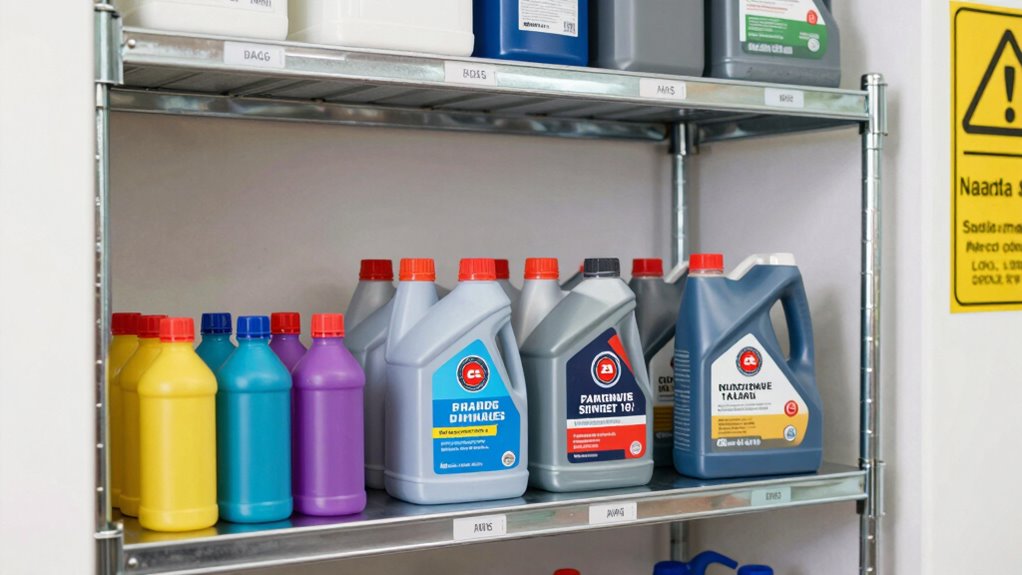
Have you ever considered where to store pesticides to protect your family? Proper storage is essential to prevent accidents and keep everyone safe. Pesticides should be kept in a secure, locked cabinet away from children and pets. Store them separate from items used in car maintenance to avoid cross-contamination.
Store pesticides securely, out of children’s reach, to ensure family safety and prevent accidents.
Consider these key points:
- Keep pesticides in a cool, dry, well-ventilated area, away from heat sources.
- Store them away from garden pests, but also out of reach of children and pets.
- Use clearly labeled, sturdy containers to prevent accidental misuse.
- Avoid storing pesticides near food, beverages, or household chemicals.
How Can You Spot Signs of Chemical Leaks or Reactions?
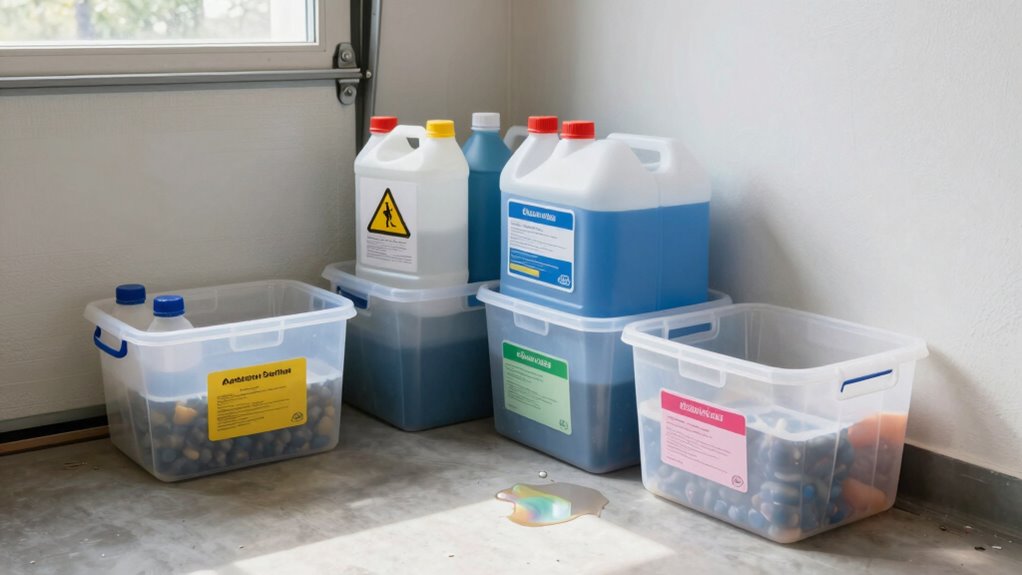
How can you identify if a chemical leak or reaction is occurring? First, look for signs like unusual odors, discoloration, or a chemical spill on surfaces. Leaks often produce puddles or wet spots, so keep an eye out for any unexpected moisture. Leak detection methods include monitoring for bubbling, fizzing, or releasing fumes that weren’t present before. Listen for hissing or crackling sounds that might indicate a reaction. Changes in container shape or damage also suggest a leak or reaction. If you notice any of these signs, act quickly by isolating the area and ventilating the space. Addressing chemical spills immediately helps prevent hazards and guarantees safe storage practices. Recognizing these signs early is vital for your safety and effective response.
Frequently Asked Questions
How Often Should I Check My Chemical Storage Area?
You should check your chemical storage area at least once a month to guarantee safety. During these inspections, verify that chemical labeling remains clear and intact, and assess storage organization to prevent accidental mixing or spills. Look for leaks, corrosion, or damaged containers. Regular checks help you maintain a safe environment, prevent hazards, and ensure that chemicals are stored properly according to safety guidelines.
What Safety Equipment Is Essential in a Chemical Storage Area?
You need vital safety equipment like personal protective equipment, including gloves, goggles, and masks, to protect yourself from chemical exposure. Spill containment devices, such as trays and absorbent materials, are essential for managing leaks or spills. Always wear appropriate protective gear when handling chemicals, and make certain spill containment measures are in place to prevent accidents. Regularly check and maintain your safety equipment to keep your storage area safe and compliant.
Are There Legal Regulations for Chemical Storage in Garages?
Think of your garage as a fortress that needs strict rules to stay safe. Yes, there are legal regulations for chemical storage, including specific storage restrictions you must follow. You’re responsible for legal compliance to prevent accidents. These rules aim to keep hazardous materials contained and away from heat, flames, or incompatible substances. Ignoring them can lead to fines or dangerous incidents, so always stay informed and adhere to local codes.
How Can I Safely Dispose of Expired or Unused Chemicals?
You should safely dispose of expired or unused chemicals by following local hazardous waste regulations. Wear personal protective gear like gloves and goggles to prevent exposure. To prevent chemical spills, keep chemicals in clearly labeled, sealed containers. Take them to a designated disposal facility or a hazardous waste collection event. Never pour chemicals down drains or onto the ground, as this can harm the environment. Proper disposal keeps you safe and protects your surroundings.
What Are the Signs of Chemical Deterioration or Degradation?
Like a ticking time bomb, chemical deterioration signals danger. You’ll notice changes in color, texture, or smell, indicating compromised chemical stability. Clumping or sedimentation can also be signs. Poor storage conditions, such as exposure to heat or moisture, accelerate degradation. Regularly inspect your chemicals and keep an eye out for these signs to prevent accidents. Proper storage conditions are key to maintaining chemical stability and ensuring safety in your garage.
Conclusion
Properly storing chemicals in your garage isn’t just smart—it’s a lifesaver. By keeping incompatible substances apart, you prevent dangerous reactions that could turn your garage into a hazardous battleground. Think of it as your ultimate shield against chaos and disaster. Stay vigilant, organize smartly, and always prioritize safety. Remember, a small mistake in chemical storage can escalate into a catastrophe faster than you can blink—so stay cautious and keep your family safe from the unseen dangers lurking nearby.
Cold & flu season Picks
humidifiers
As an affiliate, we earn on qualifying purchases.