
Garages can be deadly hidden danger zones because they often trap carbon monoxide from vehicle exhaust and appliances, which are colorless and odorless. Running engines or using fuel-powered tools indoors increases CO levels rapidly, risking poisoning without you realizing it. Proper ventilation, installing detectors, and avoiding engine use inside are essential safety measures. If you want to learn how to protect yourself and your loved ones effectively, there’s more you should know.
Key Takeaways
- Garages often contain sources of CO like vehicle engines and fuel appliances, which emit dangerous, odorless, colorless fumes.
- CO buildup in enclosed garages can occur rapidly, especially without proper ventilation, posing serious health risks.
- Installing CO detectors and maintaining proper airflow are essential for early detection and prevention of poisoning.
- Running engines or fuel-powered tools indoors significantly increases CO risk; outdoor use is safer.
- Symptoms of CO poisoning include headache, dizziness, nausea, and confusion; immediate action is vital if symptoms appear.
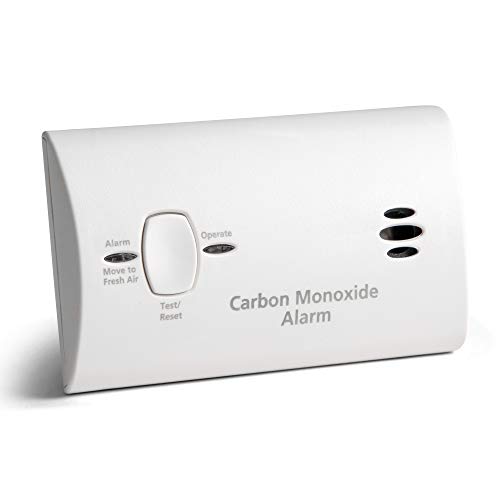
Kidde Carbon Monoxide Detector, AA Battery Powered, Portable for Travel or Home, 85 dB Alarm, LED Status Indicators, 3rd Edition
Electrochemical sensor technology detects CO gas
As an affiliate, we earn on qualifying purchases.
As an affiliate, we earn on qualifying purchases.
Why Is Carbon Monoxide a Hidden Danger in Your Garage?
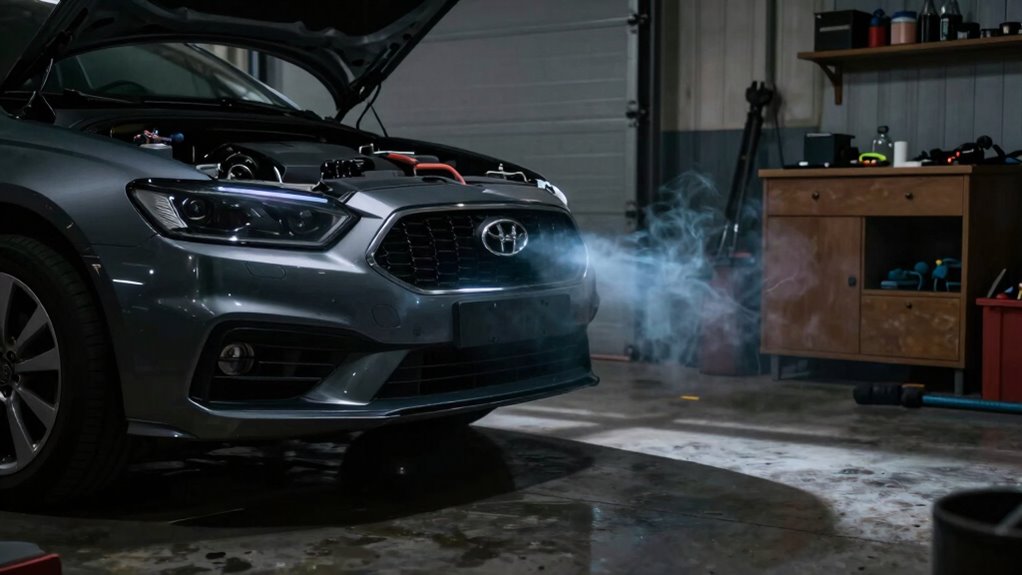
Although it often goes unnoticed, carbon monoxide (CO) is a silent, invisible threat lurking in garages. You might not realize how easily it can build up, especially if your garage lacks proper ventilation. Poor garage ventilation reduces air circulation, allowing CO to accumulate quickly from your vehicle or appliances. Because CO is colorless and odorless, you won’t notice its presence until symptoms appear or a detector alerts you. This makes vehicle safety essential—always make sure your garage is well-ventilated, especially during and after engine use. Proper garage ventilation not only minimizes CO buildup but also helps protect you and your loved ones from potentially deadly exposure. Staying aware of these risks is crucial for keeping your garage a safe space. Additionally, understanding the importance of ventilation systems can significantly reduce the risk of dangerous CO concentrations. Regular maintenance and installing CO detectors in your garage are vital steps to enhance safety. Being proactive about garage safety measures can further prevent hazardous situations. Ensuring proper ventilation solutions can make a substantial difference in maintaining a safe environment.

iLIVING 12" Wall Mounted Shutter Exhaust Fan, Automatic Shutter, with Thermostat and Variable Speed controller, 0.6A, 960 CFM, 1400 SQF Coverage Area Silver (ILG8SF12V-ST)
POWERFUL AIR VENTILATOR – 960 CFM, 115V, 0.6A, 1/20 Horse Power, 1650 RPM, Coverage up to 1400 square…
As an affiliate, we earn on qualifying purchases.
As an affiliate, we earn on qualifying purchases.
How Do Engines and Appliances Produce Carbon Monoxide in Your Garage?

When engines run or appliances burn fuel, they produce exhaust emissions that contain carbon monoxide. These emissions can build up quickly in your garage if it’s not well-ventilated. Understanding how these combustion byproducts form helps you recognize the risks and take steps to stay safe. Electric dirt bikes, such as those from KTM, produce no emissions during operation, reducing the risk of carbon monoxide buildup. Proper ventilation and awareness of combustion byproducts are essential for maintaining a safe environment. Using anti-fatigue mats can also improve safety by reducing fatigue and discomfort in prolonged standing situations, which is common when working in garages.
Engine Exhaust Emissions
Ever wonder how engines and appliances in your garage produce carbon monoxide? When these devices burn fuel, they release combustion byproducts, including carbon monoxide, into the air. Since CO is odorless and colorless, it can accumulate quickly, especially in poorly ventilated spaces. This buildup impacts indoor air quality, making your garage a hidden danger zone. To reduce risks, effective ventilation strategies are essential. Proper airflow helps disperse carbon monoxide and prevents dangerous concentrations from forming. Keep garage doors open when running engines or appliances, and consider installing exhaust vents or fans to improve air exchange. Regular maintenance of engines and appliances also minimizes CO emissions. Additionally, understanding exhaust emissions can help you better manage and reduce indoor air quality concerns, especially since combustion byproducts can pose serious health risks. Recognizing how engine operation contributes to CO buildup is crucial for maintaining a safe environment. By understanding how exhaust emissions contribute to indoor air quality concerns, you can take proactive steps to protect yourself and your family. Properly assessing your garage’s ventilation needs is vital in preventing dangerous CO accumulation. Ensuring adequate air circulation can significantly reduce the risk of dangerous CO buildup.
Appliance Combustion Byproducts
Engines and appliances in your garage produce carbon monoxide through their combustion processes, directly impacting indoor air quality. When fuel combusts, it releases toxic byproducts like carbon monoxide, which can accumulate quickly in enclosed spaces. This invisible threat can cause serious health issues or even death if not properly ventilated. Consider this table to understand the emotional impact:
| Danger | Effect |
|---|---|
| Quiet threat | Sudden loss of consciousness |
| Invisible enemy | Unnoticed, yet deadly |
| Continuous exposure | Long-term health risks |
| Improper ventilation | Accelerates buildup |
| Household appliances | Hidden dangers |
Always guarantee proper ventilation and avoid running engines or appliances unnecessarily inside your garage to prevent dangerous CO buildup.

Milwaukee M18 FUEL 18V Lithium-Ion Brushless Cordless Combo Kit with Two 5.0 Ah Batteries, 1 Charger, 2 Tool Bags (7-Tool)
2904-20 Hammer Drill: Only 6.9 in. L for access into tight spaces and reduced fatigue 2904-20 Hammer Drill:…
As an affiliate, we earn on qualifying purchases.
As an affiliate, we earn on qualifying purchases.
How Can You Detect Carbon Monoxide in Your Garage?
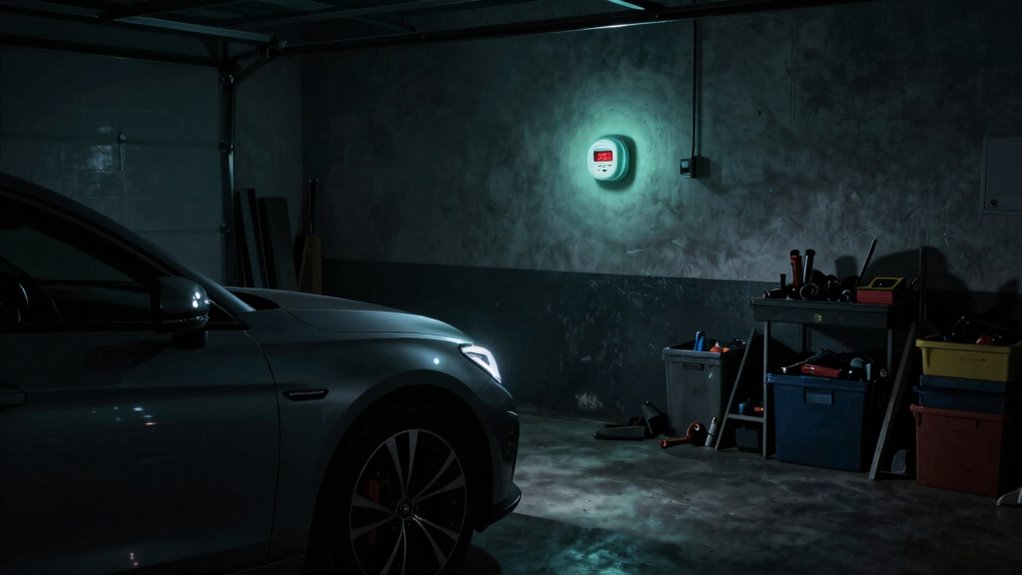
Detecting carbon monoxide in your garage is essential because this colorless, odorless gas can pose serious health risks. To keep yourself safe, consider these detection methods:
- Install a carbon monoxide detector near the garage entrance, ensuring it’s a battery-operated model with an alarm that alerts you to dangerous levels.
- Maintain proper garage organization by keeping fuel sources separate from your vehicle, reducing the risk of CO buildup.
- Practice storage safety by storing combustibles in well-ventilated areas to prevent accidental CO accumulation. Proper air circulation is crucial for dispersing any potential gases. Regular ventilation practices can significantly lower the chance of dangerous concentrations forming.
- Regularly check and test detectors and keep your garage well-ventilated. These steps help you stay ahead of potential hazards and protect your household from unseen dangers. Proper gear care and safety measures are essential in preventing dangerous situations involving carbon monoxide. Additionally, understanding carbon monoxide sources can help you identify and eliminate other risks.

Air Purifiers for Home Large Room up to 2180 Sq Ft, DBFIT HEPA Air Purifier with Washable Nylon Pre-Filter, PM2.5 Air Quality Sensor, Air Cleaner for Pet Hair, Odor, Smoke, Dust, Pollen AP2410
POWERFUL AIR CLEANING FOR LARGE ROOMS – Breathe easier with the 2025 DBFIT AP2410 Air Purifier, designed with…
As an affiliate, we earn on qualifying purchases.
As an affiliate, we earn on qualifying purchases.
What Are the Symptoms of Carbon Monoxide Poisoning to Watch For?
Carbon monoxide poisoning can develop quickly and silently, making it essential to recognize the symptoms early. Poor indoor air quality caused by CO exposure often starts with headache, dizziness, and weakness. You might also notice nausea, confusion, or tiredness that seems out of proportion to your activity level. As exposure continues, symptoms can worsen, leading to chest pain and impaired vision or coordination. Because these signs can mimic other illnesses, it’s vital to stay alert. Emergency preparedness involves knowing these symptoms and acting immediately if you suspect CO poisoning. Ignoring them can be dangerous or even fatal. Regularly monitor your indoor air quality, especially when using fuel-powered tools or appliances, and never underestimate the importance of early detection to keep yourself and your loved ones safe. Proper ventilation and air quality control are crucial in preventing dangerous CO buildup indoors. Understanding carbon monoxide hazards can help you take preventative steps to protect your home. Being aware of the symptoms of poisoning can help you respond quickly and seek emergency assistance when necessary.
How to Ventilate Your Garage Safely and Effectively

Proper ventilation is essential to keep harmful carbon monoxide from building up in your garage. To do this effectively, consider the following ventilation techniques and air exchange systems. First, install exhaust fans that pull stale air out, creating a continuous flow. Second, open garage doors or windows whenever working with engines or fuel-powered tools, ensuring fresh air enters. Third, invest in mechanical ventilation systems designed specifically for garages, which help regulate air quality even when doors are closed. Visualize a steady breeze flowing through your space, replacing contaminated air with clean air. These methods work best when combined, reducing the risk of dangerous carbon monoxide buildup. Additionally, maintaining proper airflow and ventilation efficiency is crucial for preventing dangerous accumulation. Properly installing and maintaining ventilation systems ensures consistent performance over time. Regularly inspecting and cleaning your ventilation equipment can enhance system effectiveness and safety. Consistent use of ventilation techniques is your best defense against hidden dangers lurking in your garage.
Why You Should Install and Maintain Carbon Monoxide Detectors

Installing and maintaining carbon monoxide detectors is essential because early detection can save lives. Proper placement guarantees the alarms alert you promptly, especially near garages and sleeping areas. Regular checks keep your detectors working effectively and provide peace of mind.
Importance of Early Detection
Early detection of carbon monoxide is critical because this silent, odorless gas can quickly reach dangerous levels without any warning. Without detectors, you might not realize there’s a problem until symptoms appear or it’s too late. Installing and maintaining carbon monoxide detectors enhances your indoor air quality and strengthens your emergency preparedness. Imagine:
- A detector sounding alarm as CO levels rise unnoticed, alerting you instantly.
- A quick response preventing poisoning, keeping your family safe.
- Peace of mind knowing your garage and home are protected from hidden dangers.
Early detection guarantees you’re always aware of potential CO buildup, allowing you to act swiftly. Regular maintenance keeps your detectors functioning properly, guaranteeing they’ll alert you in time. Prioritizing early detection saves lives and minimizes risks associated with carbon monoxide exposure.
Proper Detector Placement
To guarantee your carbon monoxide detectors provide reliable alerts, placement matters just as much as having them installed. Proper detector placement ensures that you’re alerted early enough to take action. Place detectors in key safety zones, such as near garages, bedrooms, and on every level of your home. Avoid installing them in dead zones like behind furniture, curtains, or in humid areas like bathrooms. Keep detectors at least 15 feet from fuel-burning appliances to prevent false alarms. Mount detectors at chest height or on the wall, following manufacturer instructions. Regularly check and maintain them to confirm they’re functioning properly. Correct detector placement maximizes safety, giving you the critical warning needed to protect yourself and your loved ones from carbon monoxide poisoning.
Why Running Engines Indoors Is a Major Risk

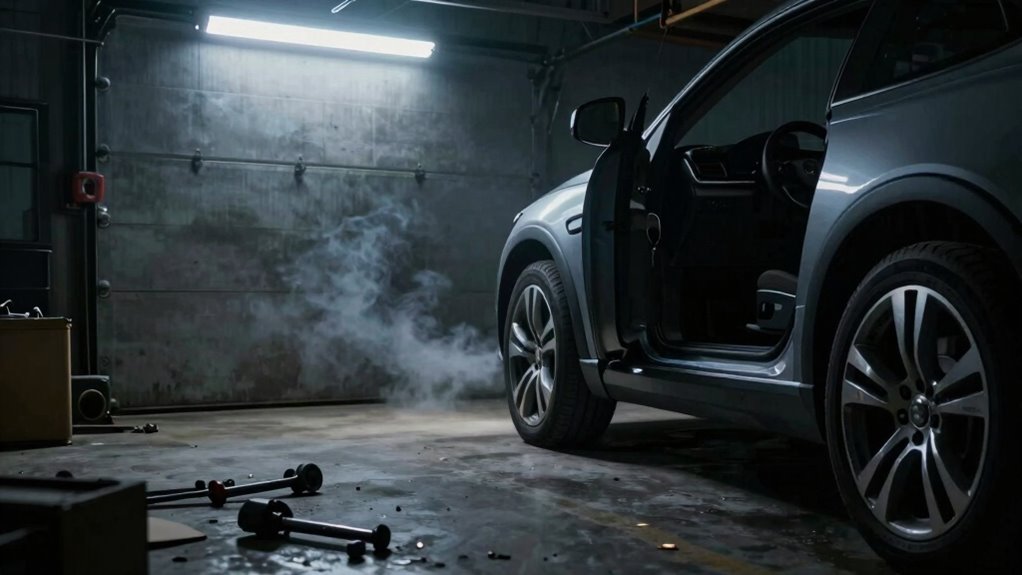
Have you ever thought about what happens when you run your car engine inside a garage? The risks are serious. When the engine runs, it produces carbon monoxide, a deadly, odorless gas. If your garage isn’t well-ventilated, this gas can quickly build up, endangering everyone nearby.
Running your car engine in a garage can cause dangerous carbon monoxide buildup. Always ventilate properly.
Imagine:
- Your garage cluttered with tools and boxes, blocking airflow.
- A vehicle left idling during routine maintenance or warm-up.
- The door closed tightly, trapping dangerous fumes inside.
Garage organization plays a vital role here; a cluttered space hampers ventilation and increases risk. Never run your engine indoors, even for a short time. Proper vehicle maintenance should always be performed outdoors or in well-ventilated areas to avoid carbon monoxide poisoning.
How to Protect Your Hobbies and Workspaces From CO Exposure
Protecting your hobbies and workspaces from carbon monoxide exposure is essential for your safety. Proper garage organization helps prevent CO buildup by ensuring ventilation systems are clear and functional. Keep tools and equipment stored properly to avoid accidental engine startups in enclosed spaces. When working on projects involving engines or fuel-powered tools, always do so outdoors or in well-ventilated areas. Installing carbon monoxide detectors near hobby areas adds an extra layer of protection, alerting you to dangerous levels before they become a threat. Remember, hobby safety isn’t just about avoiding accidents—it’s about preventing dangerous CO accumulation. Regularly inspect ventilation systems, keep garage doors open during use, and never run engines or generators inside enclosed spaces. These steps help keep your hobbies safe and your air clean.
What to Do Immediately If You Suspect CO Poisoning

If you notice symptoms of carbon monoxide poisoning—such as headache, dizziness, nausea, or weakness—it’s essential to act immediately. Your priority is to get fresh air and call emergency services without delay. Quickly:
- Move to a safe, well-ventilated area away from the source of CO.
- Call emergency services and inform them of your symptoms.
- If safe, turn off any appliances or equipment that could be producing CO.
Frequently Asked Questions
Can Carbon Monoxide Accumulate in Attached Garages Without Proper Ventilation?
Yes, carbon monoxide can accumulate in attached garages without proper ventilation. If your garage lacks effective ventilation systems, fumes from vehicles or appliances can build up, especially if the garage is insulated with poor or no insulation. Proper ventilation helps disperse these dangerous gases, preventing dangerous concentrations. Ensuring good airflow and installing ventilation systems are essential steps to protect your home and family from carbon monoxide poisoning.
Are There Specific Garage Materials That Increase CO Risk?
Ever wonder if certain garage materials increase Co risk? You bet they do. Materials like poorly sealed doors, uninsulated walls, or porous concrete can trap and concentrate carbon monoxide, making your garage more hazardous. These garage materials act as Co risk factors, especially if ventilation is inadequate. To stay safe, make certain of proper sealing, ventilation, and choose materials that don’t absorb or retain harmful gases.
How Often Should Carbon Monoxide Detectors Be Tested and Replaced?
You should test your carbon monoxide detector at least once a month to guarantee it’s working properly. Regular detector maintenance is essential for safety. Follow the replacement guidelines provided by the manufacturer, typically replacing the unit every 5 to 7 years or sooner if it malfunctions. Keeping your detector in good condition helps prevent CO buildup, especially in garages where the risk is higher.
Can Outdoor Weather COnditions Affect CO Buildup in Garages?
Like a knight’s shield, outdoor weather can influence CO buildup in garages. High outdoor humidity and wind exposure can either disperse or trap carbon monoxide, depending on conditions. Wind may blow CO away, reducing risk, but still, sealed garages with poor ventilation can trap dangerous levels regardless of weather. Always guarantee proper ventilation and check your detectors regularly, especially during extreme weather, to keep safe from unseen dangers.
Are There Legal Regulations for Garage Ventilation and CO Safety Standards?
Yes, there are legal regulations for garage ventilation and CO safety standards. You must guarantee proper garage insulation and install effective ventilation systems to prevent CO buildup. Local building codes often require vents or exhaust fans, especially if you store vehicles or fuel-powered equipment. Regularly inspecting and maintaining these systems helps you stay compliant and protects you from dangerous CO exposure, making your garage safer for everyone.
Conclusion
Remember, your garage can be a quiet whisperer of danger if you’re not careful. Think of it as a silent guardian that needs your attention—ventilate it well, keep detectors active, and avoid indoor engine running. By staying vigilant, you’re gently guiding yourself away from hidden shadows, allowing fresh air to fill the space like sunlight breaking through clouds. Keep safety front and center, and your garage will remain a secure harbor rather than a lurking threat.