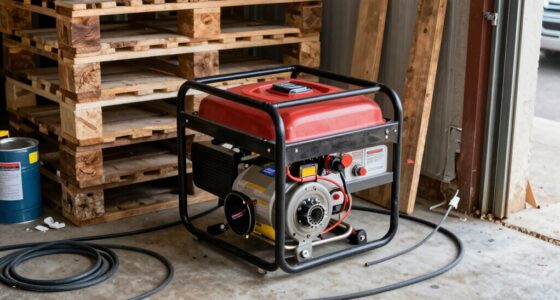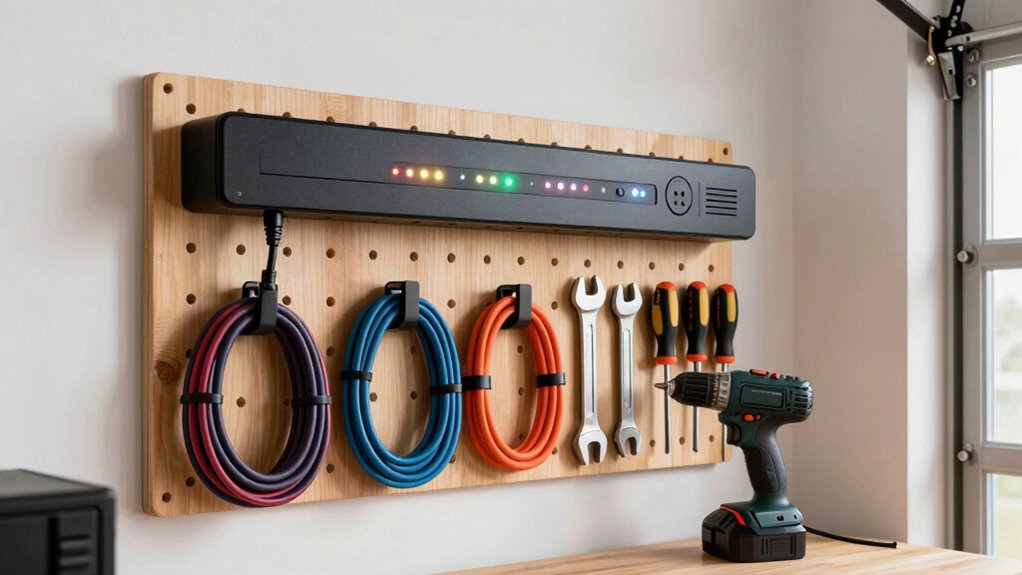

To protect your garage tools and electronics from power surges, you should install high-quality surge protectors with a high joule rating and enough outlets for your devices. Make sure to connect them properly near your main power source and keep them maintained by testing regularly and replacing them every few years. Proper grounding and safety measures also help prevent damage. Keep browsing to discover more tips on keeping your garage equipment safe and secure.
Key Takeaways
- Install high-quality surge protection devices with high joule ratings near your garage outlets.
- Use whole-house surge protection systems for comprehensive electrical surge defense.
- Regularly test and replace surge protectors every 3-5 years to maintain optimal protection.
- Ensure proper grounding of electrical systems to safely divert excess voltage.
- Keep garage electronics and tools away from moisture and dust, and inspect wiring regularly for safety.

Power Strip,SUPERDANNY 5000 Joules Surge Protector with 13 AC Outlets 2 USB-A & 2 USB-C PD 20W Fast Charging Heavy Duty 14AWG/3C Industrial Grade Extension Cord for Workbench Home Office Black
Heavy Duty Power Strip: SUPERDANNY 15A/1875W heavy duty power strip features 13 widely-spaced outlets and 4 fast-charging USB…
As an affiliate, we earn on qualifying purchases.
As an affiliate, we earn on qualifying purchases.
How Do Power Surges Damage Garage Tools and Electronics?
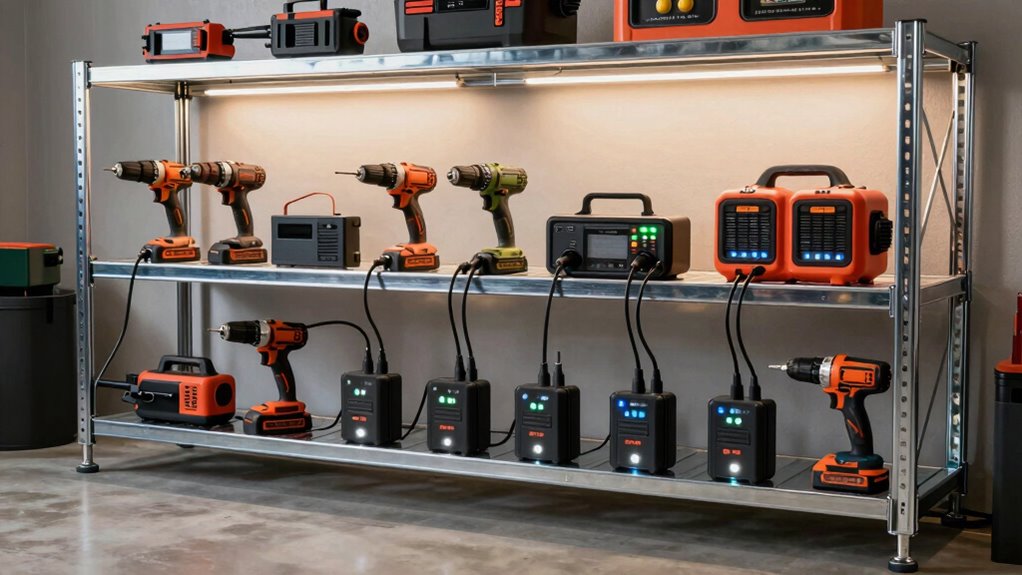
Power surges can cause immediate and irreversible damage to your garage tools and electronics by delivering a sudden spike of excessive voltage through the power lines. Surge causes vary, including lightning strikes, power outages, or faulty wiring. When a surge occurs, it can overload the electrical components inside your devices, overheating and burning out sensitive circuitry. Proper electrical grounding helps prevent some damage by directing excess voltage safely into the ground, but if grounding is poor or absent, your tools are vulnerable. Without adequate protection, this excess voltage can fry motors, chips, and circuit boards, rendering your equipment useless. Understanding how surge causes interact with grounding systems is essential to safeguarding your garage tools from the destructive power of unexpected electrical spikes. Additionally, using surge protectors designed for garage use can offer an extra layer of electrical safety and help prevent costly replacements.
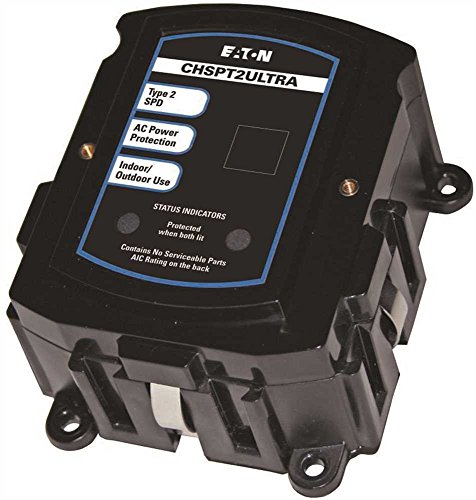
Eaton CHSPT2ULTRA Ultimate Surge Protection 3rd Edition, 2.38" Length, 5.25" Width 7.5" Height
Universally connects to any manufacturer’s load center (breaker box)
As an affiliate, we earn on qualifying purchases.
As an affiliate, we earn on qualifying purchases.
How to Choose the Best Surge Protectors for Your Garage
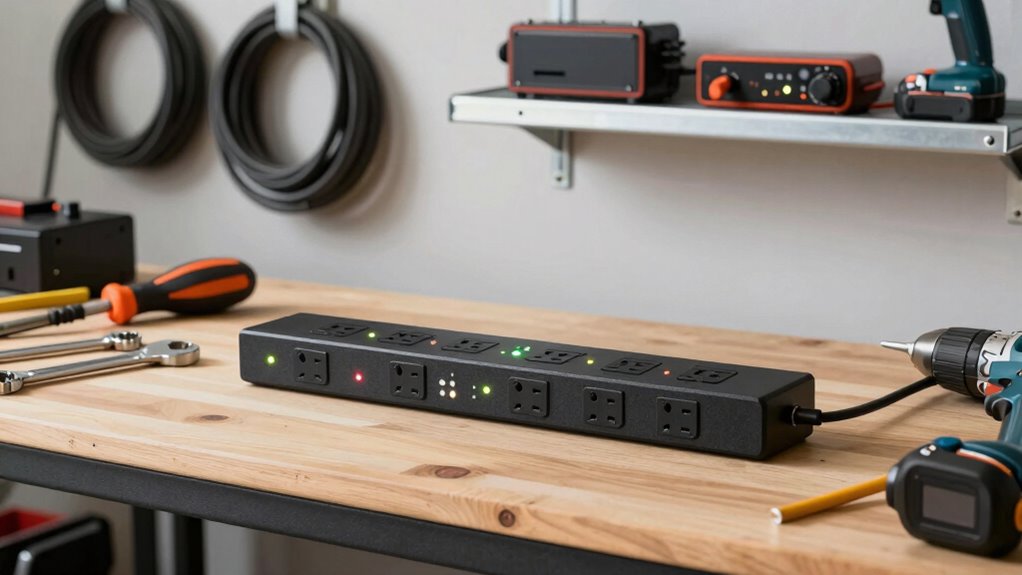
Choosing the right surge protector for your garage is essential to keep your tools and electronics safe from unexpected voltage spikes. Look for protectors with high joule ratings, ensuring they absorb more energy during surges. Consider models with multiple outlets for garage organization and tool storage, so everything stays protected in one place. Also, check if they have features like LED indicators and warranty coverage for added confidence. To further enhance security, consider smart lock options for your garage access, providing added control over entry points. Proper grounding and circuit protection are also vital for comprehensive surge safety, especially when managing whole-home water systems that can be affected by electrical surges. Understanding early warning signs of electrical issues can help you prevent costly damages before they happen. Regular maintenance and electrical system inspections are recommended to detect potential vulnerabilities early. Here’s a quick comparison:
| Surge Protector Type | Joule Rating | Number of Outlets |
|---|---|---|
| Power Strip | 900-1200 | 6-8 |
| Wall Mount | 1500-2500 | 4-6 |
| Heavy-duty | 2500+ | 8+ |
Choose based on your tools’ value and garage setup.

CCCEI Heavy Duty Surge Protector Power Strip 20 Amp Individual Switches. 6FT 12 Gauge Extension Cord with Multiple Outlets. Kitchen, Garage, Shop, Industrial Wall Mount Electric Extender, Yellow.
Heavy duty power strip 20 amp with 4 outlets and individual switches, 5-20R, 6-20R and come with standard…
As an affiliate, we earn on qualifying purchases.
As an affiliate, we earn on qualifying purchases.
How to Install Surge Protectors Safely and Correctly

Once you’ve selected the right surge protector for your garage tools and electronics, it’s important to install it properly to guarantee maximum safety and effectiveness. Start by choosing a location that’s easily accessible and close to your main power source, ensuring it’s not obstructed by clutter or poor garage organization. Mount the surge protector securely on a wall or sturdy surface, avoiding areas prone to moisture or excessive dust. Make sure the outlet can handle the surge protector’s capacity and that cords are neatly managed to prevent tripping hazards. When installing, follow the manufacturer’s instructions carefully, and double-check all connections. Proper installation helps protect your tools and electronics while maintaining an organized tool storage space, making future access safer and more efficient. Additionally, ensure the power source is properly grounded to prevent electrical faults and enhance safety. Checking that your electrical system has proper grounding is an essential safety measure to prevent damage from power surges. Understanding the importance of electrical safety can help you avoid costly repairs and potential hazards.
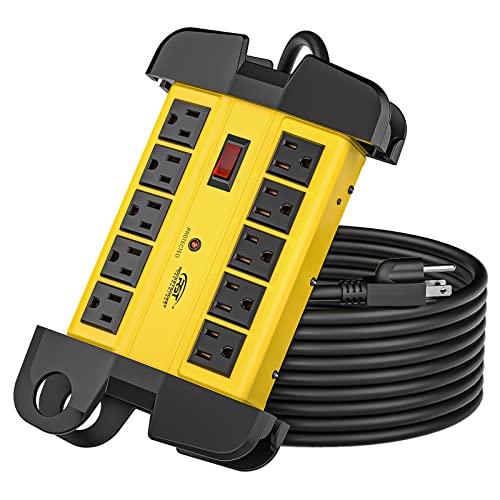
CRST 10-Outlets Heavy Duty Power Strip Metal Surge Protector with 15 Amps, 15-Foot Power Cord 2800 Joules for Garden, Kitchen, Office, School, ETL Listed(3165047) (10-Outlet, Yellow)
–Sturdy, extruded aluminum housing stands and Surge Protection constructed. CRST Industrial Power Strip is perfect for construction site,…
As an affiliate, we earn on qualifying purchases.
As an affiliate, we earn on qualifying purchases.
How to Test and Maintain Your Surge Protection System

Regularly testing and maintaining your surge protection system is essential to guarantee it continues to safeguard your garage tools and electronics effectively. Many people believe surge protection myths that lead to neglect, but understanding how to test and maintain your system helps dispel these misconceptions. Keep in mind that surge protection costs are minimal compared to replacing damaged devices. To assure peak performance:
Regular testing and maintenance ensure your surge protector keeps garage tools and electronics safe and functioning properly.
- Use a surge protector tester to verify functionality
- Check indicator lights regularly
- Inspect cords and connections for damage
- Test the system after major storms
- Replace surge protectors every 3-5 years
- Incorporate landscaping techniques that can help reduce the risk of power surges caused by weather-related events. Additionally, understanding surge protection device types can help you select the most reliable system for your needs. Being aware of power surge causes can further assist in preventing damage before it occurs. Proper maintenance extends the lifespan of your surge protection, making it a worthwhile investment against unexpected power surges. Staying informed about electrical system vulnerabilities can help you identify potential risks early on.
Staying proactive ensures your system remains reliable, saving you money and hassle. Proper maintenance extends the lifespan of your surge protection, making it a worthwhile investment against unexpected power surges. Incorporating balance and motivation techniques can also help you stay consistent with your maintenance routines and ensure your system stays in top condition.
What to Do When Devices Are Damaged by Surges and How to Prevent Future Risks
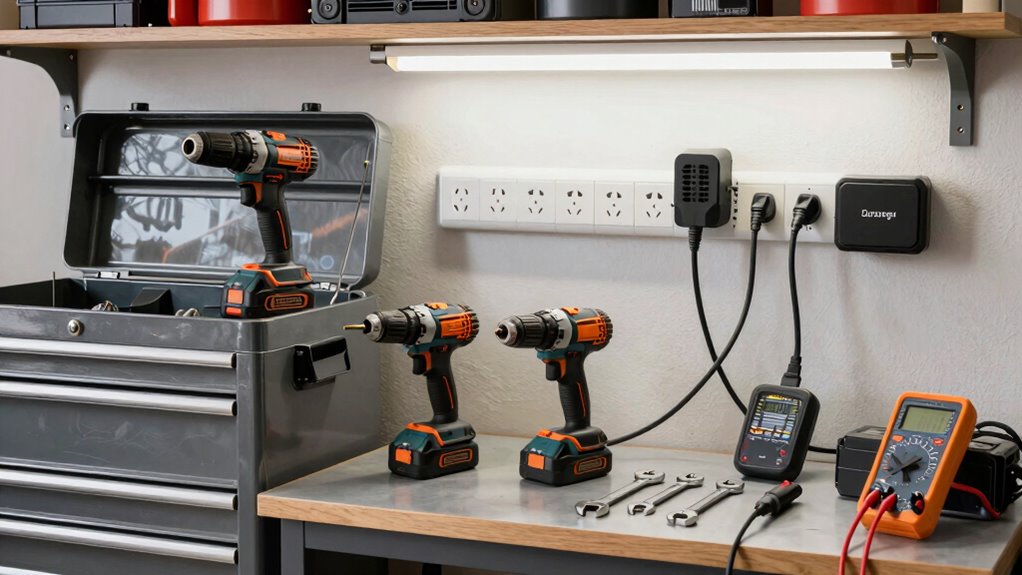
When your devices get damaged after a power surge, it’s important to act quickly to minimize further harm and understand your options. In the surge aftermath, first unplug the affected devices to prevent additional damage. Assess whether repair strategies are feasible; sometimes, electronics can be repaired, but often, replacement is necessary. Check if your devices are under warranty or if insurance covers surge damage. To prevent future risks, invest in high-quality surge protectors and consider whole-house surge protection systems. Regularly test and maintain your surge protection devices to guarantee they function properly. Educate yourself on recognizing signs of damage, like unusual noises or overheating. Understanding the importance of proper electrical safety measures can also help you avoid risks associated with power surges. Implementing privacy policies and securing your devices can further safeguard your equipment from malicious or unintended electrical issues. Additionally, choosing surge protectors with the right clamping voltage can significantly improve your protection. Being aware of the Gold IRA markets can help you understand the value of protecting your investments from unexpected electrical surges. Staying informed about power surge causes can help you better prevent and respond to electrical issues. Taking these steps helps safeguard your garage tools and electronics against future power surges, minimizing disruption and cost.
Frequently Asked Questions
Can Surge Protectors Prevent All Types of Electrical Damage?
Surge protectors can’t prevent all types of electrical damage. They mainly protect against voltage spikes, but issues like electrical insulation faults or improper grounding techniques can still cause damage. To maximize protection, make sure your system has proper grounding and maintains good electrical insulation. These measures help prevent surges from causing harm, but always remember that no device guarantees complete safety from all electrical problems.
Are Portable Surge Protectors Effective for Garage Tools?
Yes, portable surge protectors are effective for garage tools, helping you keep your equipment safe from unexpected power spikes. Think of them as your first line of defense—quick to deploy and easy to move around. They provide an extra layer of garage safety, especially for power tools and electronics that might not be protected by built-in safeguards. Using portable protectors guarantees your tools stay safe, no matter where you work.
How Often Should Surge Protectors Be Replaced?
You should replace your surge protector every 3 to 5 years, as its lifespan diminishes over time. The replacement frequency depends on usage, power surges, and wear and tear. If the protector shows signs of damage, or if it trips frequently, it’s time for a new one. Regularly check your surge protector to make certain it’s functioning properly and providing the best possible protection for your garage tools and electronics.
Do Weather Conditions Affect Surge Protector Performance?
Weather conditions do impact surge protector performance, especially during storms with lightning or heavy rain. These weather impacts can cause power fluctuations, increasing the risk of surges that may damage your tools and electronics. It’s essential to use high-quality surge protectors, especially in areas prone to severe weather, and consider additional safeguards like whole-house surge protection. Regularly check and replace surge protectors to guarantee ongoing protection.
What Are the Signs of a Surge Protector Failure?
Did you know that about 70% of surge protectors fail prematurely due to overloads or wear over time? Signs of a surge protector failure include frequent tripping, a burnt smell, or visible damage like scorch marks. You should replace it if it’s past its surge protector lifespan or if it no longer provides electrical damage prevention. If you notice these signs, acting quickly helps safeguard your garage tools and electronics.
Conclusion
Protecting your garage tools and electronics from power surges is essential—did you know that electrical surges can cause up to $10,000 in damage? By choosing the right surge protectors, installing them correctly, and maintaining your system, you can considerably reduce this risk. Regular testing ensures your protection stays effective. Don’t wait for damage to strike—taking these steps could save you thousands and keep your garage running smoothly for years to come.