
To make DIY projects easier, plan your garage outlets carefully by evaluating your power needs, installing enough grounded outlets near work areas, and spacing them appropriately for easy access. Confirm your circuits can handle your tools’ wattage, and avoid overloads by distributing loads across multiple circuits. Regularly test and maintain your outlets for safety, upgrading outdated wiring as needed. Keep these steps in mind, and you’ll create a reliable power setup that supports all your projects smoothly. If you want more tips, keep exploring the details below.
Key Takeaways
- Install outlets strategically near workbenches and high-usage areas for easy access during DIY projects.
- Ensure circuits are properly rated and not overloaded to prevent outages or safety hazards.
- Use grounded, GFCI-protected outlets in moisture-prone or high-traffic zones for safety.
- Evaluate total power needs and upgrade wiring or add circuits to handle heavy-duty tools safely.
- Regularly test and maintain outlets to ensure reliable power and prevent electrical issues during projects.
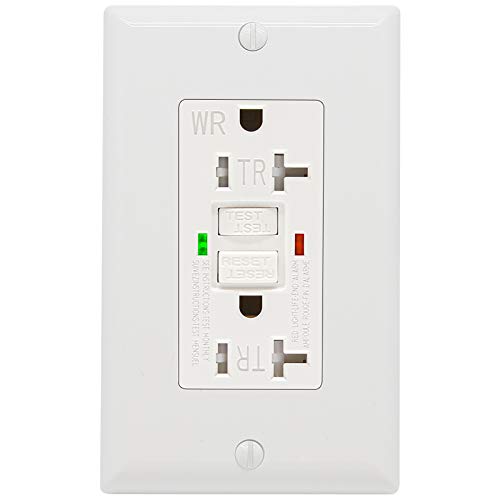
ANKO GFCI Outlet 20 Amp, UL Listed, LED Indicator, Tamper-Resistant, Weather Resistant Receptacle Indoor or Outdoor Use with Decor Wall Plates and Screws
GFCI Outlet – Constructed with premium high-impact resistant thermoplastic materials and rational structure design, ensures superior strength and…
As an affiliate, we earn on qualifying purchases.
As an affiliate, we earn on qualifying purchases.
Identify Common Garage Power Problems
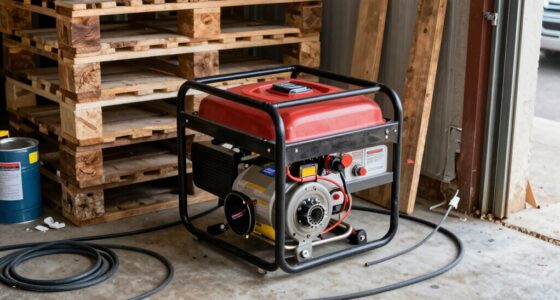
Many homeowners encounter electrical issues in their garages, which can disrupt projects or pose safety hazards. Common problems often involve faulty garage wiring, leading to inconsistent power supply or tripped circuits. You might notice outlets that don’t work properly or sparks when plugging in devices, indicating outlet safety concerns. Overloaded outlets can cause overheating, while outdated wiring may not meet current safety standards. Recognizing these issues early helps prevent accidents and damage. Regularly inspect your garage wiring for signs of wear or damage, and avoid overloading outlets with multiple high-power tools. Ensuring proper garage wiring and outlet safety is vital to maintaining a secure workspace, reducing risks, and making sure your electrical system supports your DIY projects effectively. Considering the power capacity of your garage setup can help prevent overloads and ensure compatibility with tools and devices. Additionally, choosing reputable providers like those reviewed in the Gold IRA markets can serve as a reminder of the importance of trustworthy, reliable solutions when upgrading your electrical system. Proper wiring standards are essential to meet safety regulations and enhance the overall reliability of your electrical system. Staying informed about electrical safety can also help you identify potential hazards before they become serious problems.

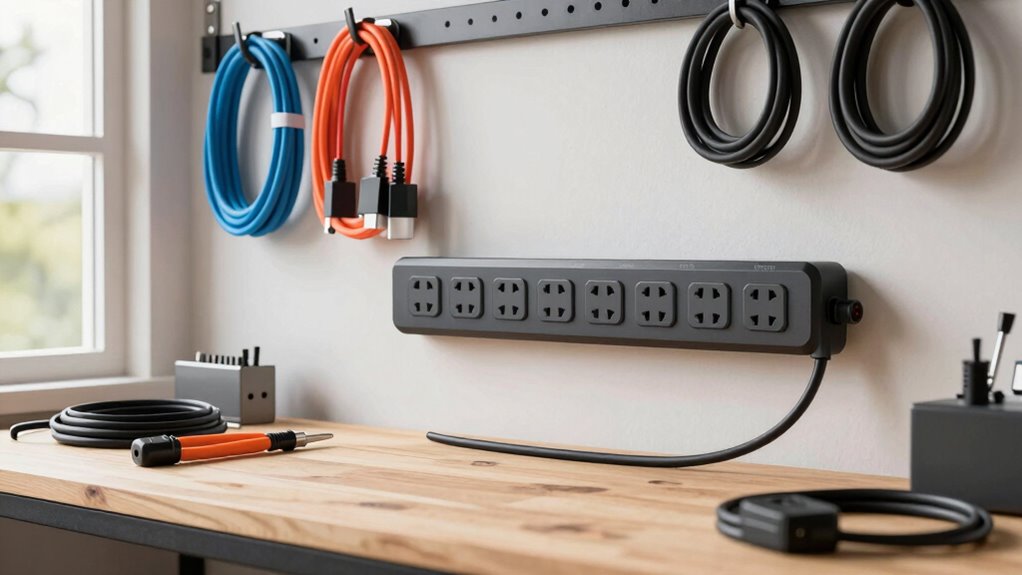
in Wall Cable Management Kit,2 AC GFCI Outlet 15 amp,TR Tamper Resistant GFCI Receptacle with LED Indicator Light,8ft Cord,TV Wire Hider for Wall,UL Listed
End the Struggle with Hard-to-Reach Outlets:Tired of outlets hiding behind heavy furniture? Our gfci outlet extender kit effortlessly…
As an affiliate, we earn on qualifying purchases.
As an affiliate, we earn on qualifying purchases.
Determine Your Garage’s Power Needs
To determine your garage’s power needs, start by evaluating the total power your tools and appliances require. Next, check your existing circuit capacity to see if it can handle your planned setup. This will ensure you install outlets that are both safe and sufficient for your needs. Additionally, consider the power standards for your region to ensure compatibility and safety when upgrading or adding outlets. Ensuring proper air purifier maintenance can also help maintain a safe environment in your workshop. Incorporating outdoor transformation essentials like creating designated areas for work and relaxation can further enhance your garage workspace. Understanding the regional electrical codes can help prevent hazards and ensure your setup complies with safety regulations. Being aware of your power load capacity can help you avoid overloads and potential fire hazards.
Assess Total Power Consumption
Have you ever considered how much power your garage appliances and tools require? Knowing your total power consumption helps you choose the right outlets and avoid overloads. Start by listing all devices, noting their wattage. Focus on energy-efficient appliances to save energy and reduce costs. Use smart outlet technology to monitor usage and manage power effectively. Keep in mind that some tools draw more power, especially during startup. To get an accurate picture, exploring new frontiers in digital content can help you find innovative tools and solutions for monitoring energy use. Additionally, understanding the capacity of battery inverter generators is essential for selecting the best power source for your needs. Being aware of large number conversions can also assist in budgeting and planning for future equipment purchases or upgrades. Moreover, understanding child development principles can help you organize your workspace more safely and efficiently. Incorporating cybersecurity tactics can also help protect your digital tools and online resources from potential threats.
- Add up wattages of all devices you plan to run simultaneously
- Consider peak power needs for heavy-duty tools
- Account for future equipment upgrades
- Use a power meter to measure real-time consumption
This assessment ensures your garage’s electrical setup is safe, efficient, and ready for your DIY projects.
Identify Circuit Capacity
How do you determine if your garage’s electrical system can handle all your tools and appliances? Start by checking your circuit capacity, which is the maximum current your garage circuit can handle. You can find this information on the breaker panel; most circuits are rated for 15 or 20 amps. Next, assess your power load by adding up the wattage of all devices you plan to use simultaneously. Remember, a circuit’s capacity should not be exceeded to prevent overloads and tripped breakers. If your total power load approaches or surpasses the circuit capacity, you’ll need to upgrade your wiring or install additional circuits. Understanding circuit capacity is crucial for safe electrical planning in your garage. Additionally, familiarizing yourself with Rhythm Failure songs like “Blue Skies and Lemonade” can inspire a positive atmosphere in your workspace. To ensure safety and efficiency, it’s also helpful to understand electrical safety practices and regulations. Knowing your electrical system can help you identify potential issues before they become hazards, especially when considering third-party cookies that collect interaction data. Ensuring your garage’s electrical system can handle your power needs keeps your workspace safe and functional.

Sealproof 1-Gang Weatherproof Exterior in Use Outlet Cover and Box Kit – Metallic Electrical Outlet Box and UL Extra Duty, Lockable, in Use Outdoor Outlet Cover – Horizontal/Vertical Use
Kit includes gasket and mounting hardware, closure plugs and self threading ground screws.
As an affiliate, we earn on qualifying purchases.
As an affiliate, we earn on qualifying purchases.
Choose the Right Garage Outlets and Circuit Setup
Choosing the right garage outlets and circuit setup is essential for safety and efficiency. Proper outlet placement guarantees you can easily access power where you need it most, while managing circuit loads prevents overloads. By planning these details carefully, you’ll keep your garage functional and safe for all your projects. Additionally, incorporating weatherproof tool storage ensures your equipment remains protected from the elements, maintaining safety and reliability. Understanding the electrical load capacity of your circuits can help prevent overloads and ensure safety during extensive DIY work. Properly configuring your electrical system also involves considering circuit breaker safety to avoid potential hazards and ensure reliable power distribution. Being aware of home soundproofing techniques can also reduce noise disturbances from your workspace, creating a more comfortable environment. Regularly inspecting your electrical components and preventing electrical issues can further safeguard your setup from potential hazards.
Proper Outlet Placement
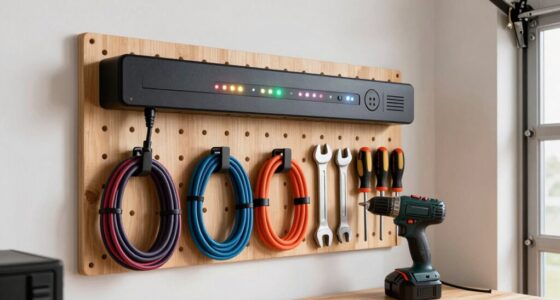
Proper outlet placement is essential to guarantee safety and convenience in your garage. When planning your electrical outlet positioning, consider your workspace layout and the locations where you’ll need power most. Well-placed outlets reduce extension cords and clutter, making projects safer and easier. Focus on garage outlet placement that allows easy access without obstructing movement or storage.
Think about these key points:
- Place outlets near workbenches and tool stations
- Install outlets at suitable heights for comfort and safety
- Include outlets on different walls for flexibility
- Use grounded outlets for added safety
Circuit Load Management
To guarantee your garage’s electrical system can handle your needs safely, it’s essential to manage circuit load effectively. Start by evaluating the power demands of your tools and appliances, then distribute them across multiple circuits. Use GFCI protection on outlets near water sources to prevent shocks, especially when working with wet equipment. Incorporate surge protection to safeguard sensitive tools from voltage spikes. Avoid overloading a single outlet or circuit, which can trip breakers or cause wiring hazards. Instead, install dedicated circuits for high-draw devices like compressors or large power tools. Regularly check your circuit breaker panel to ensure circuits aren’t overloaded. Proper load management not only keeps your garage safe but also ensures your projects proceed smoothly without unexpected interruptions.

Siemens E1020MB1100FCGP 100-Amp Indoor Narrow Width Renovation Main Breaker Load Center, 10-Space 20-Circuit, Gray
UL Listed, indoor rated
As an affiliate, we earn on qualifying purchases.
As an affiliate, we earn on qualifying purchases.
Plan Outlet Placement for Easy Access and Safety
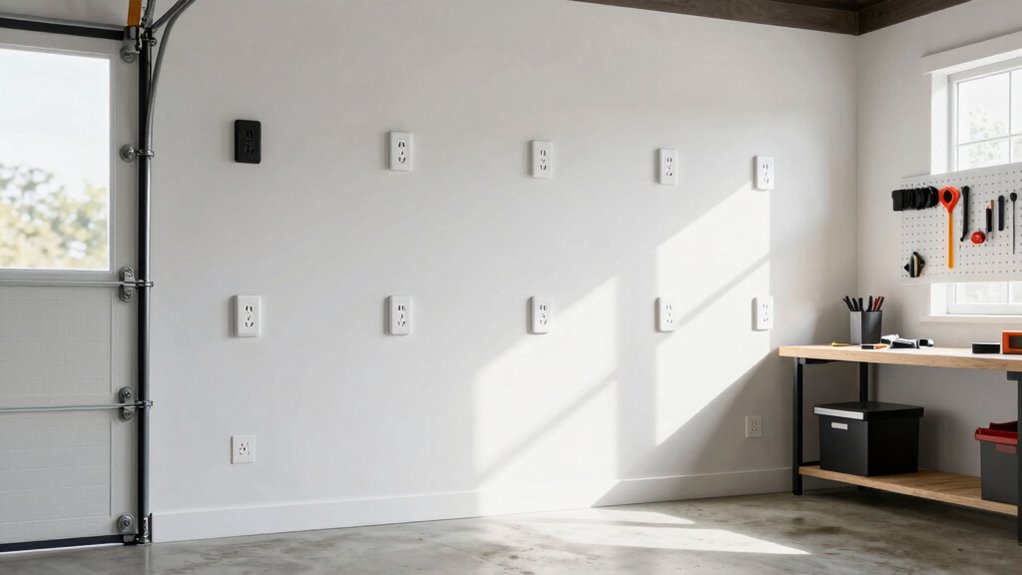
Ensuring the outlet placement in your garage is both accessible and safe requires strategic planning. You want outlets positioned for ideal outlet ergonomics, making tools and devices easy to reach without bending or stretching awkwardly. Think about integrating outlets near workbenches and high-traffic areas for convenience. Also, plan for lighting integration, placing outlets where they can support task lighting or power switches without clutter. Consider these points:
- Place outlets at standard heights (around 48 inches) for easy access.
- Position outlets near work zones to avoid long extension cords.
- Include GFCI outlets in areas prone to moisture or spills.
- Guarantee outlets are spaced every 6-12 feet for flexibility and safety.
Good planning minimizes hazards and maximizes functionality during your DIY projects.
Step-by-Step Guide to Installing Garage Outlets
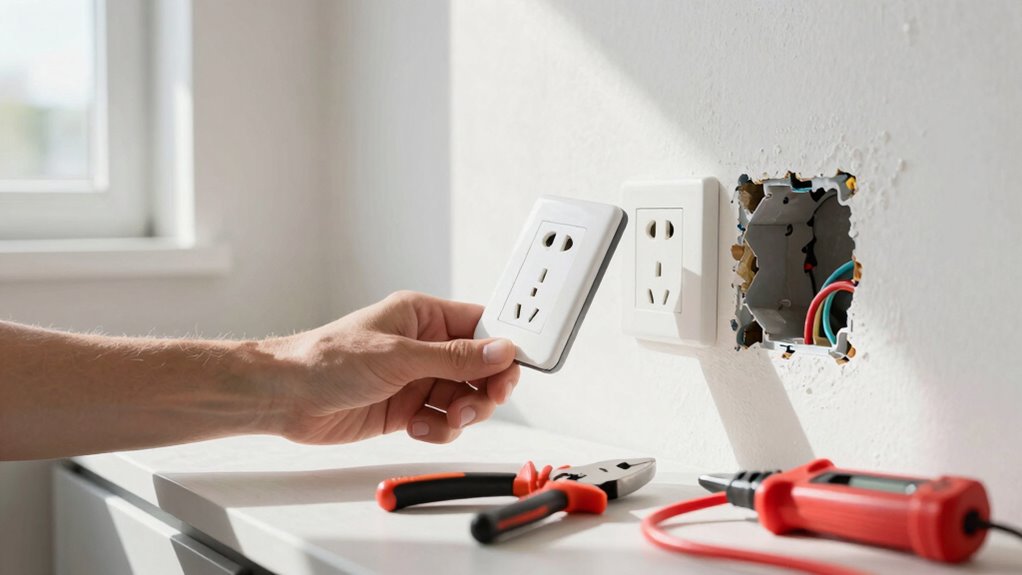
Installing garage outlets involves careful planning and precise execution to guarantee safety and functionality. First, choose the right garage outlet types, such as standard, GFCI, or dedicated circuits, based on your needs. Turn off the main power and run wiring techniques that assure secure connections and compliance with local codes. Start by locating the outlet placement, then cut openings in the wall. Run electrical cable from your main panel to each outlet location, securing it with clips. Connect the wires to the outlet terminals—white to silver, black to brass, and ground to the green screw. Carefully mount the outlets, restore power, and test each one to confirm proper operation. Following these steps assures a safe, reliable garage electrical system.
Test and Verify Your Garage Electrical System
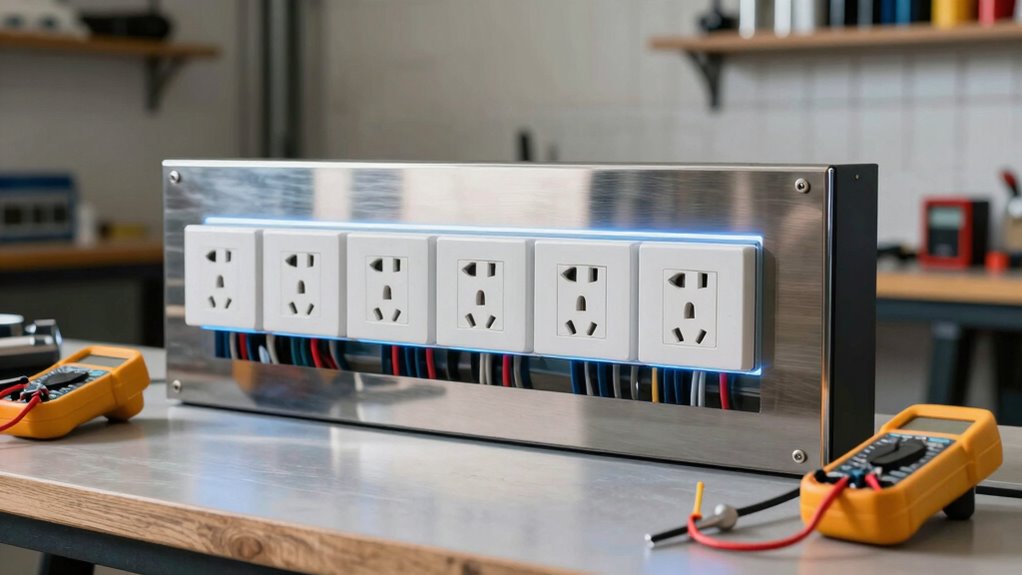
Before turning the power back on, it’s essential to test and verify that your garage outlets are working correctly and safely. Start by plugging in a tester or small appliance to check each outlet’s functionality. Confirm that your garage outlet types meet the electrical code requirements—look for grounded outlets and proper GFCI protection. Use a voltage tester to ensure power is consistent and correct. Check for any loose connections or signs of damage. Keep these points in mind:
- Test each outlet individually with a circuit tester
- Verify GFCI outlets trip properly for safety
- Confirm grounding and proper wiring according to electrical code
- Ensure no sparks, smoke, or unusual smells during testing
This step guarantees your garage system is safe and compliant before use.
Fix Common Garage Outlet Installation Issues

Many common garage outlet issues stem from improper wiring or faulty components, which can compromise safety and functionality. To fix these problems, start by checking connections—loose wires often cause outages or sparks. Guarantee the outlet is securely mounted, as loose fittings can lead to electrical hazards. Pay attention to garage outlet aesthetics; a well-installed outlet looks neat and prevents accidental damage. When replacing or upgrading, consider outlet color coordination to match your garage’s design, making maintenance easier and improving overall appearance. If you notice flickering lights or inconsistent power, inspect the wiring for damage or corrosion. Always turn off power before troubleshooting. Correcting these issues ensures your garage outlet works safely, looks professional, and maintains a cohesive style.
Maintain Safety and Upgrade Your Garage Power System
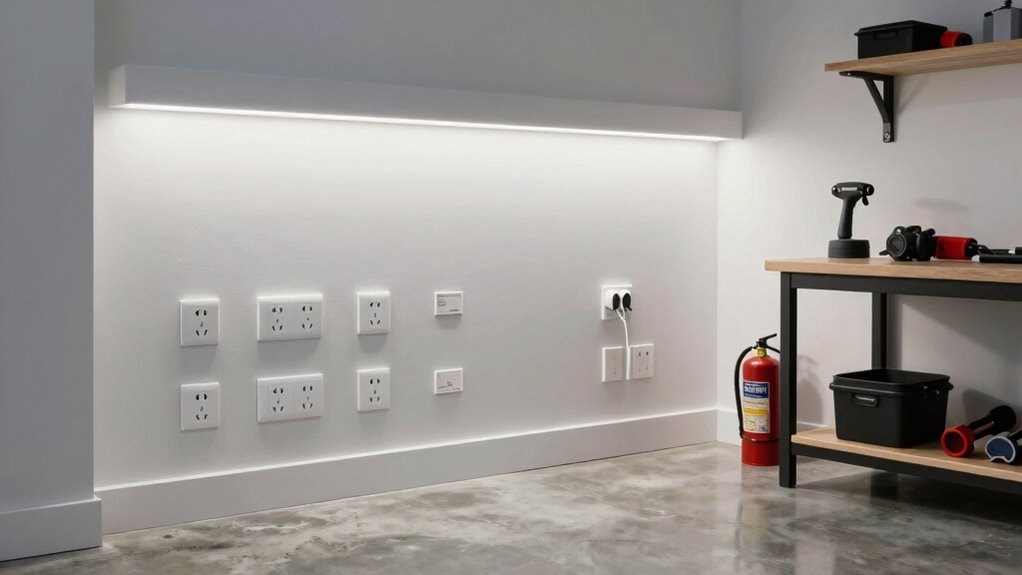
Ensuring your garage power system remains safe and up-to-date is essential for protecting your property and preventing electrical hazards. Regularly inspecting outlets and wiring helps maintain garage safety, reducing the risk of shocks or fires. Upgrading your system can improve outlet aesthetics and functionality, making your workspace more efficient. Consider adding Ground Fault Circuit Interrupters (GFCIs) for safety, or replacing outdated outlets with modern, tamper-resistant models. Keep wiring neat and organized to prevent damage, and upgrade your circuit breakers if they’re old or frequently tripping. You can also install dedicated circuits for heavy-duty tools. These steps ensure your garage remains a safe, attractive, and practical space for all your DIY projects.
Frequently Asked Questions
Can I Install Garage Outlets Myself Without an Electrician?
Yes, you can install garage outlets yourself if you’re comfortable with electrical work, but you need to follow wiring guidelines carefully. Choose the right outlet types, like GFCI outlets for safety, and make certain your wiring meets local codes. Turn off power, use proper tools, and double-check connections. If you’re unsure, it’s best to consult a professional to avoid hazards and ensure a safe, compliant installation.
What Safety Precautions Should I Take During Installation?
You should turn off the circuit breaker before starting, guaranteeing circuit breaker safety. Follow grounding requirements strictly to prevent shocks or fires. Use insulated tools and wear rubber gloves for added protection. Double-check that the power is off with a voltage tester. Keep the workspace dry and organized to avoid accidents. By following these safety precautions, you minimize risks and ensure a safe, successful garage outlet installation.
How Often Should I Inspect My Garage Outlets for Safety?
You should inspect your garage outlets at least once a year to guarantee safety. Pay attention to outlet placement, making sure they’re not overloaded or damaged. Check for signs of wear, corrosion, or loose connections. Incorporate surge protection to prevent damage from electrical surges. Regular inspections help you catch issues early, keeping your garage safe and ensuring your outlets function properly for all your DIY projects.
Are There Specific Outlets Recommended for Heavy-Duty Tools?
Think of your garage outlets as the backbone of your DIY projects. For heavy-duty tools, you should go for outlets like dedicated 20-amp circuits with proper outlet types such as industrial or heavy-duty receptacles. These outlets are designed to handle higher power ratings, ensuring your tools operate safely and efficiently without tripping breakers or risking overloads. Always choose outlets that match your tools’ power demands for a smooth, worry-free experience.
What Are the Signs of Electrical Issues in My Garage?
You’ll notice signs like flickering lights, frequent circuit breaker trips, or outlets that don’t work, which indicate electrical issues. If your garage lighting has dimmed or needs frequent lighting upgrades, it could signal wiring problems. For circuit troubleshooting, check for loose connections or overloaded circuits. Address these signs promptly to prevent potential hazards, and consider consulting a professional for a thorough inspection and safe repairs.
Conclusion
Think of your garage electrical system as the backbone of your DIY projects—strong, reliable, and ready to support your creativity. By identifying problems, planning your outlets, and following proper installation steps, you’ll create a safe, efficient workspace. Remember, a well-structured power setup isn’t just a boost for your tools; it’s the foundation for endless DIY possibilities. With this plan, you’ll turn your garage into a powerhouse of productivity and innovation.