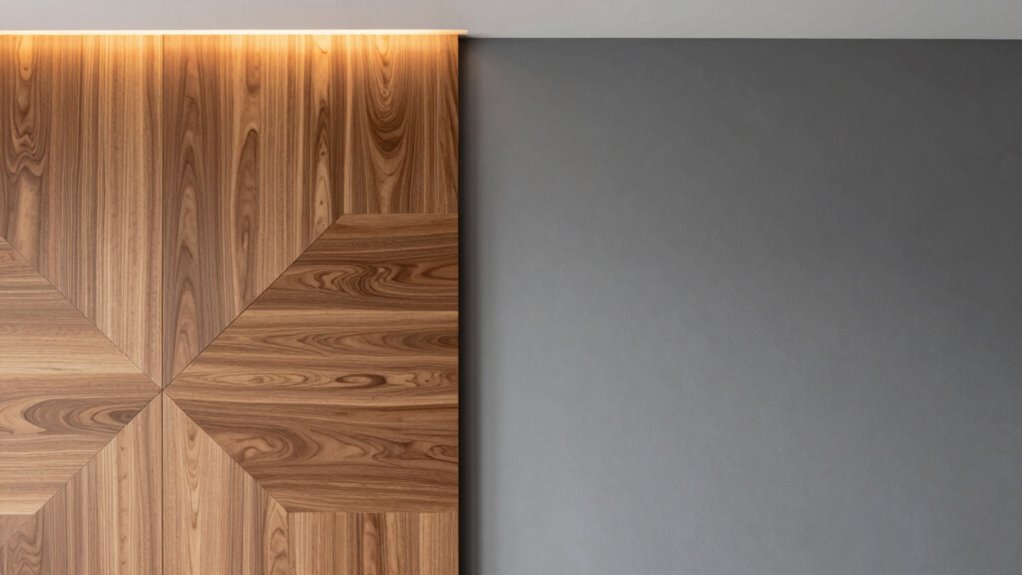

When choosing between wall panels and painted drywall, consider your budget, style preference, and long-term needs. Wall panels offer better durability, textures, and a decorative look, but they often cost more and are trickier to install or change later. Drywall is budget-friendly, easy to install, and simple to modify, making it good for quick updates. To find your best fit, explore how each option aligns with the style, maintenance, and future renovation plans—more details can guide your decision.

Get home appliances delivered free with Prime
- Fast, free delivery on millions of items
- Prime Video, Amazon Music and more included
- Member-only deals all year
Key Takeaways
- Consider your budget, as drywall is generally cheaper initially, while wall panels may have higher upfront costs but offer greater durability.
- Evaluate desired aesthetics; wall panels provide textured, decorative surfaces, whereas painted drywall offers a clean, minimalist look.
- Assess maintenance needs; wall panels are easier to clean and resist damage better than drywall.
- Determine installation complexity; drywall is quicker and simpler to install, while wall panels require more precise preparation.
- Think about future modifications; drywall is easier to remove or update, making it suitable for flexible renovation plans.
As an affiliate, we earn on qualifying purchases.
What Are Wall Panels and Drywall Made Of?

Wall panels and drywall are fundamental materials used to finish interior walls, but they differ considerably in composition. Wall panels are usually made from materials like wood, MDF, or fiberboard, often with decorative finishes, giving them a solid, textured feel. Their material composition varies based on the type, with some incorporating metal or plastic elements for added durability. The manufacturing process involves cutting, shaping, and applying surface treatments to create a finished look. Additionally, wall panels can be customized for different aesthetics to enhance interior design, and they often provide better sound insulation compared to drywall. Drywall, on the other hand, is primarily composed of a gypsum core sandwiched between layers of paper or fiberglass mats. Its manufacturing process involves mixing gypsum with additives, forming it into large sheets, then drying and sealing the surfaces. These differences influence each material’s appearance, strength, and installation methods, which are important considerations for different projects. Understanding these material properties helps in selecting the best option for specific needs, especially when considering acoustic performance and visual appeal.
As an affiliate, we earn on qualifying purchases.
Which Style Looks Best in Your Space?
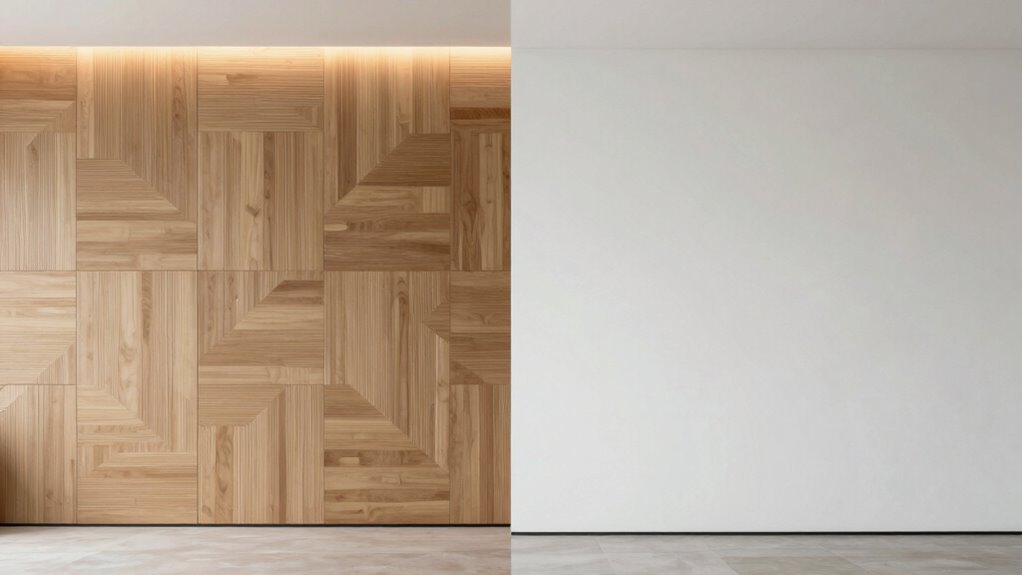
Think about your room’s style and how each option complements it—some textures and patterns work better in modern spaces, while others suit traditional looks. Consider the visual texture you want to add, whether smooth paint or textured panels, to create the right atmosphere. Finally, choose colors and patterns that enhance your space without overwhelming it, making sure everything flows cohesively. Exploring different digital content formats can also inspire your design choices. Additionally, understanding material durability can help you select options that stand up to daily wear and tear. Paying attention to interior design basics, such as mood boards and narratives, can help you visualize how each option fits into your overall space. Incorporating textural variety can further refine your choice by adding depth and interest to your walls. Being aware of aesthetic appeal can also guide your decision to ensure your walls contribute positively to the overall ambiance of your home.
Room Style Compatibility
Choosing between wall panels and painted drywall largely depends on your room’s style and overall aesthetic. Your choice should complement the decorative finishes and wall texture you envision, creating harmony in your space. For a modern, sleek look, painted drywall offers a clean, minimalist vibe that feels open and airy. If you prefer a cozy, rustic atmosphere, wall panels add warmth with textured surfaces and rich finishes. Consider Victorian or vintage styles, where ornate decorative finishes shine. Alternatively, contemporary spaces may benefit from the simplicity of painted drywall, highlighting artwork or furniture. Think about how your walls reflect your personality and the mood you want to evoke. Your decision should enhance your room’s character, making it both beautiful and inviting. Exploring different wall treatments can also provide insights into design durability, helping you choose options that last.
Visual Texture Options
When considering the visual impact of your walls, the texture they bring can dramatically influence your space’s overall feel. Decorative finishes offer a variety of options, from smooth to highly textured surfaces, allowing you to tailor the look to your style. Textural patterns, like wood grain, geometric designs, or embossed surfaces, add depth and character to a room. Wall panels often feature built-in decorative finishes that create a three-dimensional effect, making them ideal for adding visual interest. Painted drywall, on the other hand, provides a more subtle, versatile background that can be enhanced with different paint techniques or minimal textural details. Think about whether you want bold, tactile finishes or a more understated, sleek appearance when choosing the best style for your space.
Color and Pattern Choices
Selecting between wall panels and painted drywall ultimately depends on how you want your space to feel through color and pattern. Your choice influences the mood, whether you prefer calm serenity or energetic vibrancy. Think about the color schemes that evoke emotion—soft neutrals for relaxation, bold hues for excitement. Pattern styles also matter; sleek, minimal patterns create modern elegance, while intricate designs add personality and warmth. Consider how these elements align with your style and the atmosphere you want to foster.
- Feel empowered by vibrant, lively color schemes that energize your space
- Embrace tranquility with subtle, monochrome palettes
- Make a statement with bold, geometric pattern styles
- Create coziness through warm, textured color combinations
As an affiliate, we earn on qualifying purchases.
How Much Do Wall Panels and Drywall Cost?
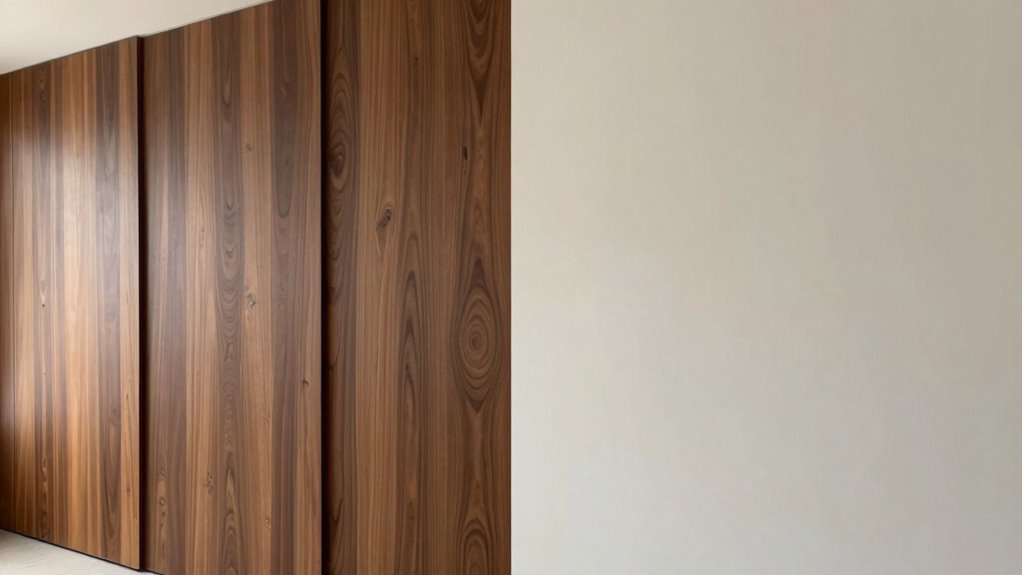
Wall panels and drywall vary in cost based on material prices and installation expenses. You’ll find that some options are more budget-friendly, while others can add to your overall project cost. Understanding these differences helps you choose the best fit for your budget and space. For example, decorative wall panels can sometimes be more affordable and easier to install than traditional drywall, depending on the material used. Additionally, the choice of incorporating features like landscaping or outdoor amenities can influence your overall backyard renovation budget. Considering the material durability of each option can also impact long-term costs and maintenance needs.
Material Price Differences
The cost difference between wall panels and drywall can considerably impact your renovation budget. Wall panels tend to be more expensive upfront, but they often offer better durability and aesthetic appeal, which could save money long-term. Drywall, on the other hand, is typically cheaper initially but may require more maintenance or replacement over time. When considering material prices, think about material sustainability and environmental impact—some panels are eco-friendly, while drywall can produce more waste.
- Feel the thrill of transforming your space with premium wall panels that last.
- Experience the peace of mind from sustainable, eco-conscious choices.
- Save money in the long run with durable, environmentally friendly materials.
- Enjoy the satisfaction of making an impactful, responsible investment.
Installation Cost Variations
Installation costs can substantially influence your overall renovation budget, especially when choosing between wall panels and drywall. A clear cost comparison shows drywall typically costs less for installation, as it’s quicker and easier to put up. Material selection impacts costs markedly; drywall is affordable and widely available, reducing labor time and expenses. Wall panels, on the other hand, often require more intricate installation, increasing labor costs. High-end panel options or custom designs can further raise expenses. If you’re working within a tight budget, drywall generally offers a more cost-effective solution. However, if you prioritize aesthetics and durability, investing in wall panels might justify the higher installation costs. Additionally, considering the design options and styles available for wall panels can influence the overall value and appeal of your space. Ultimately, understanding these variations helps you make an informed decision aligned with your budget and style preferences.
As an affiliate, we earn on qualifying purchases.
Are Wall Panels or Drywall More Durable and Easy to Maintain?
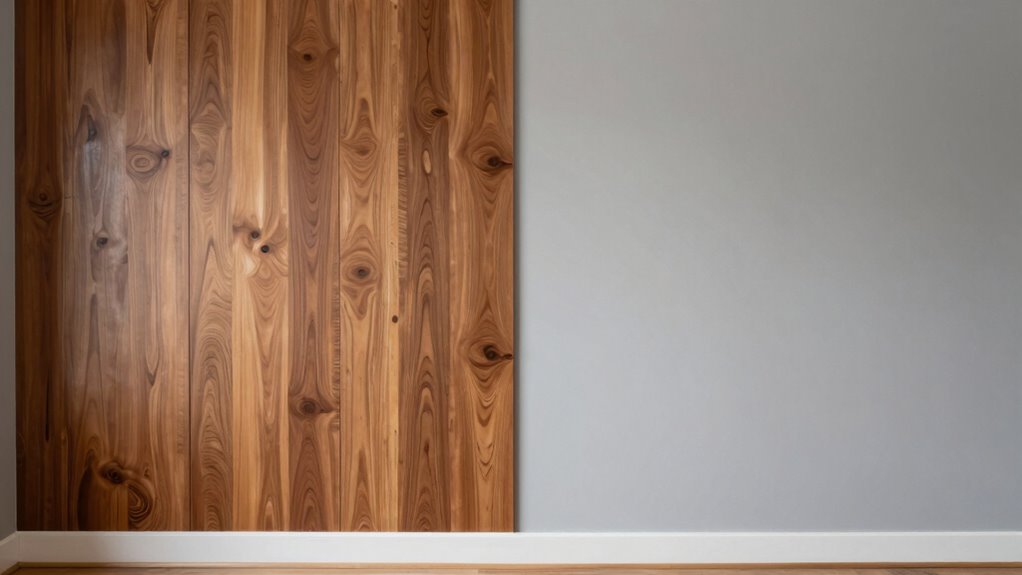
When it comes to durability and ease of maintenance, wall panels often outperform traditional drywall. In a durability comparison, wall panels resist dents, scratches, and moisture better, making them ideal for high-traffic or humid areas. They require less frequent repairs and touch-ups, reducing your ongoing maintenance requirements. Drywall, on the other hand, can crack or get damaged more easily and often needs patching and repainting. Additionally, wall panels are generally easier to clean and can be quickly dried after water exposure water damage prevention, helping to protect your walls from long-term harm. Incorporating indoor air quality considerations when selecting wall surfaces can further contribute to a healthier living environment. Selecting the right wall surface can also contribute to tax-efficient home upgrades, which is an important consideration for many homeowners. By opting for durable wall surfaces, you also enhance the overall safety and resilience of your home, which is especially important in caregiver households. Consider the emotional impact of choosing a resilient option:
- Feel confident knowing your walls can withstand daily wear and tear
- Enjoy the peace of mind that comes with less maintenance hassle
- Experience the satisfaction of long-lasting beauty
- Reduce stress from costly repairs and upkeep
How Easy Is It to Install Wall Panels vs. Drywall?
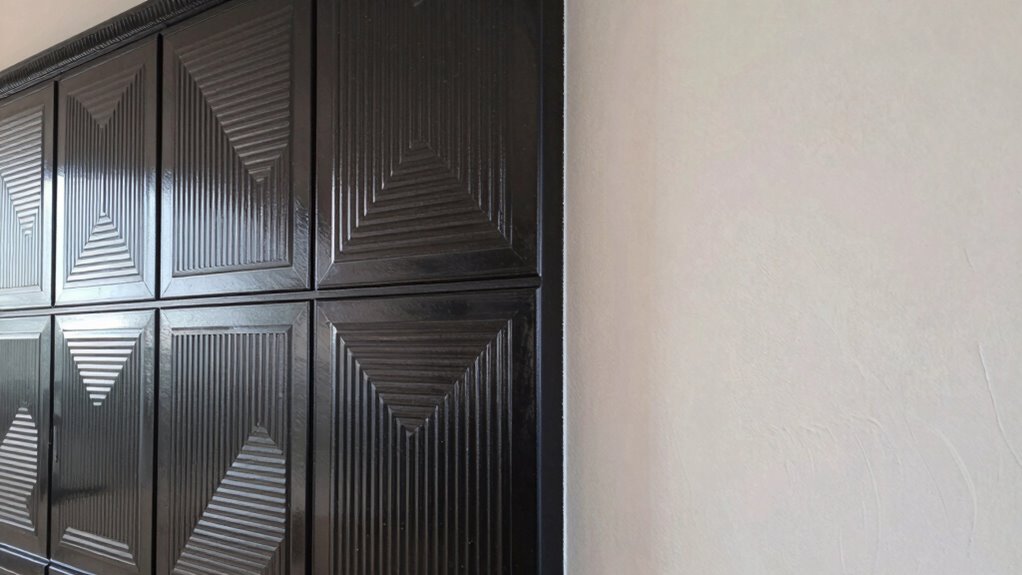
Installing wall panels can be straightforward, especially with the right preparation and tools, but it generally involves more steps than hanging drywall. The installation complexity of wall panels depends on surface preparation; uneven walls or existing damage may require additional work to guarantee a smooth, secure fit. You’ll need to measure precisely, cut panels accurately, and attach them using adhesive or fasteners, which can be more time-consuming than drywall installation. Drywall, on the other hand, typically involves hanging sheets with screws or nails, then taping and mudding joints. While drywall might seem simpler initially, it requires finishing work to achieve a seamless surface. Overall, wall panels demand more careful surface preparation and detailed installation steps, making them a slightly more involved choice. Additionally, choosing luxury lifestyle products like premium wall panels can elevate the aesthetic and value of your space. Understanding the installation process and the materials involved can also help you decide which option fits your skill level and project timeline. Proper surface preparation is crucial for both options to ensure a professional-looking result and long-lasting durability. It’s also important to consider cost and maintenance when making your decision.
Can You Change Wall Panels or Drywall Later?
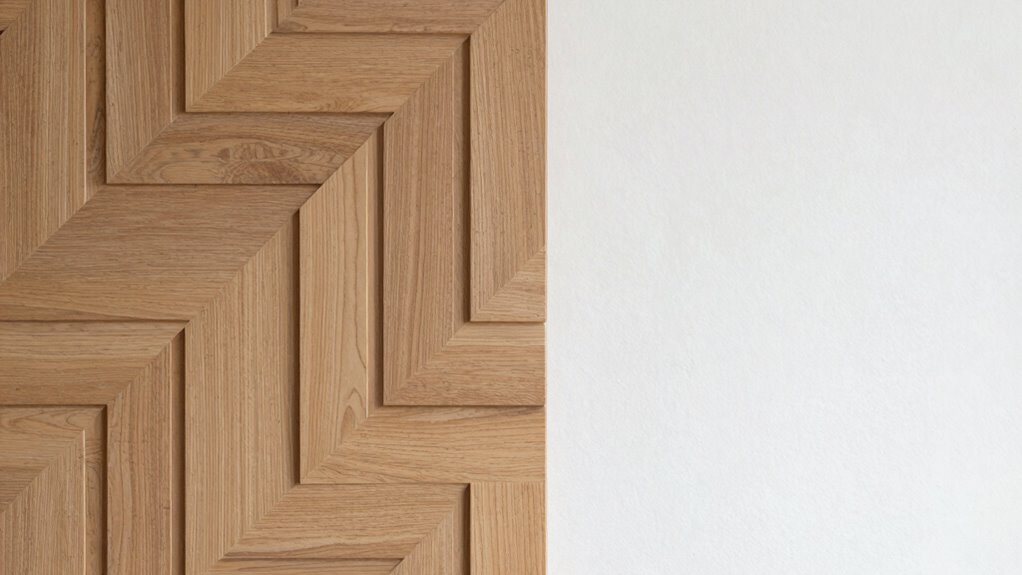
Thinking about changing your wall surfaces later? Both wall panels and drywall offer different levels of remodeling flexibility for future modifications. Wall panels can be more challenging to remove or replace, especially if they’re decorative or custom-fitted. Drywall, on the other hand, is generally easier to modify or update, making it a better choice if you envision frequent changes.
Consider these feelings when planning your space:
- Excitement for fresh, new looks with minimal hassle
- Frustration over complex removal processes
- Relief knowing drywall can be patched quickly
- Confidence in future updates with drywall’s flexibility
Ultimately, drywall tends to provide more straightforward options for future modifications, while wall panels might limit your remodeling flexibility.
How Do Cleaning and Upkeep Compare?

Cleaning and maintaining wall panels versus drywall can considerably impact your long-term effort and satisfaction. Wall panels often require less frequent cleaning because their surfaces are less prone to smudges and stains; a simple dusting or gentle wipe usually suffices. Drywall, especially when painted with flat or matte finishes, may need more regular cleaning to remove fingerprints, dirt, or marks, often involving mild soap and water. Upkeep methods differ: wall panels typically need occasional dusting or polishing, while drywall might require touch-ups or repainting if damaged. Overall, wall panels generally demand less frequent cleaning and simpler upkeep methods, making them more convenient for low-maintenance spaces. Your choice depends on how much effort you’re willing to invest in ongoing cleaning and care.
What Are the Pros and Cons of Wall Panels and Drywall?
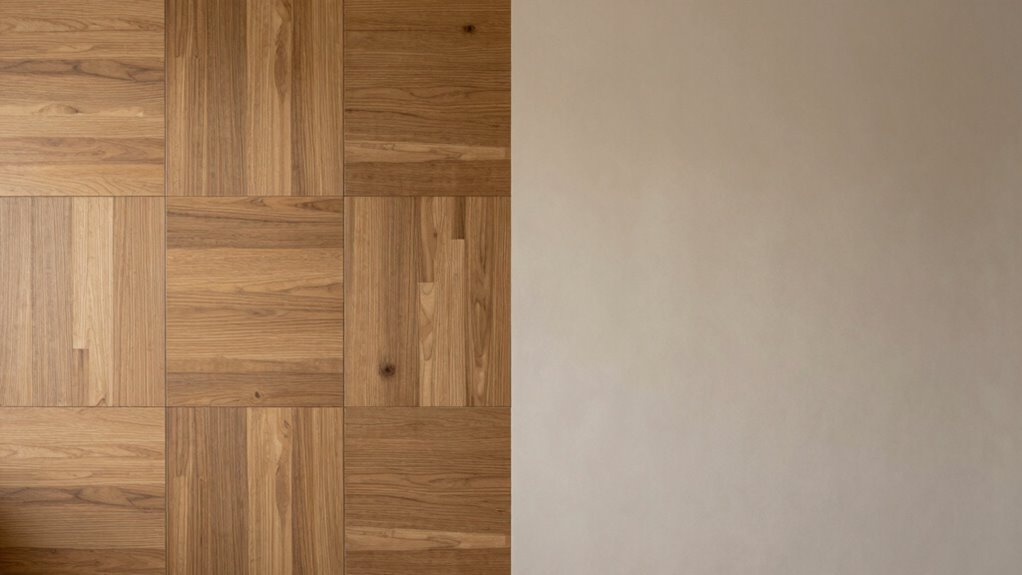
Wall panels and drywall each offer distinct advantages and disadvantages, so understanding their pros and cons can help you make an informed choice. Wall panels excel in providing decorative finishes that add character and style, creating a striking focal point. They also offer superior acoustic properties, reducing noise and enhancing privacy. Drywall, on the other hand, is more affordable, easy to install, and simple to repair, making it a practical choice for many projects. However, drywall may lack the decorative appeal of panels and doesn’t provide the same soundproofing benefits.
- Feel confident knowing you can elevate your space with visually appealing wall panels
- Enjoy a quieter, more peaceful environment thanks to better acoustic properties
- Save time and money with the straightforward maintenance of drywall
- Achieve a personalized look that reflects your unique style
Which Option Is Right for Your Budget and Long-Term Goals?
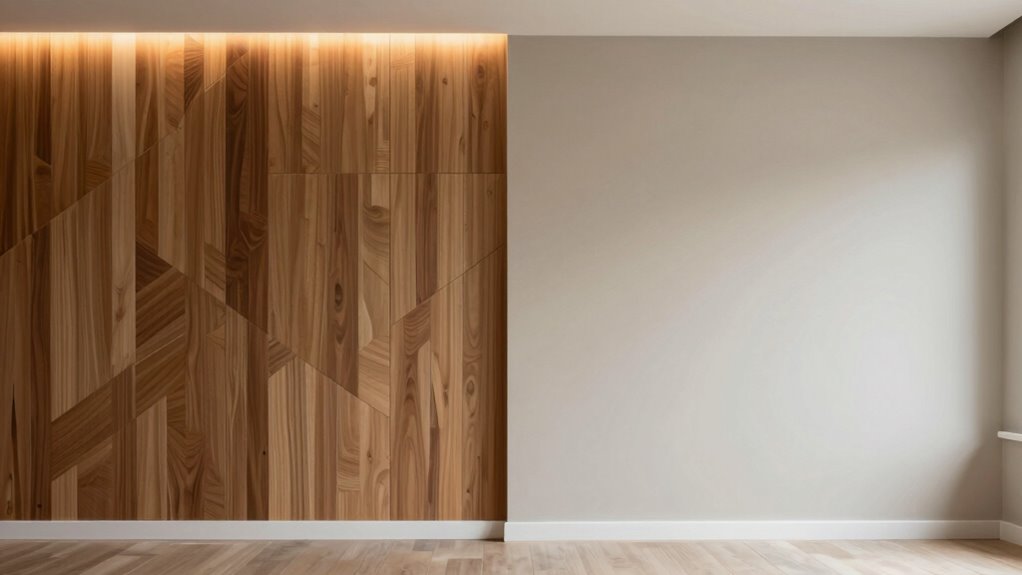
Deciding between wall panels and drywall ultimately depends on your budget and long-term goals. Budget considerations play a key role, as drywall tends to be more affordable upfront and easier to install, making it a good choice if you’re watching costs. Wall panels, however, often require a higher initial investment but can add value through durability and aesthetic appeal. Think about your long-term investment: if you want a low-maintenance, timeless look, drywall might suit you better. But if you’re aiming for a unique design that lasts and enhances your space’s character, wall panels could be worth the extra expense. Ultimately, weigh the initial costs against your desired longevity and style to choose the option that aligns with your financial plans and future vision.
Frequently Asked Questions
Are Wall Panels or Drywall Better for Soundproofing?
Wall panels generally offer better soundproofing than drywall because they provide superior acoustic performance. They absorb and block sound waves more effectively, making them ideal if noise reduction is your priority. Plus, wall panels come in decorative finishes, enhancing your space’s look. Drywall, while more affordable and easier to install, doesn’t perform as well acoustically. So, if soundproofing matters most, wall panels are your best choice.
How Eco-Friendly Are Wall Panels Compared to Drywall?
Wall panels are generally more eco-friendly than drywall, thanks to their sustainability benefits. A notable statistic is that some wood-based panels are made from sustainably sourced materials and can be recycled easily, offering recyclability benefits. In a sustainability comparison, wall panels often produce less waste during manufacturing and installation. Plus, choosing eco-friendly options like recycled or sustainably harvested materials makes wall panels a greener choice for your home or project.
Can Wall Panels Be Used in Outdoor Applications?
Yes, wall panels can be used outdoors if you select ones designed for outdoor durability. Look for panels that offer weather resistance, such as those made from composite materials, treated wood, or specialized plastics. These materials withstand moisture, UV rays, and temperature changes better than indoor panels. Proper installation and sealing are essential to guarantee long-lasting outdoor performance, protecting your space from the elements effectively.
Do Wall Panels Require Special Tools for Installation?
Imagine you’re installing wooden wall panels in your living room. You don’t need special tools; basic installation tools like a drill, level, and screwdriver typically suffice. The panel types, whether wood, PVC, or MDF, determine the tools you’ll use. For example, thicker MDF panels might require a bit more force or specific fasteners. Overall, most wall panels are designed for straightforward installation with common tools, making your project manageable.
Which Option Offers Better Insulation Properties?
Wall panels generally offer better insulation properties than painted drywall, helping you achieve improved thermal comfort and energy efficiency in your space. They often contain insulating materials that trap air and reduce heat transfer, keeping your room warmer in winter and cooler in summer. By choosing wall panels, you can enhance your home’s energy performance and enjoy greater comfort year-round, making them a smart investment for insulation benefits.
Conclusion
Choosing between wall panels and drywall depends on your style, budget, and long-term plans. Did you know that wall panels can last up to 50 years with proper care, making them a durable choice? If you want a quick, budget-friendly update, drywall might be best. But if you’re after a unique look that adds value over time, wall panels could be your ideal option. Consider your needs carefully, and you’ll find the perfect wall solution.
Fall Picks
fall essentials
As an affiliate, we earn on qualifying purchases.