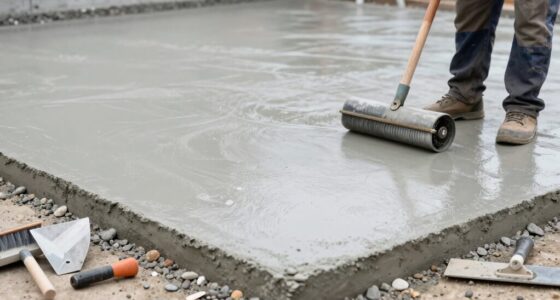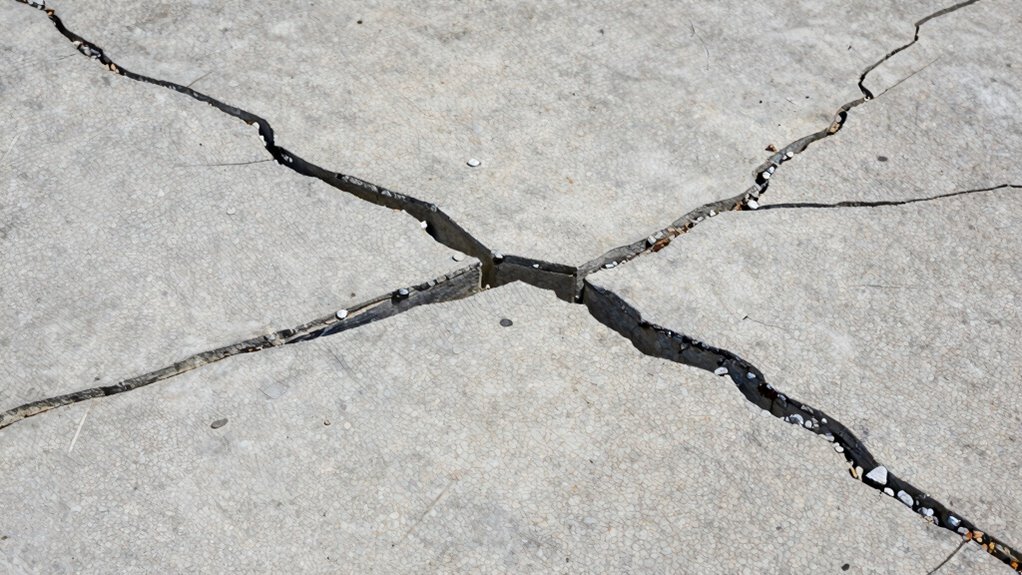

If you notice cracks in your garage concrete, pay attention to their size, pattern, and progress. Small, hairline cracks are usually non-structural and can often be repaired easily. However, large, wide, or widening cracks might signal foundation issues and require professional evaluation. Horizontal cracks or those caused by shifting ground are especially concerning. To avoid costly repairs later, it’s important to assess your cracks properly and take appropriate action. More detailed guidance can help you keep your garage safe and durable.
Key Takeaways
- Small, hairline cracks are usually non-structural; wide or widening cracks may indicate serious foundation issues.
- Horizontal or large cracks suggest significant ground movement or shifting requiring immediate professional assessment.
- Monitor crack patterns and size over time to detect worsening conditions or structural deterioration.
- For major, deep, or expanding cracks, consult a structural engineer or concrete specialist promptly.
- Address water leaks and moisture issues early to prevent further concrete deterioration and mold growth.

Rust-Oleum 301012 Concrete Patch & Repair, 24 oz, Gray
Ideal for indoor/outdoor use to repair concrete cracks and holes in concrete
As an affiliate, we earn on qualifying purchases.
As an affiliate, we earn on qualifying purchases.
Why Do Garage Concrete Cracks Appear?
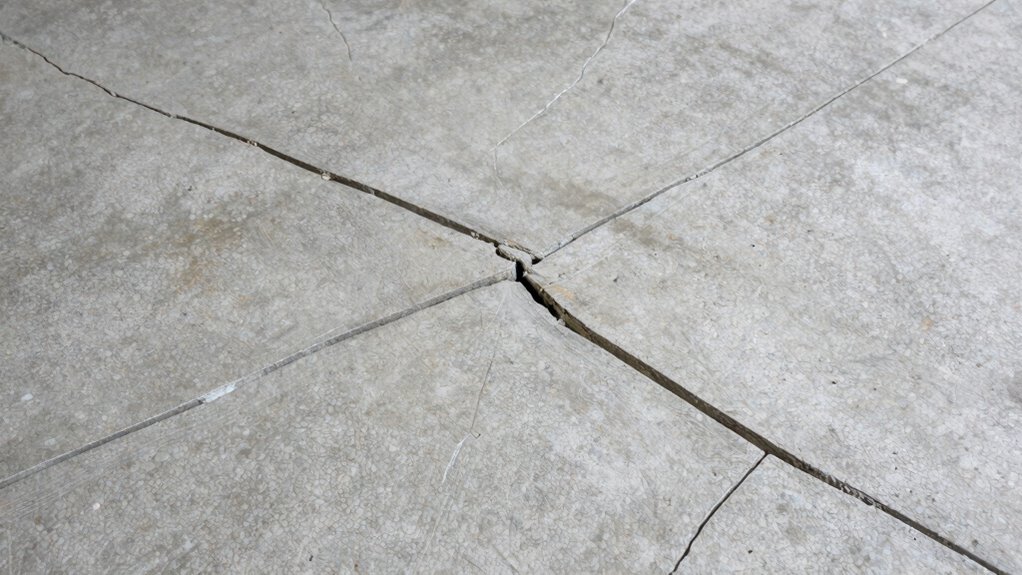
Concrete cracks in your garage can happen for various reasons, often related to how the concrete was poured or how it ages over time. When cracks appear, they can affect your garage’s aesthetics, making the space look neglected. Sometimes, the cracks are minor and don’t impact the structural integrity, but they can still disrupt the overall appearance. If you want a seamless look, you might consider color matching repair materials to blend the cracks with the existing concrete. Poor mixing, improper curing, or ground movement can all cause cracks to develop. Additionally, temperature changes cause expansion and contraction, leading to surface cracks. Understanding these causes helps you decide whether a simple repair suffices or if you need a more extensive fix to maintain your garage’s visual appeal, especially when considering concrete cracking causes and how they relate to the material’s properties. Recognizing the signs of structural damage early can help prevent more serious issues down the line, particularly when the cracks are linked to foundation settlement or other underlying issues. Being aware of material properties can also influence your repair choices, ensuring that the fixes you implement are durable and appropriate for your specific situation. Regular inspections and understanding the underlying factors that contribute to cracking can help you address problems before they worsen.

DAP Concrete Crack Filler, Gray, 1.62 lb (7079860500)
Concrete crack filler repairs horizontal cracks in concrete, stone and other masonry materials
As an affiliate, we earn on qualifying purchases.
As an affiliate, we earn on qualifying purchases.
How to Recognize Different Types of Garage Cracks
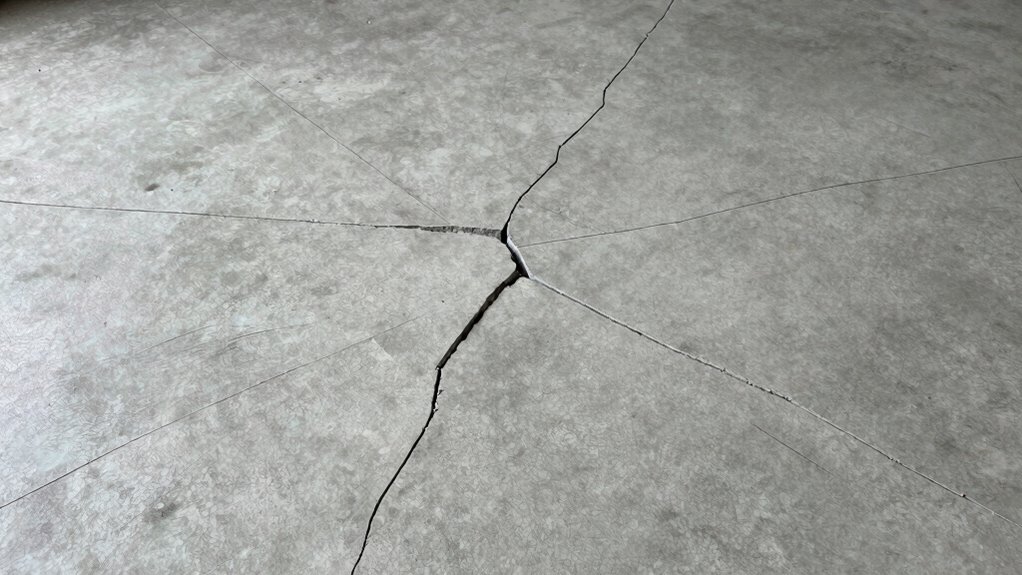
Understanding the differences between crack types helps you assess their severity. You’ll notice that hairline cracks are thin and shallow, while structural cracks are wider and deeper. Pay attention to whether cracks run vertically or horizontally, as this can indicate different underlying issues. Additionally, using precise measurement tools like test accuracy instruments can help monitor crack progression over time. Recognizing the importance of structural integrity can guide you in taking appropriate action before minor issues escalate, especially since certain crack patterns may signal foundation problems that require professional evaluation. Being aware of garage concrete composition can also influence how cracks develop and the best repair strategies to employ. Understanding how concrete durability affects crack formation can help you choose the right repair methods and prevent future issues.
Hairline Vs. Structural Cracks
Are all cracks in your garage equally concerning? Not necessarily. Hairline cracks are usually thin, often less than 1/8 inch wide, with a smooth surface texture and minimal color variation. They’re common and typically don’t affect structural integrity. Structural cracks, however, tend to be wider, often more than 1/4 inch, with noticeable roughness or jagged edges. They may show irregular surface texture or significant color variation along the crack line. These signs suggest deeper issues, possibly indicating movement or shifting in the concrete slab. Pay close attention to the size, pattern, and appearance of cracks. If a crack starts to widen, deepen, or if surface texture and color variation become more pronounced, it’s time to seek professional inspection to prevent further damage. Regular monitoring can help detect early signs of structural issues and ensure timely repairs, especially since concrete movement can be a sign of underlying foundation problems. Recognizing crack patterns can also provide clues about the severity and potential causes of the damage. Additionally, understanding industry transformations like the increasing use of AI automation in construction assessments can improve diagnostic accuracy and efficiency. Being aware of material properties can also help you better understand how different factors influence crack development and progression.
Vertical Vs. Horizontal Cracks
Vertical and horizontal cracks in your garage slab often indicate different underlying issues, so recognizing their orientation is essential. Vertical cracks usually appear as thin, straight lines that resemble decorative patterns, often caused by shrinkage or minor settling. In contrast, horizontal cracks tend to be wider and may display surface discoloration or spalling, signaling more significant structural movement or pressure. Horizontal cracks are often a sign of soil expansion or foundation shifting, which requires immediate attention. Recognizing these differences helps you determine the severity of the problem. Keep an eye on surface discoloration around the cracks, as it can indicate moisture intrusion or deterioration. Addressing horizontal cracks quickly can prevent further damage, while minor vertical cracks may simply need monitoring or sealing. Understanding the types of foundation movement associated with each crack can help guide appropriate repairs. Additionally, understanding how foundation movement relates to soil stability can aid in preventing future issues. Being aware of the signs of foundation failure can help you take early action to avoid costly repairs. Recognizing the early warning signs of foundation problems allows for timely intervention, reducing the likelihood of extensive damage. It’s also helpful to know that crack pattern analysis can provide insights into the potential causes of foundation movement.
Rust-Oleum 301012 Concrete Patch & Repair, 24 oz, Gray
Ideal for indoor/outdoor use to repair concrete cracks and holes in concrete
As an affiliate, we earn on qualifying purchases.
As an affiliate, we earn on qualifying purchases.
Are Small Cracks in Your Garage Floor Repairable?
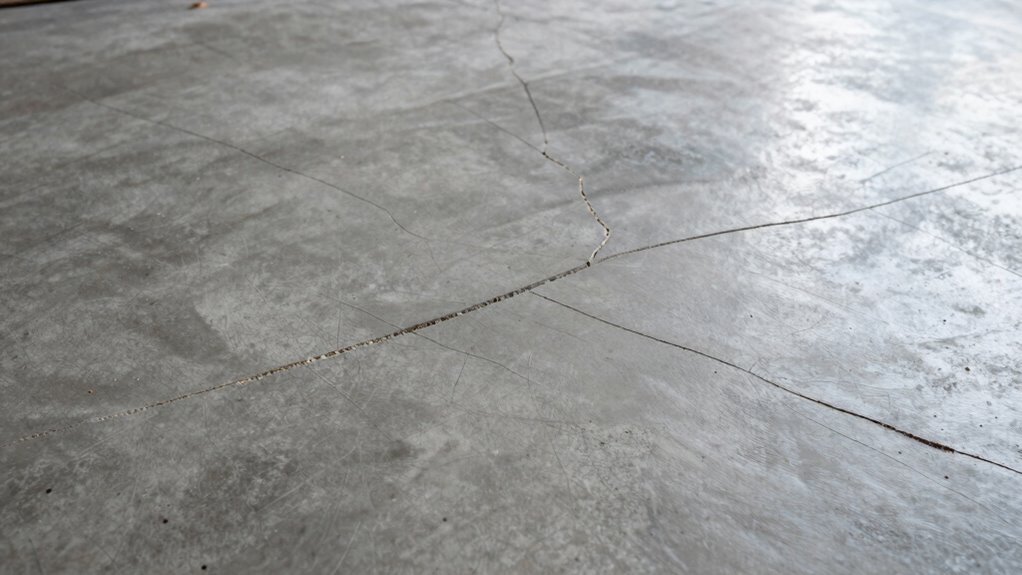
Small cracks in your garage floor are often repairable, especially if they’re caught early. Repairing minor cracks helps maintain your garage’s overall garage floor aesthetics, preventing further damage and preserving its appearance. For tiny cracks, simple patching with epoxy or concrete filler usually does the trick. If you want a more polished look, decorative overlays can conceal small imperfections while enhancing your floor’s style. These overlays are durable and can be customized with colors or patterns, giving your garage a fresh, attractive look. Early intervention not only keeps cracks from expanding but also saves you money long-term. Remember, addressing small cracks promptly is key to maintaining a smooth, visually appealing garage floor that lasts. Understanding the importance of preventive maintenance can help you stay ahead of larger, more costly repairs down the line. Additionally, implementing proper crack repair techniques can significantly extend the lifespan of your garage floor.

Yuly Heavy-Duty Building Crack Monitor For Concrete Masonry And Stucco Crack Gauge Monitor Crack Measuring Crack Width Gauge, 4 Pack
Whether you are a professional or a homeowner, this Monitoring Device is a must have tool for detecting…
As an affiliate, we earn on qualifying purchases.
As an affiliate, we earn on qualifying purchases.
What Do Large Cracks Say About Structural Stability?
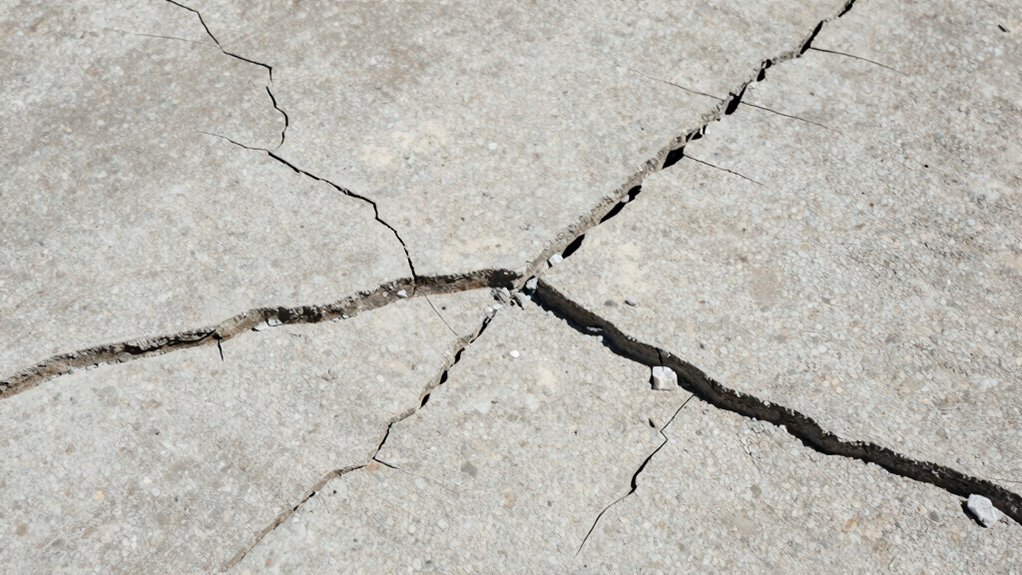
Large cracks in your garage floor often signal more serious underlying issues that could threaten the structural stability of your home. These cracks may indicate foundation movement, which occurs when the soil beneath shifts or settles unevenly. Soil settlement, whether from moisture changes, poor compaction, or erosion, can cause the concrete to crack as the ground beneath it shifts. If the cracks are wide, deep, or extend across the entire garage floor, it’s a sign that the foundation might be compromised. Such movement can weaken the overall structure, leading to uneven floors and potential future damage. You should monitor these cracks closely and consider consulting a structural engineer to assess the extent of foundation movement and determine necessary repairs. Recognizing signs of foundation issues early can help prevent more extensive and costly repairs down the line. Additionally, understanding soil stability factors can provide insights into the root causes of the cracks and guide effective solutions. Regular inspections and awareness of soil conditions can help identify potential problems before they become severe.
How Can You Tell If a Crack Is Serious?
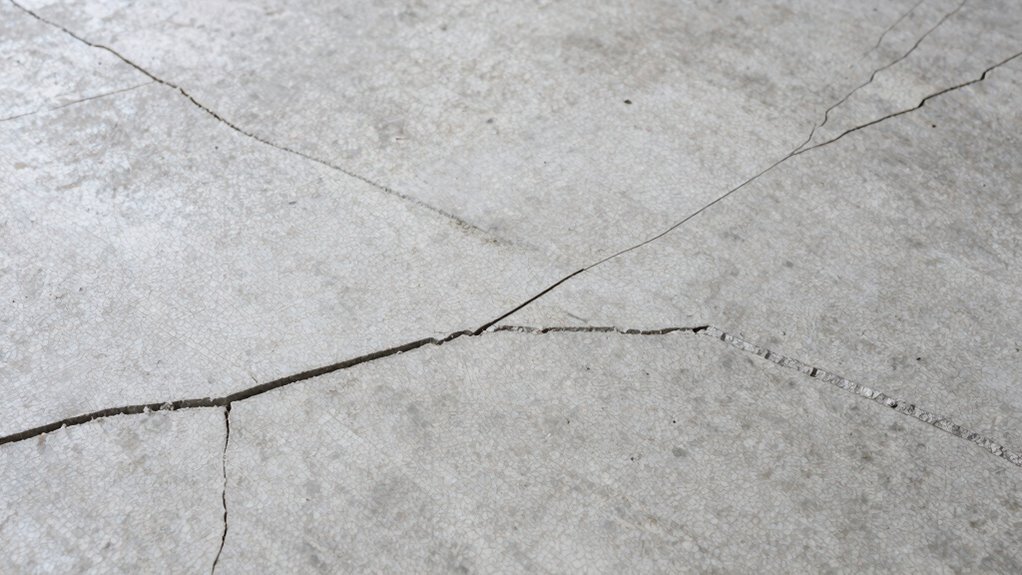
Not all cracks in your garage floor are equally concerning, so it’s important to learn how to distinguish between harmless and serious damage. Look at the crack’s width, pattern, and location. Narrow, hairline cracks usually don’t impact structural integrity or garage aesthetics. However, wider cracks or those that widen over time could signal foundation issues. Also, consider whether the cracks follow a pattern or are random. Changes in concrete color around the crack might indicate moisture problems or deterioration. Use the table below to help identify the seriousness:
| Crack Type | What to Watch For | Impact on Garage Aesthetics |
|---|---|---|
| Hairline | Less than 1/8 inch, stable | Minimal, barely noticeable |
| Wide | Over 1/4 inch, widening | More noticeable, may reduce visual appeal |
| Patterned | Multiple cracks forming patterns | Affects overall look, could suggest structural concerns |
DIY Repairs for Garage Concrete Cracks
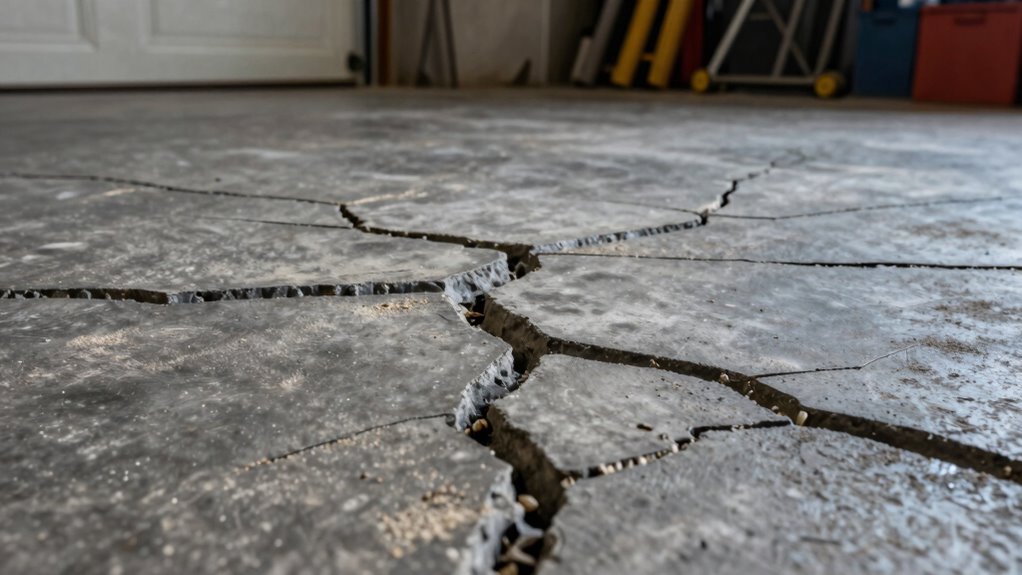
Wondering how to tackle garage concrete cracks yourself? Start by understanding the garage crack causes, which often include settling, temperature changes, or moisture. For DIY repair, gather essential tools like a wire brush, chisel, concrete patch, trowel, and a bucket of water. Here’s how you can proceed:
- Clean out the crack thoroughly with a wire brush and water
- Use a chisel to widen the crack slightly for better adhesion
- Mix the concrete patch according to instructions
- Fill the crack with the patch, pressing it in firmly
- Smooth the surface with a trowel and let it cure
These steps help prevent further damage, saving you money and effort. Just ensure you have the right DIY repair tools and identify the cause to get lasting results.
When Should You Call a Professional for Garage Repairs?
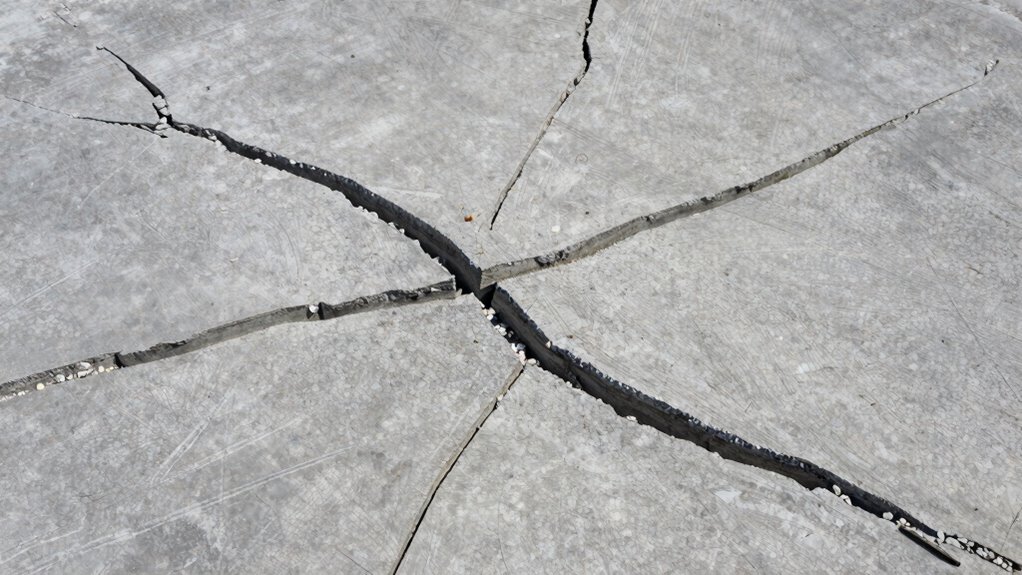
If cracks are severe, widening, or lengthening over time, it’s time to call a professional. You should also seek expert help if you notice signs of water damage or structural instability. Addressing these issues early can prevent costly repairs later.
Severe Structural Damage
Severe structural damage in your garage concrete can’t be ignored, as it compromises the safety and stability of your entire space. If you notice large, deep cracks, uneven surfaces, or signs of sinking, it’s time to call a professional. Damage like this often indicates foundation issues or extensive concrete failure.
You should consider professional help if you see:
- Significant cracks spreading across the floor
- Evidence of garage floor expansion or shifting
- Cracks that affect garage door operation
- Uneven or sunken concrete surfaces
- Need for concrete reinforcement to restore stability
A professional can evaluate whether your garage needs foundation repairs, repair or replace damaged concrete, or install reinforcement to prevent further issues. Addressing severe damage promptly helps ensure your garage remains safe and functional.
Widening or Lengthening Cracks
Widening or lengthening cracks in your garage concrete signal that the problem is worsening and requires immediate attention. These cracks can compromise the garage’s aesthetics and may indicate underlying structural issues. If you notice cracks expanding, it’s time to call a professional to assess the situation. Ignoring this sign can lead to more extensive damage and costly repairs later. Proper cracks prevention starts with timely intervention; a professional can determine whether the cracks are purely cosmetic or if they threaten the foundation’s stability. Addressing expanding or lengthening cracks promptly helps maintain your garage’s integrity and appearance. Don’t delay—early repairs can save you money and ensure your garage remains safe and visually appealing.
Signs of Water Damage
Have you noticed water stains, puddles, or a musty smell in your garage? These are clear signs of water damage that require attention. Poor garage ventilation can trap moisture, leading to mold growth and structural issues. Look out for:
- Discolored or peeling paint on walls or floor
- Visible mold spots or a persistent damp smell
- Cracks that seem to be expanding or water seeping through
- Warped or soft concrete surfaces
- Puddles forming without rain or obvious leaks
If you see any of these signs, it’s time to call a professional. Addressing water damage early helps prevent mold expansion and keeps your garage safe. Proper ventilation and quick repairs are essential for mold prevention and maintaining a sturdy, dry space.
Tips to Prevent Cracks in Your Garage Concrete
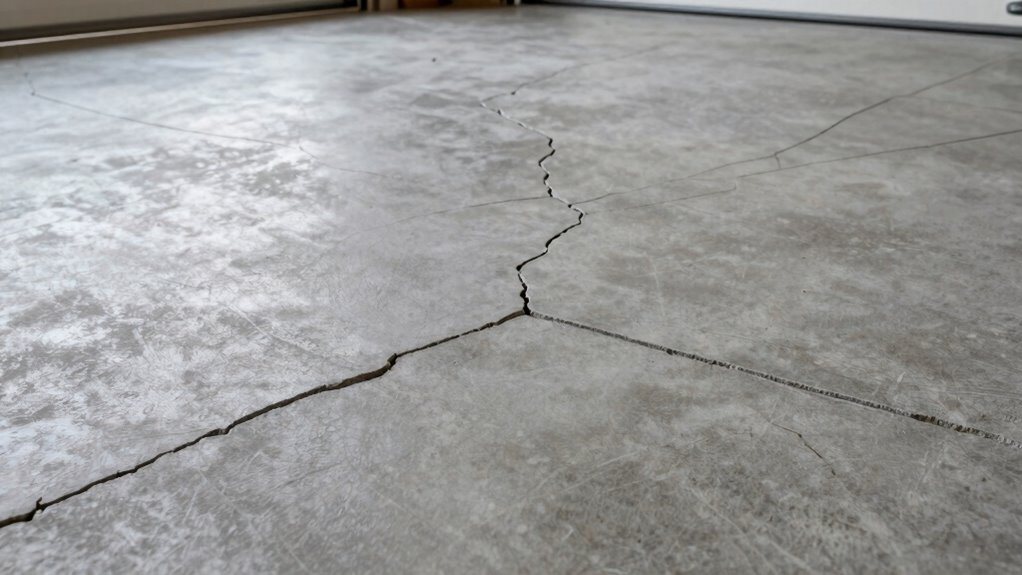
Preventing cracks in your garage concrete starts with proper planning and preparation. Focus on selecting quality materials that enhance garage aesthetics and withstand stress. Use a suitable mix with proper water-cement ratios to prevent weak spots. Properly preparing the subgrade ensures stability and reduces shifting. Additionally, consider the following tips:
| Tip | Explanation |
|---|---|
| Use control joints | They direct cracks along designated lines |
| Ensure proper curing | Keeps concrete strong and less prone to cracking |
| Avoid rapid drying | Prevents surface shrinkage cracks |
| Reinforce with rebar or mesh | Adds strength and minimizes cracking |
| Maintain consistent thickness | Prevents uneven stress distribution |
Choosing the right material and implementing these strategies helps maintain your garage’s appearance while reducing crack risks.
Maintaining Your Garage Floor for Long-Term Durability
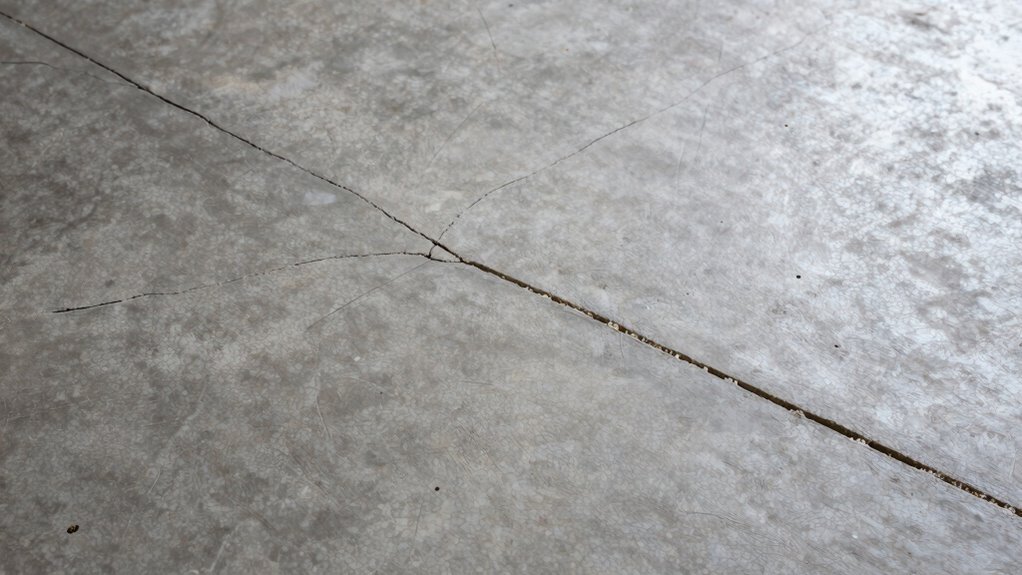
To guarantee your garage floor stays durable over time, regular maintenance is essential. This helps preserve garage aesthetics and extends paint longevity, making your space look clean and well-kept. Start by cleaning spills promptly to prevent stains and surface damage. Regularly sweep away debris and dirt that can cause surface wear. Seal cracks early to prevent water infiltration, which can worsen damage. Reapply protective coatings or paint as needed to maintain a fresh appearance. Consider using high-quality sealers that resist chemicals and moisture. Keep an eye on the surface for signs of wear, and address issues quickly to prevent costly repairs. Proper upkeep not only enhances your garage’s visual appeal but also ensures the concrete remains strong and reliable over the years.
Frequently Asked Questions
How Much Does Professional Garage Concrete Crack Repair Typically Cost?
Professional garage concrete crack repair usually costs between $300 and $1,000, depending on the extent of damage and the repair method. You’ll want to focus on garage maintenance to preserve concrete durability, which helps prevent future cracks. Smaller cracks cost less to fix, while larger or multiple cracks may require more extensive work. Investing in professional repair guarantees your garage stays safe and structurally sound, saving you money long-term.
Can Weather Changes Cause New Cracks to Form in My Garage?
Yes, weather changes can cause new cracks to form in your garage. Fluctuations in temperature lead to expansion and contraction of the concrete, while humidity effects can cause moisture to seep in or evaporate, weakening the surface over time. These cycles put stress on your garage floor, making cracks more likely. To minimize damage, consider sealing the concrete and maintaining consistent indoor humidity levels.
Are There Specific Signs Indicating Foundation Issues Behind Garage Cracks?
Think of foundation issues as warning signs flashing on a dashboard. If you notice large, diagonal, or stair-step cracks, especially near door frames or windows, it could signal foundation movement threatening your structural stability. Also, look for uneven floors, sticking doors, or gaps between walls and ceilings. These signs suggest your foundation may be shifting, making it essential to consult a professional to assess and address potential structural stability concerns before they worsen.
How Long Does It Take for a Repaired Garage Crack to Cure Completely?
You can expect a repaired garage crack to cure in about 24 to 48 hours, depending on the repair method and garage crack causes. During this repair timeline, the filler or epoxy needs time to set and harden properly. To guarantee the best results, avoid heavy loads or stress on the area until it’s fully cured. Proper curing helps prevent future cracks and maintains your garage’s structural integrity.
What Are the Best Preventative Measures to Avoid Future Cracks?
You can prevent future garage cracks by regularly applying a high-quality sealant to fill small gaps and protect the concrete surface. Additionally, improving drainage around your garage helps reduce water infiltration that causes cracking. Make sure gutters direct water away from the foundation, and consider grading the soil to slope away. These measures minimize stress on your concrete, keeping it durable and crack-free longer.
Conclusion
By understanding the causes, recognizing the types, and knowing when to act, you can safeguard your garage’s foundation and prolong its lifespan. Address cracks promptly, assess their severity carefully, and maintain your concrete regularly. Whether you’re tackling small repairs or calling in professionals, your proactive approach ensures safety, stability, and durability. Stay vigilant, stay informed, and stay committed to keeping your garage in top shape—because a well-maintained garage is a foundation for peace of mind.