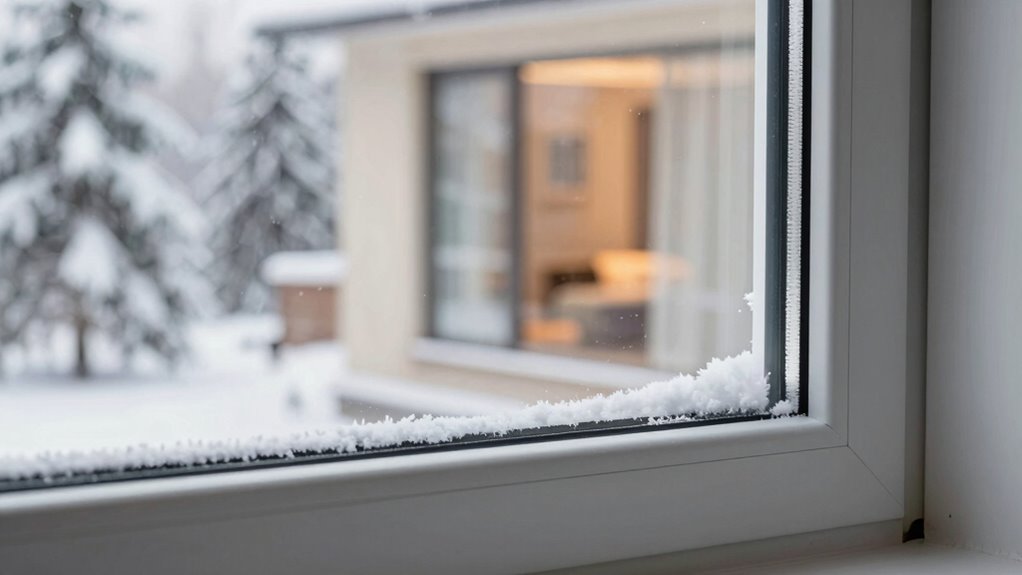

To reduce heat loss through your windows, start by sealing any cracks or gaps with weatherstripping or caulk to prevent drafts. Upgrade to energy-efficient double or triple-glazed windows, and consider adding insulating curtains or films for extra warmth. Keep your windows clean and well-maintained, and make certain they are properly installed. Simple DIY fixes like applying window insulation kits can also make a big difference. Follow these tips for more ways to improve your indoor comfort effortlessly.

Get home appliances delivered free with Prime
- Fast, free delivery on millions of items
- Prime Video, Amazon Music and more included
- Member-only deals all year
Key Takeaways
- Install double or triple-glazed windows with low-emissivity coatings for improved insulation.
- Use weatherstripping and caulk to seal gaps around window frames and prevent drafts.
- Add thermal curtains or insulating films to trap heat and reduce heat transfer through windows.
- Choose energy-efficient window frames made from uPVC, wood, or fiberglass instead of aluminum.
- Regularly inspect and maintain seals, weatherstripping, and window mechanisms to ensure optimal insulation.
Products Worth Considering

Bose SoundLink Flex Bluetooth Speaker (2nd Gen), Portable Waterproof Speaker, Black

Shark Rocket Pet Plus Corded Stick Vacuum, Bordeaux, HV322

Philips Hue Bridge Pro Smart Lighting Hub
As an affiliate, we earn on qualifying purchases.
Why Windows Are a Major Source of Heat Loss
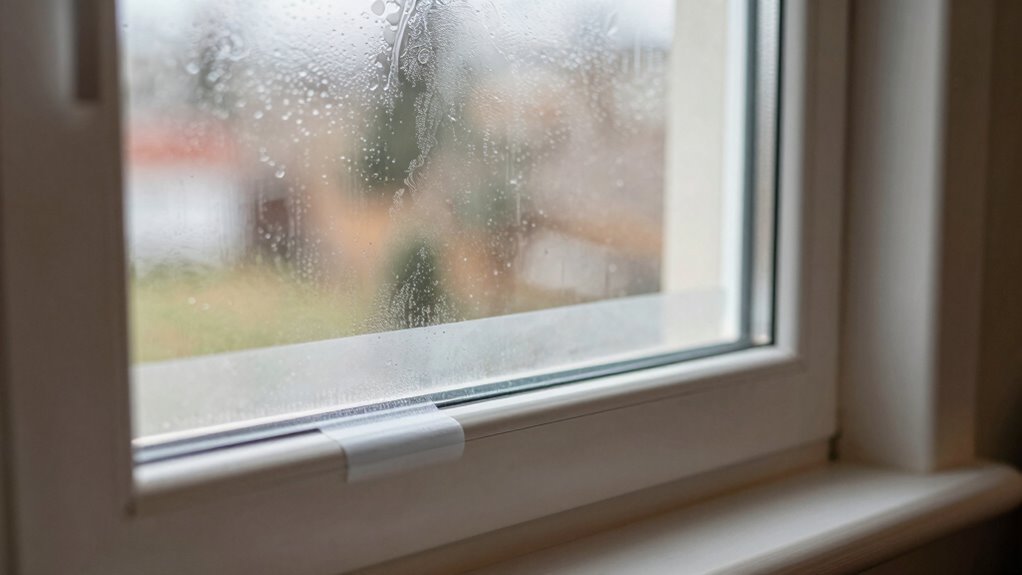
Why do windows often become the biggest source of heat loss in a home? It mainly comes down to window frame materials and design features. If your window frames are made from materials like aluminum or thin vinyl, they conduct heat easily, allowing warmth to escape. Conversely, wood and uPVC provide better insulation. Window design features also matter—large panes or single-glazed windows let more heat slip out than double or triple-glazed options. Slim frames or those with minimal insulation spaces increase heat transfer, making your home colder. Additionally, material conductivity influences how much heat is lost through the frames. Choosing high-quality double glazing can dramatically reduce heat loss and improve energy efficiency. Understanding these factors highlights how window insulation can significantly improve energy efficiency and comfort in your home. By understanding these factors, you realize that choosing the right window frame materials and design features can notably reduce heat loss and keep your home warmer and more energy-efficient. Proper installation techniques also play a crucial role in minimizing air leaks, further enhancing the effectiveness of your insulation efforts.
How to Check if Your Windows Insulate Well
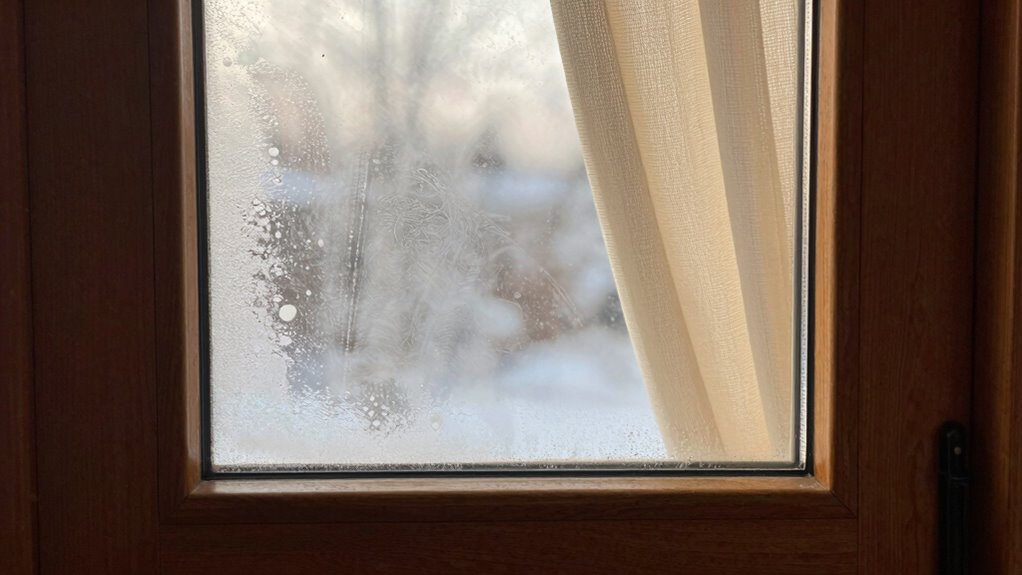
To see if your windows insulate well, start with a visual inspection for cracks or gaps around the frames. You can also measure air leakage by holding a lit candle or incense stick near the edges—if the flame flickers, drafts are likely. A natural pool can also help maintain a comfortable outdoor environment, reducing the need for additional heating. These simple checks help you identify where your windows might be letting heat escape. Additionally, consider evaluating the energy efficiency of your windows to determine if upgrading or adding insulation could further reduce heat loss. Understanding credit card security measures and implementing them can also protect your home’s energy systems from cyber threats that might disrupt efficient heating controls. Monitoring your home’s insulation regularly ensures that any issues are addressed promptly, maintaining optimal warmth and reducing energy costs.
Visual Inspection Techniques
Performing a visual inspection is a straightforward way to evaluate your windows’ insulation quality. Start by checking the window frames and sashes for cracks, gaps, or damage that could let warm air escape. Look closely at the glass for condensation between panes, which indicates poor insulation. Examine the overall window aesthetics—deterioration or warped frames can reduce effectiveness. If you use decorative films or coatings, verify they’re intact without peeling or gaps, as these can impact insulation. Also, inspect weatherstripping for wear or tears, which can cause drafts. A simple flashlight held around the edges can reveal light leaks, indicating areas where heat may escape. Regular visual checks help identify problems early, saving energy and improving comfort. Additionally, understanding window insulation techniques can guide you in making effective repairs or upgrades to enhance your home’s energy efficiency, and being aware of spiritual signs like angel numbers can inspire a positive mindset during your home improvements. To further improve insulation, consider exploring energy-saving methods that target windows specifically. Recognizing proper installation practices can also significantly impact the overall insulation performance of your windows.
Measuring Air Leakage
Ever wondered if your windows are truly insulating your home? To find out, you need to measure air leakage. Start by closing all doors and windows, then turn off fans and appliances that create airflow. Use a lit incense stick or a smoke pencil near the window frame, and observe any movement of the smoke. Changes in air pressure around the window indicate leaks. For a more precise method, conduct a blower door test, which measures how much air escapes under controlled air pressure. This test helps identify leaks you might not see visually. Good ventilation control is essential for accurate readings, as it minimizes external influences that could skew results. Properly measuring air leakage guarantees your windows provide optimal insulation, reducing heat loss effectively. Measuring air leakage is a crucial step in ensuring your windows provide effective insulation. Additionally, understanding the regional climate can help tailor your insulation strategies for better energy efficiency.
Upgrade to Energy-Efficient Windows for Better Comfort
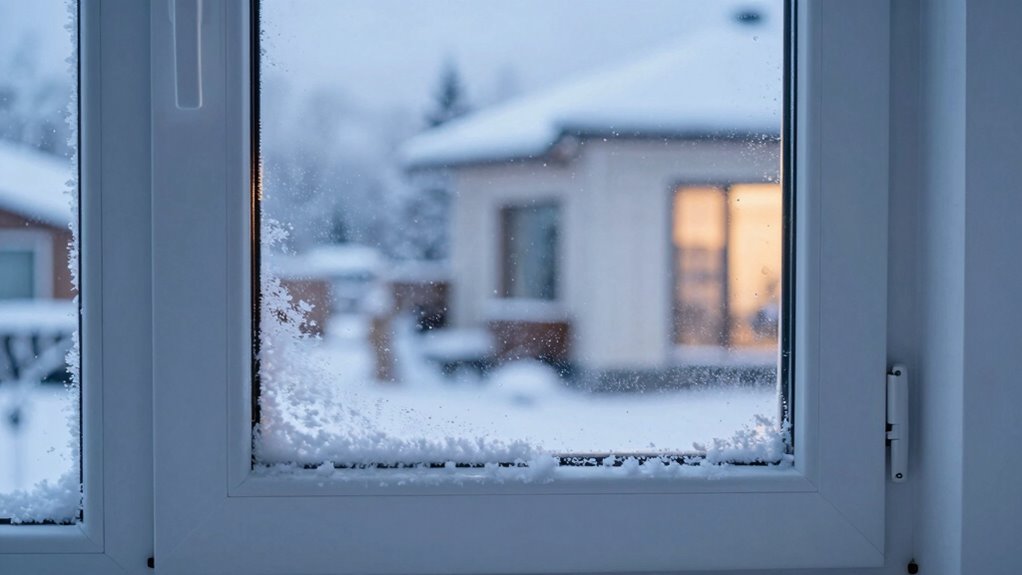
Are your windows letting in too much cold air during the winter? Upgrading to energy-efficient windows can substantially improve your comfort and reduce heat loss. Look for windows with high-performance glass and low-emissivity coatings that minimize heat transfer. The choice of window frame materials matters too; vinyl, fiberglass, and wood composites offer better insulation than aluminum frames. These materials help prevent cold spots and drafts. Additionally, energy-efficient windows are designed to optimize solar gain, allowing sunlight to warm your home naturally while blocking unwanted heat loss at night. This balance keeps your home more comfortable and lowers heating bills. Investing in these upgrades is a smart way to enhance insulation, reduce drafts, and enjoy a warmer, more energy-efficient home year-round. Using electric power generation with bike generators as an example, innovative energy solutions can even supplement your home’s energy needs, further increasing efficiency. Incorporating microplastics in dust awareness can also lead to healthier indoor environments, as improved filtration and ventilation systems help reduce indoor pollutants. Moreover, choosing windows with certifications from reputable Gold IRA Markets providers ensures quality and reliability in your investments, aligning with the importance of reliable and high-quality energy-efficient products. Additionally, considering the use of Soul Sanctuaries for relaxation and mental well-being can further enhance your home’s comfort and your overall lifestyle.
Seal Gaps and Drafts With Weatherstripping and Sealants
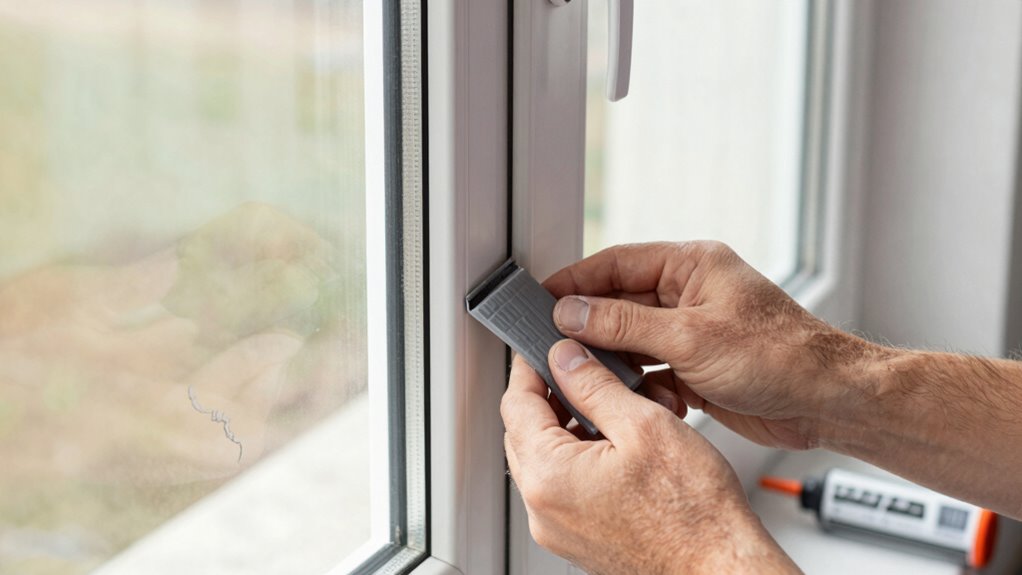
Have you noticed cold drafts or feeling a chill near your windows? These gaps often occur around window frame materials, allowing heat to escape. To seal them, use weatherstripping tailored to your window type—whether wood, vinyl, or aluminum. Applying sealants like caulk around the frame creates a tight barrier against drafts. Also, consider glass coating options; some coatings can help reduce condensation and improve sealing, further minimizing heat loss. Check for gaps or cracks regularly and replace worn weatherstripping to maintain an airtight seal. Sealing these small spaces not only blocks drafts but also enhances your window’s overall energy efficiency, keeping your home warmer and reducing energy bills. Proper sealing guarantees your windows perform at their best year-round. For a more durable solution, explore mount leveling kits to ensure your windows are perfectly aligned, preventing gaps and enhancing sealing effectiveness. Additionally, using weatherstripping methods designed for your specific window type can significantly improve insulation and comfort.
Use Insulating Curtains and Films to Keep the Heat In
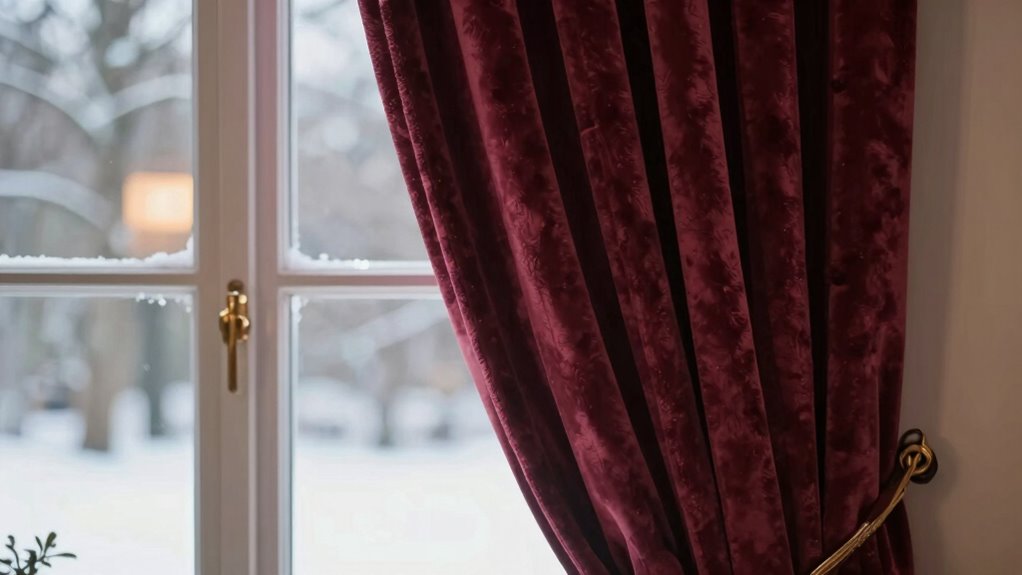
Once you’ve sealed gaps and blocked drafts, adding insulating curtains and films can further boost your home’s warmth. Thermal curtains are designed to trap heat inside, creating a barrier that prevents heat from escaping through the window. When drawn, they markedly reduce heat transfer, keeping your living space warmer. Window films are transparent or tinted coatings applied directly to the glass, providing an extra layer of insulation. These films reflect heat back into your room while blocking cold air from seeping in. Using both thermal curtains and window films together maximizes energy efficiency, especially during winter months. They are easy to install, affordable, and effective at reducing heat loss without sacrificing natural light. Incorporate these solutions to keep your home cozy and cut heating costs.
Benefits of Installing Double or Triple Glazing
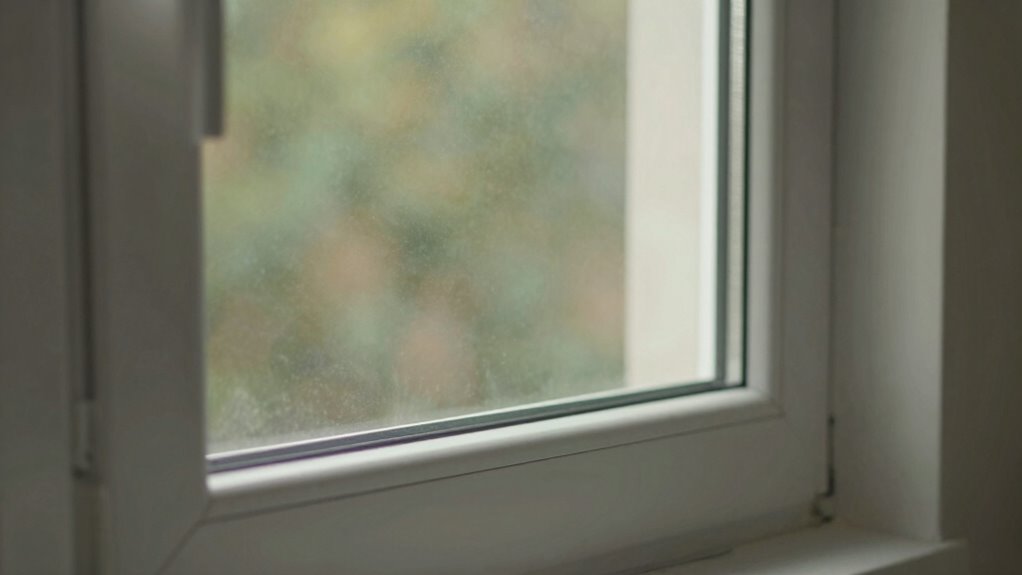
Installing double or triple glazing considerably enhances your home’s insulation by creating additional barriers that trap air between panes. This design reduces heat transfer, helping you retain warmth and lower heating costs, leading to significant energy savings. Beyond insulation, these windows also offer excellent noise reduction, making your home quieter and more peaceful, especially in busy or noisy areas. The multiple panes act as sound buffers, blocking out external sounds more effectively than single-glazed windows. Additionally, modern glazing options can include low-emissivity coatings that further improve energy efficiency. Overall, upgrading to double or triple glazing not only keeps your home warmer but also minimizes energy expenses and creates a more comfortable living environment.
Maintain Your Windows to Maximize Heat Retention
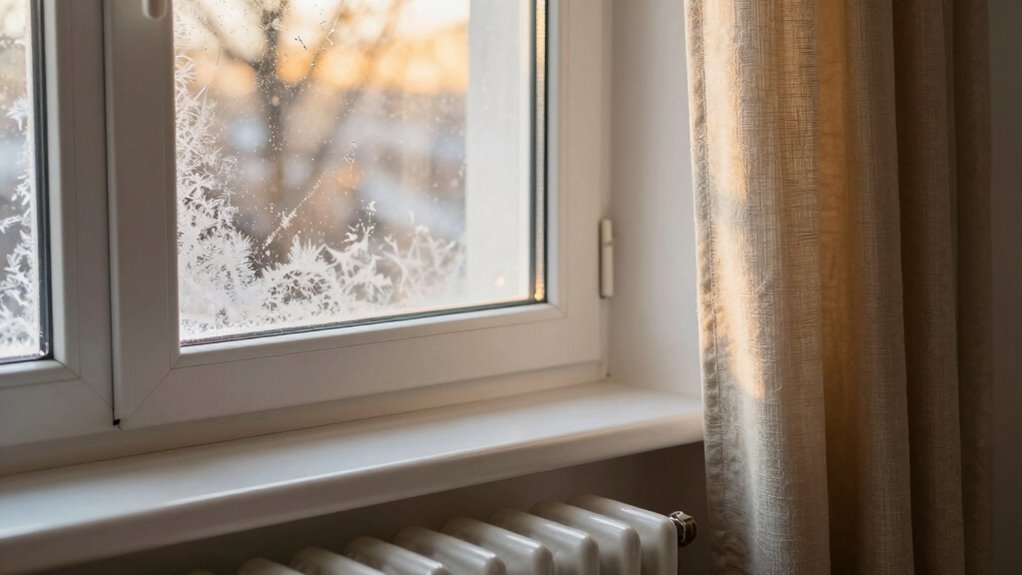
Regularly maintaining your windows is essential for maximizing heat retention. Clean glass and frames prevent dirt buildup that can reduce insulation efficiency. Check seals around windows for cracks or gaps and replace them if needed to keep drafts out. Well-maintained windows also enhance window aesthetics, making your home look more inviting and polished. Consider updating decorative treatments like curtains, blinds, or window films to improve insulation further. Heavier curtains or thermal blinds can trap warm air indoors, reducing heat loss. Regularly inspecting and caring for your windows guarantees they operate smoothly and retain heat effectively. By keeping everything in top condition, you not only boost energy efficiency but also create a comfortable, cozy living environment.
Easy DIY Fixes to Reduce Heat Escape From Windows
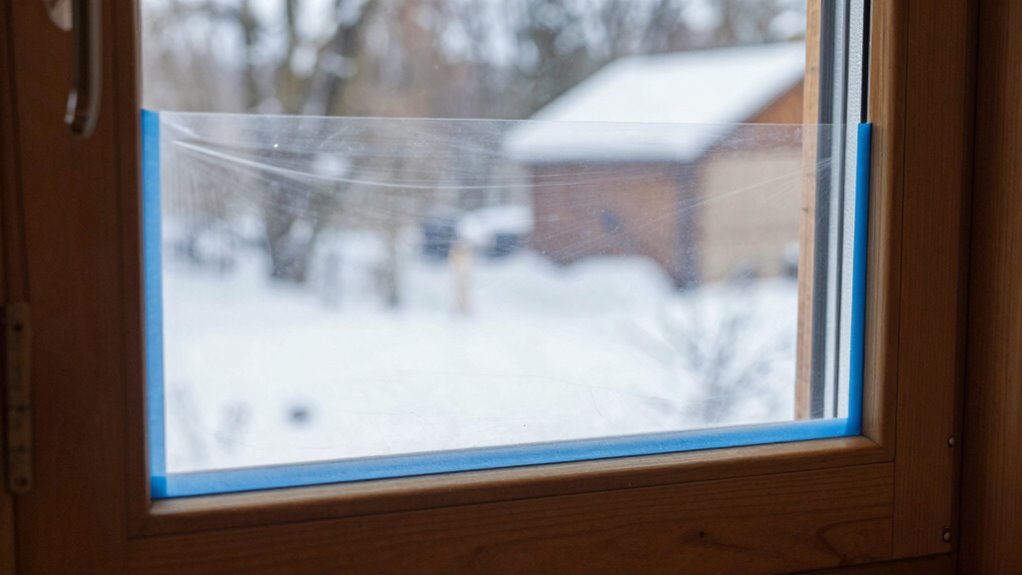
Looking for simple ways to stop heat from escaping through your windows? Start by inspecting your window frame. If it’s cracked or gaps are visible, seal them with weatherstripping or caulk to prevent drafts. Adding insulation films to your window can also make a difference—these are easy to install and help trap heat inside. Consider applying glass coatings, like reflective or low-emissivity (Low-E) films, which reflect heat back into your room while still letting light in. These coatings are affordable and straightforward to apply, making them perfect DIY solutions. Remember, combining these fixes can notably reduce heat escape, improve comfort, and lower energy bills without requiring major renovations.
Cost-Effective Tips to Minimize Heat Loss Through Windows
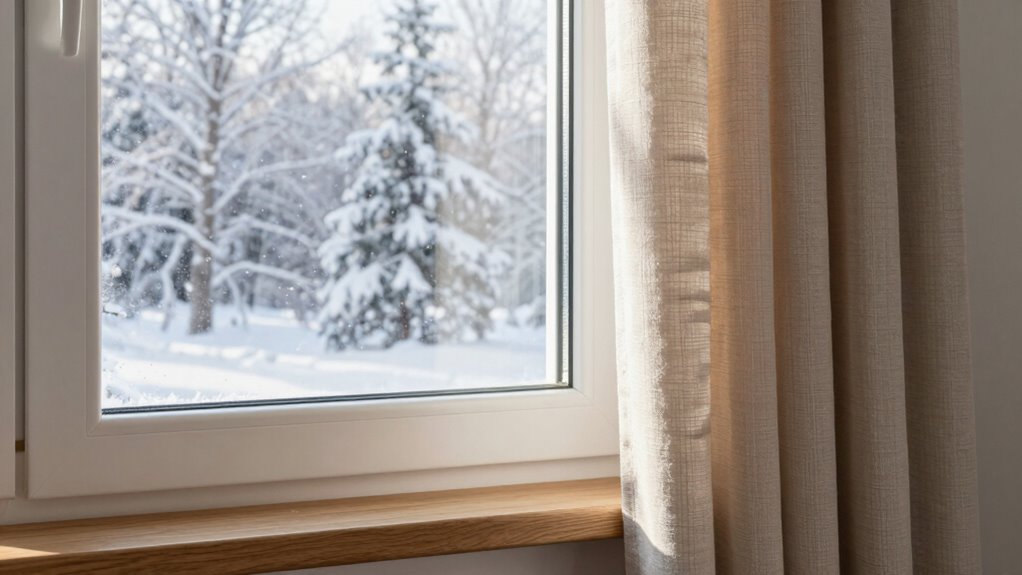
You can save money and keep warm by covering your windows with simple insulation materials. Sealing gaps and cracks around the frames prevents drafts and heat loss effectively. These small, affordable steps make a noticeable difference in your home’s warmth and energy bills.
Cover Windows With Insulation
Ever considered how adding insulation to your windows can cut down on heat loss? One simple method is using thermal curtains, which act as a barrier, trapping warm air inside. When closed, they provide extra insulation, especially during cold nights or winter months. Additionally, you can improve your home’s energy efficiency with window insulation kits, which create a seal around the window frame, reducing drafts and heat escape. These kits are affordable, easy to install, and highly effective. Combining thermal curtains with window insulation can substantially lower heat loss, keeping your space warmer and reducing your heating bills. Investing in these cost-effective solutions makes a noticeable difference in maintaining indoor comfort without hefty expenses.
Seal Gaps and Cracks
Sealing gaps and cracks around your windows is one of the most effective and budget-friendly ways to reduce heat loss. Draught proofing is key—you can use weatherstripping or caulk to seal leaks. Additionally, window treatments like heavy curtains or draft stoppers help block cold air. Proper sealing prevents warm air from escaping and cold air from entering, saving energy and lowering bills. Here’s a quick comparison:
| Method | Benefits |
|---|---|
| Weatherstripping | Flexible, easy to install, cost-effective |
| Caulking | Seals small cracks, long-lasting |
| Window Treatments | Insulation, added privacy |
Focusing on these simple steps can make a noticeable difference in your home’s warmth and comfort.
Frequently Asked Questions
How Do I Determine the Most Cost-Effective Window Upgrade?
You determine the most cost-effective window upgrade by comparing cost and benefits. Start with a cost comparison of different window types, considering energy savings over time. Factor in installation costs, which can vary based on window size and type. Look for options like double-glazed or low-E windows that offer good insulation. Choose the option that provides the best balance between upfront costs and long-term energy savings, maximizing value for your investment.
Are There Eco-Friendly Options for Window Insulation?
Yes, you can choose eco-friendly options for window insulation. Look for products made from sustainable materials like recycled foam or cellulose, which reduce environmental impact. Additionally, opt for windows with environmentally friendly coatings that improve insulation without harmful chemicals. These options help you cut heat loss while supporting sustainability. Installing such environmentally conscious solutions can lower your energy bills and minimize your carbon footprint, making your home both comfortable and eco-friendly.
How Often Should Window Seals Be Replaced?
You should replace your window seals when you notice drafts, condensation, or difficulty opening windows, typically every 5 to 10 years. Regular window seal maintenance guarantees you catch issues early. Keep in mind, sealant durability varies based on climate and quality; high-quality sealants tend to last longer. Inspect your seals annually, especially before winter, to maintain energy efficiency and prevent heat loss through your windows.
Can Window Tinting Reduce Heat Loss Effectively?
Imagine a cozy, sun-dappled room—window films act like a gentle shield, quietly blocking unwanted warmth. Yes, window tinting can effectively reduce heat loss by enhancing heat rejection, especially with specialized films designed for colder months. They help keep warmth inside while minimizing drafts, making your space more energy-efficient. With the right tint, you get a visual barrier that preserves comfort without sacrificing natural light.
What Are the Best Materials for DIY Window Insulation?
You should choose materials like window film and thermal curtains for DIY window insulation. Window film acts as a barrier, reflecting heat back inside and reducing heat loss. Thermal curtains provide an extra layer of insulation, trapping air and keeping cold air out. Combining these two options offers a cost-effective way to improve your window’s insulation, making your home warmer and more energy-efficient during chilly months.
Conclusion
Reducing heat loss through your windows can considerably cut energy bills and boost comfort. Did you know that poorly insulated windows can account for up to 25% of heat loss in a home? By sealing gaps, upgrading to energy-efficient options, and using simple DIY fixes, you can keep warm air in and cold air out. Taking these steps not only saves money but also helps the environment—making your home cozy all winter long.