
TL;DR

Get home appliances delivered free with Prime
- Fast, free delivery on millions of items
- Prime Video, Amazon Music and more included
- Member-only deals all year
An Ideal Home report examines why radiators may fail to heat rooms effectively, citing expert advice on cleaning, bleeding and keeping furniture clear. The report also discusses radiator balancing and thermostat use, but the supplied material does not establish that these steps will fix every cold home or quantify savings.
Ideal Home has published advice on radiator cleaning, bleeding and airflow after its writer questioned why a cold, draughty house remained uncomfortable despite the central heating being on. Experts quoted in the report say dust, trapped air and furniture blocking heat can affect radiator performance, though the article does not show that any one issue explains the writer’s experience or will solve every heating problem.
Martin Garbutt, head of technical governance at home services platform Ding, recommends cleaning radiators before they are used regularly for the heating season. He said accumulated dust can affect indoor air quality and may reduce a radiator’s efficiency by up to 10%. That figure is Garbutt’s estimate as quoted in the report; the article does not provide a test method or further detail on the conditions behind it.
For cleaning, Garbutt advises turning a radiator off and letting it cool before removing dust from its fins with a hairdryer or a narrow vacuum nozzle. He suggests placing a damp towel beneath it to catch debris. For a deeper clean, he recommends warm water with a small amount of dish soap or white vinegar, a microfiber cloth for the exterior and a long-handled brush for narrow spaces.
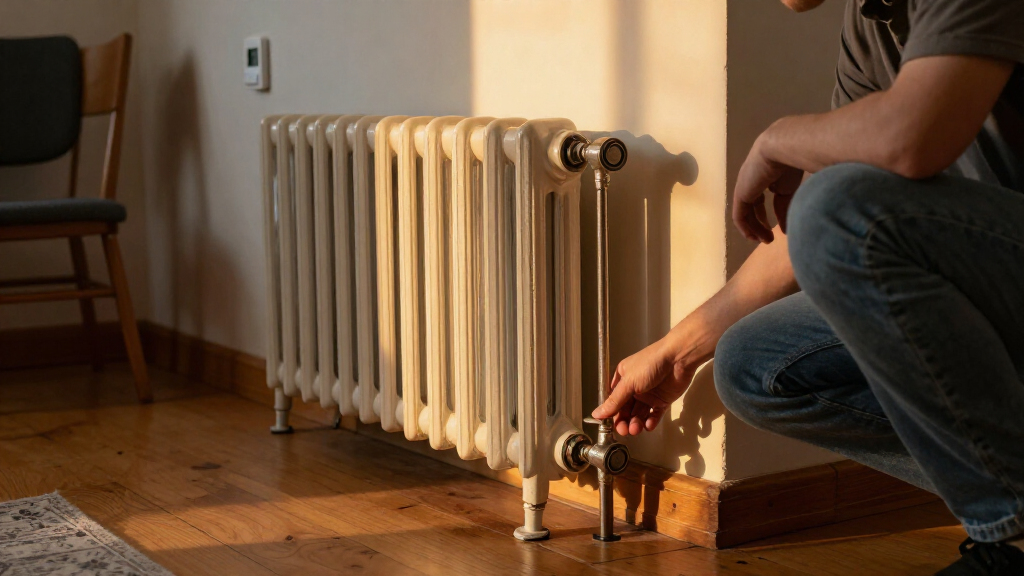
Ian Palmer-Smith, an appliance repair expert at Domestic & General, says a radiator that is cold at the top but warm at the bottom may have trapped air and need bleeding. Gurgling or banging sounds can also indicate air, he says, and recommends bleeding radiators at least annually as routine maintenance. If uneven heating continues after bleeding and valve settings have been checked, Ant Langston of HeatandPlumb.com says a lockshield valve may need adjustment to balance heat distribution across radiators.
Small issues can limit room heat
The advice matters to households that find their heating uneven or their rooms colder than expected: basic maintenance and unobstructed airflow may help identify avoidable problems before people rely heavily on heating. A radiator covered by furniture or coats may not distribute warmth freely around the room, while a radiator with trapped air may not heat evenly.
These checks are not a diagnosis of a cold home. The source writer describes a property that is draughty and poorly insulated, both of which can contribute to heat loss. Cleaning or bleeding radiators cannot, by itself, establish that a home’s insulation, boiler, heating controls or broader system is working properly. The report offers practical expert guidance, not a controlled test comparing heating costs or performance before and after maintenance.
Products Worth Considering

Dreame H15 Pro Wet-Dry Vacuum and Mop

Roborock Q7 M5+ Robot Vacuum and Mop

Shark Navigator Lift-Away Upright Vacuum (NV360)
As an affiliate, we earn on qualifying purchases.
How the report began
The report starts with an Ideal Home writer’s account of an older house that felt colder indoors than outside, even when the central heating was running. The writer suspected both the building’s draughts and the radiators might be contributing, and asked heating and appliance specialists about possible causes.
The supplied article focuses on cleaning, bleeding, radiator placement and controls. It notes that radiators hidden behind doors, beneath shelves or blocked by furniture may struggle to circulate heat into a room. It also raises thermostat use as a possible issue, but the provided source text ends before giving the relevant expert advice or explaining how the writer’s thermostat was set. No outcome from trying the suggested steps is reported.
“If your radiator feels cold at the top and hot at the bottom, this means there is trapped air inside of it that is preventing hot water from circulating.”
— Ian Palmer-Smith, appliance repair expert at Domestic & General
What the advice does not establish
The article does not report whether the writer cleaned or bled the radiators, adjusted any valves, or saw a change in room temperature. It also gives no date for publication in the material provided, and no cost or energy-use figures for the suggested maintenance.
The thermostat section is incomplete in the supplied text, so it is not possible to report what settings or usage advice the full article provided. The report does not establish whether the house’s poor insulation, radiator condition, system balancing, boiler operation or controls were the main cause of the problem. If a radiator stays cold or uneven after routine checks, the material does not specify a diagnosis; a qualified heating professional may be needed to assess the system.
Check radiators before heavier use
The report’s practical next steps are to inspect and clean radiators while they are switched off and cool, check for cold spots or unusual noises, and make sure furniture and other objects do not block heat. Palmer-Smith recommends bleeding radiators at least once a year as standard maintenance. Anyone unsure how to bleed a radiator should consult the manufacturer’s instructions or seek appropriate professional advice.
If uneven warmth remains after bleeding and checking radiator valves, Langston’s suggestion is to consider whether the system needs balancing. The source does not announce a planned follow-up or document repairs, so whether the writer’s home improves remains unknown. Readers with persistent heating problems should arrange an assessment rather than assume cleaning or valve adjustments will address the cause.
Key Questions
What can a cold radiator at the top mean?
According to appliance repair expert Ian Palmer-Smith, a radiator that is cold at the top and warm at the bottom may have trapped air and need bleeding. Gurgling or banging noises can also be a sign. These symptoms do not by themselves confirm the cause in every case.
How often should radiators be bled?
Palmer-Smith recommends bleeding radiators at least once a year as routine maintenance. The report also advises checking for signs such as cold areas or unusual noises.
Can dust make a radiator less effective?
Martin Garbutt of Ding says dust can affect air quality and may reduce radiator efficiency by up to 10%. The source does not give a testing method or explain what conditions the estimate applies to.
What should I do if some radiators remain colder?
The report says that if bleeding has been done and valve settings checked, uneven heating could relate to system balancing. Ant Langston points to the lockshield valve as a possible adjustment, but persistent problems may require assessment by a qualified heating professional.
Does the report explain how to use a thermostat?
Not in the supplied text. It introduces thermostat use as a possible issue, but the source material ends before the relevant advice appears, so no specific settings or recommendations can be confirmed.
Source: idealhome.co.uk