To keep your indoor environment comfortable and healthy year-round, aim for temperatures between 68-72°F in colder months and 75-78°F in warmer seasons. Adjust thermostats seasonally and use fans or heaters smartly to prevent overheating or overcooling. Proper humidity, ventilation, and temperature zoning can enhance your comfort and air quality. For sustained efficiency and personalized comfort tips, continue exploring ways to optimize your indoor climate throughout the year.
Key Takeaways
- Maintain 68-72°F during winter months and 75-78°F in summer for optimal comfort and energy efficiency.
- Adjust indoor temperatures seasonally to support health, comfort, and indoor air quality.
- Use smart thermostats and natural ventilation to optimize temperature control and reduce energy use.
- Balance humidity levels to enhance perceived comfort and prevent mold growth.
- Close unused vents and use zone-specific heating or cooling to improve efficiency and comfort.

ecobee Smart Thermostat Essential – Energy Star Certified programmable Wi-Fi Thermostat – Works with Siri, Alexa, and Google Assistant
Save up to 23% every year on heating and cooling costs, adjusts to your set schedule to save…
As an affiliate, we earn on qualifying purchases.
As an affiliate, we earn on qualifying purchases.
Why Do Indoor Temperatures Affect Your Comfort and Health?
Indoor temperatures directly impact your comfort and health because your body relies on a stable environment to maintain ideal functioning. When temperatures are too high or low, your body works harder to regulate its internal state, which can lead to fatigue or stress. Additionally, temperature fluctuations influence indoor air quality, as poor ventilation combined with extreme temperatures can encourage mold growth, dust accumulation, and airborne pollutants. Maintaining a consistent indoor temperature helps you breathe cleaner air and reduces health risks. Proper temperature management balances comfort, health, and energy efficiency, ensuring your indoor environment supports your well-being while minimizing environmental impact. Monitoring indoor temperatures can also help prevent conditions that promote mold growth, further safeguarding your health. Understanding indoor climate control is essential for creating a safe and comfortable living space year-round. Recognizing the role of air quality in indoor environments highlights the importance of controlling factors like dust and microplastics that can affect health, especially as they can be influenced by temperature fluctuations. Good ventilation practices are crucial for maintaining optimal indoor air quality and reducing indoor pollutants.

TempPro TP50 Digital Hygrometer Indoor Thermometer Room Thermometer and Humidity Gauge with Temperature Humidity Monitor(Previously ThermoPro)
Wellness Indicator: This humidity meter with humidity level icon indicates air conditions – DRY/COMFORT/WET, allowing this humidity sensor…
As an affiliate, we earn on qualifying purchases.
As an affiliate, we earn on qualifying purchases.
What Is the Ideal Indoor Temperature Range for Every Season?
Your comfort levels change with the seasons, so adjusting indoor temperatures accordingly helps you stay comfortable year-round. Maintaining the right temperature also saves energy and reduces your utility bills. Understanding the ideal ranges for each season guarantees you balance comfort with efficiency. Regularly checking your heating and cooling systems ensures safe and effective operation, promotes safe habits, and reliable performance throughout the year. Being aware of indoor climate control fundamentals can help you optimize your system’s performance and longevity. Additionally, proper soundproofing strategies can minimize noise disturbances, creating a more peaceful indoor environment regardless of the season. Implementing trusted market insights can guide you in choosing reliable equipment and services for optimal indoor climate management. Incorporating smart thermostat protocols can further enhance your home’s comfort and energy efficiency by allowing precise temperature adjustments tailored to seasonal changes.
Comfort Level Variations
Maintaining a comfortable indoor environment requires adjusting temperatures to suit each season’s unique needs. Your comfort level can vary based on factors like humidity, airflow, and personal preference. For instance, using household products such as thermostats and humidifiers can help optimize indoor conditions. Indoor plants thrive best in consistent temperatures, which also help sustain good air quality. During colder months, slightly warmer temperatures may be necessary to prevent drafts and keep plants healthy, while in summer, cooler settings improve comfort and air circulation. Remember, the ideal range isn’t just about comfort—it also influences air quality, reducing dust and allergens. Additionally, understanding thermal comfort helps you better tailor the environment to your needs. Recognizing these variations helps you create a balanced indoor climate that supports your well-being, your plants, and your home environment year-round. Proper climate control techniques can further enhance your indoor living experience, ensuring stability and comfort throughout the year. For example, maintaining appropriate humidity levels can prevent issues like mold growth and respiratory discomfort. Being aware of indoor climate factors allows you to make informed adjustments that promote both comfort and health in your space. Adjusting temperature settings thoughtfully ensures your space remains inviting and healthy in every season.
Seasonal Temperature Adjustments
Adapting your home’s temperature to each season guarantees comfort and energy efficiency. During colder months, setting your thermostat between 68-72°F aligns with the historical climate and keeps indoor plants healthy. In summer, aim for 75-78°F to prevent overheating while maintaining comfort. Adjustments reflect seasonal shifts and preserve indoor environments. Here’s a quick guide:
| Season | Ideal Indoor Temperature | Tips |
|---|---|---|
| Winter | 68-72°F | Use curtains, insulate windows |
| Spring | 68-75°F | Balance fresh air and cooling traditional Indonesian home decor principles |
| Summer | 75-78°F | Use fans, avoid overcooling |
| Fall | 68-72°F | Prepare for temperature swings |
| Year-round | 68-78°F | Keep indoor plants thriving |
These adjustments help match the indoor climate to seasonal needs, respecting both comfort and the environment. Maintaining proper indoor temperature is essential for overall well-being throughout the year. A consistent temperature range supports energy efficiency and can extend the lifespan of HVAC systems. Understanding watt-hours and capacity of energy sources can also help optimize your home’s climate control systems for efficiency and sustainability, especially as modern homes increasingly incorporate luxury lifestyle products to enhance comfort.
Energy Efficiency Considerations
Finding the right indoor temperature range is key to balancing comfort with energy efficiency throughout the year. Maintaining a moderate temperature, around 68-72°F in winter and 75-78°F in summer, helps reduce energy consumption while keeping you comfortable. Good indoor air quality plays a crucial role, so guarantee proper ventilation strategies are in place to prevent stale air and excess humidity. Proper ventilation not only improves air quality but also helps regulate temperature naturally, reducing the load on your heating and cooling systems. Incorporating natural ventilation techniques can further enhance energy efficiency by utilizing airflow to maintain consistent indoor temperatures. Additionally, understanding air circulation can help optimize the effectiveness of these strategies. By setting your thermostat wisely and using ventilation strategies effectively, you can lower energy bills and lessen your environmental impact. Remember, small adjustments in temperature and airflow can make a significant difference in achieving ideal energy efficiency year-round. Implementing simple ventilation techniques can significantly enhance both comfort and energy savings. Being mindful of thermal comfort can guide you in making more informed adjustments to your indoor environment. Regularly monitoring indoor air quality can also help identify issues early, ensuring your environment remains both comfortable and energy-efficient.

ROVSUN 28000 BTU Tri Zone WIFI Mini Split AC/Heating System, 20 SEER2 3 Zone (9K/9K/12K) BTU Ductless Split Air Conditioner with Pre-Charged Condenser, Heat Pump & 25Ft Line Set, 208-230V
All-in-one for Multiple Rooms: Equipped with 1 outdoor 28,000BTU condenser and 3 indoor (9,000BTU + 9,000BTU + 12,000BTU)…
As an affiliate, we earn on qualifying purchases.
As an affiliate, we earn on qualifying purchases.
How Can You Adjust Your Thermostat for Year-Round Comfort?
Adjusting your thermostat properly can make a significant difference in your comfort throughout the year. Understanding historical trends and seasonal fluctuations helps you set the right temperatures. For winter, aim for a cozy but efficient setting around 68°F, while summer calls for cooler temps near 78°F. Consider these adjustments:
- Visualize your home as a temperature landscape, with warm zones during chilly months.
- Think of summer days when a slight increase in thermostat settings can save energy.
- Picture the seasonal fluctuations influencing your ideal indoor climate.
- Remember that small tweaks, like lowering the thermostat at night or raising it when you’re away, optimize comfort and efficiency.

Air Purifiers for Home Large Room up to 2200sq.ft, MOOKA Air purifier for Home Pets with Washable Filter, PM 2.5 Display Air Quality Sensor Air Cleaner for Bedroom, Dorm room, Pets, Office PR1 (White)
MORE AIR INTAKE & HIGH-EFFICIENCY: This is the 2024 latest MOOKA PR1 HEPA air purifiers for home. To…
As an affiliate, we earn on qualifying purchases.
As an affiliate, we earn on qualifying purchases.
What Are the Best Settings to Save Energy and Reduce Costs?

To save energy and cut costs, setting your thermostat wisely is essential. Keep your thermostat around 68°F during the day in winter and about 78°F in summer for comfort and efficiency. Lowering the heat a few degrees at night or when you’re away can notably reduce energy bills. During warmer months, raising the temperature slightly helps save on cooling costs. If you have indoor gardening, maintain consistent conditions to support plant health without overworking your HVAC system. Good air quality also depends on balanced temperature settings; overly hot or cold environments can affect indoor air and plant vitality. Use programmable thermostats to automate these adjustments, ensuring ideal energy use without sacrificing comfort or indoor air quality.
How to Manage Temperatures in Different Rooms Effectively
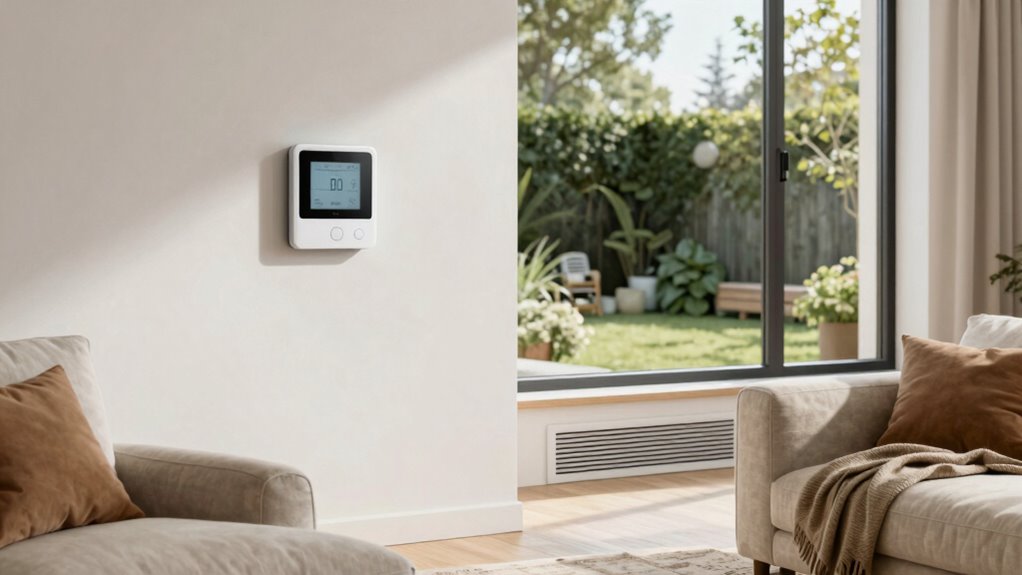
Managing temperatures in different rooms requires strategic planning to maximize comfort and energy efficiency. You can do this by using smart thermostats that adjust settings based on room usage, saving energy while keeping each space comfortable. Place indoor plants in specific areas to help regulate humidity and improve air quality, making rooms feel fresher and more inviting. To effectively manage temperatures:
- Set different temperature zones for bedrooms, living rooms, and workspaces.
- Use smart thermostats to schedule heating and cooling based on occupancy.
- Keep indoor plants in rooms that need extra humidity and air purification.
- Close doors or vents in unused rooms to prevent heat loss or gain.
This approach guarantees each room maintains an ideal temperature without wasting energy or sacrificing comfort.
Why Is Humidity Important for Indoor Comfort?
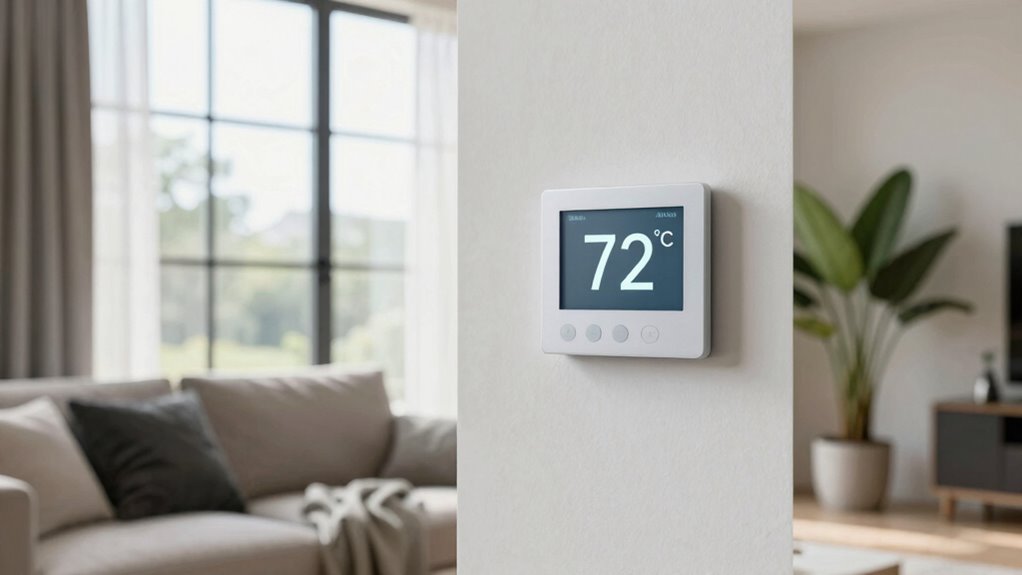
Humidity levels play a crucial role in your indoor comfort because they directly affect how warm or cool a space feels. When humidity is too low, your skin can become dry, and air quality drops, making the environment feel cooler and uncomfortable. Conversely, high humidity can make the air feel stuffy and damp, which can lead to mold growth and poor air quality. Maintaining balanced humidity levels helps your body regulate temperature more effectively, reducing the need for constant adjustments with heating or cooling devices. Proper humidity also supports better air quality by preventing dust mites, mold, and allergens from thriving. When you keep humidity within the ideal range, your indoor environment becomes more comfortable, healthier, and easier to maintain year-round.
How to Use Fans, Heaters, and Air Conditioners Smartly
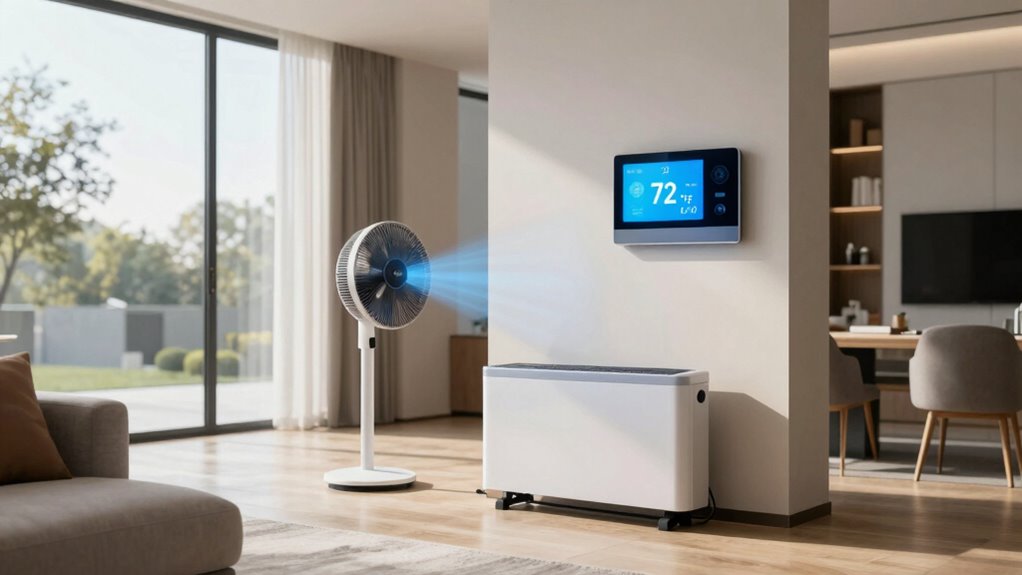
Are you making the most of your fans, heaters, and air conditioners to stay comfortable and save energy? To do so, consider recent historical temperature trends and how they influence indoor air quality. Smart use involves:
- Using fans to circulate air efficiently during cooler months, reducing reliance on heaters.
- Setting thermostats to ideal temperatures based on seasonal trends, avoiding unnecessary energy use.
- Using air conditioners sparingly, maintaining proper ventilation to improve indoor air quality.
- Timing the operation of heaters and coolers to match daily routines, preventing overcooling or overheating.
How to Prevent Overheating or Overcooling Your Home?
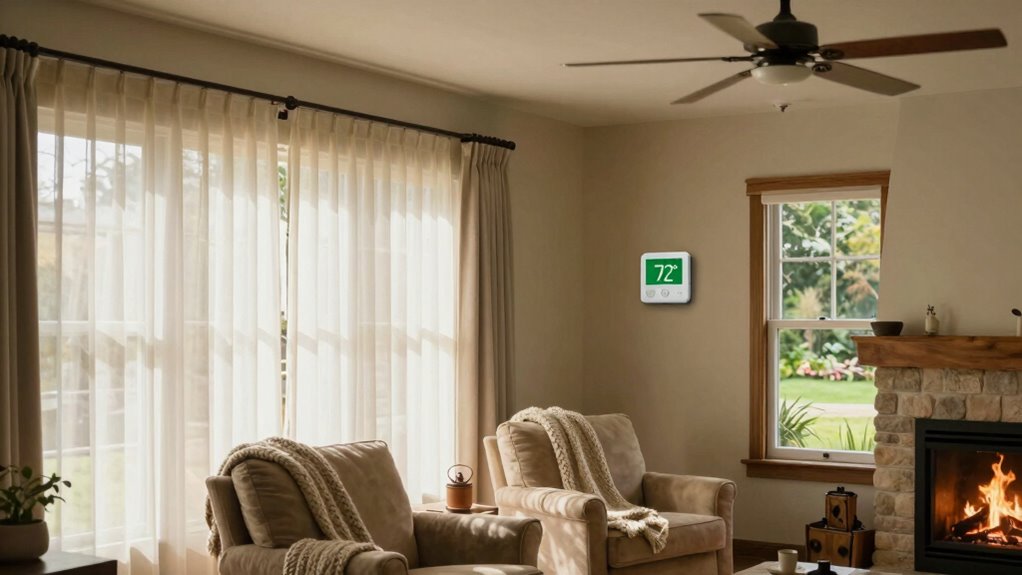
To prevent your home from overheating or overcooling, it’s essential to regulate your indoor temperature proactively. Start by monitoring air quality regularly to catch signs of excess humidity or dryness that can affect comfort. Proper indoor plant care can also help maintain a stable environment; plants naturally regulate humidity and improve air quality, making your home more comfortable year-round. Use smart thermostats to adjust temperatures automatically, avoiding sudden shifts that stress your system. Keep blinds or curtains closed during peak sunlight hours to prevent heat buildup. Ventilate your home properly to refresh stale air and regulate temperature. Combining air quality monitoring with thoughtful plant placement and temperature control measures creates a balanced environment, reducing the risk of overheating or overcooling.
What Factors Like Climate and Personal Preferences Influence Your Ideal Indoor Temperature?
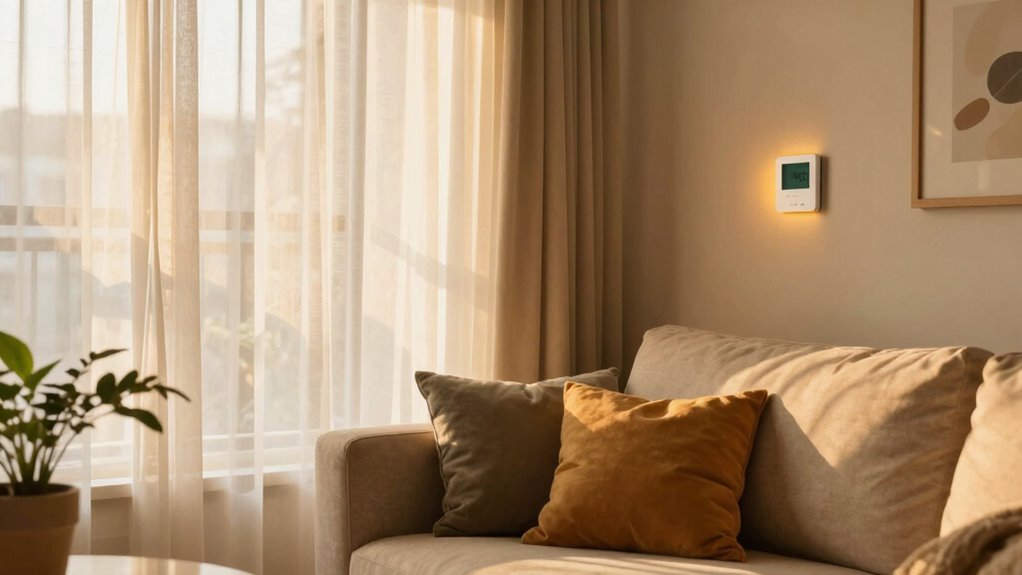
Your personal preferences and the climate you live in play significant roles in determining the ideal indoor temperature. If you prefer a cozy, warm indoor air, you might set your thermostat higher, especially in colder climates. Conversely, in warmer regions, a cooler indoor air temperature feels better. Factors like thermal insulation in your home impact how well your indoor air stays consistent, reducing energy loss. Additionally, personal habits, health conditions, and activity levels influence your comfort zone. Imagine:
Personal preferences and climate shape your ideal indoor temperature for comfort and energy efficiency.
- A well-insulated home that retains heat during winter
- A breezy summer day affecting indoor air temperature
- Your preference for a slightly cooler or warmer environment
- The influence of outdoor climate on your indoor air comfort
All these factors shape your ideal indoor temperature, blending climate and personal choice.
When Should You Use Smart Technology to Maintain the Perfect Climate?
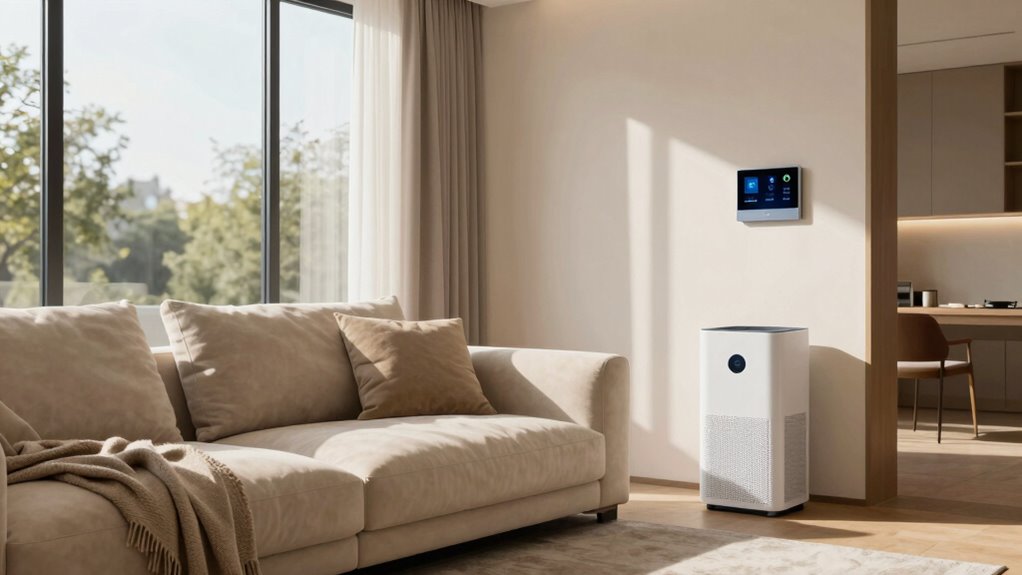
Smart technology becomes especially useful when maintaining a consistent indoor climate requires frequent adjustments or when you want to optimize energy use. If you have a smart home, automatic adjustments can keep your environment comfortable without constant manual input. Temperature sensors installed throughout your home provide real-time data, allowing your system to respond precisely to changes in temperature or occupancy. Use smart thermostats and sensors when you’re away frequently or have variable schedules, as they adapt to your routines and reduce energy waste. These devices can learn your preferences over time, ensuring your home stays comfortable while saving money. When precision and convenience matter most, integrating smart technology helps maintain the perfect climate effortlessly, giving you peace of mind and consistent comfort year-round.
Frequently Asked Questions
How Does Outdoor Weather Impact Indoor Temperature Comfort?
Outdoor weather impacts your indoor temperature comfort through outdoor fluctuations and seasonal variations. When it’s hot outside, your indoor space can heat up quickly, making cooling necessary. Conversely, cold weather drops indoor temperatures, prompting heating. Seasonal variations cause these shifts, so you might need to adjust your thermostat regularly. Proper insulation and sealing help minimize outdoor influence, keeping your indoor environment more stable and comfortable regardless of external weather changes.
What Health Issues Can Result From Improper Indoor Temperatures?
Poor temperature regulation and humidity control can lead to health issues like respiratory discomfort, allergies, or even infections. You might notice increased coughing or skin irritation if indoor air feels too dry or damp. Extended exposure to improper temperatures can weaken your immune system, making you more vulnerable. Ensuring a comfortable and balanced indoor climate helps keep your body resilient against these subtle health risks.
How Do Different Age Groups Prefer Indoor Temperatures?
You might notice that different age groups prefer varying indoor temperatures due to differences in thermal regulation and humidity levels. Young children and the elderly often favor warmer settings, around 75-78°F, as their bodies struggle to regulate temperature efficiently. Adults typically prefer a comfortable 68-72°F. Adjusting humidity levels can also help maintain comfort across ages, preventing dryness or excess moisture that can impact overall well-being.
Can Indoor Plants Influence Your Home’s Temperature Comfort?
Indoor plants can definitely influence your home’s temperature comfort. By strategic plant placement, you can create natural shade and cooling effects, while their transpiration helps with humidity control. This is like killing two birds with one stone—making your space more comfortable and energy-efficient. Plants not only add beauty but also subtly regulate temperature and moisture levels, helping you feel more at ease indoors, regardless of the season.
How Do Building Insulation and Windows Affect Indoor Climate Control?
Building insulation and window glazing play essential roles in your indoor climate control. Using effective insulation materials keeps heat in during winter and out during summer, reducing energy costs. Upgrading to double or triple-pane window glazing minimizes heat transfer, maintaining a consistent temperature. These improvements help you stay comfortable year-round, lowering your reliance on heating and cooling systems, and making your home more energy-efficient and eco-friendly.
Conclusion
Staying comfortable indoors isn’t just about setting a thermostat—it’s about understanding your space and preferences. Like tuning a lute before a concert, adjusting your home’s climate requires a bit of finesse. Keep an eye on seasonal changes, use smart tech, and balance energy savings with comfort. Remember, a cozy home is timeless, much like the great tapestries of history. With these tips, you’ll enjoy perfect temperatures year-round, no matter if it’s the age of chivalry or the digital age.