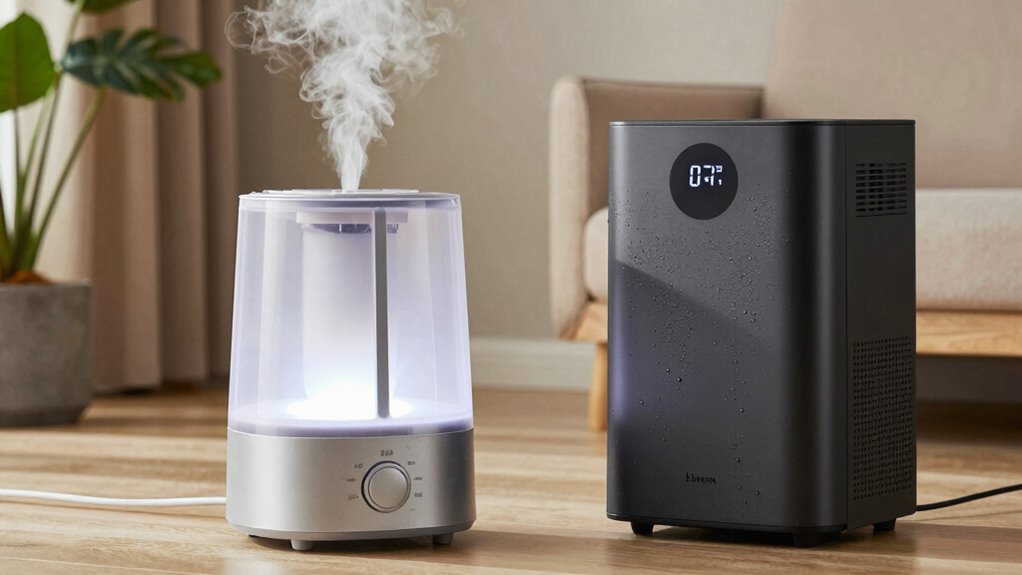
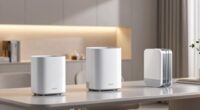
Humidifiers add moisture to dry indoor air, helping with dry skin and respiratory issues, while dehumidifiers remove excess moisture to prevent mold and musty odors. Most humidifiers use evaporation, ultrasonic vibrations, or steam, while dehumidifiers draw in humid air and condense the moisture. Choosing the right one depends on your environment needs, space size, and humidity levels. To discover more about how these devices differ and which is best for you, keep exploring.
Key Takeaways
- Humidifiers add moisture to dry air, while dehumidifiers remove excess moisture to prevent mold and odors.
- Humidifiers are ideal for dry environments; dehumidifiers suit humid spaces prone to mold growth.
- Humidifiers typically consume less energy but require regular cleaning; dehumidifiers use more power but are energy-efficient with proper use.
- Proper placement, maintenance, and humidity monitoring are essential for both devices’ effectiveness.
- Choosing between them depends on your indoor environment’s specific humidity needs and health considerations.

LEVOIT Top Fill Humidifiers for Bedroom, 2.5L Tank for Large Room, Easy to Fill & Clean, 28dB Quiet Cool Mist Air Humidifier for Home Baby Nursery & Plants, Auto Shut-off for Safety, 25H
𝙁𝙖𝙨𝙩 𝙃𝙪𝙢𝙞𝙙𝙞𝙛𝙞𝙘𝙖𝙩𝙞𝙤𝙣 𝘼𝙡𝙡 𝙉𝙞𝙜𝙝𝙩: Runs for up to 25 hours on low thanks to its SUPER LARGE capacity…
As an affiliate, we earn on qualifying purchases.
As an affiliate, we earn on qualifying purchases.
Humidifiers vs Dehumidifiers: What’s the Difference?
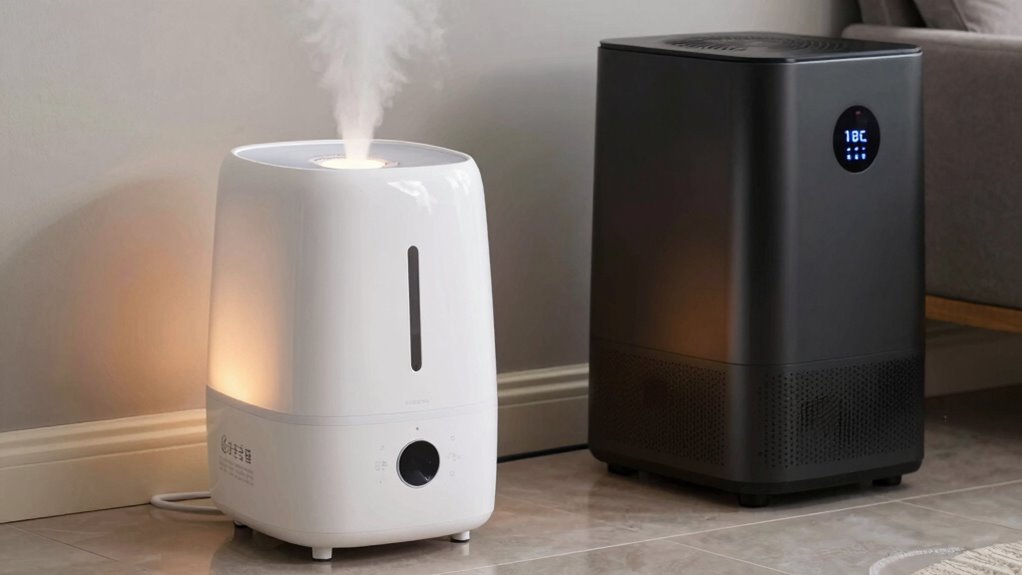
Are you wondering how humidifiers and dehumidifiers differ? Both devices play crucial roles in improving air quality, but they serve opposite purposes. A humidifier adds moisture to dry indoor air, which can help reduce respiratory irritation and skin dryness. In contrast, a dehumidifier removes excess moisture, preventing mold growth and musty odors. When it comes to energy consumption, humidifiers typically use less power, but their ongoing use can add up. Dehumidifiers often require more energy because they work harder to extract moisture from the air. Your choice depends on your environment’s needs; understanding these differences helps you select the right device to maintain ideal air quality efficiently.
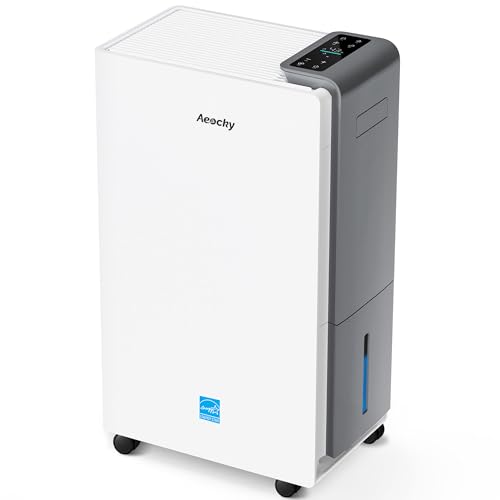
4500 Sq.Ft Energy Star Most Efficient 2025 Dehumidifier,AEOCKY Max 80 Pint/Day Smart Compressor Dehumidifier with Drain Hose, Intelligent Humidistat,for Basement,Bedroom,Home,Bathroom
【ENERGY STAR 25 ≠ ENERGY STAR Most Efficient 2025】Don't fall for competitors' word games. With only 2.6% of…
As an affiliate, we earn on qualifying purchases.
As an affiliate, we earn on qualifying purchases.
How Do Humidifiers Add Moisture to Indoor Air?
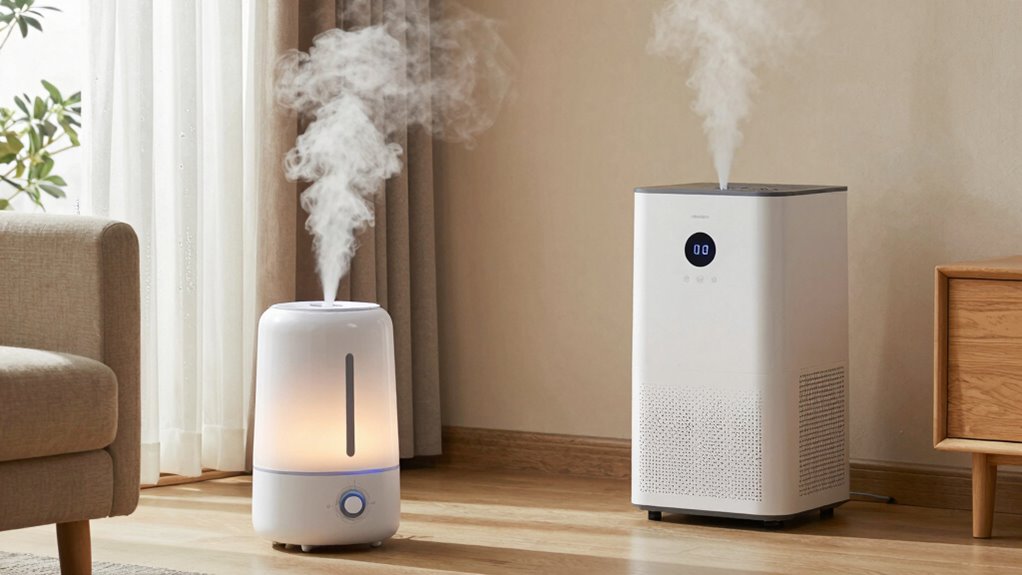
Humidifiers add moisture to indoor air through an evaporative process, where water is transformed into vapor and released into the room. Different types, like evaporative, steam, and ultrasonic humidifiers, use various methods to generate and distribute moisture. Understanding how each distributes humidity helps you choose the right device for your space. AI-powered devices are also beginning to incorporate smart features to optimize humidity levels more efficiently. Additionally, the effectiveness of humidifiers can depend on the type of humidifier used and the room conditions, as well as the evaporative process, which is common in many models and relies on natural evaporation to add moisture. Proper maintenance and cleaning and understanding of humidification mechanisms can also enhance performance and prevent issues like over-humidification or mold growth.
Evaporative Process Explained
To understand how humidifiers add moisture to indoor air, it’s important to grasp the evaporative process they use. When water is exposed to air, moisture evaporates, which increases humidity levels. This process relies on evaporative cooling, where water absorbs heat from the environment, helping to cool the air slightly while adding moisture. As the water evaporates, it spreads evenly throughout the room, maintaining a consistent humidity level. This natural process is simple, effective, and mimics how moisture enters the air in nature. Additionally, the evaporative process is influenced by the air’s humidity level, which determines how much moisture can be absorbed. Understanding the types of humidifiers can help optimize this process for different indoor environments, especially considering environmental factors that affect evaporation rates. Moreover, factors such as air circulation can significantly impact the efficiency of moisture distribution in a space. Proper humidity control is essential to ensure optimal comfort and health benefits from humidifier use.
Types Of Humidifiers
Different types of humidifiers use various mechanisms to add moisture to indoor air. Humidifier types mainly fall into three categories: evaporative, ultrasonic, and steam vaporizer. Evaporative humidifiers use a wick filter soaked in water, with a fan blowing air through it to disperse mist. Ultrasonic humidifiers create a fine mist using high-frequency vibrations, releasing cool or warm mist into the room. Steam vaporizers boil water to produce warm mist, which then disperses into the air. Mist dispersal methods vary between these types, but all aim to increase humidity efficiently. Understanding these humidifier types helps you select the best option for maintaining comfortable indoor moisture levels. Additionally, choosing a humidifier with appropriate safety features can help prevent potential hazards, especially in households with children or pets. Proper maintenance and understanding of humidifier operation are essential for safe and effective use.
Moisture Distribution Methods
Ever wonder how humidifiers actually deliver moisture into the air? They use different methods to guarantee effective humidity control and airflow regulation. Some release cool mist through ultrasonic vibrations, creating tiny water droplets that disperse quickly. Others use evaporation, where a wick or filter soaks up water and releases moisture as air flows over it. Warm mist humidifiers boil water to produce steam, adding moisture directly to the room. The key is to regulate airflow, making sure the right amount of humidity is achieved without overdoing it. These methods help you maintain a comfortable environment and prevent issues like dryness or mold growth. Many models incorporate humidity regulation features to ensure optimal moisture levels are maintained automatically, often utilizing smart sensors for precise adjustments. Understanding the moisture distribution methods can help you choose the right humidifier for your needs and ensure effective indoor air quality management. Additionally, being aware of battery inverter generators can be beneficial when considering power options for maintaining humidifier operation during outages. Proper maintenance practices are also essential to keep these devices functioning efficiently and to prevent bacterial growth.
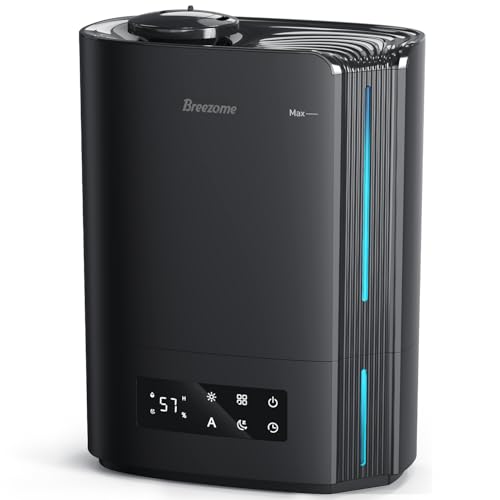
BREEZOME 6L Humidifiers for Bedroom Large Room & Essential Oil Diffuser, Ultrasonic Top Fill Cool Mist Humidifiers for Baby, Plants, Nursery Last up to 60 Hours, Smart Humidistat Control, Quiet, Black
POWERFUL HUMIDIFICATION, PERFECT FOR BEDROOM & BABY ROOM: Our ultrasonic humidifier has a 6L (1.6 gallon) large tank…
As an affiliate, we earn on qualifying purchases.
As an affiliate, we earn on qualifying purchases.
How Do Dehumidifiers Remove Excess Humidity?
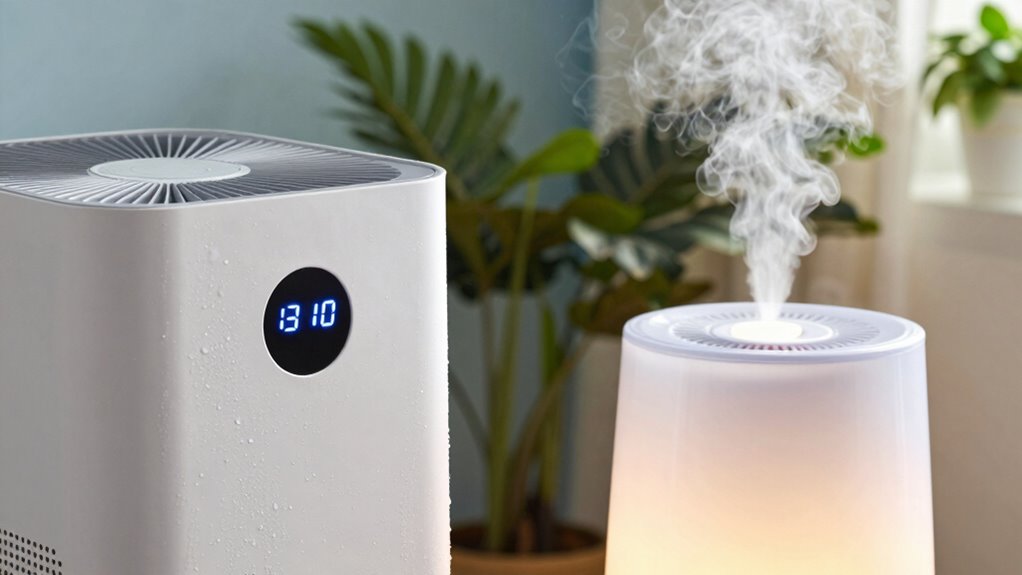
Have you ever wondered how dehumidifiers effectively reduce excess moisture in the air? They do this by drawing in humid air over a cooled coil, where moisture condenses into water droplets. The collected water is then stored in a tank or drained away, helping you control humidity levels. Humidity sensors monitor the air, triggering the dehumidifier to turn on or off, ensuring ideal moisture control. This process keeps your environment comfortable and prevents mold growth. Additionally, understanding the cooling coil function is essential for maintaining the device’s efficiency, especially considering spec verification to ensure compatibility and performance standards. To optimize performance, regular maintenance and understanding the device components can significantly enhance your dehumidifier’s lifespan and effectiveness. Proper air circulation also ensures that humidity levels are evenly managed throughout the space.

ToLife Dehumidifier for Home 95 OZ Water Tank, 1000 sq.ft Dehumidifiers for Basement Bedroom Bathroom with Auto Shut Off 7 Colors LED Light, Grey
Upgrade High Efficient Dehumidification: ToLife dehumidifier utilize semiconductor condensation technology, ensuring quiet operation while effectively extracting moisture from…
As an affiliate, we earn on qualifying purchases.
As an affiliate, we earn on qualifying purchases.
Which Device Is Best for Your Home or Office? Key Factors to Consider
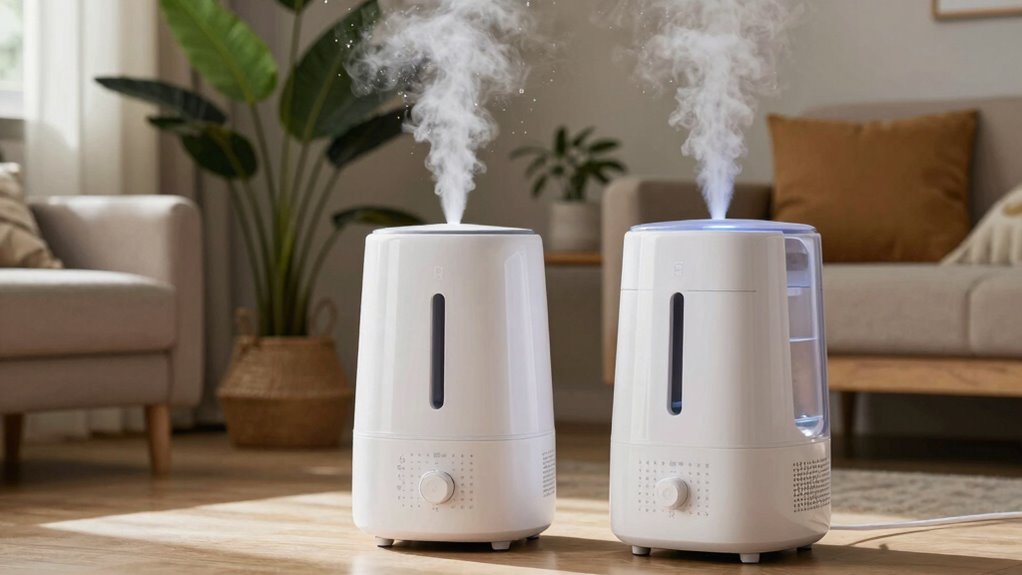
Choosing between a humidifier and a dehumidifier depends on your specific needs and the conditions of your space. Consider factors like indoor air quality, energy efficiency, and climate. If your home feels dry, a humidifier can improve comfort and respiratory health. Conversely, if excess moisture causes mold or musty odors, a dehumidifier is more suitable. When selecting, think about:
- The size of your space and device capacity
- Energy consumption and cost-effectiveness
- How each device impacts indoor air quality
- Product options that best match your space’s humidity levels and your budget
Additionally, understanding humidity control can help you choose the most effective device for maintaining a healthy environment. A well-chosen device not only maintains ideal humidity levels but also enhances indoor air quality and saves energy. Your decision should align with your space’s humidity levels and your comfort priorities, ensuring a healthier, more efficient environment. Proper humidity regulation can also prevent issues like dust accumulation and static electricity, contributing further to a comfortable indoor atmosphere. Maintaining the proper humidity level is essential for indoor air quality, which directly affects health and comfort.
Pros and Cons of Humidifiers and Dehumidifiers
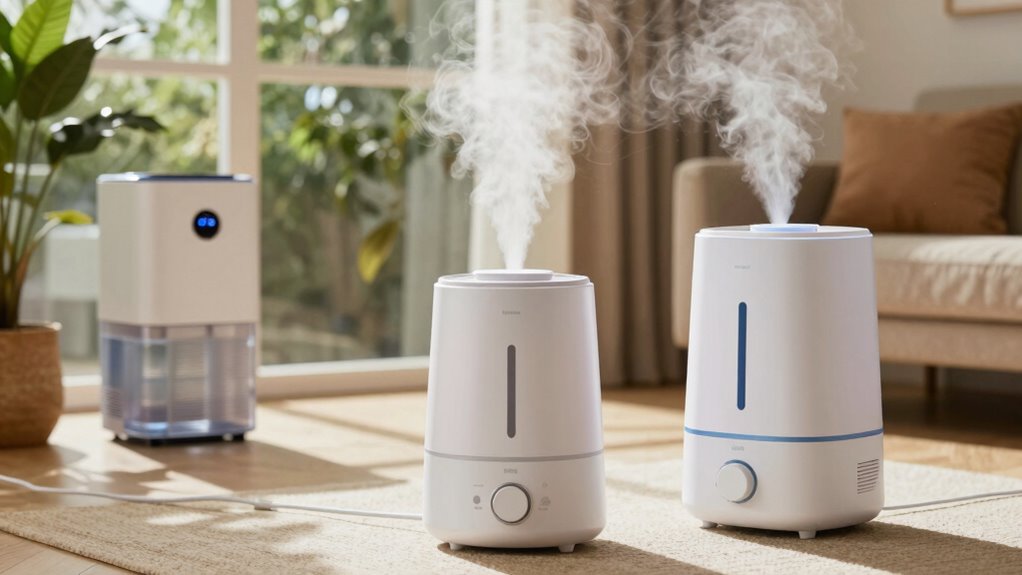
Humidifiers and dehumidifiers each offer distinct advantages and drawbacks that can substantially impact your indoor environment. Humidifiers improve air quality by adding moisture, which can reduce respiratory issues and dry skin. However, if not maintained properly, they can promote mold growth or bacteria, negatively affecting air quality. They tend to be less energy-efficient, especially larger models, which can increase your energy bills. Dehumidifiers help by removing excess moisture, preventing mold and musty odors, and improving air quality. They are generally more energy-efficient when used correctly. But, overuse can dry out your skin and respiratory passages, and they might require regular maintenance to prevent mold buildup inside. Choosing the right device depends on balancing these pros and cons for your specific needs.
Tips for Choosing, Using, and Maintaining Your Device

Selecting the right device starts with understanding your specific indoor environment and needs. To improve air quality and maximize energy efficiency, choose a device suited to your space. When using it, guarantee proper placement—away from walls and vents—and regularly monitor humidity levels. Clean your device according to the manufacturer’s instructions to prevent mold and bacteria buildup. To maintain efficiency, replace filters as needed and avoid overworking the device, which can waste energy. Consider these tips:
- Use a hygrometer to keep humidity levels ideal
- Regularly clean and inspect your device for dust and mold
- Adjust settings to match seasonal or environmental changes
This approach helps you maintain healthy air quality while keeping energy costs low and your device operating smoothly.
Frequently Asked Questions
Can Humidifiers or Dehumidifiers Help With Allergy Relief?
Yes, humidifiers and dehumidifiers can help with allergy relief by improving air quality and preventing mold growth. A humidifier adds moisture to dry air, soothing nasal passages and reducing allergy symptoms, while a dehumidifier removes excess moisture, preventing mold and dust mites. Both devices help create a healthier indoor environment, making it easier for you to breathe comfortably and reducing allergy triggers caused by poor air quality or mold.
How Energy-Efficient Are Humidifiers Compared to Dehumidifiers?
You might find it interesting that humidifiers generally use less energy than dehumidifiers, making them more cost-effective for long-term use. Humidifiers have lower energy consumption because they only add moisture, while dehumidifiers work harder to remove excess humidity, which demands more power. When comparing costs, consider how often you’ll use each device, but overall, humidifiers tend to be more energy-efficient.
Are There Health Risks Associated With Improper Use of These Devices?
Yes, improper use of humidifiers and dehumidifiers can pose health risks. If a humidifier isn’t cleaned regularly, mold growth and bacteria can develop, which harms indoor air quality and may cause respiratory issues. Overusing a dehumidifier can dry out your skin and irritate your throat. To stay safe, follow manufacturer instructions, monitor indoor humidity levels, and guarantee devices are maintained properly to prevent mold and other health hazards.
Can These Devices Be Used Together in the Same Space?
Think of using a humidifier and dehumidifier together like balancing a teeter-totter; it’s possible but tricky. Yes, they can work in the same space, but device compatibility and ideal placement matter. You need to position them carefully to prevent conflicting air conditions. For example, keep the humidifier away from the dehumidifier’s intake, and monitor humidity levels regularly to maintain a comfortable, healthy environment.
What Are the Maintenance Costs for Each Device Type?
The maintenance costs for humidifiers and dehumidifiers vary, but generally, humidifiers have lower ongoing expenses, mainly needing regular cleaning and occasional filter replacements. Dehumidifiers may incur higher costs due to more frequent filter changes and potential refrigerant recharges. When considering a cost comparison, factor in longevity, as quality models last longer and reduce replacement costs. Proper maintenance enhances device longevity and keeps costs manageable over time.
Conclusion
So, now that you’re a humidity hero, you can confidently choose between a humidifier or dehumidifier—no more guessing games! Whether you’re fighting dry skin or mold monsters, remember: these devices aren’t magic, just clever gadgets. Just don’t forget to read the manual, clean them regularly, and resist the urge to use your humidifier as a giant tea kettle. Your walls—and your sanity—will thank you. Stay moist, or stay dry—your call!