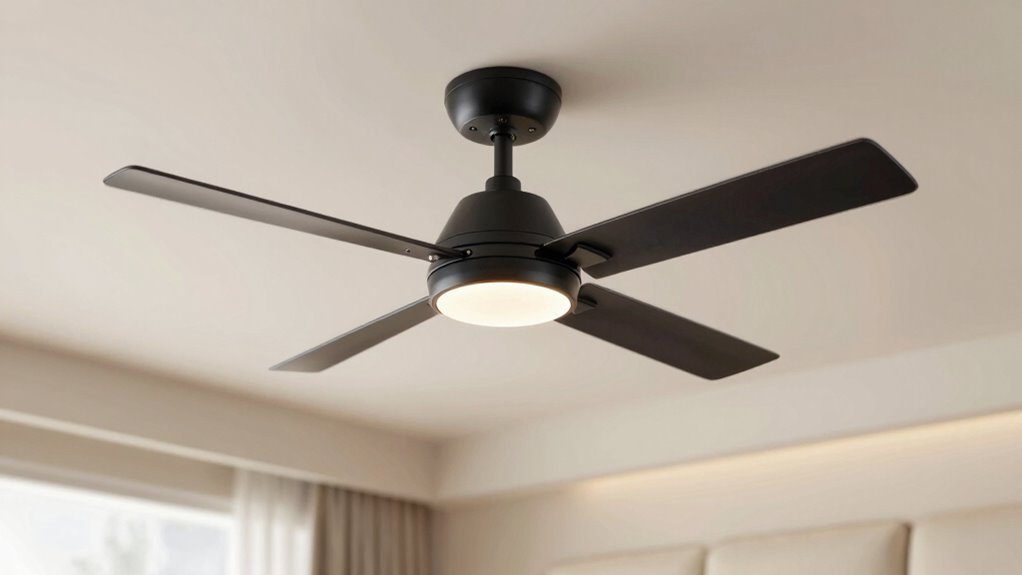

In summer, you should set your ceiling fan to spin clockwise at a high speed to create a cooling breeze by pushing air downward. In winter, switch it to counterclockwise at a lower speed to pull air upward, circulating warm air evenly. Properly adjusting the blade direction and pitch enhances comfort and energy savings year-round. If you want to learn how to maximize your fan’s effectiveness through seasonal adjustments and maintenance, continue exploring.
Key Takeaways
- Summer settings: blades spin clockwise to push air downward, creating a cooling breeze.
- Winter settings: blades reverse to counterclockwise, pulling air upward to circulate warm air.
- Adjust blade pitch angle between 12-15 degrees for optimal airflow efficiency.
- Seasonal blade direction improves comfort, air quality, and energy savings.
- Proper fan speed selection enhances performance and reduces energy consumption year-round.

Fanbulous 52 Inch Ceiling Fans with Lights, Indoor/Outdoor Modern Ceiling Fan with Reversible Blade And 2 Rods, Quiet DC Motor, 3CCT & 6-Speed Remote Control, Dual Finish Blade for Living Room/Bedroom
Ultra-Quiet Motor, Year-Round Comfort: This 52 inch large black ceiling fan features a reversible ultra-quiet motor with noise…
As an affiliate, we earn on qualifying purchases.
As an affiliate, we earn on qualifying purchases.
How Ceiling Fans Help in Summer and Winter

Ceiling fans are versatile tools that can improve your comfort year-round, not just during the hot summer months. They help in summer by creating a cooling breeze, making you feel cooler even without lowering the thermostat. In winter, reversing the fan’s direction allows warm air to circulate more evenly, helping you save on heating costs. When choosing a fan, consider its fan noise; a quiet motor guarantees comfort without distraction. Additionally, the aesthetic design matters—select a style that complements your room’s decor to enhance your space’s look. Modern fans combine functionality with sleek designs, so you don’t have to sacrifice style for efficiency. Proper fan operation can optimize your comfort and energy savings throughout the year. Using the correct fan settings in each season maximizes energy efficiency and comfort. Understanding air circulation principles can further enhance the effectiveness of your ceiling fan and improve overall room climate control. Being aware of energy-saving strategies can help you make more informed decisions about your fan use and boost your home’s efficiency. With the right fan, you enjoy year-round comfort, quiet operation, and an attractive addition to your home.

72 inch Ceiling Fans with Lights,Large Ceiling Fan with Light and Remote Control, Dimmable, 3CCT, Quiet, Black Modern Ceiling fan For Living Room, Bedroom, Kitchen, Patio, Farmhouse, Indoor/Outdoor
Ceiling Fan with Light: Decorate your home with Amico ceiling fan! While bringing you coolness and comfort, it…
As an affiliate, we earn on qualifying purchases.
As an affiliate, we earn on qualifying purchases.
Proper Blade Direction for Seasonal Comfort
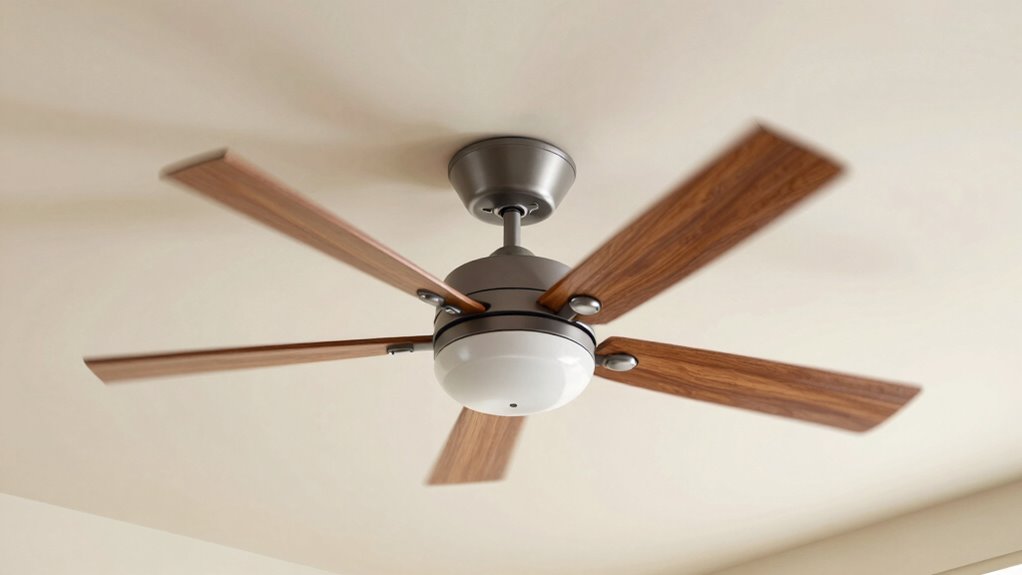
To maximize comfort with your ceiling fan, you need to set the blade direction correctly for each season. Adjusting the blade pitch angle, rotation, and circulation direction can make a big difference in how effectively your fan cools or warms your space. Knowing the proper settings helps you stay comfortable year-round while saving energy. Additionally, understanding nail biology can remind us that just as nails require proper care for strength, your ceiling fan settings need adjustment for optimal performance. Proper vacuum technology can also be compared to maintaining your fan, as both require the right tools and settings to operate efficiently and effectively. Regularly inspecting and cleaning your fan blades ensures optimal airflow, much like how proper mechanical adjustment keeps a complex system functioning smoothly. Being aware of cookie categories and managing user preferences can help you optimize your home’s comfort settings for different seasons. Recognizing the importance of seasonal airflow adjustments can further enhance your energy savings and comfort year-round.
Correct Blade Pitch Angle
Adjusting the blade pitch angle correctly is essential for ensuring your ceiling fan works efficiently and provides ideal comfort during different seasons. The blade angle, or pitch, influences how much air the fan moves. Proper pitch adjustment allows the fan to create a gentle breeze in summer and a gentle upward flow in winter. To optimize performance, check that the blades are set to the manufacturer’s recommended angle—usually between 12 and 15 degrees. If the pitch is too steep, the fan may wobble or be noisy; if it’s too flat, airflow will be weak. Adjust the blade angle by loosening the blade brackets and changing their tilt. Ensuring the correct blade pitch helps you achieve maximum efficiency and comfort year-round. Additionally, maintaining the proper blade pitch angle can help prevent wear and tear, prolonging the lifespan of your ceiling fan. Regularly inspecting and adjusting the blade pitch according to the fan’s specifications can also improve energy efficiency and reduce unnecessary strain on the motor. Proper blade alignment is crucial for smooth operation and to prevent imbalance. Monitoring and maintaining the correct blade angle can also promote safer operation and reduce noise issues. Ensuring the correct blade pitch is maintained can also minimize vibrations and noise, leading to quieter operation.
Seasonal Blade Rotation
Once your blade pitch is properly set, rotating the blades direction according to the season allows your fan to work more efficiently and keep you comfortable year-round. For summer, you want the blades to spin clockwise, pushing air downward to create a cooling breeze. In winter, reverse the direction to counterclockwise, pulling air upward and helping to circulate warm air trapped near the ceiling. The effectiveness of this rotation depends partly on your fan size and blade materials; larger fans with heavier blades may require more effort to change direction smoothly, while lightweight blades made from materials like wood or plastic respond quickly. Ensuring your fan’s blades rotate correctly for each season optimizes airflow and comfort, saving energy and improving your space’s climate. Proper seasonal adjustment is a simple yet effective way to maximize fan efficiency, much like understanding safety features enhances the safe use of portable oil radiators. Just like fan communities learn and experiment through shared knowledge, understanding your fan’s capabilities helps you maximize comfort and efficiency. Additionally, being aware of whole-home water system optimization can lead to better overall energy savings in your household. Regularly checking your fan’s blade alignment can further improve its performance and longevity, especially when considering the importance of pinball machine weight for safe and proper installation in different spaces.
Optimal Air Circulation Direction
Proper blade direction is essential for maximizing your ceiling fan’s efficiency and ensuring seasonal comfort. When set correctly, it helps improve indoor air quality and reduces noise. For summer, set your fan to rotate counterclockwise, creating a breeze that cools you directly. In winter, switch to clockwise rotation to gently circulate warm air trapped near the ceiling. Visualize this effect with these images:
- A fan spinning counterclockwise, pushing air downward, cooling your skin.
- Gentle clockwise movement, pulling air upward and redistributing warm air.
- Quiet operation, minimizing noise and disturbance during rest.
- Consistent airflow that enhances indoor air quality by reducing stagnant air zones. Proper blade direction also supports effective troubleshooting when issues arise with fan performance.
Adjusting blade direction optimizes comfort and reduces unnecessary noise, ensuring your indoor environment feels just right year-round.

addlon Ceiling Fans with Lights, 42 Inch Low Profile Ceiling Fan with Light and Remote Control, Flush Mount, Reversible, 3CCT, Dimmable, Quiet, Black Small Ceiling Fan for Bedroom Indoor/Outdoor Use
Ceiling Fan with Light: Bring more than just wind and light, but comfort! addlon modern ceiling fan, with…
As an affiliate, we earn on qualifying purchases.
As an affiliate, we earn on qualifying purchases.
How to Switch Your Fan From Summer to Winter Mode
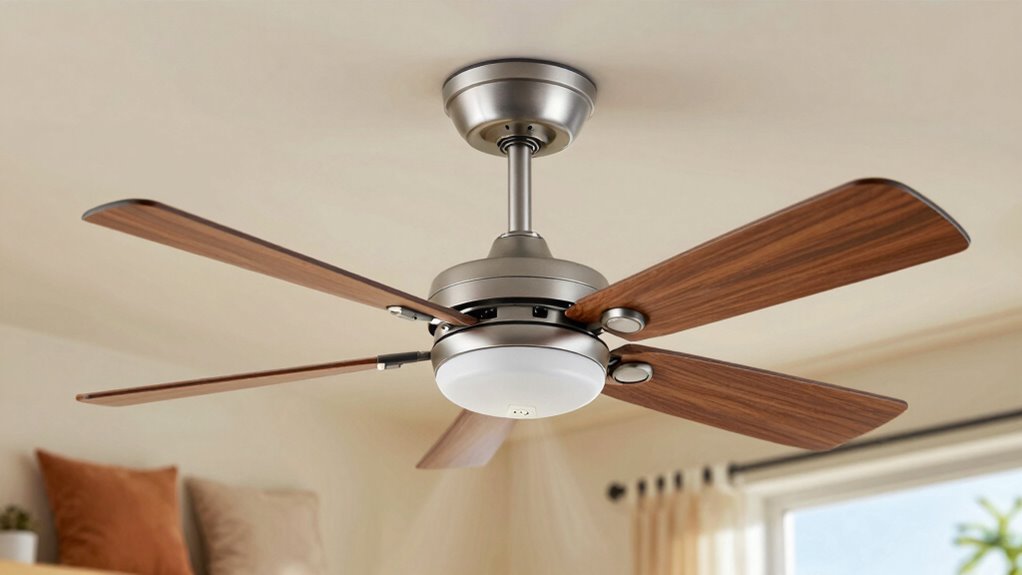
Switching your ceiling fan from summer to winter mode is straightforward and can instantly improve your home’s comfort. To do this, locate the fan’s reverse switch, typically on the fan’s motor housing. Flip the switch to change the direction, ensuring the blades rotate clockwise for winter. Adjusting fan speed settings can help optimize comfort further. Many decorative fan designs include multiple speed options, so choose a lower setting for gentle warmth. Here’s a quick visual:
| Fan Speed Settings | Effect |
|---|---|
| Low | Gentle, consistent airflow |
| Medium | Moderate airflow |
| High | Strong airflow (summer use) |
Understanding the importance of proper cabling solutions can ensure your fan is installed securely and functions correctly. Additionally, selecting the right fan settings based on seasonal needs can significantly impact energy efficiency and comfort. Proper installation techniques also contribute to the fan’s effectiveness and safety. Regularly inspecting the fan’s wiring can prevent potential electrical issues and ensure safe operation. Being aware of these seasonal adjustments can help you maximize the efficiency and longevity of your ceiling fan. This simple switch and understanding of fan speeds can make a big difference in your home’s comfort year-round.

Ohniyou Ceiling Fans with Lights, 52'' Low Profile Ceiling Fan with Light and Remote/APP Control, Modern Flush Mount Ceiling Fan for Indoor Bedroom Living Room, Dimmable, Qiuet DC Motor, Black
Smart Ceiling Fans with APP & Remote Control: This modern ceiling fan with lights has all functions controllable…
As an affiliate, we earn on qualifying purchases.
As an affiliate, we earn on qualifying purchases.
Benefits of Using Ceiling Fans in Winter
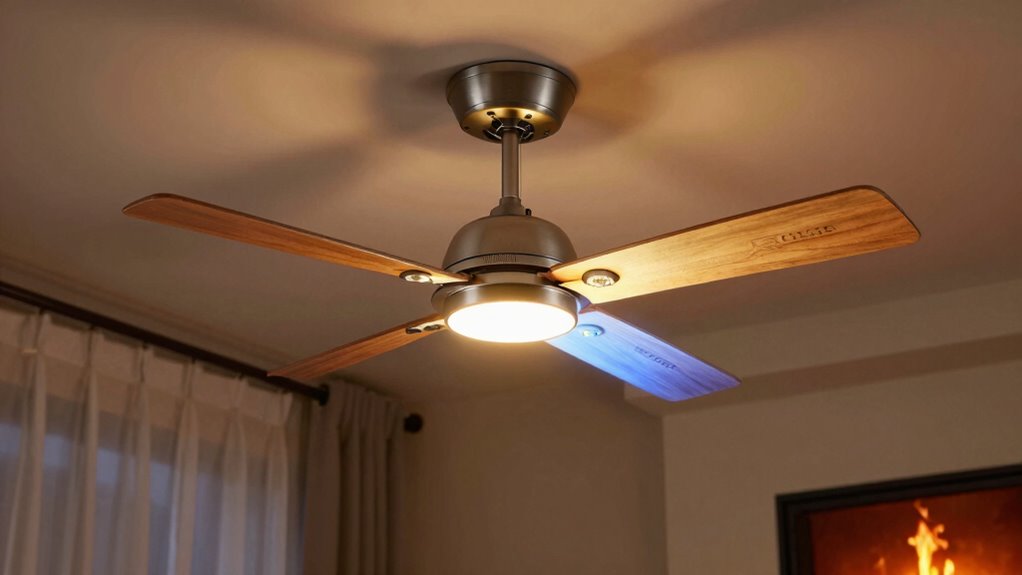
Using your ceiling fan in winter helps improve heat circulation, making your space feel warmer without increasing the thermostat. This can lead to noticeable savings on your heating bills. By adjusting your fan correctly, you get better comfort and efficiency all season long.
Improved Heat Circulation
Have you ever noticed how warm air tends to rise and gather near the ceiling during winter? Using your ceiling fan on the reverse setting helps improve heat circulation by pushing warm air downward. This creates a more even room temperature, making your space feel cozy without extra effort. Imagine:
- Warm air gently flowing down, avoiding cold spots
- The room feeling uniformly heated, eliminating drafts
- Your heater working less because the heat spreads more efficiently
- Quiet operation ensuring noise reduction while maintaining comfort
This method boosts energy efficiency by reducing the need for constant heater use. Plus, the fan’s quiet, smooth operation minimizes noise, allowing you to enjoy a warm, peaceful environment. Proper heat circulation keeps you comfortable while saving energy and maintaining tranquility.
Reduced Heating Costs
When you activate your ceiling fan’s reverse setting during winter, it helps distribute warm air more evenly throughout the room. This improved circulation allows you to maintain comfortable temperatures without cranking up your heater, reducing your energy bills. Modern ceiling fans often feature energy-efficient motors that consume less power while delivering effective airflow. Additionally, many models include decorative lighting, adding style without sacrificing functionality. By using your fan to push warm air downward, you can keep your space cozy and cut heating costs. This simple adjustment maximizes your heating system’s efficiency, saving you money over time. It’s an easy, cost-effective way to make the most of your existing heating and ceiling fan investments during the colder months.
Troubleshooting Common Ceiling Fan Issues
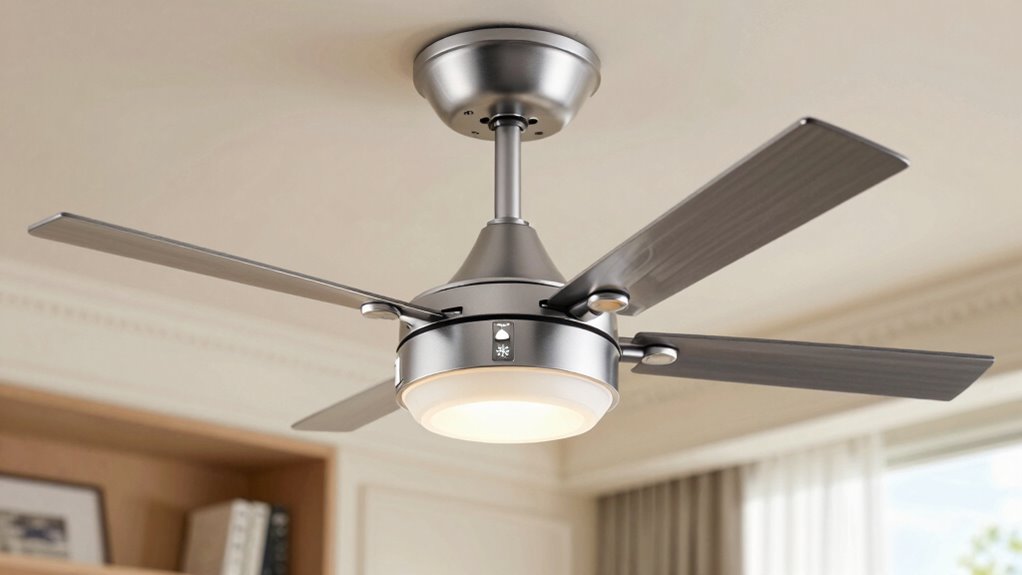
If your ceiling fan isn’t functioning properly, troubleshooting can often identify and resolve common issues quickly. First, check the fan motor; if it’s humming but not spinning, the motor might need lubrication or replacement. Next, inspect the blades for wobble—uneven or loose blades can cause imbalance. To fix this:
- Tighten all blade screws and brackets.
- Balance the blades using a balancing kit.
- Ensure the fan is mounted securely to the ceiling.
- Remove any debris or dust that could interfere with movement.
If the fan still isn’t working smoothly, consider replacing worn-out parts or consulting an electrician. Addressing these issues promptly can restore proper airflow and prevent further damage.
Key Features to Look for in All-Season Fans
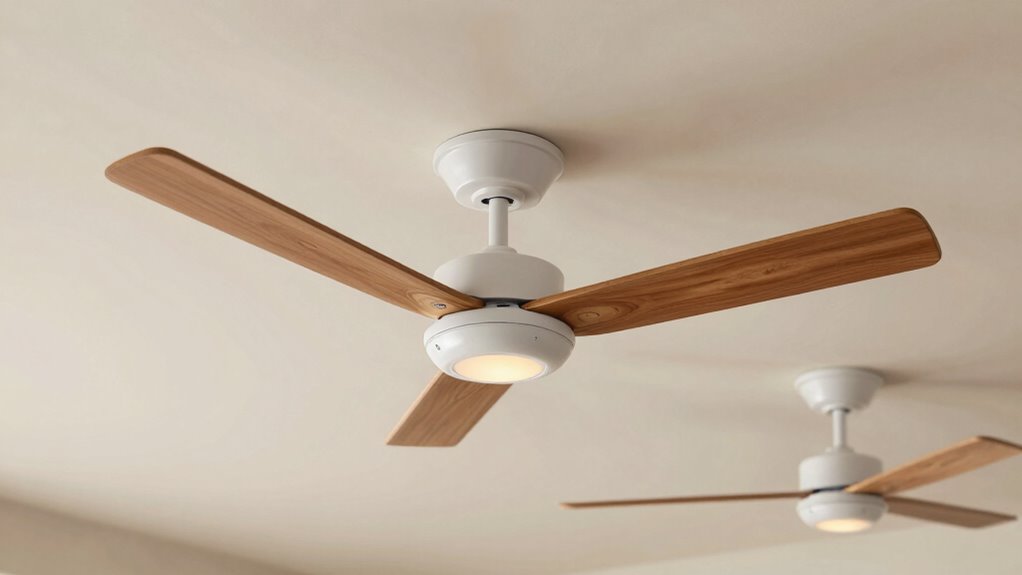
Choosing an all-season ceiling fan means looking for features that maximize comfort and efficiency year-round. Focus on design aesthetics that match your space, so the fan complements your decor while providing ideal airflow. Look for fans with versatile finishes and sleek styles that blend seamlessly with your room’s theme. Fan size options are equally important; a larger fan moves more air in bigger rooms, while a smaller one suits compact spaces. Many all-season fans also feature adjustable speed settings and reversible blades, making it easy to switch between summer cooling and winter heating. Prioritize models with energy-efficient motors and quiet operation to enhance comfort without increasing your energy bills. These key features guarantee your fan performs well throughout the year, no matter the season.
Mistakes to Avoid When Using Fans Year-Round
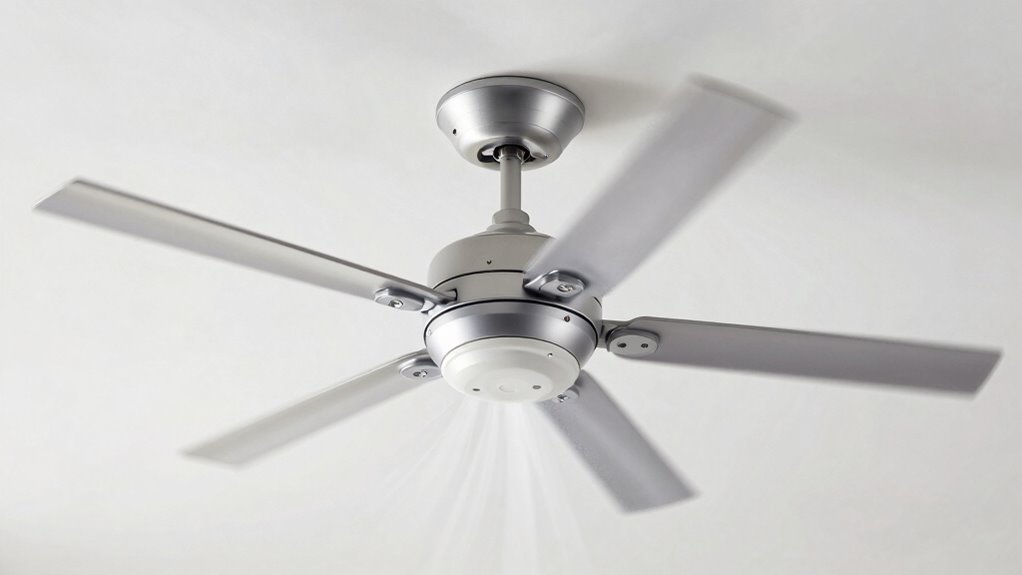
Using your ceiling fan correctly throughout the year can considerably improve comfort and energy savings, but common mistakes can undermine its effectiveness. First, avoid ignoring fan blade materials; some materials, like wood or plastic, are better suited for specific environments. Second, don’t forget to check if your remote control features allow you to reverse the fan’s direction seasonally—this is essential for winter efficiency. Third, never leave the fan running when the room is unoccupied, wasting energy. Fourth, resist the temptation to set the fan at a high speed constantly; adjusting speed based on your needs improves comfort and saves power. Being mindful of these mistakes ensures your fan operates at its best year-round, keeping you comfortable without increasing energy costs.
Save Energy and Money With Proper Fan Use
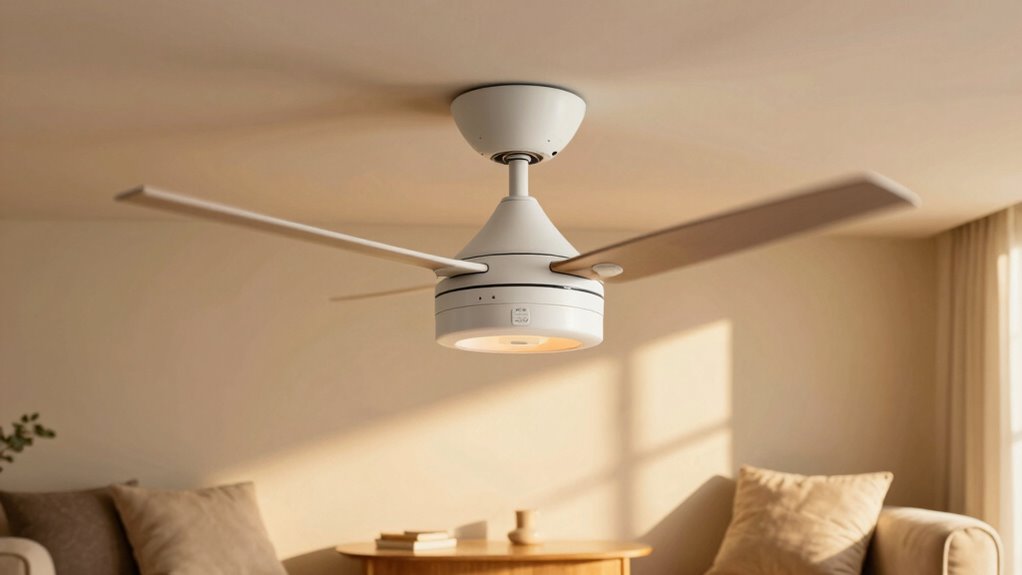
Maximizing your ceiling fan’s efficiency can lead to significant savings on energy bills, especially when you use it correctly throughout the year. To do this, consider energy efficient upgrades like installing models with better airflow and lower power consumption. Regular fan maintenance tips, such as cleaning blades and checking for loose parts, guarantee ideal performance and prevent unnecessary energy waste. When used properly, your fan can cool a room in summer by circulating air, and in winter, it can help distribute warm air more evenly. Adjusting the fan’s direction seasonally enhances its efficiency. Proper usage combined with upgrades and maintenance helps you save money while reducing your environmental impact. Small adjustments can make a big difference in your overall energy savings.
Frequently Asked Questions
Can Ceiling Fans Reduce Heating and Cooling Bills Effectively?
Yes, ceiling fans can reduce your heating and cooling bills effectively. By improving energy savings through better temperature regulation, fans help circulate air, making rooms feel cooler in summer and warmer in winter. When used properly, they reduce the workload on your HVAC system, cutting energy costs. Switching the fan direction seasonally maximizes these benefits, ensuring you stay comfortable while lowering your utility bills.
Are There Specific Ceiling Fan Models Designed for All-Season Use?
Much like the Swiss Army knife of tools, some ceiling fans are designed for all-season use, offering unmatched design versatility and energy efficiency. These models feature reversible motors, allowing you to switch between summer and winter modes seamlessly. With their adaptable functionality, you can enjoy year-round comfort and savings, making them a smart investment for any home seeking efficiency and convenience in one device.
How Often Should I Clean My Ceiling Fan Blades for Optimal Performance?
You should clean your ceiling fan blades every 1 to 2 months to prevent dust buildup, which can cause blade imbalance and wobbling. Regular cleaning maintains ideal performance and energy efficiency. Use a microfiber cloth or a gentle vacuum attachment to remove dust, and avoid harsh chemicals. Keeping blades clean ensures smooth operation and reduces strain on the motor, extending the lifespan of your fan.
Can Ceiling Fans Be Safely Used Outdoors Year-Round?
Yes, you can safely use outdoor ceiling fans year-round if they’re designed for outdoor durability and weather resistance. These fans are built to withstand elements like rain, humidity, and temperature changes. Verify a model specifically rated for outdoor use, and regularly check for any signs of wear or damage. Proper maintenance ensures your outdoor fan remains functional and safe, no matter the season.
Do Ceiling Fans Require Professional Installation for Seasonal Adjustments?
You don’t need a professional to adjust your ceiling fan for seasonal changes if it has a remote control or smart technology. These features make switching between summer and winter modes quick and easy. Simply use the remote or app to reverse the fan’s direction and adjust speed settings. However, if your fan lacks these features or you’re unsure about its wiring, consulting a professional is a safer choice to prevent any damage or safety issues.
Conclusion
By mastering your ceiling fan’s seasonal settings, you’re turning your home into a well-orchestrated symphony of comfort and savings. When you switch blades with a simple flick, you’re not just changing directions—you’re harnessing the power of efficiency and comfort all year round. Think of your fan as a silent partner, working tirelessly to keep your space cool in summer and warm in winter. With a little knowledge, you turn everyday fans into your home’s unsung heroes.