
When comparing steam cleaning and chemical cleaning, you’ll find that steam uses high-temperature vapor to sanitize surfaces without chemicals, making it safer and eco-friendly for household use. Chemical cleaning involves harsh solutions that quickly remove tough stains but pose safety risks and environmental concerns. Depending on your needs—whether deep stain removal or gentle sanitization—you’ll prefer one method over the other. Keep exploring to discover which technique suits your situation best and how to use them effectively.
Key Takeaways
- Steam cleaning uses high-temperature vapor, effectively sanitizing surfaces without chemicals, while chemical cleaning involves chemical agents for stain and grime removal.
- Steam excels on delicate surfaces, fabrics, and flood-affected areas; chemical cleaning is better for tough stains and rapid sterilization.
- Steam cleaning is safer, eco-friendly, and reduces chemical exposure risks, whereas chemical cleaning poses health hazards and environmental concerns.
- Initial equipment costs for steam cleaning are higher, but it can save money long-term; chemical cleaning generally has lower upfront costs but ongoing chemical expenses.
- Steam cleaning is sustainable with minimal waste, while chemical cleaning involves hazardous chemicals requiring careful handling and disposal.

BISSELL TurboClean, Upright Carpet Cleaner, Pro Max Clean & Protect + Oxy Urine Eliminator Formula Included, 3952
EVERY PURCHASE SAVES PETS. Every purchase makes it possible for BISSELL to continue our support of BISSELL Pet…
As an affiliate, we earn on qualifying purchases.
As an affiliate, we earn on qualifying purchases.
What Are the Main Differences Between Steam and Chemical Cleaning?
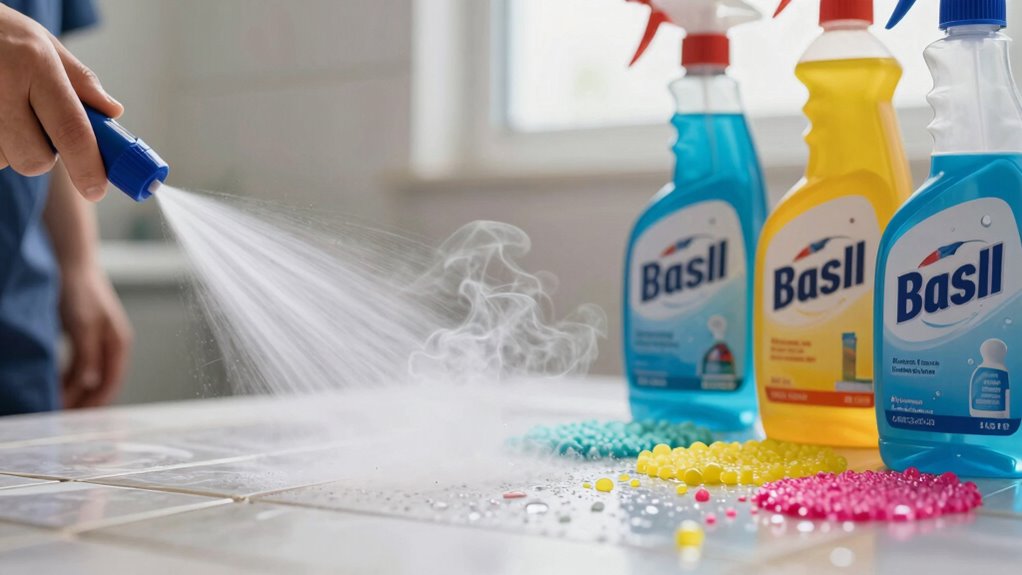
Steam cleaning and chemical cleaning differ primarily in their methods and the substances they use. With recent cleaning innovations, steam cleaning relies on high-temperature vapor to sanitize surfaces, eliminating germs without harsh chemicals. This approach reduces environmental impact, making it eco-friendly and safer for your family and the planet. Chemical cleaning, on the other hand, involves applying chemical solutions to break down dirt and stains, often containing substances that can be harmful if misused or overused. While chemical cleaners might be effective for tough grime, they can contribute to pollution and pose health risks. Your choice depends on priorities like environmental impact and safety. Steam cleaning offers a greener, chemical-free alternative, aligning with cleaner, more sustainable solutions. Additionally, modern cleaning techniques are continually evolving to promote safer and more eco-conscious options, emphasizing the importance of environmentally friendly cleaning methods. Incorporating proper maintenance of cleaning equipment, such as air purifiers, can further enhance overall cleanliness and safety, especially as research shows that sound vibrations can influence health and cellular regeneration.
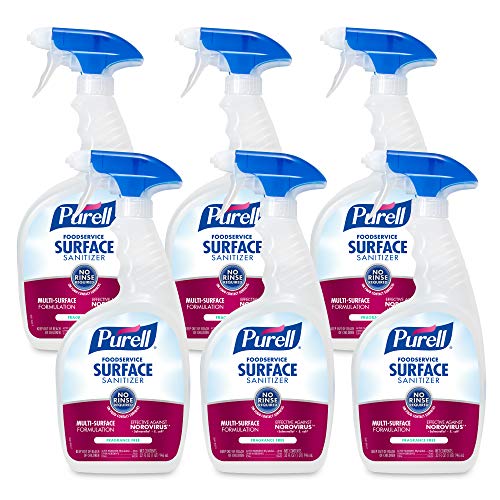
PURELL Foodservice Surface Sanitizer Spray, Fragrance Free, 32 fl oz Capped Bottle with Spray Trigger in Pack (Pack of 6) – 3341-06
One-step sanitizer offers powerful germ-kill without harsh chemicals to provide a better overall experience for guests
As an affiliate, we earn on qualifying purchases.
As an affiliate, we earn on qualifying purchases.
How Do Steam and Chemical Cleaning Work?
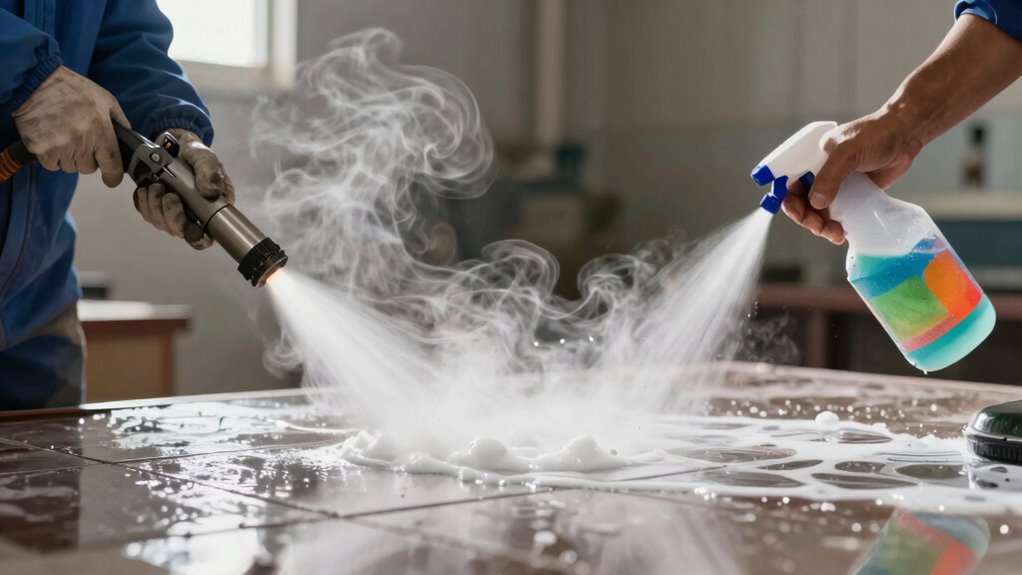
Both cleaning methods rely on different processes to remove dirt and germs from surfaces. Steam cleaning uses high-temperature vapor generated by boiling water, which penetrates surfaces to loosen grime and kill bacteria. The cleaning technology relies on heat and moisture, making it effective for sanitizing without chemicals. Steam cleaning can also be used on delicate surfaces where abrasive cleaning might cause damage, further expanding its versatility. Additionally, steam cleaning can be more suitable for environmentally friendly cleaning practices due to its reduced reliance on chemicals. Proper requirements traceability ensures that cleaning methods meet safety and compliance standards, especially in regulated environments. Understanding the different cleaning processes helps determine the most appropriate method for various surfaces and settings. Moreover, the choice between methods can influence the overall cost-effectiveness and environmental impact of the cleaning routine.

Waitbird Steam Cleaner, Steam Cleaner For Home,Handheld Steam Cleaner With 21 Accessories,248 ° F High Temperature,Suitable For Floors,Sofas,Interior Decoration,Barbecue Grills,Mop Replacement Parts
Safety first with child lock and automatic shut-off: Features an integrated child lock to prevent accidental activation and…
As an affiliate, we earn on qualifying purchases.
As an affiliate, we earn on qualifying purchases.
Which Method Is Safer for Household Use?
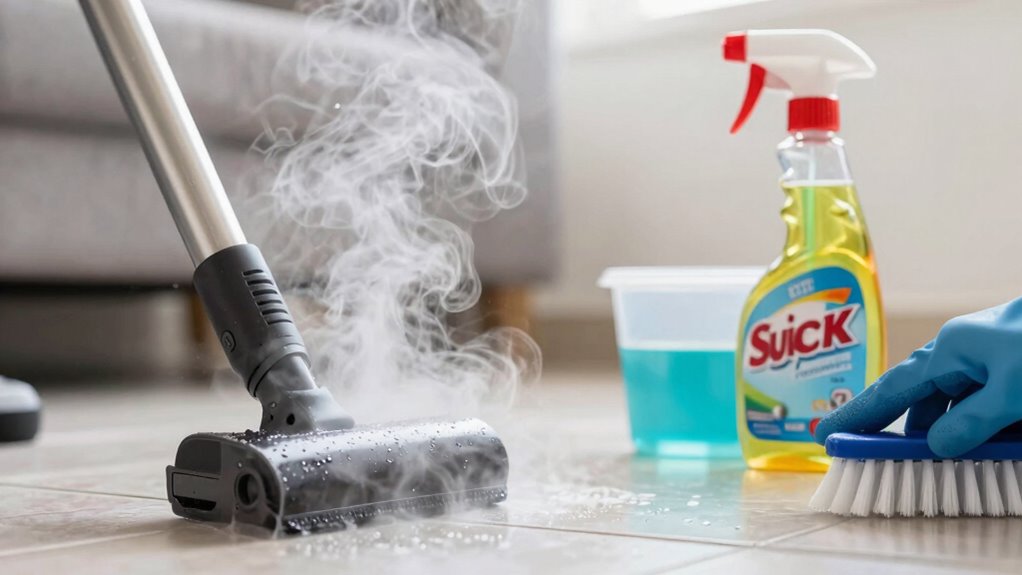
When considering safety for household cleaning, chemical methods can pose exposure risks and leave residues or allergens behind. These residues might trigger allergies or skin sensitivities, especially for children or pets. In contrast, steam cleaning generally avoids these hazards, making it a safer choice for many homes. Additionally, steam cleaning can be more effective at removing bacteria and germs, reducing the need for harsh disinfectants. Proper power protection can also ensure that cleaning equipment operates safely and reliably during use, minimizing electrical hazards. Using the right cleaning techniques can further enhance safety and effectiveness in household cleaning routines. Incorporating environmentally friendly methods like steam cleaning can contribute to a healthier home environment overall, especially since natural cleaning options are gaining popularity among eco-conscious consumers.
Chemical Exposure Risks
Are you concerned about the potential health risks associated with cleaning methods? Chemical cleaning can pose significant exposure risks, especially with repeated use. You might encounter occupational hazards like respiratory issues or skin irritation from handling harsh chemicals. Additionally, these substances can have a notable environmental impact, contaminating water sources and harming wildlife. To better understand the risks, consider these points:
- Chemical fumes may cause respiratory problems or allergic reactions.
- Prolonged exposure can lead to skin burns or eye irritation.
- Some chemicals are toxic and persist in the environment.
- Improper disposal increases ecological harm and health hazards.
- Using chemical cleaners may also introduce toxic substances into the home environment, potentially affecting vulnerable populations like children and pets. Incorporating certified eco-friendly products can help mitigate some of these concerns. Understanding the environmental impact of chemicals can further guide safer choices for household cleaning. Being aware of proper disposal methods is also crucial to reduce ecological damage.
While chemical cleaning might be effective, it’s essential to weigh these risks carefully. Steam cleaning, by contrast, typically involves fewer chemical hazards and less environmental impact, making it a safer household option.
Residue and Allergens
Since residues and allergens can linger on surfaces after cleaning, choosing a method that minimizes these remnants is essential for household safety. Steam cleaning effectively reduces residues because it uses high temperatures to kill bacteria, mold, and allergens without leaving chemical traces. This makes it excellent for mold prevention and odor elimination, especially in damp areas prone to mold growth. Chemical cleaners often leave behind residues that can trigger allergies or asthma symptoms, and they may require thorough rinsing to remove chemicals completely. Steam cleaning provides a safer alternative by avoiding chemical residues altogether. With fewer allergens and residues left behind, your home becomes a healthier environment. Overall, steam cleaning offers a cleaner, safer, and more allergen-free option for maintaining a healthy household.

Pressurized Handheld Multi-Surface Natural Steam Cleaner with 12 pcs Accessories, Multi-Purpose Steamer for Home Use, Steamer for Cleaning Floor, Upholstery, Grout and Car (Grey) (Grey)
POWERFUL HOT STEAM – 1050 watts with 3-5 minutes fast heat-up and emits pressurized powerful hot steam 230℉…
As an affiliate, we earn on qualifying purchases.
As an affiliate, we earn on qualifying purchases.
Are Steam Cleaning and Chemical Cleaning Eco-Friendly?
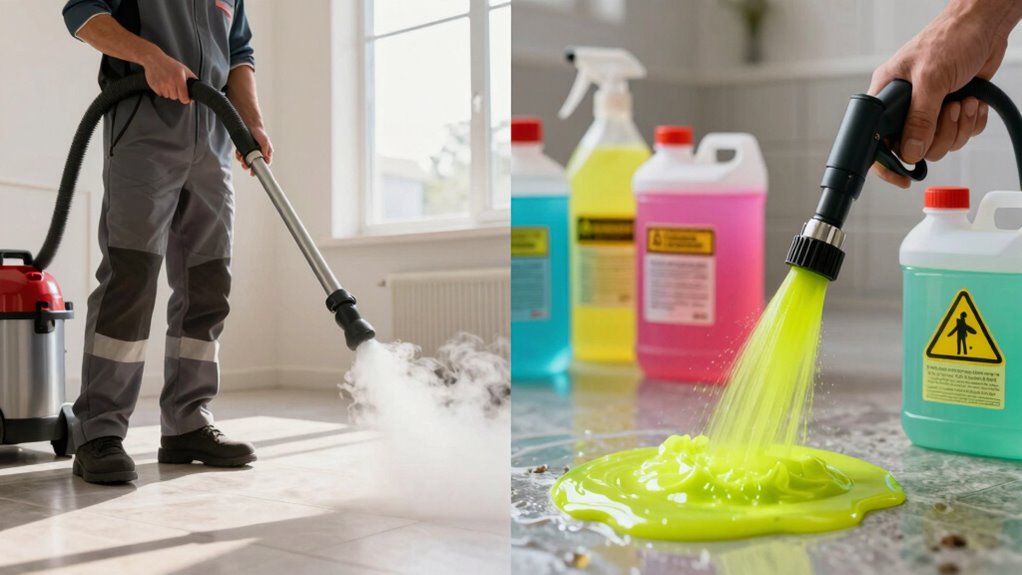
Steam cleaning is often considered more eco-friendly because it uses just water and heat, producing minimal waste and fewer harmful chemicals. Its environmental impact is lower since it avoids chemical disposal issues and reduces the release of toxic substances into the environment. In contrast, chemical cleaning involves the use of various cleaning agents that may contain hazardous ingredients, which can persist in water systems or soil. These chemicals often require special disposal methods to prevent environmental harm. Additionally, chemical cleaning consumes more resources and energy for manufacturing, transportation, and disposal. When evaluating eco-friendliness, consider these points: Cookies and user data, which are used in some cleaning tools and products, can also impact the environment if not properly managed. Proper disposal and the use of environmentally friendly cleaning agents can further reduce the ecological footprint of chemical cleaning. Furthermore, selecting sustainable cleaning practices can significantly enhance the overall eco-friendliness of cleaning methods. Incorporating environmentally conscious choices in cleaning routines is essential for minimizing ecological impact, especially considering how indoor air quality can be affected by cleaning chemicals and methods.
Where Is Steam Cleaning Most Effective?
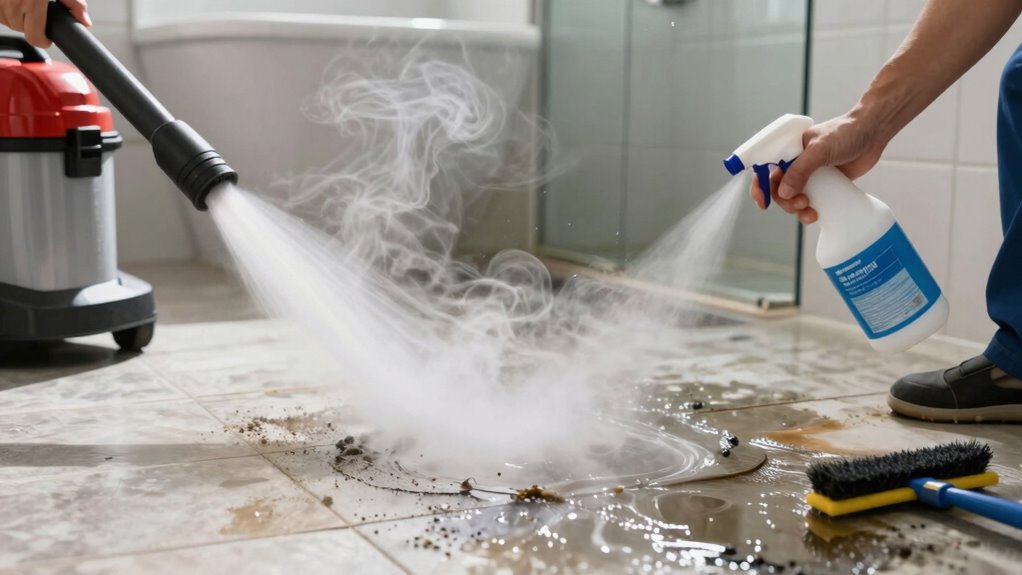
You’ll find steam cleaning works best on upholstery, where its deep-reaching heat can eliminate dirt and germs without harsh chemicals. It’s also highly effective on hard surfaces like tile and countertops, leaving them spotless and sanitized. Additionally, steam cleaning can be a lifesaver for flood damage, helping to remove moisture and prevent mold growth efficiently. Proper technique, such as heat buffering, ensures that delicate surfaces are cleaned safely without damage.
Ideal for Upholstery
Have you ever wondered where steam cleaning truly shines when it comes to upholstery? It’s especially effective on fabrics that benefit from gentle, thorough cleaning without harsh chemicals. Steam cleaning preserves fabric durability by penetrating deep into fibers, removing dirt and bacteria without weakening the material. It also helps with scent retention, eliminating odors at their source rather than masking them. For upholstery, steam cleaning works best on:
- Light to medium fabric textures
- Items with frequent use and odor buildup
- Delicate materials needing gentle treatment
- Fabrics where chemical residues are undesirable
This method ensures your furniture stays fresh, clean, and odor-free while maintaining its integrity over time. It’s a smart choice for those who prioritize fabric longevity and a clean scent without the use of chemicals. Additionally, understanding home design and architecture details can help you choose the most suitable cleaning methods for different furniture styles and materials.
Perfect for Hard Surfaces
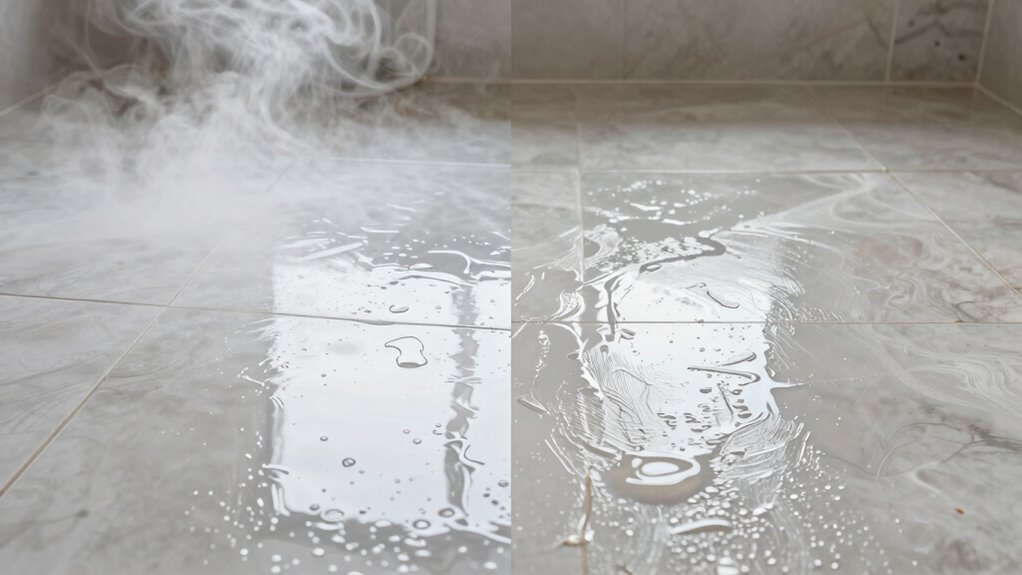
When it comes to hard surfaces, steam cleaning proves to be especially effective because it can quickly loosen dirt, grime, and stains without the need for harsh chemicals. This makes it ideal for cleaning kitchen countertops, where residue from food and spills can build up, and bathroom tiles, which often harbor soap scum and mold. Steam penetrates into cracks and textured surfaces, lifting dirt without damaging the material. You’ll find steam cleaning especially useful for maintaining hygiene and appearance with minimal effort. It’s a quick, eco-friendly option that leaves surfaces sanitized and spotless. Unlike chemical cleaners, steam doesn’t leave behind residues or fumes, making it a safe choice for high-traffic and moisture-prone areas.
Effective in Flood Damage
Is steam cleaning truly effective in flood-damaged areas? Yes, especially for flood mitigation efforts where water damage is severe. Steam cleaning can disinfect surfaces and remove contaminants that traditional methods might miss. It penetrates porous materials like carpets, upholstery, and drywall, helping eliminate bacteria, mold, and odors. However, it’s most effective when used as part of a comprehensive water damage restoration plan. Keep in mind:
- It’s ideal for sanitizing flood-affected soft furnishings.
- Suitable for cleaning hard surfaces after floodwaters recede.
- Less effective on deeply saturated materials that require drying or removal.
- Complements other flood mitigation techniques for thorough cleanup.
While steam cleaning boosts sanitation, it’s essential to address moisture removal and structural drying to prevent mold growth.
When Should You Use Chemical Cleaners?
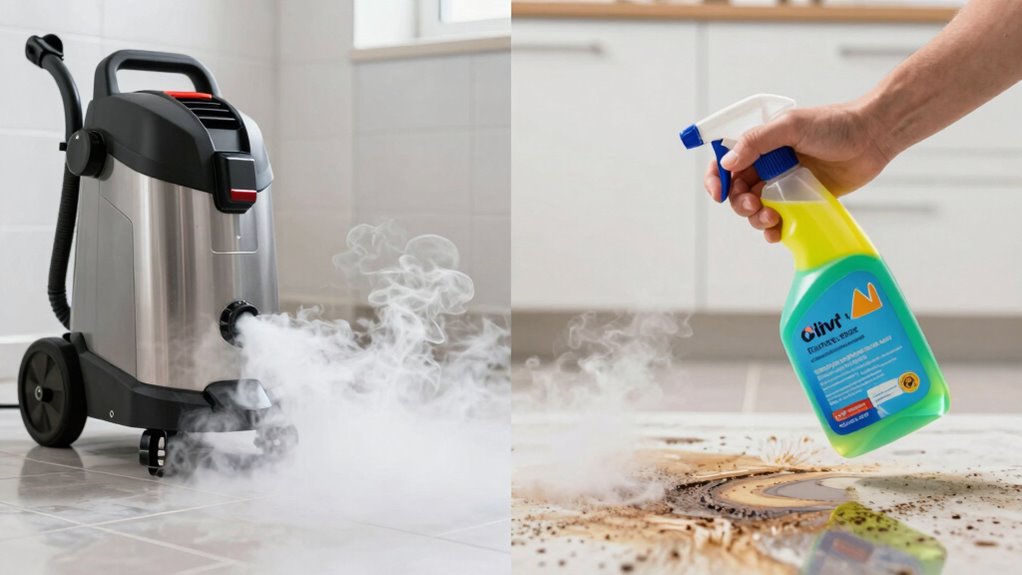
Chemical cleaners are most effective when dealing with tough stains, stubborn grime, or surfaces that require quick, powerful results. You should use them in industrial applications where rapid, deep cleaning is essential, such as removing heavy grease or residues. They’re also ideal for medical sterilization, ensuring surfaces are sanitized thoroughly and quickly, which is vital in healthcare settings. Chemical cleaners excel where steam cleaning may fall short due to their ability to dissolve tough deposits and eliminate bacteria swiftly. However, they aren’t always suitable for delicate surfaces or environments that demand eco-friendly solutions. Use chemical cleaners when you need immediate, intensive cleaning power, especially in environments where hygiene and sanitation are critical.
What Is the Cost of Steam and Chemical Cleaning?
The costs associated with steam and chemical cleaning can vary considerably based on several factors, including the size of the area, the complexity of the job, and the equipment required. When considering a cost comparison, you’ll find that steam cleaning generally has higher upfront costs due to specialized equipment but may save money long-term through eco-friendly and safer practices. Chemical cleaning tends to have lower initial expenses but can incur ongoing costs for chemicals and disposal. Your budget considerations should also factor in:
- Labor costs
- Equipment rental or purchase
- Frequency of cleaning needed
- Potential environmental or health expenses
Ultimately, evaluating these elements helps you determine which method aligns best with your financial and environmental priorities.
Pros and Cons of Steam Versus Chemical Cleaning
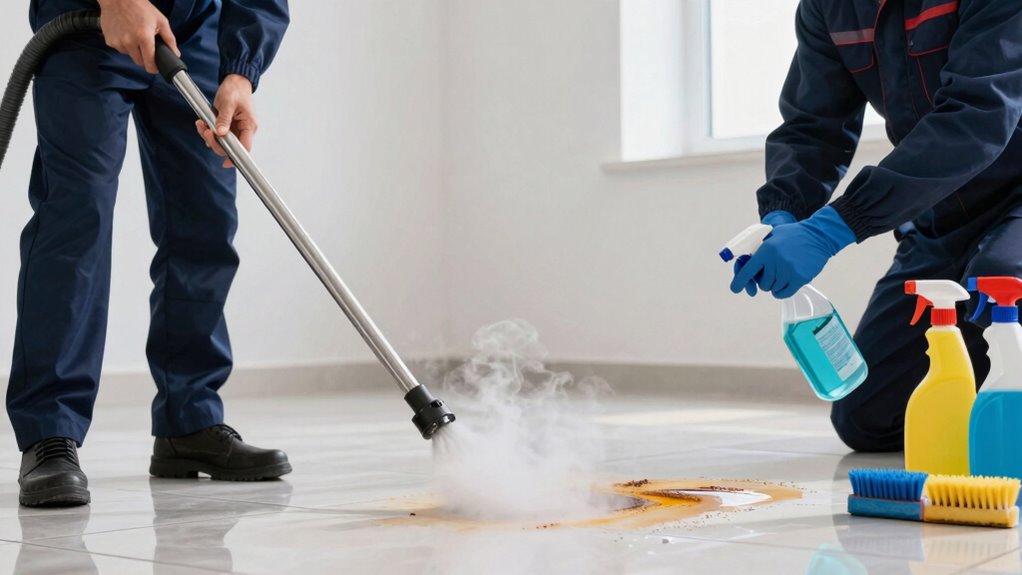
When choosing between steam and chemical cleaning, understanding their respective advantages and disadvantages can help you make an informed decision. Steam cleaning uses cleaning equipment that’s environmentally friendly, often requiring fewer chemicals, which reduces health risks. It’s effective at removing dirt, bacteria, and allergens without harsh residues. However, it may take longer and isn’t suitable for all surfaces. Chemical cleaning, on the other hand, relies on strong cleaning agents that can quickly tackle tough stains and grime. But it involves handling potentially hazardous chemicals, so following safety precautions is essential to avoid health issues. The cleaning equipment for chemical methods can range from simple sprayers to complex machines. Consider your safety precautions and surface compatibility when weighing these pros and cons to choose the best method for your needs.
How to Choose the Best Cleaning Method for Your Needs
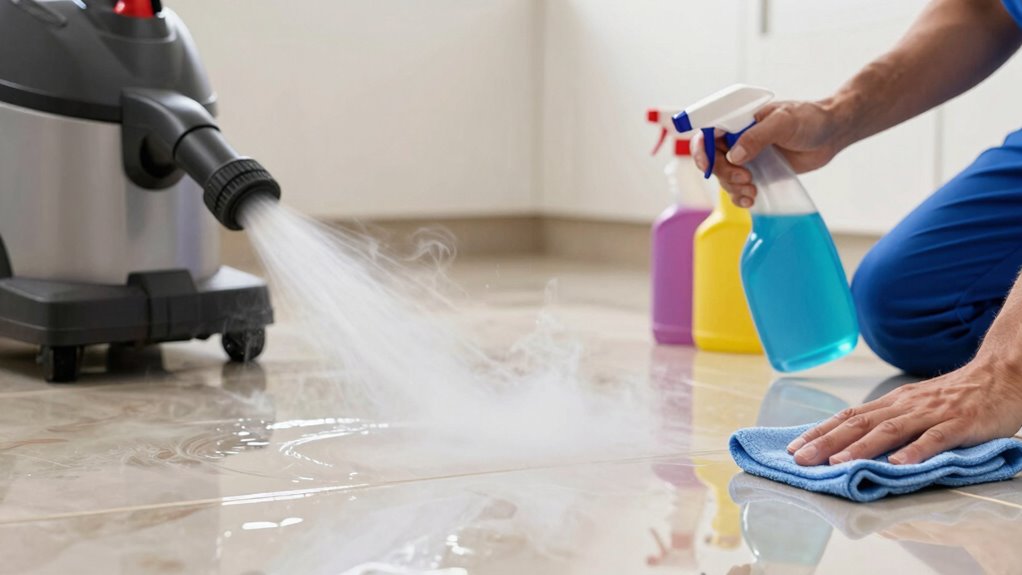
Choosing the right cleaning method depends on your specific needs, surfaces, and priorities. To make an informed choice, consider the history and cultural context of cleaning practices. Historical cleaning methods often relied on natural ingredients and manual techniques, emphasizing sustainability. Cultural cleaning practices reflect local traditions and environmental considerations, influencing whether steam or chemical cleaning is preferred.
Choosing the right cleaning method depends on needs, surfaces, and cultural traditions for sustainable, effective results.
When selecting a method, evaluate:
- The surface type and material
- Environmental impact and safety
- Effectiveness against germs and stains
- Personal preferences for eco-friendliness or convenience
Frequently Asked Questions
How Long Does Each Cleaning Method Typically Take?
Steam cleaning usually takes less time, often 30 minutes to an hour, thanks to its quick setup and efficient cleaning process. Chemical cleaning can take longer, sometimes 1 to 3 hours, because it involves applying solutions, waiting for them to work, and thorough rinsing. When comparing time, steam cleaning offers higher efficiency, allowing you to finish faster, while chemical cleaning might need more time for proper effectiveness.
Can Steam Cleaning Remove All Types of Stains?
Think of steam cleaning as a gentle but strong rain—effective on many stains, but not all. It’s great for stain removal on compatible surfaces like tile or sealed wood, but some stubborn stains, like oil or dye-based ones, may need chemical cleaners. Your success depends on surface compatibility and stain type; for example, wine on fabric might resist steam alone, requiring a specialized approach.
Are There Specific Surfaces That Should Not Be Cleaned With Chemicals?
Certain surfaces shouldn’t be cleaned with chemicals, especially if you have chemical sensitivities. You risk surface damage on materials like natural stone, hardwood, or delicate fabrics. Always check manufacturer instructions before applying chemicals, and consider testing a small, hidden area first. For sensitive surfaces, steam cleaning or gentle, eco-friendly cleaners are safer options, reducing risks of chemical exposure and surface damage while effectively cleaning your space.
What Are the Maintenance Requirements After Each Cleaning Type?
Think of cleaning like maintaining a garden—you need different tools for different plants. After steam cleaning, you should regularly check for residue buildup and guarantee the area dries thoroughly to prevent mold, especially with eco-friendly methods. Chemical cleaning might require more frequent rinsing to remove chemical residues. Overall, steam cleaning is often cost-effective long-term, saving money and the environment, while chemical cleaning demands ongoing supplies and maintenance.
Do Professional Cleaning Services Prefer One Method Over the Other?
Professional cleaning services often prefer eco-friendly options, like steam cleaning, because they’re safer for the environment and occupants. While chemical cleaning may be more cost-effective upfront, many professionals favor steam cleaning for its long-term benefits and reduced chemical use. You’ll find that the cost comparison often balances out when considering health, safety, and environmental impact, making steam cleaning a popular choice for those prioritizing sustainability.
Conclusion
In the end, whether you choose steam or chemical cleaning, you’ll still end up battling stubborn stains and lingering odors. Ironically, the very method that promises a chemical-free sparkle might leave behind a cloud of fumes, while steam’s gentle touch can sometimes miss the toughest grime. So, next time you’re faced with a mess, remember: you’re either risking chemical fumes or risking a marathon of steam battles—either way, clean-up’s never quite simple.