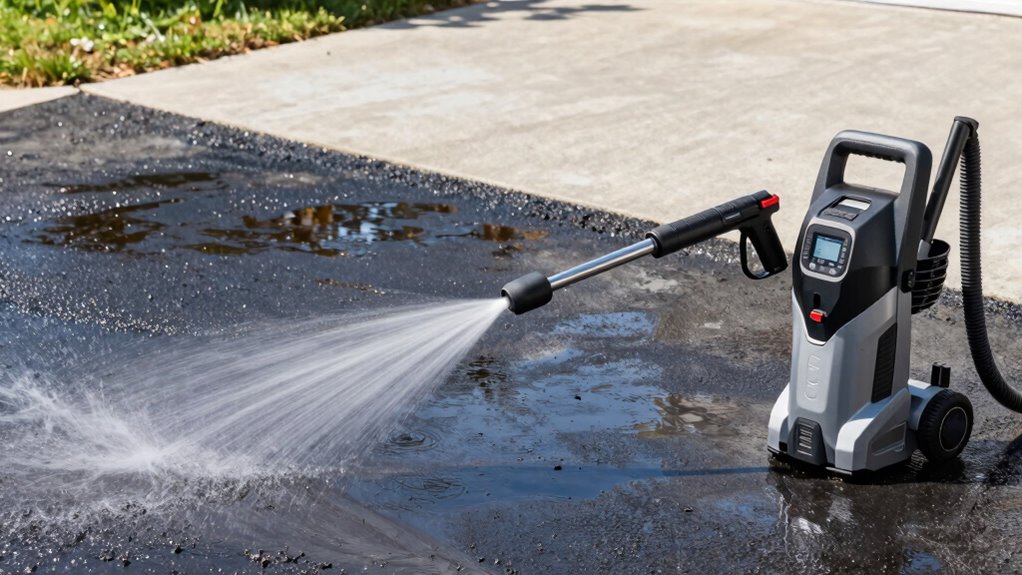

For most homeowners, I’d start with the Westinghouse ePX3100, rated at 2300 PSI and 1.76 GPM, because its listed flow and pressure make it a strong fit for routine driveway cleaning. The Westinghouse WPX3000e is a more substantial alternative, while the Greenworks 2100 PSI offers a simpler choice for lighter work. The main tradeoff is between cleaning pace and easy storage: higher listed output can help with broad concrete areas, but compact electric units are easier to handle and put away. No electric model here should be judged by PSI alone; water flow, nozzle choice, and surface condition also affect the job. Read on for the full comparison and guidance on matching a washer to your driveway.

Get home appliances delivered free — and shop member deals
- Fast, free delivery on millions of items
- Access to Prime Big Deal Days deals on October 6–7
- Prime Video, Amazon Music and more included
Complete the kit


Key Takeaways
- The Westinghouse ePX3100 (2300 PSI, 1.76 GPM) has the strongest listed combination of pressure and flow among the named Westinghouse models, making it the leading choice for routine driveway work.
- The WPX3000e is the lineup’s more substantial electric option, while the smaller ePX models trade some heft for compact storage and easier handling.
- The Greenworks 2100 PSI and Sun Joe SPX3000 sit in a similar listed pressure and flow class; attachment details and handling preferences may matter more than their headline numbers.
- The Baococo’s 4500 PSI and 2.8 GPM claims are far above the other listed electric models, so buyers should verify the product’s specifications and included equipment before treating those figures as a practical advantage.
- The LWQ portable washer is the niche pick for portability, but its listed description does not provide comparable pressure or flow figures for judging it against the driveway-focused machines.
| LWQ Portable Pressure Washer with 4 Quick-Connect Nozzles |  | Best for Flexible Water Access | Brand: LWQ | Water flow: Up to 2.5 GPM | Nozzles: 4 quick-connect metal nozzles: 0°, 15°, 25°, and 40° | VIEW ON AMAZON | See Our Full Breakdown |
| Greenworks 2100 PSI 1.2 GPM Electric Pressure Washer |  | Best for Straightforward Electric Use | Brand: Greenworks | Model: GPW2101A | Pressure: 2100 PSI | VIEW ON AMAZON | See Our Full Breakdown |
| Westinghouse WPX3000e Electric Pressure Washer |  | Best Overall for Driveway Coverage | Brand and model: Westinghouse WPX3000e | Maximum pressure: 3000 PSI | Maximum flow rate: 1.76 GPM | VIEW ON AMAZON | See Our Full Breakdown |
| Westinghouse ePX3100v Electric Pressure Washer, 2100 PSI |  | Best Compact Pick | Brand and model: Westinghouse ePX3100v | Maximum pressure: 2100 PSI | Maximum water flow: 1.76 GPM | VIEW ON AMAZON | See Our Full Breakdown |
| Sun Joe SPX3000 Electric Pressure Washer, 2030 PSI, 1.2 GPM |  | Best for Switching Detergents | Brand and model: Sun Joe SPX3000 | Type: Electric pressure washer | Maximum pressure: 2500 PSI | VIEW ON AMAZON | See Our Full Breakdown |
| Westinghouse ePX3050 Electric Pressure Washer, 2100 Max PSI, 1.76 Max GPM, with Foam Cannon and Turbo Nozzle |  | Best Lightweight Pick | Max Pressure: 2100 PSI (1800 rated) | Max Flow Rate: 1.76 GPM (1.2 rated) | Pump: Maintenance-free axial cam with auto stop | VIEW ON AMAZON | See Our Full Breakdown |
| Westinghouse ePX3500 Electric Pressure Washer, 2500 PSI, 1.76 GPM |  | Best for Nozzle Versatility | Max Pressure: 2500 PSI | Max Flow Rate: 1.76 GPM | Wand: 17.5-inch extendable steel | VIEW ON AMAZON | See Our Full Breakdown |
| Westinghouse ePX3100 Electric Pressure Washer, 2300 PSI, 1.76 GPM |  | Best Value All-Rounder | Max Pressure: 2300 PSI | Max Flow Rate: 1.76 GPM | Nozzles: 0°, 15°, 25°, turbo, soap applicator | VIEW ON AMAZON | See Our Full Breakdown |
| Baococo Electric Pressure Washer, 4500 PSI, 2.8 GPM, with Anti-Tipping Technology |  | Most Powerful Electric Pick | Max Pressure: 4500 PSI | Flow Rate: 2.8 GPM | Nozzles: 0°, 15°, 25°, 40° quick connect | VIEW ON AMAZON | See Our Full Breakdown |
| pressure washer for driveway | Nozzles | Warranty |
|---|---|---|
| LWQ Portable Pressure Washer w | 4 quick-connect metal nozzles: 0°, 15°, 25°, and 40° | — |
| Greenworks 2100 PSI 1.2 GPM El | — | 3-year limited |
| Westinghouse WPX3000e Electric | 5 quick-connect: 0°, 15°, 25°, soap, and turbo | 3-year limited service, labor, and parts coverage |
| Westinghouse ePX3100v Electric | — | 3-year limited service, labor, and parts coverage |
| Sun Joe SPX3000 Electric Press | — | — |
| Westinghouse ePX3050 Electric | 15°, 25°, turbo (quick connect) | 3-year manufacturer warranty |
| Westinghouse ePX3500 Electric | 0°, 15°, 25°, turbo, soap applicator | 3-year limited service, labor, and parts |
| Westinghouse ePX3100 Electric | 0°, 15°, 25°, turbo, soap applicator | 3-year limited coverage |
| Baococo Electric Pressure Wash | 0°, 15°, 25°, 40° quick connect | — |
More Details on Our Top Picks
LWQ Portable Pressure Washer with 4 Quick-Connect Nozzles
For a driveway without a convenient faucet, the LWQ Portable Pressure Washer has a practical advantage: it can draw water from a faucet or bucket. Its listed flow of up to 2.5 GPM is higher than the Greenworks 2100 PSI washer’s 1.2 GPM, which may help move rinse water across a broad paved area, though the listing does not give a working pressure figure for judging cleaning force. Four spray angles let you adjust the stream for different surfaces, while the foam cannon is more useful for vehicles than driveway grime. Dual rollers and an anti-tip base support repositioning, but this unit requires air to be purged from the hoses before use. I’d choose it for flexible water sourcing, not for buyers who need a clearly specified pressure rating.
Pros:- Can collect water from a faucet or bucket
- Up to 2.5 GPM flow is higher than the listed 1.2 GPM on the Greenworks 2100 PSI model
- Four spray angles suit different cleaning surfaces
- Dual rollers, an anti-tip base, and onboard holders support moving and storing the unit
Cons:- No pressure rating is provided in the supplied product data
- Hoses need to be purged of air before use
- The foam cannon adds more value for vehicle washing than for driveway surface cleaning
Best for: Homeowners cleaning a driveway where faucet access is limited and who want bucket-fed water as an option
Not ideal for: Buyers who need a stated PSI rating to compare driveway cleaning force or want to avoid setup steps such as purging air from the hoses
- Brand:LWQ
- Water flow:Up to 2.5 GPM
- Nozzles:4 quick-connect metal nozzles: 0°, 15°, 25°, and 40°
- Included accessory:Foam cannon
- Water supply:Faucet or bucket
- Mobility:Dual rollers
- Stability:Anti-tip base
Our verdict“Choose the LWQ if bucket-fed water access matters more to you than having a published PSI rating for driveway work.”
Greenworks 2100 PSI 1.2 GPM Electric Pressure Washer
The Greenworks is the simpler choice for a homeowner who wants push-button electric operation and a published pressure figure for occasional driveway cleaning. Its 2100 PSI and 1.2 GPM are more modest on water flow than the Westinghouse WPX3000e’s 1.76 GPM, so a large or heavily soiled driveway may take longer to rinse. In return, the Greenworks pairs a 35-foot GFCI cord with a 20-foot hose, a telescoping handle, and no gas engine to maintain. The turbo nozzle can focus cleaning on stubborn spots, but the cord still ties work to an outlet, and the product is not intended for heavy-duty commercial jobs. I’d rank it for routine residential use where ease of operation matters more than pace.
Pros:- Push-button start avoids gas, oil, and engine maintenance
- 2100 PSI provides a stated pressure figure for comparison
- Includes a turbo nozzle, two other nozzles, and a soap applicator
- Telescoping handle and 35-foot GFCI cord aid transport and reach
Cons:- The 1.2 GPM flow is lower than the Westinghouse WPX3000e’s 1.76 GPM
- Corded operation limits where it can be used
- Not suited to heavy-duty commercial cleaning
Best for: Homeowners with an outdoor outlet who want a manageable electric washer for periodic driveway and patio cleaning
Not ideal for: Owners of large or heavily stained driveways who need faster coverage, or anyone without a reachable electrical outlet
- Brand:Greenworks
- Model:GPW2101A
- Pressure:2100 PSI
- Flow rate:1.2 GPM
- Power source:Corded electric
- Power cord:35 ft with GFCI plug
- Hose:20 ft
- Included accessories:Pressure washer gun, 25° nozzle, 40° nozzle, turbo nozzle, and soap applicator
- Warranty:3-year limited
Our verdict“Pick the Greenworks for occasional residential driveway cleaning if easy electric starting matters more than fast coverage.”
Westinghouse WPX3000e Electric Pressure Washer
The WPX3000e earns the lead spot for buyers comparing these five options on a stated pressure rating, water flow, and equipment for surface work. It lists up to 3000 PSI and 1.76 GPM, giving it more flow than the Greenworks 2100 PSI washer’s 1.2 GPM for rinsing a driveway. Five quick-connect nozzles, including a turbo tip, also make it easier to adapt the spray to stubborn areas or broader passes. The 25-foot abrasion-resistant hose and 10-inch never-flat wheels help with reach and repositioning. Its headline maximum flow is specified at the lowest pressure, so buyers should not assume both maxima arrive together; accessory compatibility also depends on M22 fittings. It makes the most sense for broader residential jobs, though the compact ePX3100v is easier to carry and store.
Pros:- Listed 1.76 GPM flow is higher than the Greenworks 2100 PSI model’s 1.2 GPM
- Five nozzle options include a turbo nozzle for concentrated cleaning
- 25-foot abrasion-resistant hose and 10-inch never-flat wheels aid reach and repositioning
- Built-in 0.45-gallon soap tank and 3-year limited warranty
Cons:- Maximum flow is specified at the lowest pressure, so both maximum figures may not apply together
- Accessories require compatible M22 fittings
- Wheeled steel-frame design is less compact than the Westinghouse ePX3100v
Best for: Homeowners cleaning a medium or large driveway who want more listed flow and a wheeled frame for moving around the work area
Not ideal for: Buyers prioritizing compact storage or those expecting the maximum pressure and maximum flow figures to apply at the same time
- Brand and model:Westinghouse WPX3000e
- Maximum pressure:3000 PSI
- Maximum flow rate:1.76 GPM
- Motor:120V AC electric
- Pump:Maintenance-free axial 3-piston auto-stop pump
- Soap tank:0.45 gallon
- Hose and cord:25 ft abrasion-resistant hose; 35 ft GFCI cord
- Nozzles:5 quick-connect: 0°, 15°, 25°, soap, and turbo
- Warranty:3-year limited service, labor, and parts coverage
Our verdict“Choose the WPX3000e for driveway cleaning when higher listed flow, multiple nozzle choices, and easy repositioning matter most.”
Westinghouse ePX3100v Electric Pressure Washer, 2100 PSI
When storage space and carry weight shape the purchase, the 17.6-pound ePX3100v is the easiest fit here. Its listed 2100 PSI and 1.76 GPM give it a stated pressure and flow combination, while the built-in handle and automatic stop system favor short residential sessions. Compared with the wheeled WPX3000e, this model is easier to lift and tuck away, but it has a shorter 20-foot hose and only three spray tips. The detachable foam cannon suits washing a car after the driveway, though it does little to offset the narrower accessory set for pavement. Its listing separates maximum figures from lower rated figures, so the headline numbers need careful interpretation. I’d pick it for smaller driveways and limited storage, not for buyers prioritizing sustained coverage.
Pros:- At 17.6 pounds, it is easier to carry and store than the wheeled WPX3000e
- Automatic stop system helps conserve energy and reduce pump operation when idle
- Includes a detachable foam cannon for vehicle washing
- Listed maximum flow of 1.76 GPM exceeds the Greenworks model’s 1.2 GPM
Cons:- The 20-foot hose is shorter than the WPX3000e’s 25-foot hose
- Three spray tips offer fewer options than the WPX3000e’s five nozzles
- Maximum and lower rated pressure and flow figures are listed separately
Best for: Apartment and townhouse owners with a small driveway or paved area and limited storage space
Not ideal for: Homeowners tackling broad driveways who want a longer hose, more nozzle choices, or a wheeled frame
- Brand and model:Westinghouse ePX3100v
- Maximum pressure:2100 PSI
- Maximum water flow:1.76 GPM
- Weight:17.6 lbs
- Hose length:20 ft
- Included accessories:Pro-style wand, 3 spray tips, and detachable foam cannon
- Stop system:Automatic stop
- Warranty:3-year limited service, labor, and parts coverage
Our verdict“Choose the ePX3100v for a smaller driveway when easy carrying and compact storage outweigh longer reach and broader nozzle choice.”
Sun Joe SPX3000 Electric Pressure Washer, 2030 PSI, 1.2 GPM
The Sun Joe SPX3000 suits driveway owners who also clean vehicles or outdoor gear and want to keep two detergents ready. Its dual 0.9L tanks let you switch cleaning solutions without changing containers, a practical extra compared with the Greenworks washer’s single soap applicator. For driveway pace, though, its 1.2 GPM flow matches the Greenworks and falls below the Westinghouse WPX3000e’s 1.76 GPM, which may make rinsing a broad surface slower. Five spray tips cover a useful range, but the 2030 PSI working pressure is below the advertised 2500 PSI maximum. The stainless-steel lance and brass fittings are durable details, yet the 20-foot hose and corded power keep this a residential option. I’d choose it for mixed cleaning tasks, not speed across a large driveway.
Pros:- Dual 0.9L detergent tanks make switching cleaning solutions convenient
- Five quick-connect tips include 25° and 40° options for broader spray patterns
- Stainless-steel lance with brass fittings
- 34-inch lance offers reach while the 20-foot hose supports movement around the work area
Cons:- The 1.2 GPM flow is lower than the WPX3000e’s listed 1.76 GPM
- Working pressure is 2030 PSI, below the stated 2500 PSI maximum
- Corded electric power limits portability compared with gas models
Best for: Homeowners who clean driveways alongside cars or outdoor equipment and want two detergent options ready
Not ideal for: Owners of broad driveways seeking faster rinsing or buyers who expect the 2500 PSI maximum to be its working pressure
- Brand and model:Sun Joe SPX3000
- Type:Electric pressure washer
- Maximum pressure:2500 PSI
- Working pressure:2030 PSI
- Water flow:1.2 GPM
- Spray tips:5 quick-connect: 0°, 15°, 25°, 40°, and soap
- Spray lance:34-inch stainless steel with brass fittings
- Hose:20-foot high-pressure hose
- Detergent tanks:2 × 0.9L onboard tanks
Our verdict“Pick the SPX3000 if detergent flexibility across driveway, vehicle, and equipment cleaning matters more than rinse speed.”
Westinghouse ePX3050 Electric Pressure Washer, 2100 Max PSI, 1.76 Max GPM, with Foam Cannon and Turbo Nozzle
At 14 pounds, the ePX3050 is the lightest machine in this lineup, and that changes how you actually use it. Compared with the 19-pound Westinghouse ePX3100, this model is far easier to carry around a long driveway or lift into a storage shelf, and the 5-inch never-flat wheels roll smoothly over concrete expansion joints. The turbo nozzle is the standout here — it concentrates the 2100 max PSI into a rotating jet that strips grime noticeably faster than the standard fan nozzles on the Greenworks 2100 PSI. The tradeoff is honest: the rated output is 1800 PSI at 1.2 GPM, so it cleans slower than the specs suggest, and the 35-foot GFCI cord still anchors you to an outlet. For routine driveway upkeep rather than heavy restoration, that compromise is reasonable.
Pros:- Lightest machine in the lineup at 14 lbs with never-flat wheels
- Turbo nozzle accelerates grime removal beyond standard fan nozzles
- Maintenance-free axial cam pump with auto-stop protects the motor between passes
- Foam cannon included for pre-treating dirty concrete
Cons:- Rated flow of 1.2 GPM is well below the advertised 1.76 max figure, slowing large jobs
- Corded design limits reach to 35 feet from an outlet
Best for: Homeowners with average driveways who want a light machine they can carry, store, and deploy in minutes
Not ideal for: Anyone tackling large or heavily stained concrete — the 1.2 rated GPM means slower cleaning over big areas
- Max Pressure:2100 PSI (1800 rated)
- Max Flow Rate:1.76 GPM (1.2 rated)
- Pump:Maintenance-free axial cam with auto stop
- Weight:14 lbs
- Hose Length:20 ft
- Power Cord:35 ft GFCI
- Nozzles:15°, 25°, turbo (quick connect)
- Warranty:3-year manufacturer warranty
Our verdict“This pick makes the most sense for buyers who prioritize portability and light-duty driveway maintenance over raw cleaning speed.”
Westinghouse ePX3500 Electric Pressure Washer, 2500 PSI, 1.76 GPM
The ePX3500 earns its spot with the most complete nozzle set among the mid-tier electrics here: 0°, 15°, 25°, turbo, and a dedicated soap applicator. That range matters on a driveway, where you might blast oil spots with the pencil jet, sweep the surface with the 25° fan, and pre-treat with detergent — all without swapping attachments. With 2500 max PSI, it sits above the ePX3100 and the Sun Joe SPX3000 in raw pressure, giving it real bite on embedded grime. The onboard 20-ounce soap tank beats the spray-bottle approach the ePX3050 uses, feeding detergent continuously through the wand. The catch: like most electrics, the 1.76 GPM max flow is measured at low pressure, so rinsing a full driveway takes patience, and the 25-foot hose is short if your water spigot sits far from the driveway.
Pros:- Five-nozzle set covers every task from pinpoint stain removal to soap application
- Highest pressure of the Westinghouse electrics in this lineup at 2500 PSI
- Onboard 20-ounce soap tank feeds detergent continuously
- Four 360° steering wheels resist tipping on uneven pavement
Cons:- Maximum flow rate is only achieved at low pressure, so cleaning force and speed trade off
- 25-foot hose limits reach without repositioning the unit
Best for: Detail-oriented homeowners who want the right nozzle for every driveway task, from oil stains to gentle rinsing
Not ideal for: Buyers with distant spigots — the fixed 25-foot hose will force frequent repositioning on long driveways
- Max Pressure:2500 PSI
- Max Flow Rate:1.76 GPM
- Wand:17.5-inch extendable steel
- Nozzles:0°, 15°, 25°, turbo, soap applicator
- Hose Length:25 ft
- Soap Tank:20 oz onboard
- Weight:19 lbs
- Warranty:3-year limited service, labor, and parts
Our verdict“A strong choice for driveway owners who value flexibility and pressure headroom over sheer speed.”
Westinghouse ePX3100 Electric Pressure Washer, 2300 PSI, 1.76 GPM
The ePX3100 is the balanced middle child of this Westinghouse family. It carries the same five-nozzle set, onboard soap tank, and four-wheel anti-tipping chassis as the ePX3500, but at 2300 PSI it gives up a little pressure headroom in exchange for a friendlier position for budget-conscious buyers. Compared with the Sun Joe SPX3000 at 2030 PSI, this model still has meaningful cleaning-force advantage for baked-on driveway grime, and the automatic pump stop when you release the trigger reduces wear during long stop-start sessions — a real benefit when you’re working a driveway section by section. At 19 pounds, it’s heavier than the ePX3050 but remains easy to wheel out and store. Its limitation is the same one shared across this class: the 1.76 GPM figure is the maximum, not what you get at full pressure, so rinsing large slabs takes longer than the numbers imply.
Pros:- Full five-nozzle set and onboard soap tank included as standard
- Automatic pump stop conserves energy and extends pump life
- Four-wheel anti-tipping design is stable on cracked or sloped pavement
- Compact 16.5-inch frame stores easily in a garage corner
Cons:- 2300 PSI trails the ePX3500, which matters on stubborn stains
- Real-world flow at working pressure falls below the 1.76 GPM headline figure
Best for: First-time pressure washer buyers who want a complete accessory package and proven design without paying for extra pressure they won’t use
Not ideal for: Owners of very large or heavily oil-stained driveways who would benefit from the ePX3500’s extra pressure or the Baococo’s higher flow
- Max Pressure:2300 PSI
- Max Flow Rate:1.76 GPM
- Nozzles:0°, 15°, 25°, turbo, soap applicator
- Hose Length:25 ft
- Soap Tank:20 oz onboard
- Weight:19 lbs
- Warranty:3-year limited coverage
Our verdict“The sensible default pick for most driveways — capable, well-equipped, and priced where extra specs stop paying for themselves.”
Baococo Electric Pressure Washer, 4500 PSI, 2.8 GPM, with Anti-Tipping Technology
On paper, the Baococo dwarfs everything else here: 4500 PSI and 2.8 GPM is nearly double the cleaning force of the Westinghouse ePX3500, putting it in territory that approaches gas machines while staying plug-in simple. For driveways with years of embedded grime, moss, or old sealant, that combination shortens the job considerably — the higher flow rate in particular rinses and pushes debris faster than any Westinghouse in this lineup. The 33-foot high-pressure hose is also the longest here, reducing how often you drag the unit around. The tradeoffs are real, though. That pressure is genuinely dangerous to softer surfaces — wood, painted concrete, and vehicle clear coats — so it demands nozzle discipline the gentler ePX3100 never requires, and the brand lacks the 3-year warranty backing Westinghouse provides, which matters on a machine working this hard.
Pros:- Class-leading 4500 PSI and 2.8 GPM output for fast heavy-duty driveway cleaning
- Longest working radius in the lineup with a 33 ft hose plus 20 ft cord
- Four lockable 360° swivel wheels keep the unit stable during operation
- Four quick-connect nozzles and 500 ml foam bottle included
Cons:- Extreme pressure can etch concrete or damage softer surfaces without care
- No stated manufacturer warranty comparable to Westinghouse’s 3-year coverage
Best for: Owners of large, badly stained concrete driveways who want gas-rivaling power without dealing with fuel and engine maintenance
Not ideal for: Anyone also cleaning cars, wood decks, or decorative surfaces — 4500 PSI demands careful technique to avoid damage
- Max Pressure:4500 PSI
- Flow Rate:2.8 GPM
- Nozzles:0°, 15°, 25°, 40° quick connect
- Foam Bottle:500 ml
- Power Cord:20 ft
- High-Pressure Hose:33 ft
- Wheels:4 lockable 360° swivel
- Safety Features:Safety lock switch
Our verdict“The pick when driveway grime has genuinely gotten away from you — buy it for muscle, but respect the trigger.”

How We Picked
I ranked these washers for driveway cleaning by looking first at the listed pressure and flow, since both influence how quickly a machine can cover concrete and loosen grime. I also weighed practical factors such as portability, storage footprint, nozzle and foam-cannon inclusions, and the likely ease of controlling the spray on a large flat surface. Since the product information provided is uneven, I treat advertised maximum figures as claims rather than proof of sustained cleaning performance.
The Westinghouse ePX3100 at 2300 PSI and 1.76 GPM leads on the published specifications supplied here. The WPX3000e and other Westinghouse ePX options follow according to their stated positioning and included accessories; Greenworks and Sun Joe are sensible choices for more modest jobs. The Baococo’s unusually high figures and the LWQ’s limited comparable specs make them harder to rank confidently for a driveway, despite their distinct appeal.
Factors to Consider When Choosing Pressure Washer For Driveway
Choosing a driveway washer is less about chasing the biggest number and more about matching the machine to your concrete, water supply, storage space, and cleaning routine. These factors can help you judge whether a compact electric unit will do the job or whether a more capable setup is worth the extra bulk.
Pressure and Flow Work Together
PSI describes water pressure, while GPM describes how much water the machine moves. Pressure helps loosen stuck-on dirt; flow helps carry loosened debris away and cover an area. A high PSI claim paired with modest flow may feel less productive across a broad driveway than the headline number suggests. Compare both figures when a listing provides them, and check whether it reports maximum or working output. Maximum figures from different brands may not be directly comparable. For a long or heavily soiled driveway, flow and a suitable surface-cleaning attachment can matter as much as peak pressure.
Match the Nozzle to the Concrete
A narrow spray concentrates force into a small area, which can speed up cleaning but also leave marks or damage weak concrete and mortar. A wider fan spreads the force and is usually easier to control across a driveway. Turbo nozzles can help with stubborn buildup, though their rotating spray needs careful movement and a test on an inconspicuous spot. A surface cleaner can make broad, flat areas more uniform and reduce visible striping. Don’t assume every included nozzle suits every surface. Start with a wider pattern and increase intensity only when the concrete tolerates it.
Account for the Full Cleaning Setup
A pressure washer’s reach depends on more than the machine: hose length, power-cord length, outlet placement, and access to a water source all shape how easily you can work. A short hose can force repeated repositioning, while an extension cord that is not rated for the washer can create an electrical hazard or reduce performance. Check the manual for the required outlet and cord guidance before buying accessories. If your driveway is far from the tap, a longer compatible hose may be more useful than a higher PSI rating. Also consider where you will store hoses and accessories after the job.
Consider Driveway Size and Soil
A small parking pad with loose dust is a different job from a long driveway with algae, oil, or years of embedded grime. For light, occasional cleaning, a compact electric model may be easier to store and sufficient for maintenance. Large areas take time even with a capable washer, so a surface cleaner and good water flow can make the task more manageable. Oil stains may need a suitable detergent or pretreatment because water pressure alone may not remove them. Check that any detergent is approved for the machine and safe for the surface. If stains are deep or the concrete is deteriorating, more pressure may cause harm without solving the underlying problem.
Read Maximum Claims Carefully
Listings may emphasize maximum pressure or flow rather than the output sustained during ordinary use. This makes direct comparisons uncertain, especially when one product’s figures are much higher than the rest. Look for clear operating specifications, included accessories, warranty terms, and manufacturer guidance alongside headline claims. A stated anti-tipping feature or a compact frame can improve handling, but neither tells you how quickly the washer cleans a driveway. Favor listings that explain what is included and how the machine should be used. Treat unusually high figures as a reason to check the details, not as a guaranteed shortcut.
Frequently Asked Questions
Is 2100 PSI enough to clean a concrete driveway?
It can be enough for routine cleaning, particularly when the concrete is sound and the dirt is mostly surface grime. Cleaning speed also depends on flow rate, nozzle choice, and whether you use a surface cleaner. A low-angle or narrow spray can damage concrete even when the pressure rating seems moderate, so test a wide spray in a hidden area first. For heavy buildup across a large driveway, expect more passes than you would with a higher-flow setup. Compare working specifications where available instead of relying only on a maximum PSI figure.
Should I choose the Baococo because it lists 4500 PSI?
That figure is much higher than the other electric models in this lineup, but the listing also needs to make clear whether it refers to maximum or sustained output. Check the product documentation, electrical requirements, hose and nozzle details, and warranty before relying on the claim. A driveway does not always benefit from more pressure, since excessive force can etch concrete or damage joints. Flow rate and a suitable surface cleaner may contribute more to an even result. If the specifications are unclear, the better-documented options are easier to compare.
Is a compact ePX model a poor choice for a large driveway?
Not necessarily, but a compact frame mainly helps with storage and moving the unit; it does not by itself make a large job faster. Check that model’s pressure, flow, hose reach, and included attachments against the size and condition of your driveway. If the listed flow is modest, cleaning a broad area may take longer and require more passes. A surface cleaner can help create a consistent finish if it is compatible with the washer. For occasional maintenance, convenience may outweigh speed; for frequent large-area cleaning, prioritize output and coverage.
Do I need a foam cannon or detergent to clean concrete?
For loose dirt and routine rinsing, water and a suitable nozzle may be enough. Detergent can help with greasy spots, organic growth, or grime that does not lift easily, but it needs to be compatible with both the washer and the concrete. A foam cannon is an accessory, not a substitute for a good cleaning pattern or adequate flow. Follow the machine’s instructions for detergent use and rinse the surface thoroughly. For oil stains, pretreatment may be more useful than repeatedly increasing pressure.
What should I check before using a pressure washer on an older driveway?
Look for loose aggregate, cracks, crumbling edges, and deteriorated joints before you start. High-pressure water can widen weak spots or remove material that is already separating. Begin with a wide spray, keep the nozzle moving, and test a small inconspicuous section. Avoid directing concentrated spray at cracks or joints, and follow the washer maker’s distance guidance. If the concrete is visibly failing, a gentle rinse or professional assessment may be safer than trying to restore it with stronger pressure.
Conclusion
For most driveway owners, I recommend the Westinghouse ePX3100 (2300 PSI, 1.76 GPM) as the best overall pick based on its listed combination of pressure and flow. The Greenworks 2100 PSI is my value-oriented choice for routine, lighter cleaning, while the WPX3000e suits buyers who want a more substantial electric unit. Beginners may prefer the Greenworks or Sun Joe models, whose listed output is less extreme than the Baococo’s headline claims. For compact storage, compare the ePX models and choose by their exact specs and accessories; for portability, the LWQ has a distinct role but lacks comparable figures in the supplied description. Buyers considering the Baococo should verify its unusually high output claims and included setup before making it their driveway washer.
NFL season / tailgating Picks
team gear
As an affiliate, we earn on qualifying purchases.