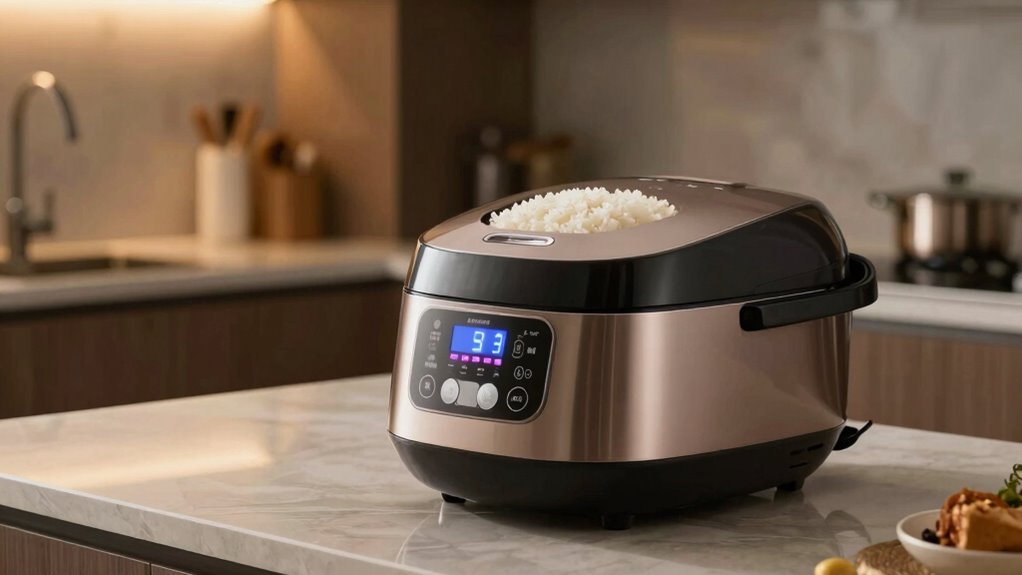

Your rice cooker’s basic functions, like “Cook” and “Keep Warm,” manage heating and maintain serving temperature. Preset options such as “White Rice” or “Brown Rice” adjust cooking times for different grains, while water levels help control firmness or softness. Extra features like steaming and slow cooking add versatility for vegetables, meats, or grains. Understanding these settings helps you cook perfect rice every time—keep exploring to master all the tips and tricks.

Get home appliances delivered free — and shop member deals
- Fast, free delivery on millions of items
- Access to Prime Big Deal Days deals on October 6–7
- Prime Video, Amazon Music and more included
Key Takeaways
- Different settings like “White Rice” or “Brown Rice” adjust cooking time and water ratios for specific rice types.
- “Cook” mode manages temperature for proper rice cooking, while “Keep Warm” maintains serving temperature without drying.
- Adjustable water levels influence rice firmness or softness, tailored to personal texture preferences.
- Extra features like steaming and slow cooking expand versatility for vegetables, meats, and grains.
- Regular maintenance and correct operation ensure consistent results and prolong the lifespan of the cooker.
automatic rice cooker with multiple settings
As an affiliate, we earn on qualifying purchases.
As an affiliate, we earn on qualifying purchases.
What Do the Basic Rice Cooker Functions Do?
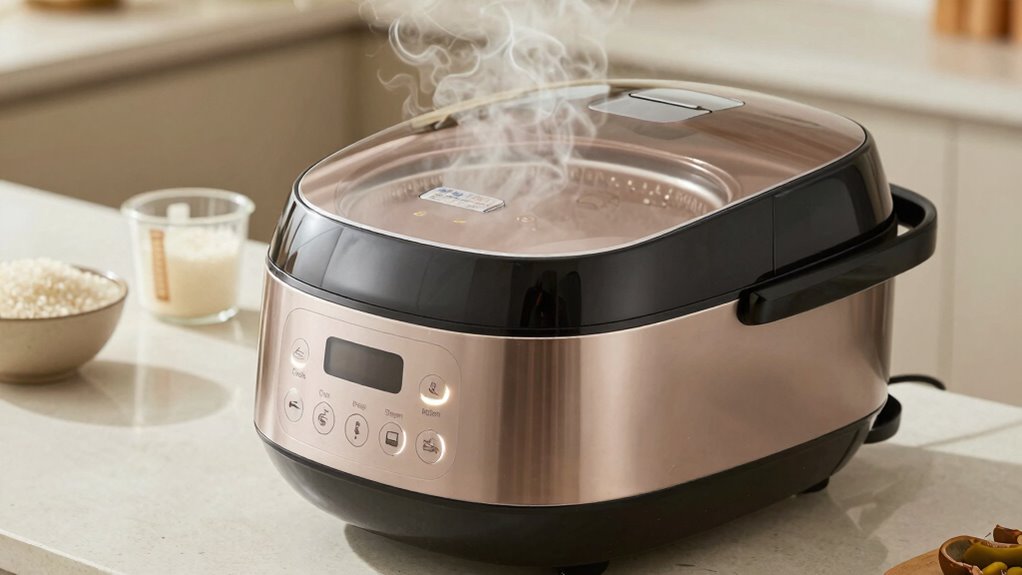
Most rice cookers come with a few basic functions that make cooking rice straightforward and convenient. These functions help you master different cooking techniques, ensuring perfect results every time. The standard “Cook” setting automatically manages the heating process, adjusting temperature as needed until the rice is done. The “Keep Warm” feature activates after cooking, keeping your rice at the ideal serving temperature without drying it out. Some cookers include a “White Rice” or “Brown Rice” option, tailored to specific rice varieties, adjusting cooking times accordingly. These simple functions eliminate guesswork, so you can focus on selecting the right rice and mastering cooking techniques. Understanding what these basic functions do helps you achieve consistent, delicious rice with minimal effort. Additionally, temperature control plays a significant role in ensuring rice is cooked evenly and to your desired texture. Proper water-to-rice ratio is also essential for achieving the best results, as it influences the final texture and consistency of your cooked rice. Being aware of these cooking settings allows you to customize your rice preparation for different types and preferences. Moreover, paying attention to cooking times ensures that rice doesn’t become overcooked or undercooked, leading to better overall results. Knowing how to adjust these settings based on rice variety can further improve your cooking outcomes.
As an affiliate, we earn on qualifying purchases.
How to Choose the Right Settings for Different Types of Rice
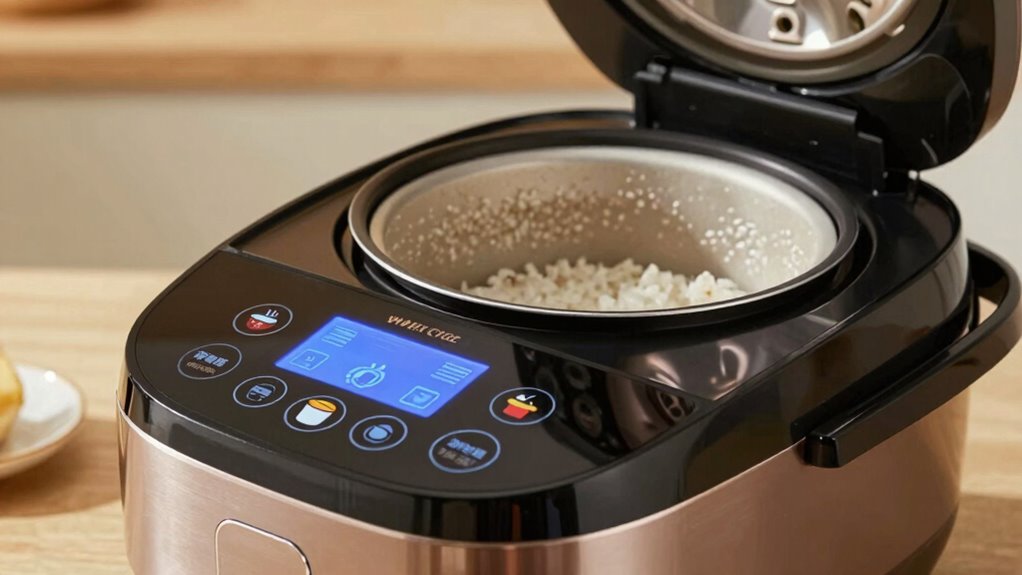
Choosing the right settings for different types of rice guarantees your results are always perfect. Start by considering the rice variety you’re cooking. For example, jasmine rice benefits from a setting that emphasizes a softer, fluffier texture, while brown rice requires a longer cooking time with more water. Adjust the cooking techniques accordingly: delicate short-grain rice for sushi needs a gentle cycle, whereas firmer long-grain rice for pilafs might need a slightly extended cook. Check your rice cooker’s settings or presets if available, and match them to your rice type. Using the correct settings assures proper moisture absorption and texture. Proper system monitoring during cooking can also help ensure consistent results. Additionally, understanding mammography guidelines and how different diagnostic tools work can help you make informed decisions about rice cooking, much like choosing appropriate screening methods for health. Being familiar with cooking techniques can further improve your results and help you troubleshoot when things don’t go as planned. Practice makes perfect, and experimenting with small batches can help you learn which adjustments work best for your preferred rice variety. Paying attention to cooking parameters such as water-to-rice ratio and cooking time can significantly enhance your outcomes.
digital rice cooker with slow cooking function
As an affiliate, we earn on qualifying purchases.
As an affiliate, we earn on qualifying purchases.
When Should You Use Extra Features Like Steaming or Slow Cooking?
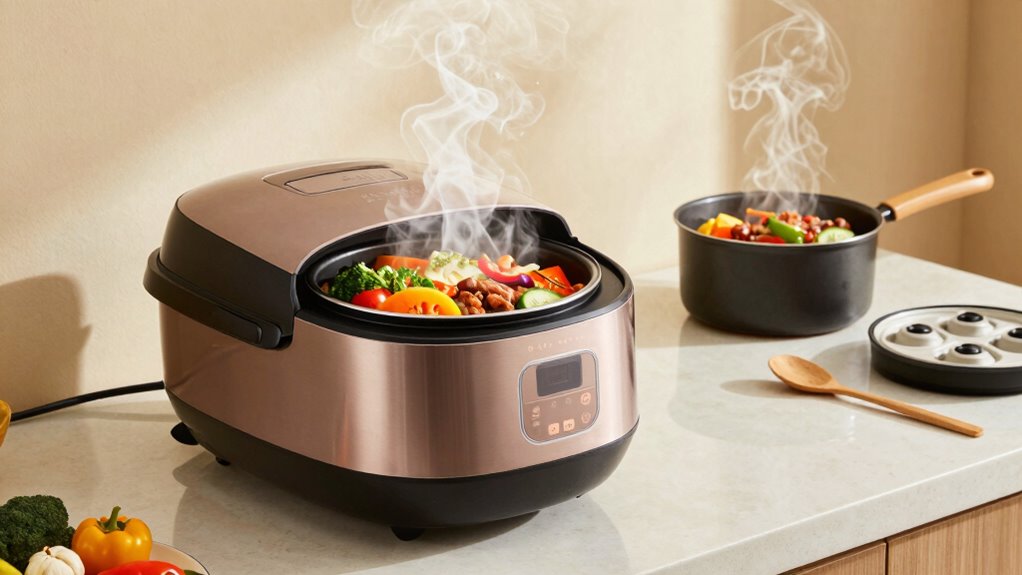
Use the steaming feature when you want perfectly cooked vegetables, preserving their nutrients and texture. The slow cooking setting is ideal for tender meats that benefit from gentle, prolonged simmering. If you need to simmer dishes conveniently, this extra feature can save you time and effort. Additionally, slow cooking can be useful for preparing healthy meal options that require minimal supervision.
Perfect For Vegetables
When preparing vegetables, utilizing extra features like steaming or slow cooking can considerably enhance their texture and flavor. Vegetable steaming is ideal for preserving nutrients, ensuring your vegetables stay vibrant and healthy. Use the steaming function when you want crisp-tender results without overcooking. Slow cooking is useful for softer, more tender vegetables, especially root vegetables or those that benefit from longer cook times. These features help retain more nutrients compared to boiling or frying, making your meals healthier. You should choose steaming for quick, nutrient-rich vegetables, and slow cooking for dishes that require a gentle, prolonged process. Additionally, understanding the safety considerations of your appliance can help prevent accidents and ensure optimal performance. Properly maintaining your rice cooker, such as cleaning the filtering system, can also improve its efficiency and prolong its lifespan. Regularly checking the user manual can provide valuable tips for optimal use and safety guidelines. Being aware of proper cleaning techniques can further enhance the appliance’s longevity and cooking results. Maintaining your rice cooker properly also involves paying attention to temperature settings, which can influence cooking outcomes and safety.
Ideal For Tender Meats
Since tender meats benefit from gentle, prolonged cooking, using extra features like slow cooking can be especially effective. These cooking techniques help break down connective tissues, resulting in juicy, flavorful results. When you select the slow cook or steam functions on your rice cooker, make certain you follow the recommended settings to prevent overcooking or burning. Always prioritize kitchen safety by keeping an eye on the process and avoiding overcrowding the cooker. Using the steaming feature is ideal for delicate meats like chicken breasts or fish, maintaining moisture without drying them out. Properly utilizing these features ensures your tender meats are cooked evenly while reducing the risk of accidents or messes, making your meal both safe and delicious. Additionally, understanding home safety tips during cooking can further prevent accidents and ensure a secure environment in your kitchen. Being aware of safe cooking practices can help you avoid common hazards such as burns or electrical issues while using your rice cooker. For optimal results, familiarize yourself with the different cooking settings and their specific purposes to enhance your culinary experience. Recognizing the importance of proper maintenance can also extend the lifespan of your appliance and ensure consistent performance.
Convenient For Slow Simmering
Because slow simmering allows flavors to meld and tougher ingredients to become tender, extra features like steaming or slow cooking are especially convenient for dishes that benefit from extended, gentle heat. Use these settings when you want to enhance flavor and achieve tender results without overcooking. Slow simmering is perfect for hearty stews, braised dishes, or anything that needs time for flavors to develop fully. The slow cooking function maintains a low, steady temperature, preventing ingredients from breaking down too quickly. Incorporating cooking techniques can further improve your results, especially when aiming for depth of flavor and texture. Steaming can also be employed for delicate foods that require gentle heat while preserving their texture and flavor. These features give you versatility, allowing you to prepare complex dishes with better flavor enhancement and tender, well-cooked ingredients. Using essential oils for flavor enhancement can add an aromatic dimension to your slow-cooked dishes, especially when combined with herbs and spices. Incorporating seasonal variations can further elevate your cooking by adding fresh, local ingredients at their peak.
rice cooker water level measuring cup
As an affiliate, we earn on qualifying purchases.
As an affiliate, we earn on qualifying purchases.
How to Adjust Settings for Perfect Rice Every Time
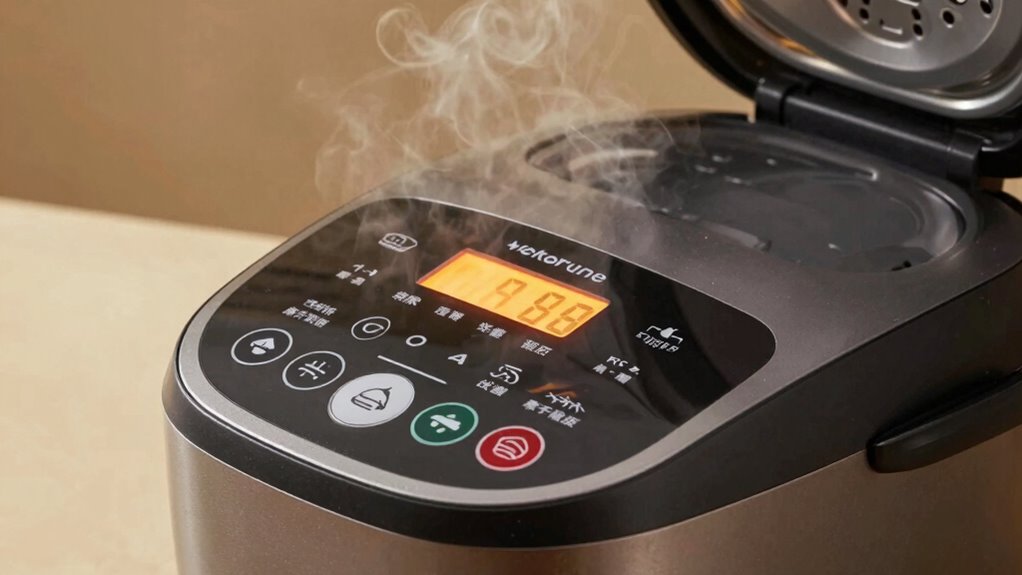
Achieving perfectly cooked rice hinges on understanding how to adjust your rice cooker settings accordingly. First, rinse rice well and store it properly using rice storage tips. Use the appropriate setting for your rice type, whether white, brown, or jasmine. For firmer rice, set a shorter cooking time; for softer rice, extend it. Keep your rice cooker well-maintained for consistent results. Adjust water levels based on rice texture preference—less water for firmer, more for softer. Using cooking techniques can help you better control the texture and flavor of your rice. Use this guide to help you decide, and remember that proper technique primers can help improve your overall rice cooking process.
Troubleshooting Common Rice Cooker Settings Issues
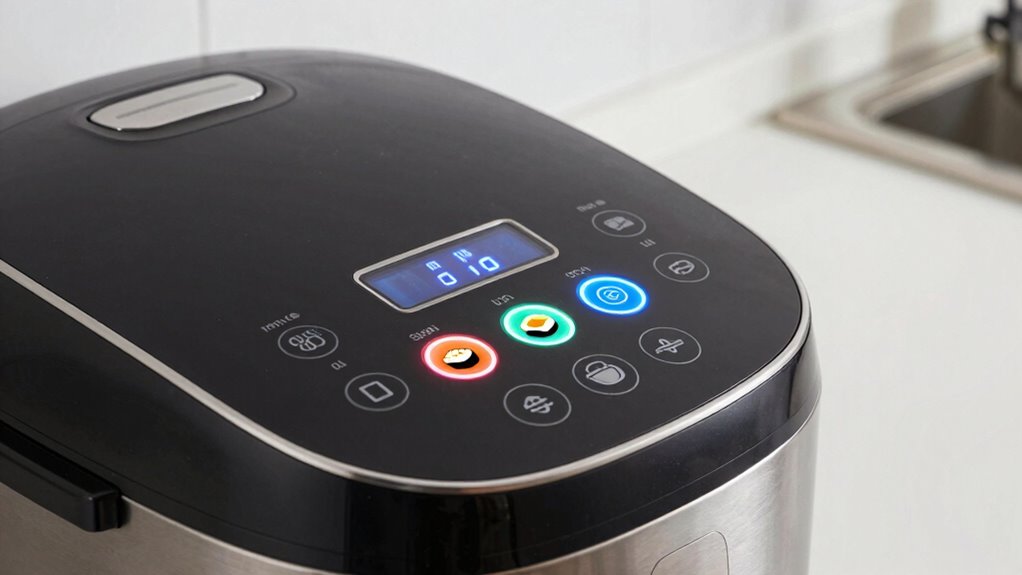
Even with careful adjustments, you might encounter issues with your rice cooker settings that affect the final outcome. If your rice turns out too mushy or undercooked, it could be a sign of improper rice cooker maintenance or incorrect setting use. Check that the lid seals properly and that the sensor is clean to guarantee accurate cooking times. Sometimes, settings may not respond correctly due to a malfunction or dirt buildup. To troubleshoot, reset your cooker or consult the manual. Additionally, using energy saving tips, like avoiding prolonged warm modes, can prevent overheating and extend your cooker’s lifespan. Regular maintenance keeps settings functioning correctly, helping you achieve consistent results while saving energy and avoiding common problems.
What Are the Best Settings for Special Grains and Recipes?

When cooking special grains or recipes, you need to adjust the cooking time and choose the right setting on your rice cooker. Different ingredients require specific temperature and time adjustments to turn out well. Knowing how to select and modify these settings guarantees your dishes come out perfect every time.
Adjusting Cooking Time
Adjusting the cooking time on your rice cooker is essential for perfectly preparing special grains and recipes. Proper time adjustments ensure you achieve ideal cooking durations, preventing undercooking or overcooking. When working with different grains, like quinoa or barley, you might need to extend or shorten the default settings. Keep in mind that some recipes may require a specific timeframe for optimal texture and flavor. To fine-tune your results, experiment with small time adjustments based on your desired outcome. Remember, even slight changes in cooking durations can make a significant difference.
- Use the rice cooker’s manual or digital display to modify time settings
- Adjust cooking durations based on grain type or recipe instructions
- Be attentive to the texture and doneness during early trials
- Record successful time adjustments for future reference
Selecting Appropriate Settings
Choosing the right settings on your rice cooker is key to perfectly preparing special grains and recipes. For delicate grains like quinoa or barley, select a lower heat setting or a specific grain cycle if available. When cooking recipes that require longer or gentler heat, such as risotto or porridge, use the “slow cook” or “multi-function” modes to prevent burning and guarantee even cooking. Always prioritize rice cooker safety by not overfilling and avoiding abrupt temperature changes. Regular maintenance tips, like cleaning the steam vent and keeping the inner pot clean, help maintain consistent results. Adjusting settings based on the recipe and grain type ensures ideal texture and flavor. Properly selecting these settings minimizes the risk of mishaps and prolongs your rice cooker’s lifespan.
Tips for Using Your Rice Cooker More Effectively
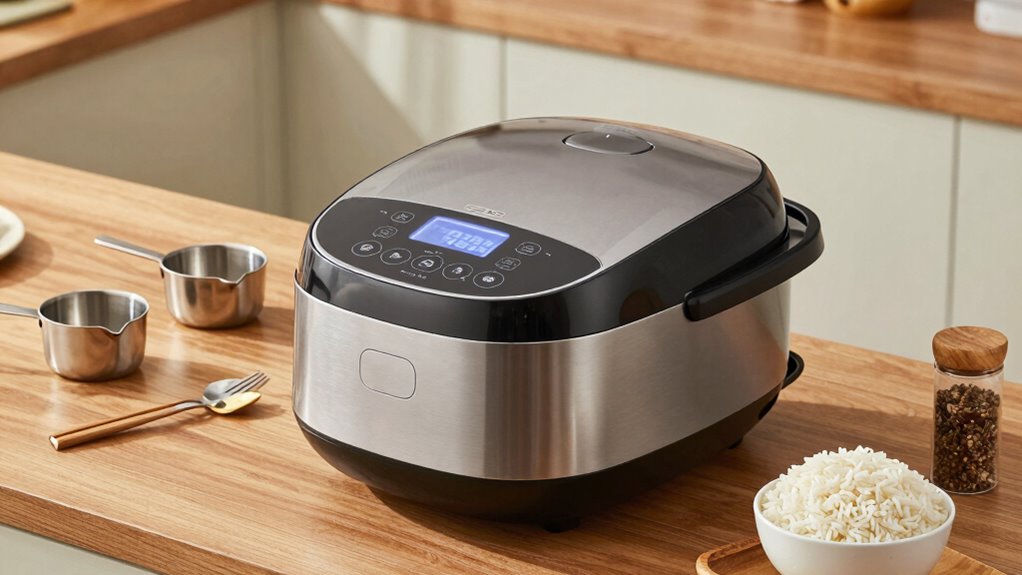
To get the most out of your rice cooker, it’s essential to understand how to use its features effectively. Using cooking shortcuts can save time and energy, so explore quick-cook options or pre-set functions for different grains. Always prioritize kitchen safety by keeping the appliance on a stable surface and avoiding overfilling, which can cause spills or malfunctions. To enhance your experience, consider these tips:
Maximize your rice cooker’s potential with quick-cook settings, safe placement, and proper filling for efficient, safe cooking.
- Use the rice cooker’s timer to plan meals ahead
- Rinse rice thoroughly to prevent sticking and ensure even cooking
- Experiment with cooking different grains or vegetables in your rice cooker
- Keep the appliance clean to maintain performance and safety
Applying these tips helps you cook more efficiently and safely while maximizing your rice cooker’s versatility.
Frequently Asked Questions
Can I Cook Other Grains Besides Rice in My Rice Cooker?
Yes, you can cook other grain varieties in your rice cooker using different cooking methods. For example, you might need to adjust water ratios or cooking times for grains like quinoa, barley, or oats. Many rice cookers have a setting for “multigrain” or similar options, which help you prepare these grains properly. Experimenting with these settings allows you to enjoy a variety of grains beyond just rice.
How Do I Reset or Calibrate My Rice Cooker Settings?
Did you know that nearly 60% of rice cooker owners find calibration issues? To reset or calibrate your rice cooker, start with the reset procedures provided in your user manual—usually unplugging the appliance for a few minutes. For calibration methods, adjust the settings according to specific instructions for your model, often involving pressing certain buttons simultaneously. Always follow manufacturer guidelines to guarantee accurate cooking results.
Are There Safety Concerns With Using Advanced Features?
Using advanced features in your rice cooker generally isn’t risky if you follow safety protocols and user precautions. Always read the instruction manual carefully and avoid overriding safety mechanisms. Keep the appliance dry, unplug it when not in use, and don’t tamper with internal parts. By adhering to these safety guidelines, you can enjoy the convenience of advanced settings without concerns, ensuring safe and effective operation every time.
Can I Customize Cooking Times for Different Recipes?
Yes, you can customize cooking times for different recipes. Imagine the perfect texture you want—just adjust the cooking time accordingly. Many rice cookers feature recipe-specific settings, allowing you to tailor each dish precisely. With cooking time adjustments, you gain control over your culinary creations. Don’t settle for one-size-fits-all—explore your cooker’s options and reveal new flavors every time you cook.
What Maintenance Is Needed for Optimal Performance of Settings?
To keep your rice cooker performing at its best, regularly run cleaning cycles and follow descaling procedures to remove mineral buildup. Wipe the lid, inner pot, and exterior with a damp cloth after each use. For deeper cleaning, use vinegar or a manufacturer-recommended descaler. These maintenance steps guarantee your cooker’s settings work accurately, extend its lifespan, and prevent issues like uneven cooking or malfunctioning sensors.
Conclusion
Now that you’re a rice cooker aficionado, you can confidently navigate its settings like a seasoned chef. With a flick of a switch, you’ll summon steaming bowls of rice or even conjure up slow-cooked stews—just don’t expect it to solve all your life problems. Remember, mastering these buttons is like taming a wild beast; with a little patience, your kitchen will become a zen temple of perfectly cooked grains. Happy cooking!
Fall Picks
fall essentials
As an affiliate, we earn on qualifying purchases.