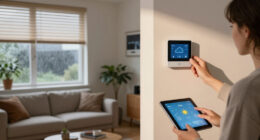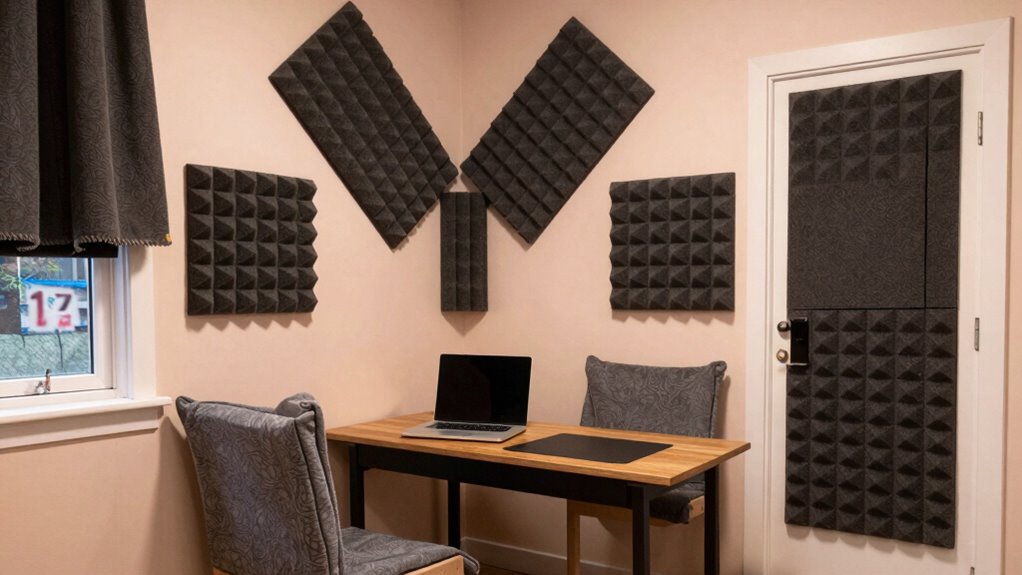
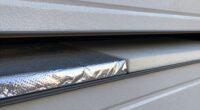
To soundproof your home office on a budget, start by identifying the loudest spots using a sound level app or phone. Use affordable materials like foam panels, blankets, or mass-loaded vinyl to block noise, and seal gaps around windows, doors, and outlets with weatherstripping or caulk. Strategically place soft furniture and hang wall hangings to absorb sound. By combining these simple tricks, you can create a quieter space—keep exploring tips to make it even better.

Get home appliances delivered free — and shop member deals
- Fast, free delivery on millions of items
- Access to Prime Big Deal Days deals on October 6–7
- Prime Video, Amazon Music and more included
Key Takeaways
- Seal gaps around doors, windows, and outlets with weatherstripping or caulk to prevent sound leaks.
- Use affordable sound-absorbing materials like foam panels, thick blankets, or egg crate foam on walls and ceilings.
- Rearrange furniture to block noise sources and position desks away from shared walls or noisy areas.
- Add soft furnishings such as rugs, curtains, and cushions to absorb sound reflections and echoes.
- Incorporate DIY solutions like hanging wall hangings or installing acoustic fabric panels for enhanced noise reduction.
soundproof foam panels for home office
As an affiliate, we earn on qualifying purchases.
As an affiliate, we earn on qualifying purchases.
How to Find the Noisiest Spots in Your Home Office
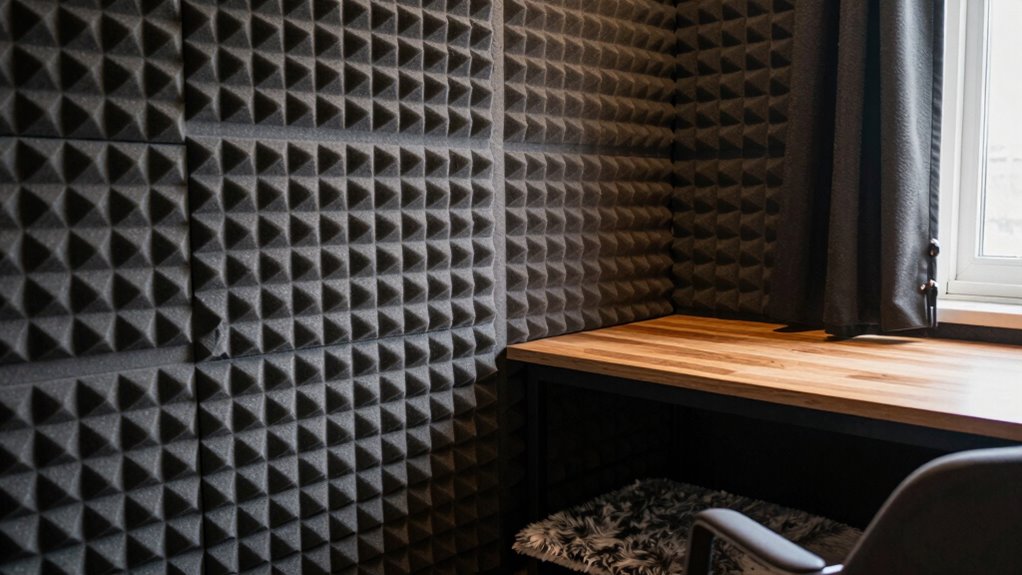
Have you ever wondered which areas of your home office are the loudest? To pinpoint these spots, start with sound frequency analysis. This method helps identify the specific types of noise bothering you, whether it’s high-pitched voices or low hums. Use a basic sound level meter or a smartphone app to measure decibel levels in different parts of your office. Pay attention to common office noise sources like printers, HVAC systems, or external traffic. Walls, windows, and doors often amplify these sounds, so test near these surfaces. By mapping out where noise is most intense, you gain a clear picture of where to focus your soundproofing efforts. Understanding soundproofing techniques can also help you optimize your environment for better sound control and comfort. Additionally, considering soundproofing materials can significantly enhance your efforts without overspending. Knowing your problem areas makes it easier to choose effective, budget-friendly solutions. Incorporating sound-absorbing elements like soft furnishings or acoustic panels, which are discussed in soundproofing science, can further improve noise reduction. Recognizing common noise sources can also guide you in targeting specific problem spots more efficiently.
mass loaded vinyl soundproofing material
As an affiliate, we earn on qualifying purchases.
As an affiliate, we earn on qualifying purchases.
Best DIY Soundproofing Materials on a Budget
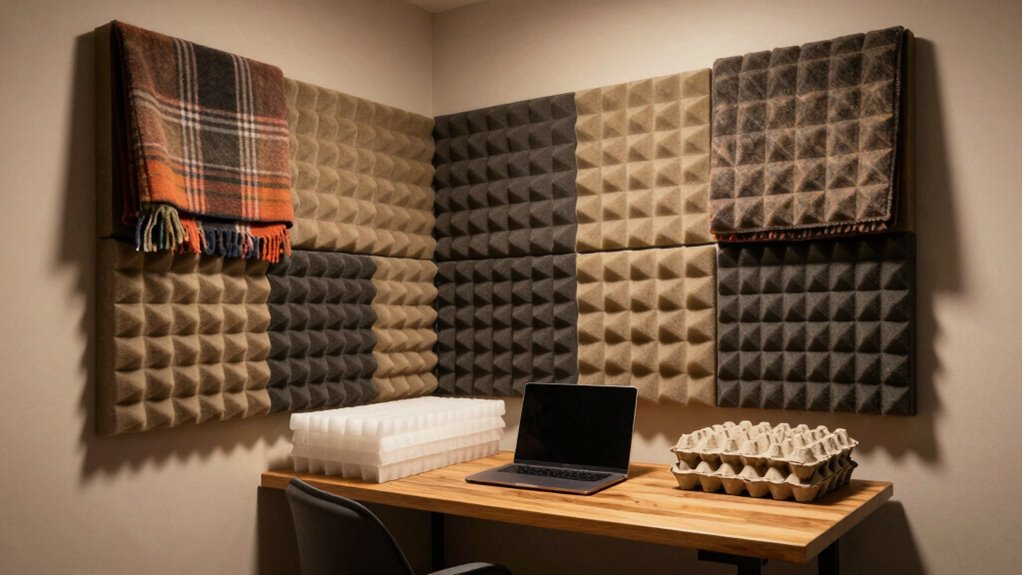
When working with a limited budget, choosing the right DIY soundproofing materials can make a significant difference without breaking the bank. Many believe you need professional installation or expensive products, but that’s a common soundproofing myth. You can effectively reduce noise using affordable materials like mass-loaded vinyl, acoustic foam panels, or thick blankets. These options absorb sound and block noise transmission without costly upgrades. Here’s a quick comparison:
| Material | Pros |
|---|---|
| Acoustic foam | Easy to install, affordable |
| Mass-loaded vinyl | Dense, high soundproofing |
| Thick blankets | DIY-friendly, cheap |
| Egg crate foam | Noise absorption |
You don’t need professional installation—simple, budget-friendly solutions work just fine for your home office. Additionally, utilizing landscaping can help dampen exterior noise and improve your overall soundproofing efforts. Incorporating soundproofing techniques can further enhance your space by minimizing noise leakage, especially when combined with effective materials that suit your specific needs. Recognizing soundproofing myths can help you avoid unnecessary expenses and focus on practical, budget-conscious methods.
acoustic blankets for noise reduction
As an affiliate, we earn on qualifying purchases.
As an affiliate, we earn on qualifying purchases.
Easy Hacks to Reduce Household Noise in Your Office
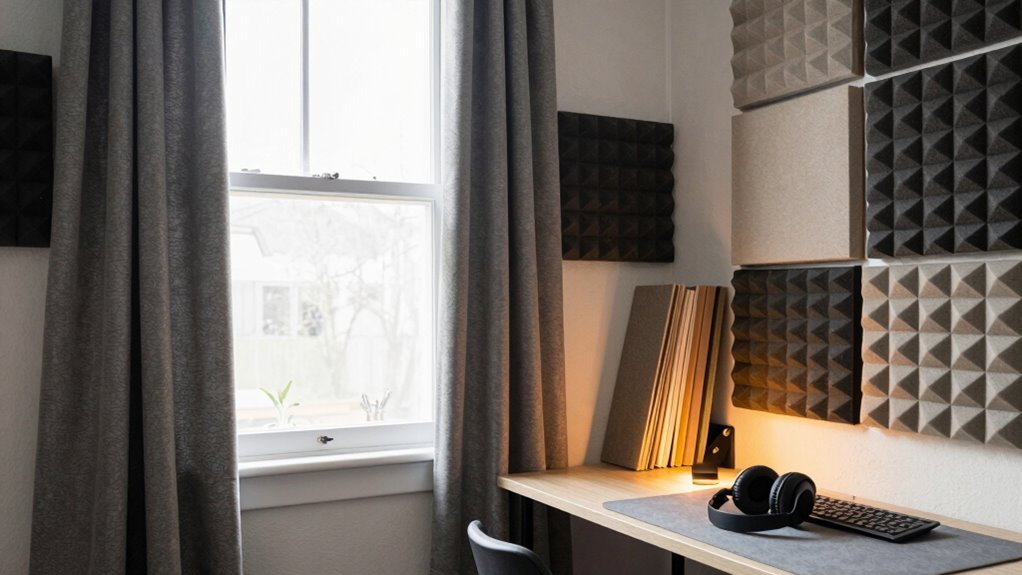
You can start by placing soft items like rugs, curtains, or cushions around your office to absorb sound. Sealing gaps and cracks in doors and windows can make a big difference in reducing noise leaks. These simple adjustments are quick, affordable ways to create a quieter workspace at home. Additionally, incorporating soundproofing techniques can further enhance your efforts without breaking the bank. Being aware of noise reduction strategies can help you achieve a more peaceful environment and improve your focus. For example, selecting the right battery inverter generator with appropriate watt-hours and capacity can ensure your home office remains powered efficiently during outages, minimizing disruptions to your work environment. Checking store return policies and hours can be helpful if you need to exchange or return equipment or supplies used for soundproofing or office setup.
Strategically Place Soft Items
Placing soft items strategically around your home office can considerably dampen household noise. This simple tactic counters common soundproofing myths, revealing that you don’t need expensive materials to reduce noise pollution effectively. Soft furnishings absorb sound waves, preventing them from bouncing around. Use rugs, curtains, bookshelves, and cushions to create a sound-absorbing environment. Incorporating sound absorption techniques can further enhance noise reduction in your space. For example, adding a vetted fake fireplace can help diffuse sound and create a cozy atmosphere without extensive modifications. Understanding how soundproofing materials work can guide you in choosing the most effective soft items for your needs. Additionally, knowing which soundproofing strategies are most affordable can help you maximize your budget without sacrificing effectiveness.
Seal Gaps and Cracks
Sealing gaps and cracks is one of the simplest and most effective ways to cut down on household noise entering your home office. Start by inspecting windows, doors, and wall openings for visible gaps. Use weatherstripping or caulk to seal these areas, creating a better sound barrier. Adding acoustic panels around problem areas can further absorb noise, preventing sound from leaking in or out. Don’t forget to check gaps around electrical outlets and baseboards; foam sealers work well here. These quick fixes enhance your existing sound barriers and make your office quieter without a big investment. Sealing even small gaps can considerably reduce distracting household noise, helping you focus better and work more efficiently. Proper soundproofing techniques can significantly improve your workspace comfort, especially when combined with durable survival gear essentials that protect your equipment and maintain a quiet environment. Additionally, consider using soundproofing materials that are affordable and easy to install for an even more effective noise reduction.
weatherstripping for windows and doors
As an affiliate, we earn on qualifying purchases.
As an affiliate, we earn on qualifying purchases.
Simple Ways to Improve Your Office’s Acoustics
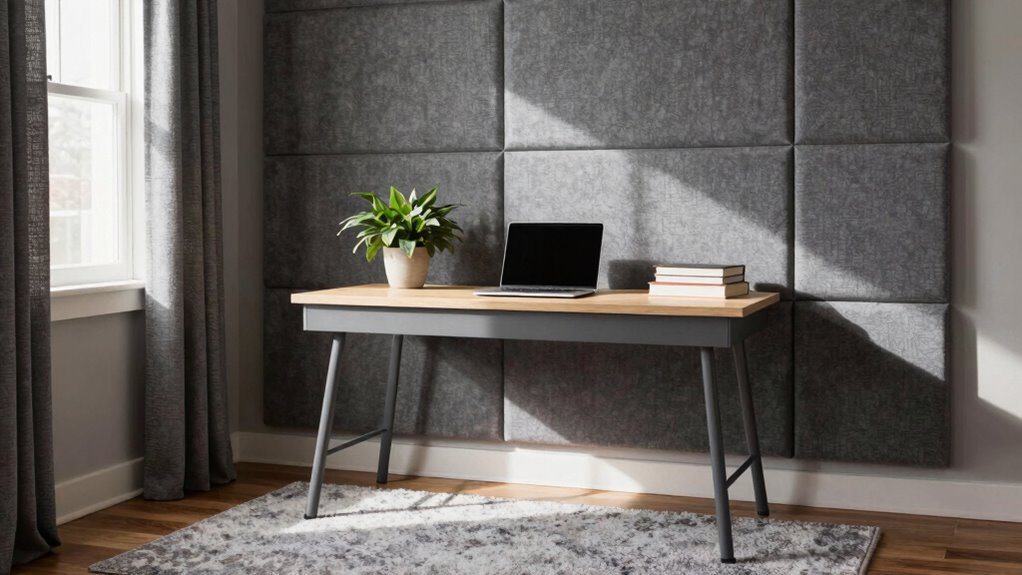
Improving your home office’s acoustics doesn’t have to be complicated or expensive. Many soundproofing myths suggest you need costly materials, but simple adjustments can make a big difference. First, identify common office noise sources like keyboard clicks or nearby household sounds. To reduce these, consider:
Simple, affordable ways to improve your home office acoustics without costly materials or complex solutions.
- Adding soft furnishings like rugs or curtains to absorb sound reflections
- Using bookshelves filled with books to act as sound diffusers
- Positioning your desk away from noisy walls or windows
- Incorporating soundproofing myths strategies, such as background music or white noise machines, to mask distracting sounds.
- Exploring best laundry detergents can help prevent lingering odors that might contribute to a distracting environment, indirectly improving your workspace comfort.
These tips help manage sound without breaking the bank. Remember, understanding office noise sources and dispelling soundproofing myths can make your space much more comfortable. Small, strategic changes can significantly improve your acoustics, making your home office more productive and quieter.
How to Install Weatherstripping and Door Sweeps Correctly
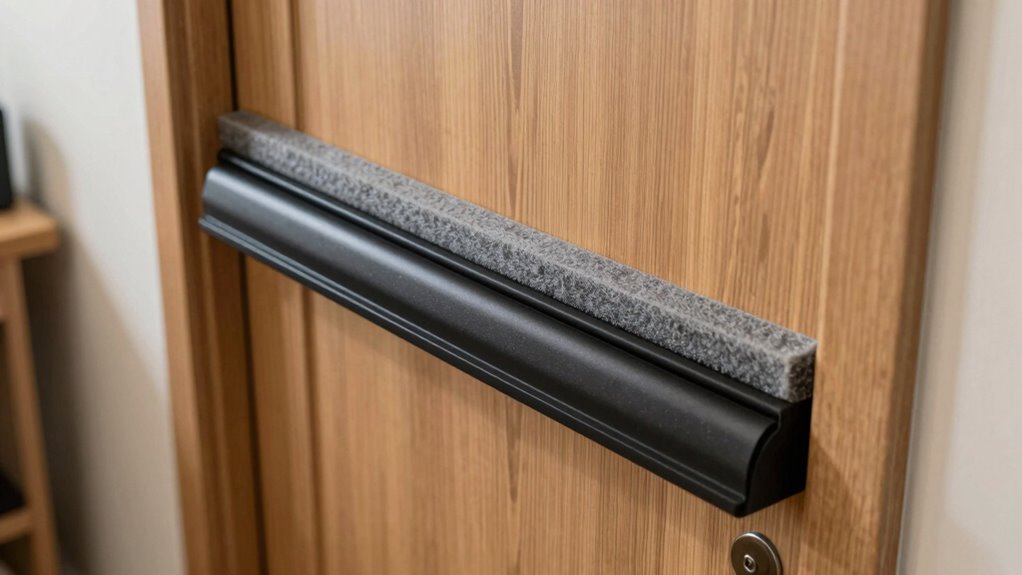
To effectively reduce drafts and noise around your home office, installing weatherstripping and door sweeps is essential, but proper technique is key. First, choose the right weatherstripping types, such as foam tape, V-strip, or vinyl, depending on your door’s gap size. Clean the surface thoroughly before applying to ensure adhesion. When doing door sweep installation, measure your door’s width accurately and cut the sweep to fit. Attach the sweep to the bottom of the door using screws or adhesive, making sure it just touches the threshold without causing obstruction. Properly installed weatherstripping seals gaps and prevents sound leaks, while a well-placed door sweep blocks noise and drafts effectively. Take your time to ensure a snug, secure fit for maximum soundproofing benefits.
Using Furniture and Decor to Absorb Sound Naturally

Using furniture and decor strategically can naturally absorb sound and reduce noise in your home office. Incorporate items that dampen sound without breaking the bank. For example, hanging decorative wall hangings can help muffle echoes and improve acoustics. Acoustic fabric panels are also effective; you can install them on walls or ceiling areas to absorb sound waves directly. Additionally, consider placing soft furniture, such as upholstered chairs and plush sofas, which naturally absorb noise. These elements work together to create a quieter environment. To maximize sound absorption, combine these features with your existing decor, making your home office both stylish and functional. Small investments in decor can make a significant difference in reducing background noise and increasing focus.
Tips to Keep Your Home Office Quiet Without Spending Much
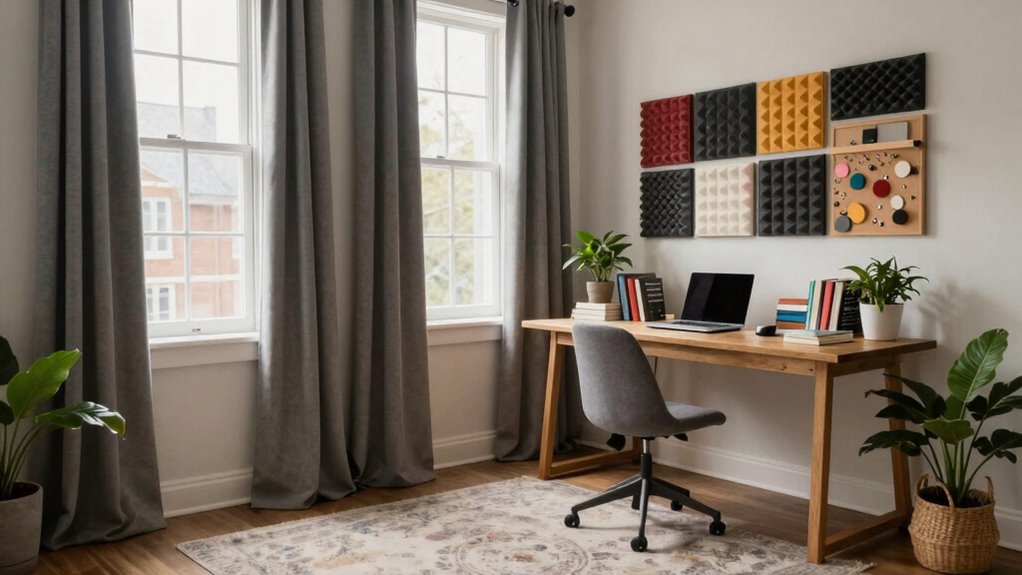
You can keep your home office quieter without spending much by making simple changes. Try using DIY soundproofing materials like egg cartons or thick blankets, and rearrange your furniture to block noise sources. Don’t forget to seal gaps and cracks around doors and windows to prevent sound leaks.
Use DIY Soundproofing Materials
When aiming to keep noise levels down without breaking the bank, DIY soundproofing materials offer an effective solution. Many believe soundproofing myths, but simple, affordable materials can make a real difference. By understanding basic acoustic technology, you can enhance your home office’s quietness without expensive upgrades.
Try these DIY options:
- Mass-loaded vinyl: Adds mass and blocks sound transmission.
- Egg cartons or foam panels: Improve acoustic quality and absorb echoes.
- Weatherstripping: Seals gaps around doors and windows to prevent noise leaks.
Using these materials, you can create a quieter workspace while debunking myths about soundproofing being costly or complex. Focus on practical, affordable solutions that leverage basic acoustic principles for effective noise reduction.
Rearrange Your Furniture Strategically
Rearranging your furniture can considerably reduce noise transfer and create a quieter home office environment without spending extra money. Focus on furniture arrangement by placing bulky or sound-absorbing pieces, like bookshelves or fabric-covered furniture, against shared walls to block noise. Position your desk and seating to minimize direct contact with noisy areas or thin walls. Additionally, consider lighting placement; avoid placing bright lamps or screens near shared walls, as glare can encourage you to move around and create noise. Use soft furnishings strategically—like rugs or curtains—to dampen sound reflections. By thoughtfully organizing your furniture and lighting, you can enhance your home office’s acoustics, making it more peaceful without any additional investment.
Seal Gaps and Cracks
Sealing gaps and cracks around doors, windows, and outlets is one of the most effective ways to keep noise from leaking into your home office without spending much. This simple step enhances your acoustic insulation and strengthens your sound barrier techniques. You can use affordable materials like weatherstripping or caulk to close these openings. Focus on areas where sound escapes, such as:
- Gaps around door frames and window sills
- Outlets and switch plates
- Small cracks in walls or baseboards
Frequently Asked Questions
Can Plants Help With Soundproofing My Home Office?
Plants can help with soundproofing your home office by absorbing noise and reducing echo. Strategic plant placement around your workspace, especially using acoustic plants with dense foliage, can make a noticeable difference. While they won’t block all sound, incorporating these plants creates a quieter environment. Plus, they add a calming touch, making your office more inviting and productive without breaking the bank.
How Long Does DIY Soundproofing Typically Last?
Did you know that DIY soundproofing can last between 5 to 10 years with proper maintenance? Your DIY techniques’ longevity depends heavily on material durability. If you choose high-quality, resilient materials like mass-loaded vinyl or acoustic panels, they can withstand wear and tear longer. Regularly inspecting and replacing worn-out components will help maintain effectiveness, ensuring your home office stays quiet and functional for years to come.
Are There Any Eco-Friendly Soundproofing Options?
Yes, eco-friendly soundproofing options are available. You can use recycling materials like recycled denim or cellulose insulation made from recycled paper, which are sustainable and effective. Sustainable insulation options, such as sheep’s wool or cork, also work well for soundproofing and are environmentally friendly. These choices not only reduce your carbon footprint but also provide good sound absorption, making your home office quieter and greener.
Will Adding Rugs Significantly Reduce Noise?
Adding rugs can markedly reduce noise, especially if you choose thick, dense materials. They absorb sound waves and minimize echoes, making your home office quieter. When considering material options, look for dense wool or shaggy rugs for better sound absorption. Cost considerations are important—affordable options like thrifted or layered rugs can be effective without breaking your budget. Overall, rugs are a simple, budget-friendly way to improve your workspace’s acoustics.
How Can I Soundproof Shared Walls Effectively?
You can effectively soundproof shared walls by installing acoustic panels, which absorb sound vibrations and reduce noise transmission. Additionally, adding wall insulation behind the panels enhances soundproofing by blocking sound waves. You might also consider sealing gaps and cracks with weatherstripping or acoustic caulk. Combining these methods creates a barrier that minimizes noise transfer, improving your home office environment without breaking the bank.
Conclusion
With these budget-friendly tips, you can create a quieter home office without breaking the bank. By identifying noisy spots, using DIY materials, and smartly adding furniture and decor, you’ll improve your workspace’s sound quality. Remember, a peaceful environment boosts productivity and focus. Isn’t it worth investing a little effort now to enjoy a calmer, more efficient workday? Start implementing these hacks today and experience the difference for yourself.
Fall yard work Picks
leaf blowers
As an affiliate, we earn on qualifying purchases.