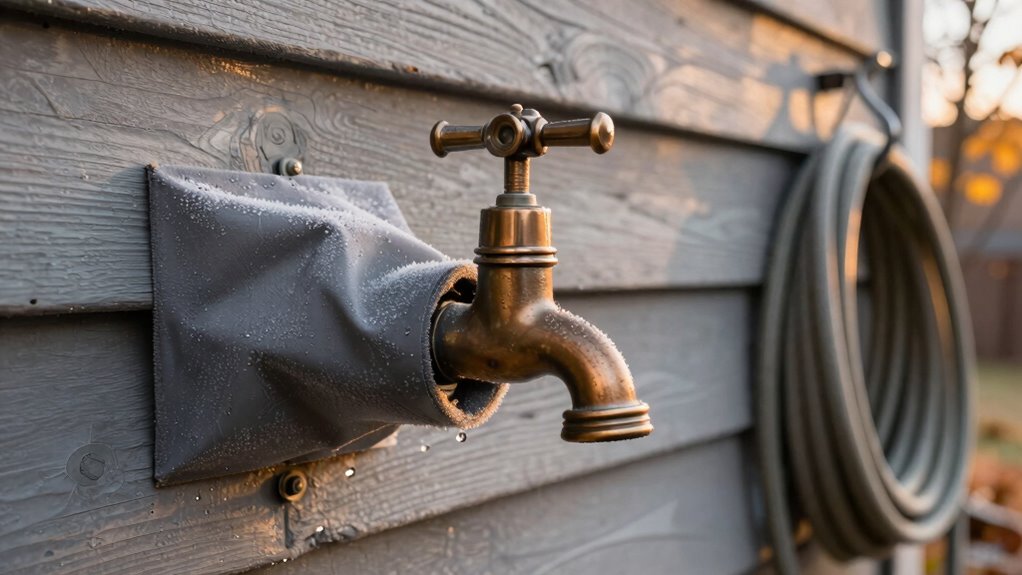

To winterize your outdoor faucets, start by shutting off the water supply and disconnecting hoses to prevent water from freezing inside. Drain any remaining water by opening the faucet slightly or using an air compressor. Insulate the faucet and pipe with foam covers or heat tape to protect against the cold. Consider installing a cover or shield for extra protection. If you want detailed steps to guarantee your faucets stay safe all winter, keep exploring for more tips.

Get home appliances delivered free — and shop member deals
- Fast, free delivery on millions of items
- Access to Prime Big Deal Days deals on October 6–7
- Prime Video, Amazon Music and more included
Key Takeaways
- Shut off the main water supply and outdoor faucet valves to prevent water from remaining in the pipes.
- Disconnect hoses and drain any residual water from outdoor faucets and hoses.
- Insulate faucets with foam covers, heat tape, or weatherproof tape to prevent freezing.
- Use an air compressor to blow out remaining water from the pipes and faucet lines.
- Install faucet covers or shields for extra protection against cold temperatures.
As an affiliate, we earn on qualifying purchases.
Why Freezing Temperatures Damage Outdoor Faucets
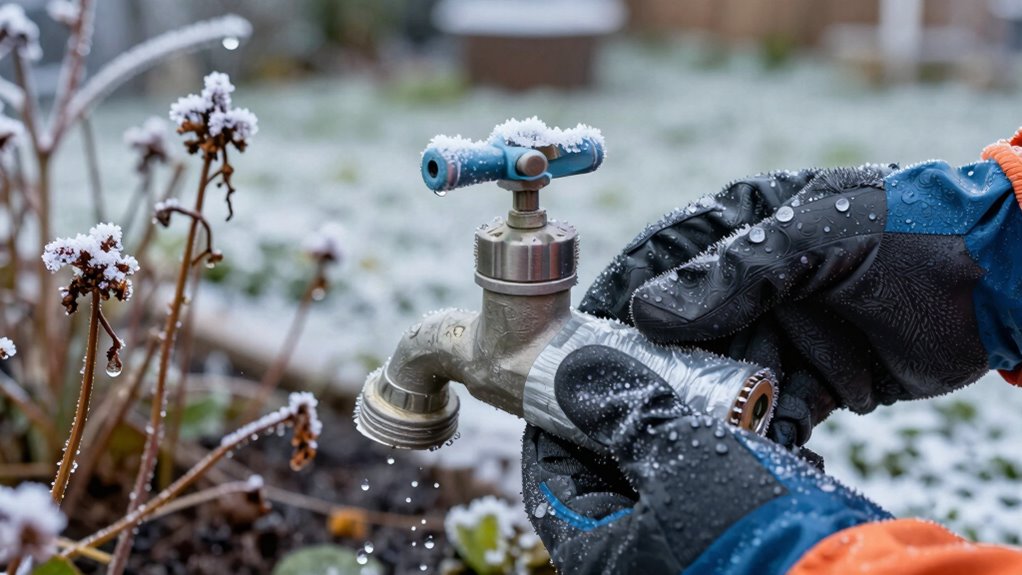
Have you ever wondered why freezing temperatures pose such a threat to outdoor faucets? When the temperature drops below freezing, water inside the pipes can freeze, leading to frost damage. As water turns to ice, it expands, exerting pressure on the pipe walls. This pipe expansion can cause cracks or even burst the pipes completely. Outdoor faucets are especially vulnerable because they’re often exposed to the cold and lack insulation. Once the pipes crack, water leaks out, causing water damage and costly repairs. Understanding this process highlights why winterizing is essential. Protecting your outdoor faucets from freezing temperatures helps prevent frost damage and avoids the inconvenience of dealing with broken pipes come spring. Proper precautions save you time, money, and headaches. Additionally, using appropriate insulation materials can further safeguard your plumbing during harsh winter conditions. Incorporating frost-proof valves can also provide extra protection and peace of mind during the cold months. Recognizing the importance of weatherproofing your outdoor plumbing can make all the difference in preventing winter-related damage. Adding proper drainage to your outdoor faucet setup can help eliminate trapped water and reduce the risk of freezing.
As an affiliate, we earn on qualifying purchases.
Get Your Supplies Ready for Winterizing
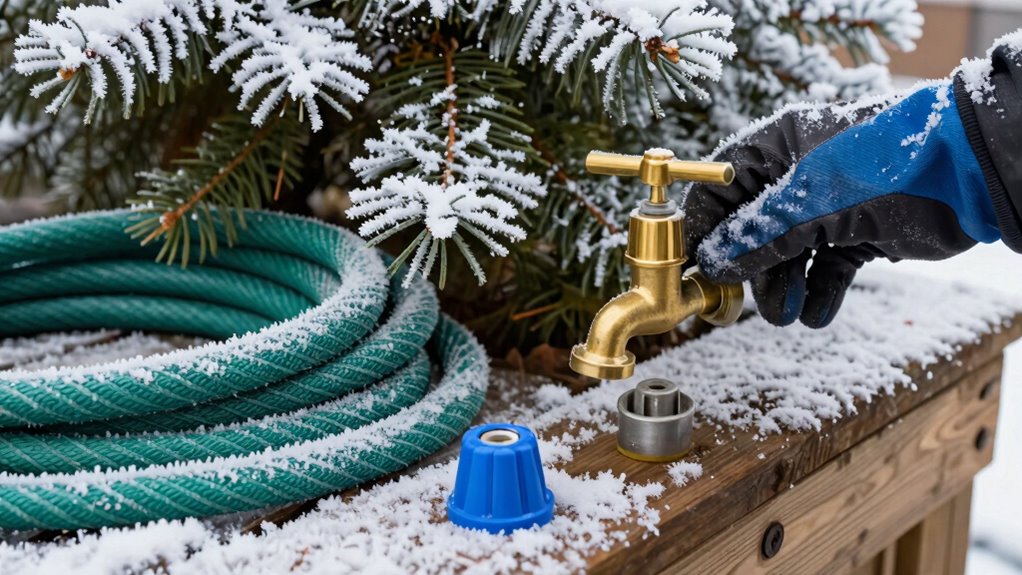
Before you start winterizing your outdoor faucets, gather all the necessary supplies to make the process smooth and efficient. You’ll need items like a waterproof faucet cover, a garden hose, and a wrench. Having everything ready saves time and preserves your outdoor plumbing for spring. Keep in mind, protecting your faucets helps maintain your garden aesthetics by preventing damage or leaks that could mar your yard’s appearance. Additionally, using waterproof covers can help prevent costly repairs by shielding faucets from freezing temperatures. Ensuring your outdoor plumbing is properly prepared can also prevent potential water damage during the cold months. Being aware of ethical considerations in consumer choices, like selecting environmentally friendly supplies, can also contribute to a more sustainable winterizing process. Consulting reputable sources about Gold IRA markets can provide valuable insights into making sound investment decisions for your financial future. Proper winterization techniques, such as draining residual water and insulating pipes, can further protect your outdoor plumbing from damage.
As an affiliate, we earn on qualifying purchases.
Shut Off the Water Supply to Your Outdoor Faucets
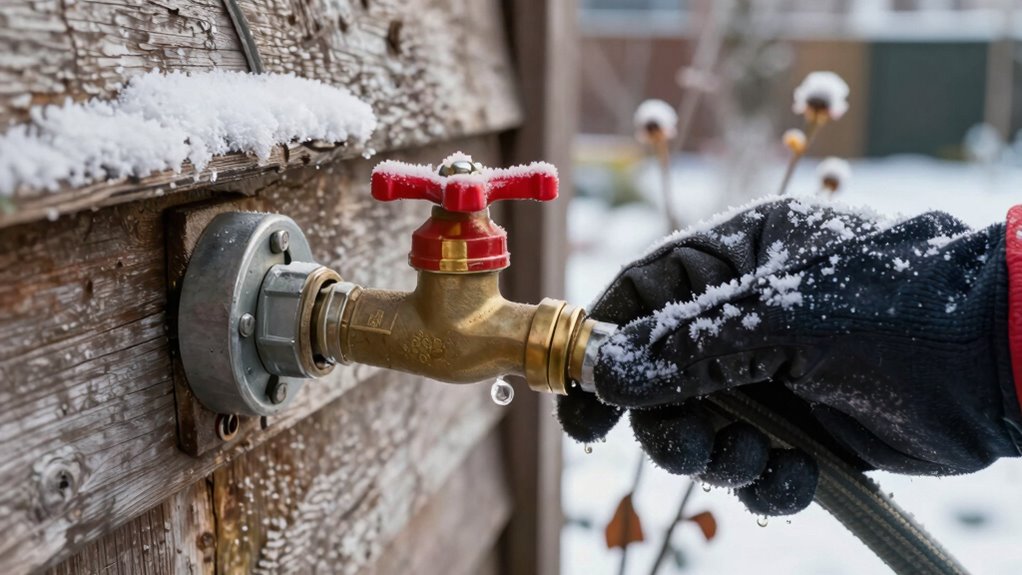
Shutting off the water supply is a crucial first step in winterizing your outdoor faucets, as it prevents water from remaining in the pipes and freezing during cold weather. Turning off the main valve stops water flow, reducing the risk of leaks and burst pipes. To do this effectively:
Shutting off the water supply prevents freezing and burst pipes during winter.
- Locate the outdoor faucet shut-off valve.
- Turn the valve clockwise to close it completely.
- Confirm the water flow has stopped.
- Disconnect any hoses attached to prevent water backup.
- Open the outdoor faucet slightly to drain residual water and release pressure.
- Incorporate gratitude practices to appreciate the safety of your plumbing system during winter.
air compressor for pipe draining
As an affiliate, we earn on qualifying purchases.
As an affiliate, we earn on qualifying purchases.
Drain Remaining Water to Prevent Freezing Damage
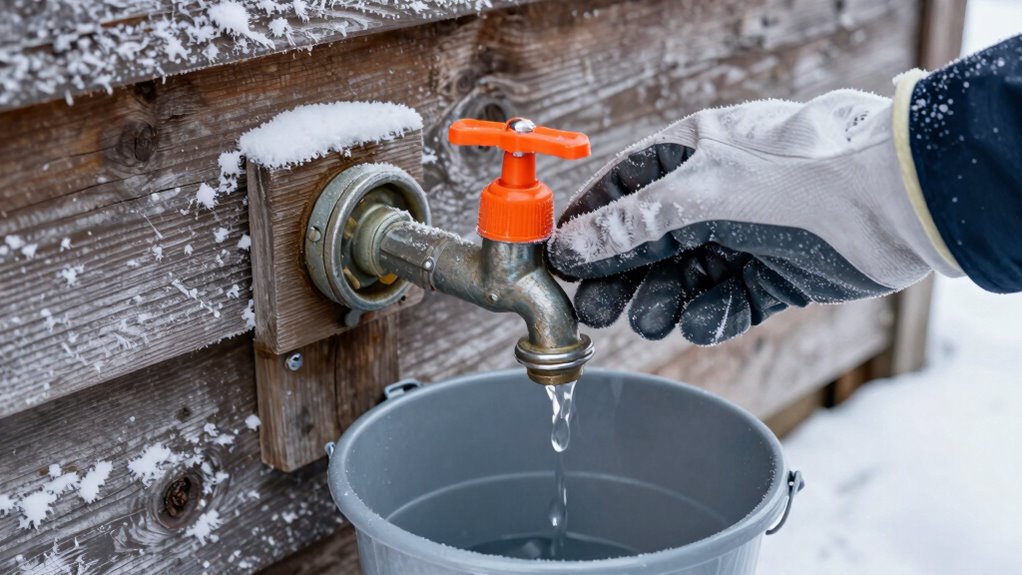
After closing the shut-off valve and disconnecting hoses, it’s important to drain any remaining water from the faucet to prevent freezing damage. Water left in the outdoor faucet can expand when frozen, causing pipes or fixtures to crack. To guarantee all water is removed, open the outdoor faucet and let any residual water flow out. Be cautious if your indoor plumbing is linked to the outdoor faucet, as high water pressure could hinder complete drainage. If you have a faucet with a built-in valve, activate it to release trapped water. You may also use an air compressor to blow out remaining water if needed. Proper drainage practices can be enhanced by ensuring all components are properly winterized, helping to prevent freezing damage. Regular maintenance and inspection of outdoor plumbing can also prevent freezing damage, ensuring your system remains intact during harsh winter conditions. Ensuring all connections are secure and free of debris can further protect your plumbing, reducing the risk of winter-related issues. Additionally, consulting professional winterization services can provide peace of mind and ensure all measures are correctly implemented. Draining thoroughly helps protect your outdoor plumbing from winter damage and keeps your system functioning smoothly in the spring.
Insulate and Cover Outdoor Faucets Effectively
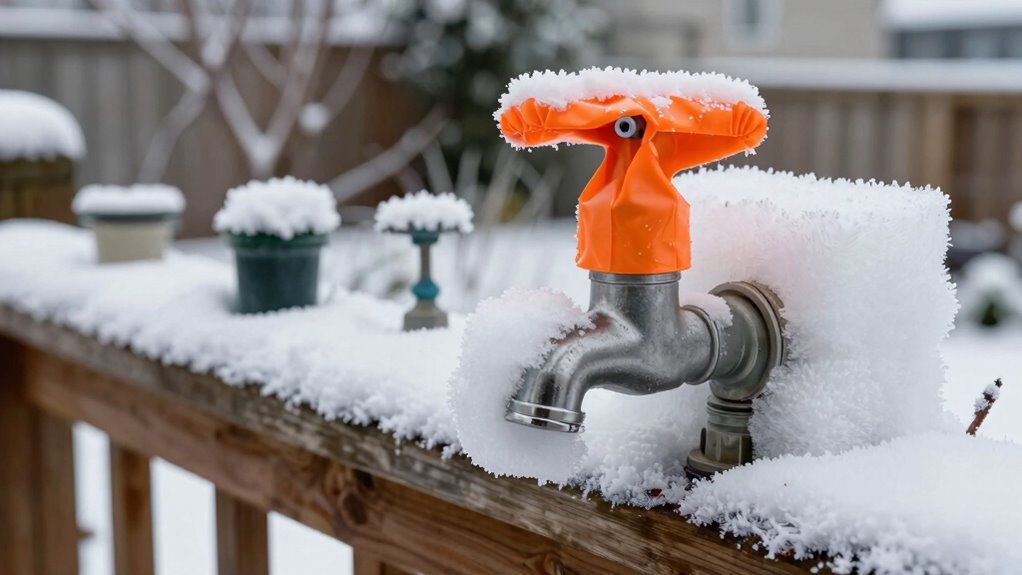
To effectively protect your outdoor faucets during winter, insulating and covering them is essential. First, seal leaks around faucet bases and hose connections to prevent cold air from entering. Next, enhance insulation by wrapping the faucet and pipe with foam insulation or heat tape. Use weatherproof tape to secure insulation in place. Additionally, consider installing faucet covers or shields for extra protection. Proper workspace organization can also make it easier to access and maintain these protective measures. Ensuring proper spraying techniques can help you apply insulation effectively and prevent gaps that allow cold air infiltration. Incorporating home theater fundamentals such as proper lighting and comfort can also create a cozy outdoor setup, making winterization more manageable. These steps help keep cold air out, preventing freezing and burst pipes. Proper insulation and coverage are vital in ensuring your outdoor faucets withstand harsh winter conditions. Incorporating proper insulation techniques can further improve protection against freezing temperatures.
Protect Outdoor Faucets With Covers and Shields
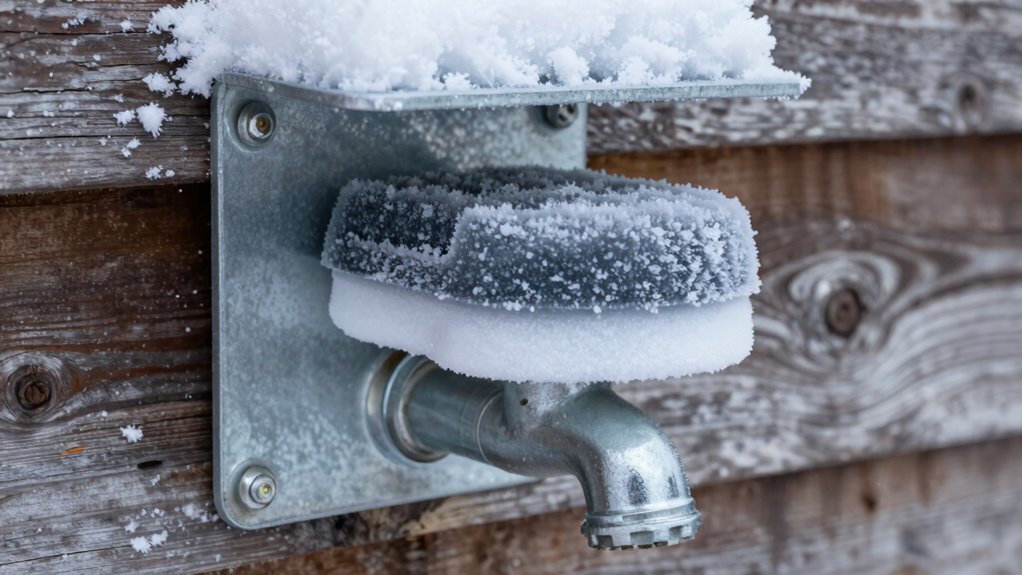
Protecting your outdoor faucets with covers and shields is a simple yet effective step to prevent freezing and damage during winter. Use insulated faucet covers to shield against low temperatures, ensuring they stay dry and insulated. These covers can blend with your garden decor, keeping your yard looking tidy. If you have outdoor lighting around your faucets, consider shields that also protect wiring and fixtures from snow and ice. Properly covering your faucets reduces the risk of cracks and leaks caused by frozen water. Additionally, choosing appropriate outdoor lighting can help illuminate your winter-proofing efforts and add a cozy ambiance. To better understand how cable failures can affect your outdoor setups, ensure all wiring is properly shielded and weatherproofed. Remember, weatherproofing your outdoor fixtures is essential to prevent damage from snow and moisture. Using the right insulation materials can further enhance your protection against the cold and extend the lifespan of your outdoor plumbing. Keep in mind, the goal is to create a barrier that prevents cold air from reaching your faucets while maintaining the aesthetic of your yard.
Check and Maintain Your Winterization Setup
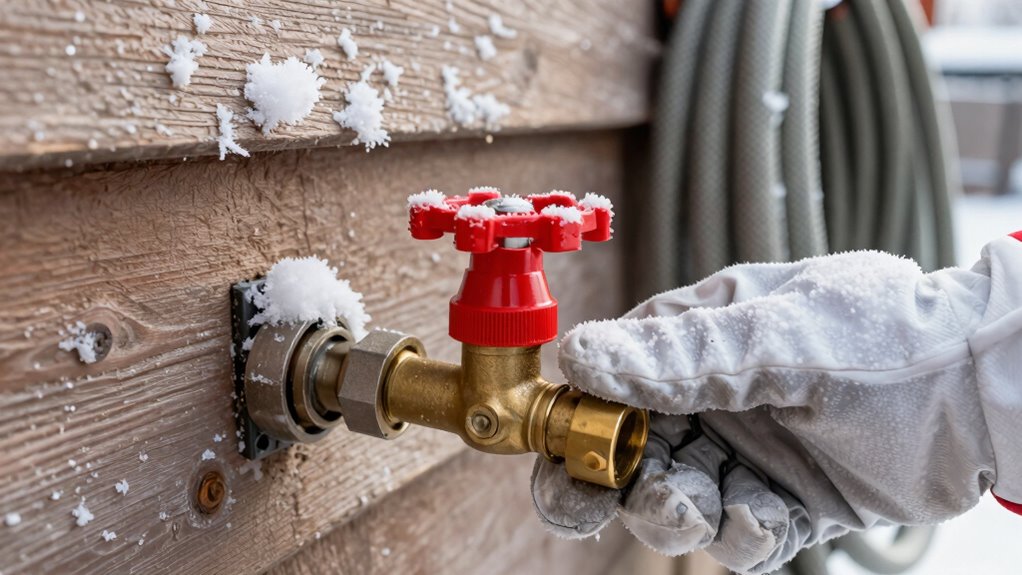
You should regularly inspect your winterization equipment to make certain everything is in good shape. Testing the system helps catch issues early and confirms it’s working properly. Keeping up with this maintenance keeps your outdoor faucets protected all winter long. Proper home comfort practices can also ensure your entire plumbing system remains protected during cold weather.
Inspect Existing Equipment
Have you checked your existing winterization equipment recently? Regular inspection guarantees your setup is ready for cold weather. Start with leak detection—look for drips or cracks in hoses and fittings that could cause problems later. Next, verify that all valves are properly adjusted to prevent leaks and ensure they’re closed tightly. Check the insulation around pipes and faucets for damage or gaps, which can compromise protection. Inspect the freeze-proof faucet or spigot, ensuring it’s functioning correctly and securely sealed. Finally, review your backup components, like drain valves or air vents, to confirm they’re free of debris and working properly. Staying proactive with these checks helps prevent costly repairs and keeps your outdoor faucets winter-ready. Additionally, understanding how whole-home water systems impact your plumbing can help you identify potential issues before they become major problems.
Test Winterization System
Before cold weather hits, it’s essential to test your winterization system to guarantee it functions properly when you need it most. Start by following your winterization checklist and verify all components—such as valves, hoses, and air blowers—are working correctly. Conduct a testing system check by opening valves to see if water flows smoothly or if there are leaks. If you’re using an air compressor, verify it’s delivering sufficient pressure to clear remaining water from pipes. Regular testing helps you identify issues early, preventing costly repairs later. Make adjustments as needed, and re-test until your system runs flawlessly. This proactive step ensures your outdoor faucets stay protected throughout the winter, giving you peace of mind during the coldest months.
Prepare Your Faucets for Spring Reopening
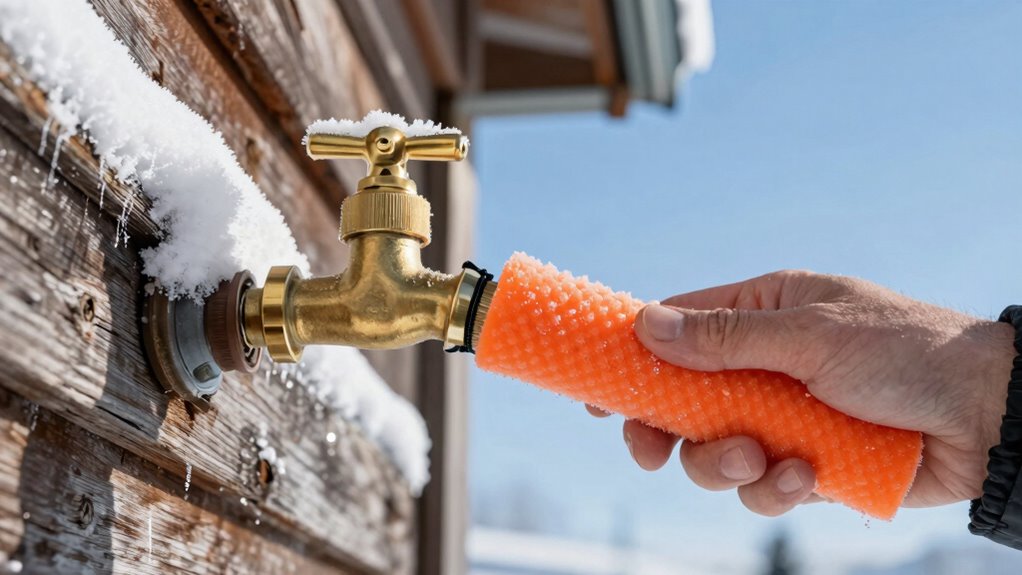
As winter ends and temperatures rise, it’s essential to prepare your outdoor faucets for the upcoming season. This guarantees your garden aesthetics stay pristine and your outdoor landscaping thrives. Start by inspecting your faucets for any damage or leaks. Remove any attached hoses to prevent pressure buildup. Turn the faucets on slowly to flush out any remaining debris. Check for cracks or corrosion that could cause leaks once fully reopened. Finally, clean the faucet area and clear debris, so your outdoor space looks inviting. These simple steps help prevent future leaks, protect your fixtures, and make sure your garden remains beautiful. Properly preparing your outdoor faucets now makes spring setup smoother and keeps your outdoor spaces functioning flawlessly.
Frequently Asked Questions
How Often Should I Check My Outdoor Faucet Covers During Winter?
You should check your outdoor faucet covers at least once a month during winter. Regular inspections help prevent frost damage by ensuring the covers stay secure and intact. If you notice any gaps or damage, replace or repair them promptly. Proper pipe insulation underneath the covers also plays an essential role in protecting against freezing temperatures. Staying vigilant minimizes the risk of frozen pipes and costly repairs caused by winter weather.
Can I Winterize Outdoor Faucets Without Shutting off the Main Water Supply?
You shouldn’t winterize outdoor faucets without shutting off the main water supply because doing so helps prevent frost damage. Turning off the water stops the flow, reducing the risk of frozen pipes. After shutting off the main, drain the faucet, and add pipe insulation to protect the remaining exposed areas. This method effectively prevents frost damage and keeps your outdoor plumbing safe during cold weather.
What Are the Best Materials for Insulating Outdoor Faucets?
You should choose insulation types like foam faucet covers or rubber faucet boots for outdoor faucets, as they offer effective protection against cold. These materials provide good insulation and are durable enough to withstand weather conditions. Silicone or polyethylene wraps also work well, offering flexible, long-lasting coverage. Opt for these materials because they resist cracking and tearing, ensuring your outdoor faucets stay protected throughout winter.
How Do I Prevent Leaks After Removing Faucet Covers in Spring?
Think of your outdoor faucet like a sleeping giant, now awakening. To prevent leaks after removing faucet covers in spring, carefully inspect the faucet for damage. Use proper leak prevention techniques like tightening fittings and replacing worn washers. Regular faucet cover maintenance ensures no debris causes issues. As you remove the covers, make sure all connections are secure, and consider applying a little plumber’s tape around joints to keep leaks at bay during the shift.
Is It Necessary to Drain All Water From the Faucet if Temperatures Stay Above Freezing?
If temperatures stay above freezing, you might not need to drain your outdoor faucet completely, but it’s still wise to drain some water to prevent freezing issues. Indoor plumbing can freeze if exposed to cold, so make certain your pipe insulation covers exposed outdoor pipes. Draining water reduces the risk of damage during unexpected cold snaps, and pipe insulation helps maintain a safe temperature, offering extra protection for your outdoor faucet and connected plumbing.
Conclusion
By winterizing your outdoor faucets, you’re not just protecting your home—you’re creating a fortress against winter’s icy grip. Imagine the water—normally fierce and relentless—being gently held at bay, frozen in time, safe from cracking pipes and costly repairs. With each step you take, you’re planting a shield of insulation and covers, ensuring your faucets emerge unscathed come spring. It’s a simple act that guards your home’s heart, turning winter’s threat into a distant memory.
NFL season / tailgating Picks
team gear
As an affiliate, we earn on qualifying purchases.