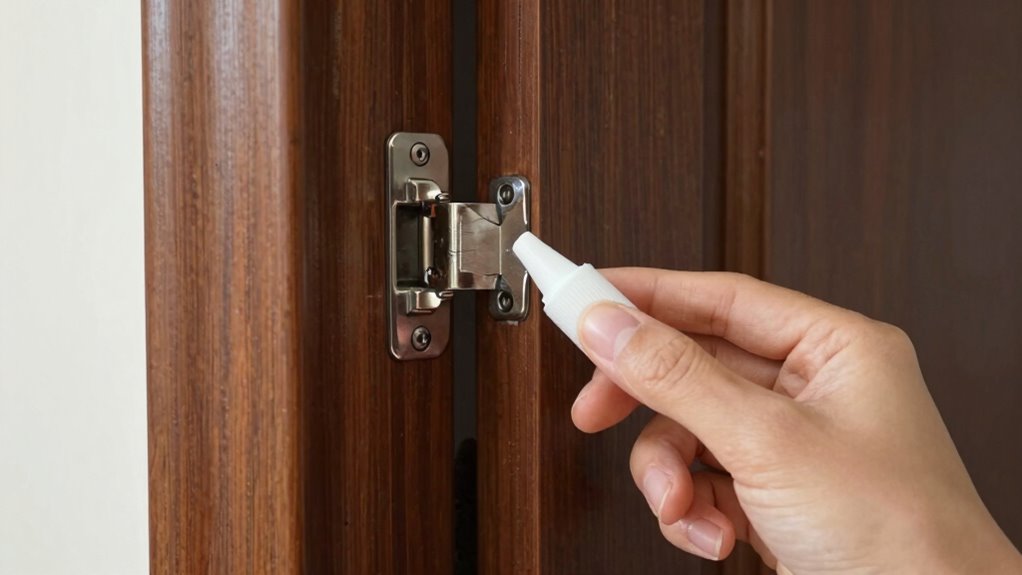
To fix squeaky doors, start by inspecting hinges for dirt, rust, or misalignment. Lubricate the hinges with a silicone spray or light oil, then open and close the door a few times to work in the lubricant. Tighten any loose screws and adjust the hinges if needed. If squeaking persists or hinges are rusted or damaged, replacing them might be necessary. Keep exploring to discover more tips for quiet, smooth doors.

Get home appliances delivered free with Prime
- Fast, free delivery on millions of items
- Prime Video, Amazon Music and more included
- Member-only deals all year
Key Takeaways
- Inspect door hinges for rust, misalignment, or damage, and replace if necessary.
- Lubricate hinges regularly with silicone spray or light machine oil to prevent squeaks.
- Tighten loose hinges or hardware to reduce friction and noise.
- Check and adjust door alignment to prevent rubbing and squeaking.
- Perform routine maintenance, including cleaning hinges and controlling environmental humidity.
As an affiliate, we earn on qualifying purchases.
How to Identify What’s Causing Your Squeaky Door?
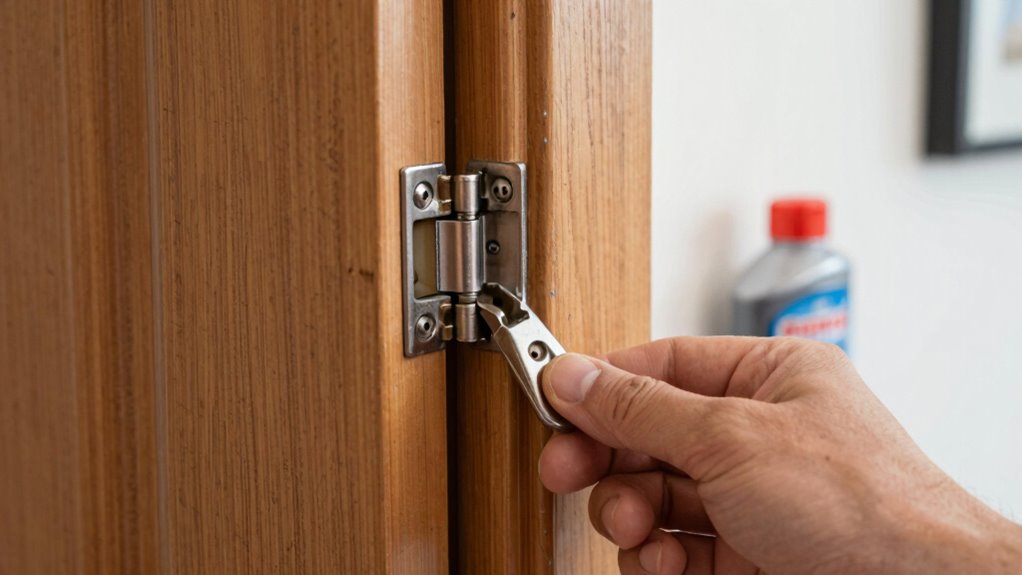
To fix a squeaky door, the first step is figuring out what’s causing the noise. Start by examining the door material, as different materials can produce distinct sounds. Wooden doors often squeak due to expansion or contraction, while metal doors might squeak from friction or rust. Also, check the door alignment—if the door isn’t properly aligned with the frame, it can cause rubbing and squeaking. Open and close the door slowly to see where the noise originates, paying attention to any sticking or uneven movement. Look for gaps, misaligned hinges, or any visible damage. Understanding the causes of squeaking can help you choose the most effective repair method. Identifying whether the squeak results from the door material or misalignment helps determine the right fix, preventing unnecessary repairs and ensuring your door operates smoothly. Additionally, considering proper maintenance techniques can help prevent future squeaks and keep your door functioning quietly. Regular lubrication and inspection of hinges, for example, are essential preventative measures to maintain smooth operation over time. Being aware of the door material properties can further assist in selecting appropriate lubricants or repair methods. Paying attention to environmental factors such as humidity or temperature changes can also influence the squeaking, guiding you toward more tailored solutions.
As an affiliate, we earn on qualifying purchases.
How to Lubricate Door Hinges and Stop the Squeak
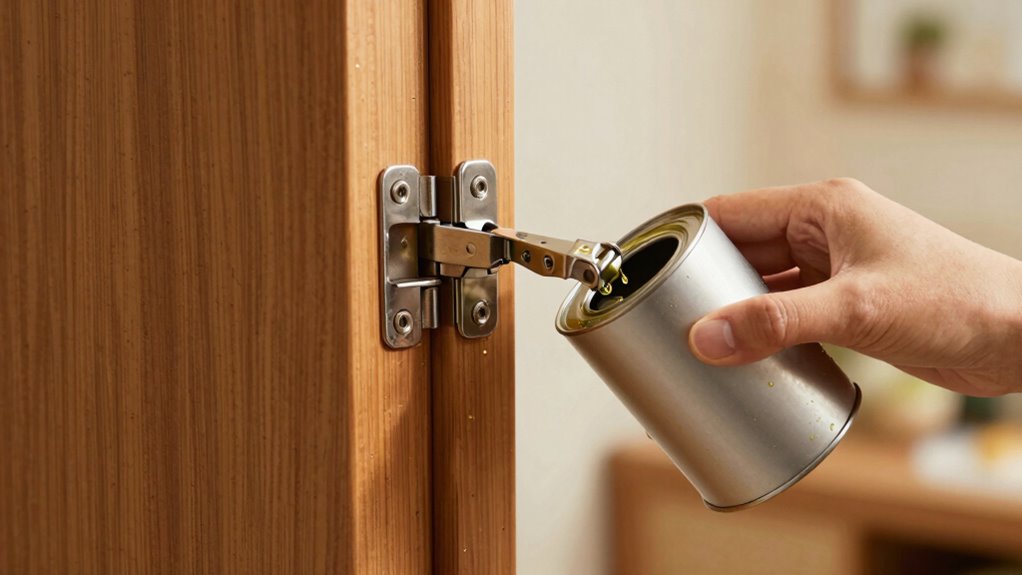
When your door squeaks, the most common and straightforward fix is to lubricate the hinges. Start by choosing the right lubricant—spray lubricants work well for most door hinge materials like steel or brass. Before applying, clean off any dirt or old grease with a cloth. Spray the lubricant directly onto the hinge pin and moving parts, then open and close the door to work it in. Be careful not to overspray on painted surfaces or near the door’s finish, as some lubricants can damage paint or finish coatings. If your door has a delicate paint or finish, use a silicone-based spray to minimize damage. Regular lubrication helps keep hinges quiet and prevents rust, extending the life of your door’s hardware. For long-term protection, consider applying a corrosion-resistant coating to your hinges after lubrication. Using the right type of lubricant can make a significant difference in how effectively the squeak is eliminated. Additionally, understanding the testing accuracy of your chosen lubricant can ensure optimal performance and durability over time. Incorporating proper maintenance techniques can also help prevent future squeaks and keep your doors functioning smoothly. Keeping hinges well-maintained is an essential part of preventive maintenance to avoid recurring issues.
silicone spray lubricant for hinges
As an affiliate, we earn on qualifying purchases.
As an affiliate, we earn on qualifying purchases.
Troubleshooting Squeaky Door Latches: Causes and Fixes
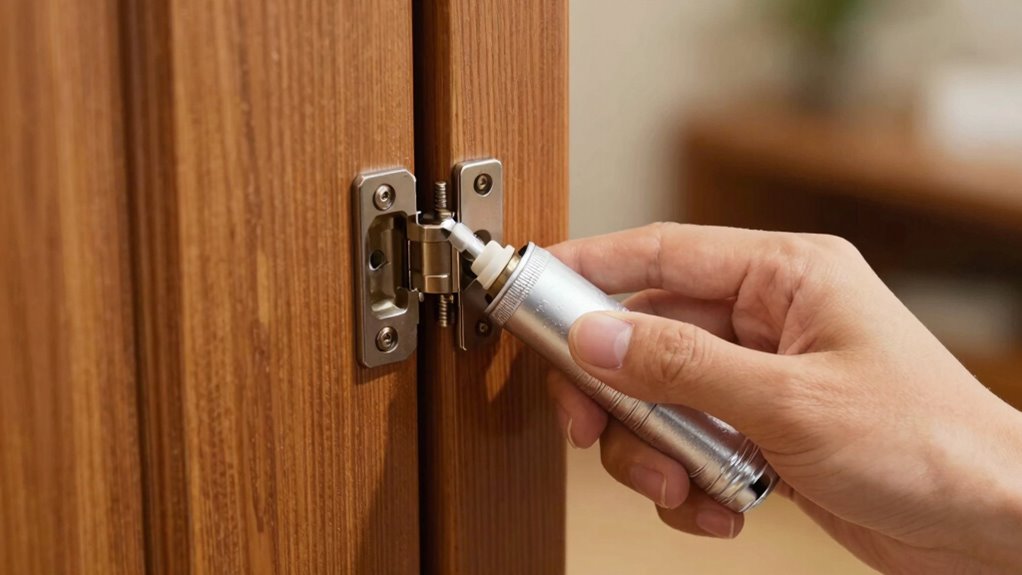
Squeaky door latches often have simple causes like dirt, rust, or misalignment, and understanding these issues can help you fix them quickly. You can try basic lubrication techniques or identify if the latch needs replacement. Knowing how to troubleshoot common latch problems and perform the right fixes makes it easier to restore smooth operation. Additionally, applying appropriate lubricants can sometimes be similar to using the right airless paint spraying gear to ensure a smooth finish. When addressing squeaky latches, it’s also helpful to consider proper maintenance practices to prevent future issues and keep your doors functioning smoothly. Regular inspection and timely adjustments can be key components of effective home maintenance to avoid recurring problems. Being familiar with Victorian/steampunk aesthetic details can also guide your choice of period-appropriate lubricants or repair techniques, blending functionality with style. Incorporating preventive care measures, such as applying lubricant at regular intervals, can significantly extend the lifespan of your latches and reduce the need for more extensive repairs.
Common Latch Problems
Have you noticed your door latch making squeaky or grinding sounds every time you open or close it? Common latch problems often stem from door alignment or frame issues. When the door isn’t properly aligned, the latch may scrape against the strike plate, causing noise and wear. Frame issues, such as warped or swollen wood, can also misalign the latch mechanism, making it harder to operate smoothly. Over time, loose or damaged latch components can develop friction, resulting in squeaks or grinding sounds. Check if the latch moves freely without resistance; if it doesn’t, realigning the door or fixing the frame might be necessary. Addressing these common latch problems can eliminate noise and improve the door’s overall function. Using proper DIY tools and safety tips can help you perform these adjustments safely and effectively. Additionally, understanding how door hardware interacts with the frame can help prevent future issues. Being aware of door alignment as a potential cause can also guide your troubleshooting efforts effectively. Recognizing latch wear early can save you from more extensive repairs down the line.
Lubrication Techniques
Proper lubrication is essential for silencing squeaky door latches and guaranteeing smooth operation. To do this effectively, consider these key steps:
- Remove any decorative hinge covers to access the latch and hinges easily.
- Choose the right lubricant—light machine oil or a silicone spray works best; avoid thick greases.
- Apply a small amount directly to the latch, hinges, and moving parts, avoiding excess.
- Wipe away any overspray to prevent dirt buildup and guarantee smooth movement.
Using the correct lubricant and proper application technique can prevent squeaks from returning. Remember, the right lubricant selection makes all the difference in achieving long-lasting silence and smooth operation.
Replacement Procedures
When lubrication fails to eliminate persistent squeaks or the latch becomes damaged, replacing the faulty parts often provides a lasting solution. Start by removing the door from its hinges to access the latch mechanism easily. Inspect the door frame and ensure proper door alignment; misalignment can cause stress on the latch, leading to squeaks. If the latch is damaged or worn, replace it with a compatible new one. Carefully detach the old latch, making note of how it fits, and install the new latch in the same position. During reinstallation, double-check that the door is properly aligned with the frame. Tighten all screws securely, ensuring the latch moves smoothly without sticking or squeaking. Proper replacement and alignment will eliminate noise and restore smooth operation. Additionally, considering the environmental impact of your repair choices can contribute to more sustainable home maintenance. Being mindful of sustainable repair practices can help reduce waste and promote eco-friendly solutions. Checking for corrosion or debris around the latch area can prevent future squeaks and prolong the lifespan of your repair. Incorporating preventative maintenance into your routine can also help avoid similar issues in the future, and understanding the importance of proper maintenance techniques can make a significant difference in longevity.
adjustable door hinge pin remover
As an affiliate, we earn on qualifying purchases.
As an affiliate, we earn on qualifying purchases.
When to Replace Hinges or Other Door Parts
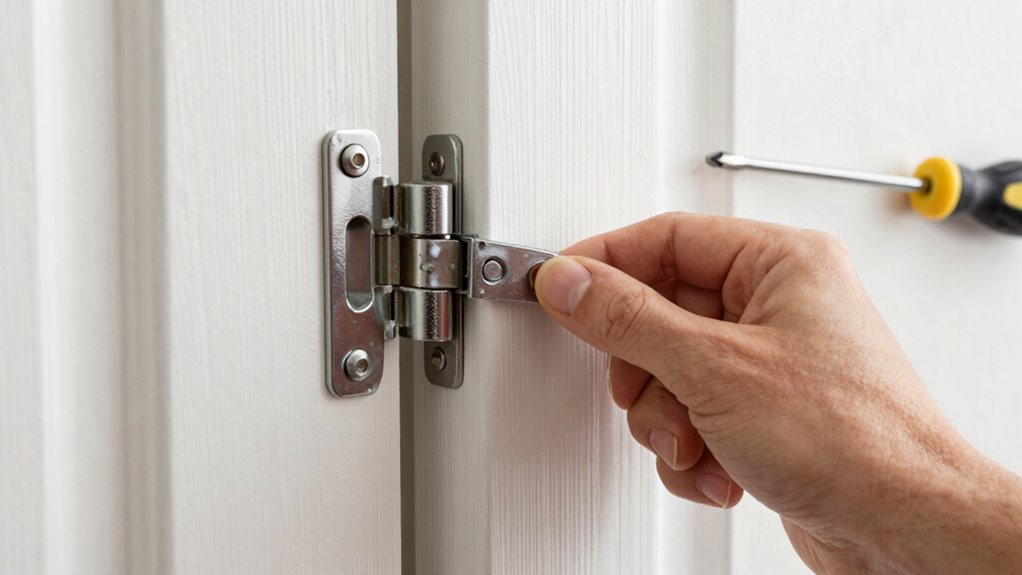
If your hinges look rusted, cracked, or misaligned, it’s time to contemplate replacing them. When hinges no longer support the door properly or cause persistent squeaks despite lubrication, replacement is usually the best option. Recognizing these signs early helps prevent further damage and keeps your door functioning smoothly. Incorporating inclusive design principles can also ensure your space remains accessible and welcoming for everyone.
Signs Hinges Are Worn
Worn hinges often give themselves away through visible damage or performance issues. If you notice your door squeaking despite regular door hinge maintenance, it might be a sign the hinges are worn out. Here are four signs to watch for:
- The door doesn’t close properly or feels loose.
- You see rust, corrosion, or cracked paint around the hinges.
- The hinges make creaking or squeaking sounds even after lubrication.
- The hinges appear misaligned or sagging.
These signs indicate that your hinges may need replacing rather than just squeak prevention. Addressing worn hinges early can save you from more extensive repairs later. When you spot these issues, it’s time to consider replacing hinges to maintain smooth operation and quiet doors.
When to Consider Replacement
Determining whether to replace hinges or other door parts depends on their condition and how much they affect your door’s function. If hinges are corroded, bent, or loose despite repairs, replacement is often the best option. Consider the door material—metal hinges might last longer than wood or composite ones. Aesthetic considerations also matter; if hinges are rusty or outdated, replacing them can improve your door’s appearance. If repairs no longer restore smooth operation or eliminate squeaks, replacement becomes necessary. Pay attention to how the door operates—if it sticks, drags, or wobbles despite adjustments, it’s time for new parts. Ultimately, replacing hinges or other components ensures better performance, safety, and visual appeal, especially when repairs no longer suffice.
Tips to Prevent Future Squeaks and Keep Your Doors Quiet
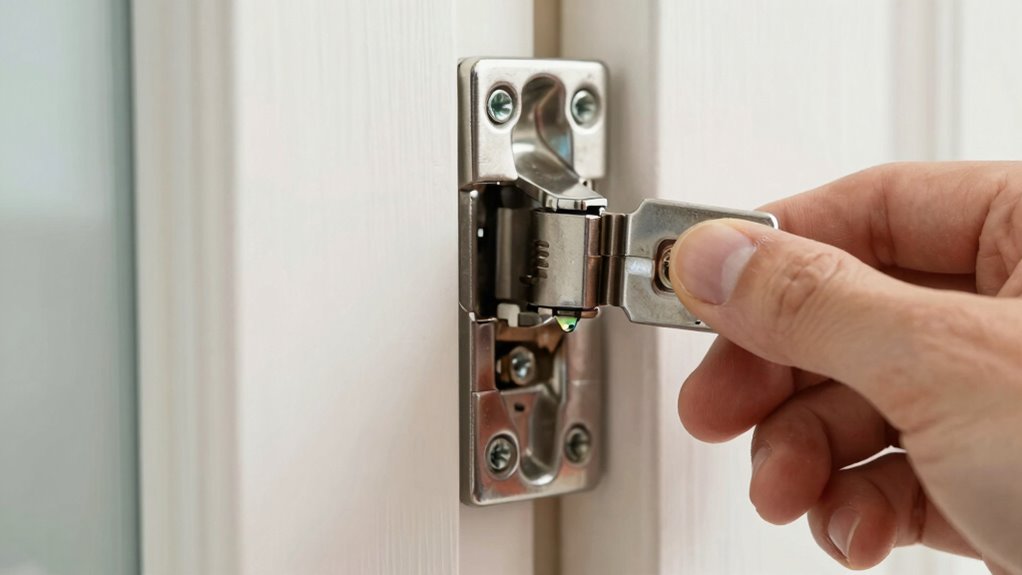
To keep your doors squeak-free in the long run, regular maintenance is essential. Here are some tips to prevent future squeaks and maintain a quiet door:
Regular maintenance keeps your doors quiet and squeak-free over time.
- Choose decorative door hardware that’s well-made and properly installed to reduce friction.
- Regularly lubricate hinges with a suitable oil to prevent squeaks from developing.
- Adjust door hinges if they become loose over time to keep everything aligned.
- Be mindful of seasonal humidity effects—wood expands and contracts, so check for gaps or tightness and adjust or lubricate accordingly.
Quick Tips for Maintaining Smooth-Operating Doors
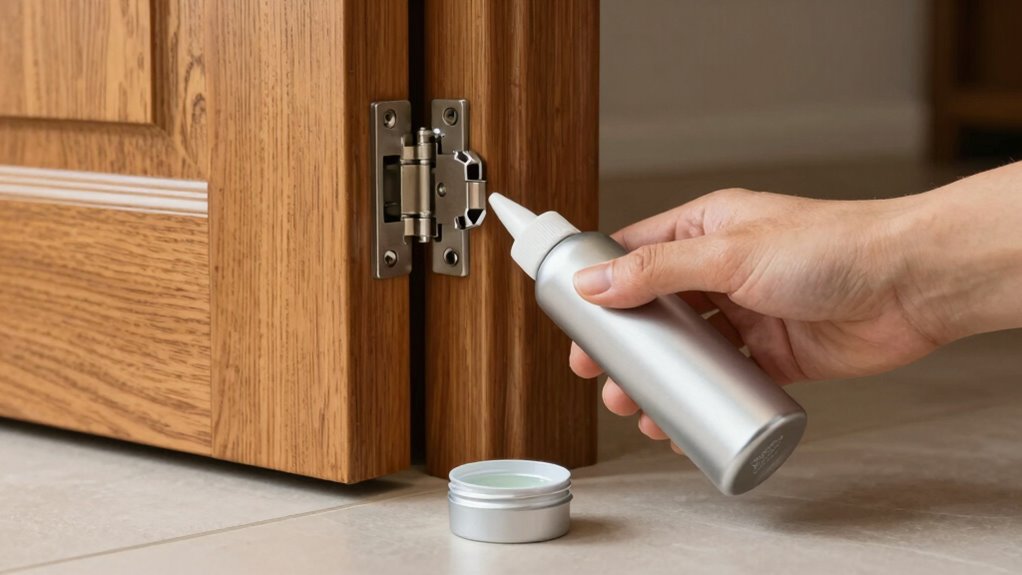
Keeping your doors operating smoothly doesn’t require complicated steps—simple routine checks can make a big difference. Regularly inspect and tighten decorative door hardware to prevent squeaks caused by loose parts. Lubricate hinges with a light spray of silicone or WD-40, especially before seasonal humidity changes, which can cause wood and metal to swell or contract. Adjust hinges if your door sticks or squeaks persist. Here’s a quick visual guide:
| Problem | Solution |
|---|---|
| Squeaky hinges | Lubricate with silicone or WD-40 |
| Loose hardware | Tighten screws and fittings |
| Seasonal humidity effects | Use dehumidifiers or fans to stabilize moisture |
Consistent maintenance keeps your doors quiet and functional, no matter the season.
Frequently Asked Questions
Can Weather Changes Cause Door Squeaks?
Yes, weather changes can cause door squeaks. When it’s humid, the door frame and hinges might expand, leading to friction and noise. Conversely, dry weather can cause the wood to contract, creating gaps and squeaks. You should check for pest infestation or loose hinges, as these can worsen the problem. Regular lubrication and sealing gaps can help reduce squeaks caused by weather fluctuations, keeping your door quiet and smooth.
Are Certain Door Materials More Prone to Squeaking?
Certain door materials are more prone to squeaking, especially those with a lot of wood or metal components. Wood doors, especially if untreated or exposed to moisture, tend to have higher squeak frequency because of expansion and contraction. Metal doors may squeak due to friction between parts or lack of lubrication. You can reduce squeaks by regularly lubricating hinges and choosing materials like fiberglass or composite that resist squeaking better.
How Long Does a Typical Door Hinge Lubrication Last?
A typical door hinge lubrication lasts about six months, but this depends on hinge maintenance and usage. To keep hinges functioning smoothly, you should apply lubricant regularly, adjusting lubrication frequency based on how often the door is used. If you notice squeaking or stiffness, it’s a good sign to re-lubricate sooner. Consistent maintenance guarantees your door stays quiet and moves easily over time.
Is It Necessary to Remove the Door for Lubrication?
You don’t need to remove the door for hinge lubrication. Instead, you can apply lubricant directly through the hinge pin or using a straw or nozzle on a spray lubricant. While door removal can make access easier, it’s unnecessary for most hinge lubrication tasks. Just open and close the door a few times after applying the lubricant to make sure it spreads evenly and stops the squeaking.
Can DIY Fixes Damage the Door or Hinge?
You might worry that DIY fixes could damage your door or hinge, but with careful attention, you won’t risk harm. Using proper lubrication and gentle techniques, you can often fix squeaks without needing door hinge replacement or professional repair services. However, if you notice cracks or persistent issues, it’s smarter to seek professional help before making things worse. Sometimes, expert repair guarantees your door stays in perfect condition, with no surprises later.
Conclusion
Regularly maintaining your doors can reduce squeaks and extend their lifespan. Did you know that squeaky hinges are one of the top reasons for door replacements, accounting for nearly 30% of all door repairs? By identifying issues early, lubricating hinges, and replacing worn parts when needed, you can keep your doors operating smoothly and quietly. With these simple tips, you’ll enjoy a quieter, more comfortable home environment for years to come.
Fall yard work Picks
leaf blowers
As an affiliate, we earn on qualifying purchases.