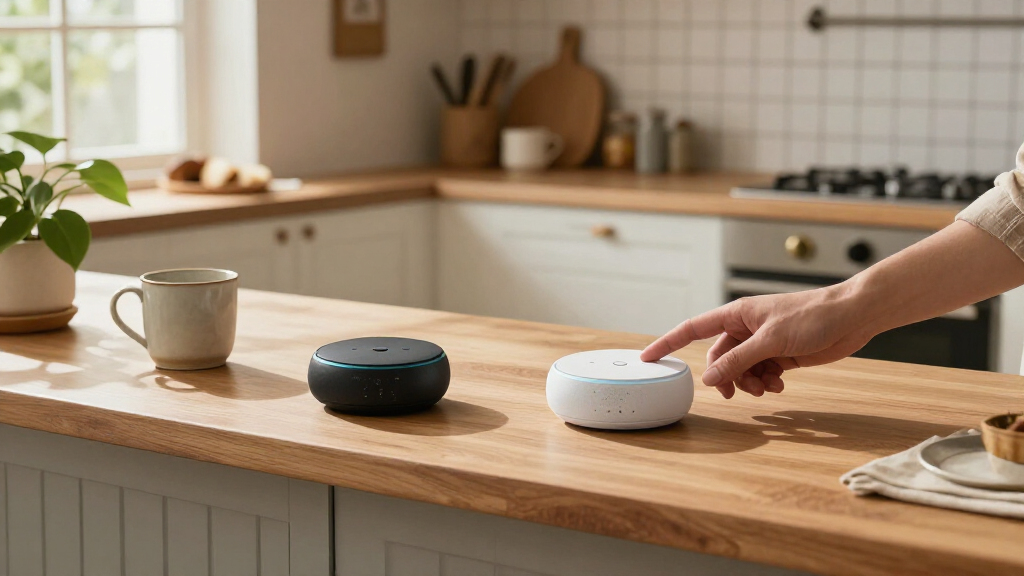

TL;DR
The Echo Dot (6th generation) adds built-in Zigbee and Thread support, an AZ3 processor and a claimed 1.5-times increase in bass over the 5th-generation Dot. The older model remains a lower-cost option for basic Alexa use, but prices, availability and the Echo Dot Max may affect which is the better buy.
The Echo Dot (6th generation) adds built-in Zigbee and Thread support, a newer AZ3 processor and improved bass over the 5th-generation Echo Dot, according to a review comparison. The newer speaker is the stronger choice for smart-home features and Alexa+ performance, while the older model may cost less for buyers who need a basic Alexa speaker.

Get home appliances delivered free with Prime
- Fast, free delivery on millions of items
- Prime Video, Amazon Music and more included
- Member-only deals all year
The most practical difference is smart-home connectivity. The 6th-generation Dot includes a Zigbee and Thread hub and supports Matter. The 5th-generation model also supports Matter, but lacks built-in Zigbee and Thread, limiting its role as a hub for devices that rely on those protocols.
Both speakers have an ultrasound presence sensor and a temperature sensor, and both can act as eero Wi-Fi extenders. Amazon has quoted speeds of up to 100 Mbps for the 5th-generation model; the supplied comparison does not give an equivalent speed figure for the 6th generation. Both can use Alexa+, but the newer Dot is described as shipping with Alexa+ Early Access.
The two models use the same-size 1.73-inch full-range driver, but the review reports that the 6th generation sounds somewhat better. Amazon claims 1.5 times more bass than the previous generation. In listening tests described by the reviewer, bass-heavy tracks had a stronger low end without distortion, while mids and treble sounded clearer. The review still characterizes the improvement as a close gap, not a major change in sound quality.
Echo Dot 6th vs 5th generation What changes?
The 6th-generation Dot adds smart-home connectivity and newer hardware. The 5th-generation model may still suit basic Alexa use at a lower price.
Smart-home connections
Both support Matter; only the newer Dot adds Zigbee and Thread as built-in hubs.
| Feature | 6th generation | 5th generation |
|---|---|---|
| Zigbee and Thread | ✓ Yes | ✗ No |
| Matter | ✓ Yes | ✓ Yes |
| Temperature and presence sensors | ✓ Yes | ✓ Yes |
Hardware and sound
The newer model pairs a newer chip with a reported, modest audio improvement.
- AZ3 processor
- Stronger bass, clearer mids and treble in the review
- Fabric top and front-facing status light
- AZ2 processor
- Full mesh body and light around the base
- May cost less if discounted and in stock
Choose for your setup
The right buy depends on the devices you use and today’s prices.
Choose the 6th generation if you need Zigbee or Thread without a separate hub.
Check remaining 5th-generation stock and the Echo Dot Max alongside current prices.
For basic Alexa use, a discounted 5th-generation Dot may be better value.
Choosing the Right Echo Dot
The choice matters most to buyers deciding whether to build a smart home around an Echo speaker. With Zigbee and Thread built in, the 6th-generation Dot can connect with compatible devices without requiring a separate hub. Buyers whose devices use Matter or Wi-Fi, and who primarily want voice control and music, may find fewer reasons to pay extra.
Price can change the recommendation. The comparison lists a full or launch price of £94.99 / $99.99 for the 6th generation and a 5th-generation launch price of £54.99 / $49.99. These are not necessarily current retail prices, and the source says the 5th generation may be available only while remaining stock lasts. It also advises checking the Echo Dot Max price: if that larger model is discounted close to the 6th-generation Dot’s price, it may offer better overall value.
Products Worth Considering

Dyson Cyclone V10 Origin Cordless Vacuum

eufy Security SoloCam E42 4-Camera Kit, 4K Solar Security Camera System

Sonos Era 100 SL Wireless Speakers, Black, Pack of 2
As an affiliate, we earn on qualifying purchases.
How the Two Generations Differ
The 6th-generation Dot changes the exterior as well as the hardware. It is described as having a fabric top and solid rear, while the 5th-generation model has a full mesh body. The newer model has a front-facing status light bar; the older one places its light around the base. The 6th generation is listed in four colors with matching cables, compared with three colors for the 5th generation.
Both models have volume and mute controls, though their placement differs: the 5th-generation controls are on top, while those on the 6th generation sit toward the rear. The review says both are compact globe-shaped speakers and rates their design as a draw. Its 5th-generation assessment was based on the Echo Dot with Clock, a discontinued version that is otherwise the same as the regular model but adds a small LED time display.
Processing also separates the models. The 6th generation uses the AZ3 chip, compared with the AZ2 in the 5th generation. The review reports faster Alexa+ responses on the newer device and says its four-microphone array can hear a whispered request while loud music is playing. The supplied material does not specify the 5th generation’s microphone count.
“The 6th-generation model has 1.5 times more bass than the previous Echo Dot.”
— Amazon, as reported in the comparison
Prices and Stock Still Matter
The comparison does not establish current street prices, how much stock of the 5th-generation Dot remains, or how frequently the Echo Dot Max is discounted. Its listed prices include the 6th generation’s full price and the 5th generation’s launch price, so they should not be treated as a like-for-like snapshot of today’s offers.
The reported performance differences also come from the cited review and Amazon’s own bass claim. The source does not provide independent laboratory measurements for sound, microphone pickup or processor speed. It also does not give a specific 6th-generation eero extender speed or clarify how long Alexa+ Early Access will remain available.
Check Offers Before Buying
Buyers comparing the speakers should check live prices for the Echo Dot 6th generation, any remaining 5th-generation stock and the Echo Dot Max before deciding. The 6th generation is the clearer fit for Zigbee or Thread devices and for shoppers who want the newer Alexa+ hardware. If those features are not needed, a discounted 5th-generation Dot may be a lower-cost option while it remains available.
Any recommendation could shift as retailers change prices or older stock sells through. The comparison does not provide a confirmed end date for 5th-generation availability or a timetable for Alexa+ access changes.
Key Questions
What is the biggest difference between the Echo Dot 6th and 5th generations?
The 6th-generation Dot has built-in Zigbee and Thread, while the 5th generation supports Matter but lacks those two protocols. The newer model also uses an AZ3 processor and is reported to have improved bass.
Does the 5th-generation Echo Dot support Matter?
Yes. The comparison says both generations support Matter. The 5th generation does not have built-in Zigbee or Thread, which may matter for buyers with devices that use those protocols.
Is the Echo Dot 6th generation worth paying more for?
It may be worth the higher price if you want Zigbee or Thread support, Alexa+ Early Access, or the newer processor. For basic Alexa use, the 5th generation may be better value if discounted and still in stock. Compare the Echo Dot Max’s current price as well.
Does the 6th-generation Echo Dot sound much better?
The review reports stronger bass and clearer mids and treble, and Amazon claims 1.5 times more bass than the prior generation. The reviewer describes the difference as noticeable but close, and says neither Dot is the best choice for a high-quality music experience.
Are the Echo Dot 5th generation and Echo Dot with Clock the same?
The comparison says its 5th-generation review covers the Echo Dot with Clock, which has the same features as the regular model plus a small LED display showing the time. That Clock version is described as discontinued.
Source: the-ambient.com