
The best air conditioners and heat pumps depend on whether you need a room unit, a ductless system, or whole-home heating and cooling. My best overall pick is the Midea 10,000 BTU U-Shaped Inverter Window Air Conditioner for efficient room cooling and a design that keeps the window more usable, while the Midea Duo 14,000 BTU Portable stands out for flexible placement and added heat. For a permanent ducted setup, the Goodman 3-Ton 15 SEER2 system is a compelling option for buyers whose home and climate suit its capacity. The main tradeoffs are installation complexity, heating performance, room size, and whether you need a portable appliance or a whole-home system. Read on for the full breakdown of all 15 options and guidance on choosing the right type.

Get home appliances delivered free with Prime
- Fast, free delivery on millions of items
- Prime Video, Amazon Music and more included
- Member-only deals all year
Complete the kit


Key Takeaways
System type matters as much as capacity: window and portable units address individual rooms, while the Goodman and 1HVAC systems are ducted whole-home equipment and the Senville LETO is a ductless mini split.
Heat-pump labeling does not mean equal cold-weather performance: room units with supplemental heat suit smaller, more limited needs; central and mini-split systems are better candidates for primary heating, subject to their specifications and local climate.
The Midea U-shaped window model prioritizes room cooling: unlike the window picks with heating, it is a focused cooling choice with an inverter design and a window-friendly format.
Portable flexibility brings installation tradeoffs: the Hisense dual-hose and Midea Duo options can work where a window unit or ductless installation is impractical, but they still need exhaust routing and floor space.
Central system choice needs more than a tonnage match: the Goodman and 1HVAC options differ in capacity, efficiency figures, refrigerant, and included equipment, so a professional load calculation and compatibility check matter more than picking the largest unit.
| ROVSUN 8,000 BTU Window Air Conditioner with Heat, Wi-Fi and Voice Control |  | Best Smart Window Unit for Year-Round Use | Cooling capacity: 8,000 BTU | Heating capacity: 4,000 BTU | Room coverage: Up to 350 sq ft | VIEW LATEST PRICE | See Our Full Breakdown |
| 1HVAC 2-Ton 15.2 SEER2 Central Heat Pump System with 10 kW Air Handler and Thermostat |  | Best Central System for Straightforward Replacement | Capacity: 2 tons; 24,000 BTU/h heating and cooling | Efficiency: 15.2 SEER2 | Air handler power: 10 kW | VIEW LATEST PRICE | See Our Full Breakdown |
| Hisense AP55023HR1GD Dual-Hose Portable Air Conditioner with Heat Pump, 8,000 BTU Cooling, 9,000 BTU Heating, 550 sq. ft. |  | Best Portable Pick for Larger Rooms | Cooling capacity: 8,000 BTU SACC | Heating capacity: Approximately 9,000 BTU | Coverage area: 550 sq ft | VIEW LATEST PRICE | See Our Full Breakdown |
| Midea 10,000 BTU U-Shaped Inverter Window Air Conditioner |  | Best Quiet Window Air Conditioner | Cooling capacity: 10,000 BTU | Recommended area: Up to 450 sq ft | Noise level: 32 dBA | VIEW LATEST PRICE | See Our Full Breakdown |
| Senville 3-Ton Central Air Conditioner and Heat Pump, 36,000 BTU, Inverter | 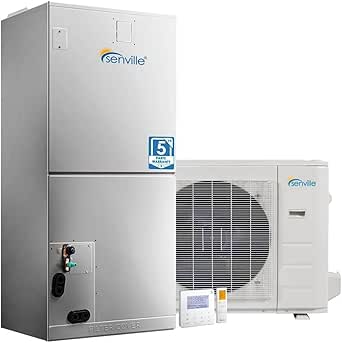 | Best Cold-Climate Central Heat Pump | Cooling capacity: 36,000 BTU | Coverage: Up to 2,000 sq ft | System type: 3-ton split system heat pump | VIEW LATEST PRICE | See Our Full Breakdown |
| Midea Duo 14,000 BTU Inverter Portable Air Conditioner with Heat | 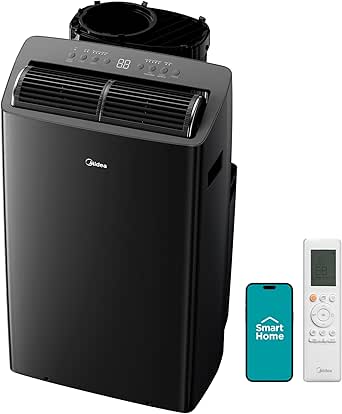 | Best Quiet Portable Heat Pump | Cooling capacity: 14,000 BTU; 12,000 BTU SACC | Coverage area: Up to 550 sq. ft. | Heating: Heat pump; operating range 41°F–86°F | VIEW LATEST PRICE | See Our Full Breakdown |
| Goodman 2.5 Ton 14.3 SEER2 R-32 Split-System Heat Pump with AMST30BU1300 Air Handler |  | Best for Flexible Central-System Installation | System type: Split-system heat pump | Capacity: 2.5 tons | Efficiency: 14.3 SEER2 | VIEW LATEST PRICE | See Our Full Breakdown |
| Midea 8,000 BTU Smart Inverter Window Air Conditioner with Supplemental Heat |  | Best Compact Window Unit for Mild-Weather Heating | Cooling capacity: 8,000 BTU | Recommended room size: Up to 350 sq. ft. | Functions: Cooling, dehumidifying, fan, and supplemental heat | VIEW LATEST PRICE | See Our Full Breakdown |
| Westinghouse 14,000 BTU Portable Air Conditioner with Heat Pump |  | Best Portable Pick for Larger Rooms | Coverage area: Up to 700 sq. ft. | Modes: Cool, heat, fan, and dehumidifier | Dehumidifying capacity: 90 pints per day | VIEW LATEST PRICE | See Our Full Breakdown |
| Senville LETO 24,000 BTU Mini Split Air Conditioner and Heat Pump |  | Best High-Capacity Ductless System | System type: Ductless mini split | Cooling and heating capacity: 24,000 BTU | Heating operation: Down to 5°F (-15°C) | VIEW LATEST PRICE | See Our Full Breakdown |
| ROVSUN 8,000 BTU Window Air Conditioner with 4,000 BTU Heater |  | Best Compact Window Unit for Basic Year-Round Use | Cooling capacity: 8,000 BTU/hr | Heating capacity: 4,000 BTU/hr | Recommended coverage: 250–350 sq. ft. | VIEW LATEST PRICE | See Our Full Breakdown |
| Soleus Air 12,000 BTU Window Air Conditioner with 10,000 BTU Heater |  | Best Window Pick for Stronger Heating and Cooling | Cooling capacity: 12,000 BTU | Heating capacity: 10,000 BTU | Compressor: Inverter | VIEW LATEST PRICE | See Our Full Breakdown |
| Goodman 3-Ton 15 SEER2 R-32 Heat Pump System with Air Handler |  | Best Higher-Capacity Central Heat Pump | Capacity: 3 tons | Cooling capacity: 36,000 BTU | Efficiency: 15 SEER2 | VIEW LATEST PRICE | See Our Full Breakdown |
| Goodman 2.5 Ton 14.5 SEER2 Heat Pump System with AMST30BU1300 Air Handler |  | Best Mid-Size Central System for Flexible Air-Handler Layouts | Capacity: 2.5 tons | Cooling capacity: 30,000 BTU | Efficiency: 14.5 SEER2 | VIEW LATEST PRICE | See Our Full Breakdown |
| Goodman 1.5-Ton 14.3 SEER2 R-32 Heat Pump Split System with AMST24BU1300 Air Handler |  | Best Smaller-Capacity Central Heat Pump | Capacity: 1.5 tons | Heat pump model: GLZS4BA1810 | Air handler model: AMST24BU1300 | VIEW LATEST PRICE | See Our Full Breakdown |
| air conditioners and heat pump | Cooling capacity | Noise level |
|---|---|---|
| ROVSUN 8,000 BTU Window Air Co | 8,000 BTU | 57 dB |
| 1HVAC 2-Ton 15.2 SEER2 Central | — | — |
| Hisense AP55023HR1GD Dual-Hose | 8,000 BTU SACC | — |
| Midea 10,000 BTU U-Shaped Inve | 10,000 BTU | 32 dBA |
| Senville 3-Ton Central Air Con | 36,000 BTU | — |
| Midea Duo 14,000 BTU Inverter | 14,000 BTU; 12,000 BTU SACC | As low as 42 dB |
| Goodman 2.5 Ton 14.3 SEER2 R-3 | — | — |
| Midea 8,000 BTU Smart Inverter | 8,000 BTU | As low as 45 dBA |
| Westinghouse 14,000 BTU Portab | — | 51 dB |
| Senville LETO 24,000 BTU Mini | — | 27 dB |
| ROVSUN 8,000 BTU Window Air Co | 8,000 BTU/hr | 52 dB as low as; 57 dB listed |
| Soleus Air 12,000 BTU Window A | 12,000 BTU | 48 dB |
| Goodman 3-Ton 15 SEER2 R-32 He | 36,000 BTU | — |
| Goodman 2.5 Ton 14.5 SEER2 Hea | 30,000 BTU | — |
| Goodman 1.5-Ton 14.3 SEER2 R-3 | — | — |
More Details on Our Top Picks
ROVSUN 8,000 BTU Window Air Conditioner with Heat, Wi-Fi and Voice Control
The ROVSUN 8,000 BTU combines window-unit cooling with heating, dehumidifying, and fan modes, making it a flexible choice for a room that needs more than seasonal cooling. Its app and voice controls give it an edge over simpler window units, while the 24-hour timer, ECO mode, and washable filter add useful day-to-day convenience. Compared with the Midea 10,000 BTU U-Shaped Inverter, this ROVSUN provides heat and fits a smaller room, but it lacks inverter technology and is rated at a much louder 57 dB. The 4,000 BTU heating capacity is best treated as supplemental warmth rather than a substitute for a central heat pump. Check the window dimensions before buying: it needs a 26–36-inch-wide opening with 16 inches of height.
Pros:- Provides cooling, supplemental heating, dehumidifying, and fan modes in one window unit.
- App, remote, touch, Alexa, and Google Assistant controls offer flexible operation.
- Washable filter, adjustable louvers, timer, and ECO mode support convenient routine use.
- Includes side panels and installation parts.
Cons:- Its 57 dB noise rating is substantially higher than the 32 dBA Midea U-shaped window unit.
- The 4,000 BTU heating capacity is limited compared with dedicated heat-pump systems.
- Requires a window 26–36 inches wide and at least 16 inches high, and its compressor is not an inverter.
Best for: People who want app or voice control plus cooling and supplemental heat in a room up to 350 square feet.
Not ideal for: Buyers prioritizing quiet operation, inverter efficiency, or stronger whole-room heating.
- Cooling capacity:8,000 BTU
- Heating capacity:4,000 BTU
- Room coverage:Up to 350 sq ft
- Voltage:115 V
- Noise level:57 dB
- Controls:App, remote, touch, and voice control; Alexa and Google Assistant compatible
- Modes:Heat, Auto, Cool, Dry, Fan
- Window fit:26–36 in wide; 16 in high
Our verdict“Choose the ROVSUN for smart, multi-mode room comfort, but skip it if quiet cooling or substantial heating matters most.”
1HVAC 2-Ton 15.2 SEER2 Central Heat Pump System with 10 kW Air Handler and Thermostat
This 2-ton split heat pump is the central-system pick for buyers who want heating and cooling in one professionally installed setup. Its 24,000 BTU/h capacity, 10 kW air handler, ECM blower, and factory-installed TXV kit make it a more complete system package than a room unit such as the ROVSUN window air conditioner. The included thermostat keeps the package usable out of the box, but it is non-programmable, so buyers wanting scheduled temperature changes may prefer a separate upgrade. Its 15.2 SEER2 rating is a modest-efficiency proposition within this roundup, not the strongest choice for those seeking inverter operation or high-efficiency performance. The condenser is also substantial at 165 pounds and 74 dBA. Technician installation and online registration are required for the stated 10-year parts warranty.
Pros:- Provides 24,000 BTU/h of both heating and cooling for central home comfort.
- Includes a 10 kW air handler with ECM blower and an all-aluminum evaporator.
- Factory-installed TXV kit simplifies system configuration for the installer.
- AHRI certified and ETL listed, with a stated 10-year parts warranty under specified conditions.
Cons:- The included thermostat is non-programmable.
- The 74 dBA condenser rating and 165-pound outdoor unit may be a concern for placement and noise-sensitive homes.
- The 10-year parts warranty requires technician installation and online registration.
Best for: Homeowners replacing or installing a 2-ton central system who want an included air handler and basic thermostat.
Not ideal for: Buyers seeking a DIY installation, a programmable thermostat in the box, or inverter-based operation.
- Capacity:2 tons; 24,000 BTU/h heating and cooling
- Efficiency:15.2 SEER2
- Air handler power:10 kW
- System type:Split system heat pump
- Refrigerant:R-32
- Condenser sound level:74 dBA
- Thermostat:Non-programmable, 2 Heat / 1 Cool
- Warranty:10 years on parts with technician installation and online registration
Our verdict“Pick this 1HVAC system for a conventional, professionally installed 2-ton central setup, not for DIY buyers or those wanting inverter performance.”
Hisense AP55023HR1GD Dual-Hose Portable Air Conditioner with Heat Pump, 8,000 BTU Cooling, 9,000 BTU Heating, 550 sq. ft.
The Hisense dual-hose portable is a practical fit when a window unit is unsuitable but a larger room still needs both cooling and heat-pump operation. Its listed 550-square-foot coverage exceeds the ROVSUN window unit’s 350-square-foot target, and the dual-hose layout helps balance indoor air pressure rather than relying on a single exhaust hose. App control through ConnectLife joins a remote and onboard buttons, while the washable filter keeps routine upkeep straightforward. The tradeoff is the portable format: it still needs a window kit, so it is not a no-installation option, and the hose and window panel occupy space. Its heating is intended for temperate climates, making it a weaker cold-weather choice than the Senville 3-ton system, which is rated to heat down to -22°F.
Pros:- Combines cooling, heat-pump heating, fan, and dehumidifier modes.
- Dual-hose design helps balance air pressure during operation.
- Offers ConnectLife app, remote, and onboard push-button controls.
- Removable, washable filter and self-draining design support routine use.
Cons:- Requires a window kit and hose, unlike a permanently installed central system.
- Heating is intended for temperate climates rather than severe cold.
- Portable installation uses window space and adds equipment inside the room.
Best for: Renters or homeowners who need portable cooling and temperate-climate heating for a room listed up to 550 square feet.
Not ideal for: People who need heating through severe winter conditions or want to avoid a window hose and kit.
- Cooling capacity:8,000 BTU SACC
- Heating capacity:Approximately 9,000 BTU
- Coverage area:550 sq ft
- Hose design:Dual hose
- Modes:Cool, Heat, Fan, Dehumidifier
- Controls:ConnectLife app, push-button panel, and remote
- Filter:Removable and washable
- Drainage:Self-draining design with included accessory hose
Our verdict“Choose the Hisense when portable, dual-hose comfort and larger-room coverage matter more than winter heating strength or a hose-free setup.”
Midea 10,000 BTU U-Shaped Inverter Window Air Conditioner
For buyers focused on cooling rather than heat-pump versatility, the Midea 10,000 BTU U-shaped unit stands out for its low listed 32 dBA noise level and inverter design. The U-shaped chassis lets the window separate much of the unit from the room, helping reduce outdoor noise while still allowing the window to open for fresh air. Compared with the ROVSUN 8,000 BTU window unit, this Midea is rated for a larger area and quieter operation, but it does not provide heating. Wi-Fi, the SmartHome app, and voice-assistant support add convenient control, while ENERGY STAR certification and stated energy savings make it the more efficiency-oriented window cooling pick. Window fit deserves a careful check: the listed minimum height is 19.5 inches, and compatibility is specified for single- or double-hung windows.
Pros:- U-shaped design and 32 dBA rating are suited to noise-sensitive rooms.
- Inverter technology is designed to reduce energy use compared with traditional units.
- Wi-Fi, SmartHome app, Alexa, and Google Assistant support remote operation.
- The window can open for fresh air while the unit remains installed.
Cons:- Provides cooling only, unlike the ROVSUN and Hisense options that also offer heating.
- Requires a compatible single-hung or double-hung window and a substantial 19.5-inch minimum opening height as listed.
- The product information gives differing window-height details, so fit should be verified before purchase.
Best for: People cooling a room up to 450 square feet who prioritize quiet operation, inverter technology, and smart controls.
Not ideal for: Buyers who need built-in heating or have a window type or opening that does not match the listed fit requirements.
- Cooling capacity:10,000 BTU
- Recommended area:Up to 450 sq ft
- Noise level:32 dBA
- Technology:Inverter
- Energy certification:ENERGY STAR
- Voltage and wattage:115 V; 890 W
- Window compatibility:Single-hung or double-hung; listed width 22–36 in
- Dimensions:21.97 × 19.17 × 13.46 in (D × W × H)
Our verdict“Choose the Midea for quiet, smart window cooling in a larger room, but look elsewhere if you need heat.”
Senville 3-Ton Central Air Conditioner and Heat Pump, 36,000 BTU, Inverter
The Senville 3-ton inverter system is the strongest fit here for large spaces and demanding winter conditions: its 36,000 BTU capacity is listed for areas up to 2,000 square feet, and heating operation is rated down to -22°F. That cold-weather range sets it apart from the Hisense portable, whose heating is intended for temperate climates, and from the 1HVAC 2-ton system, which does not list a comparable low-temperature heating range. Inverter operation supports both heating and cooling, while the included indoor air handler, wired remote, and 16-foot installation kit form a substantial system package. The tradeoffs are scale and installation: this is a 356.2-pound split system requiring a licensed professional, and the warranty excludes labor. Buyers should also plan for a new outdoor unit and verify that the property suits the system’s electrical requirements.
Pros:- 36,000 BTU capacity is listed for spaces up to 2,000 square feet.
- Heating operation is rated down to -22°F (-30°C).
- Inverter compressor provides both heating and cooling.
- Includes an indoor air handler, wired remote, and 16-foot installation kit.
Cons:- Requires licensed professional installation and is not a DIY system.
- The 356.2-pound system and new outdoor-unit requirement make installation a substantial project.
- Warranty covers parts and compressor but not labor.
Best for: Homeowners with large spaces who need central heating and cooling that is rated to operate in very cold weather.
Not ideal for: Renters, DIY installers, smaller homes, or buyers who need labor coverage under the warranty.
- Cooling capacity:36,000 BTU
- Coverage:Up to 2,000 sq ft
- System type:3-ton split system heat pump
- Compressor:Inverter
- Refrigerant:R-454B
- Heating operation:Down to -22°F (-30°C)
- Electrical:208/230 V; 2,500 W
- Warranty:5 years on parts; 10 years on compressor; labor not covered
Our verdict“Choose the Senville for large-space central comfort and severe-cold heating capability if professional installation and uncovered labor costs fit your plans.”
Midea Duo 14,000 BTU Inverter Portable Air Conditioner with Heat
The Midea Duo is a strong fit for buyers who want a portable unit for both seasons without giving up much living space to permanent equipment. Its dual hose-in-hose design helps limit warm outdoor air entering as the unit exhausts indoor air, while inverter operation supports quieter, steadier cooling than a basic on-off compressor. It is rated for rooms up to 550 sq. ft. and can also provide heat pump heating when outdoor temperatures are between 41°F and 86°F. At 42 dB as low as, it is quieter on paper than the Westinghouse 14,000 BTU portable, listed at 51 dB. The tradeoff is its 77.2-pound weight and a smaller stated coverage area than the Westinghouse. I’d choose it for quieter operation and efficiency claims, not frequent room-to-room moves.
Pros:- Dual hose-in-hose design helps reduce warm outdoor air infiltration during operation.
- Provides cooling and heat pump heating for year-round use within its stated temperature range.
- Inverter system is described as using more than 40% less energy than the U.S. federal standard.
- App, voice, remote, and button controls offer several ways to operate it.
Cons:- At 77.2 pounds, it is heavy to reposition or store.
- Heat pump operation is limited to outdoor temperatures from 41°F to 86°F.
- The remote requires two AAA alkaline batteries, which are not specified as included.
Best for: Households seeking a quieter portable unit for a room up to 550 sq. ft. that needs both cooling and heat pump heating.
Not ideal for: People who need to move an air conditioner between rooms often, or who need heating below 41°F.
- Cooling capacity:14,000 BTU; 12,000 BTU SACC
- Coverage area:Up to 550 sq. ft.
- Heating:Heat pump; operating range 41°F–86°F
- Noise level:As low as 42 dB
- Compressor:Rotary scroll inverter
- Controls:App, voice control, push buttons, and remote
- Dimensions and weight:16.73 × 19.53 × 34.48 in.; 77.2 lb.
- Warranty:One year parts and labor
Our verdict“Choose the Midea Duo for quieter portable cooling and heating in a medium-to-large room, provided its weight and cold-weather limit fit your needs.”
Goodman 2.5 Ton 14.3 SEER2 R-32 Split-System Heat Pump with AMST30BU1300 Air Handler
This Goodman split system is aimed at homeowners replacing or building a central HVAC setup, rather than renters looking for a plug-in room unit. Its 2.5-ton capacity and multi-position air handler suit installations that need upflow or horizontal configurations, with a 9-speed ECM blower designed to adjust airflow across operating demands. The corrosion-resistant aluminum coil and R-32 refrigerant add specific system-level considerations compared with the Midea Duo portable, which avoids ductwork but serves a much smaller area. The Goodman’s installation flexibility is useful, though it is not a complete answer for every home: downflow requires a separate kit, and a heat kit may be needed in cold climates. Qualified installation and online registration within 60 days are also required for the stated 10-year parts warranty.
Pros:- Multi-position air handler supports upflow and horizontal-right or horizontal-left installation.
- Nine-speed ECM blower is designed to provide adaptable airflow.
- Corrosion-resistant aluminum coil is specified for the air handler.
- Outdoor unit includes service valves, gauge ports, and inspection points.
Cons:- A separate heat kit may be needed in cold climates.
- Downflow installation requires an optional kit.
- The 10-year parts warranty depends on qualified installation and online registration within 60 days.
Best for: Homeowners replacing a central heat pump who need a 2.5-ton system with upflow or horizontal air-handler placement.
Not ideal for: Renters, DIY buyers, or homeowners needing downflow installation or reliable supplemental heat without purchasing additional equipment.
- System type:Split-system heat pump
- Capacity:2.5 tons
- Efficiency:14.3 SEER2
- Refrigerant:R-32
- Outdoor unit:GLZS4BA3010
- Air handler:AMST30BU1300
- Blower motor:Direct-drive, 9-speed ECM
- Installation configurations:Upflow, horizontal right, or horizontal left
- Warranty:10-year parts warranty with qualified installation and registration within 60 days
Our verdict“Pick this Goodman for a professionally installed central system when its 2.5-ton capacity and upflow or horizontal configurations match the home.”
Midea 8,000 BTU Smart Inverter Window Air Conditioner with Supplemental Heat
For a smaller room, this Midea window unit offers a more space-conscious alternative to the larger portable models in this group. It cools and dehumidifies up to 350 sq. ft., with supplemental heat for days when outdoor temperatures stay above 41°F. Its Energy Star certification, inverter technology, washable front-access filter, and app and voice controls make routine use straightforward. Compared with the ROVSUN 8,000 BTU window unit with heat, the Midea’s described package emphasizes inverter operation and Energy Star certification; its heating remains supplemental and is not for colder conditions. Window fit is the main constraint: it requires a double-hung window with a 24–38.5-inch width and at least 14.5 inches of vertical opening. I’d skip it for sliding or incompatible windows.
Pros:- Combines cooling, dehumidifying, fan operation, and supplemental heat.
- Inverter technology and Energy Star certification suit buyers prioritizing efficient operation.
- App, Alexa, Google Assistant, remote, and panel controls provide flexible operation.
- Washable filter is accessible from the front.
Cons:- Heat pump operation is unavailable at outdoor temperatures of 41°F or below.
- Fits only specified double-hung windows, limiting installation options.
- Coverage is limited to rooms up to 350 sq. ft.
Best for: Apartment residents or homeowners cooling a room up to 350 sq. ft. who have a compatible double-hung window and want supplemental heat.
Not ideal for: Buyers with sliding or unusually sized windows, or anyone relying on the unit for heat when outdoor temperatures are 41°F or lower.
- Cooling capacity:8,000 BTU
- Recommended room size:Up to 350 sq. ft.
- Functions:Cooling, dehumidifying, fan, and supplemental heat
- Heat pump limit:Operates above 41°F
- Efficiency:CEER 13.3; Energy Star certified
- Noise level:As low as 45 dBA
- Window fit:Double-hung; 24–38.5 in. wide, minimum 14.5 in. vertical opening
- Controls:LED panel, remote, SmartHome app, Alexa, and Google Assistant
- Dimensions:19.41 W × 22.17 D × 13.9 H in.
Our verdict“Choose this Midea for a compatible double-hung window and a smaller room where efficient cooling matters more than cold-weather heating.”
Westinghouse 14,000 BTU Portable Air Conditioner with Heat Pump
The Westinghouse is the portable option here for buyers who need the broadest stated room coverage: up to 700 sq. ft., compared with 550 sq. ft. for the Midea Duo. It adds heat, fan, and dehumidifier modes, with a stated dehumidifying capacity of 90 pints per day, so it can serve more than a cooling role in a damp room. Wi-Fi app control, a remote, washable filter, and an included window kit make setup and routine operation more accessible. The tradeoff is that the listed noise level is 51 dB, above the Midea Duo’s minimum of 42 dB, and its cooling figures vary by measurement method: 14,000 BTU power, 12,000 BTU ASHRAE, and 8,150 BTU DOE. Buyers should match capacity expectations to the rating they use.
Pros:- Rated for coverage up to 700 sq. ft., broader than the Midea Duo’s stated 550 sq. ft.
- Includes cooling, heat, fan, and dehumidifier modes.
- Dehumidifying capacity is listed at 90 pints per day.
- Comes with a window kit and exhaust duct, plus app and remote controls.
Cons:- Listed noise level is 51 dB, louder than the Midea Duo’s stated minimum.
- Cooling capacity is reported using several rating figures, which can complicate comparisons.
- Window kit is designed for double-hung or sliding windows.
Best for: Households needing a portable cooling and heating unit for a larger room, especially where dehumidification is also a priority.
Not ideal for: Light sleepers seeking the quietest portable option, or buyers whose windows are neither double-hung nor sliding.
- Coverage area:Up to 700 sq. ft.
- Modes:Cool, heat, fan, and dehumidifier
- Dehumidifying capacity:90 pints per day
- Noise level:51 dB
- Refrigerant:R-32
- Controls:Wi-Fi app, remote, and top-panel controls
- Dimensions:15.6 × 18.1 × 34.1 in.
- Voltage and wattage:115 V; 1,250 W
Our verdict“Choose the Westinghouse when portable coverage and strong dehumidification matter more than quieter operation.”
Senville LETO 24,000 BTU Mini Split Air Conditioner and Heat Pump
Unlike the portable and window units in this batch, the Senville LETO is a permanent ductless system for buyers who want substantial heating and cooling without relying on central ductwork. Its 24,000 BTU capacity and inverter compressor make it a different class of solution from the Midea Duo or Westinghouse portables, while operation down to 5°F gives it a wider stated heating range than the window heat pump’s 41°F cutoff. The package includes indoor and outdoor units, a remote, and a 16-foot line set, but professional installation is required; the included kit does not make it a DIY appliance. It also operates at a stated 27 dB, though installation placement and system sizing still matter. The main compromises are installation expense and a parts-and-compressor warranty that excludes labor.
Pros:- 24,000 BTU ductless system provides substantially more capacity than the room-sized portable and window units here.
- Heating is specified to operate down to 5°F.
- Inverter compressor supports adjusted operation rather than simple fixed-output cycling.
- Package includes indoor and outdoor units, remote, installation kit, and 16-foot copper line set.
Cons:- Professional installation is required.
- Warranty covers parts and compressor but does not include labor.
- The fixed indoor and outdoor equipment is not suited to renters or buyers who need portability.
Best for: Homeowners seeking high-capacity ductless heating and cooling for a larger space without existing ductwork.
Not ideal for: Renters, DIY installers, or buyers who need labor coverage under the warranty or a portable seasonal appliance.
- System type:Ductless mini split
- Cooling and heating capacity:24,000 BTU
- Heating operation:Down to 5°F (-15°C)
- Operating modes:Cooling, heating, dehumidifying, and air circulation
- Voltage and wattage:208/230 V; 2,500 W
- Noise level:27 dB
- Refrigerant and compressor:R-454B; rotary-scroll inverter
- Included line set:16 ft copper line set; refrigerant precharge up to 25 ft
- Warranty:5 years on parts and compressor; labor not included
Our verdict“Choose the Senville LETO for a professionally installed, high-capacity ductless system, not for a quick or portable room upgrade.”
ROVSUN 8,000 BTU Window Air Conditioner with 4,000 BTU Heater
I’d choose this ROVSUN for a modest room where one window unit needs to handle cooling and occasional heating. Its 8,000 BTU cooling capacity is rated for spaces up to 350 square feet, while the 4,000 BTU heater adds flexibility when the weather turns cool. That heater is less substantial than the Soleus Air’s 10,000 BTU heating capacity, so this model makes more sense as supplemental warmth than as the main heat source for a chilly room.
Multiple operating modes, a 24-hour timer, remote control, and a washable filter cover everyday use without adding app setup. The tradeoff is fit: its window needs to be 26–36 inches wide and at least 16 inches high. I’d skip it for larger spaces or windows outside those dimensions.
Pros:- Combines 8,000 BTU cooling with 4,000 BTU heating.
- Cooling, heating, drying, fan, ECO, and sleep modes suit different conditions.
- Remote control and a 24-hour timer make routine operation easier.
- Washable filter and included installation kit support upkeep and setup.
Cons:- The 4,000 BTU heater is less capable than the Soleus Air’s 10,000 BTU heater.
- Requires a window 26–36 inches wide and at least 16 inches high.
- Coverage is limited to rooms up to 350 square feet.
Best for: People cooling a bedroom, office, or other room up to 350 square feet who also want light supplemental heat from the same window unit.
Not ideal for: Buyers who need strong primary heating, need to cool more than 350 square feet, or have a window narrower than 26 inches.
- Cooling capacity:8,000 BTU/hr
- Heating capacity:4,000 BTU/hr
- Recommended coverage:250–350 sq. ft.
- Voltage:115 V, 60 Hz
- Noise level:52 dB as low as; 57 dB listed
- Window requirements:26–36 in. wide; 16 in. high
- Timer:Up to 24 hours
- Filter:Washable
Our verdict“Choose this ROVSUN for a smaller room that needs straightforward window cooling and occasional supplemental heat, not for demanding cold-weather heating.”
Soleus Air 12,000 BTU Window Air Conditioner with 10,000 BTU Heater
The Soleus Air is the stronger all-season window option in this group: it pairs 12,000 BTU cooling with 10,000 BTU heating, well above the ROVSUN 8,000/4,000 BTU unit. Its inverter compressor and listed 48 dB noise level make it a more compelling fit for buyers who want substantial capacity without moving to a central system. Wi-Fi app control also lets you adjust operation remotely.
The saddle-mount design sits over the sill, leaves more of the window view clear, and avoids drilling support holes. That design has limits, though: the wall and sill can be no more than 12.5 inches thick, and installation still requires a suitable window. I’d pass if you need a permanent whole-home system or your opening exceeds that thickness limit.
Pros:- Provides 12,000 BTU cooling and 10,000 BTU heating.
- Inverter compressor is paired with a listed noise level of 48 dB.
- Saddle mount preserves more of the window view and avoids drilling support holes.
- Wi-Fi app control and a washable activated-carbon filter add practical convenience.
Cons:- Wall and sill thickness must not exceed 12.5 inches.
- Still depends on a compatible window opening for installation.
- Larger and more capable than needed for buyers cooling only a small room.
Best for: Households seeking a higher-capacity window unit with meaningful heating, app control, and a less obstructed window view.
Not ideal for: Buyers without a suitable window, with a wall or sill thicker than 12.5 inches, or who need central heating and cooling for multiple rooms.
- Cooling capacity:12,000 BTU
- Heating capacity:10,000 BTU
- Compressor:Inverter
- Voltage:115 V
- Noise level:48 dB
- Wall thickness compatibility:Up to 12.5 in.
- Mounting type:Window saddle mount
- Filter:Activated carbon, washable
Our verdict“Pick the Soleus Air over the smaller ROVSUN when you need more heating and cooling capacity in a window-mounted unit and your sill fits its saddle design.”
Goodman 3-Ton 15 SEER2 R-32 Heat Pump System with Air Handler
For a home needing a central system rather than a single-room unit, this Goodman stands out with 3-ton capacity, 36,000 BTU of cooling, and an included air handler. Its inverter-equipped rotary scroll compressor and 15 SEER2 rating distinguish it from the Goodman 2.5-ton, 14.5 SEER2 system in this lineup: this model offers greater stated capacity and efficiency, making it the more appropriate match for a larger load when a qualified installer confirms the sizing.
The tradeoff is a more involved purchase and setup than either window option. Linesets, thermostat, and accessories are sold separately, and the compatible heat kits are from the HKSC/HKSX series, not HKR. The listed 75 dB noise level and 361-pound system weight also make installation planning important. I’d skip it if you need a simple room-level solution.
Pros:- Includes both the 36,000 BTU heat pump and air handler.
- 3-ton capacity suits a larger central-system application when correctly sized.
- Inverter-equipped rotary scroll compressor and 15 SEER2 rating.
- Uses R-32 refrigerant and carries a 10-year limited parts warranty subject to requirements.
Cons:- Linesets, thermostat, and other accessories are sold separately.
- Compatible with HKSC/HKSX heat kits, not HKR-series kits.
- At 361 pounds with a listed 75 dB noise level, it requires careful installation planning.
Best for: Homeowners replacing or installing a central system for a larger residence who have professional sizing and installation arranged.
Not ideal for: Renters, DIY buyers, or households cooling one room; also unsuitable if the project depends on an HKR-series heat kit.
- Capacity:3 tons
- Cooling capacity:36,000 BTU
- Efficiency:15 SEER2
- System type:Split system heat pump with air handler
- Refrigerant:R-32
- Compressor:Inverter-equipped rotary scroll
- Voltage:240 V
- Compatible heat kits:HKSC/HKSX series; not HKR series
- Weight:361 lb
Our verdict“Choose this Goodman over the 2.5-ton Goodman when a correctly sized central system calls for more capacity and you can manage the separate accessories and professional installation.”
Goodman 2.5 Ton 14.5 SEER2 Heat Pump System with AMST30BU1300 Air Handler
This 2.5-ton Goodman suits buyers who need a central heat pump but don’t need the 3-ton capacity of the other Goodman system here. It supplies 30,000 BTU of cooling through a single-stage heat pump, while the air handler supports upflow and either horizontal orientation. That flexibility can help match the equipment to an existing installation layout. Its 9-speed ECM blower also offers more airflow settings than a basic fixed-speed approach.
Compared with the 1.5-ton Goodman, this model is the better fit for a larger cooling load; compared with the 3-ton system, it has less capacity and a lower listed efficiency of 14.5 SEER2. It is not an all-in-one installation package: the heat kit may be needed in cold climates, and thermostat and other accessories are sold separately. Downflow setups require an additional kit.
Pros:- 30,000 BTU cooling capacity offers a middle ground between the 1.5-ton and 3-ton Goodman systems.
- Air handler supports upflow and horizontal right or left configurations.
- 9-speed ECM blower provides multiple airflow settings.
- Corrosion-resistant aluminum coil is designed for residential air-handler use.
Cons:- Single-stage operation and no inverter distinguish it from the inverter-equipped 3-ton Goodman.
- Heat kit may be required in cold climates and is sold separately.
- Downflow installation requires an optional kit; thermostat and other accessories are also separate.
Best for: Homeowners replacing a mid-size central system who need upflow or horizontal air-handler placement and have an installer to confirm system sizing.
Not ideal for: Buyers who need downflow installation without extra parts, want a heat kit or thermostat included, or need a higher-capacity system.
- Capacity:2.5 tons
- Cooling capacity:30,000 BTU
- Efficiency:14.5 SEER2
- Stages:Single stage
- Inverter:No
- Refrigerant:R-32
- Air-handler configurations:Upflow, horizontal right, horizontal left
- Blower motor:Direct-drive 9-speed ECM
- Voltage:240 V
Our verdict“Choose this 2.5-ton Goodman when its capacity and upflow or horizontal installation options match your home, but budget for separately purchased accessories and any needed heat kit.”
Goodman 1.5-Ton 14.3 SEER2 R-32 Heat Pump Split System with AMST24BU1300 Air Handler
This 1.5-ton Goodman is the smaller central-system choice in the lineup, aimed at homes or zones with a lower heating and cooling load than the 2.5-ton and 3-ton Goodman systems. Its AMST24BU1300 air handler has a corrosion-resistant aluminum coil and a 9-speed ECM blower, with upflow and horizontal installation options. That gives installers useful layout flexibility without stepping up to the larger capacity of the other central units.
The provided efficiency figures conflict: the title lists 14.3 SEER, while the description states 15.2 SEER2, so I would confirm the exact rating before purchase. Like the 2.5-ton model, it has no included heat kit, and thermostat and other accessories are separate. Its stated warranty also depends on qualified installation and online registration within 60 days. Buyers needing more capacity should compare the 2.5-ton system instead.
Pros:- 1.5-ton capacity offers a smaller alternative to the 2.5-ton and 3-ton Goodman systems.
- Corrosion-resistant aluminum air-handler coil.
- 9-speed ECM blower and upflow or horizontal installation configurations.
- 10-year parts warranty available when installation and registration requirements are met.
Cons:- Efficiency is inconsistent in the supplied data: 14.3 SEER in the title versus 15.2 SEER2 in the description.
- Heat kit may be needed in cold climates and is sold separately.
- Thermostat and other accessories are separate; downflow installation needs an additional kit.
Best for: Homeowners with a professionally confirmed smaller heating and cooling load who need a compact-capacity split system with upflow or horizontal air-handler placement.
Not ideal for: Buyers with a larger whole-home load, anyone needing a downflow setup without extra parts, or shoppers who require one clearly stated efficiency rating before purchase.
- Capacity:1.5 tons
- Heat pump model:GLZS4BA1810
- Air handler model:AMST24BU1300
- Efficiency listed:14.3 SEER in title; 15.2 SEER2 in description
- Refrigerant:R-32
- Blower motor:Direct-drive 9-speed ECM
- Air-handler configurations:Upflow, horizontal right, horizontal left
- Voltage:208/240 V
- EER / HSPF:12.0 EER / 8.2 HSPF
Our verdict“Consider this Goodman for a smaller, professionally sized central system, but verify its efficiency rating and account for separately purchased accessories before ordering.”
How We Picked
I compared these 15 products by the job they are built to do: cool one room, provide movable room-level heating and cooling, serve a ductless zone, or condition a ducted home. I weighed stated capacity and efficiency alongside heating capability, installation demands, controls, included components, and the practical limits of each format. I also treated central-system tonnage as a starting point rather than a direct measure of suitability; home size, insulation, ductwork, and climate all affect the right match.
The ranking favors versatility and usefulness for a clearly defined buyer, not a claim that unlike systems can be compared as if they were interchangeable. The Midea U-shaped inverter leads the room-cooling group for its combination of inverter operation and window design; the Midea Duo earns a strong place for portable cooling and heat. Whole-home and mini-split systems rank by their potential fit for permanent installations, with capacity, efficiency, and installation requirements separating them. Buyers should confirm current specifications, electrical needs, installation requirements, and local code with the manufacturer or a qualified installer before purchase.
Factors to Consider When Choosing Best Air Conditioners And Heat Pumps
Before choosing a model, decide what space it must serve and whether you can make permanent changes to your home. The same BTU figure can mean very different things across a window unit, portable appliance, and central heat pump. These checks can help prevent buying a unit that is difficult to install, poorly matched to the space, or unable to meet your heating needs.
Match the equipment type to the space
Start by deciding whether you need to condition one room or the whole home. A window unit generally makes sense for a single room with a suitable window, while a portable model can help when window installation or building rules limit other options. A mini split serves one or more zones without ducts, but requires a more involved installation. Central systems rely on compatible ductwork and are not a practical substitute for a plug-in room appliance. A common mistake is comparing all four types by BTU alone; installation, air distribution, and the number of rooms served change the value of that capacity. If you rent, check permissions and removal requirements before choosing equipment that needs permanent installation.
Size by a load calculation, not a quick guess
Room dimensions offer a rough starting point for room air conditioners, but sunlight, ceiling height, insulation, occupancy, and climate also affect cooling demand. For a central heat pump, a contractor should calculate the home’s heating and cooling loads rather than select tonnage from square footage alone. An oversized unit may cycle frequently and leave humidity less controlled; an undersized one may struggle during the hottest or coldest weather. The listed capacities in this roundup span room-sized appliances and systems from 1.5 to 3 tons, which is why they are not interchangeable. Check that the selected model’s stated capacity and operating range fit the actual space. Ask the installer to explain the sizing method before accepting a proposal.
Check heating performance for your climate
A product described as having heat does not tell you how well it will heat your home in winter. Some window and portable options provide supplemental heat for a room, while central and ductless heat pumps may be designed for broader heating duties; performance still varies by model and outdoor temperature. Look for published heating capacity and operating limits at the temperatures your area reaches, rather than relying on a general heat-pump label. If winters are severe, ask a qualified contractor whether backup heat is needed and how often it may run. Also distinguish a supplemental heater rating from a heat pump’s heating output, since those figures describe different methods of producing heat. This check can prevent a room unit from being treated as a whole-home winter solution.
Compare efficiency figures on equal terms
Efficiency labels help only when you compare the same kind of equipment and the same rating method. The central products here list SEER2 figures, but room units and portable models may use different metrics, so a single number cannot rank every format fairly. An inverter can vary compressor output instead of simply switching at full power, which may improve comfort and reduce cycling under changing loads. Real energy use still depends on sizing, installation, thermostat settings, weather, and how often the unit runs. Look for the current product’s full efficiency label and, where relevant, heating-season data rather than inferring performance from cooling efficiency alone. A higher rating may be worth paying for when the equipment will run often, but a correctly sized unit is the first priority.
Plan for installation, electrical service, and upkeep
Installation can be a bigger decision than the equipment itself. Window units need a suitable opening and secure support; portable units need an exhaust path; mini splits require refrigerant-line and electrical work; central systems need compatible air handlers, ducts, and controls. Before buying, check voltage, breaker requirements, clearances, condensate handling, and whether the included thermostat or other components match your existing setup. Central heat pumps and mini splits usually call for qualified professional installation, and improper commissioning can affect comfort and system operation. Routine filter cleaning or replacement also matters, especially in dusty homes or during heavy use. Ask who handles setup and service, and confirm warranty terms for both equipment and installation.
Decide whether flexibility or permanence is more valuable
A portable air conditioner can move between rooms and avoid a permanent exterior installation, but it occupies floor space and still needs a properly sealed exhaust connection. A window unit keeps the floor clear, though it blocks part of a window and may not suit every opening. Ductless and central systems require a larger initial commitment, but they can serve spaces more directly as part of a longer-term home upgrade. Consider how long you expect to stay, whether you can alter the property, and whether you need to move the appliance seasonally. Avoid paying for extra capacity or features that do not match how you will use the system. The best fit is often the one that meets the home’s constraints with the least ongoing hassle.
Frequently Asked Questions
Can a window or portable air conditioner with heat replace a central heat pump?
Usually not for a whole home. These room appliances are intended to condition a limited area, and their heating output and operating range may not cover several rooms or cold-weather demand. They can be useful for a frequently occupied room, an addition, or supplemental comfort where installing central equipment is not practical. Check the manufacturer’s heating capacity and minimum operating temperature before relying on one during winter. For whole-home heating, compare a properly sized central heat pump or ductless system with a qualified installer.
How do I choose between a portable unit and a window unit?
Choose based on the room’s window, your installation restrictions, and whether you need to move the appliance. A window model typically leaves more floor space, but it must fit securely in an appropriate opening and may obstruct part of the window. A portable unit avoids mounting a heavy appliance in the window, yet needs an exhaust hose and a place to stand. Dual-hose designs can differ from single-hose models in how they manage air, so check the exact configuration rather than assuming all portables perform alike. Also compare noise information, drainage needs, and the included window kit before deciding.
Should I choose a central heat pump by matching its tonnage to my old system?
Not without checking the home’s current heating and cooling loads. The existing system may have been incorrectly sized, and changes to windows, insulation, air sealing, or additions can alter what the home needs. A load calculation also helps account for climate and room-by-room distribution. Ask an installer to assess duct condition and airflow, since a correctly sized outdoor unit cannot compensate for poorly matched or leaky ducts. Use the old equipment’s tonnage as background information, not the deciding factor.
When does a ductless mini split make more sense than central equipment?
A mini split is worth considering when you need targeted heating and cooling in a room or zone without extending ducts. It can suit additions, converted spaces, or homes where existing ductwork is absent or difficult to adapt. Central equipment may be a better fit when the home already has sound ducts and needs whole-home conditioning from a shared system. Compare the number of zones required, indoor-unit placement, electrical work, and installer support before choosing. Ask for a design that accounts for each room’s load rather than relying on a single outdoor-unit capacity.
Is a higher SEER2 rating enough reason to choose one central system over another?
No. A SEER2 figure is useful for comparing cooling efficiency among products rated on that basis, but it does not tell you whether the system is sized correctly or how it performs for heating in your climate. The air handler, controls, ductwork, installation quality, and published heating performance also affect real-world results. Compare complete system specifications and confirm that the listed components form a compatible setup. If the equipment will run for many hours each year, efficiency deserves more weight, but proper design and installation still come first.
Conclusion
For best overall room cooling, I would start with the Midea 10,000 BTU U-shaped inverter window unit; choose the Midea Duo instead if movable installation and added heat matter more. For a best value direction, compare the ROVSUN 8,000 BTU window models for a smaller room and select between Wi-Fi control or a simpler heater setup based on the features you will use. The best premium-style permanent upgrade depends on the home: consider the Senville LETO for ductless zoning or a Goodman central system for compatible ducted homes, with professional sizing and installation. Beginners who want a room appliance may find a window unit more straightforward than a portable model with exhaust and drainage needs, while whole-home equipment calls for installer guidance. For specific needs, the Hisense dual-hose portable is a candidate where flexible room placement matters, and the 1HVAC or Goodman systems suit buyers planning a ducted replacement. My final recommendation is to choose the equipment format first, confirm the capacity and installation fit, then compare features within that group.