
This checklist is for homeowners and renters planning a home security upgrade who want to compare door, window, camera, and smoke-alert options in one place. The picks cover a mix of individual devices and multi-camera systems, so check what each product name tells you—and what you still need to confirm—before choosing.

Get home appliances delivered free with Prime
- Fast, free delivery on millions of items
- Prime Video, Amazon Music and more included
- Member-only deals all year
The checklist is organized by where each product fits: entry points, indoor and outdoor monitoring, and smoke alerts. Each section explains why that category matters, what to verify before buying, and who may find the listed pick a practical match.
Use the list as a compatibility-first guide, not a substitute for checking the manufacturer’s current specifications. Confirm dimensions, installation requirements, connectivity, included components, and compatibility with your existing devices before you commit; then prioritize the gaps that matter most in your home.
Video Doorbell
A video doorbell can help you see who is at the entry and consider how visitors, deliveries, and household members use that doorway. The Tapo D260 4K Smart Video Doorbell is the pick in this category. Before buying, verify the exact features and installation requirements for the model, including its power arrangement, network requirements, app support, and whether any accessories are needed for your setup.
A frequent buying mistake is treating a resolution label as a complete measure of usefulness. Check the camera’s viewing area, how it handles the approach to your door, and whether its alerts and recording options meet your needs. Also measure the available mounting space and check the existing doorbell wiring or power situation against the product instructions. Fit and compatibility matter: a device that does not suit the doorway or household network may be difficult to use consistently. Consider who needs access to alerts and whether the expected setup works for everyone in the home.
What to look for:
- Confirm power and wiring requirements against your entryway.
- Check network, app, and smart-home compatibility.
- Review the camera’s field of view and mounting options.
- Verify recording, alert, and storage details in current specifications.
- Measure the mounting area and check included installation hardware.
Tapo D260 4K Smart Video Doorbell

The Tapo D260 captures 4K video with a 180° diagonal field of view, radar motion detection, and AI recognition for people, pets, vehicles, and packages. It supports battery-powered or hardwired installation, two-way audio, color night vision, and local microSD storage up to 512 GB.
Pros:
- Sharp 4K video with a wide field of view
- Battery or hardwired installation options
- AI activity detection and radar help reduce irrelevant alerts
- Local microSD storage is available without a subscription
Cons:
- microSD card is sold separately
- 24/7 recording requires hardwired installation
- Facial recognition is unavailable in Illinois and Texas
Best for: Households prioritizing a video doorbell at the main entrance
Not ideal for: Buyers who have not checked power or network compatibility
Bottom line: Confirm the Tapo D260’s installation and connectivity requirements before making it your entryway pick.
Smart Door Lock
A smart deadbolt can change how household members manage entry, so fit and access planning deserve attention before purchase. The listed option is the Yale Assure Lock 2 Keypad Deadbolt with Wi-Fi, Oil Rubbed Bronze. Its product name identifies a keypad, Wi-Fi, a deadbolt, and an oil-rubbed bronze finish; check the current listing and instructions to confirm the exact functions, included components, and setup requirements for the model you are considering.
Do not assume every deadbolt installation is interchangeable. Check your door thickness, existing bore and backset measurements, and the lock’s installation guide. Confirm how the lock connects to Wi-Fi and whether your home’s network and preferred smart-home setup are supported. Think through how each resident will get access, what happens if the network or power is unavailable, and whether the finish suits the door hardware. Measure before ordering and plan the setup around the people who will use the keypad. A lock that fits the door but does not suit your household’s access needs can create avoidable friction.
What to look for:
- Match door measurements to the current installation guide.
- Verify Wi-Fi and smart-home compatibility for your setup.
- Check exactly what components and power supplies are included.
- Plan keypad access for everyone who needs to enter.
- Confirm the finish works with your existing door hardware.
Yale Assure Lock 2 Keypad Deadbolt with Wi-Fi, Oil Rubbed Bronze

The Yale Assure Lock 2 is a smart keypad deadbolt that offers keyless entry and Wi-Fi connectivity, allowing you to share temporary access codes with guests via the Yale Access app. It automatically locks when the door is closed and is easy to install on most standard US doors without locksmith assistance.
Pros:
- Easy to install without professional help
- Automatic locking enhances security
- Share temporary codes for guest access
Cons:
- Limited to US and Canada
- Requires Wi-Fi connection for full features
Best for: Households seeking a keypad deadbolt with Wi-Fi
Not ideal for: Anyone whose door measurements or network support are unconfirmed
Bottom line: Check door fit, network support, and household access plans before selecting this Yale lock.
Outdoor Security Camera
Outdoor monitoring involves more than choosing a camera system: placement, coverage, cabling, and recording all affect whether a setup suits a property. The listed pick is the ANNKE 32-Channel Wired Security Camera System with 4TB DVR and 28 Outd. Because the product name is truncated, confirm the full model name and current package details before comparing it with other systems; do not infer the number or type of cameras from the incomplete title.
Wired systems call for a practical installation plan. Map the areas you want to monitor, check cable routes and power access, and confirm that the system’s recorder and camera connections fit the intended layout. Verify the stated camera count, outdoor suitability, recording functions, included cables, and any display or network requirements in the current listing and manual. Plan coverage first rather than assuming a channel count means every area will be covered out of the box. Consider whether you can install and maintain the wiring, or whether professional help is appropriate for your home.
What to look for:
- Confirm the complete product name and exact package contents.
- Verify camera count and outdoor-use specifications.
- Plan cable routes, power access, and recorder placement.
- Check recording, viewing, and network requirements.
- Map priority exterior areas before deciding how many cameras you need.
ANNKE 32-Channel Wired Security Camera System with 4TB DVR and 28 Outdoor Camera

This wired surveillance system includes a 32-channel 5-in-1 DVR with a pre-installed 4TB hard drive and 28 adjustable 1080p outdoor cameras. It offers person and vehicle detection, motion alerts, infrared night vision, IP67 weather resistance, and remote viewing through compatible devices.
Pros:
- Includes 28 adjustable outdoor cameras and a 32-channel DVR.
- Pre-installed 4TB drive supports local recording without monthly fees.
- Person and vehicle detection can send app notifications and email alerts.
- IP67 weather resistance and infrared night vision support outdoor use.
Cons:
- The system requires wired connections and corded power.
- The cameras use fixed 3.6mm lenses.
Best for: Buyers considering a wired outdoor camera system
Not ideal for: Households unable to accommodate the required cabling
Bottom line: Verify the full ANNKE model and installation details before planning coverage around it.
Indoor Security Camera
Indoor camera systems can support monitoring across several rooms, but the right arrangement depends on the layout and the household’s privacy preferences. The pick here is the Reolink 16-Channel 4K Security Dome Camera System with 4TB HDD (RLK16-. The model name is incomplete, so confirm the full product identifier and package contents before making a decision. In particular, check how many cameras are included and what additional equipment may be required.
Start with a room-by-room coverage plan and decide where cameras are appropriate for your household. Then check installation needs, cable paths, power access, recorder placement, and how footage can be viewed. Confirm the stated resolution, storage arrangement, included cameras, and any network or display requirements in the current product information rather than assuming they from the title. Privacy and placement deserve equal attention: avoid locations where monitoring would be intrusive, and make sure the system’s operation suits everyone at home. A system’s channel capacity is not the same as the number of cameras included, so distinguish expansion capability from what arrives in the box.
What to look for:
- Confirm the complete model identifier and included camera count.
- Check indoor placement, cabling, and power requirements.
- Verify recorder, storage, network, and viewing details.
- Distinguish channel capacity from cameras included in the package.
- Plan camera locations with household privacy in mind.
Reolink 16-Channel 4K Security Dome Camera System with 4TB HDD (RLK16-800D8)

This wired PoE security system includes eight 8MP cameras and a 16-channel NVR with a pre-installed 4TB HDD for continuous or motion-triggered recording. It offers person and vehicle detection, night vision up to 100 feet, and remote viewing and playback through the Reolink app.
Pros:
- 4K video resolution
- Person and vehicle detection helps reduce unwanted alerts
- Includes 4TB storage for continuous or motion-triggered recording
- Remote viewing and playback through the Reolink app
Cons:
- Wired PoE installation requires network cabling
- Default frame rates are 20 fps for mainstream and 10 fps for substream
Best for: Households comparing a multi-camera indoor system
Not ideal for: Buyers expecting the incomplete title to confirm package contents
Bottom line: Confirm the full Reolink model and included components, then plan coverage around your rooms and privacy needs.
Window Contact Sensor
A window contact sensor can be a useful part of an entry-point checklist when you want to monitor whether a window is open or closed. The pick is the Eve Door & Window (Matter) 3‑Pack Smart Contact Sensor. Its name identifies a three-pack and Matter support, but confirm current compatibility, included components, and the specific setup process before purchase. Check that the devices work with the smart-home platform and hub or controller arrangement you already use.
Measure the intended mounting areas and check the product instructions for the gap and placement requirements between sensor components. Windows vary in frame shape and opening direction, so do not assume a sensor will fit every window. Consider which three openings you want to cover first, and whether the pack’s quantity aligns with your home’s priorities. Placement and ecosystem fit are key: verify the required phone, controller, network, and software conditions, and decide how alerts will be handled by household members. Check whether installation is suitable for the frame material and whether the sensor can be placed without interfering with normal window operation.
What to look for:
- Verify Matter compatibility with your existing smart-home setup.
- Check whether a hub, controller, or other device is required.
- Measure frames and follow the specified sensor placement gap.
- Choose the three priority windows before buying a multi-pack.
- Confirm alert and app requirements for household members.
Eve Door & Window (Matter) 3‑Pack Smart Contact Sensor
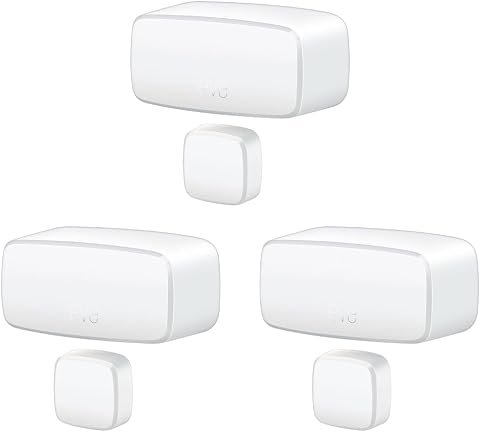
The Eve Door & Window sensors let you see the open or closed status of doors and windows at a glance and trigger automations across Apple Home, Alexa, Google Home, SmartThings and other Matter‑compatible platforms. They use Thread for reliable local communication, include a replaceable battery, and keep all data private with no cloud dependency.
Pros:
- Real‑time open/closed status with activity notifications
- Matter and Thread compatibility works across major smart home ecosystems
- Local communication ensures privacy—no cloud or registration required
- Battery included and replaceable for easy maintenance
Cons:
- Requires a compatible hub (Apple TV, HomePod, SmartThings Hub, Echo, Nest) to function
- Needs iOS 16.4+/Android 8.1+ devices for setup
Best for: Households adding contact sensors to selected windows
Not ideal for: Buyers who have not confirmed Matter ecosystem compatibility
Bottom line: Check frame fit and Matter requirements, then decide whether the three-pack covers your priority openings.
Smart Smoke Detector
Smoke alerts belong in a security checklist because a home’s safety plan should account for more than doors and cameras. The listed pick is the Sonic Alert HomeAware II Basic Starter Kit. The product name alone does not establish its precise detection method, included devices, alert types, or compatibility, so consult the current product information and instructions to understand exactly what the kit does and what else may be needed.
Before choosing any smoke-alert product, check applicable local requirements and the manufacturer’s guidance for placement, installation, testing, and maintenance. Confirm whether the kit is a smoke detector itself or an alerting system intended to work with other equipment; do not rely on the name to answer that question. Consider the needs of everyone in the household, including how alerts are communicated and whether the proposed setup is suitable for the home. Verify the safety role of the kit before treating it as a substitute for required smoke alarms or other safety equipment. Plan where devices would go and make sure their operation can be checked and maintained.
What to look for:
- Confirm whether the kit detects smoke or relays alerts from other equipment.
- Review included components and any required compatible devices.
- Follow manufacturer and local guidance for placement and maintenance.
- Check how alerts are communicated and whether they suit the household.
- Confirm the kit does not leave required smoke protection unaddressed.
Sonic Alert HomeAware II Basic Starter Kit

This alerting system listens for the sound patterns from compatible smoke and carbon monoxide alarms in the same room; it does not detect smoke or CO itself. When an alarm sounds, it provides a flashing strobe, bed-shaker vibration, audio tones, and scrolling text alerts.
Pros:
- Combines strobe, bed-shaker, audio, and text alerts
- Scrolling display spells out alerts
- Can display cellphone notifications and landline call alerts
- Rechargeable battery backup helps during power outages
Cons:
- Does not detect smoke or carbon monoxide directly
- Must be placed in the same room as the existing alarms
- Alarm compatibility and triggering should be tested regularly
Best for: Households evaluating a smoke-alert starter kit
Not ideal for: Anyone assuming the product name confirms a standalone detector
Bottom line: Read the current instructions to establish what the HomeAware II kit does and what smoke protection your home still needs.
For a budget-first buying order, start by listing the gaps that matter most rather than buying every category at once. Confirm required smoke protection and entry-point needs, then compare door access and monitoring options. For camera systems and contact sensors, plan coverage and compatibility before selecting a package; this helps avoid buying equipment that does not suit the layout or existing smart-home setup.
Take measurements, check current product documentation, and work through the checklist one space at a time. A thoughtful upgrade can be built in stages, with each addition chosen for a clear role and a workable installation. Start with what your home needs, verify the details, and adjust the plan as your household’s priorities become clearer.