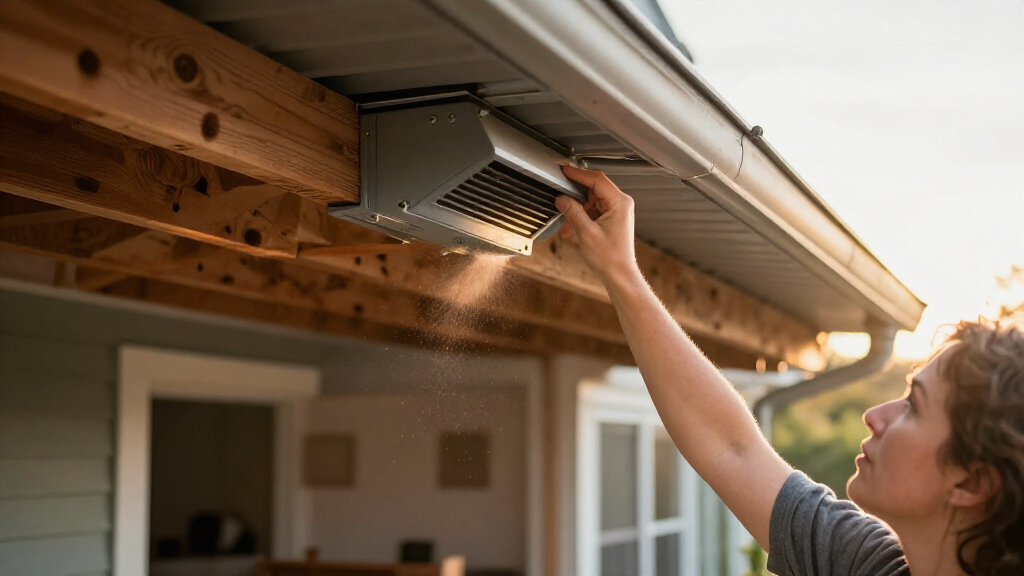
The best roof ventilation products depend on whether you need passive attic exhaust, a powered fan, a roof-penetration vent, or airflow for an RV or shipping container. My best overall pick is the Master Flow ERV4 1000 CFM Roof-Mount Attic Vent for buyers who want powered attic exhaust in a standard roof-mounted unit; the ABP CedAir-Mat stands out for ridge ventilation, while the AdaptAIR Roof Vent System suits shipping containers. The main tradeoffs are passive simplicity versus powered airflow, roof compatibility, and whether a product vents an attic or serves a duct, container, or vehicle. Installation requirements and the need for intake ventilation also affect results. Read on for a breakdown of all 13 options and how to match one to your roof.

Get home appliances delivered free with Prime
- Fast, free delivery on millions of items
- Prime Video, Amazon Music and more included
- Member-only deals all year
Complete the kit



Key Takeaways
- The lineup spans different jobs: attic fans, turbines, ridge ventilation, duct exhaust caps, container ventilation, and an RV fan are not interchangeable.
- Powered attic exhaust is the strongest fit for active airflow needs: the Master Flow ERV4 and ERV6 stand apart from passive turbines, but they require electrical planning.
- Passive products trade control for simplicity: the stainless-steel turbines and ridge vent options avoid powered operation, while performance depends on wind, layout, and compatible intake airflow.
- Small duct caps solve a narrower problem: the RDP, Hon&Guan, JYINCPED, and goose-neck vents suit compatible exhaust runs, not whole-attic ventilation.
- Specialty fit matters more than a broad feature list: AdaptAIR targets shipping containers, while the 12V RV fan is designed for a 14-by-14-inch RV roof opening and vehicle use.
| Stainless Steel 201 Non-Powered Roof Turbine Ventilator, 110 mm |  | Best for Small Roof Openings | Material: 201 stainless steel; alloy steel | Vent diameter: 110 mm | Weight: 1.28 pounds | VIEW LATEST PRICE | See Our Full Breakdown |
| ABP CedAir-Mat Roof Ventilation Mat, 39 in. x 61.5 ft. |  | Best for Contoured Roof Assemblies | Manufacturer: Advance Building Products | Material: Plastic; described as a flexible nylon matrix | Size: 39 inches x 61.5 feet | VIEW LATEST PRICE | See Our Full Breakdown |
| RDP Copper Rooftop Exhaust Vent Cap with Damper, Screen, and 3-Inch Extension (8-Inch) |  | Best for Ducted Kitchen and Bathroom Exhaust | Brand: RDP | Material: 16-ounce solid copper | Size: 8 inches | VIEW LATEST PRICE | See Our Full Breakdown |
| DioOnes Stainless Steel Turbine Roof Ventilator, 7.9-Inch |  | Best Wind-Powered Turbine | Manufacturer: DioOnes | Material: 304-grade stainless steel | Diameter: 7.9 inches (20 cm) | VIEW LATEST PRICE | See Our Full Breakdown |
| Roof Ridge Vent Mesh Roll with Activated Carbon Filter, 19.7 ft x 9.8 in |  | Best for Filtering Debris at a Ridge Vent | Length: 19.7 feet | Width: 9.8 inches | Weight: 1.7 pounds | VIEW LATEST PRICE | See Our Full Breakdown |
| Hon&Guan 4-Inch Galvanized Steel Roof Vent Cap with Damper, Black |  | Best for Compact 4-Inch Duct Runs | Manufacturer: Hon&Guan | Part number: PM130 | Duct size: 4 inches | VIEW LATEST PRICE | See Our Full Breakdown |
| Master Flow ERV4 1000 CFM Roof-Mount Attic Vent, Black |  | Best for Powered Attic Ventilation | Model: ERV4 | Airflow capacity: Up to 1,000 CFM | Recommended attic area: Up to 1,600 sq ft | VIEW LATEST PRICE | See Our Full Breakdown |
| JYINCPED 4-Inch Galvanized Steel Roof Vent Kit with Raised Edge |  | Best 4-Inch Kit for Added Rain Protection | Manufacturer: JYINCPED | Part number: RFVC-003-4 Inch Black Roof Vent | Duct diameter: 4 inches | VIEW LATEST PRICE | See Our Full Breakdown |
| Goose Neck Painted Exhaust Roof Vent with Extension, 10-Inch, Brown |  | Best for Larger Bathroom or Kitchen Exhaust Ducts | Size: 10 inches | Material: 28-gauge galvanized steel | Color: Brown | VIEW LATEST PRICE | See Our Full Breakdown |
| AdaptAIR Roof Vent System with 12-Inch Wind-Powered Turbine for Shipping Containers |  | Best for Shipping Container Roofs | Manufacturer and model: Container Creations CC-RVS | Turbine size: 12 inches | Turbine power: Wind-powered | VIEW LATEST PRICE | See Our Full Breakdown |
| Master Flow ERV6 1500 CFM Powered Roof Mount Attic Fan with Thermostat Controller, Brown |  | Best for Large Attics | Airflow capacity: 1,500 CFM | Recommended attic area: Up to 2,800 sq ft | Mounting type: Roof mount | VIEW LATEST PRICE | See Our Full Breakdown |
| 4-Inch Stainless Steel Turbine Roof Vent |  | Best Compact Wind-Powered Vent | Power source: Wind-powered | Vent diameter: 4.33 in (110 mm) | Body material: Stainless steel | VIEW LATEST PRICE | See Our Full Breakdown |
| 12V RV Roof Vent Fan, 14 x 14 in, with Four-Color LED, Reversible Airflow, Remote Control, and Rain Sensor |  | Best for RV Roof Ventilation | Power source: 12V DC | Compatible roof opening: 14 × 14 in or 400 × 400 mm | Compatible roof thickness: 1.5–3.3 in | VIEW LATEST PRICE | See Our Full Breakdown |
| roof ventilation product | Material |
|---|---|
| Stainless Steel 201 Non-Powere | 201 stainless steel; alloy steel |
| ABP CedAir-Mat Roof Ventilatio | Plastic; described as a flexible nylon matrix |
| RDP Copper Rooftop Exhaust Ven | 16-ounce solid copper |
| DioOnes Stainless Steel Turbin | 304-grade stainless steel |
| Roof Ridge Vent Mesh Roll with | — |
| Hon&Guan 4-Inch Galvanized Ste | Galvanized steel with polyester powder coating |
| Master Flow ERV4 1000 CFM Roof | Galvanized steel |
| JYINCPED 4-Inch Galvanized Ste | — |
| Goose Neck Painted Exhaust Roo | 28-gauge galvanized steel |
| AdaptAIR Roof Vent System with | — |
| Master Flow ERV6 1500 CFM Powe | — |
| 4-Inch Stainless Steel Turbine | — |
| 12V RV Roof Vent Fan | — |
More Details on Our Top Picks
Stainless Steel 201 Non-Powered Roof Turbine Ventilator, 110 mm
This compact turbine is a fit for buyers who need ventilation at a small roof opening rather than a broad attic ridge or large exhaust outlet. Its 110 mm vent diameter and stainless-steel construction give it a smaller footprint than the DioOnes 7.9-inch turbine, which is aimed at larger openings. The listing says the unit is non-powered and intended to help circulate air, making it distinct from powered attic fans such as the Master Flow ERV4. There is a material listing inconsistency, though: the product is described as non-powered while its specs name a corded electric power source. I would verify the actual operating method before buying. Its narrow diameter also limits its usefulness for larger spaces where a higher-capacity vent may be needed.
Pros:- Compact 110 mm vent diameter suits small roof openings.
- 201 stainless steel is specified for outdoor use and rust resistance.
- Intended to help circulate air and reduce heat buildup.
- Listed for residential, garage, warehouse, and factory roofs.
Cons:- The small diameter may not provide enough ventilation for larger roof spaces.
- The listing conflicts on whether the unit is non-powered or corded electric.
- No airflow capacity is provided to help size it for a particular space.
Best for: Owners of small roof openings on garages, sheds, or compact attic spaces who want a stainless-steel vent and can confirm its power requirements before installation.
Not ideal for: Buyers ventilating a large attic or seeking a clearly specified powered or wind-driven system; the 110 mm opening is small and the power-source details conflict.
- Material:201 stainless steel; alloy steel
- Vent diameter:110 mm
- Weight:1.28 pounds
- Dimensions:7.8 x 7.9 x 7.8 inches
- Blade length:11 cm
- Listed power source:Corded electric; description calls the unit non-powered
- Package quantity:1
Our verdict“Choose this compact vent for a small opening only after confirming whether it needs electrical power.”
ABP CedAir-Mat Roof Ventilation Mat, 39 in. x 61.5 ft.
Unlike a roof cap or turbine, the ABP CedAir-Mat works beneath the roofing material, creating an airspace between the roof covering and sheathing. That makes it the more relevant choice for buyers addressing airflow across a roof assembly, while the RDP Copper Rooftop Exhaust Vent Cap serves a ducted bathroom or kitchen exhaust line. The flexible nylon matrix is designed to bend around contoured surfaces, and its long roll can cover an extended run when cut and fitted to the roof. This is installation material, not a standalone vent: it does not include additional components, and its benefits depend on correct roof detailing and fit. Buyers seeking a simple, ready-to-connect roof outlet should choose a vent cap instead.
Pros:- Creates an airspace between roofing material and sheathing.
- Flexible matrix can conform to contoured roof surfaces.
- Long roll can be trimmed for extended roof runs.
- Designed to support airflow and reduce moisture-related damage.
Cons:- Requires correct installation within the roof assembly to serve its intended purpose.
- Does not function as a standalone exhaust outlet or roof-mounted vent.
- No additional components are included.
Best for: Roofers and homeowners planning a roof assembly with contoured surfaces who need a flexible mat to create an airflow space beneath the roofing material.
Not ideal for: Buyers looking for a complete exhaust vent, turbine, or ready-made roof outlet; this mat is a roof-layer component and includes no additional parts.
- Manufacturer:Advance Building Products
- Material:Plastic; described as a flexible nylon matrix
- Size:39 inches x 61.5 feet
- Thickness:0.41 inches
- Dimensions:738 x 39 x 0.41 inches
- Weight:14 pounds
- Color:Black
- Included components:No additional items included
Our verdict“Pick this mat for under-roof airflow on a contoured assembly, not as a replacement for a roof vent or exhaust cap.”
RDP Copper Rooftop Exhaust Vent Cap with Damper, Screen, and 3-Inch Extension (8-Inch)
The RDP cap is the lineup’s most specialized option: it is designed to terminate a ducted bathroom or kitchen exhaust, not ventilate an attic by itself. Its backdraft damper helps limit outside air entering through the duct, while the removable screen allows access for clearing debris. The 3-inch extension supports connection to solid metal or flexible ducting, but buyers need to match the 8-inch size to their duct and check airflow compatibility. Compared with the wind-powered DioOnes turbine, this cap serves a defined exhaust route rather than relying on wind to turn and draw attic air. Solid copper sets it apart in construction, but this purpose-built design is less suitable for buyers who need general roof-space ventilation.
Pros:- Backdraft damper helps limit outside air entering the exhaust duct.
- Removable screen can be taken out for cleaning.
- 3-inch extension is designed for solid metal or flexible ducting.
- Made from 16-ounce solid copper.
Cons:- The 8-inch size requires careful duct measurement before purchase.
- Designed for bathroom and kitchen exhaust rather than general attic airflow.
- Airflow compatibility should be checked against the exhaust system.
Best for: Homeowners or contractors terminating an 8-inch bathroom or kitchen exhaust duct who need a backdraft damper and removable screen.
Not ideal for: Buyers seeking general attic ventilation or those with ducts that do not match the 8-inch connection; duct sizing and airflow compatibility need checking.
- Brand:RDP
- Material:16-ounce solid copper
- Size:8 inches
- Extension length:3 inches
- Damper:Backdraft damper
- Screen:Removable
- Duct compatibility:Solid metal or flexible ducting
- Country of manufacture:USA
Our verdict“Choose this copper cap for a compatible 8-inch kitchen or bathroom exhaust duct, not for broad attic ventilation.”
DioOnes Stainless Steel Turbine Roof Ventilator, 7.9-Inch
For buyers who want a dedicated attic turbine without wiring, the DioOnes is the clearest fit in this group. Its wind-powered operation avoids the electrical connection required by powered fans, while the 7.9-inch diameter is substantially larger than the 110 mm opening on the Stainless Steel 201 model. A weatherproof cap is intended to help keep rain out, and the listing describes the unit as quiet. The tradeoff is that airflow depends on available wind, so it cannot offer the same controlled operation as a powered attic fan such as the Master Flow ERV4. I would also verify the unusually low listed weight of 1.76 ounces and confirm mounting suitability before installation.
Pros:- Wind-powered operation does not require electricity.
- 304-grade stainless steel is specified for corrosion resistance.
- Weatherproof cap is designed to help prevent rain infiltration.
- Larger 7.9-inch diameter than the 110 mm Stainless Steel 201 model.
Cons:- Ventilation depends on available wind.
- The listed weight of 1.76 ounces is unusually low and should be verified.
- No airflow capacity is provided for comparing ventilation needs.
Best for: Homeowners seeking a larger, wind-driven attic vent who want to avoid electrical wiring and can accept airflow that varies with wind conditions.
Not ideal for: Buyers who need dependable ventilation regardless of wind or who require confirmed installation weight and mounting details before selecting hardware.
- Manufacturer:DioOnes
- Material:304-grade stainless steel
- Diameter:7.9 inches (20 cm)
- Item weight:1.76 ounces (as listed)
- Product dimensions:11.8 x 11.5 x 11.5 inches
- Power source:Wind-powered
- Special features:Noiseless; vented
- Package quantity:1
Our verdict“Choose this turbine for wind-dependent attic ventilation without wiring, after confirming its listed weight and mounting requirements.”
Roof Ridge Vent Mesh Roll with Activated Carbon Filter, 19.7 ft x 9.8 in
This roll adds a filtering layer to a ridge-vent setup rather than replacing the vent itself. Its activated carbon layer is described as capturing dust and pollen and helping reduce musty odors, while the mesh is intended to block insects and outdoor debris without closing off airflow. That makes it a different kind of choice from the ABP CedAir-Mat, which creates an airspace beneath roofing material instead of filtering air at a ridge. The roll can be trimmed for different layouts, but fitting it requires measuring, cutting, and securing it to the existing vent arrangement. Buyers should treat it as an accessory and confirm that its dimensions suit their ridge; it is not a complete ventilation system.
Pros:- Activated carbon layer is intended to capture dust and pollen and reduce musty odors.
- Mesh is designed to block insects, leaves, and outdoor debris.
- Flexible roll can be trimmed to fit different roof layouts.
- Designed for exposure to sun, rain, wind, and seasonal temperature changes.
Cons:- Requires measuring, cutting, and securing during installation.
- Fit may need customization for different ridge sizes and layouts.
- Functions as a ridge-vent filter layer, not a complete roof ventilation product.
Best for: Homeowners with an existing ridge-vent arrangement who want a customizable mesh layer intended to filter dust, pollen, insects, and debris.
Not ideal for: Buyers installing a complete new roof ventilation system or those who want a drop-in part without measuring, trimming, and securing it.
- Length:19.7 feet
- Width:9.8 inches
- Weight:1.7 pounds
- Product dimensions:9.8 x 7 x 7 inches
- Color:Black
- Material/features:Vent mesh with activated carbon filter layer
- Included components:1 roll of roof ridge vent mesh filter
- Model:rf001
Our verdict“Choose this roll as a customizable filter layer for a compatible existing ridge vent, not as a standalone vent.”
Hon&Guan 4-Inch Galvanized Steel Roof Vent Cap with Damper, Black
I’d choose the Hon&Guan 4-inch cap for a compact exhaust duct where a basic roof or wall termination needs both a damper and a screen. Its galvanized steel body with powder coating adds corrosion protection, while the included pipe extension and four mounting holes support a straightforward connection. Compared with the larger Goose Neck Painted Exhaust Roof Vent, this cap is built for narrower 4-inch ducting rather than 10-inch exhaust runs, so matching the duct size matters more than chasing high airflow. The mesh can help deter small animals and birds, but the stated airflow figure is a manufacturer claim and does not establish performance in every installation. I’d skip it for oversized ducts or buyers who need documented airflow figures.
Pros:- Powder-coated galvanized steel is designed to resist corrosion.
- Includes a backdraft damper and mesh cover.
- Pipe extension supports connection to compatible 4-inch ducting.
- Can be mounted on a roof or wall.
Cons:- The 4-inch connection limits compatibility with other duct sizes.
- The stated airflow figure is a manufacturer claim and may vary with the installation.
Best for: Homeowners terminating a compatible 4-inch bathroom or general exhaust duct through a roof or wall who want a damper and mesh included.
Not ideal for: Buyers with ducting larger than 4 inches or those selecting a vent by independently verified airflow performance.
- Manufacturer:Hon&Guan
- Part number:PM130
- Duct size:4 inches
- Material:Galvanized steel with polyester powder coating
- Damper:Backdraft damper
- Mesh grid gap:Approximately 3 mm
- Dimensions:7 x 0.98 x 9 inches
- Item weight:1.8 pounds
Our verdict“Pick this when your duct is 4 inches and you want a coated metal cap with a damper and mesh in one compact unit.”
Master Flow ERV4 1000 CFM Roof-Mount Attic Vent, Black
For an attic that needs active air movement, the Master Flow ERV4 is the standout in this group: it is a powered attic fan rated for up to 1,000 CFM and recommended for spaces up to 1,600 square feet. Its hard-wired thermostat control lets the fan respond to attic temperature without relying on a portable or manually switched setup. That makes it a different kind of solution from the passive AdaptAIR Roof Vent System, which uses wind to turn a turbine and is intended for shipping containers, not residential attic spaces. The ERV4 requires a hard-wired electrical connection and cannot be installed on tile roofing, so roof type and wiring plans can rule it out. I’d also check that the attic’s existing intake ventilation suits a powered exhaust fan.
Pros:- Moves up to 1,000 CFM for larger attic ventilation needs.
- Hard-wired thermostat control automates operation based on temperature.
- Galvanized steel construction and an internal screen help protect the unit and deter animal entry.
- Listed approvals include UL, Miami-Dade County, and State of Florida.
Cons:- Not compatible with tile roofing.
- Requires a hard-wired electrical connection.
- A powered exhaust fan needs to suit the attic’s intake ventilation and installation conditions.
Best for: Homeowners with a compatible shingle or metal roof, a hard-wired power source, and an attic up to 1,600 square feet that needs powered ventilation.
Not ideal for: Owners of tile-roofed homes or buyers seeking a passive vent that needs no electrical connection.
- Model:ERV4
- Airflow capacity:Up to 1,000 CFM
- Recommended attic area:Up to 1,600 sq ft
- Power and control:Electric; hard-wired thermostat control
- Motor:PSC (permanent-split capacitor)
- Material:Galvanized steel
- Compatible roof slopes:3:12 to 12:12
- Roof compatibility:Not compatible with tile roofing
- Dimensions and weight:25 x 25 x 9 inches; 17 pounds
Our verdict“Choose the ERV4 for a wired, non-tile-roofed home attic that needs active ventilation rather than a passive turbine.”
JYINCPED 4-Inch Galvanized Steel Roof Vent Kit with Raised Edge
The JYINCPED 4-inch kit suits buyers who want a duct termination with more installation pieces included than the Hon&Guan cap. Its 1.58-inch raised edge is intended to help limit rainwater entering the duct, and the kit includes flexible aluminum duct, tape, and color-matched screws. A built-in damper and removable mesh add backdraft and debris protection. Compared with the Hon&Guan 4-Inch Roof Vent Cap, this package is more complete for a compatible duct run, but its cleaning access is less convenient: the mesh screen requires removing mounting screws. Installation also calls for sealing the vent with glue, so this is not a no-prep swap-in. The short listed warranty is another reason I’d favor it for a specific installation need, not for buyers prioritizing long warranty coverage.
Pros:- Raised edge is designed to help keep rain from flowing into the duct.
- Includes a backdraft damper and removable mesh screen.
- Kit includes flexible aluminum duct, vent tape, and color-matched screws.
- Compatible with solid metal and flexible 4-inch ducting.
Cons:- Installation requires sealing the vent with glue.
- Accessing the mesh for inspection or cleaning requires removing mounting screws.
- Listed warranty is 30 days.
Best for: DIYers installing compatible 4-inch solid or flexible duct who want a raised-edge vent and several connection and fastening accessories in the kit.
Not ideal for: Buyers who need easy screen cleaning, a long warranty, or a vent that can be installed without glue and sealing work.
- Manufacturer:JYINCPED
- Part number:RFVC-003-4 Inch Black Roof Vent
- Duct diameter:4 inches
- Material and finish:Galvanized steel; polished finish
- Raised edge:1.58 inches
- Included components:Roof vent cap, aluminum dryer vent tape, color-matched screws, flexible aluminum duct
- Dimensions:9.45 x 11.02 x 3.98 inches
- Item weight:3.65 pounds
- Warranty:30 days
Our verdict“Choose this kit when rain protection and included 4-inch duct accessories matter more than quick screen access or longer warranty coverage.”
Goose Neck Painted Exhaust Roof Vent with Extension, 10-Inch, Brown
Where the 4-inch Hon&Guan and JYINCPED caps are too narrow, this 10-inch goose-neck vent is intended for larger bathroom or kitchen exhaust systems. It pairs 28-gauge galvanized steel with a painted brown finish, and includes a backdraft damper, insect screen, and bottom extension for flexible tubing. That larger size is useful only when it matches the ductwork; measuring the duct before ordering is a must. Compared with the Hon&Guan 4-Inch Roof Vent Cap, this is a more specialized choice for a wider exhaust run, not a general replacement for small duct terminations. It is explicitly not intended for rooftop dryer termination, so dryer vent buyers should look elsewhere. The supplied details do not specify dimensions, weight, or roof-slope range, leaving fit planning dependent on confirming the actual installation.
Pros:- Designed for bathroom or kitchen exhaust systems.
- Includes a backdraft damper and insect screen.
- Bottom extension supports connection to flexible tubing.
- Galvanized steel body has a painted brown finish.
Cons:- Not intended for rooftop dryer termination.
- The 10-inch size requires careful duct measurement before purchase.
- Dimensions and compatible roof-slope range are not provided in the supplied product data.
Best for: Homeowners replacing or installing a 10-inch roof termination for a bathroom or kitchen exhaust system who need a damper, insect screen, and tubing extension.
Not ideal for: Anyone terminating a rooftop dryer vent or working with ducting that does not match the vent’s 10-inch size.
- Size:10 inches
- Material:28-gauge galvanized steel
- Color:Brown
- Mounting type:Roof mount
- Included features:Backdraft damper, insect screen, bottom extension
- Recommended use:Bathroom or kitchen exhaust
- Dryer termination:Not intended for rooftop dryer termination
- Country of manufacture:USA
Our verdict“Select this goose-neck vent for a measured 10-inch bathroom or kitchen exhaust run, but not for a dryer termination.”
AdaptAIR Roof Vent System with 12-Inch Wind-Powered Turbine for Shipping Containers
The AdaptAIR roof vent system fills a narrower role than the other picks: it combines a roof adapter and a 12-inch wind-powered turbine for shipping containers, aiming to reduce heat buildup and condensation. Its key fit requirement is the container’s 3.5-inch roof ribbing; the product data rules out 5.5- and 6.5-inch ribs and says it is not for side walls. Compared with the electrically powered Master Flow ERV4, this turbine does not use a hard-wired fan motor, but its wind-powered operation also means it is not the same controlled attic-ventilation solution. The installation package is unusually complete, with screws, drill bits, a driver bit, an abrasive pad, and instructions. I’d choose it only after checking the roof corrugation profile, since a mismatch defeats the main advantage of the kit.
Pros:- Combines a 12-inch wind-powered turbine with a stamped steel roof adapter.
- Designed to help reduce heat buildup and condensation in shipping containers.
- Includes installation hardware, drill bits, driver bit, abrasive pad, and instructions.
- Purpose-built for standard 3.5-inch container roof ribs.
Cons:- Fits standard 3.5-inch roof ribs only, not 5.5- or 6.5-inch ribs.
- Designed for roof corrugations and not for container side walls.
- Wind-powered operation differs from the thermostat-controlled, electrically powered Master Flow ERV4.
Best for: Shipping-container owners with standard 3.5-inch roof ribs who want a wind-powered turbine and a purpose-built roof adapter.
Not ideal for: Owners of containers with 5.5- or 6.5-inch roof ribs, buyers needing a side-wall vent, or homeowners seeking conventional attic ventilation.
- Manufacturer and model:Container Creations CC-RVS
- Turbine size:12 inches
- Turbine power:Wind-powered
- Adapter material:Stamped steel
- Compatible roof ribbing:3.5 inches
- Compatibility:Shipping-container roof corrugations; not side walls
- Included components:Adapter, turbine, 30 screws, 2 drill bits, driver bit, abrasive pad, instruction manual
- Dimensions and weight:17 x 17 x 2 inches; 12.2 pounds
- Color:Gray
Our verdict“Buy this for a shipping container roof with verified 3.5-inch ribs, not as a general residential attic vent.”
Master Flow ERV6 1500 CFM Powered Roof Mount Attic Fan with Thermostat Controller, Brown
For a larger attic that needs active exhaust, the Master Flow ERV6 offers up to 1,500 CFM and is sized for spaces up to 2,800 square feet. Its thermostat controller switches ventilation on automatically as temperatures rise, unlike the 4-Inch Stainless Steel Turbine Roof Vent, which relies on wind and a compatible small opening. Galvanized steel with a powder-coated finish suits outdoor roof mounting, while the brown color may blend better with some shingles than a silver vent.
The tradeoff is installation: this fan needs a hard-wired connection, so it is less convenient than a passive vent and may call for an electrician. It also does not fit tile roofing systems. Choose it for powered capacity and automatic control, not for a simple, universal roof-vent replacement.
Pros:- Up to 1,500 CFM of powered airflow for substantial attic ventilation
- Recommended for attic areas up to 2,800 square feet
- Thermostat controller automates operation as temperatures change
- Galvanized steel construction with a powder-coated finish
Cons:- Requires hard-wired installation
- Not compatible with tile roofing systems
Best for: Homeowners with a large, non-tile-roof attic who want thermostat-controlled powered exhaust.
Not ideal for: Tile-roof owners or buyers seeking a passive vent that avoids hard-wired installation.
- Airflow capacity:1,500 CFM
- Recommended attic area:Up to 2,800 sq ft
- Mounting type:Roof mount
- Controller:Thermostat; hard-wired
- Material and finish:Galvanized steel; powder coated
- Color:Brown
- Dimensions:25 × 25 × 9 in
- Roof compatibility:Not compatible with tile roofing systems
Our verdict“Choose the ERV6 for thermostat-controlled ventilation in a large, non-tile-roof attic if hard-wired installation suits your project.”
4-Inch Stainless Steel Turbine Roof Vent
This compact turbine is a fit for buyers who want wind-powered exhaust without adding a motor or electrical connection. Its 110 mm vent diameter makes it a different kind of solution from the Master Flow ERV6: the ERV6 actively moves up to 1,500 CFM for a large attic, while this unit is intended for a much smaller opening and turns only when wind moves its blades. That simpler operating approach avoids powered controls, but airflow will vary with conditions.
The stainless steel body and galvanized bearings are designed to resist corrosion and support smooth rotation outdoors. At 1.65 pounds, it is also relatively light to handle. Its compact size is the main limitation, not a substitute for a high-capacity attic fan. Check the existing opening carefully; buyers needing broader coverage may be better served by the ERV6 or a larger turbine such as the DioOnes 7.9-Inch Stainless Steel Turbine Roof Ventilator.
Pros:- Wind-powered operation does not require an electrical connection
- Stainless steel body is designed for corrosion resistance
- Galvanized bearings support smooth turbine rotation
- Lightweight at 1.65 pounds
Cons:- Ventilation depends on wind to rotate the turbine
- The 110 mm diameter limits it to compatible small openings
Best for: Buyers with a 110 mm vent opening who want a lightweight, wind-powered ventilator for a small attic, garage, or utility space.
Not ideal for: Owners seeking steady, powered airflow for a large attic or those without a compatible 110 mm opening.
- Power source:Wind-powered
- Vent diameter:4.33 in (110 mm)
- Body material:Stainless steel
- Bearing material:Galvanized steel
- Dimensions:7.08 × 7.48 × 4.33 in
- Weight:1.65 lb (0.75 kg)
- Package quantity:1
Our verdict“Pick this turbine for a compatible small opening and passive, wind-driven exhaust, but choose a powered fan when airflow needs to be more consistent.”
12V RV Roof Vent Fan, 14 x 14 in, with Four-Color LED, Reversible Airflow, Remote Control, and Rain Sensor
Unlike the attic-focused Master Flow ERV6 or the wind-driven 4-Inch Stainless Steel Turbine, this fan is built for an RV’s standard 14 × 14-inch roof opening. Its 12V motor offers four speeds and reversible airflow, so owners can exhaust warm interior air or draw air in without relying on wind. A rain sensor closes the adjustable cover during storms, and remote plus manual controls provide options for different setups.
The listed 674 CFM capacity and 25 dB noise level speak to airflow and quieter operation, while the four-color LED adds interior lighting. Those extras bring added complexity compared with a basic roof vent, and the fan needs a compatible 12V DC supply. Fit is also limited to roof thicknesses from 1.5 to 3.3 inches. This is a specialized RV choice, not a replacement for a residential attic fan.
Pros:- Reversible airflow and four speed settings
- Rain sensor closes the adjustable cover during storms
- Remote and manual controls offer two operating options
- Built-in four-color LED light
Cons:- Requires a compatible 12V DC power supply
- Fits only roof thicknesses from 1.5 to 3.3 inches
- The 14 × 14-inch opening requirement limits installation compatibility
Best for: RV owners with a 14 × 14-inch roof opening and 1.5–3.3-inch roof thickness who want powered, reversible ventilation.
Not ideal for: Homeowners seeking attic ventilation or RV owners with a different opening size, roof thickness, or no compatible 12V DC supply.
- Power source:12V DC
- Compatible roof opening:14 × 14 in or 400 × 400 mm
- Compatible roof thickness:1.5–3.3 in
- Airflow capacity:674 CFM
- Speeds:4
- Maximum wattage:40W
- Noise level:25 dB
- Controls and features:Remote and manual controls; reversible airflow; rain sensor; timer
- Warranty:3-year parts replacement and lifetime repair service
Our verdict“Choose this fan for an RV with a matching roof opening and thickness when you want powered, reversible airflow and weather-responsive cover control.”
How We Picked
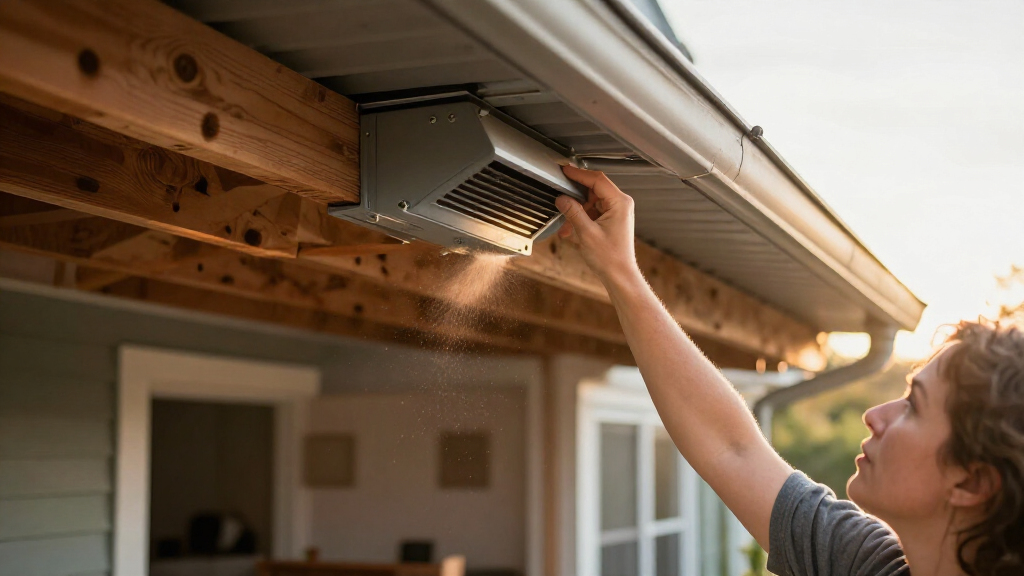
I compared these products by ventilation role, airflow approach, installation fit, materials, and control. A roof-mounted attic fan serves a different purpose from a duct cap or ridge mat, so I ranked each option against the job it is built to do rather than treating all 13 as direct substitutes. I also weighed practical tradeoffs such as powered operation and wiring, passive dependence on conditions, stated dimensions, and whether the product is intended for a house, container, or RV.
The ranking favors products with a clearly defined use and useful balance of capability and fit for a broad set of buyers. The Master Flow ERV4 leads as a general powered attic option; the CedAir-Mat and AdaptAIR rank well for distinct ventilation layouts. Specialty fittings and vehicle products rank lower for general roof ventilation, not because they cannot suit their intended tasks, but because their fit is narrower. I also account for installation complexity and the need to pair exhaust with adequate intake ventilation.
Factors to Consider When Choosing Best Roof Ventilation Products
Before choosing a product, identify what space needs ventilation and how air is meant to enter and leave it. A roof fitting that works for a duct will not replace an attic system, and adding exhaust without a suitable intake path can limit airflow. These broader checks help prevent a mismatch that product specifications alone may not reveal.
Match the vent to the space and airflow path
Start by identifying whether the target is an attic, a bathroom or appliance duct, a shipping container, or an RV cabin. Roof products in this roundup cover all four, but their functions are distinct: an exhaust cap connects to a duct, while an attic fan or ridge system manages broader roof-space airflow. A common mistake is choosing a product because its opening looks large enough without checking where its air comes from and where it goes. Map the intake and exhaust path before buying, including obstructions and any existing vents. If the airflow path is unclear, a roofer or ventilation professional can help identify the right system type.
Pair exhaust capacity with adequate intake
Exhaust cannot move air effectively if replacement air has no clear route into the space. Review existing soffit, eave, or other intake vents before adding a turbine or powered fan, and avoid blocking those openings with insulation or stored items. More exhaust capacity is not automatically better; an unbalanced system can draw air from unintended places, including living areas. When comparing powered fans, treat the stated airflow figure as one part of the decision, not a guarantee of whole-attic performance. The roof area, attic layout, intake capacity, and installation all shape the result.
Choose passive or powered ventilation for the right reasons
Passive turbines and ridge products avoid electrical wiring and moving fan motors, but their output can vary with wind and the roof layout. Powered models offer active airflow and may include controls, yet they add wiring, electrical work, and mechanical components. Do not choose a powered fan solely because its airflow number is higher; first determine whether the attic has an intake path and whether active operation fits the building. A passive option can be a simpler fit where a compatible system is already planned. If reliable, controlled operation matters more than avoiding wiring, a powered unit may be the better tradeoff.
Check roof geometry, opening size, and weather exposure
Confirm the roof type, pitch, opening dimensions, duct diameter, and clearance before ordering. A product sized for a 4-inch duct or a 14-by-14-inch RV opening cannot be treated as a general-purpose roof vent. Roof penetrations also need correct flashing and sealing for the roofing material and weather conditions; a vent that fits the opening can still leak if installed incorrectly. Check whether the product includes the parts needed for your setup, such as an extension, damper, screen, or mounting hardware. When measurements or flashing details are uncertain, installation guidance from a qualified roofer is safer than adapting the opening on site.
Weigh materials, maintenance, and controls
Material choice affects durability and upkeep, but it should be judged alongside location and exposure rather than in isolation. Stainless steel and copper options offer different material characteristics from galvanized steel, while painted finishes may need attention over time. Screens and dampers can help address pests or backdraft concerns, but they may also need inspection for blockage or wear. Powered fans and remote or sensor controls bring more operating features, along with added components that may need service. Choose the simplest setup that meets the airflow need and that you can inspect and maintain.
Pay for specialization only when the fit is right
A specialty product can be the best choice when its intended use matches yours, such as a container-specific system or an RV fan built around a standard roof opening. Those added functions do not make it a better house-attic vent. Before paying for controls, filters, or a powered system, ask whether the feature solves a real constraint in your installation. Beginners may benefit more from a clearly defined, compatible setup than from the product with the longest feature list. For a new or complex roof installation, include labor, wiring, and sealing needs in the decision rather than comparing the vent alone.
Frequently Asked Questions
Can I use a small roof vent cap instead of an attic ventilator?
Usually not, because a duct cap and an attic ventilator serve different airflow systems. A cap such as a 4-inch model is intended to terminate a compatible duct, while attic products move air through the roof space. Using a duct fitting as a substitute may leave the attic without a balanced intake and exhaust path. Check the duct size and the appliance or room the vent serves before choosing a cap. For whole-attic ventilation, select a system designed for that space.
Should I choose a powered attic fan or a passive turbine?
Choose based on the airflow path, roof layout, and whether you want electrical operation. Powered fans actively move air and may suit buyers who want controlled exhaust, but they add wiring and mechanical parts. Passive turbines avoid electrical connections, though their performance can vary with wind and installation conditions. Neither option can make up for blocked or inadequate intake vents. Check the attic’s intake openings and your roof structure before deciding.
Do I need both ridge ventilation and roof turbines?
Not automatically; combining exhaust types without a ventilation plan can create competing airflow paths. A ridge system and turbines may each be suited to particular roof layouts, but their placement and intake supply determine whether they work together. Review the existing vents and the attic’s geometry before adding another exhaust outlet. Avoid closing one type of vent based on guesswork, since that may upset the intended balance. A roofing professional can assess a mixed system when the layout is complex.
Can I install a powered roof fan without an electrician?
That depends on the fan’s electrical requirements, local rules, and your qualifications. A roof-mounted fan needs secure mounting and weatherproof roof flashing as well as safe electrical connections. If new wiring, a circuit, or changes to existing electrical work are required, use a qualified electrician and follow local code. Also confirm that the fan’s controls are compatible with the intended installation. Plan the roof work and electrical work together so neither compromises the other.
Which products in this roundup are suitable for an RV or shipping container?
The 12V RV roof fan is designed for an RV-style 14-by-14-inch roof opening and includes vehicle-focused airflow and control features. The AdaptAIR system is specifically aimed at shipping-container ventilation. Neither is a general substitute for a residential attic vent, and house roof products may not fit vehicle or container construction. Check opening dimensions, power supply, mounting surface, and weather exposure for the intended application. If the structure differs from the product’s stated use, confirm compatibility with the manufacturer before installation.
Conclusion
For broad residential attic use, my best overall pick is the Master Flow ERV4, while buyers seeking a higher-capacity powered option can compare it with the ERV6 and plan for electrical requirements. The best value-style choice is a passive stainless-steel turbine for a compatible roof and airflow plan; it keeps the setup simpler but depends more on conditions than a powered fan. For beginners, I’d start by matching a clearly specified product to an existing opening or duct and getting professional help with roof penetrations rather than choosing by feature count. The ABP CedAir-Mat is the better fit for ridge ventilation, and AdaptAIR is the specialized pick for shipping containers. RV owners should look to the 12V fan, while duct-exhaust needs call for a correctly sized cap. Choose the product that matches the space, intake path, and installation—not simply the one with the most features.