
TL;DR

Get home appliances delivered free with Prime
- Fast, free delivery on millions of items
- Prime Video, Amazon Music and more included
- Member-only deals all year
Lavazza’s Tablì and Keurig’s Alta use compressed coffee rounds rather than conventional coffee capsules. Livingetc reports that Tablì’s brewing unit is made entirely of coffee and that its packaging is recyclable through standard home recycling, but the source provides no comparative waste or lifecycle data.
Lavazza’s Tablì and Keurig’s Alta are testing a different format for single-serve coffee: compressed rounds of coffee that replace conventional capsules. The development could reduce reliance on pod materials, but available reporting does not establish how much waste the systems will avoid or how their full environmental impacts compare with existing machines.
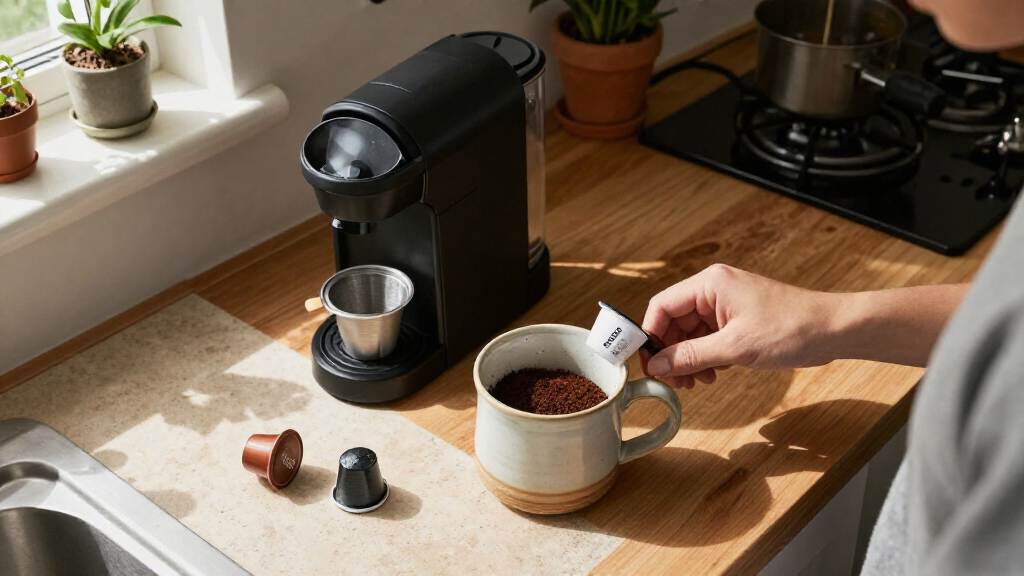
Livingetc’s report describes Tablì as a single-serve espresso system that uses a tab made from 100% coffee, with no coating or binder, according to the company. The report’s writer saw the machine demonstrated in London and said it operated much like a conventional pod brewer: users insert a coffee tab, close the lid and press a button. The writer described the resulting espresso as having a crema layer and tasting similar to espresso from a traditional machine; that is a firsthand assessment, not an independently measured product comparison.
Lavazza coffee expert David Cutler told Livingetc the company had spent five years researching the technology. He said the aim was to create a new approach to single-serve coffee. Cutler did not disclose how Lavazza compresses the coffee into a durable shape that can withstand production, shipping and brewing; the report says the method is a company secret.
The report also says Tablì packaging can go in standard household recycling, while used coffee grounds can go into food-waste collections where accepted or into home compost. Separately, it describes Keurig Alta’s AltaRounds as using what Keurig calls “plastic-free, plant-based protection” to keep the rounds intact. The source does not provide independent testing of either system’s materials, disposal outcomes or environmental performance.
A Different Route to Single-Serve Coffee
For consumers, these products retain the speed and portion control of a capsule machine while changing what goes into the brewer. If coffee rounds can be made and disposed of with fewer persistent materials than conventional capsules, they may address one part of the waste problem associated with single-serve coffee. That possibility is not yet the same as demonstrated environmental savings.
The distinction matters because a product’s impact depends on more than the brewing unit. Packaging, manufacturing, transport, how widely consumers can obtain the product, and whether local waste services accept the relevant materials all affect what happens after purchase. A coffee-only brewing tab may simplify disposal of the used serving, but it does not by itself establish that the whole system has a lower footprint.
For households choosing between a pod machine, a reusable system or another brewing method, the new formats add options but do not settle which is most sustainable. Readers will need clearer, comparable information on materials, collection rates and lifecycle impacts before drawing that conclusion.
Products Worth Considering

Philips Hue Festavia 65-Foot Smart LED String Lights, 250 Color-Changing Mini LEDs

Levoit Vital 100S-P Air Purifier with Washable Pre-Filter

LEVOIT Vital 200S-P Smart Air Purifier for Large Rooms
As an affiliate, we earn on qualifying purchases.
Capsule Waste and Earlier Alternatives
The Livingetc report cites a 2024 estimate from Knowledge Sourcing Intelligence that 12.6 million UK households owned a coffee pod machine, equal to 46% of UK households. It also cites a 2021 figure reported by The Independent: an estimated 29,000 coffee pods went to landfill per minute, with the report putting the share of capsules ending up there at 75% to 90%. These are figures attributed to earlier reporting, not new measurements made for the Tablì or Alta launches; the source does not provide a current update or the underlying methodology.
Some capsule companies and retailers offer collection or recycling programs, but the report notes that processing capsules can be difficult because coffee grounds must be separated from the capsule. It also contrasts conventional pods, which it says may take about 500 years to decompose, with compostable pods that may take roughly six months. Those estimates are reported without additional detail on conditions or product types, and should not be read as a direct comparison of the new coffee rounds.
Against that history, Tablì and Alta represent a shift in single-serve product design, not proof that the broader waste issue has been solved. The systems still depend on dedicated machines and packaged servings, and the report does not establish how their real-world use compares with reusable or non-pod brewing.
“We’ve been researching the technology behind Tablì for the past five years, developing a new approach to single-serve coffee that opens up an entirely new market segment.”
— David Cutler, Lavazza coffee expert, speaking to Livingetc
Environmental Benefits Still Unmeasured
The report does not include an independent lifecycle assessment comparing Tablì or Alta with conventional capsules, reusable pods or other brewing methods. It provides no figures for material use, manufacturing emissions, transport, total packaging waste, consumer adoption or the proportion of used rounds that will actually be composted or otherwise collected.
Several product details also remain open. Lavazza has not disclosed the process that keeps its all-coffee tab intact through shipping and use, and the source does not say whether Tablì is widely available, what it costs, or when it will reach different markets. It likewise gives no detailed specifications, availability or price for Keurig Alta. The claims about recyclable packaging and plant-based protection are reported, but independent verification and local disposal outcomes are not supplied.
Availability and Waste Data to Watch
The next useful developments will be clearer information on where and when each system is sold, its price and the range of coffees it accepts. More detailed product specifications would help consumers understand the materials in the brewing rounds and packaging, as well as the disposal instructions for each market.
Environmental comparisons will require evidence beyond product descriptions: independent lifecycle assessments, data on actual collection and composting, and comparisons that use the same assumptions across capsule, round and reusable systems. Until those details emerge, the confirmed development is a change in product format; the size of any resulting waste reduction remains uncertain.
Key Questions
Are Lavazza Tablì and Keurig Alta conventional coffee pods?
No. The report describes both as using compressed coffee rounds rather than conventional capsules. Tablì’s tab is described by Lavazza as made entirely of coffee; Keurig describes AltaRounds as having plastic-free, plant-based protection.
Does Tablì use plastic in its coffee tab?
According to the Livingetc report, Lavazza says the Tablì tab is 100% coffee with no coating or binder. The company has not disclosed the process that keeps it intact, and the report does not provide independent materials testing.
Can the used coffee grounds be composted?
Livingetc quotes recycling expert John Verity as saying used grounds can go into most UK council food-waste collections or home compost. Local collection rules vary, so households should check their council’s guidance.
Are the new systems proven to be better for the environment?
Not on the evidence in the report. The systems change the serving format, but there is no comparative lifecycle assessment or measured waste-reduction figure showing how they perform against conventional capsules or other brewing methods.
When can consumers buy Tablì or Keurig Alta?
The source describes Keurig Alta as launched in the United States but does not give detailed availability or pricing. It also does not provide a Tablì retail launch date, price or market-by-market availability.
Source: livingetc.com