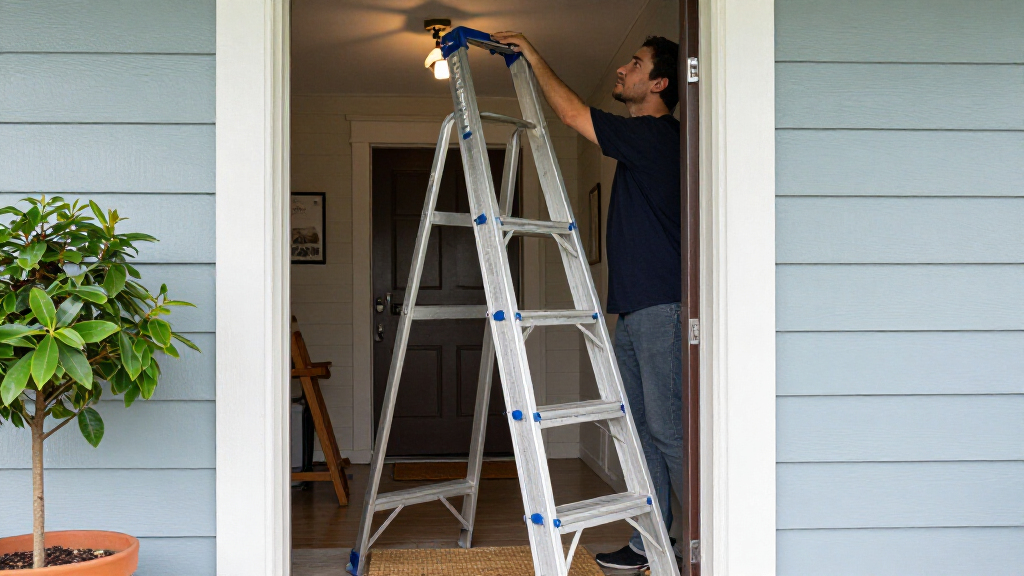

The best extension ladder for most buyers is the Louisville Ladder 24-Foot Fiberglass Extension Ladder, which pairs substantial reach with a 300-pound Type IA rating and nonconductive fiberglass rails. For frequent repositioning, the Little Giant Velocity offers multiposition flexibility, while the DEWALT 16-Foot Fiberglass Extension Ladder is a more manageable choice for shorter jobs near electrical hazards. The key tradeoffs are reach versus portability, fiberglass versus lighter aluminum, and a dedicated extension design versus a ladder that can change shape. I compare all 15 options by their intended jobs, handling demands, and practical limitations. Read on for the full breakdown and guidance on choosing a ladder that fits your work and storage space.

Get home appliances delivered free with Prime
- Fast, free delivery on millions of items
- Prime Video, Amazon Music and more included
- Member-only deals all year
Complete the kit


Key Takeaways
- Dedicated fiberglass extension ladders lead this roundup for high-reach work: the Louisville 24-foot and LITE 28-foot models offer more direct choices than multiposition designs when the job is mainly roof or exterior access.
- The longest ladder is not automatically the right ladder. A 28-foot model adds reach but is harder to transport and position than the 16- and 20-foot options.
- Multiposition models trade simplicity for flexibility. Little Giant Velocity and the LEVELEVE options can serve more than one setup, but their extra joints and conversion steps may not suit buyers who only need an extension ladder.
- Fiberglass is the stronger fit around electrical hazards, while aluminum favors easier handling. Material choice affects both carrying effort and worksite suitability, not just construction.
- Compact telescoping models solve storage and transport problems, not every high-reach problem. The Soctone 12.5-foot ladder is easier to stow, while longer fixed extension models better suit sustained exterior access.


| extension ladder | Material | Brand | Model | Load capacity |
|---|---|---|---|---|
| LEVELEVE 22-Foot Multi-Positio | Aluminum and plastic | LEVELEVE | LD-6 | 330 lb |
| Little Giant HyperLite 20-Foot | Fiberglass | Little Giant | 18720 | — |
| LEVELEVE 20-Foot Multi-Positio | Aluminum alloy | LEVELEVE | — | 350 lb |
| Louisville Ladder 24-Foot Fibe | Fiberglass | Louisville Ladder | L-3022-24PT | 300 lb |
| Little Giant SkyScraper 17-Foo | 6005-T5 aluminum | Little Giant | 10110 | 300 lb in product description; 375 lb in item details |
| Louisville FE3216 16-Foot Fibe | Fiberglass | Louisville Ladder | FE3216 | — |
| LANBITOU 14-Foot Multi-Positio | Aluminum | LANBITOU | TSZ9001-4 | — |
| LITE 28-Foot Fiberglass Extens | Fiberglass | — | LP-3021-28 | — |
| Soctone 17-Foot Multi-Position | Aluminum alloy | Soctone | — | 330 lb |
| DEWALT 16 ft Fiberglass Extens | Fiberglass | DEWALT | DXL3020-16PT | 300 lb |
| Louisville Ladder AE2224 24-Fo | Aluminum | — | — | — |
| SocTone 12.5 ft Telescoping Al | Aluminum alloy | — | — | 330 lb |
| Little Giant Velocity 17-Foot | Aircraft-grade aluminum | — | Velocity 17 | — |
| Soctone 14-Foot Multi-Position | Aluminum alloy | — | — | 330 lb |
| Louisville Ladder 20-Foot Fibe | — | — | — | — |
More Details on Our Top Picks
LEVELEVE 22-Foot Multi-Position Telescoping A-Frame Ladder
The LEVELEVE’s main advantage over a conventional extension ladder like the Louisville Ladder 24-Foot Fiberglass Extension Ladder is flexibility: it can be set up as an A-frame, step, telescoping, right-angle, or scaffold configuration. That makes it a better fit for homeowners who switch between reaching overhead, working near walls, and handling varied indoor or outdoor jobs. Stabilizer rods with eight ground support points, reinforced non-slip steps, and transport wheels add practical support and mobility. The tradeoff is that flexibility comes with setup rules: the sections need at least one double-layer step overlap, and they must not all be fully extended at once. Its maximum height is listed as 20 feet, despite the 22-foot title, so buyers needing a verified 22-foot reach should look elsewhere. At 38 pounds, it is also heavier than a simpler ladder may be.
Pros:- Five configurations suit a wider range of tasks than a conventional extension ladder.
- Stabilizer rods provide multiple ground contact points.
- Reinforced non-slip steps support more secure footing.
- Wheels on the support rods make carrying and extending it easier.
Cons:- The listed maximum height is 20 feet, not the 22 feet stated in the title.
- Use requires maintaining at least one double-layer step overlap.
- All sections must not be fully extended simultaneously.
Best for: Homeowners who want one ladder for varied tasks and are willing to follow configuration and overlap instructions carefully.
Not ideal for: Buyers who need a straightforward fixed-length extension ladder, or who require a confirmed 22-foot maximum reach.
- Brand:LEVELEVE
- Model:LD-6
- Material:Aluminum and plastic
- Maximum height:20 feet listed; title states 22 feet
- Weight:38 lb
- Load capacity:330 lb
- Configurations:Step, A-frame, telescoping, right-angle, scaffold platform
- Features:Non-slip steps, stabilizer rods, wheels
- Tubing wall thickness:2 mm
Our verdict“Choose this LEVELEVE if versatility matters more than simple extension-ladder operation and its 20-foot listed reach meets your needs.”
Little Giant HyperLite 20-Foot Fiberglass Extension Ladder
For work near electrical hazards, the HyperLite is the clearest specialist pick here: its non-conductive fiberglass rails offer a different safety profile from the aluminum LEVELEVE 20-Foot Multi-Position Ladder. It also stays focused on extension-ladder use rather than offering multiple configurations, with a double-pulley system that keeps the rope clear of the climbing path and a built-in bubble level to help with setup. Flat, wide rungs are intended to reduce foot fatigue on longer jobs, while riveted rungs can be repaired or replaced. Those jobsite-oriented details make it more compelling than a general-purpose convertible ladder for repeated exterior work. The tradeoffs are a 20-foot length that can be awkward to store in tight spaces and conflicting capacity information: the description says 300 pounds, while an item highlight says 375. I would verify the rating before use.
Pros:- Non-conductive fiberglass rails suit work near electrical hazards.
- Flat, wide rungs are designed to reduce foot fatigue.
- Built-in bubble level and adaptable feet help with setup on varied ground.
- Riveted rungs can be repaired or replaced.
Cons:- Load capacity is inconsistently listed as 300 lb and 375 lb.
- The 20-foot ladder can be awkward to maneuver or store in tight spaces.
Best for: Electricians and maintenance workers who need a 20-foot extension ladder with non-conductive rails and repairable rungs.
Not ideal for: Buyers who need a compact ladder for cramped storage, or who cannot verify which listed load-capacity figure applies.
- Brand:Little Giant
- Model:18720
- Ladder type:Extension ladder
- Length:20 ft
- Material:Fiberglass
- Rail design:Interlocking C-channel
- Rung design:Wide, flat, riveted
- Foot design:Sure-Set spike feet with rubber pads
- Warranty:1 year
Our verdict“Pick the HyperLite for electrical or repeated jobsite work if you can confirm its applicable load rating before buying.”
LEVELEVE 20-Foot Multi-Position Aluminum Extension Ladder with Stabilizer Bars and Wheels
This LEVELEVE shares the five-way format of the other LEVELEVE in this group, but its listed 350-pound load capacity gives it a distinct appeal for buyers who need more stated capacity than that model’s 330 pounds. The 20-foot reach and conversions to A-frame, step, telescopic, right-angle, and scaffold setups make it more adaptable than the Little Giant HyperLite 20-Foot Fiberglass Extension Ladder, which is a dedicated extension ladder. Reinforced non-slip steps, thickened joints, and two stabilizer rods with rollers are aimed at supporting setup and handling across different jobs. That versatility comes with a learning curve: buyers should review all safety instructions before changing configurations. The product data also lists a 240-inch height, equivalent to 20 feet, alongside a 20-foot maximum extension, so those figures align, but the setup details still deserve careful checking.
Pros:- Five configurations cover tasks that a fixed extension ladder cannot handle.
- Listed 350 lb capacity exceeds the 330 lb rating of the other LEVELEVE model.
- Stabilizer rods with rollers support handling and setup.
- Reinforced non-slip steps and thickened joints are designed for added support.
Cons:- Multiple configurations require close attention to safety instructions.
- Aluminum construction is not the non-conductive choice for electrical work.
Best for: Homeowners and tradespeople who want several ladder configurations and value the higher listed capacity among these two LEVELEVE models.
Not ideal for: Buyers who prefer a simple, dedicated extension ladder or want fiberglass rails for electrical work.
- Brand:LEVELEVE
- Material:Aluminum alloy
- Maximum extension height:20 ft
- Weight:38 lb
- Load capacity:350 lb
- Number of steps:6
- Dimensions:18 in W x 240 in H
- Stabilizers:Two anti-slip balance rods with rollers
- Configurations:Step, A-frame, telescopic, right-angle, scaffold
Our verdict“Choose this model over the 330-pound LEVELEVE if you want the same multi-position flexibility with a higher listed capacity.”
Louisville Ladder 24-Foot Fiberglass Extension Ladder, 300 lb Capacity, Type IA (L-3022-24PT)
When a job calls for more reach than the 20-foot Little Giant HyperLite, this 24-foot fiberglass extension ladder is the more direct choice. It gives up the HyperLite’s built-in bubble level and double-pulley details for a longer reach and a job-focused top package: the V-shaped ProTop has a corner grip, bumper, and tool tray, while serrated D-shaped rungs add a slip-resistant stepping surface. Fiberglass rails are non-conductive, making this a better fit than the aluminum LEVELEVE ladders for electrical work. MAXLOCK rung locks, overextension stops, and the QuickLatch system handle key securing tasks, though they do not remove the need for careful setup. The main limitation is its 300-pound capacity, which includes the user and gear. Its 24-foot length also takes more room to move and store than a shorter ladder.
Pros:- 24-foot length provides more reach than the 20-foot HyperLite.
- Non-conductive fiberglass rails suit electrical and utility work.
- ProTop includes a corner grip, bumper, and tool tray.
- MAXLOCK rung locks and QuickLatch secure the ladder sections.
Cons:- The 300 lb capacity must cover both the user and equipment.
- Its 24-foot length is less convenient to transport and store than a shorter ladder.
Best for: Homeowners and tradespeople who need a fixed 24-foot reach, fiberglass rails, and a top suited to working near corners or poles.
Not ideal for: Buyers carrying heavy tools or loads above the 300 lb combined limit, or those short on transport and storage space.
- Brand:Louisville Ladder
- Model:L-3022-24PT
- Ladder type:Extension ladder
- Length:24 ft
- Material:Fiberglass
- Load capacity:300 lb
- Rungs:Serrated D-shaped
- Top design:V-shaped ProTop with corner grip, bumper, and tool tray
- Shoes:Heavy-duty plated steel with rubber treads
Our verdict“Choose this Louisville when a fixed 24-foot reach and fiberglass rails matter more than lower weight or multi-position flexibility.”
Little Giant SkyScraper 17-Foot Adjustable Stepladder
The SkyScraper is the outlier in this roundup: it is an adjustable A-frame ladder, not a conventional extension ladder. Its 17-foot maximum height and one-foot adjustment increments let it adapt to high ceilings, stairwells, benches, and stadium seating—situations where a straight extension ladder such as the Louisville Ladder 24-Foot Fiberglass Extension Ladder may be harder to position. Non-slip feet, safety straps, U Locks, and Palm Buttons support its adjustable setup, and it stores at just over half its maximum extended height. That makes it useful when reach and positioning matter more than a wall-leaning extension format. Its limits are just as clear: the A-frame configuration will not replace a long extension ladder for reaching roofs, and some jobs may still call for scaffolding or lifts. Capacity listings also conflict between 300 and 375 pounds, so verify the applicable figure.
Pros:- Adjusts from 9 to 17 feet in one-foot increments.
- Can be positioned around stairwells, benches, and stadium seating.
- Non-slip feet and safety straps support the adjustable A-frame setup.
- Stores at just over half its maximum extended height.
Cons:- A-frame design does not replace a long extension ladder for roof access.
- Capacity is inconsistently listed as 300 lb and 375 lb.
- Some tasks may still require scaffolding or a lift.
Best for: Facility staff, homeowners, and event crews who need adjustable A-frame height around stairs, high ceilings, or seating obstacles.
Not ideal for: Buyers whose main task is reaching roofs or elevated exterior work with a conventional extension ladder.
- Brand:Little Giant
- Model:10110
- Maximum height:17 ft
- Starting height:9 ft
- Adjustment increments:1 ft
- Material:6005-T5 aluminum
- Configuration:A-frame
- Load capacity:300 lb in product description; 375 lb in item details
- Warranty:5 years
Our verdict“Choose the SkyScraper for adjustable A-frame access around obstacles, not as your primary ladder for roof-reaching extension work.”
Louisville FE3216 16-Foot Fiberglass Extension Ladder, Type IA, 300 lb Capacity
The Louisville FE3216 is a straightforward choice for buyers who need a compact extension ladder with non-conductive fiberglass rails. Its 16-foot length suits many residential and utility jobs without the reach and storage burden of the LITE 28-Foot Fiberglass Extension Ladder. Serrated D-shaped rungs provide a more secure-feeling foothold, while the MAXLOCK and QuickLatch systems secure the ladder sections during setup. Swivel shoes with rubber treads are useful when the ground is not perfectly level. The main limitation is its reach: buyers tackling tall exterior walls may need a longer ladder. Capacity information also conflicts: the title and specs list 300 pounds, while another product detail gives 375 pounds. I would verify the rating before use and follow the ladder’s own label.
Pros:- Non-conductive fiberglass rails suit electrical and utility work.
- Serrated D-shaped rungs offer a slip-resistant foothold.
- MAXLOCK and QuickLatch systems secure the ladder sections.
- Swivel shoes with rubber treads accommodate uneven ground.
Cons:- The 16-foot length offers less reach than the 28-foot LITE fiberglass ladder.
- Load-capacity information conflicts between 300 and 375 pounds.
Best for: Homeowners and electrical or utility workers who need a 16-foot fiberglass ladder for moderate-height tasks and value non-conductive rails.
Not ideal for: Buyers working at substantial heights or those who need a clearly verified load rating above 300 pounds.
- Brand:Louisville Ladder
- Model:FE3216
- Height:16 ft
- Material:Fiberglass
- Listed load capacity:300 lb
- Rungs:Serrated D-shaped
- Rung lock:MAXLOCK
- Extension latch and feet:QuickLatch; swivel shoes with rubber treads
Our verdict“Choose the FE3216 for moderate-height work where fiberglass rails matter, but verify its capacity and look to a longer ladder for high elevations.”
LANBITOU 14-Foot Multi-Position Aluminum Ladder
The LANBITOU 14-Foot Multi-Position Ladder is for buyers who need more than an extension ladder: it converts to A-frame, stair-ladder, and folding configurations, giving it a wider range of household uses than the fixed-format Louisville FE3216. Its two stabilizer bars and anti-slip feet add support, while the stated 330-pound capacity accommodates a user and gear within the ladder’s rating. At 26 pounds according to the specs, it is also manageable for many users to move between jobs, though the description lists 29 pounds instead. The tradeoff is that its 14-foot maximum reach is shorter than dedicated extension options, and several listed dimensions do not clearly align with that height. Buyers who mainly need dependable reach up a wall may prefer a conventional extension ladder.
Pros:- Converts among A-frame, extension, stair-ladder, and folding configurations.
- Two stabilizer bars and anti-slip feet provide added support.
- Folds to a listed 9-inch thickness for storage.
- 330-pound stated capacity is higher than the 300-pound rating listed for the Louisville FE3216.
Cons:- Its 14-foot maximum height provides less reach than the 16-foot Louisville FE3216.
- Weight is inconsistent: 26 pounds in the specs and 29 pounds in the description.
- The listed 47-inch dimension does not clearly explain the stated 14-foot maximum height.
Best for: Homeowners who need one folding ladder for stair work, A-frame tasks, and occasional extension use, with a compact storage footprint.
Not ideal for: Trade users who regularly need a full-length extension ladder or buyers who require unambiguous product dimensions and weight before purchase.
- Brand:LANBITOU
- Model:TSZ9001-4
- Maximum height:14 ft
- Material:Aluminum
- Listed load capacity:330 lb
- Configurations:A-frame, extension, stair ladder, folding ladder
- Stabilizers:2 anti-slip balance bars
- Listed weight:26 lb in specifications; 29 lb in description
- Warranty and standards:2 years; EN131 and ANSI
Our verdict“Pick the LANBITOU if configuration flexibility and compact storage matter more than the reach and simplicity of a dedicated extension ladder.”
LITE 28-Foot Fiberglass Extension Ladder, LP-3021-28, Type IA, 300 lb Capacity
For jobs that demand reach, the LITE 28-Foot Fiberglass Extension Ladder is the standout among the fixed extension models here. Its listed 331-inch maximum height gives it considerably more reach than the 16-foot Louisville FE3216 or DEWALT, while its fiberglass rails suit work around electrical hazards. Serrated D-shaped rungs, MAXLOCK, and QuickLatch carry over the familiar climbing and section-locking features found on those shorter ladders. The swivel shoes add flexibility, with polymer tread for regular ground contact and a spike position for suitable surfaces. That added reach also means a much larger ladder to handle and store. I would treat the load rating as unresolved: the title and details say 300 pounds, but the description says 375, and the type designation also differs between sources.
Pros:- 28-foot length and 331-inch listed maximum height provide far more reach than the 16-foot Louisville and DEWALT models.
- Fiberglass rails are non-conductive.
- Serrated D-shaped rungs, MAXLOCK, and QuickLatch support secure climbing and extension.
- Swivel shoes offer polymer tread or a spike position.
Cons:- The listed capacity conflicts between 300 and 375 pounds.
- The type rating is inconsistent between Type IA and ANSI IAA.
- Its long frame requires more storage space and effort to transport than shorter ladders.
Best for: Contractors and property owners who need substantial extension reach for exterior work and want fiberglass rails.
Not ideal for: Buyers with limited storage, frequent solo transport needs, or a requirement for a clearly documented load capacity and type rating.
- Brand and manufacturer:LITE; Louisville Ladder
- Model:LP-3021-28
- Length:28 ft
- Maximum height:331 in
- Material:Fiberglass
- Listed load capacity:300 lb in title and item details; 375 lb in description
- Number of steps:27
- Rungs and locking:Serrated D-shaped; MAXLOCK rung lock and QuickLatch
- Safety shoes:Swivel shoes with polymer tread; tread-down or spike position
Our verdict“Choose this LITE model when high reach and fiberglass construction are priorities, but confirm the ladder’s rated capacity and type before use.”
Soctone 17-Foot Multi-Position Telescoping Aluminum Ladder
The Soctone 17-Foot Multi-Position Ladder offers a useful middle ground for buyers who want both extension reach and several setup styles. It forms an A-frame, stair A-frame, right-angle ladder, extension ladder, or folding ladder, unlike the dedicated Louisville FE3216. Dual stabilizer bars and eight ground contact points are intended to add support, while locking hinges and slow retraction help manage adjustments. Its 330-pound listed capacity also exceeds the 300-pound figures given for the Louisville and DEWALT fiberglass ladders. The big caveat is how it can be extended: the instructions say not to extend every section and to leave at least one double-layer step, which limits usable reach. At 29 pounds, it is also heavier to carry than a simple small ladder, and its aluminum rails are not the non-conductive choice for electrical work.
Pros:- Five configurations cover varied indoor and outdoor tasks.
- Dual stabilizer bars and eight ground contact points are designed to improve stability.
- Slow retraction and locking hinges help keep adjusted sections in place.
- 330-pound stated capacity is above the listed 300-pound capacity of the Louisville FE3216.
Cons:- The ladder should not be fully extended; at least one double-layer step must remain.
- At 29 pounds, it is a substantial carry for a folding ladder.
- Aluminum rails do not offer the non-conductive property of the Louisville and DEWALT fiberglass models.
Best for: Homeowners who need a multi-position ladder for stairs, A-frame tasks, and occasional extension work, and can follow its partial-extension guidance.
Not ideal for: Electrical workers who need non-conductive rails, or users who need the full stated reach without restrictions on extension.
- Brand:Soctone
- Material:Aluminum alloy
- Maximum reach:17 ft
- Maximum height:16 ft
- Load capacity:330 lb
- Weight:29 lb
- Configurations:A-frame, right angle, stair A-frame, extension ladder, folding ladder
- Stability features:Dual stabilizer bars; eight ground contact points
- Extension guidance:Do not fully extend; leave at least one double-layer step
Our verdict“Choose the Soctone for adaptable household setups, not when you need unrestricted extension height or fiberglass protection around electrical work.”
DEWALT 16 ft Fiberglass Extension Ladder, 300 lb Capacity, Type IA (DXL3020-16PT)
The DEWALT DXL3020-16PT shares the Louisville FE3216’s 16-foot fiberglass format and core climbing hardware, but its tool slots and hardware tray make the top more useful for repair work where small parts need a place to sit. Nonconductive rails suit electrical and utility tasks, while serrated D-shaped rungs, MAXLOCK, and QuickLatch match the practical setup features of the Louisville. That makes the DEWALT a more task-oriented pick, rather than a higher-reaching alternative. Its 300-pound capacity includes the user and carried tools, so heavy equipment can quickly narrow the available margin. The 16-foot frame can also be awkward to transport and store. Compared with the 28-foot LITE, it is easier to manage but cannot reach the same elevations; compared with the Louisville, its clearest distinction is the integrated top storage.
Pros:- Nonconductive fiberglass rails are suited to electrical and utility work.
- Tool slots and a hardware tray keep small items accessible at the top.
- Serrated D-shaped rungs provide a slip-resistant climbing surface.
- MAXLOCK and QuickLatch secure the ladder during extension.
Cons:- The 300-pound capacity must cover the user and all tools.
- At 16 feet, it is cumbersome to transport and store compared with compact multi-position ladders.
- It offers much less reach than the 28-foot LITE extension ladder.
Best for: Home repair and utility workers who want a 16-foot fiberglass extension ladder with built-in places for tools and hardware.
Not ideal for: Users needing high-elevation reach, a load capacity above 300 pounds, or a short ladder that is easy to store in tight spaces.
- Brand:DEWALT
- Model:DXL3020-16PT
- Height:16 ft
- Material:Fiberglass
- Load capacity:300 lb
- Rails:Nonconductive
- Rungs:Serrated D-shaped
- Locking systems:MAXLOCK rung locks and QuickLatch
- Warranty:3-year limited
Our verdict“Pick the DEWALT for moderate-height repair jobs where built-in tool storage helps, and choose the LITE when the worksite demands substantially more reach.”
Louisville Ladder AE2224 24-Foot Aluminum Extension Ladder, Type IA, 300 lb Capacity
The Louisville AE2224 is a practical choice for buyers who need extension reach without moving up to fiberglass. Its 24-foot aluminum frame, rope and pulley, and slide guides suit recurring home maintenance or light construction, while serrated D-shaped rungs and swivel safety shoes address footing on the way up and at the base. Compared with the Louisville 20-Foot Fiberglass Extension Ladder, this model offers more listed ladder length and lighter aluminum construction, but it lacks fiberglass’s non-conductive rails. The QuickLatch and anti-overextension stop help secure the ladder as it extends; still, the stated maximum height is 21 feet, not the full 24-foot ladder length. Its Type IA 300-pound rating is substantial for many jobs, but the combined load of worker, tools, and materials must stay within that limit.
Pros:- Aluminum construction balances strength with easier transport than a comparable fiberglass ladder.
- Serrated D-shaped rungs provide a slip-resistant standing surface.
- Swivel safety shoes with metal shields are designed to improve contact on uneven ground.
- QuickLatch, rope and pulley, slide guides, and an anti-overextension stop support extension and positioning.
Cons:- Listed maximum height is 21 feet, shorter than the 24-foot ladder length may lead buyers to expect.
- The 300-pound duty rating limits the combined weight of the user, tools, and materials.
- Conductive aluminum rails make it a poor fit for electrical work.
Best for: Homeowners and light-construction crews who need a 24-foot aluminum extension ladder for outdoor maintenance and do not need non-conductive rails.
Not ideal for: Electrical or utility workers who need fiberglass rails, and buyers who need a listed maximum working height above 21 feet or capacity beyond 300 pounds.
- Ladder length:24 feet
- Listed maximum height:21 feet
- Material:Aluminum
- Rungs:Serrated D-shaped
- Extension hardware:Rope and pulley, QuickLatch, and slide guides
- Safety features:Swivel safety shoes with metal shields; anti-overextension stop
- Standards:ANSI, OSHA, and CSA
Our verdict“Choose the AE2222 for long-reach home and light-construction work when easier handling matters more than fiberglass insulation.”
SocTone 12.5 ft Telescoping Aluminum Ladder with Stabilizers
For buyers with limited storage, the SocTone ZL0113 trades extension-ladder reach for a compact, retractable format. Its 12.5-foot telescoping design and 10.13 kg listed weight make it easier to stow than the full-length Louisville extension ladders in this group, while triangle stabilizers and locking pins are intended to reduce wobble and hold sections in place. The 330-pound capacity also exceeds the 300-pound ratings of the Louisville AE2224 and the Little Giant Velocity 17. That capacity does not make it a substitute for a long extension ladder: the modest maximum height rules it out for many roofline and exterior jobs. It also weighs enough to feel cumbersome when carried frequently. I’d choose it for occasional indoor access and compact storage, not for work that demands substantial extension reach.
Pros:- Retracts for compact storage and transport.
- Triangle stabilizers are designed to reduce wobble.
- Locking pins hold the extended sections in place.
- 330-pound listed load capacity is higher than the 300-pound ratings of several picks here.
Cons:- A 12.5-foot maximum height is limiting for roof and upper-story work.
- At 10.13 kg, it may be cumbersome to carry despite its retractable design.
- Telescoping sections require careful locking and setup before use.
Best for: Apartment residents, RV owners, and homeowners who need a retractable ladder for indoor repairs or low exterior access with tight storage space.
Not ideal for: Users who regularly reach roofs, tall eaves, or upper stories, or anyone seeking a lighter ladder for frequent carrying.
- Maximum height:12.5 ft (380 cm)
- Load capacity:330 lb
- Material:Aluminum alloy
- Number of steps:12
- Weight:10.13 kg
- Dimensions:19 in W × 149.6 in H
- Stability features:Triangle stabilizers and locking pins
- Design:Telescoping, retractable
Our verdict“Pick the ZL0113 when storage space matters more than the reach offered by a full-size extension ladder.”
Little Giant Velocity 17-Foot Multi-Position Aluminum Ladder
The Little Giant Velocity 17 is the most adaptable choice here for jobs that change from one setup to another. It converts between A-frame, extension, staircase, and 90-degree configurations, and independently telescoping sides help it accommodate uneven ground or stairways. That flexibility sets it apart from the single-purpose Louisville AE2224, which offers more ladder length but only an extension-ladder format. Non-marring feet are useful indoors, while Tip & Glide wheels and quick-adjust locks make repositioning and setup more practical. The tradeoff is complexity: buyers who only need a straightforward extension ladder may get more function than they use. Scaffolding use also requires separately purchased trestle brackets and a plank, so that capability adds extra components rather than arriving ready to use.
Pros:- Converts to A-frame, extension, staircase, and 90-degree configurations.
- Independently telescoping sides allow flexible setup on stairs and uneven surfaces.
- Non-marring feet help protect indoor floors while providing grip.
- Rated for 300 pounds on both sides in A-frame mode.
Cons:- Trestle brackets and plank for scaffolding use are sold separately.
- Its adjustable design involves more setup choices than a dedicated extension ladder.
- The 17-foot listed size provides less extension reach than the 24-foot Louisville AE2224.
Best for: Homeowners and tradespeople who move between stairs, flat floors, walls, and extension work and want one adjustable ladder for varied setups.
Not ideal for: Buyers who only need a conventional extension ladder, want the simplest setup, or expect a complete scaffolding system in the box.
- Model:Velocity 17
- Maximum length:17 feet
- Material:Aircraft-grade aluminum
- Maximum load:300 lb
- Configurations:A-frame, extension, staircase, and 90-degree
- Adjustment features:Telescoping sides and articulating hinge
- Locks and controls:Rock Locks and Palm Buttons
- Mobility and footing:Tip & Glide wheels and non-marring feet
- Scaffolding components:Trestle brackets and plank sold separately
Our verdict“Choose the Velocity 17 if varied setup options matter more to you than the simplicity and greater reach of a dedicated extension ladder.”
Soctone 14-Foot Multi-Position Telescoping Ladder
The Soctone 14-Foot Multi-Position Ladder is aimed at household and outdoor jobs where a broader base and adjustable sections are more useful than a full-size extension ladder. Its two stabilizer bars, safety hinge locks, and J locks are designed to hold the ladder in position, while the 330-pound capacity gives it a higher listed load limit than the 300-pound Louisville extension models. The key compromise is its setup guidance: the product information says not to fully extend all sections and to keep at least one double-layer step in place for stability. That limits how buyers can use its nominal 14-foot reach. Compared with the Little Giant Velocity 17, it offers fewer stated configurations and less reach, but its stabilizer bars and foldable design suit more compact household tasks. I’d skip it for jobs that require full extension.
Pros:- Two stabilizer bars provide a wider ground contact area.
- Safety hinge locks and J locks help hold sections in place.
- 330-pound listed load capacity exceeds the 300-pound ratings of the Louisville extension ladders in this batch.
- Foldable aluminum-alloy construction suits household and outdoor tasks.
Cons:- Product guidance says not to fully extend all sections, limiting practical reach.
- Safe use requires keeping at least one double-layer step in place.
- The listed dimensions and four-step count do not clarify its usable setup range.
Best for: Homeowners handling indoor repairs and outdoor maintenance who want a foldable ladder with stabilizer bars and can work within its partial-extension guidance.
Not ideal for: People who need the full 14-foot reach, a clearly stated range of ladder configurations, or a dedicated extension ladder for roof access.
- Maximum height:14 feet
- Material:Aluminum alloy
- Load capacity:330 lb
- Weight:24.7 lb
- Listed dimensions:17.3 in W × 8.07 in H
- Number of steps:4
- Stability features:Two stabilizer bars
- Locks:Safety hinge locks and J locks
- Design:Foldable, anti-slip
Our verdict“Consider this Soctone for household work where stabilizer bars matter, but choose a conventional extension ladder if you need dependable full-height reach.”
Louisville Ladder 20-Foot Fiberglass Extension Ladder, Type IA
For work near electrical hazards, the Louisville L-3022-20PT stands apart from the aluminum AE2224 because its fiberglass rails are non-conductive. That makes it the better-matched material for electrical and utility tasks, while its Type IA 300-pound rating, serrated D-shaped rungs, and steel swivel shoes suit demanding extension-ladder work. The ProTop adds pole and corner grips, an integrated bumper, and a work tray, giving users a place for small supplies and more contact options at the top. Compared with the 24-foot aluminum Louisville, this ladder is shorter and heavier to handle, but offers a safety advantage aluminum cannot provide around electrical work. It remains a full-length ladder to transport and store, so buyers with limited space—or jobs needing more reach—may prefer a different option.
Pros:- Non-conductive fiberglass rails are suited to electrical and utility work.
- Type IA 300-pound capacity supports heavy-duty tasks within its rating.
- ProTop includes pole and corner grips, an integrated bumper, and a work tray.
- Fully serrated D-shaped rungs and steel swivel safety shoes support secure footing.
Cons:- Fiberglass construction may be heavier to handle than aluminum alternatives.
- A 20-foot ladder can be cumbersome to transport and store.
- Its reach is shorter than the 24-foot Louisville AE2224.
Best for: Electricians, utility workers, and homeowners who need a Type IA extension ladder with non-conductive fiberglass rails and an integrated top tray.
Not ideal for: Buyers prioritizing easier carrying, compact storage, or greater reach than a 20-foot ladder provides.
- Ladder length:20 feet
- Rail material:Fiberglass
- Rungs:Fully serrated D-shaped
- Rung lock:MAXLOCK and QuickLatch
- Safety shoes:Steel swivel
- Top features:ProTop with pole and corner grips, bumper, and work tray
- Standards:ANSI, CSA, and OSHA
Our verdict“Choose the L-3022-20PT when fiberglass rails and the ProTop matter more than lighter handling or longer reach.”
How We Picked
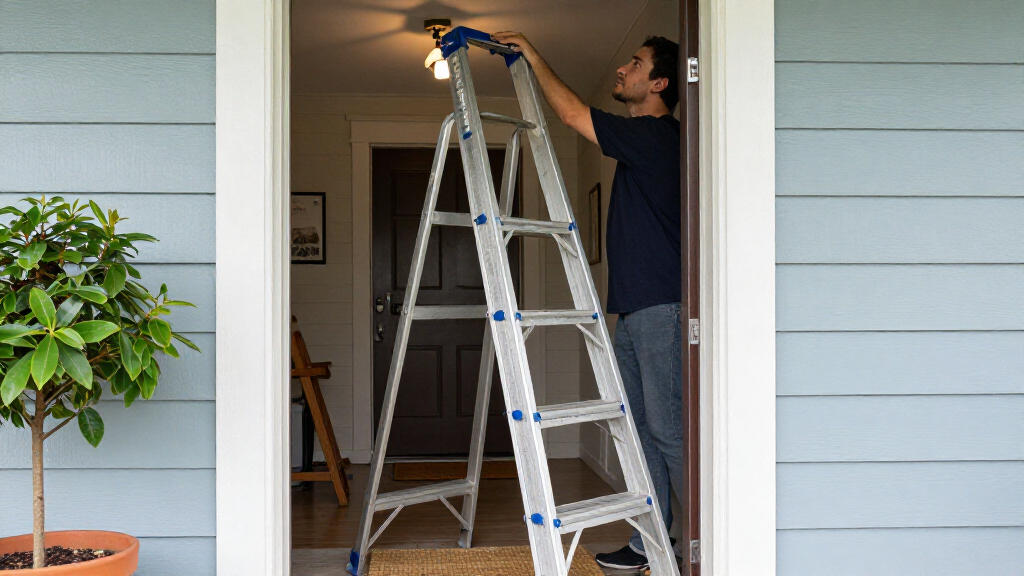
I compared the 15 ladders by usable reach, construction material, stated duty rating, stability features, and intended configuration. I separated dedicated extension ladders from multiposition and telescoping designs because they solve different problems: a simple extension ladder prioritizes direct access, while convertible models add setup choices at the cost of more moving parts and a different handling routine. Fiberglass models received stronger consideration for work near electrical hazards; aluminum models were judged for portability and versatility, with material limitations kept in view.
The ranking favors clear fit for common jobs, practical handling, and credible safety information over maximum height alone. Models with 300-pound Type IA ratings offer a useful capacity reference, but buyers still need to check the ladder label and count clothing, tools, and carried materials as part of the load. Since names and listed configurations do not replace a manufacturer’s setup instructions, I also treated stabilizers, wheels, and multiposition features as useful only when they suit the task. The order reflects how well each option serves its stated role, not a claim that one ladder is right for every user.
| extension ladder | Brand |
|---|---|
| LEVELEVE 22-Foot Multi-Positio | LEVELEVE |
| Little Giant HyperLite 20-Foot | Little Giant |
| LEVELEVE 20-Foot Multi-Positio | LEVELEVE |
| Louisville Ladder 24-Foot Fibe | Louisville Ladder |
| Little Giant SkyScraper 17-Foo | Little Giant |
| Louisville FE3216 16-Foot Fibe | Louisville Ladder |
| LANBITOU 14-Foot Multi-Positio | LANBITOU |
| LITE 28-Foot Fiberglass Extens | — |
| Soctone 17-Foot Multi-Position | Soctone |
| DEWALT 16 ft Fiberglass Extens | DEWALT |
| Louisville Ladder AE2224 24-Fo | — |
| SocTone 12.5 ft Telescoping Al | — |
| Little Giant Velocity 17-Foot | — |
| Soctone 14-Foot Multi-Position | — |
| Louisville Ladder 20-Foot Fibe | — |
Factors to Consider When Choosing Best Extension Ladders
Before choosing among these models, I would match the ladder to the work rather than start with the tallest listing. Reach, setup, carrying, and storage all affect whether a ladder is practical for repeated jobs. These factors help narrow the field beyond the individual product differences.
Choose Reach From the Work Surface, Not the Ladder Label
A ladder’s listed length is not the same as the height you can safely work at. An extension ladder leans against a surface, and its usable reach depends on the required overlap, angle, and safe standing position. Measure the height of the landing point, then check the manufacturer’s reach guidance rather than adding the ladder length to your height. Buyers often choose extra length as insurance, but a longer ladder can be heavier and harder to raise or control. If jobs vary widely, compare a dedicated extension ladder with a multiposition model, while confirming that its extension configuration reaches the needed surface. Avoid treating maximum reach as permission to stand on the top rungs.
Pick Fiberglass or Aluminum for the Worksite
Fiberglass is generally the more suitable choice when electrical exposure is a concern, but it is not a substitute for safe clearance from power lines or for checking the ladder’s condition. Aluminum is often easier to carry, which can matter when one person moves the ladder frequently or works across several locations. That lighter handling comes with a conductivity concern, so an aluminum ladder should not be used near energized electrical sources. Material also affects storage and upkeep: inspect rails, feet, rungs, and locks regularly, and protect any ladder from damage that could weaken it. Do not select by material alone; weigh the work environment against the effort required to position the ladder.
Check Capacity Against the Complete Load
The ladder’s duty rating applies to the combined weight placed on it, not just the user’s body weight. Include clothing, tool belts, materials, and anything carried up during the job. A 300-pound Type IA rating appears on several picks here, but it does not mean every ladder with that rating has the same reach, weight, or handling profile. Choose a rating that covers your real work load with room for the tools you routinely carry, and verify the marking on the product itself. A common mistake is to focus on a familiar brand or a long reach while overlooking the capacity label. If the job calls for bulky materials, consider whether carrying them on the ladder is appropriate at all.
Decide Whether Multiposition Flexibility Is Worth It
A multiposition ladder can replace several setups for work that alternates between a leaning ladder and a freestanding configuration. That versatility may reduce the number of ladders you store, but it brings more locks, hinges, and setup choices to inspect. A dedicated extension ladder is often the simpler match when nearly every task involves leaning against a wall or roof edge. Before buying a convertible design, confirm that its approved configurations match the places you work and that you can manage its weight while changing modes. Do not assume a ladder can be used in any shape just because its frame adjusts. Follow the maker’s configuration instructions for every setup.
Account for Transport, Setup, and Storage
A ladder that reaches the job but cannot be moved comfortably may be a poor fit for regular use. Check the ladder’s closed length and weight against your vehicle, storage area, and the number of people available to position it. Telescoping and compact models can be easier to stow, while longer extension ladders typically offer a more direct route to higher work. Wheels or stabilizer bars may help in particular settings, but they add bulk and do not remove the need for a stable base and correct placement. Measure the space where the ladder will live, including room to lift it out safely. For frequent solo setup, prioritize manageable handling over reach you rarely need.
Treat Stability Features as Support, Not a Substitute for Setup
Stabilizers, wider bases, and ladder feet can help with specific surfaces or positioning needs, but no feature makes a poorly placed ladder safe. Confirm that the ground is firm and level, inspect the feet for wear, and follow the prescribed ladder angle and extension overlap. Accessories can improve contact or reduce unwanted movement, yet they may complicate transport or limit where the ladder fits. Buyers sometimes focus on a stabilizer listing and overlook whether it is appropriate for their surface, task, or ladder configuration. Check which components are included and whether the manufacturer approves the setup you plan to use. A careful setup routine matters more than adding hardware after the fact.
Frequently Asked Questions
Should I buy a 28-foot ladder if I only occasionally need extra reach?
Not automatically. A longer ladder can reach higher surfaces, but it also takes more space and may be more difficult to carry, raise, and position. Compare the actual landing height of your tallest regular job with the ladder’s manufacturer guidance, including required overlap and safe standing limits. If the extra reach is only for rare work, renting or arranging professional help may make more sense than storing a cumbersome ladder year-round. Choose the 28-foot option only if its reach solves a recurring need and you can handle its setup safely.
Is fiberglass always the safer choice for electrical work?
Fiberglass is nonconductive compared with aluminum, so it is generally the better ladder material near electrical hazards. It does not make contact with a power line safe, and surface contamination or damage can affect a ladder’s condition. Maintain required clearance from energized sources and follow applicable safety guidance for the job. A fiberglass ladder can also be heavier than a comparable aluminum option, which may complicate handling. Choose it for its material advantage, not as a replacement for electrical precautions.
Can a multiposition ladder replace a dedicated extension ladder?
It can replace one for some households, especially when jobs call for both leaning and freestanding configurations. The tradeoff is a more involved setup and additional joints and locks that need inspection. If nearly all your work is exterior access to a roofline, a dedicated extension ladder may be simpler to position and use. Check the multiposition ladder’s approved configurations and reach before assuming it covers your job. The right choice depends on how often you will use its extra modes.
What ladder capacity should I choose if I carry tools?
Add your body weight to clothing, tools, and any materials carried on the ladder, then compare that total with the ladder’s marked duty rating. Do not treat a 300-pound rating as a user-weight allowance; the rating covers the full load. If your work load varies, account for the heaviest routine setup rather than an average day. Also consider whether a tool belt or hoist can reduce what you carry while climbing. Always verify the rating on the ladder label and follow its instructions.
Is a telescoping ladder a good choice for regular roof access?
A telescoping model can be useful when compact storage and transport matter, but convenience does not automatically make it the best option for repeated roof access. Check its approved use, extended reach, load rating, locking indicators, and setup requirements against the job. Frequent exterior work may be better served by a dedicated extension ladder that matches the required height and is straightforward to position. Telescoping designs also require careful inspection of each locking section before use. Choose one only if its specific instructions support the configuration and task you have in mind.
Conclusion
For most buyers seeking a conventional ladder for higher exterior work, I recommend the Louisville Ladder 24-Foot Fiberglass Extension Ladder as the best overall balance of reach, fiberglass construction, and a 300-pound Type IA rating. The Louisville 20-Foot Fiberglass Extension Ladder is my best value-style fit for buyers who do not need the 24-foot model’s extra length, while the LITE 28-Foot Fiberglass Extension Ladder is the premium choice for jobs that genuinely call for more reach. Beginners with shorter tasks may prefer the more manageable DEWALT 16-Foot Fiberglass Extension Ladder over a long, heavy ladder. For varied setups, consider the Little Giant Velocity or a LEVELEVE multiposition model; for compact storage, look at the Soctone 12.5-foot telescoping ladder. Match the final pick to your work height, load, surface, and ability to transport and position it safely.