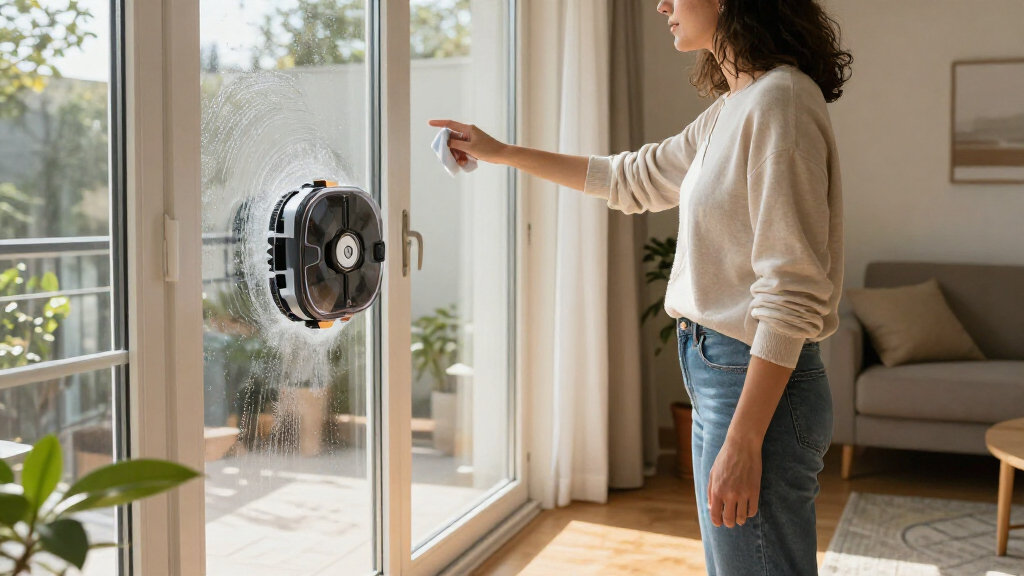
For most households, I’d start with the ECOVACS WINBOT W2 PRO Omni: its portable station and intelligent path planning give it a useful balance of cleaning control and convenience. The WINBOT W3 Omni stands out for buyers who want an auto-clean station, while the HUTT NAVI 7.0 is worth a look if strong suction and dual-stage cleaning are priorities. The main tradeoffs are between compactness, edge coverage, safety provisions, and how much setup or maintenance you’re willing to handle. A robot can reduce hands-on wiping, but it still needs suitable glass, correct placement, and occasional supervision. Read on for the full comparison and guidance on choosing among these robotic window cleaners.
Complete the kit


Key Takeaways
- Station design separates the premium ECOVACS options: the W2 PRO Omni, W2S Omni, and W3 Omni add different levels of portability, multifunction support, or automatic pad care, so buyers should match the station to their cleanup routine.
- Compact WINBOT models target a different problem than full-size systems: the WINBOT Mini versions favor smaller form factors, while the WINBOT W2S with TruEdge and WINBOT MINI 2 emphasize edge cleaning.
- Suction figures alone do not settle the choice: several HUTT, X6, and Tosima options list 6400Pa or 6500Pa, but navigation, spray delivery, safety setup, and glass compatibility also shape everyday usefulness.
- Spray systems vary across the lineup: dual-nozzle ultrasonic models such as the Tosima X1 and ECOVACS WINBOT Mini are distinct from listings that simply specify dual spray or auto-spray, making refill and coverage needs worth checking.
- Product naming can obscure meaningful differences: two WINBOT Mini listings and multiple W2S versions appear here, so buyers should verify the exact model, included station, edge-cleaning feature, and accessories before choosing.




| robotic window cleaner | Control | Surface recommendation |
|---|---|---|
| HUTT Window Cleaning Robot | — | — |
| ECOVACS WINBOT Mini Window Cle | App control | Glass |
| ECOVACS WINBOT Mini Window Cle | App control via smartphone | Glass |
| Window Cleaning Robot for Insi | — | — |
| ECOVACS WINBOT W2 PRO Omni Por | App control | Glass |
| X6 Window Cleaning Robot for H | — | — |
| ECOVACS WINBOT W2S Omni Window | — | — |
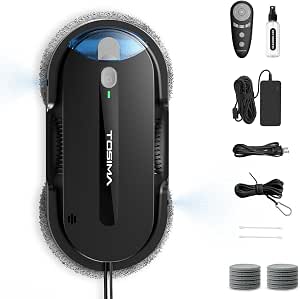
| Tosima W5 Window Cleaning Robo | Buttons and remote control | — |
| ECOVACS WINBOT W2S Window Clea | — | — |
| ECOVACS WINBOT MINI 2 Compact | — | — |
| Tosima X1 Window Cleaning Robo | Remote control | Glass |
| WA9C Pro Window Cleaning Robot | Remote control | Glass windows |
| Window Cleaning Robot with Dua | Remote control | Glass |
| ECOVACS WINBOT W3 Omni Robot W | App control | Glass |
| Automatic Window Cleaning Robo | Remote control | Glass |
More Details on Our Top Picks
HUTT Window Cleaning Robot, 6500Pa Suction, Dual-Stage Cleaning, NAVI 7.0
The HUTT is the most cleaning-focused pick here: its round and square dual-pad system is intended to handle wet lifting and dry polishing, while NAVI 7.0 uses 14 sensors to plan coverage. That makes it a stronger fit for owners who want more than quick dust removal than either compact WINBOT Mini, which is aimed at routine touch-ups. Its 6500Pa suction and 220kg-rated safety rope add reassurance on large glass, and the stated coverage reaches 60㎡. The tradeoff is a 30-minute operating time, so it may need pauses on extensive glazing. It also calls for purified water, does not include cleaning liquid, and its tracks need regular cleaning. I’d choose it for varied cleaning passes, not for the simplest set-and-forget routine.
Pros:- Dual round and square pads support wet lifting and dry polishing.
- 6500Pa suction and a 220kg-rated safety rope support secure operation.
- 14-sensor NAVI 7.0 system and coverage up to 60㎡ suit larger cleaning jobs.
- Light 1.3kg body and stated 65dB noise level make handling and indoor use easier.
Cons:- 30-minute operating time may require breaks during larger jobs.
- Cleaning liquid is not included, and purified water is required.
- Tracks need regular cleaning to maintain performance.
Best for: Households with a mix of large windows and glass that needs both damp cleaning and dry polishing.
Not ideal for: People who want to clean extensive glazing in one uninterrupted session or prefer a kit that includes cleaning liquid.
- Suction power:6500Pa
- Cleaning system:Dual round and square pads
- Water tank:80ml
- Coverage:Up to 60㎡
- Sensors:14 with NAVI 7.0
- Power:Corded electric, 28V lithium-ion battery
- Operating time:30 minutes
- Weight and noise:1.3kg; 65dB
Our verdict“Choose the HUTT if you value distinct wet and dry cleaning passes more than long uninterrupted run time.”
ECOVACS WINBOT Mini Window Cleaning Robot – Compact, Dual Nozzles, Ultrasonic Spray, 9-Stage Protection, Path Planning, 3 Modes
This WINBOT Mini is the approachable choice for buyers who want a compact robot for routine indoor glass upkeep, rather than a machine for heavy grime or large exterior jobs. Its dual ultrasonic nozzles, three modes, and path planning offer more structure than a basic wipe-down, while its compact 8.46-inch square form is easier to store than the larger-station ECOVACS WINBOT W2 PRO Omni. A 9-stage protection system helps address the concern of keeping a robot attached to glass. The limits are substantial: the supplied information describes it for indoor use and light dust or smudges, with stubborn marks potentially needing repeat cycles. Battery life is not specified, so I can’t judge how much glass it handles per charge. It suits a modest maintenance routine, not an all-purpose window-cleaning setup.
Pros:- Compact 8.46-inch square form is easy to handle and store.
- Dual ultrasonic nozzles and three cleaning modes support routine maintenance.
- Path planning helps automate coverage rather than relying on manual wiping.
- 9-stage protection system adds safety measures for glass cleaning.
Cons:- Best suited to light dust and smudges; stubborn dirt may need repeat cycles.
- Specified for indoor glass, unlike the HUTT model’s broader coverage claims.
- Battery-life details are not provided.
Best for: First-time robot-cleaner owners with small indoor glass panes who want compact storage and straightforward everyday upkeep.
Not ideal for: People cleaning outdoor or heavily soiled windows, or buyers who need a clearly stated battery runtime.
- Surface recommendation:Glass
- Form factor:Compact
- Dimensions:8.46 × 8.46 × 2.17 inches
- Spray system:Dual ultrasonic nozzles
- Protection:9-stage protection system
- Cleaning modes:3
- Control:App control
- Filter:Washable
- Battery type:Lithium-ion
Our verdict“Pick this Mini for simple indoor touch-ups and compact storage, but skip it if your windows need heavy-duty or outdoor cleaning.”
ECOVACS WINBOT Mini Window Cleaning Robot – Compact, Smart, and Quiet
This Mini shares the compact, indoor-maintenance focus of the other WINBOT Mini, but its listed 200ml capacity and quiet-operation positioning make it a more specific match for frequent cleaning in occupied rooms. Dual ultrasonic nozzles and intelligent path planning handle routine glass care, while the 9-stage protection system and anti-slipping feature address secure movement. Compared with the HUTT, it is less suited to large areas or more involved wet-and-dry cleaning: this model is described for indoor glass and light dirt, and the product data gives no coverage figure or operating time. App control is required, which may frustrate buyers who want physical controls or a simple manual setup. I’d favor it over the other Mini when quiet indoor use and its stated capacity matter more than a clearly defined runtime.
Pros:- Compact, lightweight design is easy to store and handle.
- Dual ultrasonic nozzles and path planning suit recurring glass maintenance.
- Quiet-operation positioning is appropriate for indoor use around others.
- Anti-slipping and 9-stage protection features support secure cleaning.
Cons:- Intended for light dirt; heavily soiled glass may require repeated cycles.
- Indoor-use listing does not suit exterior-window cleaning.
- App control is required, and the supplied data does not state runtime or coverage.
Best for: Apartment residents or home-office users who want a quiet, app-controlled cleaner for small indoor glass surfaces.
Not ideal for: Buyers who avoid smartphone control, need outdoor cleaning, or want documented runtime and coverage for larger jobs.
- Surface recommendation:Glass
- Spray system:Dual ultrasonic nozzles
- Protection:9-stage protection with anti-slipping system
- Capacity:200ml
- Power source:Corded electric
- Voltage:110V
- Control:App control via smartphone
- Usage:Indoor glass
- Power levels and speeds:3 power levels; 3 speeds
Our verdict“Choose this Mini for quiet, app-managed indoor upkeep on smaller panes, not for outdoor work or large cleaning sessions.”
Window Cleaning Robot for Inside and Outside Glass with 6400Pa Suction and Safety Features
For buyers whose main problem is reaching exterior glass, this model’s inside-and-outside positioning, 178-inch safety rope, backup battery, and anti-drop sensors make it a more relevant pick than either indoor-only WINBOT Mini. Its 6400Pa suction is close to the HUTT’s 6500Pa, so the HUTT has a slight stated suction advantage, while this option counters with 10 replacement microfiber cloths and three cleaning modes. That kit is useful for repeated passes without immediately needing more cloths. The tradeoff is a more hands-on cleaning process: the glass needs pre-sprayed solution, and stubborn stains may still need manual attention. The listing also gives no coverage, runtime, or navigation details, limiting how confidently I can match it to an especially large job. It makes sense when reach and included cloths matter most.
Pros:- Designed for both indoor and outdoor glass.
- 6400Pa suction with backup battery and anti-drop sensors.
- 178-inch safety rope supports work on high or hard-to-reach windows.
- Includes 10 replacement microfiber cloths and three cleaning modes.
Cons:- Requires cleaning solution to be sprayed onto the glass before use.
- Very stubborn stains may still need manual cleaning.
- No runtime, coverage, or navigation specifications are provided.
Best for: Homeowners with reachable exterior or high-rise windows who prioritize a long safety rope and replacement cloths.
Not ideal for: People who want fully autonomous stain removal, or need published runtime and coverage figures before choosing a robot.
- Suction power:6400Pa
- Water tank:85ml
- Safety rope length:178 inches
- Cleaning modes:3
- Replacement microfiber cloths:10
- Safety features:Backup battery and anti-drop sensors
- Intended surfaces:Indoor and outdoor glass
Our verdict“Choose this model for exterior reach and a generous cloth set, but not if you expect hands-off results on stubborn stains.”
ECOVACS WINBOT W2 PRO Omni Portable Window Cleaning Robot with Multi-Functional Station and Intelligent Path Planning
The WINBOT W2 PRO Omni is the most station-oriented option in this group: its multi-functional station, dual power modes, and intelligent path planning are aimed at buyers who want a more organized setup than the compact WINBOT Mini models provide. Its listed 110-minute battery life also gives it a longer stated operating window than the HUTT’s 30 minutes, though the listing cautions that it may still fall short for very large windows. Twelve-stage protection and anti-fall features put safety high on the feature list. The tradeoff is added setup complexity, and the supplied data limits intended use to indoor glass despite the flexible power modes. Buyers who clean a few panes occasionally may find the station more involved than they need; it makes more sense for regular use where storage and setup are part of the decision.
Pros:- Multi-functional station supports operation and storage in one system.
- Dual power modes give more flexibility than the Mini models’ listed setups.
- 110-minute battery life exceeds the HUTT’s stated 30-minute operating time.
- 12-stage protection and anti-fall features emphasize secure operation.
Cons:- Setup may take more learning than the compact WINBOT Mini models.
- Battery life may not cover very large windows in a single session.
- Listed for indoor glass, limiting its fit for exterior-window jobs.
Best for: Frequent indoor glass cleaners who want a dedicated station, app controls, and a longer stated battery window than the compact models offer.
Not ideal for: People with only occasional small-window touch-ups, outdoor-cleaning needs, or a preference for the simplest setup.
- Surface recommendation:Glass
- Power modes:Dual power modes
- Battery life:110 minutes
- Battery type:Lithium-ion
- Power source:Battery powered
- Protection:12-stage protection with anti-fall feature
- Cleaning features:Intelligent path planning and edge cleaning
- Control:App control
- Usage:Indoor glass
Our verdict“Choose the W2 PRO Omni for frequent indoor cleaning where a station and flexible power matter more than minimal setup.”
X6 Window Cleaning Robot for High Windows, Inside/Outside, 6400Pa Suction
The X6 is the safety-focused pick for buyers cleaning high or hard-to-reach glass: its anti-fall sensors, UPS backup, and heavy-duty safety cable address the risks that matter most when a robot is working above ground level. Its listed 6400Pa suction and smart navigation support a secure grip and planned coverage, while dual spray can help loosen everyday grime. Compared with the Tosima W5, the X6 offers a wider 8-inch cleaning path and a much longer listed battery life, but its push-button control is less flexible than the W5’s remote. The X6 also works on tile and mirrors, unlike glass-only options such as the ECOVACS WINBOT W2S. It is still a maintenance cleaner: heavily soiled windows may need repeat passes, and poor spray coverage can leave smears.
Pros:- Anti-fall sensors, UPS backup, and a heavy-duty safety cable support use on high windows.
- 6400Pa listed suction and smart navigation help maintain contact and plan cleaning paths.
- Dual-spray system can loosen dirt during a cleaning run.
- Recommended for glass, tile walls, and mirrors.
Cons:- Push-button control offers less flexibility than the Tosima W5’s remote control.
- Very dirty windows may need multiple passes.
- Incorrect or insufficient spray can leave smears.
Best for: People with high-rise or hard-to-reach glass who want multiple listed fall-protection measures and a robot that can also clean tile or mirrors.
Not ideal for: Buyers who want remote or app control, or those who expect a single pass to remove heavy, baked-on grime.
- Suction power:6400Pa
- Recommended surfaces:Glass, tile walls, mirrors
- Cleaning path width:8 inches
- Water capacity:85 ml
- Listed battery life:450 minutes
- Control method:Push button
- Noise level:63 dB
- Additional features:Anti-fall protection, dual spray, edge detection, smart navigation
Our verdict“Choose the X6 for high windows and broader surface compatibility, but skip it if remote control or one-pass cleaning is a priority.”
ECOVACS WINBOT W2S Omni Window Cleaning Robot, 6-in-1 Multifunction Station
The W2S Omni is the edge-focused choice here, pairing TruEdge technology with frame detection and WIN-SLAM 4.0 navigation to target areas that basic path planning can miss. Its 6-in-1 OMNI station adds a portable control and storage setup, a more involved package than the simpler corded arrangement of the ECOVACS WINBOT W2S. Triple wide-angle spray is aimed at dirt removal across larger glass surfaces, while two power modes give buyers some flexibility. The tradeoff is narrower material compatibility: this model is listed for glass only, unlike the X6, which also lists tile and mirrors. Its app control may also take more setup than the Tosima W5’s physical remote, and the small listed water capacity could mean refills during extensive jobs. I’d shortlist it for broad glass with troublesome edges, not mixed-surface cleaning.
Pros:- TruEdge technology is designed to improve edge and corner coverage.
- Frame detection and WIN-SLAM 4.0 support systematic cleaning paths.
- Triple wide-angle spray targets dirt across glass surfaces.
- Portable 6-in-1 OMNI station provides a dedicated control and storage setup.
Cons:- Listed for glass surfaces only, limiting use compared with the X6.
- App control may require more setup than the Tosima W5’s remote.
- Listed 80-microliter capacity may require frequent refills on large jobs.
Best for: Owners of large glass windows with frame edges or corners that need extra attention and who value a portable station for storage and control.
Not ideal for: Buyers who need to clean tile or mirrors, prefer simple button controls, or want a large onboard water reservoir for extended sessions.
- Recommended surface:Glass
- Navigation:WIN-SLAM 4.0
- Edge cleaning:TruEdge technology
- Spray system:Triple wide-angle spray
- Control type:App control
- Power modes:2
- Water capacity:80 microliters
- Safety features:12-level safety system
Our verdict“Pick the W2S Omni for feature-rich edge cleaning on large glass, but choose the X6 for broader surface use or simpler controls.”
Tosima W5 Window Cleaning Robot with 6400Pa Max Suction and Auto-Spray
The Tosima W5 suits buyers who want hands-on control without relying on an app: its remote control makes it easier to direct a compact cleaner than the app-based ECOVACS WINBOT W2S. It combines listed 6400Pa adaptive suction, auto-spray, and edge cleaning with a triple safety system and emergency backup battery, giving it a useful mix of grip, cleaning support, and protection. Its 6-inch path is narrower than the X6’s 8-inch path, so it may take longer across broad panes, but the compact form can be easier to handle and store. The biggest limitation is the 25-minute listed battery life; that makes it a better match for smaller windows or shorter sessions than extensive glass-cleaning jobs. It is designed for smooth glass, not textured surfaces.
Pros:- Remote control allows operation without app setup.
- Adaptive suction is listed up to 6400Pa.
- Auto-spray helps loosen dirt during cleaning.
- Triple safety system includes an emergency backup battery.
Cons:- Listed 25-minute battery life limits longer cleaning sessions.
- Its 6-inch cleaning path is narrower than the X6’s 8-inch path.
- Designed primarily for smooth glass, limiting use on textured surfaces.
Best for: People cleaning a few smooth-glass windows who prefer a handheld remote over app setup and want a compact robot with auto-spray.
Not ideal for: Buyers tackling many large panes in one session, or anyone who needs a robot rated for textured glass or non-glass surfaces.
- Maximum suction:6400Pa
- Recommended surface:Glass windows
- Cleaning path width:6 inches
- Control:Buttons and remote control
- Listed battery life:25 minutes
- Battery type:Lithium-ion
- Safety features:Triple safety system, anti-fall protection, emergency backup battery
- Additional features:Auto-spray, 360-degree swivel, edge cleaning
Our verdict“Choose the W5 for short, remote-controlled cleaning sessions on smooth glass, but look to the X6 for a wider path and longer listed battery life.”
ECOVACS WINBOT W2S Window Cleaning Robot with TruEdge Cleaning
The standard WINBOT W2S is a more focused alternative to the W2S Omni: it keeps TruEdge cleaning, systematic route planning, and wide-angle spray, but skips the Omni station’s added portable setup. That makes it a sensible fit for buyers who want ECOVACS edge-cleaning features without the larger station package. Multiple cleaning modes offer some flexibility, and its washable filter can be reused. The compromise is a corded power source, which restricts placement compared with the battery-powered W2S Omni and its portable station. The W2S is also limited to flat, smooth glass, while the X6 lists tile and mirrors among its recommended surfaces. Its spray system may operate intermittently, so I’d favor it for routine glass maintenance rather than stubborn dirt that needs consistently heavy wetting.
Pros:- TruEdge technology is designed to clean closer to glass edges.
- Systematic route planning helps reduce missed sections.
- Multiple cleaning modes suit different routine cleaning needs.
- Washable filter can be reused.
Cons:- Corded operation limits portability compared with the battery-powered W2S Omni.
- Designed for flat, smooth glass rather than curved or textured surfaces.
- The spray system may operate intermittently.
Best for: Glass-window owners who want TruEdge cleaning and organized route planning in a corded ECOVACS model without the W2S Omni station.
Not ideal for: People cleaning curved or textured surfaces, those who need broad placement flexibility, or buyers who want consistent spray for heavily soiled glass.
- Recommended surface:Glass
- Edge cleaning:TruEdge technology
- Control type:App control
- Power source:Corded electric
- Water capacity:60 microliters
- Noise level:68 dB
- Power levels:2
- Filter:Washable
Our verdict“Choose the W2S for systematic, edge-focused cleaning on accessible smooth glass, but select the W2S Omni if a portable station matters more.”
ECOVACS WINBOT MINI 2 Compact Window Cleaning Robot with Edge Cleaning
The WINBOT MINI 2 earns its place for narrow or awkward glass, where a compact body can be more useful than the broader coverage of the X6’s 8-inch path. It adds edge cleaning, ultrasonic spray, WIN-SLAM 4.0 navigation, and five cleaning modes, giving buyers more ways to handle different routine jobs than the Tosima W5’s remote-led setup. The app control is better suited to owners comfortable managing a connected appliance, while the washable filter helps avoid disposable replacements. This is still a glass-focused maintenance robot, not a heavy-duty answer for thick grime: the supplied description warns that heavily soiled windows may need multiple cycles. Its listed 200-minute battery life is longer than the W5’s 25 minutes, but it may not cover every large-scale job without interruption. The safety rope also needs proper anchoring before use.
Pros:- Compact form is suited to narrow and hard-to-reach glass.
- Edge cleaning and WIN-SLAM 4.0 navigation support planned coverage.
- Five cleaning modes offer flexibility for routine maintenance.
- Ultrasonic spray and washable filter are included.
Cons:- Safety rope must be anchored properly before use.
- Heavily soiled glass may need multiple cleaning cycles.
- App control may not suit buyers who prefer the Tosima W5’s remote.
Best for: People with narrow panes, glass doors, or hard-to-reach windows who want compact equipment and several app-selected cleaning modes.
Not ideal for: Buyers cleaning large expanses of glass in one go or windows with heavy buildup that may need repeated cycles.
- Recommended surface:Glass
- Navigation:WIN-SLAM 4.0
- Cleaning modes:5
- Spray system:Ultrasonic spray
- Control type:App control
- Listed battery life:200 minutes
- Noise level:65 dB
- Filter:Washable
Our verdict“Pick the MINI 2 for compact, mode-rich cleaning of awkward glass, but choose a larger-path model for extensive windows or heavy grime.”
Tosima X1 Window Cleaning Robot – Dual-Nozzle Ultrasonic Water Atomization, 85 ml Water Tank, Automatic Cleaner for Large & Small Windows
The Tosima X1 makes the most sense for people who want a compact robot with a larger onboard water supply than the 50 ml tanks listed for the dual-spray AI cleaner and the 3000Pa dual-spray model. Its 85 ml tank and viewing window make it easier to track water and may reduce interruptions across several panes. Ultrasonic atomization and an automatic S-shaped route handle routine glass cleaning, while the remote offers a way to adjust operation manually. The suction and backup battery add a safety layer, though the listing does not give a suction figure to compare with the 3000Pa alternatives. The tradeoff is a 25-minute battery runtime and 65 dB operating noise, so it is less appealing for long sessions or quiet rooms. It is also limited to glass.
Pros:- 85 ml tank is larger than the 50 ml capacities listed for two other models in this group.
- Viewing window lets users check the remaining water without opening the tank.
- Automatic S-shaped cleaning and remote control offer both routine operation and manual adjustments.
- Backup battery provides protection during a power interruption.
Cons:- Listed battery runtime is about 25 minutes, which may interrupt larger jobs.
- 65 dB noise level may be distracting in quiet indoor spaces.
- Glass-only surface recommendation limits its use around the home.
Best for: Households cleaning multiple glass panes that prefer a larger visible water tank and remote adjustments.
Not ideal for: People who need long uninterrupted cleaning sessions, quiet operation, or a robot for non-glass surfaces.
- Surface recommendation:Glass
- Water tank capacity:85 ml
- Water delivery:Dual-nozzle ultrasonic water atomization
- Cleaning route:Automatic S-shaped path
- Control:Remote control
- Power source:Corded electric
- Listed battery runtime:Approximately 25 minutes
- Noise level:65 dB
- Warranty:2 years
Our verdict“Choose the Tosima X1 if tank capacity and visible water level matter more than quieter operation or extended runtime.”
WA9C Pro Window Cleaning Robot, 4-Nozzle Dual Spray, 6 Cleaning Modes
The WA9C Pro suits buyers who want more ways to guide a cleaning run rather than the larger tank offered by the Tosima X1. Its four-nozzle spray system is designed to distribute water across the cleaning area, and six modes plus remote control give users more options for different glass layouts. Strong suction, safety sensors, power-failure protection, and a safety rope make it a more safety-focused pick for high windows than the simpler dual-spray model with 3000Pa suction. That added flexibility comes with a setup burden: overhead use requires anchoring the rope, and the controls may take more effort to learn. The 25-minute battery runtime also limits the length of a session, and the provided details do not specify a tank capacity. Buyers who want a straightforward, minimal-setup robot may prefer a simpler option.
Pros:- Four spray nozzles are intended to spread water more evenly across the cleaning path.
- Six cleaning modes and remote control allow more adjustment than basic automatic operation.
- Safety sensors and power-failure protection support use on elevated glass.
- Safety rope adds a physical backup for overhead cleaning.
Cons:- Battery runtime is limited to 25 minutes per charge.
- Overhead use requires correctly anchoring the safety rope.
- Setup and multiple modes may feel complicated to buyers who want simple operation.
Best for: People with high glass windows, mirrors, or glass doors who want several cleaning modes and are willing to secure a safety rope.
Not ideal for: Buyers seeking a simple plug-in setup, long runtime, or clearly specified water capacity.
- Surface recommendation:Glass windows
- Spray system:Four nozzles
- Cleaning modes:6
- Control:Remote control
- Battery runtime:25 minutes
- Cleaning path width:8 inches
- Safety features:Safety sensors, power-failure protection, and safety rope
- Power source:Battery powered
Our verdict“Pick the WA9C Pro for mode flexibility and added fall protection on high glass, provided you are comfortable with setup and shorter sessions.”
Window Cleaning Robot with Dual Spray and Strong Suction
This dual-spray window robot is a practical pick for buyers who want a stated suction figure and automatic coverage without paying for a larger station-style setup like the ECOVACS WINBOT W3 Omni. Its 3000Pa suction, edge detection, and intelligent path planning are intended to keep the unit attached and guide it across glass; anti-drop protection adds another safeguard. The 50 ml tank is smaller than the Tosima X1’s 85 ml capacity, so expect more frequent refills if you are cleaning many panes. A 20-minute listed battery runtime is also shorter than the WA9C Pro’s 25 minutes. This model is best for routine maintenance, not neglected glass: the product notes warn that heavy soil or textured surfaces can call for pre-cleaning, and its surface recommendation is limited to glass.
Pros:- 3000Pa suction figure gives buyers a concrete attachment specification.
- Edge detection and intelligent path planning support automated glass coverage.
- Dual spray helps wet the cleaning area during routine maintenance.
- Anti-drop protection and UPS backup provide safety measures during operation.
Cons:- 20-minute battery runtime is shorter than the WA9C Pro’s listed 25 minutes.
- 50 ml capacity is smaller than the Tosima X1’s 85 ml tank.
- Heavily soiled or textured surfaces may need pre-cleaning and are not a good fit.
Best for: Owners of ordinary indoor or outdoor glass windows, doors, or mirrors who want path planning and a stated suction rating.
Not ideal for: People tackling heavily soiled or textured glass, or cleaning large areas that need longer uninterrupted runtime.
- Surface recommendation:Glass
- Suction power:3000Pa
- Water capacity:50 ml
- Spray system:Dual spray
- Navigation:Edge detection and intelligent path planning
- Battery runtime:20 minutes
- Power source:Corded electric
- Control:Remote control
- Safety:Anti-drop protection and UPS backup
Our verdict“Choose this model for routine glass cleaning with specified 3000Pa suction, but skip it for stubborn grime or extended jobs.”
ECOVACS WINBOT W3 Omni Robot Window Cleaner with Auto-Clean Station and Smart Navigation
The ECOVACS WINBOT W3 Omni takes a different approach from compact robots such as the Tosima X1: its auto-cleaning station is designed to reduce hands-on mop maintenance, while smart navigation and a triple spray system handle the glass-cleaning routine. Its 1.1-liter capacity and listed 130-minute battery life also set it apart from the smaller-tank, short-session options in this group. Edge cleaning and multiple modes add useful coverage for large indoor windows and glass doors. The tradeoffs are substantial: at 12.22 kg, the unit is cumbersome to carry and position, and the listed use is indoor only, so it is not the choice for exterior glass. App control may also add setup friction for anyone who prefers a remote. This is a station-centered system, not a lightweight grab-and-go cleaner.
Pros:- Auto-cleaning station reduces the need to handle mop washing throughout a cleaning routine.
- 1.1-liter capacity is far larger than the small onboard tanks listed for other models here.
- Listed 130-minute battery life supports longer cleaning sessions than the compact alternatives.
- Smart navigation, triple spray, and edge cleaning are suited to routine coverage of large indoor glass.
Cons:- At 12.22 kg, lifting and positioning the unit may be awkward.
- Product details specify indoor use, so it is not suited to exterior window cleaning.
- App control may be less convenient than the remote controls used by several alternatives.
Best for: Households with large indoor windows or glass doors that value a station, reduced mop handling, and longer listed runtime.
Not ideal for: Buyers who need outdoor cleaning, a lightweight robot, or controls that do not require app setup.
- Surface recommendation:Glass
- Indoor/outdoor use:Indoor
- Auto-cleaning station:Included
- Water capacity:1.1 liters
- Battery runtime:130 minutes
- Spray system:Triple spray
- Control:App control
- Weight:12.22 kg
- Special features:Auto mop washing and edge cleaning
Our verdict“Choose the W3 Omni for a station-based indoor cleaning system and long listed runtime, not for outdoor use or easy carrying.”
Automatic Window Cleaning Robot with Dual Spray and AI Path Planning
The AI Path Planning window cleaner is aimed at buyers who want automated route decisions in a compact, remote-controlled glass robot. Its AI 5.0 path planning, dual nozzles, microfiber pads, and 3000Pa suction combine route coverage with a stated attachment rating. Compared with the other 3000Pa dual-spray model in this roundup, it specifies a high-strength safety rope and UPS backup, but its water capacity is still just 50 ml and the listing does not provide a battery runtime in minutes. That makes it harder to judge how well it will handle a large run. Its listed use is indoor and limited to glass, mirrors, and doors, so it cannot replace the ECOVACS WINBOT W3 Omni for buyers seeking a station-based system or the stated longer runtime. Regular refilling is part of the deal.
Pros:- AI 5.0 path planning is designed to automate route coverage.
- 3000Pa suction provides a stated attachment rating.
- Dual water nozzles and microfiber pads support wet wiping of glass.
- High-strength safety rope and UPS backup add backup protections.
Cons:- 50 ml capacity means regular refills may be needed during larger jobs.
- No runtime in minutes is provided, making session planning difficult.
- Listed for indoor glass, mirrors, and doors rather than exterior cleaning.
Best for: Indoor glass owners who want remote-controlled AI path planning, dual spray, and a stated 3000Pa suction rating.
Not ideal for: People cleaning exterior windows, large areas without frequent refills, or buyers who need a clearly stated runtime.
- Surface recommendation:Glass
- Suction power:3000Pa
- Water capacity:50 ml
- Water delivery:Dual spray with microfiber pads
- Path planning:AI 5.0
- Control:Remote control
- Indoor/outdoor use:Indoor
- Safety features:High-strength safety rope and UPS power backup
Our verdict“Pick this model for AI-guided indoor glass cleaning with remote control, but look elsewhere if you need a known runtime or larger water capacity.”

How We Picked
I ranked these robotic window cleaners by the practical factors that affect a buyer’s daily routine: stated navigation and path planning, spray approach, edge-cleaning claims, safety features, tank or station setup, and suitability for different window sizes. I gave more weight to clear, useful distinctions than to a high suction figure by itself; suction matters, but it does not describe route control, corner coverage, or how much work remains after the robot finishes.
The order favors products with a clearer combination of usability and capability, then places specialized or less fully specified options lower. That puts the W2 PRO Omni first as a versatile station-based pick, while the W3 Omni and W2S models serve buyers with particular station or edge-cleaning priorities. Compact WINBOT and spray-focused models follow for narrower needs, and listings with fewer distinct details rank lower because buyers have less information to compare. Since product names and configurations can overlap, I also treat model-specific features as claims to verify on the exact listing.
| robotic window cleaner | Surface recommendation | Control |
|---|---|---|
| HUTT Window Cleaning Robot | — | — |
| ECOVACS WINBOT Mini Window Cle | Glass | App control |
| ECOVACS WINBOT Mini Window Cle | Glass | App control via smartphone |
| Window Cleaning Robot for Insi | — | — |
| ECOVACS WINBOT W2 PRO Omni Por | Glass | App control |
| X6 Window Cleaning Robot for H | — | — |
| ECOVACS WINBOT W2S Omni Window | — | — |
| Tosima W5 Window Cleaning Robo | — | Buttons and remote control |
| ECOVACS WINBOT W2S Window Clea | — | — |
| ECOVACS WINBOT MINI 2 Compact | — | — |
| Tosima X1 Window Cleaning Robo | Glass | Remote control |
| WA9C Pro Window Cleaning Robot | Glass windows | Remote control |
| Window Cleaning Robot with Dua | Glass | Remote control |
| ECOVACS WINBOT W3 Omni Robot W | Glass | App control |
| Automatic Window Cleaning Robo | Glass | Remote control |
Factors to Consider When Choosing Robotic Window Cleaners
Choosing a window robot is less about chasing one headline specification and more about matching the machine to your glass, cleaning habits, and tolerance for setup. I’d use these factors to narrow the field before comparing individual models.
Match the Robot to Your Glass and Window Layout
Start by checking the manufacturer’s requirements for glass thickness, frame shape, surface type, and minimum window dimensions. A robot designed around framed panes may not suit frameless glass or unusually narrow sections, even if its suction rating looks strong. Large uninterrupted panes can benefit from path planning, while divided or awkwardly shaped windows may need more repositioning. Check whether the robot can work on the windows you actually plan to clean, not only the most accessible pane in your home. A common mistake is buying for a hard-to-reach exterior window before confirming that the glass and frame fit the device’s stated limits.
Treat Safety as a Setup System, Not a Single Feature
When a robot is used on exterior glass, the safety tether, power arrangement, and emergency procedure matter as much as the suction claim. Read how the tether attaches and whether a safe anchor point is available near each window. Consider what happens during a power interruption and whether the manufacturer describes backup power or another way to keep the unit attached. Even a model with multiple protective measures does not remove the need to follow its setup instructions. If you cannot secure the tether safely or supervise the cleaning, a robot may not be the right choice for that window.
Choose Spray Delivery for Your Cleaning Routine
Ultrasonic atomization, dual nozzles, and general auto-spray are not interchangeable descriptions; each listing may use different hardware and controls. Think about whether you want to refill a tank, apply cleaner to the pad, or have the robot dispense fluid as it moves. More spray is not automatically better, since excess moisture can leave marks or require more drying, while too little may struggle with grime. Check the approved cleaning solution and the tank capacity when those details are provided. If your windows collect heavy outdoor dirt, plan for a pre-clean or repeat pass rather than expecting any spray system to replace all manual preparation.
Decide How Much Edge Coverage You Need
Some models highlight edge or TruEdge cleaning, while others focus on compactness or general path planning. Edge-focused features may help where visible borders and corners matter, but they do not guarantee spotless results on every frame design. Measure how much of your glass is near frames, handles, or tight corners before paying extra for a feature you may rarely use. For broad, simple panes, a straightforward route may be more useful than specialized edge hardware. Buyers with many small panes should also check whether repositioning between sections will outweigh the time saved by automation.
Compare the Full Station and Maintenance Burden
A multifunction or auto-clean station can reduce some handling, but it may also add storage space, setup steps, and more parts to maintain. Consider where the station will live and whether it is practical to move between floors or rooms. A compact robot can be easier to store, while a larger station-based option may suit regular cleaning across many windows. Check pad washing and replacement instructions, tank access, and whether accessories are included with the exact configuration. The right choice depends on the whole cleaning cycle—not just how the robot behaves on the glass.
Pay for Features You Will Use, Not Spec Sheet Density
Higher-end models make the most sense when their station features, path planning, or edge tools solve a recurring problem in your home. If you clean only a few accessible windows, a simpler spray-focused model may be easier to live with than a station-heavy system. Conversely, frequent cleaning across large panes can make smoother setup and automated pad care more valuable. Compare the exact package contents, since similarly named models may differ in station, accessories, or edge features. Avoid treating suction numbers or mode counts as a direct measure of cleaning quality; they describe only part of the job.
Frequently Asked Questions
Can a robotic window cleaner be left running on an outside window without supervision?
I would not treat any window robot as completely unattended on exterior glass. Follow the specific model’s instructions for the tether, power supply, placement, and operating conditions, and use a secure anchor point. Safety features reduce risk but do not replace correct setup or monitoring. Wind, damaged seals, unsuitable glass, or a loose tether can change the situation. If you cannot supervise the process or secure the unit as directed, clean that window another way.
Is a higher suction rating enough reason to choose one model over another?
No. The listed suction figures on several models in this roundup are close, but they do not tell you how well a robot plans its route, reaches edges, dispenses cleaner, or handles interruptions. Safety features and glass compatibility also affect whether a model is appropriate for your windows. Compare suction as one specification among several, not as a ranking of finished cleaning results. When a listing gives few details beyond suction, that limited information is a reason to verify more before buying.
Should I choose a compact model or a station-based window cleaner?
A compact model is usually the more natural fit when storage space is tight or you clean a modest number of windows. A station-based option can make more sense when you want added portability, multifunction support, or pad-care features, depending on the exact model. The station also takes up room and may add setup and maintenance steps. Compare the entire cleaning routine, including carrying the unit, preparing it, and storing accessories. If those station features do not address a repeated inconvenience, compactness may matter more.
Do edge-cleaning features make a window robot finish every corner?
Edge-cleaning claims can be useful, but they do not promise perfect coverage on every pane or frame. Window geometry, handles, narrow sections, and the robot’s path may affect how close it can get. Models such as the WINBOT W2S with TruEdge and WINBOT MINI 2 call attention to edge cleaning, so they may suit buyers who care about borders more than buyers with broad, simple glass. Check the exact model details and your frame layout before paying for the feature. Plan for occasional manual touch-ups where a robot cannot reach.
How do I compare two similarly named models, such as the WINBOT Mini or W2S versions?
Compare the exact model name and package rather than relying on a shared family label. Look for the specific spray system, edge-cleaning claim, station type, included accessories, and supported window conditions. The roundup includes separate Mini listings and both W2S Omni and W2S models, which may not share the same equipment or features. Confirm those details on the product page and in the included documentation before purchase. If a feature is central to your decision, choose only a listing that states it clearly for that exact configuration.
Conclusion
For the broadest mix of station convenience and intelligent path planning, my best overall recommendation is the ECOVACS WINBOT W2 PRO Omni. The HUTT NAVI 7.0 is my best value-style choice for buyers focused on strong suction and dual-stage cleaning, while the ECOVACS WINBOT W3 Omni is the best premium fit for shoppers drawn to an auto-clean station and smart navigation. Beginners who want a compact form should compare the two WINBOT Mini listings carefully and choose the exact configuration with the clearest setup and feature details. For specific needs, I’d steer edge-conscious buyers toward the WINBOT W2S with TruEdge, and spray-focused shoppers toward the Tosima X1 or WA9C Pro; verify the model’s full specifications and glass compatibility before deciding.