
TL;DR

Get home appliances delivered free with Prime
- Fast, free delivery on millions of items
- Prime Video, Amazon Music and more included
- Member-only deals all year
A Hunker report describes using baking soda to help reduce odors on some fabric couches, while stressing that the method depends on the upholstery’s care label and a patch test. The powder should be vacuumed off after at least 20 to 30 minutes; embedded odors, stains and delicate materials may need other care or professional cleaning.
Hunker’s couch-cleaning report outlines a cautious way to use baking soda on some fabric upholstery to help address odors: check the furniture’s care label, test an inconspicuous spot, then apply a light layer and vacuum it away. The method is not suitable for every couch and does not remove the source of stains or deeply absorbed smells.
The report recommends starting with the couch’s care label, often found beneath a cushion or on the underside of the furniture. It says a “W” generally indicates that water-based cleaning is allowed, while an “X” generally means the fabric should only be vacuumed or brushed. These codes describe care options; they do not, by themselves, establish that baking soda is safe for every fabric. Hunker advises testing a small, hidden area and checking for discoloration before treating a larger surface.
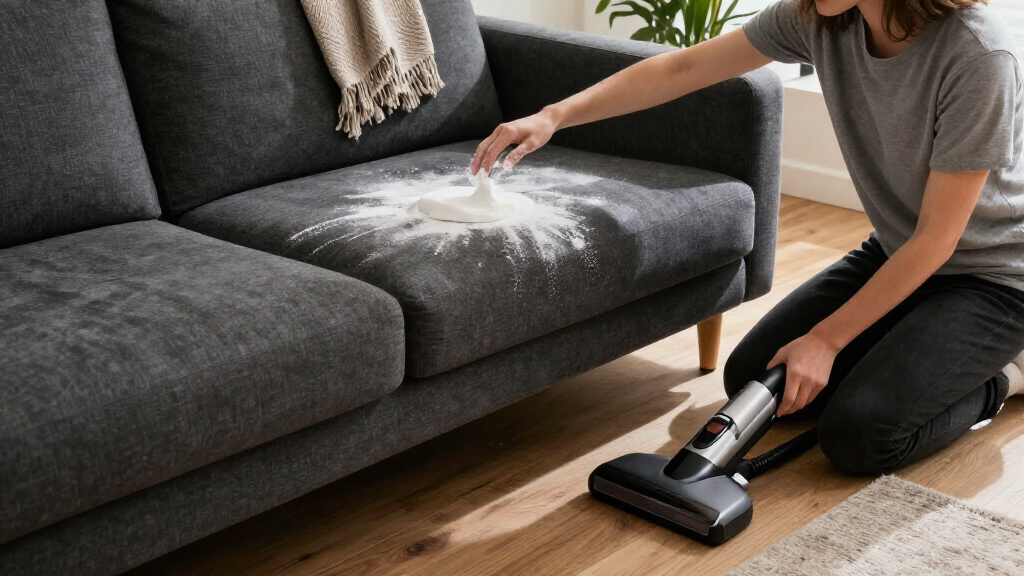
For a couch that passes the test, remove cushions and throws, take small objects out of creases, and vacuum the upholstery while dry, including seams. Sprinkle a light, even layer of baking soda over the fabric without aggressively rubbing it in. Leave it for at least 20 to 30 minutes, then vacuum thoroughly, checking cushion sides and seams for residue. The report says a longer treatment, including overnight, may be tried for stronger smells only after a patch test for the same length of time.
Hunker cautions against using this approach on leather, imitation leather, silk or delicate vintage furniture, which the powder could dry out, damage or discolor. It may also be difficult to remove from deep-pile fabric and seams. Keep children and pets away while the powder is on the couch, and follow the furniture maker’s care instructions.
A Low-Cost Step With Limits
The method offers a simple odor-freshening option for some upholstery, but the distinction between reducing an odor and cleaning its cause matters. Baking soda may help with unpleasant smells, according to the report, but it does not remove the stain or spill that produced them. Treating a visible mark with a suitable upholstery cleaner may be necessary, and persistent or absorbed odors can require professional cleaning.
Checking the label and testing a hidden patch can help reduce the risk of discoloration or damage before powder is applied across a couch. Those steps matter especially because furniture fabrics vary, and a treatment that is appropriate for one sofa may not be appropriate for another.
baking soda for fabric couch odor removal
As an affiliate, we earn on qualifying purchases.
As an affiliate, we earn on qualifying purchases.
Care Labels Guide the Method
The guidance is a household-cleaning report, not a claim that baking soda works on every couch or every kind of odor. Upholstery care labels indicate whether a material can be cleaned with water, solvent, both, or vacuuming alone, according to Hunker. The report uses “W” and “X” as examples, but owners should follow the specific instructions for their furniture rather than assume the powder is universally safe.
Hunker also distinguishes lighter odors from smells that have soaked into fabric. It gives pet urine as an example of an odor that may need professional treatment. The supplied report does not cite tests comparing baking soda with other cleaning methods or quantify how much odor it removes.
““baking soda addresses odor, but it can’t clean the upholstery to remove the cause of the odor””
— Hunker report
As an affiliate, we earn on qualifying purchases.
Results Depend on Fabric and Odor
The report does not specify which fabric types, beyond the listed exclusions, respond best to baking soda, or quantify how much odor the method can reduce. Results may vary with the upholstery, odor source and how deeply the smell has soaked in. It is also unclear from the supplied material whether a particular couch’s manufacturer permits this treatment; the care label and maker’s instructions should take precedence.
Hunker says more serious odors, including some pet-urine smells, may require professional cleaning. It does not provide a universal threshold for when to call a cleaner, so owners may need expert advice if an odor remains after suitable care or if the fabric is delicate.
As an affiliate, we earn on qualifying purchases.
Check the Label Before Treating
Before applying anything, locate the care label and test baking soda on a hidden patch for the same amount of time planned for the full treatment. If the fabric changes color or texture, do not proceed. If the test is satisfactory, use a light layer, keep children and pets away, and vacuum all powder from seams and cushions afterward.
If a spill or stain is visible, use a cleaner appropriate for the upholstery rather than relying on baking soda alone. For a smell that persists or appears deeply embedded, consult a professional upholstery cleaner. The report gives no later testing or follow-up results, so the next step for an individual couch depends on its care instructions and the outcome of the patch test.
odor absorbing baking soda for furniture
As an affiliate, we earn on qualifying purchases.
As an affiliate, we earn on qualifying purchases.
Key Questions
What is baking soda meant to do on a couch?
Hunker describes it as a way to help freshen some fabric upholstery by addressing odors. It does not remove the spill, stain or other source of the smell.
How long should baking soda stay on a fabric couch?
The report recommends at least 20 to 30 minutes, followed by thorough vacuuming. A longer treatment may be considered only after testing a hidden area for the same length of time.
Can I use baking soda on a leather couch?
Hunker advises against using it on leather or imitation leather, as well as silk and delicate vintage furniture, because the material could dry out, become damaged or discolor.
Will baking soda remove pet urine odor?
Not necessarily. The report says an odor such as pet urine may have soaked into the fabric and may require professional cleaning. Baking soda does not remove the underlying spill or stain.
What should I do before sprinkling baking soda on upholstery?
Read the couch’s care label, check the manufacturer’s instructions and test a small, hidden area. If the fabric shows a change, do not treat the full couch with the powder.
Source: rss
Halloween Picks
halloween
As an affiliate, we earn on qualifying purchases.