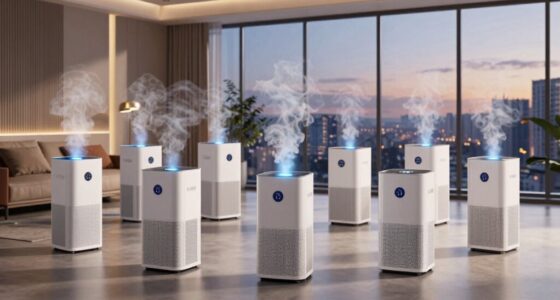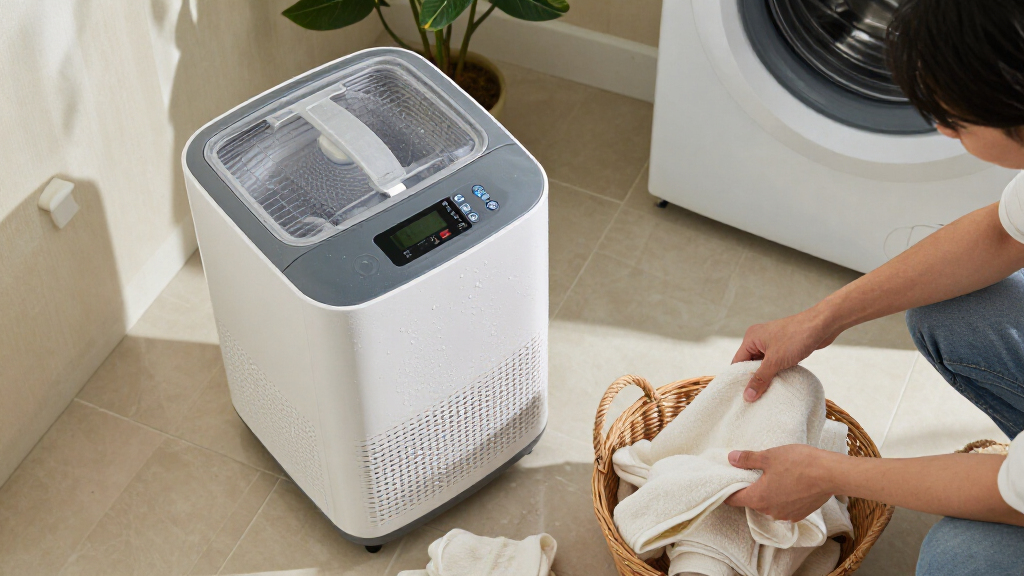

For most households, I’d start with the Midea 22 Pint Dehumidifier: its moderate capacity and basement-focused design suit everyday dampness without jumping straight to a large-unit footprint. For bigger or persistently humid spaces, the AEOCKY BOREAS-001 offers a higher-capacity compressor option, while the Waykar 34-Pint is a useful middle ground for rooms that need more moisture removal. The main tradeoffs are capacity versus size and noise, plus the convenience of continuous drainage versus the upkeep of emptying a tank. Small thermoelectric models are easier to place but are not substitutes for compressor units in damp basements. Read on for the full breakdown of all 15 picks and how to match one to your space.

Get home appliances delivered free with Prime
- Fast, free delivery on millions of items
- Prime Video, Amazon Music and more included
- Member-only deals all year
Complete the kit


Key Takeaways
The roundup spans very different jobs: large compressor units such as the Waykar 120-Pint target extensive damp areas, while the TABYIK and ToLife are compact room-level options rather than basement solutions.
Capacity alone does not settle the choice: advertised coverage reaches 6,000 square feet on some models, but room layout, dampness, temperature, and drainage access also shape real-world suitability.
Continuous drainage is a meaningful separator: several larger models include or support a drain hose, which can reduce tank-emptying chores during sustained operation.
Mid-capacity models offer a practical middle: the Midea 22-Pint and Waykar 34-Pint are less imposing choices than the 74- to 120-pint machines for many homes with localized moisture.
Bedroom-focused extras have limits: sleep modes and quiet-oriented features may help with placement, but small tank and compact designs make models like the Onsekin and TABYIK better suited to modest moisture loads.
| Midea 22 Pint Dehumidifier for Basement, 1500 Sq. Ft, Energy Star |  | Best Connected Mid-Size Pick | Moisture removal: 22 pints per day | Coverage area: Up to 1,500 sq. ft. | Tank volume: 0.8 gallons | VIEW LATEST PRICE | See Our Full Breakdown |
| KNKA Energy Star Dehumidifier for Spaces up to 5,500 Sq. Ft., 80-Pint |  | Best for Large, Damp Homes | Maximum moisture removal: 80 pints per day | Typical basement removal: 56 pints per day at 86°F and 80% RH | Coverage area: Up to 5,500 sq. ft. | VIEW LATEST PRICE | See Our Full Breakdown |
| GoGuess 21-Pint Compressor Dehumidifier for 1,600 Sq. Ft. |  | Best for Quiet, Flexible Room Control | Coverage: 1,600 sq. ft. | Maximum moisture removal: 21 pints per day at 95°F and 90% RH | Modes: DEHU, TURBO, SLEEP | VIEW LATEST PRICE | See Our Full Breakdown |
| Waykar 80 Pint Dehumidifier for Large Spaces, Energy Star Certified |  | Best for Quiet Large-Area Coverage | Moisture removal: 80 pints per day | Coverage area: Up to 5,000 sq. ft. | Humidity control range: 30%–80% | VIEW LATEST PRICE | See Our Full Breakdown |
| ToLife Dehumidifier with 95 oz Tank, Sleep Mode, and Auto Shutoff |  | Best Compact Pick for Bedrooms | Coverage: Up to 1,000 sq. ft. | Water tank capacity: 95 ounces | Technology: Semiconductor condensation | VIEW LATEST PRICE | See Our Full Breakdown |
| AEOCKY BOREAS-001 50-Pint Dehumidifier with Drain Hose |  | Best for Cooler, Humid Spaces | Model: BOREAS-001 | Moisture removal: Up to 50 pints/day at 95°F and 95% RH; 38 pints/day at 86°F and 80% RH | Noise level: Approximately 40 dB | VIEW LATEST PRICE | See Our Full Breakdown |
| Onsekin CS08 Dehumidifier with Aromatherapy, Sleep Mode, and 7-Color Lighting |  | Best Compact Bedroom Pick | Model: CS08 | Technology: Semiconductor condensation | Modes: High Speed, Sleep | VIEW LATEST PRICE | See Our Full Breakdown |
| KNKA Energy Star Dehumidifier, 74 Pints per Day, for Spaces up to 5,000 Sq. Ft. |  | Best Energy-Certified Large-Room Pick | Coverage area: Up to 5,000 sq. ft. | Dehumidification capacity: Up to 74 pints/day; 56 pints/day in typical basement conditions | Internal tank capacity: 1.45 gallons | VIEW LATEST PRICE | See Our Full Breakdown |
| Waykar 6000 Sq.Ft Energy Star Dehumidifier, 120 Pint/Day, Ultra Quiet, Smart Auto Comfort Mode |  | Best for Very Large, Wet Spaces | Capacity: Up to 120 pints/day | Coverage area: Up to 6,000 sq. ft. | Tank volume: 1.24 gallons | VIEW LATEST PRICE | See Our Full Breakdown |
| Waykar 80-Pint Dehumidifier for Homes up to 5,000 Sq. Ft. |  | Best for Flexible Everyday Drainage | Coverage: Up to 5,000 sq. ft. | Dehumidification capacity: Up to 80 pints/day | Water tank capacity: 0.92 gallons (3.5 L) | VIEW LATEST PRICE | See Our Full Breakdown |
| TABYIK 35 OZ Dehumidifier for Bedroom RV, Quiet with Auto Shut Off, White |  | Best Compact Pick | Dehumidification capacity: 0.45 liters per day | Tank volume: 1,000 ml | Stated room area: Up to 280 sq. ft. | VIEW LATEST PRICE | See Our Full Breakdown |
| Waykar 34-Pint Energy Star Dehumidifier for Spaces up to 2,000 Sq. Ft. |  | Best for Mid-Size Spaces | Moisture removal: Up to 34 pints per day at 95°F and 90% RH | Recommended coverage: Up to 2,000 sq. ft. | Humidity range: 30%–80% | VIEW LATEST PRICE | See Our Full Breakdown |
| AEOCKY RHEA-002 6000 Sq. Ft. Dehumidifier, ENERGY STAR Most Efficient 2024 |  | Best for Very Large Spaces | Coverage area: Up to 6,000 sq. ft. | Dehumidification capacity: 105 pints/day at 95°F and 95% RH | Capacity at alternate conditions: 83 pints/day at 86°F and 80% RH | VIEW LATEST PRICE | See Our Full Breakdown |
| KNKA 2500 Sq. Ft. Max 34 Pints Dehumidifier for Basement with Drain Hose, White |  | Best for Quieter Mid-Size Operation | Floor area: Up to 2,500 sq. ft. | Dehumidification capacity: 34 pints per day | Tank volume: 3 L | VIEW LATEST PRICE | See Our Full Breakdown |
| AEOCKY RHEA-001 80-Pint Dehumidifier for Homes up to 5,500 Sq. Ft. |  | Best for Large Homes with Cooler Conditions | Model: RHEA-001 | Coverage area: Up to 5,500 sq. ft. | Dehumidification capacity: Up to 80 pints/day at 95°F and 95% RH | VIEW LATEST PRICE | See Our Full Breakdown |
More Details on Our Top Picks
Midea 22 Pint Dehumidifier for Basement, 1500 Sq. Ft, Energy Star
The Midea 22 Pint is a practical fit for a basement, bedroom, or office where app control matters more than maximum moisture capacity. Its Wi-Fi connectivity and voice-assistant support let you adjust settings remotely, while 47 dBA operation is suited to spaces where a louder large-capacity unit may be intrusive. Compared with the KNKA 80-Pint, this model is much less suited to a large, persistently damp area, but its smaller footprint and 33.5-pound weight make it easier to move between rooms. The main tradeoff is water handling: the 0.8-gallon tank can fill quickly in humid conditions, and the continuous-drain hose is not included. Choose it for moderate moisture and convenient control, not high-volume basement drying.
Pros:- Wi-Fi and voice-assistant support allow remote adjustments
- Rated for spaces up to 1,500 square feet
- 47 dBA operation is suitable for rooms used regularly
- Four-wheel design and 33.5-pound weight aid repositioning
Cons:- 0.8-gallon tank may need frequent emptying in high humidity
- Continuous-drain hose is not included
- 22-pint capacity is modest compared with the KNKA and Waykar 80-pint units
Best for: People managing moderate humidity in a basement, bedroom, or home office who want app and voice-assistant control.
Not ideal for: Owners of large, very damp basements who need high daily moisture removal or want a drain hose included.
- Moisture removal:22 pints per day
- Coverage area:Up to 1,500 sq. ft.
- Tank volume:0.8 gallons
- Power:295 watts
- Airflow:135 cfm
- Noise level:47 dBA
- Dimensions:10.51 × 15.31 × 19.8 inches
- Weight:33.5 pounds
- Warranty:1 year
Our verdict“Choose the Midea for connected control and moderate room coverage, but pick a higher-capacity model for a persistently wet basement.”
KNKA Energy Star Dehumidifier for Spaces up to 5,500 Sq. Ft., 80-Pint
For a broad, humid area that needs more than a small room unit can offer, the KNKA 80-Pint brings substantial capacity and a useful continuous-drain option. Its stated removal rate reaches 80 pints per day in humid conditions, with a separate typical-basement figure of 56 pints per day at 86°F and 80% RH; that context helps set expectations better than relying on the maximum alone. It also includes a 6.56-foot hose, washable filter, and three modes. Compared with the Midea 22 Pint, it is built for much larger spaces, though its 1.45-gallon tank still needs attention when hose drainage is not used. The optional 2.64-gallon external tank costs extra, and humidity readings may differ slightly from a separate hygrometer.
Pros:- High stated capacity for spaces up to 5,500 square feet
- Energy Star certified
- Includes a 6.56-foot drain hose and automatic full-tank shutoff
- Washable filter and three operating modes simplify routine use
Cons:- The 1.45-gallon internal tank may need regular emptying without hose drainage
- Optional 2.64-gallon external tank is sold separately
- Humidity readings may vary slightly from external hygrometers
Best for: Households with a large basement or open-plan area that need high moisture removal and can use continuous hose drainage.
Not ideal for: People seeking a compact unit for one bedroom or those who need a large onboard tank without buying an accessory.
- Maximum moisture removal:80 pints per day
- Typical basement removal:56 pints per day at 86°F and 80% RH
- Coverage area:Up to 5,500 sq. ft.
- Internal tank capacity:1.45 gallons
- Drain hose length:6.56 feet
- Noise level:40–45 dB
- Humidity setting range:30%–80% RH
- Operating modes:Auto, Dry, Setting
- Certification:Energy Star
Our verdict“Pick the KNKA for large humid areas where its included hose and high capacity can do more useful work than a smaller unit.”
GoGuess 21-Pint Compressor Dehumidifier for 1,600 Sq. Ft.
The GoGuess 21-Pint suits buyers who want several ways to manage a smaller space without stepping up to a large 80-pint machine. Its DEHU, TURBO, and SLEEP modes let you trade quieter operation for faster drying, and the listed 40 dB noise level is lower than the Midea’s 47 dBA rating. It also includes a drain hose, unlike the Midea, so continuous drainage is available out of the box. Capacity needs a closer read: the maximum 21 pints per day is specified at 95°F and 90% RH, while its 2.3-liter tank is small enough to require frequent emptying if the hose is not used. Auto-defrost and a child lock add useful safeguards, but this is not the choice for large, heavily damp areas.
Pros:- Three modes include a sleep setting for quieter operation
- 40 dB listed noise level
- Includes a hose for continuous drainage as well as a removable tank
- Auto-defrost, child lock, and full-tank shutoff provide useful protections
Cons:- 2.3-liter tank may need frequent emptying when not using the hose
- 21-pint maximum is measured at 95°F and 90% RH
- Lower capacity than the KNKA 80-Pint for large damp areas
Best for: Apartment dwellers or households managing a single room who want quiet operation, selectable modes, and included hose drainage.
Not ideal for: Owners of large or severely damp spaces who need high capacity, or anyone relying on a large tank between emptying sessions.
- Coverage:1,600 sq. ft.
- Maximum moisture removal:21 pints per day at 95°F and 90% RH
- Modes:DEHU, TURBO, SLEEP
- Humidity setting range:30%–80%
- Water tank capacity:2.3 liters
- Drain hose length:3.28 feet
- Noise level:40 dB
- Safety features:Overload protection, full-tank auto shutoff, auto-defrost, child lock
Our verdict“Choose the GoGuess for quieter, mode-based control in a smaller area, especially if you plan to use its included drain hose.”
Waykar 80 Pint Dehumidifier for Large Spaces, Energy Star Certified
The Waykar 80 Pint combines large-area capacity with a relatively quiet 42 dB operating figure, making it a strong fit when a dehumidifier needs to run near living spaces. Its coverage rating reaches 5,000 square feet, slightly below the KNKA 80-Pint’s 5,500-square-foot claim, while its 4.3-liter tank is larger than the KNKA’s 1.45-gallon tank. Both offer flexible drainage, but the KNKA includes a longer hose; Waykar’s listed hose is 3.3 feet, so placement near a drain matters. A 30%–80% humidity range, 90-degree airflow swing, auto-defrost, and overload protection support adjustable everyday operation. The tradeoffs are its substantial footprint, setup demands, and higher energy use than smaller units. It makes more sense for broad coverage than for a single bedroom.
Pros:- 80-pint capacity and coverage rating up to 5,000 square feet
- 42 dB noise level suits use near occupied rooms
- 4.3-liter tank and drain hose offer two drainage approaches
- Adjustable humidity control, auto-defrost, and overload protection
Cons:- Large size needs significant placement space
- Uses more energy than smaller-capacity units
- Shorter included hose than the KNKA 80-Pint and setup may take more effort
Best for: Homeowners with a large basement or shared living area who want high capacity, quieter operation, and tank-or-hose drainage.
Not ideal for: People with limited floor space, a small room, or a drain location too far from the unit’s 3.3-foot hose.
- Moisture removal:80 pints per day
- Coverage area:Up to 5,000 sq. ft.
- Humidity control range:30%–80%
- Noise level:42 dB
- Water tank capacity:4.3 liters (1.14 gallons)
- Drain hose length:3.3 feet
- Airflow swing:90 degrees
- Protection features:Auto-defrost and overload protection
- Certification:Energy Star
Our verdict“Choose the Waykar when quiet operation and large-area coverage matter more than a compact body or a longer drain hose.”
ToLife Dehumidifier with 95 oz Tank, Sleep Mode, and Auto Shutoff
The ToLife is a compact, bedroom-oriented option rather than a substitute for the compressor models above. Its semiconductor condensation system, below-30 dB sleep mode, and 95-ounce tank make it better suited to quiet, occasional moisture control than the GoGuess or either 80-pint machine. The small footprint and handles also make moving it between a bedroom, RV, or other modest space straightforward. Seven light colors add an ambient-light feature, though they do not address moisture performance. The main limitation is the missing removal-rate figure: a stated coverage of up to 1,000 square feet does not tell buyers how quickly it can reduce humidity. I would pick the GoGuess instead for a room that needs a specified compressor capacity and included continuous drainage.
Pros:- Sleep mode operates below 30 dB
- 95-ounce tank with automatic shutoff when full or improperly positioned
- Compact dimensions and handles support moving between small spaces
- Seven selectable ambient light colors
Cons:- Moisture-removal capacity is not specified
- No continuous-drain option is listed
- Semiconductor design is a less suitable fit than compressor models for high moisture loads
Best for: Light sleepers in a bedroom or RV who want a compact unit with a quiet mode and automatic tank shutoff.
Not ideal for: People with a persistently damp basement or anyone who needs a stated daily moisture-removal rate and continuous drainage.
- Coverage:Up to 1,000 sq. ft.
- Water tank capacity:95 ounces
- Technology:Semiconductor condensation
- Modes:Powerful and low-speed sleep
- Sleep-mode noise:Below 30 dB
- Ambient light:7 color options
- Auto shutoff:When tank is full or improperly positioned
- Dimensions:8.27 × 5.55 × 13.78 inches
Our verdict“Choose the ToLife for quiet, light-duty moisture control in a bedroom or RV, not for demanding whole-room or basement drying.”
AEOCKY BOREAS-001 50-Pint Dehumidifier with Drain Hose
The AEOCKY BOREAS-001 is a strong fit for a damp basement or other residential space where a compressor dehumidifier needs to keep working as temperatures dip. Its automatic defrost supports cooler-room operation, while smart humidity monitoring makes it easier to track conditions than with the smaller, simpler Onsekin CS08. The listed capacity reaches 50 pints per day in hot, very humid conditions, so it has more muscle for a sizable room than a compact semiconductor unit. At about 40 dB, it also avoids the noise level some buyers associate with higher-capacity machines. The main catch is its 0.8-gallon tank: without the included hose connected to a drain, frequent emptying may interrupt use. The tank must stay installed even when draining continuously.
Pros:- Removes up to 50 pints per day in hot, highly humid conditions
- Automatic defrost supports operation in cooler spaces
- Includes a 2-meter hose for continuous gravity drainage
- Approximately 40 dB operation is relatively quiet for its capacity
Cons:- The 0.8-gallon tank may need frequent emptying without continuous drainage
- Tank must remain installed when using either drainage method
- Its stated maximum capacity applies to especially hot and humid conditions
Best for: Homeowners managing a cool, damp basement who can place the included hose near a suitable gravity drain.
Not ideal for: Buyers who want a large collection tank or cannot keep the unit beside a drain; its 0.8-gallon tank fills more often than the KNKA’s 1.45-gallon tank.
- Model:BOREAS-001
- Moisture removal:Up to 50 pints/day at 95°F and 95% RH; 38 pints/day at 86°F and 80% RH
- Noise level:Approximately 40 dB
- Tank capacity:0.8 gallons
- Drain hose:Included, 2 m
- Garden hose adapter:3/4 in. GHT
- Features:Smart humidity monitoring, ambient humidity indicator, automatic defrost
Our verdict“Choose the BOREAS-001 for a cool, damp residential space where defrost support and included hose drainage matter more than a larger tank.”
Onsekin CS08 Dehumidifier with Aromatherapy, Sleep Mode, and 7-Color Lighting
The Onsekin CS08 suits buyers who want a small, portable moisture-control unit with bedroom-friendly extras rather than the capacity of a compressor model. Its 5.5-pound body, sleep mode, and optional lighting make it easier to place in a bedroom, closet, or RV than the heavier Waykar 80-Pint. Aromatherapy and seven-color LEDs add ambience, though both are secondary to the core job: this semiconductor unit is better for a small, mildly damp area than a wet basement. Sleep-mode noise is listed below 45 dB, and automatic shutoff helps prevent spills if the tank fills or is misseated. Buyers should check the available space carefully, since the product data gives two different dimension sets. It also requires the tank to be positioned correctly before it operates.
Pros:- Lightweight 5.5-pound design is easy to move between small rooms
- Sleep mode is listed below 45 dB
- Automatic shutoff responds to a full or incorrectly positioned tank
- Includes aromatherapy, adjustable seven-color lighting, and a drain hose
Cons:- Semiconductor design is better suited to small spaces than heavy-duty moisture removal
- Tank must be installed correctly for the unit to run
- The two listed dimension sets conflict, making fit harder to verify
Best for: Apartment dwellers, RV owners, or bedroom users seeking a lightweight unit for a small, mildly humid area with optional lighting and aromatherapy.
Not ideal for: People trying to dry a large basement or remove heavy moisture; the KNKA 74-Pint is designed for far greater capacity.
- Model:CS08
- Technology:Semiconductor condensation
- Modes:High Speed, Sleep
- Sleep-mode noise:Below 45 dB
- Tank:Removable; automatic shutoff when full or incorrectly positioned
- Weight:5.5 lbs
- Lighting:Seven-color LED; can be turned off
- Dimensions:Description: 7.95 × 5.9 × 13.85 in.; listed item dimensions: 9.4 × 9.4 × 7.3 in.
- Included components:Tank, drain hose
Our verdict“Pick the CS08 for portable, light-duty moisture control in a small room, not for drying a large or persistently wet space.”
KNKA Energy Star Dehumidifier, 74 Pints per Day, for Spaces up to 5,000 Sq. Ft.
The KNKA 74-Pint balances substantial moisture removal with an Energy Star certification, making it a practical choice for a large home area where the unit may run often. Its stated capacity is 74 pints per day in demanding conditions and 56 pints per day in typical basement conditions, giving buyers a more grounded reference than a single maximum figure. Compared with the Waykar 120-Pint, it offers less peak capacity but is a more moderate fit for spaces up to 5,000 square feet. A washable filter, casters, child lock, and included 2-meter drain hose suit regular household use. The 1.45-gallon tank is larger than the AEOCKY BOREAS-001’s, but the product data says an external tank is sold separately, so confirm which collection setup is included. It also needs 24 hours upright before first use.
Pros:- Energy Star certified
- Rated for up to 74 pints per day, with a typical-basement figure also provided
- Includes a 2-meter hose for continuous drainage
- Washable filter, casters, and child lock support routine household use
Cons:- An external tank is listed as sold separately, so included collection components may need clarification
- Requires 24 hours upright before first use
- Humidity readings may differ from an external hygrometer
Best for: Households with a large basement or open-plan area that want Energy Star certification, adjustable humidity settings, and hose drainage.
Not ideal for: Buyers needing the greatest listed capacity for a very large or heavily damp space; the Waykar 120-Pint offers a higher stated daily maximum.
- Coverage area:Up to 5,000 sq. ft.
- Dehumidification capacity:Up to 74 pints/day; 56 pints/day in typical basement conditions
- Internal tank capacity:1.45 gallons
- Drain hose:Included, 6.56 ft. (2 m)
- Noise level:40–45 dB
- Wattage:360 watts
- Humidity settings:30%–80% RH
- Weight:27.6 lbs
- Modes:Auto, Dry, Setting
Our verdict“Choose the KNKA for a large residential area where Energy Star certification and continuous drainage matter more than maximum capacity.”
Waykar 6000 Sq.Ft Energy Star Dehumidifier, 120 Pint/Day, Ultra Quiet, Smart Auto Comfort Mode
For a very large area with persistent moisture, the Waykar 120-Pint has the highest stated removal capacity in this group: up to 120 pints per day across spaces listed up to 6,000 square feet. That extra headroom separates it from the KNKA 74-Pint, which is a more restrained match for areas up to 5,000 square feet. Waykar also lists 40 dB operation, smart auto modes, and ENERGY STAR certification in its product details, pairing capacity with automatic humidity management rather than requiring constant manual adjustments. The tradeoff is that its 1.24-gallon tank is modest relative to its stated output, so buyers should plan on a drain-hose connection for extended use. At 28.8 pounds, it is not a grab-and-go appliance either; its size and drainage needs make placement worth planning before purchase.
Pros:- Highest listed capacity in this group at up to 120 pints per day
- Designed for spaces up to 6,000 sq. ft.
- Listed at 40 dB with smart auto modes
- ENERGY STAR certification is stated in the product details
Cons:- The 1.24-gallon tank is small relative to the stated removal capacity
- Continuous drainage requires a drain-hose connection
- At 28.8 pounds, it is less convenient to move frequently
Best for: Owners of large homes, basements, or other damp spaces who need high stated moisture-removal capacity and can set up continuous drainage.
Not ideal for: People with small rooms, no nearby drain, or a preference for a light, easily carried unit; the compact Onsekin CS08 is more portable for small-space use.
- Capacity:Up to 120 pints/day
- Coverage area:Up to 6,000 sq. ft.
- Tank volume:1.24 gallons
- Wattage:470 watts
- Noise level:40 dB
- Airflow:230 cfm
- Humidity range:30%–80%
- Dimensions:12.21 × 9.02 × 19.69 in. (D × W × H)
- Weight:28.8 pounds
Our verdict“Choose the Waykar 120-Pint when a very large, damp area demands more capacity than the KNKA 74-Pint and you can provide a drain connection.”
Waykar 80-Pint Dehumidifier for Homes up to 5,000 Sq. Ft.
The Waykar 80-Pint is a middle ground for buyers who need more capacity than a compact bedroom unit but do not need the Waykar 120-Pint’s larger-area rating. It is designed for spaces up to 5,000 square feet and provides both a removable tank and continuous hose drainage, so it can suit a room without a drain as well as a basement with one nearby. Auto defrost, self-drying, and operation down to 41°F add useful support for cooler household spaces; the KNKA 74-Pint, by comparison, brings Energy Star certification and a larger listed tank. Here, the 0.92-gallon tank is the main limitation during heavy moisture removal, while the included hose reaches only 3.3 feet. Casters and a handle help with repositioning, though the unit still weighs 28.6 pounds.
Pros:- Rated for spaces up to 5,000 sq. ft. and up to 80 pints per day
- Offers both removable-tank collection and continuous drainage
- Auto defrost and self-drying support cooler, regular-use settings
- Casters and a handle help with moving the 28.6-pound unit
Cons:- The 0.92-gallon tank may need frequent emptying during heavy use
- Included drain hose is only 3.3 feet long
- At 28.6 pounds, it is not especially easy to carry between floors
Best for: Homeowners who need a large-area compressor dehumidifier with both tank collection and hose drainage, plus cold-room features.
Not ideal for: Buyers who need a long included hose or a large tank to reduce emptying; the KNKA 74-Pint lists a 1.45-gallon tank and a 2-meter hose.
- Coverage:Up to 5,000 sq. ft.
- Dehumidification capacity:Up to 80 pints/day
- Water tank capacity:0.92 gallons (3.5 L)
- Drain hose:3.3 ft.
- Humidity setting range:30%–80%
- Power:300 watts
- Airflow:147 cfm
- Operating temperature:Down to 41°F
- Features:Auto defrost, self-drying, auto swing, timer, continuous drainage, washable filter, automatic shutoff
Our verdict“Choose this Waykar for flexible tank-or-hose operation and cold-room features, but favor the KNKA if tank capacity and hose reach matter more.”
TABYIK 35 OZ Dehumidifier for Bedroom RV, Quiet with Auto Shut Off, White
The TABYIK is the small-space choice in this group: its 2.2-pound body and compact footprint make it easier to move between a closet, bathroom, or RV than the larger Waykar or AEOCKY units. Its stated removal rate is 0.45 liters per day, so it is suited to light, localized dampness—not a wet basement or whole-floor humidity control. At 28 dB, it is also the quietest specified option here, which may matter in a bedroom or office. The tradeoff is capacity: the 1-liter tank can call for frequent emptying in humid conditions, and the single speed offers little adjustment. I’d choose it for a small room where portability and low noise matter more than fast moisture removal.
Pros:- Lightweight 2.2-pound design is easy to move between small spaces
- 28 dB operating-noise claim suits quiet rooms
- Auto shut-off helps prevent overflow when the tank fills
- Ambient lighting adds a low-key night-light feature
Cons:- 0.45-liter daily removal rate is limited to mild, localized moisture
- 1-liter tank may need frequent emptying in humid conditions
- One speed provides little control over operation
Best for: RV owners and people managing mild dampness in a bedroom, closet, or bathroom who want a lightweight, quiet unit.
Not ideal for: Homeowners with a damp basement or broad open-plan area; its stated daily removal and 1-liter tank are modest compared with the Waykar 34-Pint or larger AEOCKY models.
- Dehumidification capacity:0.45 liters per day
- Tank volume:1,000 ml
- Stated room area:Up to 280 sq. ft.
- Noise level:28 dB
- Wattage:40 W
- Dimensions:5.9 × 5.9 × 10.1 in
- Weight:2.2 lb
- Speeds:1
Our verdict“Choose the TABYIK for a quiet, portable solution to light dampness in a small room, not for serious moisture problems.”
Waykar 34-Pint Energy Star Dehumidifier for Spaces up to 2,000 Sq. Ft.
The Waykar 34-Pint fills the middle ground between compact room units and the high-capacity AEOCKY RHEA models. Its stated coverage of up to 2,000 sq. ft. and removal of up to 34 pints per day make it a more appropriate fit for a basement or several connected rooms than the TABYIK, while stopping short of the larger areas claimed by the AEOCKY RHEA-002. ENERGY STAR certification, two fan speeds, and humidity settings from 30% to 80% give buyers useful control. Continuous drainage can reduce tank-emptying chores, though the included tank is only 2.5 liters and may fill quickly during heavy use. I’d favor this model for routine household moisture management, but not for buyers who need the highest stated extraction capacity.
Pros:- ENERGY STAR certification
- Adjustable humidity range from 30% to 80%
- Continuous-drainage option reduces manual tank emptying
- Automatic defrost, overload protection, and restart are included
Cons:- 2.5-liter tank may require frequent emptying during extended or heavy operation
- Manual 90-degree airflow adjustment is less convenient than automatic direction control
- 34-pint capacity is below the larger AEOCKY RHEA models’ stated maximums
Best for: Households managing recurring humidity in a mid-size basement or connected living area that want adjustable humidity and the option of continuous drainage.
Not ideal for: Owners of very large or exceptionally damp spaces who need more stated capacity than 34 pints per day, or buyers who want a large built-in reservoir.
- Moisture removal:Up to 34 pints per day at 95°F and 90% RH
- Recommended coverage:Up to 2,000 sq. ft.
- Humidity range:30%–80%
- Water tank capacity:2.5 L (0.66 gal)
- Fan speeds:2
- Drainage:Removable tank or continuous drainage hose
- Timer:24 hours
- Certification:ENERGY STAR
Our verdict“Pick the Waykar for controllable, mid-size household dehumidification with continuous drainage, but choose a higher-capacity model for a large, wet basement.”
AEOCKY RHEA-002 6000 Sq. Ft. Dehumidifier, ENERGY STAR Most Efficient 2024
The RHEA-002 is the capacity-led pick here, with a stated maximum of 105 pints per day in hot, very humid conditions and coverage up to 6,000 sq. ft. That puts it above the RHEA-001’s stated 80-pint maximum and well beyond the Waykar 34-Pint for large, damp areas. The figures depend on test conditions: the supplied data gives 83 pints per day at a more moderate 86°F and 80% RH, a useful reminder that output changes as conditions change. ENERGY STAR Most Efficient 2024, automatic defrost, humidity compensation, and power-off memory add practical control features. The main gap in the supplied specifications is tank capacity or drainage information, so I’d verify how water is handled before choosing it for unattended use.
Pros:- Highest stated maximum removal capacity among these five products
- Rated for spaces up to 6,000 sq. ft.
- ENERGY STAR Most Efficient 2024 certification
- Automatic defrost, humidity compensation, and power-off memory
Cons:- Maximum output is stated under hot, very humid test conditions and may not reflect typical use
- Supplied product data does not give tank capacity or drainage options
- Its large-space capacity may be unnecessary for smaller homes and rooms
Best for: Owners of large homes or basements with substantial humidity who prioritize high stated extraction capacity and automatic humidity management.
Not ideal for: People with a small room, or buyers who need clearly specified tank capacity and drainage details before deciding how often they will need to manage collected water.
- Coverage area:Up to 6,000 sq. ft.
- Dehumidification capacity:105 pints/day at 95°F and 95% RH
- Capacity at alternate conditions:83 pints/day at 86°F and 80% RH
- Certification:ENERGY STAR Most Efficient 2024
- Lowest fan-speed noise:44 dB
- Compressor:Rotary
- Defrost:Automatic
- Power-off memory:Yes
Our verdict“Choose the RHEA-002 for a very large, persistently humid area if its water-management setup suits your needs.”
KNKA 2500 Sq. Ft. Max 34 Pints Dehumidifier for Basement with Drain Hose, White
KNKA’s 34-pint model targets a similar moisture load to the Waykar 34-Pint, but its stated coverage reaches 2,500 sq. ft. and its reported 37 dB operation makes it the quieter-specified choice between the two. Smart controls, safety lock, and multiple operating modes give it a more feature-focused feel than the Waykar, whose strengths are its stated ENERGY STAR certification and humidity range down to 30%. KNKA also lists a 3-liter tank and multiple drainage options, although the product information says an external water tank is sold separately, so buyers should confirm what is included. The control interface may take more effort to learn, and the requirement to leave the unit upright for 24 hours after delivery adds setup time.
Pros:- Stated coverage of up to 2,500 sq. ft. with 34-pint daily capacity
- 37 dB noise claim is lower than the Waykar 34-Pint’s listed information
- Smart controls, humidity adjustment, and safety lock
- Multiple drainage options and a listed 3-liter tank volume
Cons:- External water tank is sold separately according to the supplied product details
- Control interface may be complex for buyers who prefer straightforward operation
- Must remain upright for 24 hours after delivery before use
Best for: People with a basement or living area up to the stated coverage who want quieter operation, smart controls, and flexible drainage.
Not ideal for: Buyers who want a simple setup straight out of the box or need clearly included drainage hardware; check the external tank and hose arrangements before purchase.
- Floor area:Up to 2,500 sq. ft.
- Dehumidification capacity:34 pints per day
- Tank volume:3 L
- Wattage:230 W
- Noise level:37 dB
- Speeds:2
- Operating modes:Continuous, Dry, Dehumidify
- Dimensions:13.23 × 10.31 × 20.87 in
Our verdict“Pick the KNKA if quieter operation and smart controls matter in a mid-size space, after confirming the water-management parts you need are included.”
AEOCKY RHEA-001 80-Pint Dehumidifier for Homes up to 5,500 Sq. Ft.
The RHEA-001 is a large-space option for buyers who need more capacity than the Waykar 34-Pint but do not need the RHEA-002’s higher stated maximum or 6,000-square-foot coverage. It is rated for up to 5,500 sq. ft. and removes up to 80 pints per day under hot, highly humid conditions; at 86°F and 80% RH, the listed figure is 56 pints per day. Its ENERGY STAR Most Efficient 2025 certification, power-off memory, and low-temperature defrost operation make it appealing for broader home use, including cooler spaces. At 44 dB on the lowest fan setting, it is not as quiet by the supplied figures as the KNKA 34-Pint. Tank capacity and drainage options are not provided, so I’d check water handling before buying.
Pros:- Stated 80-pint daily maximum for large areas
- ENERGY STAR Most Efficient 2025 certification
- Designed for low-temperature operation with defrost support
- Power-off memory supports retaining settings after an interruption
Cons:- Daily removal figure falls to 56 pints under the listed 86°F and 80% RH conditions
- Supplied information does not specify tank capacity or drainage options
- 44 dB lowest-fan rating is higher than the KNKA 34-Pint’s stated 37 dB
Best for: Owners of larger homes who need substantial moisture removal and value low-temperature operation and power-off memory.
Not ideal for: Buyers with small spaces, or anyone who needs confirmed tank capacity and drainage details before planning regular or unattended operation.
- Model:RHEA-001
- Coverage area:Up to 5,500 sq. ft.
- Dehumidification capacity:Up to 80 pints/day at 95°F and 95% RH
- Capacity at alternate conditions:56 pints/day at 86°F and 80% RH
- Certification:ENERGY STAR Most Efficient 2025
- Lowest fan noise:44 dB
- Dimensions:14.45 × 8.66 × 24.09 in
- Weight:31 lb
Our verdict“Choose the RHEA-001 for a large home that needs strong capacity and cooler-condition operation, once you confirm how it drains.”
How We Picked
I compared the 15 listed models by the job they appear designed to handle: room-scale moisture control, routine basement use, or larger areas with heavier humidity. Capacity and stated coverage helped distinguish categories, but I treated those figures as starting points rather than guarantees; open layouts, low temperatures, and unusually wet conditions can change what a home needs. I also weighed practical details that affect daily ownership, including tank size, drain-hose support, auto shutoff, sleep or comfort modes, and how easy a unit is likely to place.
The ranking favors versatility and a useful balance of capacity, day-to-day convenience, and clear fit for common homes. Models with large stated capacities rank higher for demanding spaces, but they are not automatic winners for a small bedroom or a home where noise and footprint matter more. Compact thermoelectric options are included for their distinct placement niche, not ranked as replacements for compressor dehumidifiers. Where product names provide limited technical detail, I avoid treating unlisted features as confirmed advantages.
Factors to Consider When Choosing Best Dehumidifiers
Before choosing a model, I’d match the machine to the moisture problem rather than buying by the biggest capacity figure. These points can help you avoid an undersized unit, an unnecessarily bulky one, or a setup that creates extra maintenance.
Match capacity to the moisture problem
Start with the room or connected area you want to dry, then think about how damp it gets and how often the problem returns. A lightly humid bedroom does not call for the same capacity as a basement with persistent dampness or laundry drying indoors. Coverage claims are useful for narrowing the field, but they do not account for every floor plan or moisture source. A divided basement may need different placement or more than one unit even if its total area fits a product’s stated range. Avoid buying a very large model just because its number is higher; size, operating noise, and energy use still matter. If moisture comes from a leak or water intrusion, address that source before relying on a dehumidifier.
Choose the drainage setup you will actually maintain
A built-in tank is straightforward when you run a unit occasionally and can empty it as needed. Under sustained humidity, however, a small reservoir can fill quickly and interrupt operation, so tank capacity and shutoff behavior matter. A hose connection can reduce hands-on work, but it needs a suitable drain nearby and a route that allows water to flow properly. Check whether the hose is included or whether you may need to supply one; product listings do not always make that distinction clear. Do not assume a drain hose means the machine can pump water upward, since gravity drainage and pump drainage are different arrangements. Think through the exact placement before buying so the drainage plan is workable.
Treat coverage claims as estimates, not room guarantees
Square-foot figures can make models look directly comparable, but they do not describe every condition in a home. Ceiling height, closed doors, connected rooms, outdoor humidity, and how wet the space is all affect moisture removal. A large advertised coverage area may suit an open basement better than a set of separate rooms with limited airflow. For an enclosed room, a smaller unit placed where air can circulate may be more useful than a larger model tucked into a corner. Keep the manufacturer’s placement and clearance guidance in mind, and avoid blocking air intake or exhaust. If the damp area has several distinct zones, prioritize how the air moves through them rather than relying on one headline coverage number.
Plan for noise, footprint, and placement
Compressor models are generally the more relevant category for substantial moisture loads, but their size and operating sound can make placement a real decision. If the unit will sit near a bed, desk, or living area, compare noise information and controls rather than assuming a sleep mode makes any model silent. A compact thermoelectric unit is easier to fit on a shelf or in a small room, yet it is intended for lighter-duty moisture control. Large-capacity models may need more floor space and a convenient route for moving or draining them. Leave room around the unit for airflow and routine access to the tank or filter. A good location can improve usefulness without requiring you to run the machine in the middle of the room.
Compare operating needs, not just the feature list
Energy-related certifications can help identify models designed around efficiency criteria, but they do not tell you exactly what a unit will cost to run in your home. Runtime, humidity level, room temperature, and how often the machine cycles all affect energy use. Features such as auto shutoff, a humidity setting, or a drain connection matter most when they solve a routine problem you expect to have. A lighting feature or aromatherapy function may suit someone who wants a compact bedroom appliance, but it does not replace capacity for a damp basement. Before choosing, check filter-cleaning instructions, tank access, control settings, and any installation needs. Paying for a feature you will not use is less useful than getting a machine that fits your moisture load and maintenance habits.
Frequently Asked Questions
Should I choose a 34-pint model or jump to an 80-pint dehumidifier?
I’d choose based on the severity and spread of the moisture problem, not the largest number on the label. A 34-pint unit can make more sense for a single room or a moderately damp area where a large machine would take up unnecessary space. An 80-pint model is a better candidate for a broad or persistently humid area, especially when continuous drainage is available. The stated coverage figures are not a promise that either unit will handle every layout equally well. If you are unsure, note whether the dampness is occasional or ongoing and whether the target area is open or divided before sizing up.
Can a small dehumidifier handle a damp basement?
Usually, a compact thermoelectric model is better suited to a small, mildly humid room than a basement with persistent dampness. Its smaller tank and lighter-duty design can mean frequent emptying and limited moisture removal when the load is high. Compressor units in this roundup, including the Midea and larger Waykar or AEOCKY models, are more relevant candidates for substantial basement use. The basement’s temperature and layout still matter, so check the manufacturer’s operating guidance before choosing. If there is standing water, a leak, or a recurring wet patch, fix that cause rather than expecting an appliance to solve it.
Is a drain hose worth choosing if a model has a water tank?
A drain hose is useful when the unit will run for long stretches and a floor drain or other suitable outlet is close by. It can spare you from repeatedly checking and emptying a tank, which is especially helpful in a basement or utility area. A tank remains convenient when you need a portable setup or do not have a place for continuous drainage. Confirm whether the hose is included, how it must be routed, and whether the unit relies on gravity or has a pump. If the hose cannot reach a drain with a safe downward path, the feature may not reduce much work.
Are the advertised square-foot ratings reliable for an open-plan home?
Use those ratings as rough guidance, not as a guarantee for every open-plan layout. A connected space may allow air to circulate, but partitions, hallways, high ceilings, and doors can limit how effectively one unit reaches the full area. The amount of moisture entering the home also matters: a mildly humid open room is a different task from a basement with ongoing dampness. Check whether the capacity and coverage claims suit your conditions, then place the unit where air can move freely. For separate rooms, one large rating may be less useful than a practical plan for airflow and placement.
Which features matter most if the dehumidifier will run near a bedroom?
Start with operating noise, size, and how often you will need to empty the tank; these affect comfort more than decorative extras. Sleep modes may dim lights or adjust operation, but they do not necessarily make a compressor model quiet enough for every sleeper. A small model such as the TABYIK or ToLife is easier to place, though it is intended for a more modest moisture load than a large compressor unit. If the bedroom is persistently damp, prioritize adequate moisture removal and consider placing the machine outside the sleeping area if airflow allows. Check the product’s sound information and control behavior before treating a sleep mode as a guarantee of quiet operation.
Conclusion
For most homes, I’d choose the Midea 22 Pint as the best overall starting point because its basement-focused, mid-capacity profile avoids the bulk of the largest machines. The Waykar 34-Pint is my best value-style fit for buyers who need more capacity for a moderate area without going straight to an 80-pint model, while the AEOCKY RHEA-002 is the premium-leaning choice for shoppers prioritizing a larger-area design and its ENERGY STAR Most Efficient 2024 designation. For beginners handling a localized, modest moisture problem, I’d favor a straightforward compact option such as the ToLife, provided its limited capacity fits the room. For large or persistently damp spaces, compare the Waykar 120-Pint, KNKA 80-Pint, and AEOCKY 80-Pint options against your drainage plan and available floor space. Choose the smallest model that can reasonably handle your actual moisture load, then let noise, drainage, and placement break the tie.