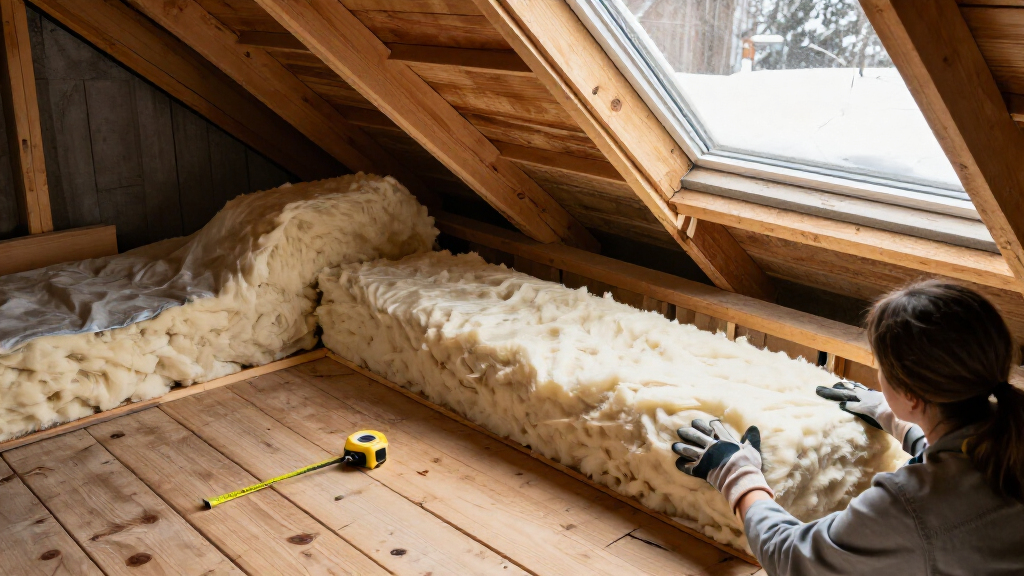
Choosing insulation for a zone 6a home means balancing thermal resistance, air leakage, framing depth, moisture management, and installation effort. My three picks serve different jobs: Owens Corning R-19 Unfaced Fiberglass is my lead choice for 2×6 cavities and open attic or floor areas; BEEST FullStop Spray Foam is the targeted option for cracks and awkward gaps; and Owens Corning R-13 Kraft-Faced Fiberglass fits standard 2×4 walls where a faced batt is appropriate.

Get home appliances delivered free with Prime
- Fast, free delivery on millions of items
- Prime Video, Amazon Music and more included
- Member-only deals all year
These are not interchangeable whole-house solutions. R-19 batts cover larger framed cavities, while the R-13 roll is sized for shallower framing and spray foam is better suited to sealing localized openings than insulating an entire home. I rank them by how clearly they fit common zone 6a retrofit and construction tasks, while weighing the listed R-value, installation conditions, coverage information, and moisture-control requirements. The right pick depends on where the insulation goes and whether air sealing or cavity coverage is the bigger problem.
Complete the kit


Key Takeaways
- For 2×6 cavities: Owens Corning R-19 is the most direct match here, with 6.5-inch unfaced batts and stated coverage of 77.5 square feet per bag.
- For small leaks and irregular gaps: BEEST FullStop offers a packaged spray-foam setup, but it requires careful application and a 68–77°F application range.
- For standard 2×4 walls: Owens Corning R-13 is sized for 3.5-inch cavities; its listed coverage lacks an area figure, so verify the package before planning a project.
- Faced versus unfaced matters: The R-13 roll has kraft facing, while the R-19 batts do not; neither product should be selected without checking the wall or assembly’s moisture-control design.
- Zone 6a is not one-size-fits-all: These products cover distinct tasks, and local code, assembly design, and air sealing needs can matter as much as the insulation label.
| Owens Corning R-19 Unfaced Fiberglass Insulation, 77.5 sq. ft. |  | Best Overall for 2×6 Cavities | Insulation type: Unfaced fiberglass batts | R-value: R-19 | Thickness: 6.5 inches | VIEW LATEST PRICE | See Our Full Breakdown |
| BEEST FullStop Spray Foam Insulation Kit, 240 Board Feet |  | Best for Sealing Gaps and Irregular Areas | Brand: BEEST | Material: Moisture-cured polyurethane hybrid foam | Coverage: Up to 240 board feet | VIEW LATEST PRICE | See Our Full Breakdown |
| Owens Corning R-13 Pink Kraft-Faced Fiberglass Insulation Roll, 15 in. x 32 ft., 3-Pack |  | Best for Standard 2×4 Walls | Brand: Owens Corning | Insulation type: Kraft-faced fiberglass roll | R-value: R-13 | VIEW LATEST PRICE | See Our Full Breakdown |
| insulation for zone 6a home | R-value | Coverage | Insulation type | Thickness |
|---|---|---|---|---|
| Owens Corning R-19 Unfaced Fib | R-19 | 77.5 square feet per bag | Unfaced fiberglass batts | 6.5 inches |
| BEEST FullStop Spray Foam Insu | 8.24 at 2 inches | Up to 240 board feet | — | — |
| Owens Corning R-13 Pink Kraft- | R-13 | Listed as 1 bag; area not specified | Kraft-faced fiberglass roll | 3.5 inches |
More Details on Our Top Picks
Owens Corning R-19 Unfaced Fiberglass Insulation, 77.5 sq. ft.
For a zone 6a project with open 2×6 framing, this is my strongest all-around pick in the lineup. Its 6.5-inch thickness is intended for that framing depth, and the stated R-19 value gives it a higher listed thermal resistance than the R-13 roll. That makes it the clearer choice when the job is filling a full-depth cavity rather than patching scattered air leaks.
The package information also gives buyers a practical planning detail missing from the R-13 product: 77.5 square feet per bag, with eight batts. That makes it easier to estimate material needs before work begins. The batts are described as easy to cut and suitable for walls, floors, and attics, so this pick can serve more than one framed location, provided the dimensions and assembly are right.
Its main limitation is the unfaced design. Unlike the kraft-faced R-13 roll, it does not come with a facing that may form part of a planned vapor-control layer. That is not automatically a defect; it means I would not treat the batt as a complete moisture-control strategy. Buyers should confirm how the wall or ceiling assembly manages vapor and air movement. Also, fiberglass batts do not seal perimeter cracks on their own, so the BEEST foam kit may be a better companion for discrete gaps, not a replacement for cavity insulation.
I rank this first because it combines a clear 2×6 fit, a stated coverage area, and useful flexibility across framed locations. Choose it when the project is primarily insulating open cavities. Skip it if you need insulation for 2×4 walls, want a faced product, or need to stop irregular air leaks without separate air-sealing work.
Pros:- R-19 rating and 6.5-inch thickness are matched to 2×6 framing.
- Stated coverage of 77.5 square feet per bag helps with project planning.
- Unfaced batts can suit assemblies where moisture control is designed separately.
- Described for walls, floors, and attics, with batts that can be cut to fit.
Cons:- Unfaced construction does not provide a facing or vapor-control layer.
- Does not air-seal gaps around framing or penetrations.
- Its thickness makes it unsuitable for standard 2×4 wall cavities.
Best for: Homeowners insulating open 2×6 walls, floors, or attic areas who want a stated R-19 value and clear bag coverage.
Not ideal for: Buyers with 2×4 cavities, those who need facing included, or anyone expecting fiberglass batts to seal cracks and gaps.
- Insulation type:Unfaced fiberglass batts
- R-value:R-19
- Thickness:6.5 inches
- Recommended framing:2×6
- Coverage:77.5 square feet per bag
- Quantity:8 batts per bag
- Batt dimensions:93 inches long x 15 inches wide
- Recommended uses:Attics, floors, and walls
Our verdict“I recommend this as the most straightforward choice here for zone 6a projects with open 2×6 cavities and separately planned moisture control.”
BEEST FullStop Spray Foam Insulation Kit, 240 Board Feet
The BEEST kit earns a distinct place in a zone 6a insulation plan because it addresses a problem fiberglass batts leave behind: small cracks and hard-to-fit gaps. The polyurethane hybrid foam adheres to wood, metal, drywall, concrete, and brick, making it useful around irregular openings where a batt cannot make a close fit. Its stated R-value is 8.24 at 2 inches, but the bigger practical distinction is that foam can both insulate and fill the opening when applied correctly.
Compared with the Owens Corning R-19 and R-13 products, this is not my pick for covering broad, regular wall cavities. Its stated coverage is up to 240 board feet, and the kit comes with 12 cans, a gun, cleaner, gloves, goggles, and a coverall. That package supports a more self-contained application than buying components separately, but spray foam calls for more care than fitting batts. The recommended application range is 68–77°F, so cold site conditions can affect when the work can be done.
The product lists Class A surface-burning performance under ASTM E84, with a Flame Spread Index of 0 and Smoke Developed Index of 120. I view that as one part of the product information, not a reason to skip safe installation or assembly requirements. The kit requires protective gear and careful handling, and its short-term water absorption testing is not a substitute for planning moisture control in a wall or roof. If the project is a large, uniformly framed area, the R-19 or R-13 fiberglass options are simpler to map to cavity dimensions and coverage.
I rank BEEST second because air-sealing capability gives it a valuable supporting role, while temperature limits and application demands make it less universal than the R-19 batts. It makes most sense for targeted leaks, awkward transitions between materials, and small cavities. Skip it if you want a low-skill, large-area insulation job or cannot work within its application conditions.
Pros:- Kit includes foam cans, applicator gun, cleaner, and protective equipment.
- Adheres to common materials including wood, metal, drywall, concrete, and brick.
- Stated R-value of 8.24 at 2 inches and coverage up to 240 board feet.
- Lists Class A surface-burning performance under ASTM E84.
Cons:- Recommended application temperature is limited to 68–77°F.
- Careful handling and protective gear are required during application.
- Less suited than batts for covering large, regular framed cavities.
Best for: Homeowners sealing small cracks, penetrations, and irregular gaps where batts cannot provide a close fit.
Not ideal for: Those insulating broad, regular wall areas, working outside the recommended application temperature range, or seeking a simple no-spray installation.
- Brand:BEEST
- Material:Moisture-cured polyurethane hybrid foam
- Coverage:Up to 240 board feet
- R-value:8.24 at 2 inches
- Application temperature:68–77°F
- Fire performance:ASTM E84 Flame Spread Index 0; Smoke Developed Index 120; Class A
- Included components:12 foam cans, foam gun, cleaner, glasses, coverall, and gloves
- Item weight:26.6 pounds
Our verdict“I would choose BEEST to seal localized gaps in a zone 6a home, not as my primary material for insulating whole walls or large attic areas.”
Owens Corning R-13 Pink Kraft-Faced Fiberglass Insulation Roll, 15 in. x 32 ft., 3-Pack
When the job is an open 2×4 wall cavity, this R-13 roll is the most direct fit among the fiberglass choices. It is 3.5 inches thick and 15 inches wide, dimensions intended for standard wall framing. Kraft facing distinguishes it from the R-19 unfaced batts: the facing may suit an assembly designed to use that layer, while the R-19 product leaves moisture control to separate components.
The stated R-13 value is lower than the R-19 batts, but the comparison only makes sense when the framing depth is the same. A thicker batt intended for 2×6 construction is not an appropriate swap for a 2×4 cavity simply because its label shows a higher number. This roll is also described as helping with sound control and indoor temperature stability, giving it a practical role in wall work where both matter.
Its most significant purchasing drawback is that coverage is listed as one bag without an area measurement. Each roll is specified as 15 inches by 32 feet and the pack contains three rolls, but I would check the packaging and calculate the actual project area before ordering. The formaldehyde-free fiberglass description may appeal to buyers choosing materials for occupied homes, yet the product still calls for suitable installation practices and protective measures common to fiberglass work.
I rank it third not because R-13 is inherently a poor choice, but because its role is narrower and its coverage information is less complete than the R-19 bag. Choose it for 2×4 wall cavities where a faced roll fits the assembly plan. Compared with BEEST, it is better for continuous cavity coverage; compared with R-19, it fits shallower framing. Skip it if you need 2×6 insulation, explicit bag-area planning, or a solution for air leaks around penetrations.
Pros:- R-13 fiberglass roll is sized for standard 2×4 wall cavities.
- Kraft facing is included for assemblies designed around faced insulation.
- Formaldehyde-free material is described for residential or commercial use.
- The product is described as helping maintain temperatures and control noise.
Cons:- Coverage is listed as one bag without an area measurement.
- R-13 is lower than the R-19 option when comparing products for compatible cavities.
- Does not provide spray foam’s gap-filling air-sealing function.
Best for: Homeowners insulating standard 2×4 walls who want a 3.5-inch kraft-faced fiberglass roll.
Not ideal for: Buyers with 2×6 framing, those who need clear stated bag-area coverage, or anyone expecting the roll to seal gaps.
- Brand:Owens Corning
- Insulation type:Kraft-faced fiberglass roll
- R-value:R-13
- Thickness:3.5 inches
- Roll dimensions:15 inches x 32 feet per roll
- Pack quantity:3 rolls
- Coverage:Listed as 1 bag; area not specified
- Recommended uses:Residential or commercial walls and roofs
Our verdict“I recommend this for straightforward 2×4 wall insulation when its facing suits the assembly and the package coverage is confirmed before purchase.”
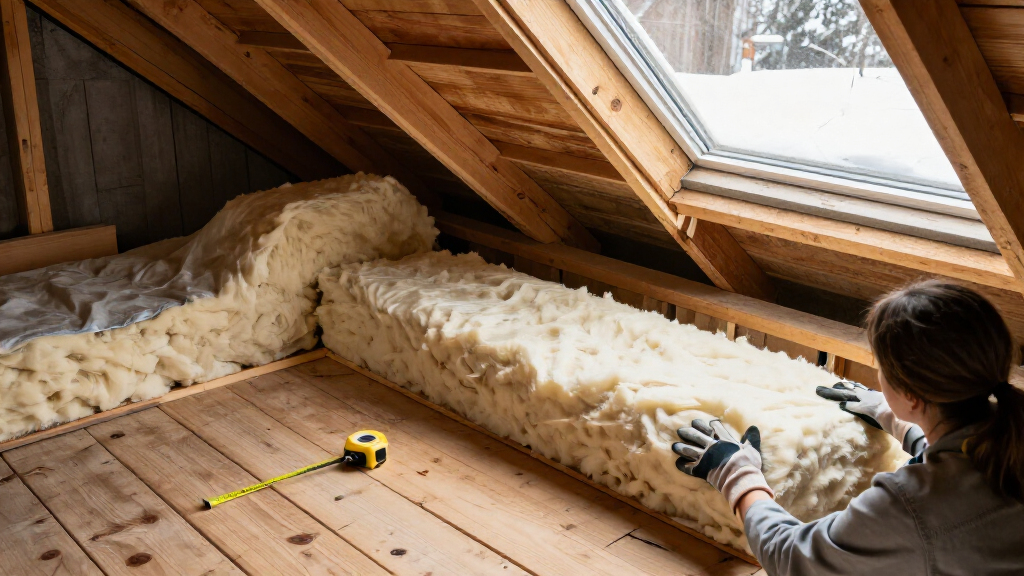
How We Picked
I compared the three products as solutions for different insulation jobs in zone 6a, rather than treating a higher R-value as an automatic win. A batt sized for a 2×6 cavity cannot replace a material intended to fill narrow cracks, and a spray-foam kit does not provide the same straightforward area coverage as a bag of batts. I gave the most weight to stated R-value, framing fit, stated coverage, and how clearly each product’s role can be identified from its supplied specifications.
I also considered how installation demands change the choice. The BEEST kit includes applicator and protective equipment, but its specified application temperature and careful handling requirements make it less forgiving than cutting fiberglass batts. The Owens Corning R-13 roll is explicitly sized for standard 2×4 walls, though its coverage is listed only as one bag rather than an area. The R-19 product provides clearer bag coverage and a 2×6 framing match, but its unfaced construction means moisture control must be handled by the larger assembly where needed.
My order reflects practical fit and versatility for stated uses, not a claim that one material is best for every wall, attic, or floor. I have not treated the products as substitutes for code review, ventilation planning, air sealing, or professional advice on moisture-sensitive assemblies. Zone 6a projects vary by climate exposure, building age, and construction details, so I favor clear product-to-task matches and call out where the available specifications leave questions for the buyer.
| insulation for zone 6a home | Insulation type | Recommended uses | Brand |
|---|---|---|---|
| Owens Corning R-19 Unfaced Fib | Unfaced fiberglass batts | Attics, floors, and walls | — |
| BEEST FullStop Spray Foam Insu | — | — | BEEST |
| Owens Corning R-13 Pink Kraft- | Kraft-faced fiberglass roll | Residential or commercial walls and roofs | Owens Corning |
Factors to Consider When Choosing Best Insulation For Zone 6a Homes
I would start by identifying the location and construction of the work, then match the product to that assembly. Zone 6a describes a cold-winter climate zone, but it does not by itself tell you what insulation belongs in every wall or roof. Framing depth, air leaks, moisture strategy, and local code shape the decision just as much as the product’s R-value.
Match R-value to the cavity, not just the climate
R-value describes resistance to heat flow, but the products here are designed for different depths. The R-13 roll is 3.5 inches thick and intended for 2×4 framing, while the R-19 batts are 6.5 inches thick and intended for 2×6 framing. A deeper batt should not be compressed into a shallow cavity; compression can undermine the intended fit and performance. For a zone 6a home, compare the insulation plan with the framing and applicable energy requirements instead of assuming that the highest printed R-value is the right answer.
Spray foam has a different role. BEEST lists R-8.24 at 2 inches, but that figure does not make it a direct replacement for a full-depth batt across a large wall. It is more useful where the opening is irregular or air leakage needs attention. I would treat cavity insulation and air sealing as related but separate tasks, and plan each deliberately.
Decide whether you need coverage, air sealing, or both
Fiberglass batts and rolls suit open cavities with regular framing. Their job is to fit the space without voids, gaps, or compression. Spray foam can fill small openings and conform to irregular edges, which makes it a better candidate around selected penetrations or cracks. It also calls for careful application, protective gear, and attention to the recommended temperature range. In this lineup, the R-19 batts are the broad-area choice, while BEEST is the targeted gap-filling choice.
Neither approach removes the need to check the full assembly. Insulation does not correct every source of drafts, and foam applied in the wrong place may complicate later access or moisture management. If a wall is enclosed, has existing dampness, or contains wiring and other services, I would identify the cause of the problem and understand the assembly before adding material.
Treat facing and moisture control as assembly decisions
The R-13 product includes kraft facing; the R-19 product is unfaced. That difference affects how each may fit into a planned wall or ceiling assembly, but a facing alone should not be treated as a universal moisture solution. Vapor control depends on the climate, materials, and position of layers, and the correct arrangement can vary by construction. Check local requirements and the design of the existing assembly, especially for roofs, basements, and walls with known moisture concerns.
Unfaced batts are useful where a separate layer or assembly design handles moisture control. Faced insulation can be appropriate where its facing is intended for that location. If you are not sure which side should face a room or whether a vapor retarder belongs in the assembly, get guidance before closing the cavity. The product descriptions do not provide enough information to settle that question for every zone 6a home.
Check coverage and installation conditions before ordering
Project planning is easier when the coverage figure is explicit. The R-19 bag lists 77.5 square feet and eight batts. The BEEST kit lists up to 240 board feet, a volume measure that depends on application thickness. The R-13 product identifies three rolls at 15 inches by 32 feet each, but lists coverage only as one bag without an area figure. I would verify the package details and calculate the area to insulate before relying on that listing.
Installation constraints can change the schedule. BEEST recommends application between 68 and 77°F and includes safety gear, but the kit still requires careful handling. Fiberglass batts can be cut to fit framing, yet gaps, excessive compression, and uncovered areas can reduce the quality of the installation. Plan for the actual work conditions, follow product instructions, and use protective equipment appropriate to the material.
Use local requirements to settle the final specification
Climate-zone labels can guide energy planning, but they are not a substitute for checking current local building requirements. Existing-home upgrades may also differ from new construction because of framing, ventilation, access, and the condition of the building envelope. Review the relevant code and assembly guidance before deciding how much insulation to add, particularly in attics, roof assemblies, and below-grade spaces.
If you are insulating a large area or a moisture-sensitive assembly, a qualified building professional can help identify the right R-value, vapor-control approach, and air-sealing sequence. For a small, accessible cavity with known framing dimensions, the product descriptions make the comparisons more direct: R-19 for 2×6 cavities, R-13 for 2×4 cavities, and spray foam for selected gaps.
Frequently Asked Questions
Which of these products is the best overall choice for a zone 6a home?
I rank the Owens Corning R-19 unfaced batts first for projects with open 2×6 cavities because they combine a clear framing match, R-19 rating, and stated 77.5-square-foot coverage per bag. That does not make them a universal whole-house choice: they are too thick for 2×4 framing, do not air-seal cracks, and require moisture control to be handled by the assembly where needed. The best pick changes with the location and construction.
Can I use R-19 insulation in a 2×4 wall?
The R-19 product here is 6.5 inches thick and listed for 2×6 framing, so I would not select it for a standard 2×4 cavity. Compressing a batt to force a fit can interfere with its intended performance and installation. The Owens Corning R-13 roll is 3.5 inches thick and designed for 2×4 walls, making it the better fit among these options when the wall assembly is suitable for faced insulation.
Is spray foam better than fiberglass insulation for zone 6a?
Neither is automatically better because they address different tasks. BEEST spray foam is suited to selected gaps and irregular openings, where it can adhere to several building materials and fill space. Fiberglass batts are easier to match to broad, regular cavities and have clearer area coverage in the R-19 product. For many projects, the useful comparison is not foam versus fiberglass for the whole home, but whether a particular area needs cavity insulation, air sealing, or both.
Does the unfaced R-19 product need a vapor barrier?
The R-19 batts are unfaced, but that fact alone does not determine whether a vapor retarder belongs in the wall or ceiling. The answer depends on the assembly, the location of the insulation, local requirements, and the materials already present. I would review the planned moisture-control approach before installation rather than adding a layer by default. The R-13 roll’s kraft facing is also not a substitute for checking that the full assembly is designed correctly.
How should I choose between the R-13 roll and the R-19 batts?
Start with the framing depth: the R-13 roll is 3.5 inches thick for standard 2×4 walls, while the R-19 batts are 6.5 inches thick for 2×6 framing. Then check whether kraft facing fits the assembly and confirm the amount needed. The R-19 listing gives coverage of 77.5 square feet per bag; the R-13 listing does not give an area total, so verify that package detail before planning a larger project.
Conclusion
For homeowners insulating open 2×6 cavities, I would start with the Owens Corning R-19 batts: the framing match and stated coverage make them the clearest broad-area pick here. If your project is a standard 2×4 wall, choose the Owens Corning R-13 roll after checking the bag’s actual coverage and confirming that its kraft facing suits the assembly. For localized cracks, penetrations, and uneven gaps, BEEST is the targeted option, provided you can follow its safety instructions and work within the recommended application temperature.
My final advice is to treat these as complementary tools, not three competing whole-house packages. Match the material to the cavity, plan air sealing separately, and check moisture control and local requirements before closing walls or ceilings. That approach is more useful for a zone 6a home than choosing by R-value alone.
Columbus Day / Indigenous Peoples' Day Picks
long weekend sales
As an affiliate, we earn on qualifying purchases.