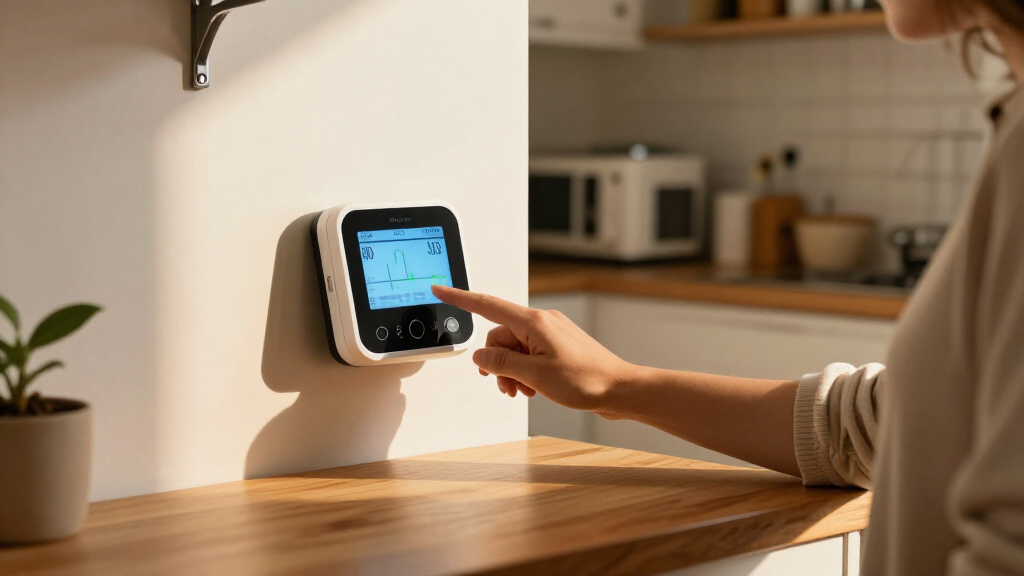

The best home energy monitors pair useful circuit-level data with controls and setup that fit your home. My best overall pick is the Meross 18-circuit monitor, which combines broad circuit coverage, Home Assistant support, and solar surplus detection. The Emporia Vue 3 with 16 sensors is a strong alternative for households seeking detailed circuit tracking, while the Refoss EM16P stands out for open API and Home Assistant users. The main tradeoffs are sensor count, compatibility, local versus cloud control, and whether you need a panel monitor or an off-grid battery display. Read on for the full comparison, buying advice, and recommendations by household type.

Get home appliances delivered free — and shop member deals
- Fast, free delivery on millions of items
- Access to Prime Big Deal Days deals on October 6–7
- Prime Video, Amazon Music and more included
Complete the kit


![[Genuine] Waterdrop PF-01A Water Filter Replacement for W...](https://m.media-amazon.com/images/I/41+5tl9EiKL._SX342_SY445_QL70_FMwebp_.jpg)
Key Takeaways
- Meross’s 18-sensor model leads this lineup on listed circuit coverage and adds solar surplus detection, making it the clearest fit for homes with many loads to track.
- Emporia’s Vue 3 options provide a straightforward choice between 8- and 16-circuit sensor packages; match the package to the number of circuits you actually need to monitor.
- Refoss EM16P and the 16-sensor Refoss model make open integration and local control stronger differentiators than simply maximizing sensor count.
- Renogy ONE Core serves a different job from the panel monitors: it targets off-grid battery systems in vans, cabins, boats, and tiny homes.
- Monitoring coverage is not the same as whole-home coverage. Sensor counts, panel compatibility, and installation needs matter more than a feature list alone.
| Meross Smart Home Energy Monitor with 18 Circuit Monitoring |  | Best for Home Assistant and Solar | Model: EM16 | Circuit monitoring: Up to 18 circuits | Main circuit capacity: Up to 200A | VIEW LATEST PRICE | See Our Full Breakdown |
| Renogy ONE Core Off-Grid Energy Monitoring Panel |  | Best for Off-Grid DC Systems | Power source: Battery powered | Minimum operating voltage: 8V DC | Measurement type: Voltmeter and ammeter | VIEW LATEST PRICE | See Our Full Breakdown |
| Refoss EM16P Smart Home Energy Monitor with Open API and Home Assistant |  | Best for Local Data and Technical Users | Model: EM16P | Main circuit sensors: 2, each rated 2–200A | Branch circuit sensors: 16, each rated 1–60A | VIEW LATEST PRICE | See Our Full Breakdown |
| Emporia Vue 3 Home Energy Monitor with 16 Circuit Sensors |  | Best for App-Based Whole-Home Monitoring | Model: EMV3A-2P-16 | Included circuit sensors: 16 branch sensors, 50A | Supported systems: Single phase, single-split phase, and 2-wire; some 3-wire and 3-phase systems with an additional sensor | VIEW LATEST PRICE | See Our Full Breakdown |
| Refoss Smart Home Energy Monitor with 16 60A Circuit Sensors and Local Control |  | Best for Local Multi-Protocol Monitoring | Sensor count: 16 sensors | Circuit capacity: 60A per sensor | System compatibility: Single-phase, split-phase, and 3-phase 4-wire Wye | VIEW LATEST PRICE | See Our Full Breakdown |
| Emporia Vue 3 Home Energy Monitor – Smart Home Automation Module and Real-Time Electricity Usage Monitor |  | Best for Solar and Flexible System Support | Model: EMV3A-2P-WH | Connectivity: 2.4 GHz Wi-Fi | Supported systems: Single phase, single-split phase, 2-wire, 3-wire, 3-phase, and 4-wire Wye | VIEW LATEST PRICE | See Our Full Breakdown |
| Siemens Inhab Smart Home Energy Monitor with Circuit-Level Sensors |  | Best Complete Circuit-Level Package | Model: INHEM1216 | Main sensors: 2 x 200A CTs | Circuit sensors: 16 x 50A CTs | VIEW LATEST PRICE | See Our Full Breakdown |
| Emporia Vue 3 Home Energy Monitor with 8 Circuit Sensors |  | Best Value for Starter Circuit Monitoring | Model: EMV3A-2P-8 | Included circuit sensors: 8 | Accuracy: ±2% | VIEW LATEST PRICE | See Our Full Breakdown |
| Meross Smart Home Energy Monitor with 16 Circuit Sensors | | Best for Home Assistant and Long-Term Local Data | Model: EM16 | Main circuit capacity: 2 circuits, 200A | Branch circuit capacity: Up to 16 circuits, 60A | VIEW LATEST PRICE | See Our Full Breakdown |
| Smart Home Energy Monitor with 16 50A Circuit Sensors, Real-Time Power Usage & Cost Tracking, Compatible with Home Assistant |  | Best for Local MQTT and Shared Housing | Sensor count: 16 | Sensor current: 50A | Supported voltages: 120VAC, 240VAC, 415Y/240VAC | VIEW LATEST PRICE | See Our Full Breakdown |
| home energy monitor | Warranty | Model | Connectivity | Certifications |
|---|---|---|---|---|
| Meross Smart Home Energy Monit | 2 years | EM16 | — | — |
| Renogy ONE Core Off-Grid Energ | 2 years | — | Bluetooth and Wi-Fi | — |
| Refoss EM16P Smart Home Energy | 2 years | EM16P | — | — |
| Emporia Vue 3 Home Energy Moni | 1 year | EMV3A-2P-16 | 2.4 GHz Wi-Fi and internet connection required | UL and CE listed |
| Refoss Smart Home Energy Monit | 2 years | — | Wi-Fi, Open API, MQTT, and WebSocket | — |
| Emporia Vue 3 Home Energy Moni | 1 year | EMV3A-2P-WH | 2.4 GHz Wi-Fi | CE and UL |
| Siemens Inhab Smart Home Energ | — | INHEM1216 | Wi-Fi | CE marked and UL Listed in the US and Canada |
| Emporia Vue 3 Home Energy Moni | 1 year | EMV3A-2P-8 | 2.4 GHz Wi-Fi and internet connection required | UL and CE listed |
| Meross Smart Home Energy Monit | 2 years | EM16 | — | ETL-certified; compliant with UL 61010 testing standard |
| Smart Home Energy Monitor with | 1 year | — | 2.4 GHz Wi-Fi and MQTT | — |
More Details on Our Top Picks
Meross Smart Home Energy Monitor with 18 Circuit Monitoring
The Meross EM16 is a strong fit for homeowners who want broad circuit coverage and local-first smart-home control. It tracks up to 18 circuits, supports solar surplus detection, and connects with Home Assistant, Open API, and web control, so energy readings can feed into custom automations without relying on a subscription. Compared with the Emporia Vue 3, Meross puts more emphasis on local access and Home Assistant integration, while Emporia’s app-led setup may suit people who prefer a more conventional interface. Meross also stores up to five years of data, but it has no built-in display; readings are viewed through connected software. Installation involves working at the electrical panel, and its stated wiring support is limited to US configurations, so it is a better match for technically confident households than for renters or hands-off buyers.
Pros:- Monitors up to 18 circuits, including main circuits up to 200A and branch circuits up to 60A.
- Home Assistant, Open API, and web-control support enable flexible integrations.
- Local data storage can retain up to five years of monitoring history.
- Solar surplus detection and smart alerts support energy-aware automation.
Cons:- Installation requires access to the electrical panel and familiarity with electrical systems.
- No built-in screen; readings depend on an app or supported software interface.
- Listed system compatibility is limited to specified US wiring configurations.
Best for: Homeowners with a US-compatible electrical panel who use Home Assistant or want local energy data for solar-aware automations.
Not ideal for: Renters, buyers who want a dedicated on-device display, or households with wiring outside the listed US configurations.
- Model:EM16
- Circuit monitoring:Up to 18 circuits
- Main circuit capacity:Up to 200A
- Branch circuit capacity:Up to 60A
- Supported systems:Single-phase 2-wire, single-split phase 3-wire, and 3-phase 4-wire with earthed neutral
- Data storage:Up to 5 years
- Integrations:Home Assistant, Open API, and web control
- Warranty:2 years
Our verdict“Choose the Meross EM16 if local data, Home Assistant support, and 18-circuit coverage matter more to you than a built-in display.”
Renogy ONE Core Off-Grid Energy Monitoring Panel
The Renogy ONE Core serves a different need from panel-mounted monitors such as the Emporia Vue 3: it is built around 12V and 24V DC off-grid systems, not whole-home AC circuit tracking. For a van, boat, cabin, or tiny home with compatible Renogy batteries and accessories, its voltmeter and ammeter readings, Wi-Fi and Bluetooth connections, and remote app access can bring key system information into one place. Its battery-powered design and smart-accessory support also suit setups where monitoring needs to travel with the equipment. That specialization is its main tradeoff. It does not replace a monitor that tracks household branch circuits, and full features depend on Bluetooth or Wi-Fi. Buyers should also check their system’s voltage and compatible devices before choosing it; conventional grid-connected homes will usually get more relevant circuit detail from the Meross EM16 or Emporia Vue 3.
Pros:- Designed for off-grid applications including vans, cabins, boats, and tiny homes.
- Supports remote monitoring through mobile apps and the Renogy ONE Portal.
- Bluetooth and Wi-Fi connectivity support monitoring and smart-accessory integration.
- Battery-powered design supports flexible placement in an off-grid setup.
Cons:- Limited to 12V and 24V DC systems rather than household AC circuit monitoring.
- Full features depend on Bluetooth or Wi-Fi connectivity.
- Compatibility centers on Renogy devices and supported Bluetooth batteries and accessories.
Best for: Van, boat, cabin, and tiny-home owners monitoring compatible Renogy batteries and 12V or 24V DC equipment remotely.
Not ideal for: Homeowners seeking whole-house AC or individual breaker-circuit monitoring, or users whose equipment is outside the supported Renogy and Bluetooth device ecosystem.
- Power source:Battery powered
- Minimum operating voltage:8V DC
- Measurement type:Voltmeter and ammeter
- Battery capacity:10,000mAh lithium-ion polymer
- Supported system voltage:12V and 24V DC systems
- Connectivity:Bluetooth and Wi-Fi
- Compatible devices:Renogy energy devices, smart accessories, supported Bluetooth batteries, DC Home App, and Renogy ONE Portal
- Warranty:2 years
Our verdict“Pick the Renogy ONE Core for remote monitoring of a compatible off-grid DC setup, not for tracking circuits in a conventional home.”
Refoss EM16P Smart Home Energy Monitor with Open API and Home Assistant
The Refoss EM16P makes sense for buyers who want circuit-level visibility without making a cloud service the center of their setup. Its built-in web UI, Open API, MQTT, and native Home Assistant integration offer several ways to access readings and build automations. It monitors two main circuits and up to 16 branch circuits, and its five-year data capacity is useful for comparing seasonal usage or tracking longer-term changes. Against the Emporia Vue 3, the EM16P is the more flexible choice for local integrations, while Emporia leans on its app and requires internet access. That freedom brings a more technical setup: installation means working at the breaker panel, and low-current accuracy is specified at ±2% rather than ±1%. Buyers who want a simple, app-first experience may find the Emporia easier to approach.
Pros:- Monitors two main circuits and up to 16 branch circuits.
- Local web UI, Open API, MQTT, and native Home Assistant integration.
- Stores up to five years of data without requiring a cloud service.
- ETL certified and compliant with UL 61010.
Cons:- Installation requires access to the home’s circuit panel.
- Specified accuracy is ±2% at low current.
- Its range of local integration options may require more setup than an app-focused monitor such as the Emporia Vue 3.
Best for: Technically confident homeowners who want local monitoring, Home Assistant or MQTT integrations, and detailed data from multiple household circuits.
Not ideal for: Renters, buyers unwilling to work with a circuit-panel installation, or users who want a simple cloud-based app setup.
- Model:EM16P
- Main circuit sensors:2, each rated 2–200A
- Branch circuit sensors:16, each rated 1–60A
- Accuracy:±1%; ±2% at low current
- Data storage:Up to 5 years
- Connectivity and integrations:Wi-Fi, built-in web UI, Open API, MQTT, and Home Assistant
- Certification:ETL certified; compliant with UL 61010
- Warranty:2 years
Our verdict“Choose the Refoss EM16P if you want local, integration-friendly circuit monitoring and are comfortable with a technical panel installation.”
Emporia Vue 3 Home Energy Monitor with 16 Circuit Sensors
The Emporia Vue 3 is a practical choice for homeowners who want whole-home and branch-circuit readings in an app, including support for solar and net metering. Its 16 included sensors make it ready to track several major loads, while live data, notifications, and energy-management automations keep the experience centered on everyday use. Compared with the Refoss EM16P, Emporia is more app-led and requires an internet connection; Refoss offers local web and integration options for users who prefer to manage their own data. The Vue 3’s listed ±2% sensor accuracy and UL and CE listings provide useful reference points, but the one-year warranty is shorter than the two-year terms listed for Meross and Refoss. It also needs 2.4 GHz Wi-Fi, and some supported electrical configurations require an additional sensor, so check the panel setup before buying.
Pros:- Tracks whole-home and individual circuit electricity use, including solar and net metering.
- Includes 16 branch sensors rated at 50A.
- App supports live data, notifications, and energy-management automations.
- UL and CE listed.
Cons:- Requires 2.4 GHz Wi-Fi and an internet connection.
- Some supported system configurations need an additional sensor.
- One-year warranty is shorter than the two-year coverage listed for the Meross EM16 and Refoss EM16P.
Best for: Homeowners who want an app-centered view of whole-home, circuit, and solar usage, with notifications and automations.
Not ideal for: Buyers who need local monitoring without internet, want a longer listed warranty, or have a supported configuration that requires an extra sensor they do not plan to add.
- Model:EMV3A-2P-16
- Included circuit sensors:16 branch sensors, 50A
- Supported systems:Single phase, single-split phase, and 2-wire; some 3-wire and 3-phase systems with an additional sensor
- Connectivity:2.4 GHz Wi-Fi and internet connection required
- Sensor accuracy:±2%
- Certifications:UL and CE listed
- Warranty:1 year
- Dimensions:10 x 5 x 5 inches
Our verdict“Choose the Emporia Vue 3 if you want broad circuit and solar tracking through an app and have dependable 2.4 GHz internet at home.”
Refoss Smart Home Energy Monitor with 16 60A Circuit Sensors and Local Control
This Refoss monitor is a compelling match for households that want local control across multiple circuits and prefer choosing their own automation path. It lists Wi-Fi, Open API, MQTT, and WebSocket connectivity, supports single-phase, split-phase, and 3-phase 4-wire Wye systems, and retains up to five years of data. Compared with the Refoss EM16P, this model highlights WebSocket support and broad system compatibility in its supplied specifications, while the EM16P states its accuracy and certification details more clearly. The product description says it monitors 18 circuits, though the specs list 16 sensors, so buyers should confirm how the circuit count is configured before purchase. Its local-first feature set comes with a substantial installation hurdle: fitting sensors at a breaker panel may call for electrical expertise. It is a better fit for automation-minded owners than for anyone seeking a simple plug-in monitor.
Pros:- Supports local control without dependence on a cloud service.
- Offers Wi-Fi, Open API, MQTT, and WebSocket connectivity.
- Stores energy data for up to five years.
- Supports single-phase, split-phase, and 3-phase 4-wire Wye systems.
Cons:- Installation at the electrical panel may require technical knowledge or professional help.
- The description says 18 circuits while the specifications list 16 sensors, leaving the exact sensor configuration unclear.
- Its compatibility is limited to the listed system types.
Best for: Homeowners with compatible single-phase, split-phase, or 3-phase 4-wire Wye service who want local data and multiple automation protocols.
Not ideal for: Renters, users who need a straightforward plug-in setup, or buyers who require a clearly specified sensor configuration before purchasing.
- Sensor count:16 sensors
- Circuit capacity:60A per sensor
- System compatibility:Single-phase, split-phase, and 3-phase 4-wire Wye
- Data storage:Up to 5 years
- Connectivity:Wi-Fi, Open API, MQTT, and WebSocket
- Dimensions:4.5 x 3.5 x 1.1 inches
- Weight:4.27 pounds
- Warranty:2 years
Our verdict“Choose this Refoss model if local control and protocol flexibility suit your automation setup, but confirm the included sensor count first.”
Emporia Vue 3 Home Energy Monitor – Smart Home Automation Module and Real-Time Electricity Usage Monitor
The Emporia Vue 3 is a strong fit for homeowners who want whole-home readings now and the option to add appliance-level detail later. Its support for solar and net metering helps show how household use relates to production, while compatibility with several wiring configurations gives it broader system coverage than the included-sensor Emporia Vue 3 bundle. You can add sensors for individual circuits, but those are sold separately, so the entry setup is less revealing than the Siemens Inhab, which includes sensors for up to 16 circuits. This model also depends on 2.4 GHz Wi-Fi for full functionality, and its one-second updates are available only while the app is open. Choose it for a flexible starting point, not turnkey circuit-by-circuit coverage.
Pros:- Supports solar and net metering monitoring.
- UL-certified and compatible with several electrical system types.
- Can expand to appliance-specific monitoring with additional sensors.
Cons:- Additional circuit sensors are sold separately.
- Full functionality requires a 2.4 GHz Wi-Fi connection.
- One-second updates are available only while the app is open.
Best for: Homeowners with solar or net metering who want whole-home monitoring first and may add circuit sensors later.
Not ideal for: Buyers who want many circuits monitored straight away or need one-second data without keeping the app open.
- Model:EMV3A-2P-WH
- Connectivity:2.4 GHz Wi-Fi
- Supported systems:Single phase, single-split phase, 2-wire, 3-wire, 3-phase, and 4-wire Wye
- Data retention:7 days of 1-minute data; hourly data retained indefinitely
- Certifications:CE and UL
- Weight:1.92 pounds
- Dimensions:10 x 5 x 5 inches
- Warranty:1 year
Our verdict“Choose this Emporia if solar-aware whole-home monitoring and the option to expand matter more than included circuit sensors.”
Siemens Inhab Smart Home Energy Monitor with Circuit-Level Sensors
The Siemens Inhab makes the strongest case for buyers who want broad circuit coverage without assembling a sensor package separately: the box includes 16 branch-circuit sensors plus two main sensors. It tracks energy use and production, then adds custom alerts and controls for time-of-use and excess solar management. Compared with the base Emporia Vue 3, it gives you circuit-level visibility from the supplied hardware rather than requiring add-on sensors. That breadth comes with a more involved commitment: the unit installs inside the electrical panel, and it is available only in the United States and Canada. Its listed system details and regional limits also make it worth checking panel compatibility before buying. I’d rank it for buyers who value an established, complete panel-monitoring kit over a simpler starting setup.
Pros:- Includes two main sensors and 16 circuit sensors.
- Tracks both energy use and production.
- Offers custom alerts and time-of-use and excess-solar management features.
- UL Listed in the United States and Canada.
Cons:- Requires installation in an electrical panel.
- Availability is limited to the United States and Canada.
Best for: US and Canadian homeowners who want main-supply and up to 16 circuit readings from the included sensor kit.
Not ideal for: Renters, buyers outside the United States and Canada, or anyone not prepared for electrical-panel installation.
- Model:INHEM1216
- Main sensors:2 x 200A CTs
- Circuit sensors:16 x 50A CTs
- Connectivity:Wi-Fi
- Certifications:CE marked and UL Listed in the US and Canada
- Dimensions:1.1 x 5.71 x 2.76 inches
- Weight:4.8 pounds
- Availability:United States and Canada
Our verdict“Pick the Siemens Inhab if you want extensive circuit coverage in the box and can accommodate panel installation in its supported markets.”
Emporia Vue 3 Home Energy Monitor with 8 Circuit Sensors
This Emporia Vue 3 bundle takes a practical middle path: it monitors whole-home use and arrives with eight circuit sensors, giving buyers appliance-level insight without the 16-sensor setup included with the Siemens Inhab. That smaller sensor count can be enough to track the circuits behind the biggest loads, while solar and net metering support adds useful context for homes that generate power. Emporia lists accuracy at ±2% and supports iPhone, Android, and web access. The tradeoff is that it needs both internet access and 2.4 GHz Wi-Fi; some wiring systems also need an extra sensor. Its one-second data retention is listed as just three hours, so it is less suited to buyers who want a long record of very fine-grained readings. For targeted circuit monitoring, the included sensors make it a more ready-to-use choice than the sensor-free Vue 3.
Pros:- Includes eight circuit sensors for appliance-level monitoring.
- Tracks whole-home use, solar, and net metering.
- Works with iPhone, Android, and a web app.
- UL and CE listed with stated accuracy of ±2%.
Cons:- Requires 2.4 GHz Wi-Fi and an internet connection.
- Some supported electrical systems need an additional sensor.
- One-second data is retained for only three hours.
Best for: Homeowners who want to track a handful of major circuits alongside whole-home and solar use, without buying sensors separately.
Not ideal for: Buyers who need more than eight monitored circuits, local operation without internet, or extended one-second data history.
- Model:EMV3A-2P-8
- Included circuit sensors:8
- Accuracy:±2%
- Connectivity:2.4 GHz Wi-Fi and internet connection required
- Supported systems:Single phase, single-split phase, and 2-wire; some 3-wire and 3-phase systems with an additional sensor
- Compatible devices:iPhone, Android, and web app
- Certifications:UL and CE listed
- Warranty:1 year
Our verdict“Choose this bundle over the base Emporia Vue 3 if eight included circuit sensors cover the loads you want to track.”
Meross Smart Home Energy Monitor with 16 Circuit Sensors
The Meross EM16 suits buyers who want extensive circuit coverage alongside smart-home integration: it includes sensors for up to 16 branch circuits and supports Home Assistant. Its mix of power, voltage, current, and power-factor readings gives technically minded households more than a basic usage total, while local data storage and up to five years of retention support longer-term comparisons without a subscription. Against the Siemens Inhab, it offers stated ±1% accuracy and Home Assistant support, but its electrical-system compatibility needs more attention: Delta systems are excluded, and wiring should be checked before purchase. The clamp-on setup still requires electrical-panel work, so this is not a plug-in monitor. I’d favor it over the privacy-focused MQTT option below when you want a defined Home Assistant fit and a supplied 16-sensor kit.
Pros:- Includes sensors for two main circuits and up to 16 branch circuits.
- Supports Home Assistant and local data storage.
- Tracks power, voltage, current, and power factor with stated ±1% accuracy.
- Offers up to five years of data storage and a two-year warranty.
Cons:- Not compatible with Delta electrical systems.
- Supported wiring configurations should be checked before purchase.
- Clamp-on installation requires access to the electrical panel.
Best for: Home Assistant users who want detailed readings across many circuits, local data storage, and long-term usage records.
Not ideal for: Households with Delta wiring or buyers who are not ready to confirm their panel configuration and manage a panel installation.
- Model:EM16
- Main circuit capacity:2 circuits, 200A
- Branch circuit capacity:Up to 16 circuits, 60A
- Accuracy:±1%
- Data storage:Up to 5 years
- Compatibility:Home Assistant; single-phase 2-wire, split-phase 3-wire, and 3-phase 4-wire Wye
- Certifications:ETL-certified; compliant with UL 61010 testing standard
- Warranty:2 years
Our verdict“Choose the Meross EM16 if Home Assistant integration, long-term local records, and 16-circuit coverage suit your system.”
Smart Home Energy Monitor with 16 50A Circuit Sensors, Real-Time Power Usage & Cost Tracking, Compatible with Home Assistant
This 16-sensor monitor has a distinct appeal for technically capable owners who want energy data to stay on their local network. Its MQTT operation avoids cloud dependence, and circuit-level cost tracking can help landlords or housemates separate usage across monitored loads. Compared with the Meross EM16, it is a better fit when local MQTT and shared-property billing are the priority; Meross has clearer listed data retention, measurement accuracy, and Home Assistant support. Here, Home Assistant compatibility is specified, but the product data gives little detail about app usability or long-term data handling. Setup also calls for MQTT and local network configuration, which is a steeper start than the Wi-Fi app route offered by the Emporia Vue 3 bundle. Choose it for local control, not a polished out-of-box experience.
Pros:- Includes 16 circuit sensors rated at 50A each.
- Operates locally through MQTT without cloud dependency.
- Tracks real-time power use and costs across circuits.
- Supports Home Assistant and several listed voltage configurations.
Cons:- MQTT and local network configuration require technical setup.
- Only 2.4 GHz Wi-Fi is listed.
- Product data gives limited detail about app usability and data history.
Best for: Technically confident landlords and shared-house residents who want circuit-level cost tracking through a local MQTT setup.
Not ideal for: Buyers who want a straightforward app-led installation, cloud-based convenience, or detailed published information about the monitoring interface.
- Sensor count:16
- Sensor current:50A
- Supported voltages:120VAC, 240VAC, 415Y/240VAC
- Connectivity:2.4 GHz Wi-Fi and MQTT
- Compatibility:Home Assistant
- Dimensions:3.1 x 1.2 x 4.18 inches
- Weight:4.05 pounds
- Warranty:1 year
Our verdict“Pick this monitor if local MQTT control and circuit-based cost allocation matter more to you than a simple app setup.”
How We Picked
I compared the ten listed products by how well their stated capabilities answer common home energy monitoring needs: circuit coverage, real-time visibility, integration options, solar or battery relevance, and the kind of home each device is meant to serve. I gave weight to practical differences that affect a purchase, such as choosing between 8, 16, or 18 circuit sensors, open API or Home Assistant support, local control, and whether a product is designed for a standard electrical panel or an off-grid system.
The ranking favors monitors with a useful mix of coverage, flexibility, and clearly described functions for typical grid-connected homes. That puts the Meross 18-circuit model first for its broad sensor count and solar surplus feature, with Emporia’s 16-sensor Vue 3 and Refoss EM16P close behind for different priorities. I ranked specialized or narrower-fit choices lower for general home use, not because they lack value, but because they suit particular setups or offer less stated differentiation for a broad range of households. Before buying, verify panel compatibility and installation requirements; product names alone do not confirm fit.
| home energy monitor | Model | Certifications |
|---|---|---|
| Meross Smart Home Energy Monit | EM16 | — |
| Renogy ONE Core Off-Grid Energ | — | — |
| Refoss EM16P Smart Home Energy | EM16P | — |
| Emporia Vue 3 Home Energy Moni | EMV3A-2P-16 | UL and CE listed |
| Refoss Smart Home Energy Monit | — | — |
| Emporia Vue 3 Home Energy Moni | EMV3A-2P-WH | CE and UL |
| Siemens Inhab Smart Home Energ | INHEM1216 | CE marked and UL Listed in the US and Canada |
| Emporia Vue 3 Home Energy Moni | EMV3A-2P-8 | UL and CE listed |
| Meross Smart Home Energy Monit | EM16 | ETL-certified; compliant with UL 61010 testing standard |
| Smart Home Energy Monitor with | — | — |
Factors to Consider When Choosing Best Home Energy Monitors
Choosing a monitor is less about collecting the most data and more about getting useful readings from the equipment you care about. I would start with your electrical setup and goals, then check how much installation, integration, and interpretation you are comfortable handling.
Match Sensor Count to Your Electrical Panel
Count the circuits you want to track rather than assuming every circuit needs its own sensor. An 8-sensor package can suit a focused setup, such as tracking major appliances, while a 16- or 18-sensor model offers more room to separate loads. Check whether the listed sensor count means individual circuits, paired circuits, or a particular panel arrangement in the manufacturer’s installation details. A higher count does not automatically mean every circuit in your home will be covered. Also leave room for circuits you may want to add later, such as a heat pump or EV charger. Buying excess sensors can add complexity without helping if you only need to identify a few major energy drains.
Check Panel Fit and Installation Requirements Before Ordering
Home energy monitors connect to electrical equipment, so compatibility and safe installation deserve attention before feature comparisons. Confirm the panel type, available space, conductor sizes, and sensor placement requirements against the product documentation. Do not assume a model fits simply because it has the right number of sensors. If the installation involves work inside an electrical panel, use a qualified electrician when required or when you are not comfortable with the task. Ask in advance whether the installation requires a neutral connection, dedicated breaker, or wireless signal at the panel. These details can affect both setup effort and the total project cost.
Decide How Much Local Control and Integration You Need
Home Assistant support, an open API, and local control can matter if you want readings to feed automations or remain useful alongside other smart-home tools. They are less important if you mainly want a basic view of consumption in a manufacturer’s app. Read the integration documentation before buying: a product name that mentions compatibility may not describe every feature available through that connection. Check whether data is available locally, whether an account or cloud service is needed, and which controls remain available during an internet outage. More open systems can offer flexibility, but may ask more of the owner during setup and troubleshooting. Choose integrations based on the automations you will actually maintain.
Separate Whole-Home Monitoring From Battery Monitoring
A circuit monitor for a grid-connected home and a battery-focused display for an off-grid setup solve different problems. For a conventional house, you may want to identify which circuits drive consumption and compare usage over time. For a van, boat, cabin, or tiny home, battery state and off-grid system visibility may be more relevant than tracking a household breaker panel. Do not treat an off-grid panel as a direct substitute for circuit-level home monitoring. Write down the readings you need—such as circuit draw, battery status, or solar production—before choosing a device. That simple distinction can prevent buying a capable product built for the wrong electrical system.
Plan for Solar, Automation, and Future Loads
If you have solar or expect to add it, check what the monitor can actually measure and whether it can identify surplus generation or only report consumption. Solar surplus detection, like the feature listed on the Meross 18-circuit model, may help inform energy-use decisions, but it does not replace a full review of inverter and utility data. For automation, decide whether you want alerts, reporting, or actions triggered by changing energy use; those needs can call for different integrations. Consider likely additions such as an EV charger, heat pump, or battery before settling on a smaller sensor package. Avoid paying for future-facing features you have no plan to use, but leave enough monitoring capacity for changes already on your household roadmap.
Choose Data Detail You Will Use
More granular readings can help identify which circuits deserve attention, but extra data is useful only if you can interpret it and act on it. A monitor may show real-time power or estimated cost, yet those numbers depend on setup details such as utility rates and how loads are grouped. Check how the app presents historical information and whether it supports the views you expect, rather than buying based on a single live-reading feature. Alerts can be handy for unusual consumption, but poorly tuned notifications may become noise. Start with a few clear questions—what uses the most power, when does it run, and what can I change? The best choice is the one that answers those questions without creating a maintenance project.
Frequently Asked Questions
Do I need a sensor for every circuit in my electrical panel?
No. Many buyers can begin by monitoring the circuits that serve major or energy-intensive loads, then add coverage if their needs grow. A smaller sensor package may be enough to spot patterns in heating, cooling, laundry, or cooking use. Before purchasing, check how the manufacturer counts sensors and whether any circuit arrangement uses more than one sensor. If you want a complete circuit-by-circuit picture, compare the panel’s circuit count with the product’s documented coverage rather than relying on the model name.
Can I install a home energy monitor myself?
Installation requirements vary, and these devices connect to electrical panels where mistakes can create serious hazards. Read the installation guide for the exact model and check local rules before attempting any work. If the process requires panel access or you are unsure about wiring, hire a qualified electrician. Ask whether the installer has experience with the product’s sensor layout and whether your panel has enough space. A monitor that is easy to use after installation may still call for professional help to fit safely.
Will a home energy monitor tell me exactly what my utility bill will be?
Not necessarily. Cost estimates depend on correct rate settings and may not match a bill that includes taxes, fixed charges, time-of-use periods, or other utility adjustments. Treat the monitor’s cost display as a guide for comparing household usage, not as a guaranteed bill total. Check whether the app lets you enter your rate structure and how it handles changing rates. For bill planning, compare the monitor’s readings with utility statements over multiple billing periods.
Should I choose local control or a cloud-connected monitor?
Choose based on how you want to access and use the data. Local control and open integrations can appeal to owners who want Home Assistant automations or more direct control over their smart-home setup. A cloud-oriented app may be simpler for someone who mainly wants to review usage from a phone. Before deciding, check which features depend on an internet connection, which data is retained, and whether the integrations you need are supported. A more flexible setup can take extra configuration, so value that flexibility only if you plan to use it.
Can an off-grid monitor replace a circuit-level monitor for a regular house?
Usually, those products address different monitoring needs. An off-grid panel such as Renogy ONE Core is aimed at battery systems in settings like vans, boats, cabins, and tiny homes, while circuit-level monitors are designed to track loads in a home electrical panel. A standard house with utility power may need circuit data rather than battery-focused information. If your property uses both a grid connection and a battery system, list the readings you need from each part of the system and confirm the product documentation covers them. Do not assume the words energy monitor mean identical functions across product types.
Conclusion
For most grid-connected households, I would start with the Meross 18-circuit monitor as the best overall choice, particularly if broad coverage, Home Assistant support, and solar surplus detection match your plans. For a best value-style fit, consider the Emporia Vue 3 with 8 sensors when you only need to track a focused set of loads; choose the 16-sensor version if broader circuit detail matters more. The Refoss EM16P is my pick for buyers who prioritize open API and Home Assistant integration, while the Refoss 16-sensor local-control model suits those who favor local operation. Beginners should compare the Emporia packages by sensor count and keep the setup focused on a few major circuits. For off-grid battery monitoring, choose Renogy ONE Core rather than treating it as a substitute for a standard panel monitor. Before ordering any model, verify electrical-panel fit and installation needs.
Fall Picks
fall essentials
As an affiliate, we earn on qualifying purchases.