
TL;DR

Get home appliances delivered free — and shop member deals
- Fast, free delivery on millions of items
- Access to Prime Big Deal Days deals on October 6–7
- Prime Video, Amazon Music and more included
A Hunker home-care report recommends citric acid as an alternative to vinegar for dissolving mineral scale in showerheads. It gives a two-tablespoon-to-two-cups mixture and a one-to-two-hour soak, while warning against using the solution on aluminum, copper or brass fixtures.
Hunker’s shower-cleaning report recommends diluted citric acid to dissolve mineral deposits that can obstruct showerhead openings and disrupt water flow. The advice offers an alternative to vinegar, but the report warns that the solution can corrode aluminum, copper and brass and should not be used on showerheads made from those materials.
The report’s suggested mixture is two tablespoons of citric acid powder in two cups of water. It says to soak the showerhead for about one to two hours, then rinse and scrub it. Citric acid is available as a powder, allowing users to mix a solution at home; Hunker presents it as a stronger descaling option than vinegar, but supplies no comparative test data.
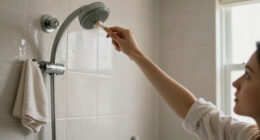
There are two ways to soak the fixture: remove it and place it in the solution, or leave it installed and secure a plastic bag of solution around the head so the spray holes remain submerged. For a non-handheld showerhead, the report describes unscrewing it with slip-lock pliers. It advises mixing the solution in a plastic, ceramic or glass container, not a metal one, because the acid may react with metals or cause discoloration.
After soaking, Hunker recommends a final rinse and scrub. It says some holes may remain blocked by debris rather than mineral scale, in which case a toothpick can help dislodge material. The report does not promise that cleaning will restore a particular pressure level or specify how often households should repeat the process.
A Simple Fix for Clogged Spray
Mineral buildup can narrow or block the small openings in a showerhead, leaving water to spray unevenly. Cleaning may restore a more consistent flow when scale is the cause, while avoiding the cost of replacing a fixture. Hunker also points out that a frustratingly weak spray can lead people to spend longer showering, so a perceived water-saving effect from restricted flow may not translate into shorter water use.
The practical value of the advice depends on identifying the cause and knowing the fixture material. Citric acid is not appropriate for every showerhead, and a soak may not clear openings blocked by other debris. The article offers a household cleaning method, not a measured guarantee of improved pressure or reduced water consumption.
As an affiliate, we earn on qualifying purchases.
Why Mineral Scale Blocks Showerheads
The Hunker report describes mineral deposits as a cause of irregular or reduced spray. Its proposed remedy is an acidic soak intended to dissolve scale, followed by physical cleaning for anything left behind. Vinegar is another acidic household cleaner, but the article favors citric acid powder because it can be mixed with water and avoids vinegar’s strong smell.
The report says citric acid powder is commonly used as a cleaning staple in Japan and is available as a food-grade product in North America. It cites a price as low as 31 cents per ounce on Amazon, though that figure is a source-specific price claim and may change. The report provides no independent comparison of products or current price survey.
““Just clean the showerhead with something acidic that dissolves scale.””
— Hunker report
mineral deposit removal showerhead
As an affiliate, we earn on qualifying purchases.
As an affiliate, we earn on qualifying purchases.
Material and Results Need Checking
The report does not provide laboratory testing comparing citric acid with vinegar, nor does it quantify changes in flow or pressure after cleaning. Its estimate that scale should dissolve in one to two hours is guidance from the article, not a stated guarantee for every showerhead or level of buildup. Results may depend on the fixture, the deposit and whether a blockage is actually mineral scale.
Hunker warns against use on aluminum, copper and brass but does not identify the material of any particular reader’s fixture. The source also does not give a general cleaning schedule or explain what to do if flow remains weak after the soak and scrub. Readers should check product and fixture-care instructions before applying an acid solution.
As an affiliate, we earn on qualifying purchases.
Check the Fixture Before Soaking
Before trying the method, identify the showerhead’s material and follow its manufacturer’s care instructions. If it is compatible with citric acid, the report’s next steps are to mix the diluted solution in a nonmetal container, soak the head for one to two hours, then rinse and scrub it. A toothpick may help clear individual openings if debris remains.
If the showerhead is made of a material named in the warning, or its material is uncertain, do not assume the solution is safe. Hunker offers no further testing or follow-up results, so whether the method restores flow in a specific fixture remains a matter for the user to verify after cleaning.
As an affiliate, we earn on qualifying purchases.
Key Questions
What mixture does Hunker recommend?
It recommends two tablespoons of citric acid powder in two cups of water, with a soak of about one to two hours.
Can citric acid be used on every showerhead?
No. Hunker warns against using the solution on showerheads made of aluminum, copper or brass, because it may cause corrosion.
Do I have to remove the showerhead?
No. The report describes soaking a removed head in a bowl or bucket, or securing a plastic bag of solution around an installed head with the spray holes submerged.
What if the spray holes are still blocked afterward?
Hunker recommends rinsing and scrubbing the showerhead after soaking. It says a toothpick can dislodge debris from individual holes if mineral scale is not the only obstruction.
Source: rss
Fall yard work Picks
leaf blowers
As an affiliate, we earn on qualifying purchases.