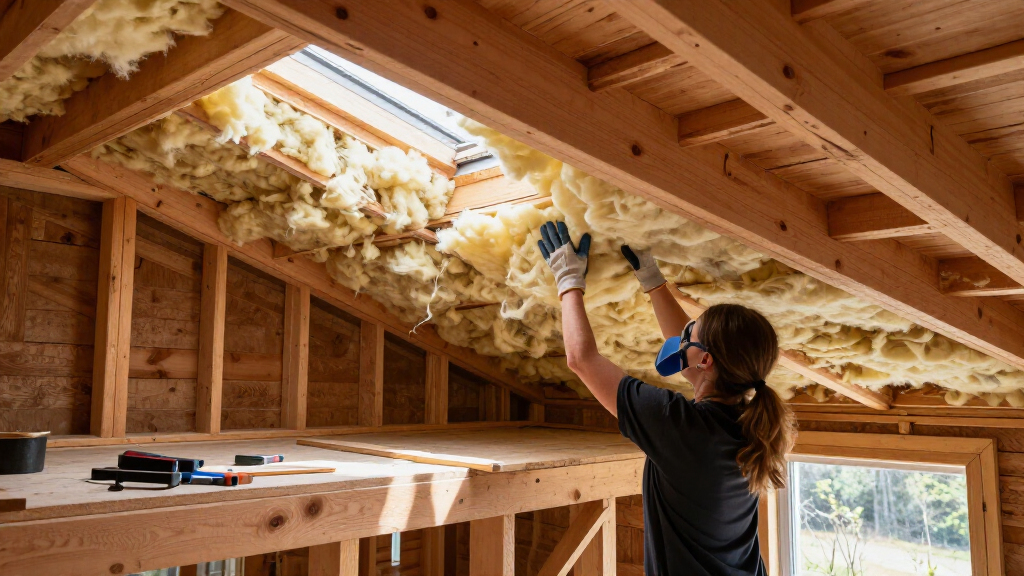
The best cathedral ceiling insulation in this roundup is Knauf R-30 Kraft Faced High Density, a ceiling-focused batt that balances thermal resistance with a clear fit for cathedral assemblies. CertainTeed’s wider R-30 batt is a strong choice for 24-inch framing, while Owens Corning R-38 suits buyers prioritizing more labeled thermal resistance where the roof cavity can accommodate it. The main tradeoffs are R-value versus cavity depth, faced versus unfaced batts, and matching batt width to rafter spacing without compression or gaps. No single batt fits every cathedral roof, and ventilation details matter as much as the insulation itself. Read on for the full comparison, selection criteria, and advice for matching a product to your ceiling assembly.

Get home appliances delivered free — and shop member deals
- Fast, free delivery on millions of items
- Access to Prime Big Deal Days deals on October 6–7
- Prime Video, Amazon Music and more included
Complete the kit


Key Takeaways
- Knauf R-30 High Density leads for its explicit cathedral application and 15-inch width, but only suits framing spaced for that batt.
- CertainTeed R-30 High Density covers the widest listed area and is sized for wider framing, making it a practical pick for 24-inch layouts.
- Owens Corning R-38 Kraft Faced offers the highest labeled R-value here, but its greater thickness must fit the available cavity without being compressed.
- The three Owens Corning R-30 options have different listed coverage and facing details, so buyers should compare package quantities and framing fit rather than rely on the shared R-value.
- Owens Corning R-19 unfaced is a lower-resistance, longer batt option for shallower cavities or specific assembly plans—not a like-for-like substitute for the R-30 choices.


| cathedral ceiling insulation | Brand | R-value | Material | Batt dimensions |
|---|---|---|---|---|
| Knauf R-30 Kraft Faced Fibergl | Knauf | R-30 | Fiberglass | 15 x 48 inches |
| Owens Corning 8-Pack R-30 Unfa | Owens Corning | R-30 | Fiberglass | 16 x 48 inches |
| Owens Corning R-38 Kraft Faced | Owens Corning | R-38 | Fiberglass | 16 x 48 inches |
| Certainteed R-30 Kraft Faced F | Certainteed | R-30 | Fiberglass | 23 x 48 inches |
| Owens Corning 87.5 Sqft 10-Bag | Owens Corning | R-19 | Fiberglass | 15 x 105 inches |
| Owens Corning R-30 Kraft Faced | — | — | — | — |
More Details on Our Top Picks
Knauf R-30 Kraft Faced Fiberglass Batt Insulation, 15 x 48, High Density (Cathedral), 8 Bags, 440 sq ft
Knauf’s 8-inch, R-30 high-density batts are the most directly targeted choice here for a cathedral ceiling framed with 2×8 members. Their 15-by-48-inch format and stated cathedral-ceiling use make the fit clearer than the Owens Corning R-30 unfaced batts, which are 10 inches thick and intended for 2×10 framing. The Kraft facing offers a facing layer that the unfaced Owens Corning option lacks, though it does not remove the need to follow the project’s vapor-control and assembly requirements. The 440-square-foot package is substantial without reaching the 613.36-square-foot coverage of Certainteed’s wider batts, so it may be easier to plan for a smaller roof area. The tradeoff is that it is still a bulky delivery, and its dimensions suit a specific framing depth rather than every cathedral assembly.
Pros:- R-30 rating in an 8-inch batt specified for 2×8 construction
- Product data explicitly lists cathedral ceilings as an application
- Kraft-faced construction provides a facing layer
- 440 square feet across eight bags suits a substantial but not oversized project
Cons:- Kraft facing does not replace checking vapor-control requirements for the roof assembly
- Bulk delivery requires space and coordination
- The 15-by-48-inch format will not suit every rafter spacing or framing depth
Best for: Homeowners insulating a cathedral ceiling framed with 2×8 members who want R-30 batts with Kraft facing and a clearly stated cathedral application.
Not ideal for: Buyers with 2×10 framing, unusually spaced rafters, or an assembly requiring a different insulation depth; the 8-inch batt is intended for a specific fit.
- Brand:Knauf
- R-value:R-30
- Material:Fiberglass
- Facing:Kraft faced
- Batt dimensions:15 x 48 inches
- Thickness:8 inches
- Package:8 bags
- Coverage:440 sq ft
- Listed applications:2×8 construction, attics, cathedral ceilings, floors, and ceilings
Our verdict“Choose this Knauf batt when your cathedral ceiling has 2×8 framing and you want a specifically designated R-30 option with Kraft facing.”
Owens Corning 8-Pack R-30 Unfaced Fiberglass Insulation 16″ x 48″ for 2×10 Floor/Ceiling and Attic (426 sq ft)
For a cathedral ceiling framed around 2×10 depth, these Owens Corning batts offer R-30 in a 10-inch thickness, a better dimensional match than Knauf’s 8-inch R-30 batt for 2×8 construction. The unfaced, low-dust fiberglass may appeal when the roof assembly calls for unfaced insulation or a separately specified vapor-control layer. Compression packaging is described as easier to handle on site, but the complete shipment weighs about 170 pounds, so moving it still takes planning. Coverage is approximately 426 square feet, slightly less than Knauf’s 440, and well below Certainteed’s 613.36; the relevant choice is framing fit, not simply package area. Product data also warns against installing it within 3 inches of non-IC recessed lighting. Buyers need to confirm the ceiling assembly’s ventilation and vapor-control details before choosing an unfaced batt.
Pros:- R-30 rating in a 10-inch thickness suited to 2×10 framing
- Unfaced format gives the installer flexibility where the assembly specifies no facing
- Low-dust formulation is intended to make installation cleaner
- Compression packaging is described as easier to handle on site
Cons:- Unfaced insulation may require a separately specified vapor-control layer
- The approximately 170-pound shipment can be difficult to move
- Must be kept at least 3 inches from non-IC recessed lighting
Best for: Renovators with 2×10 cathedral-ceiling framing who need R-30 unfaced batts and can provide any required vapor-control layer separately.
Not ideal for: Projects with 2×8 framing, buyers seeking Kraft-faced batts, or anyone unable to manage a roughly 170-pound shipment.
- Brand:Owens Corning
- R-value:R-30
- Material:Fiberglass
- Facing:Unfaced
- Batt dimensions:16 x 48 inches
- Thickness:10 inches
- Package:8 bags, 10 pieces per bag
- Coverage:Approximately 426.64 sq ft
- Item weight:170 pounds
Our verdict“Pick these Owens Corning batts for a 2×10 cathedral assembly that calls for R-30 unfaced insulation, not for a standard 2×8 cavity.”
Owens Corning R-38 Kraft Faced Fiberglass Batt Insulation, 16 x 48 inches, 8 Bags (341 sqft)
R-38 in a 12-inch batt gives this Owens Corning option the highest stated thermal resistance in this group, making it the pick for a cathedral ceiling whose framing and assembly can accommodate that depth. It goes beyond the R-30 choices from Knauf and Certainteed, but that extra rating only helps if the cavity is designed for the thicker batt and the installation does not compress it. Kraft facing distinguishes it from Owens Corning’s 10-inch unfaced R-30 product, while the 16-by-48-inch size covers a smaller area—about 341 square feet—than the R-30 packages listed here. The product description also mentions attic, wall, ceiling, and floor use, though the buyer still needs to verify suitability for the specific cathedral roof assembly. Its main compromise is less coverage per package and a deeper framing requirement.
Pros:- R-38 is the highest stated R-value in this product group
- Kraft-faced construction distinguishes it from the unfaced Owens Corning R-30 option
- 12-inch thickness provides the stated resistance where the cavity can accommodate it
- Listed for ceilings as well as attics, walls, and floors
Cons:- The 12-inch batt needs deeper framing than the listed 2×8 and 2×10 R-30 options
- Approximately 341 square feet of coverage is lower than the other R-30 packages listed
- The product description does not identify it specifically as a cathedral-ceiling batt
Best for: Homeowners with cathedral-ceiling framing deep enough for a 12-inch batt who prioritize the highest listed R-value among these products.
Not ideal for: Projects framed for 2×8 or 2×10 cavities, or buyers who need broad coverage from fewer bags; the 12-inch thickness and 341-square-foot coverage may not fit their plans.
- Brand:Owens Corning
- R-value:R-38
- Material:Fiberglass
- Type:Kraft-faced batt insulation
- Batt dimensions:16 x 48 inches
- Thickness:12 inches
- Package:8 bags
- Coverage:Approximately 341 sq ft
- Listed applications:Attics, walls, ceilings, and floors
Our verdict“Choose this R-38 batt only when your cathedral ceiling can take 12 inches of insulation and the roof assembly suits a Kraft-faced product.”
Certainteed R-30 Kraft Faced Fiberglass Batt Insulation, 23 x 48 inches, High Density (Cathedral), 8 Bags, 613.36 sq ft
613.36 square feet across eight bags makes this Certainteed option the coverage leader in the lineup. Its 23-by-48-inch, 8-inch-thick batt is listed for cathedral use and 2×8 construction, like the Knauf R-30, but the wider format is aimed at broader cavities. That can reduce the number of pieces needed when the framing matches; it is not a universal substitute for narrower batts, since the width must suit the actual bay without gaps or compression. The Kraft facing and R-30 rating also align it with Knauf, while the larger package coverage may suit a bigger project better. The tradeoff is handling: eight bags of bulky insulation call for delivery planning and room to stage materials. Choose it for compatible wide bays, not simply because its coverage figure is largest.
Pros:- R-30 rating in an 8-inch batt listed for cathedral ceilings and 2×8 construction
- Kraft facing provides a facing layer
- 613.36-square-foot coverage is the largest stated package coverage in this group
- 23-by-48-inch format can suit compatible wide framing bays
Cons:- The 23-inch width may not fit narrower or differently spaced framing
- Eight bulky bags require delivery coordination and staging space
- The coverage advantage is useful only if the batt dimensions match the actual ceiling bays
Best for: Owners insulating a large cathedral ceiling with compatible wide, 2×8 framing who want R-30 Kraft-faced batts and high package coverage.
Not ideal for: Buyers with standard narrower bays or limited storage and handling help; the 23-inch width and large shipment may not suit their site.
- Brand:Certainteed
- R-value:R-30
- Material:Fiberglass
- Facing:Kraft faced
- Batt dimensions:23 x 48 inches
- Thickness:8 inches
- Package:8 bags
- Coverage:613.36 sq ft
- Listed applications:Floors, walls, and attics in 2×8 construction; cathedral ceiling designation in product title
Our verdict“Select Certainteed for a large cathedral-ceiling project with framing that fits its 23-inch-wide, 8-inch-thick R-30 batts.”
Owens Corning 87.5 Sqft 10-Bag R-19 Unfaced Fiberglass Insulation for 2×6 Floor/Ceiling (15″ x 105″)
R-19 in a 6.25-inch batt is a different fit from the R-30 and R-38 options above: it targets 2×6 floor or ceiling framing, rather than the deeper cavities needed by the other products. Its friction-fit design is described as helping batts stay in place, and the 15-by-105-inch pieces may reduce seams across suitable bays. At 875 square feet, its package coverage is the largest listed, though that figure does not make it a higher-performance choice for a cathedral ceiling. Compared with the 8-inch Knauf R-30, it provides a lower stated R-value and is not identified specifically for cathedral use. The unfaced construction may suit some interior assemblies, but buyers must confirm the required vapor control and ceiling design; product data also flags clearance from non-IC recessed lights.
Pros:- 6.25-inch thickness is suited to the listed 2×6 floor and ceiling application
- Friction-fit design is intended to help batts stay in place
- 875-square-foot total coverage is the largest package figure in this group
- Unfaced material may suit assemblies that specify insulation without a facing
Cons:- R-19 is lower than the R-30 and R-38 choices in this roundup
- Product data does not specifically identify cathedral ceilings as an application
- Must be kept at least 3 inches from non-IC recessed lighting
Best for: Buyers with 2×6 ceiling framing who need a large quantity of unfaced fiberglass and whose project requirements suit R-19.
Not ideal for: Homeowners seeking a cathedral-specific, higher-R-value batt for 2×8 or 2×10 framing; this product is R-19 and listed for 2×6 floor or ceiling use.
- Brand:Owens Corning
- R-value:R-19
- Material:Fiberglass
- Facing:Unfaced
- Batt dimensions:15 x 105 inches
- Thickness:6.25 inches
- Package:10 bags
- Coverage:87.5 sq ft per bag; 875 sq ft total
- Listed application:2×6 floor and ceiling
Our verdict“Choose this Owens Corning batt for a compatible 2×6 ceiling that calls for R-19, not when your cathedral roof needs the higher R-value or deeper fit of the other picks.”
Owens Corning R-30 Kraft Faced Fiberglass Insulation, 469 sqft, 8 Bags, 16×48 inches
I’d choose this R-30 batt when the cathedral ceiling has compatible 16-inch framing and the project calls for substantial coverage from one package. Its 469 square feet across eight bags exceeds the listed coverage of the Owens Corning R-30 unfaced option, which covers 426 square feet, while retaining kraft facing for a built-in vapor retarder. That facing can simplify material selection, but it does not replace careful moisture planning: cathedral assemblies need appropriate ventilation and climate-specific vapor control. At 9.5 inches thick, the batts are intended for 2×10 framing, so check the rafter depth and required ventilation space before buying. Compared with the R-38 kraft-faced Owens Corning batts, this provides less thermal resistance, but its listed coverage is greater. The bulk shipment and flame-protection requirements also call for planning.
Pros:- R-30 thermal resistance for compatible ceiling assemblies
- 469 square feet of listed coverage across eight bags
- Kraft facing provides a moisture-retarding layer
- 16 x 48-inch batts suit 16-inch framing and 2×10 applications
Cons:- Requires appropriate ventilation and moisture planning in a cathedral ceiling
- Kraft facing is flammable and must be protected from open flames
- Eight-bag bulk delivery requires space and delivery coordination
Best for: Homeowners insulating cathedral ceilings with 16-inch-on-center, 2×10 framing who want kraft-faced R-30 batts and broad package coverage.
Not ideal for: Buyers with 15-inch or 23-inch framing, shallow rafters, or a ceiling assembly that needs a different vapor-control approach; the dimensions and facing may not fit their design.
Our verdict“Choose this for 16-inch, 2×10 cathedral-ceiling framing when R-30 kraft-faced batts and broad listed coverage fit the assembly.”
How We Picked
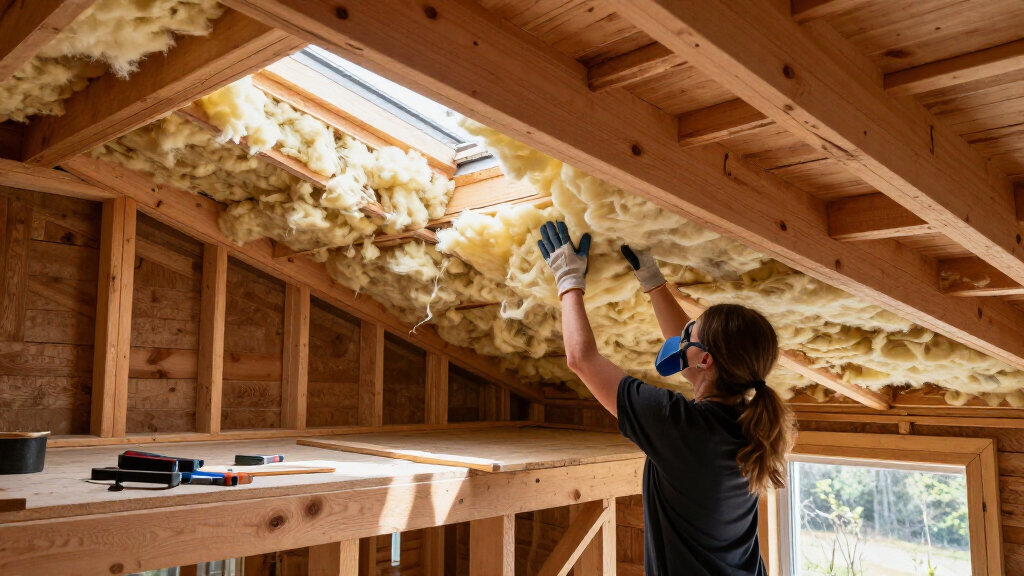
I ranked these six products by how clearly their stated dimensions, R-value, facing, and intended application align with cathedral-ceiling work. I gave extra weight to products explicitly labeled for cathedral use, then considered whether the batt width and thickness can plausibly match common framing layouts and the available cavity. Coverage and package details also matter: a large listed area can simplify estimating, but it does not make a product a better fit if its dimensions do not match the rafters.
The ranking favors fit and application clarity over R-value alone. Knauf takes the lead for its high-density cathedral labeling; CertainTeed stands out for wider framing and listed coverage; Owens Corning R-38 ranks well for buyers with adequate cavity depth. The remaining Owens Corning options serve narrower use cases, including unfaced installation and lower-R-value assemblies. Product names and listings do not replace checking the manufacturer’s installation instructions, local energy requirements, or the complete roof assembly design.
| cathedral ceiling insulation | Brand | R-value | Facing |
|---|---|---|---|
| Knauf R-30 Kraft Faced Fibergl | Knauf | R-30 | Kraft faced |
| Owens Corning 8-Pack R-30 Unfa | Owens Corning | R-30 | Unfaced |
| Owens Corning R-38 Kraft Faced | Owens Corning | R-38 | — |
| Certainteed R-30 Kraft Faced F | Certainteed | R-30 | Kraft faced |
| Owens Corning 87.5 Sqft 10-Bag | Owens Corning | R-19 | Unfaced |
| Owens Corning R-30 Kraft Faced | — | — | — |
Factors to Consider When Choosing Best Cathedral Ceiling Insulation
Before ordering, treat a cathedral ceiling as a roof assembly, not simply a flat surface to fill with batts. The right choice depends on framing dimensions, the planned ventilation path, moisture control, and how the ceiling will be finished. These checks can prevent a batt that looks suitable on paper from creating gaps, compression, or moisture problems in the roof.
Match Batt Width to Actual Rafter Spacing
Measure the framing rather than choosing by a nominal width alone. Rafters may be spaced 16 or 24 inches on center, but the clear cavity between them is narrower, and older or custom framing can vary from bay to bay. A batt that is too wide may buckle or compress; one that is too narrow can leave air gaps that reduce performance. Check the product’s stated width and its installation guidance against the clear cavity dimensions. For irregular framing, cutting batts carefully or choosing a different insulation approach may be more effective than forcing a standard size to fit.
Check Cavity Depth Before Chasing a Higher R-Value
R-38 is not automatically a better choice than R-30 if the roof cavity cannot hold it at its intended thickness. Compressing fiberglass to fit reduces the value of choosing a higher-rated batt and can interfere with the rest of the roof assembly. Measure the usable depth, including any space needed for ventilation, wiring, or other components. If the rafters are too shallow, compare code-compliant alternatives such as adding continuous insulation or using a designed unvented assembly with professional guidance. Do not treat a product’s R-value as a substitute for checking the assembly as a whole.
Plan the Ventilation and Moisture-Control Layers
Cathedral roofs have less room for mistakes than open attics because the insulation sits close to the roof deck. In a vented assembly, the design needs a continuous airflow channel from the eave toward the ridge, with insulation kept out of that path. Faced batts include a vapor-retarder facing, but the correct placement depends on climate, local code, and the rest of the wall and roof layers. Unfaced batts may suit assemblies where a separate vapor-control layer is specified, but they do not provide that layer by themselves. If the roof design is unclear, ask a qualified building professional before closing the ceiling.
Choose Faced or Unfaced for the Assembly, Not Convenience
Kraft facing can simplify vapor-control planning when it matches the assembly requirements, but it is not a universal moisture solution. The facing typically needs to be installed in the orientation required by local code and manufacturer directions, with seams and penetrations handled appropriately. Unfaced insulation offers flexibility when another layer provides the needed control or when the design calls for no facing. Avoid installing two low-permeance layers that trap moisture between them unless the assembly has been designed for that condition. Confirm the role of every layer before buying, especially when replacing insulation in an existing roof.
Estimate Coverage After Accounting for Cuts and Odd Bays
Package coverage is a useful starting point, not a guarantee that the listed area will cover a real ceiling. Cathedral roofs often include end bays, framing changes, skylights, and short sections that require cuts, which can increase waste. Measure each ceiling plane and count the framing bays before comparing package totals. Add a reasonable allowance for cuts, while avoiding large overestimates that leave unused material. Also check whether the listed square footage reflects the exact product size and bag count you intend to order.
Know When to Use a Different Insulation Strategy
Fiberglass batts are easiest to use in regular, accessible framing cavities, but they are not always the best answer for a cathedral roof. Complex framing, limited cavity depth, or a roof that needs an unvented design can call for a different assembly, such as professionally installed spray foam or rigid insulation above the roof deck. Those approaches may cost more or require more planning, but can address constraints batts cannot solve by themselves. Avoid mixing insulation methods without checking how they affect drying and condensation risk. When the roof is being renovated, weigh insulation choice alongside ventilation, air sealing, and roofing work rather than treating each as a separate decision.
Frequently Asked Questions
Can I use an R-38 batt in any cathedral ceiling?
No. The cavity must be deep enough to hold the batt at its intended thickness, and the roof assembly must still allow any required ventilation space. Compressing a thick batt can reduce its thermal performance and leave the installation uneven. Check rafter depth, the product’s installation instructions, and local requirements before buying. If the cavity is shallow, a designed alternative may be more suitable than forcing R-38 into the available space.
How do I choose between the 15-inch and 23-inch R-30 batts?
Base the choice on the clear width of your rafter bays, not just the nominal spacing. The 15-inch Knauf batt is aimed at narrower framing, while the 23-inch CertainTeed batt is intended for wider bays; either can perform poorly if it is compressed or leaves gaps. Measure several cavities because framing can vary across a roof. Also compare package coverage and the amount of cutting your ceiling layout will require.
Is kraft-faced insulation always the right choice for a cathedral roof?
No. Kraft facing can serve as a vapor-retarder layer, but the correct facing choice and placement depend on climate, code, and the full roof assembly. Some designs call for unfaced insulation because vapor control is handled elsewhere, while other assemblies may need a different approach. Avoid adding facing without checking whether another layer could trap moisture. If you cannot identify the existing roof layers, get the assembly reviewed before covering the ceiling.
Can I use the Owens Corning R-19 batt instead of an R-30 product?
Only if R-19 matches the design requirements for your project and the available cavity. Its lower labeled thermal resistance makes it a different choice from the R-30 options, not a direct equivalent. Check local energy requirements and whether the insulation is being used as one layer in a larger system. If the goal is to improve an existing ceiling, compare the planned total assembly rather than choosing by batt fit alone.
How much extra insulation should I order for cuts and waste?
Start with measured ceiling area, then account for the number of bays, roof angles, openings, and framing changes. A simple rectangular ceiling may need little extra, while a roof with skylights or irregular end bays can create more offcuts. Compare the resulting estimate with the package coverage, and check whether the product width matches the bays before adding material. Ordering a small allowance is sensible, but the right amount depends on the layout rather than a fixed percentage for every project.
Conclusion
Best overall: I’d choose Knauf R-30 Kraft Faced High Density for a project with compatible narrower framing, since its listing explicitly identifies cathedral use. Best value by coverage: CertainTeed R-30 High Density is the practical pick when its wider batt fits 24-inch framing and its listed coverage suits the job. Best premium-style thermal option: Owens Corning R-38 is for buyers with enough cavity depth who want the highest labeled R-value in this group. Best for beginners: Owens Corning R-30 Kraft Faced is a straightforward option when its 16-inch width and facing fit the planned assembly. Best for specific needs: choose Owens Corning R-19 Unfaced for a shallower or separately designed assembly, and Owens Corning R-30 Unfaced when the roof plan calls for unfaced batts. I would make the final choice only after checking rafter spacing, cavity depth, ventilation, and local requirements.
Fall Picks
fall essentials
As an affiliate, we earn on qualifying purchases.