TL;DR

Get home appliances delivered free — and shop member deals
- Fast, free delivery on millions of items
- Access to Prime Big Deal Days deals on October 6–7
- Prime Video, Amazon Music and more included
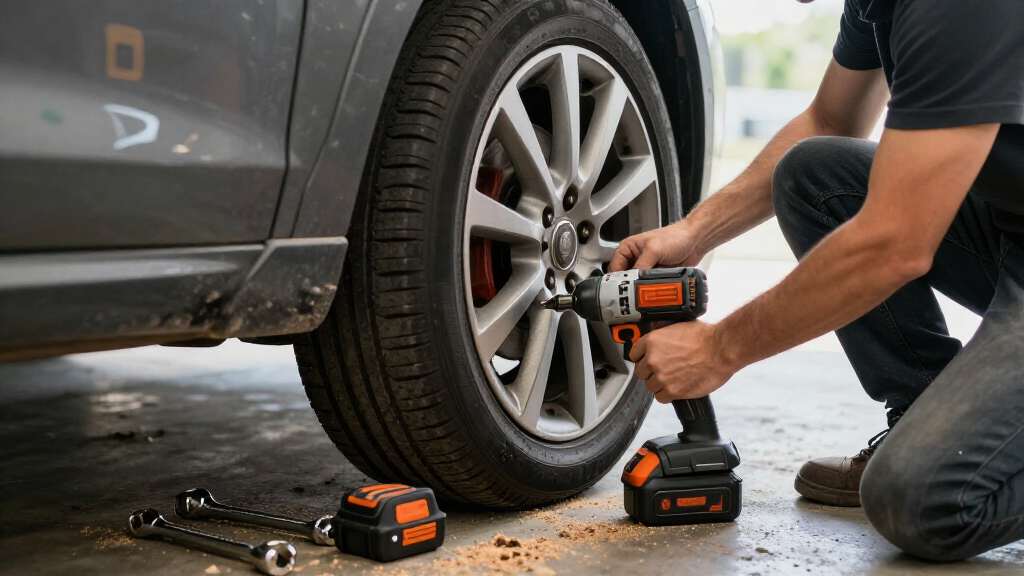
Pro Tool Reviews compared the Ryobi HP Brushless P262 and Ridgid 18V Brushless R86012 mid-torque impact wrenches in hands-on testing. Ridgid won two of three tests, driven largely by its higher impact rate, but the results were close enough to suggest Ryobi’s prosumer line is narrowing the gap with pro-focused brands.
Pro Tool Reviews has published a head-to-head test of two mid-torque impact wrenches sold at Home Depot, and the results show the Ridgid R86012 edging out the Ryobi P262 in two of three performance tests. The margin was narrow in most categories, but a lab-measured torque test showed a wider gap, which the reviewer attributed to Ridgid’s higher impact rate. The outcome adds data to a running question among tool buyers: whether Ryobi’s HP Brushless line, aimed at serious DIYers and prosumers, now competes directly with Ridgid’s pro-positioned tools.
Both tools sit at the top of their respective lineups and share much of the same DNA — a reflection of the fact that both brands belong to the same parent company, TTI. The Ryobi P262 is rated at 600 ft-lbs of breakaway torque and 2,800 RPM, while the Ridgid R86012 is rated at 650 ft-lbs breakaway and 500 ft-lbs fastening torque, also at 2,800 RPM. Ridgid’s impact rate is higher: 3,800 IPM versus 3,200 IPM for the Ryobi. The tools weigh the same bare, at 3.69 lbs, though the Ridgid tested heavier at 5.69 lbs working weight because it was paired with a larger 8.0Ah battery.
Pro Tool Reviews ran three standardized tests. In the bolt break test — removing eight lug nuts torqued to 500 ft-lbs — the Ryobi finished in 33.27 seconds versus 33.68 seconds for the Ridgid, a near-tie. In the lag bolt test, the Ridgid sank the bolt slightly deeper, leaving 0.31 inches above the surface versus 0.36 inches for the Ryobi. The widest gap came in the inertia torque test, where the Ridgid measured 283.4 ft-lbs against the Ryobi’s 236.6 ft-lbs.
The reviewer attributed the inertia torque gap primarily to impact rate: Ridgid’s anvil strikes roughly 18.75% faster, and the extra 600 IPM translated into higher measured output. On pricing, the Ryobi bare tool sells for $179 and the Ridgid for $189; neither is offered as a kit. The Ryobi carries a 3-year warranty, while the Ridgid is covered by Ridgid’s Lifetime Service Agreement.
What the Results Mean for Tool Buyers
The comparison matters because both brands are sold almost side by side at Home Depot and are separated by only $10 at the bare-tool level, making the choice a common one for DIYers and pros on a budget. According to the review, the results show that Ryobi’s One+ HP Brushless performance is blurring the line between pro and prosumer tools, even though Ridgid — traditionally positioned as the pro-focused value option within TTI’s brand portfolio — still holds an edge.
The reviewer concluded that the practical decision comes down to which battery platform the buyer already owns, since both tools are sold bare-only and the real-world performance gap was small. For buyers weighing long-term costs, the warranty difference — Ridgid’s Lifetime Service Agreement versus Ryobi’s 3-year coverage — may carry as much weight as the torque numbers.
Brand Positioning Behind the Matchup
Ridgid and Ryobi are both owned by TTI (Techtronic Industries) but target different customers: Ridgid has traditionally been positioned as the pro-focused value brand, while Ryobi built its reputation serving DIYers and homeowners through its broad One+ battery platform. Ryobi’s HP Brushless line, introduced to bring higher-output performance to the One+ system, has progressively narrowed that gap, which is what prompted the head-to-head.
Both tested tools share several features: brushless motors, three speed modes with Assist Mode, die-cast gearboxes, and 1/2-inch anvils — the Ryobi with a friction ring, the Ridgid available with either a friction ring or pin detent. The review used Pro Tool Reviews’ established testing protocol, including a calibrated bolt-break test, a lag-bolt fastening test, and a Skidmore-style inertia torque tester designed to isolate torque from speed and impact-rate effects.
“So, after all our hands-on testing, I’m obliged to declare Ridgid the winner… but let’s be honest, this one was close.”
— Pro Tool Reviews, verdict
Limits of the Comparison Data
The results reflect a single set of laboratory tests on one example of each tool, and Pro Tool Reviews does not claim the sample is representative of all units. The inertia torque readings (236.6 and 283.4 ft-lbs) fall well below both manufacturers’ stated breakaway ratings, which is expected given that the test isolates sustained torque output rather than the loosening bursts manufacturers use for spec sheets — but it means published specs and measured results are not directly comparable.
The review also did not test long-term durability, runtime per charge, or ergonomics under extended use in a quantified way, and the working-weight comparison was affected by the different battery capacities used (4.0Ah for the Ryobi, 8.0Ah for the Ridgid). How the tools hold up over years of job-site use remains outside the scope of the published data.
Where the Prosumer Gap Goes From Here
The review’s conclusion — that Ryobi’s HP Brushless line is closing the performance gap with pro-tier brands — sets up future comparisons as both brands refresh their lineups. Buyers can expect Pro Tool Reviews and similar outlets to continue benchmarking new mid-torque impact wrench releases against these results. For consumers, the immediate decision points remain battery platform compatibility, the $179 vs $189 price difference, and the warranty terms, since neither tool is sold as a kit with batteries or charger included.
Key Questions
Which impact wrench won the head-to-head, and by how much?
According to Pro Tool Reviews, the Ridgid R86012 won two of three tests. It was near-tied in the bolt break test (33.68 vs 33.27 seconds, actually a slight Ryobi win), slightly ahead in the lag bolt test (0.31 vs 0.36 inches remaining), and clearly ahead in inertia torque (283.4 vs 236.6 ft-lbs).
Is the Ryobi P262 good enough for professional use?
Based on this review, it is close: the reviewer stated the results show Ryobi’s One+ HP Brushless performance is blurring the line between pro and prosumer tools, though Ridgid retained a measurable edge in torque output.
Why did the Ridgid measure higher torque in testing?
The review attributes the gap to impact rate: the Ridgid’s anvil strikes at 3,800 IPM versus 3,200 IPM for the Ryobi — about 18.75% faster — which produced higher measured torque in the isolated inertia torque test.
How much do the two tools cost?
Both are sold as bare tools only: the Ryobi P262 at $179 and the Ridgid R86012 at $189, according to the review. Neither is available as a kit with batteries or a charger.
Which warranty is better?
The Ridgid R86012 is covered by Ridgid’s Lifetime Service Agreement, while the Ryobi P262 carries a 3-year limited warranty. The Ridgid’s coverage term is longer, though conditions and registration requirements apply.
Source: rss
Evergreen bestsellers Picks
bestsellers
As an affiliate, we earn on qualifying purchases.